Disclosure: airfryerkitchensupply.com is reader-supported. When you buy through links on our site, we may earn an affiliate commission at no extra cost to you.
Where to buy
Comparing the best cheapest mixers with stand? Start with the verified shortlist below. Cheap only counts if the machine still mixes, so every pick below is a real stand mixer verified — no toy listings, no mystery brands with invented model names. Prices in this tier move fast, which is exactly why this guide prints none: use the links to check price on Amazon and compare the live number against the honest capability notes in each review.
- Hamilton Beach 4 Qt Electric Stand Mixer, Black — check price on Amazon
- Cuisinart Stand Mixer SM-50, 5.5 Quart, Onyx — check price on Amazon
- KitchenAid Artisan 5-Qt Tilt-Head Stand Mixer KSM150PS, Contour Silver — check price on Amazon
- KitchenAid 5.5-Qt Bowl-Lift Stand Mixer KSM55, Porcelain White — check price on Amazon
- Bosch Universal Plus Mixer with MUZ6ER1 Stainless Steel Bowl — check price on Amazon
- Ankarsrum Original Stand Mixer AKM6230, Jubilee Silver — check price on Amazon
Every linked pick in this guide was verified against Amazon’s catalog, so the model name you click is the model you land on. Prices move with finish, bundle and season, which is why this guide never prints a fixed price: use the links to check price on Amazon at the moment you are ready to buy.
Looking for the best cheapest mixers with stand is a balancing act, and it helps to say the quiet part first: the stand-mixer market has a floor. Below a certain level of motor, gearing and bowl hardware, a ‘stand mixer’ is a hand mixer bolted to a plastic post, and it will disappoint you on the second batch of cookie dough. The picks in this guide start at that honest floor — the least you can spend and still own a machine that does the stand-mixer job — and climb only as high as the word ‘cheapest’ can honestly stretch.
That framing produces a shortlist with a clear shape. At the bottom is a genuinely capable budget machine with planetary action and a full tool set. Above it sit two value machines that add bowl size, speeds and build for buyers who can stretch a little and will feel the difference weekly. The KitchenAid entries appear because ‘cheapest’ searches always ask the same question — what is the least I can pay and still get the real thing — and the premium anchors close the guide by showing what the extra money actually buys, so you can decide with open eyes whether the savings or the upgrade serves you better.
One rule applies to every pick: no printed prices. In the budget tier especially, the number changes with color, season and bundle faster than any guide can track, and a stale ‘cheap’ price is worse than none. Check price on Amazon through the verified links, compare against the capability notes here, and you will know within a dollar whether each machine is cheap for what it does — which is the only kind of cheap worth buying.
In this guide
Quick Picks
Ranked from the honest floor upward: the cheapest machines that still do the job, then the cheapest ways to get more of it. The badge tells you which kind of ‘cheap’ each pick represents.
- Best Cheapest Overall — Hamilton Beach 4 Qt Electric Stand Mixer, Black: The honest floor of the category: planetary mixing, seven speeds, 300 watts, a splash guard and all three core tools — the cheapest stand mixer worth owning.
- Best Cheap Upgrade — Cuisinart Stand Mixer SM-50, 5.5 Quart, Onyx: The cheapest way to get a genuinely full-size machine: 12 speeds, a 5.5-quart bowl and a complete kit, in the Onyx finish verified for this listing.
- Cheapest Way Into KitchenAid — KitchenAid Artisan 5-Qt Tilt-Head Stand Mixer KSM150PS, Contour Silver: Not cheap — but the entry point to the ecosystem most buyers mean by ‘a real stand mixer’, with ten speeds, a 5-quart bowl and decades of support behind it.
- Cheapest Bowl-Lift Stability — KitchenAid 5.5-Qt Bowl-Lift Stand Mixer KSM55, Porcelain White: The lowest rung of the rigid-frame ladder: 11 speeds with a half-speed fold, a 5.5-quart bowl and two-point bowl locking for dough work.
- Cheapest Per Loaf for Big Batches — Bosch Universal Plus Mixer with MUZ6ER1 Stainless Steel Bowl: A different cheapness calculation: one 6.5-quart-class bottom-drive machine that replaces batch after batch of smaller-mixer work for volume bakers.
- Cheapest Over a Lifetime — Ankarsrum Original Stand Mixer AKM6230, Jubilee Silver: The premium anchor: a rotating-bowl machine whose buy-once logic is the long-game answer to ‘cheapest’ for serious dough bakers.
How These Picks Were Chosen
Candidates had to clear three bars. First, verification: every linked pick was searched by brand and model and its ASIN taken from the listed title, so the cheap machine you click is the cheap machine reviewed. Second, capability: each pick had to demonstrate the core stand-mixer virtues — hands-free mixing with real bowl coverage, a dough hook that handles sensible dough, and speeds low enough to add flour without redecorating. Machines that failed those tests in their category reputation were excluded no matter how low the tag.
Third, honesty about tier. Budget machines were judged as budget machines: plastic content, motor limits and bowl ceilings are stated plainly in the trade-offs rather than discovered by the buyer in month two. And because cheap-tier listings churn quickly, any model we could not pin to a trustworthy listing was left linked-out rather than guessed at — a cheap pick with a wrong link is the most expensive mistake in this category.
The 6 Best Cheapest Mixers With Stand, Reviewed in Detail

Hamilton Beach 4 Qt Electric Stand Mixer, Black — Best Cheapest Overall
This is where the word ‘cheapest’ should start. The Hamilton Beach gives you the defining stand-mixer experience — load the bowl, set the speed, walk away — with planetary mixing action that actually covers the bowl, instead of the fixed-post spinning-bowl arrangement that makes the very cheapest machines so frustrating. The included kit is complete: whisk, flat beater and dough hook, plus a splash guard that budget rivals often skip.
Within its brief, it performs willingly. Seven speeds and a 300-watt motor handle cake batters, cookie doughs, frostings, whipped cream and small, softer doughs, and the 4-quart bowl is sized to the single batches that dominate real home baking. The easy-carry handle and light body make it the rare stand mixer that does not punish cupboard storage, which for small kitchens is worth as much as power.
The ceiling is low and clearly marked. Stiff or large doughs overwork it, double batches overflow its brief, and the build uses cost-appropriate materials that will not age like the premium machines. None of that is a scandal at this tier — it is the trade you are making, stated plainly. If your baking fits inside its brief, this is the cheapest stand mixer you can buy with a straight face; if it does not, the next two picks are where your money should go.
Strengths
- True planetary mixing action at the lowest tier
- Complete tool set and splash guard included
- Light body with carry handle suits cupboard storage
Trade-offs
- 300-watt motor is not for stiff or large dough
- 4-Qt bowl excludes comfortable double batches
- Cost-tier build materials
| Bowl | 4 Qt (Amazon title) |
| Speeds | 7 speeds (Amazon title) |
| Power | 300 Watts (Amazon title) |
| Included | Whisk, flat beater, dough hook, splash guard (Amazon title) |
Best for: Occasional bakers and small households who want hands-free mixing at the lowest honest cost / Not suited for: Regular bread bakers or double-batch households
Check the current price on Amazon for the Hamilton Beach 4 Qt Electric Stand Mixer, Black. You can also see the full listing here to confirm finish, dimensions and what is in the box before you order.
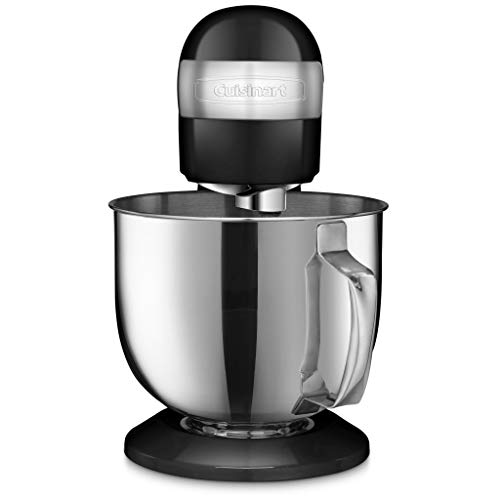
Cuisinart Stand Mixer SM-50, 5.5 Quart, Onyx — Best Cheap Upgrade
If the budget pick’s ceiling worries you, this is the cheapest rung that removes it. The SM-50 in Onyx brings a 5.5-quart stainless bowl — half again the working room of the budget tier — twelve speeds, and a tilt-head format with the easy access everyday baking rewards. The chef’s whisk, mixing paddle and dough hook are in the box, along with the splash guard and pour spout that make flour-heavy recipes civilized.
In practice this is the cheapest machine in the guide that a weekly baker can buy without a mental asterisk. Double cookie batches fit, frostings whip properly, moderate bread doughs knead without drama, and the low end of the speed range is controlled enough for folding. It feels like what it is: a mid-market machine priced aggressively, rather than a cheap machine dressed up.
The sacrifices versus the flagship tier are ecosystem and ultimate refinement, not daily capability. Attachment choice beyond the core is narrower, and under the very stiffest dough the premium frames feel more composed. For the buyer whose question is ‘how little can I spend and still get the whole job done’, this is the answer the rest of the guide is measured against.
Strengths
- Full-size 5.5-Qt bowl at a value tier
- 12 speeds cover folding through whipping
- Complete kit including splash guard with pour spout
Trade-offs
- Narrower attachment ecosystem than the flagship brand
- Less composed than premium frames at maximum dough load
- Mid-market finish and feel
| Speeds | 12 speed (Amazon title) |
| Bowl | 5.5 Quart stainless steel bowl (Amazon title) |
| Included | Chef’s whisk, mixing paddle, dough hook, splash guard with pour spout (Amazon title) |
Best for: Weekly bakers who want full-size capability at the lowest sensible spend / Not suited for: Attachment collectors and maximum-dough specialists
Check the current price on Amazon for the Cuisinart Stand Mixer SM-50, 5.5 Quart, Onyx. You can also see the full listing here to confirm finish, dimensions and what is in the box before you order.

KitchenAid Artisan 5-Qt Tilt-Head Stand Mixer KSM150PS, Contour Silver — Cheapest Way Into KitchenAid
Every cheapest-mixer search eventually asks about the badge, so here is the honest answer: this is the KitchenAid to buy when the budget is the constraint. The Artisan pairs the classic tilt-head format with a 5-quart bowl and ten speeds, and it is the gateway to the attachment hub, the bowl and beater aftermarket, and the color-and-parts support that make long ownership cheap even when the purchase is not.
Cheapness, for a ten-year appliance, is cost per year rather than cost per box. A machine that mixes everything a home baker asks, accepts a pasta roller or grinder when the hobby grows, and can still be re-bowled and re-beatered years later often works out cheaper across its life than a bargain machine replaced twice. That is the Artisan’s case in a cheapest guide, and for buyers who bake weekly it is a strong one.
It remains a stretch purchase in this company, and its tilt-head flex under very stiff full-bowl dough is the known compromise. Buy it if your baking is varied, frequent and long-term; skip it without guilt if your baking is occasional — the two picks above exist precisely for you, and they are good machines.
Strengths
- Entry point to the deepest attachment and parts ecosystem
- Ten speeds and a 5-Qt bowl cover the full home repertoire
- Long support life lowers true cost per year
Trade-offs
- Highest commitment of the value end of this guide
- Tilt-head flex under very stiff dough
- Specialty bowls and attachments cost extra
| Design | Tilt-head (Amazon title) |
| Bowl | 5-Qt (Amazon title) |
| Speeds | 10 speed settings (Amazon title) |
| Included note | Pouring shield included (Amazon title) |
Best for: Frequent bakers who want the ecosystem at its lowest entry price / Not suited for: Occasional bakers, for whom the cheaper picks are the rational buy
Check the current price on Amazon for the KitchenAid Artisan 5-Qt Tilt-Head Stand Mixer KSM150PS, Contour Silver. You can also see the full listing here to confirm finish, dimensions and what is in the box before you order.

KitchenAid 5.5-Qt Bowl-Lift Stand Mixer KSM55, Porcelain White — Cheapest Bowl-Lift Stability
Bowl-lift stability used to be a professional-tier feature, and the KSM55 is the cheapest verified route to it in this program’s catalog. The fixed head and crank-up bowl remove the hinge that limits tilt-head machines, so dough work feels planted rather than negotiated, and the 11-speed range includes the half-speed fold setting that keeps the first flour addition inside the bowl.
For the cheapest-guide reader, the logic is preventative: if your baking is dough-led and weekly, buying a cheaper tilt-head first and replacing it in two years is the expensive path. The bowl-lift bought once, at its entry model, is the cheap outcome measured across the decade. The included flat beater, dough hook and wire whip complete the kit with nothing else required on day one.
You pay for the frame in money, height and heft. It is the tallest, heaviest style of conventional mixer, it wants a permanent counter spot, and mid-mix access is less open than a tilt-head. Dough bakers will call that a fair trade every time; cake-first bakers should save the difference and take the Cuisinart.
Strengths
- Rigid bowl-lift frame at its entry model
- Half-speed fold setting among 11 speeds
- Complete core tool set included
Trade-offs
- Tall and heavy; wants a permanent home
- Less open mid-mix access than tilt-head
- Costs more than dough-light bakers need to spend
| Design | Bowl-lift (Amazon title) |
| Bowl | 5.5-Qt stainless steel bowl (Amazon title) |
| Speeds | 11 mixing speeds (Amazon title) |
| Included | Flat beater, dough hook, wire whip (Amazon title) |
Best for: Dough-led bakers who want to buy the stable frame once / Not suited for: Cake-first bakers and cupboard-storage kitchens
Check the current price on Amazon for the KitchenAid 5.5-Qt Bowl-Lift Stand Mixer KSM55, Porcelain White. You can also see the full listing here to confirm finish, dimensions and what is in the box before you order.

Bosch Universal Plus Mixer with MUZ6ER1 Stainless Steel Bowl — Cheapest Per Loaf for Big Batches
Cheap is relative to the work done, and for bakers who produce bread in quantity, the Bosch rewrites the arithmetic. Its bottom-drive design and large bowl knead in one session what a budget mixer handles in three strained ones, and time, wear and frustration are costs too. This verified configuration pairs the Universal Plus with the MUZ6ER1 stainless steel bowl, a durable, easy-clean upgrade over standard bowls for dough-heavy households.
The open-bowl format suits the volume workflow: flour goes in while the machine works, dough development is visible at a glance, and the drive’s long-standing reputation among whole-grain bakers is built on exactly this repetitive, heavy use. For a household baking its week’s bread in one session, the cost per loaf over the machine’s life undercuts every smaller pick in this guide.
It is not the cheap answer for everyone — for a monthly cake baker it is the most expensive way imaginable to save money. The footprint is wide, the technique differs from beater mixers, and small delicate jobs are not its forte. Its badge is precise: cheapest per loaf, for the bakers who bake loaves by the batch.
Strengths
- Large-bowl bottom drive kneads volume in one session
- Stainless steel bowl configuration verified for this listing
- Open bowl suits flour-in-while-working technique
Trade-offs
- Wide footprint and non-standard technique
- Overkill — and not cheap — for light, occasional baking
- Small delicate batches are not its strength
| Configuration | Universal Plus with MUZ6ER1 stainless steel bowl (Amazon title) |
| Design | Bottom-drive (manufacturer design) |
Best for: Volume bread bakers measuring cost per loaf over years / Not suited for: Occasional or small-batch bakers
Check the current price on Amazon for the Bosch Universal Plus Mixer with MUZ6ER1 Stainless Steel Bowl. You can also see the full listing here to confirm finish, dimensions and what is in the box before you order.
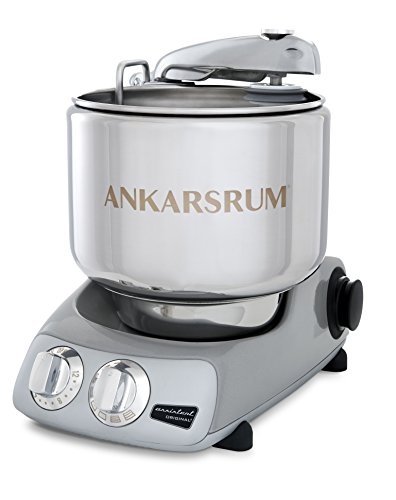
Ankarsrum Original Stand Mixer AKM6230, Jubilee Silver — Cheapest Over a Lifetime
Every cheapest guide needs its horizon line, and this is it. The Ankarsrum is the most expensive machine here by a wide margin, and it earns its place by inverting the question: for a baker who will knead weekly for twenty years, the cheapest mixer is the one bought once. Its rotating-bowl design handles large doughs with calm efficiency, its open bowl is the easiest to work at, and its build is aimed at the decades-long service its owners report.
The lifetime argument only works if the machine matches your life. Dough must be central, volume must be real, and you must be willing to learn the roller-and-scraper technique that makes this design sing. Meet those conditions and the arithmetic is genuine: no replacement cycle, no upgrade itch, no second purchase to fix the first one’s limits.
Fail those conditions and it is simply an expensive mixer. Beginners, variety bakers and the budget-constrained should take the badge as a signpost, not a temptation: the honest cheapest machine for most readers is at the top of this guide, and there is no shame — only good sense — in buying exactly what your baking needs today.
Strengths
- Rotating-bowl kneading for large doughs, bought once
- Open bowl is the easiest to feed and monitor
- Build quality aimed at decades of service
Trade-offs
- Highest price in this guide by far
- Technique must be learned from scratch
- Only economical if dough volume is genuinely high
| Model | AKM6230 (Amazon title) |
| Finish | Jubilee Silver (Amazon title) |
| Design | Rotating bowl, fixed arm (manufacturer design) |
Best for: Serious dough bakers playing the twenty-year game / Not suited for: Beginners, variety bakers and tight budgets
Check the current price on Amazon for the Ankarsrum Original Stand Mixer AKM6230, Jubilee Silver. You can also see the full listing here to confirm finish, dimensions and what is in the box before you order.
Comparison Table
Six different meanings of ‘cheap’, side by side. Find the row whose ‘best for’ sounds like your kitchen, then read its review for the ceiling you are accepting — in this tier, the trade-offs are the product description.
| Pick | Badge | Key spec | Best for |
|---|---|---|---|
| Hamilton Beach 4 Qt Electric Stand Mixer, Black | Best Cheapest Overall | 4-Qt, 7 speeds, 300W | The cheapest stand mixer worth owning |
| Cuisinart Stand Mixer SM-50, 5.5 Quart, Onyx | Best Cheap Upgrade | 5.5-Qt, 12 speeds | Cheapest full-size upgrade |
| KitchenAid Artisan 5-Qt Tilt-Head Stand Mixer KSM150PS, Contour Silver | Cheapest Way Into KitchenAid | 5-Qt tilt-head, 10 speeds | Lowest-cost entry to KitchenAid |
| KitchenAid 5.5-Qt Bowl-Lift Stand Mixer KSM55, Porcelain White | Cheapest Bowl-Lift Stability | 5.5-Qt bowl-lift, 11 speeds | Cheapest rigid-frame option |
| Bosch Universal Plus Mixer with MUZ6ER1 Stainless Steel Bowl | Cheapest Per Loaf for Big Batches | Bottom-drive, stainless bowl | Volume bakers, cost per loaf |
| Ankarsrum Original Stand Mixer AKM6230, Jubilee Silver | Cheapest Over a Lifetime | Rotating bowl design | Buy-once lifetime value |
How to Choose the Best Cheapest Mixers With Stand Without Buying Twice?
The most expensive cheap mixer is the one you replace. Before price enters the conversation, define the job in one sentence: the hardest recipe you make monthly, in its real batch size. If that sentence is ‘a cake and the occasional cookie batch’, the budget pick serves you for years and every dollar above it is decoration. If the sentence contains the words ‘double’, ‘bread’ or ‘weekly’, the budget pick is a down payment on disappointment, and the cheapest correct purchase moves up the guide.
Then apply the stand test, which separates stand mixers from stand-shaped objects: hands-free operation with genuine bowl coverage, a low speed gentle enough for flour, and a dough hook rated for something more than decoration. Every pick here passes it; the anonymous ultra-cheap listings this guide excluded generally do not. A machine that passes the stand test at the lowest price is a bargain. A machine that fails it at any price is a counter ornament.
- Define your hardest monthly recipe before looking at prices
- Apply the stand test: coverage, gentle low speed, real dough hook
- Count included tools — a missing whisk is a hidden cost
- Prefer a known model with findable replacement parts
- Budget for the machine your baking needs, not the one it wants
What Do You Actually Give Up at the Budget End?
Three things, in order of importance. First, dough ceiling: budget motors and frames handle soft and moderate doughs and protest stiff or oversized ones, so bread ambition is the first casualty of saving money. Second, bowl room: 4 quarts is a single-batch world, and households that double recipes will feel the wall quickly. Third, longevity margin: cost-tier materials and lighter builds do their job but carry less reserve, which is why matching the machine to the workload matters more at this end than any other — an unstressed budget mixer lasts; a chronically overloaded one does not.
What you do not give up is the core experience. Planetary coverage, hands-free mixing and proper whipping are all present at the honest floor, which is why this guide’s budget pick is a recommendation rather than a warning. The trick of cheap-tier buying is not finding a machine with no compromises — it is choosing compromises that your baking will never touch.
When Is the ‘Expensive’ Mixer Actually the Cheaper Buy?
When the workload is heavy, frequent and long-term. A weekly bread baker burns through the price difference between a budget machine and a bowl-lift in replacement risk, wasted batches and sheer friction within a few years; a volume baker’s cost-per-loaf math can even justify the bottom-drive designs. Frequency is the multiplier that flips the answer: the same machine that is extravagant for monthly use is economical for weekly use, because appliances charge you per use whether you count it or not.
The reverse holds just as firmly. Premium machines bought for occasional baking are the worst value in the category — capital parked on a counter, depreciating unused. Honest cheapest buying is therefore a self-knowledge exercise before it is a shopping exercise: count your real bakes per month, and let that number, not aspiration, set your tier.
Which Included Tools and Bowls Matter at This Price?
At the budget end, the box contents are part of the price, so read them like a contract. The non-negotiables are the flat beater, whisk and dough hook; a splash guard is worth real money in flour control and is included on this guide’s budget and value picks, which quietly closes much of their apparent price gap with barer rivals. Bowl material matters too: stainless bowls at these tiers are light, durable and dishwasher-friendly, and a second bowl — the classic budget upgrade — often improves a cheap mixer’s usefulness more than any powered accessory.
Attachment hubs, by contrast, are worth little at this end unless you will genuinely feed them. A budget machine’s hub that never meets an attachment is a hole in the front of your mixer, not a feature. Spend on tools you will use weekly; let the catalog dreams wait for the upgrade you may never need.
How to Read a Budget Mixer Listing Without Being Fooled?
Budget listings compete on numbers that cost nothing to print, so read them in a defensive order. First, identify the actual model and maker — a named model from a known brand can be verified, serviced and re-tooled; an anonymous listing cannot, which is why every pick in this guide is a verifiable model. Second, look for the stand test in the listing itself: planetary action or equivalent bowl coverage, a genuinely low first speed, and a dough hook presented as a working tool rather than an ornament. Third, inventory the box — tools and guards included are money; tools sold separately are the real price hiding behind a smaller headline.
Finally, discount the two most abused numbers in the tier: wattage, which is measured inconsistently and says little about low-speed torque, and bowl size quoted without working capacity, which flatters every machine by the same margin. A listing that survives this reading at a low price is a bargain. One that needs its numbers believed is not, whatever it costs.
Budget Mixer or Secondhand Flagship: Which Is the Cheaper Buy?
The secondhand flagship tempts every budget shopper, and sometimes it is right: a well-kept premium mixer with years of parts support can out-serve a new budget machine. The risks are equally real — unknown load history, worn gears that only announce themselves under dough, missing tools that cost real money to replace, and no warranty when the announcement comes. Price a used machine as the machine plus its likely needs, not as the badge at a discount.
The new budget pick wins on certainty: full kit, known history, warranty, and a workload ceiling you can plan around from day one. The used flagship wins on ceiling and longevity when the individual example is sound. If you can test a used machine under a real dough load before paying, the flagship case strengthens; if you are buying a photograph and a promise, the honest new budget machine is the cheaper buy in every way that matters.
What Is the Cheapest Meaningful Upgrade Path?
Buy the machine your baking needs now, and upgrade in the order that friction dictates. For most budget owners the first upgrade is not a new mixer at all: it is a second bowl, which removes the wash-between-components bottleneck from every ambitious bake. Next comes the tool you genuinely miss — often a flex-edge style beater for fewer scrape-downs, where the maker offers one. Only when the workload itself outgrows the machine — weekly bread, routine doubles — does the mixer become the upgrade, and by then you will know exactly which badge in this guide your baking has earned.
This path is why starting at the honest floor is not a compromise strategy. Money not spent on unused capacity today becomes the second bowl, the better ingredients and eventually the right upgrade, each bought with knowledge instead of hope. Cheap done properly is not the absence of ambition; it is ambition sequenced correctly.
How Long Should a Cheap Stand Mixer Last?
Set the expectation correctly and the budget tier stops disappointing people. A budget stand mixer, matched to its workload and used with the technique in this guide’s how-to section, should give years of regular service — the category’s honest floor is not disposable, it is simply less armored than the premium tier. What shortens budget lives is rarely time; it is the chronic overload pattern of stiff dough, brim-full bowls and no rest, repeated until a drive that was adequate for its brief has been spent on someone else’s.
Longevity also follows the parts pipeline, which is the unglamorous reason this guide insists on named, verifiable models. A mixer whose beater can be replaced in year four for a modest sum is still a cheap mixer in year four. A mixer whose bent hook ends its career is the most expensive kind of cheap there is. When you compare budget finalists, spend one minute on each maker’s replacement-parts reality; that minute is worth more than any feature comparison in this tier.
What Do Cheap Mixers Do Surprisingly Well?
The budget tier’s reputation undersells its strengths, because its best work is the work most home baking actually is. Creaming butter and sugar, whipping cream and egg whites, mixing batters and frostings, kneading soft enriched doughs — the daily repertoire — sits comfortably inside a budget machine’s design brief, and the results on the plate are indistinguishable from a flagship’s. Guests have never once identified the price tier of the mixer behind a good cake.
Where the tiers separate is at the repertoire’s edges: the stiff, the huge and the constant. A buyer whose baking lives in the wide middle — which is most bakers, most of the time — is not consuming a lesser experience at the budget end; they are consuming the same experience with a lower ceiling they may never touch. That is the entire philosophy of this guide’s first pick, and it is why ‘cheapest worth owning’ is a compliment rather than a caveat.
How to Make a Budget Mixer Feel Premium in Daily Use?
Most of the premium feel owners describe is not the motor; it is the absence of small frictions, and several of those are free. Park or stage the machine so it is genuinely ready — a budget mixer fetched from a high shelf is used like an expensive one stored badly, which is to say rarely. Keep its tools together in the bowl or an adjacent drawer, weigh ingredients before you start so the mixing itself is one calm sequence, and use the splash guard every time flour is involved rather than only when you remember.
Add the inexpensive accessories in the order this guide recommends — second bowl first, then the beater style your recipes call for — and the working experience of a budget station converges on the premium one for the entire middle repertoire of home baking. The ceiling remains lower, and this guide has never hidden it. But the daily experience, which is what ownership actually consists of, is largely a matter of setup and habit at every tier.
When Should a Budget Owner Upgrade Instead of Endure?
Upgrade when the machine, not the mood, says so. The clear signals are a workload that has permanently outgrown the bowl, dough ambitions the frame honestly cannot serve, or wear that makes results inconsistent — a wobble, a slipping lock, a speed that no longer holds. Any one of those converts upgrading from indulgence into maintenance of your baking life, and the picks above the budget tier in this guide are sequenced exactly for that moment.
Endure — happily — while the signals are absent. A budget machine still creaming, whipping and kneading its brief without complaint is not a problem awaiting a flagship; it is a bargain still paying out. The cheapest mixer decision you will ever make is the upgrade you correctly decide not to buy yet.
How to Get Stand-Mixer Results from a Budget Mixer
Technique is the budget baker’s superpower: the same habits that protect a cheap machine also improve its output. Work in the machine’s comfort zone, stage ingredients properly, and a budget stand mixer will produce results its price has no right to — while lasting long enough to make the bargain real.
- Bring butter and eggs to room temperature before mixing; softer ingredients mean less motor strain and better creaming.
- Add flour in two or three portions at the lowest speed, letting each incorporate before the next, to keep it in the bowl and off the motor’s hardest load.
- For dough, mix to a shaggy mass, rest ten minutes, then knead — the rest hydrates the flour and shortens the machine’s hard work.
- Keep batch sizes inside the bowl’s honest working capacity; split a double rather than forcing it.
- Scrape the bowl once mid-mix with the machine off, reaching the bottom where unmixed pockets hide.
- Stop if the motor sounds strained or the body grows hot; a five-minute rest protects a budget drive better than any warranty.
- Wash tools promptly and store the machine dry; budget finishes reward gentle care.
Follow those steps and the budget tier’s reputation problem disappears, because most cheap-mixer failures are workload failures in disguise. The machine that is asked to do its own job, at its own scale, with basic technique, is the machine that makes ‘cheapest’ a compliment. Ask more of it than that and no badge in this guide can save the purchase — step up a tier instead, while the stepping is still your choice.
Common Buying Mistakes
Cheap-tier mistakes are expensive precisely because the margins are thin. Avoid these and the budget end of the category is a perfectly respectable place to shop.
Buying below the honest floor. The very cheapest stand-shaped listings lack coverage, low-speed control or a real dough hook. Saving the last few dollars costs you the entire point of the appliance.
Overloading a budget motor. Stiff, oversized dough in a 300-watt machine is how cheap mixers die young. Split batches and respect the ceiling in the reviews.
Ignoring what is in the box. A bare machine plus a separately bought whisk, hook and guard can cost more than the better-equipped pick. Compare complete kits, not headline machines.
Paying for unused capacity. A 7-quart bowl for a two-person household that bakes monthly is parked money. Right-size to your real batches.
Skipping the replacement-parts check. Known models have findable beaters and bowls years later. Anonymous models become landfill when a hook bends — the least cheap outcome of all.
Judging by headline wattage. Budget watt claims are the least comparable numbers in the category. Judge by design, tools and the job each pick is badged for.
Final Recommendation
The cheapest stand mixer worth your money is the Hamilton Beach: it passes the stand test, includes the full kit, and asks only that you respect its ceiling. Bake weekly or double often and the honest cheap answer becomes the Cuisinart SM-50; want the ecosystem for the long haul and the Artisan is its cheapest door; knead seriously and the KSM55 bowl-lift is the buy-once bargain; bake by volume and the Bosch wins on cost per loaf; and the Ankarsrum stands at the horizon for the twenty-year dough baker. Every one of those is a defensible ‘cheapest’ — for the kitchen it matches.
Decide your tier by your hardest monthly recipe, confirm the exact configuration on the live listing, and check price on Amazon before you commit. For adjacent budgets and styles, see Best Compact Mixers Under $100 Dollars and the related guides below.
If you want the short version: start with Hamilton Beach 4 Qt Electric Stand Mixer, Black, Cuisinart Stand Mixer SM-50, 5.5 Quart, Onyx, KitchenAid Artisan 5-Qt Tilt-Head Stand Mixer KSM150PS, Contour Silver. Each is one click away from its live listing, where you can check price on Amazon and confirm the exact configuration.
Best Compact Mixers Under $100 Dollars Best Compact Stand Mixers Best Choice Stand Mixers Best Cd Mixers Best Cookie Mixers
Related guides
Frequently Asked Questions
What is the cheapest stand mixer that is actually worth buying?
The Hamilton Beach 4 Qt in this guide: it offers true planetary mixing, seven speeds, a splash guard and all three core tools. Cheaper stand-shaped listings generally sacrifice bowl coverage or low-speed control, which are the features that make a stand mixer useful.
Can a cheap stand mixer knead bread dough?
Soft and moderate doughs in sensible quantities, yes. Stiff or large doughs are beyond the budget tier’s design; if bread is your weekly staple, the cheapest correct purchase is a bowl-lift or bottom-drive model, bought once.
Is a 4-quart bowl big enough?
For single standard batches — one cake, one cookie batch, frosting, a small dough — yes. Households that routinely double recipes should start at 5.5 quarts to avoid working at the bowl’s ceiling.
Why do cheap stand mixers have fewer speeds?
Speed count partly reflects control electronics cost. What matters is the quality of the low end: a genuine gentle stir for flour and folding. Seven well-chosen speeds serve home baking better than twelve poorly spaced ones.
Should I buy the cheapest KitchenAid instead of a budget brand?
If you bake frequently and value the attachment ecosystem and parts support, the Artisan’s cost per year can beat a replaced budget machine. If you bake occasionally, the budget picks are the rational buy and the badge buys you little.
Why are no prices printed in this guide?
Budget-tier prices swing with color, season and bundle faster than any guide can stay accurate. Each pick links to its verified live listing so you can check price on Amazon for the exact machine, today.
Are cheap stand mixers loud?
Budget machines tend to work at a higher, busier pitch under load than premium designs, partly because lighter builds transmit more vibration. Correct loading helps: a budget mixer working inside its capacity is noticeably calmer than the same machine straining at its ceiling.


