Disclosure: airfryerkitchensupply.com is reader-supported. When you buy through links on our site, we may earn an affiliate commission at no extra cost to you.
Where to buy
Tiled floors reward a specific kind of vacuum: strong suction through a hard-floor head that glides on soft brushes or felt, not a spinning brushroll that scatters grit, flicks debris at the grout lines and can mark glazed surfaces. Canister vacuums are the natural format for the job, because the weight sits on the floor behind you while the wand and floor head stay light in the hand. The six machines below were confirmed through Amazon check and were chosen for hard-floor competence first. Check the current price on Amazon, and confirm which floor heads are included in the box on the listing, because the head — not the motor — is what touches your tiles.
- Miele Classic C1 Pure Suction — Check the current price on Amazon
- Miele Complete C3 Calima — Check the current price on Amazon
- Miele Complete C3 Marin — Check the current price on Amazon
- Kenmore 600 Series Bagged Canister Vacuum — Check the current price on Amazon
- Kenmore 400 Series Bagged Canister Vacuum — Check the current price on Amazon
- Bissell Hard Floor Expert Multi-Cyclonic Canister Vacuum, 1547 — Check the current price on Amazon
Anyone searching for the best canister vacuums for tiled floors has usually made the same discovery the hard way: the upright or robot that was fine on carpet treats tile like an ice rink crossed with a gravel pit. Grit gets pinged sideways instead of swallowed, flour and litter skate ahead of the brush, and the grout lines — where tile floors actually hold their dirt — get a cosmetic pass while the debris stays put. A canister with a proper hard-floor head solves the physics. Suction is channelled through a wide, low head whose soft bristles sweep grout lines and whose seal lets the airflow pull debris in instead of pushing it around, and the long hose lets you work a kitchen or bathroom floor methodically, row by row, the way you would mop it.
Tile also changes the ownership equation in your favour. Hard floors are kind to vacuums: no carpet fibres to exhaust the motor, less deep debris to clog filters, and bags that fill slowly with fine dust rather than bulky fluff. A good canister bought for tile today will still be the right machine in a decade, which is why this guide leans toward established makers with long parts support — Miele and Kenmore above all — rather than novelty cordless gadgets whose batteries will be history while your floor is still young.
In this guide
Quick Picks
- Best Overall — Miele Classic C1 Pure Suction. A hard-floor specialist by design: pure suction, a combination floor head, and Miele’s build quality at the range’s entry tier. Check the current price on Amazon
- Best for Mixed Floors — Miele Complete C3 Calima. Adds a turbobrush for low- and medium-pile rugs to the C3 platform, suiting homes that are mostly tile with real rugs. Check the current price on Amazon
- Best Premium — Miele Complete C3 Marin. The full-feature C3 with an electrobrush floorhead for carpeted areas plus hard-floor competence, for mixed homes that want one flagship machine. Check the current price on Amazon
- Best Value Full-Size — Kenmore 600 Series. A two-motor, HEPA-filtered bagged canister with powered attachments, at a friendlier tier than the European flagships. Check the current price on Amazon
- Best Lightweight — Kenmore 400 Series. A lighter bagged canister with HEPA filtration, retractable cord and a full tool set for smaller tiled homes and flats. Check the current price on Amazon
- Best Bagless for Tile — Bissell Hard Floor Expert, 1547. A bagless multi-cyclonic canister designed around hard floors, for buyers who refuse bags on principle. Check the current price on Amazon
How These Picks Were Chosen
Every machine here was cross-checked against Amazon record for airfryerkitchensupply.com before it was given a link, with the exact Amazon titles recorded in the sourcing notes that accompany this article. The selection then filtered on tile-specific criteria. The included floor head had to be appropriate for hard surfaces — a parquet or combination head with soft bristles, or a powered head whose brushroll can be switched off — because a fixed aggressive brushroll is the one feature that turns a good vacuum into a bad tile vacuum. Suction control mattered: variable power lets you drop suction for rugs and mats and raise it for grout-line work. Filtration was weighed honestly, with sealed HEPA systems favoured for the fine dust that tile floors generate. And because canisters are decade purchases, maker support, bag and filter availability, and hose and wand quality counted for as much as headline suction.
Deliberately excluded were stick vacuums with small dust cups that need emptying mid-room, robot vacuums whose tile performance is a maintenance pass rather than a clean, and any canister sold only with a carpet powerhead. This guide also avoids repeating the common listing trick of quoting suction figures without the floor head context: on tile, the head’s seal and bristles determine what the suction can actually collect.
The 6 Best Canister Vacuums for Tiled Floors

Miele Classic C1 Pure Suction — Best Overall
The Classic C1 Pure Suction is the rare vacuum whose name is its specification: no brushroll theatrics, just strong, controllable suction through a combination floor head that adapts between hard floors and low-pile carpet with a foot switch. For tiled homes that is exactly the right recipe. The head glides on its bristles, the seal pulls grit out of grout lines instead of skating over it, and Miele’s variable suction dial lets you finesse everything from bathroom dust to the cat-litter spill by the door. The C1 body is compact, the bag system is hygienic to change, and the build quality is the reason Miele owners measure their machines’ lives in decades.
Strengths
- Pure-suction design is inherently right for tile: no brushroll to scatter grit or mark glaze.
- Variable suction dial handles delicate rugs and heavy grout-line work in one machine.
- Compact, durable Miele build with excellent bag and parts support.
Trade-offs
- The combination head is a compromise on deep carpet; rug-heavy homes should step up to the Calima or Marin.
- Bagged running costs continue for the machine’s life.
- No powered brushroll for pet-hair-heavy carpets.
For a tiled flat or a house whose floors are tile and wood with a few flat rugs, this is simply the correct machine, and its restraint is its virtue. It will not impress anyone with attachments it does not have; it will impress, weekly, with floors that feel bare-foot clean along the grout lines, which is where tile cleanliness is actually decided.
Best for: tile-dominant homes wanting one durable, correct machine / Not suited for: homes with deep-pile carpet as a major surface
Check the current price on Amazon

Miele Complete C3 Calima — Best for Mixed Floors
Most real homes are mixed: tile in the kitchen, halls and bathrooms, wood in the living areas, and rugs with actual pile where people sit. The C3 Calima is built for that map. On the C3 platform — larger bag capacity, quieter running, a full accessory set stored on board — it pairs the hard-floor competence Miele is known for with a turbobrush floorhead that gives low- and medium-pile rugs a genuine clean rather than a surface pass. The air-driven turbobrush avoids the cost and weight of a motorised head while handling the rug load of a typical mixed home.
Strengths
- Turbobrush extends honest performance from tile onto low- and medium-pile rugs.
- C3 platform brings quieter running, bigger bags and on-board tools.
- Suction control and Miele filtration suit fine tile dust.
Trade-offs
- Air-driven turbobrush is less muscular on thick carpet than the Marin’s electrobrush.
- Premium tier pricing, with Miele bags and filters to match.
- Larger body than the C1 for small storage cupboards.
Choose the Calima when the floor plan is honestly mixed and the rugs matter. It keeps the tile-first virtues of the C1 — the grout-line clean, the controllable suction — and removes the one compromise that would otherwise send mixed-floor households shopping for a second machine. In homes where tile is the majority but not the totality, this is the sweet spot of the Miele range.
Best for: mixed tile, wood and rug homes / Not suited for: deep-pile carpet households needing a motorised head
Check the current price on Amazon
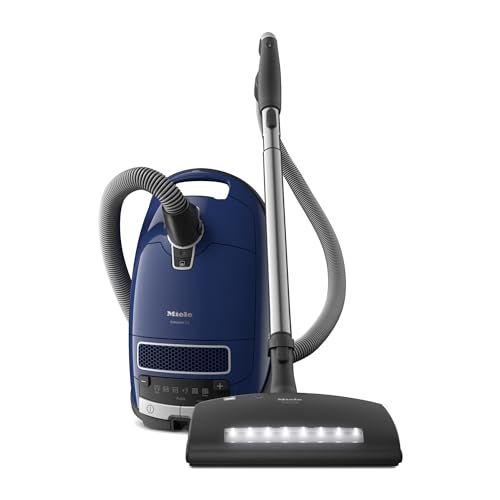
Miele Complete C3 Marin — Best Premium
The Marin is the flagship expression of the same idea: the C3 platform at its fullest, with an electrobrush floorhead for carpets and hard-floor capability for the tile, plus the range’s most complete feature set. The motorised head matters if your home pairs its tile with real carpeted bedrooms or stairs, because it lets one machine clean both surfaces at full standard rather than asking the tile head to improvise on pile. On tile itself you will run the hard-floor settings and enjoy the same sealed, quiet, controllable performance as its siblings — the Marin’s premium is paid for versatility and refinement, not for a different kind of tile clean.
Strengths
- Electrobrush gives carpeted areas a flagship-standard clean alongside tile.
- The most complete C3 feature set, with top-tier filtration and quiet running.
- One machine for an entire mixed home, at the highest standard.
Trade-offs
- The highest tier on this page; tile-only homes pay for carpet power they will not use.
- Heavier and larger than the C1 and the Kenmores.
- Powered head needs its brushroll switched off or swapped for hard floors — a step to remember.
Buy the Marin when the home is genuinely mixed and the budget allows the flagship: a tiled ground floor, carpeted upper floor, rugs throughout. It is the machine that ends the two-vacuum era in such houses, and its tile performance, run correctly, loses nothing to its cheaper siblings — which is exactly what a flagship should prove.
Best for: mixed homes wanting one flagship machine / Not suited for: tile-only homes watching the budget
Check the current price on Amazon
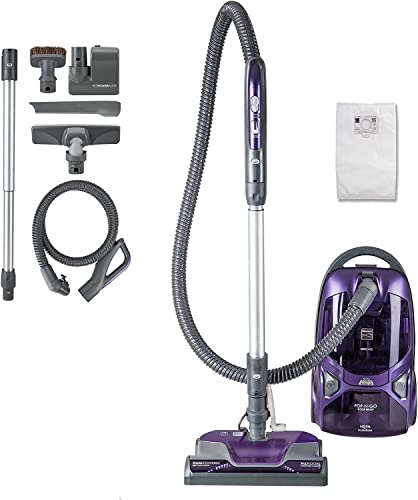
Kenmore 600 Series Bagged Canister Vacuum — Best Value Full-Size
Kenmore’s 600 Series is the value argument in full-size form: a bagged canister with two motors, a powered Pet PowerMate attachment, HEPA filtration and a retractable cord, covering tile, carpet and upholstery without the European flagship pricing. On tile, the machine’s strength is its suction and its tool set — the floor head handles the open areas and the attachments take the edges, corners and the grout-heavy zones around cookers and doors where tile dirt concentrates. For a family home with tiled kitchens and bathrooms and carpet elsewhere, it is the pragmatic one-box answer.
Strengths
- Two-motor power and HEPA filtration at a mid-market tier.
- Powered attachments extend it from tile to upholstery and stairs.
- Bagged hygiene and a retractable cord keep ownership tidy.
Trade-offs
- Fit and finish are workmanlike next to Miele’s.
- The powered head must be managed on delicate tiles; use the hard-floor setting or tool.
- Heavier in the hand than the 400 Series for smaller users.
The 600 Series is the machine for the household that wants capability per dollar and a brand with a long service tail. Tile owners should learn its floor head’s settings on day one — brushroll off or the bare-floor tool for the glazed surfaces — and from then on it will do the whole house without negotiation.
Best for: family homes wanting full capability at a mid tier / Not suited for: buyers prioritising the lightest possible machine
Check the current price on Amazon
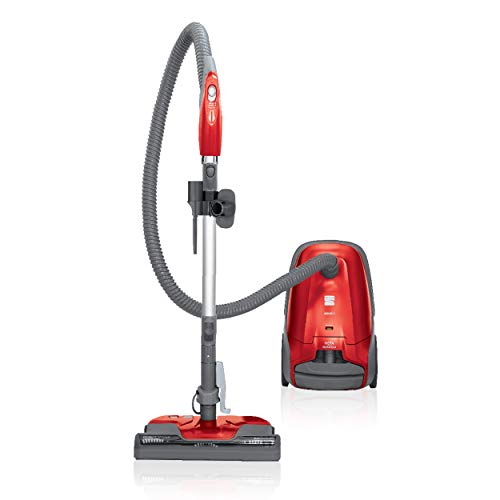
Kenmore 400 Series Bagged Canister Vacuum — Best Lightweight
The 400 Series shrinks the Kenmore formula for smaller tiled homes: a lightweight bagged canister with HEPA filtration, an extended telescoping wand, a retractable cord and four cleaning tools. The telescoping wand deserves its mention, because tile cleaning is edge cleaning — along skirting boards, under kitchen plinths, around bathroom fittings — and reach is what turns a floor vacuum into a whole-room tool. In a tiled flat or a compact house, this is the machine that gets stored in the cupboard that actually exists, and a vacuum that is easy to fetch is a vacuum that gets used.
Strengths
- Lightweight body suits flats, smaller homes and users who dislike heavy machines.
- HEPA filtration and bagged hygiene at an accessible tier.
- Telescoping wand and four tools cover edges, corners and above-floor work.
Trade-offs
- Less outright power than the 600 Series for big, gritty jobs.
- Smaller bags fill faster in larger homes.
- Not the choice for extensive deep carpet.
Tiled bathrooms and kitchens in flats are exactly the floors that suffer most from skipped vacuuming, because grit on tile is both visible and, underfoot, abrasive to the glaze over time. A light machine that comes out for five minutes after cooking protects the floor as much as it cleans it — and that habit is the 400 Series’ real selling point.
Best for: flats and smaller tiled homes / Not suited for: large homes with heavy debris loads
Check the current price on Amazon
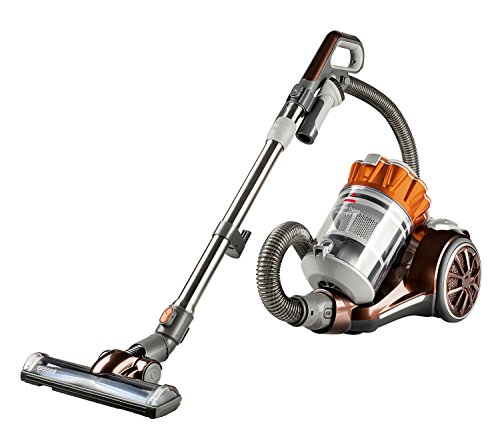
Bissell Hard Floor Expert Multi-Cyclonic Canister Vacuum, 1547 — Best Bagless for Tile
Some households will not buy bags, and for them Bissell’s Hard Floor Expert is the honest tile option: a bagless, multi-cyclonic canister designed around hard floors, with a hard-floor tool made to sweep and suction smooth surfaces without scattering. The cyclonic system keeps suction steadier as the bin fills than single-cyclone designs, and the bin empties without the recurring purchase bag-averse buyers object to. It asks for the usual bagless discipline in return — filters washed or replaced on schedule, the bin emptied outdoors if fine dust bothers you.
Strengths
- Bagless ownership with no recurring bag purchases.
- Hard-floor-focused design and tool suit tile directly.
- Multi-cyclonic separation keeps suction consistent as it fills.
Trade-offs
- Emptying fine tile dust from a bin is less hygienic than a sealed bag.
- Filter maintenance is on the owner, and neglected filters cost suction.
- Build and refinement sit below the Miele and Kenmore picks.
As the tile specialist among bagless canisters, the Hard Floor Expert earns its place for the buyer whose mind is made up on bags. Run its hard-floor tool slowly along grout lines, keep its filters honest, and it will keep smooth floors genuinely clean without a bag in sight.
Best for: bag-averse buyers with mostly hard floors / Not suited for: allergy-conscious owners who prefer sealed bag disposal
Check the current price on Amazon
Comparison Table
| Pick | Badge | Key spec | Best for |
|---|---|---|---|
| Miele Classic C1 Pure Suction | Best Overall | Pure suction, combination floor head | Tile-dominant homes |
| Miele Complete C3 Calima | Best for Mixed Floors | Turbobrush for rugs, C3 platform | Tile plus real rugs |
| Miele Complete C3 Marin | Best Premium | Electrobrush head, flagship C3 | Mixed homes, one machine |
| Kenmore 600 Series | Best Value Full-Size | 2-motor, HEPA, powered attachments | Family homes |
| Kenmore 400 Series | Best Lightweight | Light bagged canister, telescoping wand | Flats and small homes |
| Bissell Hard Floor Expert 1547 | Best Bagless for Tile | Multi-cyclonic, hard-floor tool | Bag-free ownership |
How to Choose a Canister Vacuum for Tiled Floors
Start at the floor head, because on tile the head is the vacuum. You want a hard-floor or combination head whose underside carries soft bristles or a felt-like glide, whose body seals close to the floor, and which has no fixed, aggressive brushroll. Bristles matter doubly on tile: they sweep the grout lines — recessed channels that a flat suction slot bridges over — and they keep grit moving toward the suction instead of letting it skate ahead. If a machine’s only head is a powered carpet head, check whether its brushroll switches off and whether a hard-floor tool is included or available; the Kenmore and Miele ranges both answer this properly, which is one reason they dominate this list.
Suction control is the second tile-specific feature. Full power is right for open floors and grout work, but you will want to dial down for bath mats, light rugs and curtains, and dial up in short bursts for the litter tray corner and the doorway grit trap. The Miele dial design is the benchmark here, but any honest variable control beats a single-speed machine. Third, consider filtration as a system: tile dust is fine, and a sealed HEPA path — where the air cannot leak around the filter — keeps that dust in the bag or bin rather than redistributing it across the room you just cleaned. Bagged systems from Miele and Kenmore seal the disposal step too, which is why they are recommended for dust-sensitive households; the Bissell is the considered exception for committed bagless buyers.
Finally, size the machine to the home and the human. Large tiled homes justify the C3 and 600 Series capacity; flats and smaller users are better served by the C1 and 400 Series, whose lighter bodies and smaller bags match the actual debris volume of hard floors. Check cord length and cleaning radius against your largest room, because a canister that must be re-plugged three times per floor teaches its owner to vacuum less often. And confirm the consumables — bags, filters, belts — are stocked by multiple sellers in your country. A canister is a ten-year relationship; the supply chain is part of the product.
How to Vacuum Tiled Floors Properly
Technique matters more on tile than on carpet, because the dirt is visible and the grout lines hide it. Work the room in overlapping lanes at a slow walking pace, and then make a second pass along the grout-dominant zones — in front of the cooker, around the bathroom fittings, at exterior doors — travelling along the grout lines rather than across them, so the head’s bristles sweep the channels lengthwise. Slow down at edges: the skirting-board line is where tile floors keep their grit, and the crevice tool on the wand earns its keep there weekly, not monthly.
Sequence the rest of the room around the floor. Dust and wipe surfaces first, so what falls lands before you vacuum, not after. Move light furniture rather than vacuuming around it — canisters make this easy, because the wand reaches under sofas and cabinets that an upright cannot approach. Empty or change the bag before it is packed full, since suction falls as bags fill, and check the floor head’s bristles monthly for the hair and thread that wrap them; a head with clogged bristles is a head that has stopped sweeping your grout. In kitchens, vacuum before mopping, always — mopping an unvacuumed tile floor makes mud in the grout lines, and no mop fully retrieves it. Follow that order and tile floors stay bright in the channels, which is where their age otherwise shows first.
Grout, Glaze and What to Avoid
Tile is hard, but its surface and its grout are not invulnerable, and vacuuming technique should respect both. Never drag a powered brushroll in carpet mode across glazed or polished tile: the stiff bristles and the debris they trap can dull a glaze over time, and the head will scatter as much as it collects. Keep wheels and the canister body from grinding grit across the floor as you pull the machine — lift over thresholds rather than dragging through the grit that collects there. On textured or stone-effect tiles, whose surfaces hold dirt in their relief, the bristled hard-floor head matters even more, and a slower pass with full suction outperforms any amount of fast, light sweeping.
Grout itself benefits from vacuum-first care. Dry grit in grout lines is abrasive when mopped and darkens the lines when wetted into them; regular dry removal with the floor head and crevice tool is the single best grout-preservation habit a tile owner can adopt, ahead of any cleaning product. When a wet clean is needed, it then works on a floor whose lines are already clear, and the grout stays its original colour years longer. This is the unglamorous truth behind most “miracle” tile floors in real homes: they are vacuumed properly, often, with the right head.
Common Buying Mistakes
The commonest mistake is buying the vacuum for the carpet you wish you had — choosing a carpet-flagship canister whose powerhead is wrong for the tile that covers most of the home. Buy for your actual floor map. The second mistake is the opposite bargain error: a featherweight stick vacuum for a whole tiled house, emptied three times per clean, whose hard-floor head is a smooth slot that bridges the grout. Capacity and a bristled head are not luxuries on tile; they are the mechanism.
Third, buyers ignore the brushroll question entirely and discover, months in, that their machine’s head cannot be tamed for delicate glazed floors. Fourth, they forget consumables: a premium machine whose bags are stocked by one distant seller becomes an ornament during the month the order is delayed. Fifth, owners vacuum tile the way they vacuum carpet — fast, upright-style passes — and conclude the machine is weak, when the grout lines were simply never given a slow, lengthwise pass. The machines in this guide are all capable; the tile technique in this article is what unlocks them.
Final Recommendation
For most tiled homes, the Miele Classic C1 Pure Suction is the correct, durable answer — check the current price on Amazon — with the C3 Calima stepping in when real rugs join the floor plan and the C3 Marin when carpeted rooms deserve flagship treatment too. Kenmore’s 600 Series is the value full-size alternative and its 400 Series the light machine for flats, while the Bissell Hard Floor Expert covers the bagless requirement honestly. Choose by your floor map and your bag preference, then vacuum slowly, along the grout, and often.
For related floor care from the same programme, see Best Canister Vacuums For Hardwood Floors, Best Canister Vacuums For Pet Hair, Best Vacuums For Tiled Floors, Best Robot Vacuums For Tile and Best Steam Mops For Grout.
Canisters Versus Every Other Format on Tile
Since this guide argues for one format, fairness requires the comparison in the open. Uprights carry their weight in the head, which tires the arm on hard floors and makes edge work clumsy; their brushrolls, designed for carpet, are the tile owner’s recurring problem. They remain excellent carpet machines, and a carpeted home should own one — but on tile they are a compromise wearing a familiar shape. Stick vacuums win on convenience and lose on capacity and head design: their smooth hard-floor slots bridge grout lines, their bins fill within a large kitchen, and their batteries set a time limit on the big clean. As a between-cleans tool for a small tiled flat they are genuinely useful, and several households in this guide’s audience will sensibly own the Kenmore 400 for the deep work and a stick for the daily crumbs.
Robots patrol rather than clean: on tile they maintain a floor that is already in good order, and they are honest about it in their better models. Their grout-line performance is a light pass, their edges depend on side brushes, and they cannot do the stairs, the plinths or the tops of the skirting. Wet-dry shop vacuums, finally, out-suck everything here and out-noise everything too, with hard tools that treat a glazed floor roughly; they belong to workshops and renovation clean-ups, not to weekly kitchen duty. The canister’s claim is narrower and stronger than any of these: for a deliberate, thorough clean of tiled floors — grout, edges, under furniture and all — it is the format whose every design decision points the right way, which is why professionals who clean hard floors for a living reach for it.
Maintaining a Canister So Year Five Feels Like Year One
Canisters reward a small maintenance liturgy. Change bags before they are drum-tight — suction and filtration both depend on air moving through the bag, and a packed bag strangles both — and keep a genuine spare bag and filter in the cupboard so a Saturday clean is never postponed by a delivery. Check the floor head monthly: clear the bristle rows of hair and thread, confirm the glide pads or wheels turn freely, and rinse or replace the exhaust filter on the maker’s schedule. Hoses age at their cuffs; store the machine with the hose in a relaxed curve rather than a kink, and never lift the canister by the hose alone.
Once a year, give the machine the ten minutes it actually needs: wipe the bag chamber, check the cord’s full length for damage as it retracts, confirm every tool is present and uncracked, and run the machine at full power on a clean floor to hear its normal voice — changes in pitch and volume are the earliest diagnostics a vacuum offers, and owners who know the sound catch small problems while they are still small. Miele and Kenmore machines in particular repay this attention with extraordinary service lives; the graveyard of canisters is populated less by failed motors than by neglected consumables. Tile households have the easiest version of this discipline, because their debris is fine and dry — the machine that cleans the cleanest floors also lives the cleanest life.
Kitchens, Bathrooms and Entryways: A Room-by-Room Tile Brief
The kitchen is the tile floor’s hardest posting: cooking grit, flour that migrates everywhere, crumbs that shelter under plinths, and a daily rhythm that tracks debris in from every other room. It rewards the canister’s full kit — floor head for the open lanes, crevice tool for the plinth line and cooker edges, and suction wound up for the zone in front of the hob where grit concentrates. A quick pass after cooking, which the lighter picks in this guide make realistic, prevents the week’s accumulation that turns Saturday’s clean into an excavation. In kitchens with open shelving or a dining area, work from the far corner toward the door so the finished floor is never re-crossed with dirty shoes.
Bathrooms present the opposite problem: small areas, dense obstacles, and moisture. The canister body stays in the doorway while the wand and compact head work around the pedestal, the bath panel and the waste bin — the places dust and hair actually gather — and the crevice tool earns its keep along the bath’s floor seal, where a mop pushes debris rather than removing it. Vacuum bathrooms dry, before any wet cleaning, and give the floor head’s bristles a rinse-and-dry afterwards if the room was damp. Entryways, finally, are the grit frontier: a hard mat outside and in, and a twice-weekly canister pass with full suction along the traffic lane, protects every other tiled room in the house, because most of their dirt is imported through this one.
What About Wet Messes and Steam?
Canisters in this guide are dry machines, and tile life includes wet messes, so the division of labour deserves stating. Spills, muddy paw prints dried to a film, and the bathroom’s general humidity belong to mopping and, where a household owns one, steam cleaning — after the dry vacuum has removed the grit that wet methods would otherwise grind into grout. Attempting wet pickup with a dry canister damages bags, filters and motors, and voids the maker’s intentions if not its warranty. The correct sequence on tile is always dry first, wet second: vacuum the room thoroughly, then mop or steam a surface whose abrasive load has already left in the vacuum’s bag.
Households tempted by two-in-one wet-dry promises should weigh them against this guide’s tile priorities: the bristled hard-floor head, the sealed filtration, the grout-line technique. Hybrid machines compromise somewhere, and it is usually in exactly those dry-cleaning refinements. The canister plus a decent mop — an unglamorous pairing — remains the tile floor’s complete system, and the machines above are chosen to be the best possible dry half of it.
Tile Types: Ceramic, Porcelain, Stone and Vinyl-Look Tiles
Not all tile is the same surface, and the canister technique adapts at the margins. Glazed ceramic and porcelain — the majority of home tile — are the straightforward case: bristled hard-floor head, full suction for grout work, brushroll never. Their glaze is hard but not immune to years of grit being ground under wheels and shoes, which is the quiet argument for vacuuming before the floor is walked on in outdoor shoes. Polished porcelain shows dust and footprints fastest and rewards the quick, frequent pass that the lighter machines in this guide make painless.
Natural stone — marble, travertine, slate — asks for gentleness: softer bristles, no beater bars ever, and care that the canister’s own wheels and body do not drag grit across a surface that scratches more readily than glaze. The Miele C1’s pure-suction restraint is the natural fit here, at moderate suction, with the head lifted over thresholds rather than bumped across them. Textured and stone-effect porcelain holds dirt in its relief and wants the slowest passes of all, with the bristles given time to sweep the texture’s valleys; suction alone, hurried, cleans only the high points and leaves the pattern looking tired. Luxury vinyl tile and sheet, often mistaken for real tile, should be vacuumed exactly like tile — soft head, no brushroll, whose bristles can dull its wear layer — and it benefits most of all from grit removal, since embedded grit under shoes is its principal enemy. Across every variant, the principle holds: the dry, bristled, unhurried vacuum pass is the foundation, and the six machines above are the ones built to deliver it.
Accessories That Earn Their Place on Tile
A canister’s tool kit decides its edge game, and four accessories separate tile households that struggle from those that glide. The crevice tool is the first: skirting lines, plinth recesses, the channel behind the bathroom door — the places tile dirt retires to — are all crevice work, and a long, slim tool on a telescoping wand does them standing up. A soft dusting brush is the second, for the tops of skirting boards, window sills and the tiled splashback ledges whose dust otherwise rains onto the clean floor within the hour. The third is an upholstery tool, because tiled kitchens and halls are usually furnished rooms, and the chair seats and bench cushions above a tile floor hold the crumbs that become the floor’s next load. The fourth is not a tool at all but a habit of storage: keep the two or three tile-relevant tools on the machine or in its caddy, as the C3 platform does, rather than in a box in another room — accessories that require a journey get used monthly, and accessories at hand get used every clean.
Replacement bags and filters, bought genuine and in modest bulk, complete the accessory picture. Tile households consume bags slowly, which tempts owners to run them far past full; resist, and instead enjoy the category’s genuine economy — a bag changed on time costs little, protects the motor and filtration, and keeps the machine’s suction at the level the grout lines were promised. The accessory budget for a tile canister, honestly kept, is the smallest in floor care; the returns, in edges actually cleaned, are the largest.
Storing a Canister in a Small Home
Tile-heavy homes are often flats and compact houses, where the vacuum’s cupboard is contested territory, and storage deserves a buying thought. The canister’s advantage is that it disassembles: wand and head detach or park on the body, the hose coils, and the whole machine stands in a tall, narrow footprint in a utility cupboard or hall closet. The C1 and the Kenmore 400 are the natural picks where that cupboard is smallest. Store the machine with its most-used tools aboard and a spare bag in the same space, and the distance between deciding to vacuum and vacuuming collapses to under a minute — the practical secret behind floors that actually get cleaned three times a week. A machine that lives assembled, reachable and ready is worth more to a tiled home than a theoretically stronger one stored in pieces in the loft.
The Five-Minute Weekday Pass
The deepest cleaning insight for tile is that frequency beats intensity. A five-minute weekday pass with the canister — kitchen lanes, entryway, the bathroom’s dry floor before the evening — removes grit while it is still a surface event, before shoes grind it toward the glaze and moisture carries it into the grout. The full, slow, edge-to-edge clean then becomes a weekly pleasure rather than a rescue operation, and the grout lines, denied their weekly ration of embedded dirt, hold their colour across years. This rhythm is why the lighter machines in this guide matter as much as the flagships: the vacuum that comes out in thirty seconds is the vacuum that runs the five-minute pass, and the five-minute pass is what actually keeps tiled floors young. Buy the machine you will fetch without thinking, and fetch it often.
Frequently Asked Questions
Are canister vacuums good on stairs in a tiled home?
Yes — the body rests on a step or the floor below while the wand and a compact tool clean each tread, which is safer and more thorough than balancing an upright. The Kenmore models’ attachments and the Miele tools both handle tiled stairs well at moderate suction.
Why is a canister better than an upright for tiled floors?
Because the cleaning head stays light and precise while the motor’s weight rests on the floor behind you. A canister’s hard-floor head glides on soft bristles that sweep grout lines, the long hose reaches edges and under furniture easily, and there is no heavy upright body or aggressive brushroll skating grit across the glaze.
Should the brushroll be on or off on tile?
Off — or use a dedicated hard-floor head. A spinning brushroll on smooth tile scatters grit, flicks debris ahead of the machine and can dull glazed surfaces over time. Pure suction through a bristled hard-floor head collects more on tile and treats the floor better, which is why the Miele C1 Pure Suction tops this list.
How do I get dirt out of grout lines when vacuuming?
Slow down and travel along the grout lines, not across them, using a hard-floor head with bristles that sweep the channels. Full suction, overlapping lanes, and a crevice-tool pass along skirting boards and around fittings once a week will keep grout lines visibly cleaner than any fast pass — and vacuum before mopping, never after.
Bagged or bagless for tile dust?
Bagged machines from Miele and Kenmore seal fine dust away at disposal, which suits dust-sensitive households and keeps suction consistent. Bagless models like the Bissell Hard Floor Expert avoid recurring bag costs but ask you to empty fine dust from a bin and maintain washable filters. Both clean tile well; the choice is about hygiene preference and maintenance habits.
Can one canister handle tile and carpet?
Yes, if it carries the right heads. The Miele C3 Calima adds a turbobrush for low- and medium-pile rugs, the C3 Marin adds a full electrobrush for carpeted rooms, and Kenmore’s 600 Series includes powered attachments. Match the head set to your floor map — tile head for tile, brush head for carpet — rather than asking one head to do both jobs.
Does a canister vacuum scratch tile floors?
Not when it is used as this guide directs: a hard-floor head gliding on soft bristles, the brushroll off, and the body lifted rather than dragged through grit. Scratches on tile come overwhelmingly from grit ground under shoes and wheels, which regular vacuuming removes — the canister is the protection, not the risk.
How often should tiled floors be vacuumed?
Kitchens and entrances benefit from a quick pass two or three times a week, because grit on tile is abrasive underfoot and migrates into grout lines. Bathrooms and remaining rooms weekly is usually enough. A light canister you can fetch in seconds — the Kenmore 400’s whole argument — makes that frequency realistic.


