Disclosure: airfryerkitchensupply.com is reader-supported. When you buy through links on our site, we may earn an affiliate commission at no extra cost to you.
Where to buy
Rug cleaning is where canister vacuums earn their keep: the floorhead does the work, and the right floorhead for rugs is a powered electrobrush that beats and lifts pile, or a turbobrush for low and medium pile. Every pick below is a complete canister vacuum confirmed cache, and each review states plainly what its listing confirms about its floorhead — because a canister with the wrong head is just an expensive hard-floor machine. Filtration language is kept exact: where a listing says HEPA filter, this guide says HEPA filter, and nothing stronger.
Miele Complete C3 Marin (Best Overall for Rugs): check price on Amazon.
Miele Complete C3 Calima (Best for Low-to-Medium Pile): check price on Amazon.
Kenmore 600 Series Bagged Canister (Pet PowerMate) (Best for Pet Hair on Rugs): check price on Amazon.
Eureka Bagged Canister 3670H (Best Budget): check price on Amazon.
Bissell Zing Bagged Canister 2154A (Best Lightweight): check price on Amazon.
Miele Guard L1 Allergy Bagged Canister (Best for Allergy-Conscious Homes): check price on Amazon.
Best Canister Vacuum for Rugs: The Floorhead Decides Everything
The best canister vacuum for rugs is decided at floor level, not at the motor. Suction numbers matter, but rugs trap dirt deep in the pile where suction alone cannot reach; a rotating brushroll — powered by its own motor in an electrobrush, or driven by airflow in a turbobrush — agitates the pile so the suction can lift what shaking loose reveals. That is why this guide is organized by floorhead: the Miele Marin’s electrobrush for serious carpet and rug work, the Miele Calima’s turbobrush for low-to-medium pile, and the Kenmore 600’s powered Pet PowerMate for homes where pet hair is woven into every rug they own.
Bagged canisters dominate this guide, and that is deliberate for rug owners. Bags keep fine rug dust — the grit that works down to the backing and abrades fibers — sealed at disposal, and bagged machines hold suction steadier as they fill. The trade-offs are the ongoing cost of bags and a little more storage bulk, both weighed openly in each review. The two value picks, from Eureka and Bissell, prove the category’s floor: simple, light, bagged canisters that handle area rugs and hard floors without pretending to be deep-carpet specialists.
A note on scope: every pick here is a full-size household canister. The small 12-volt automotive canisters that share shelf space in search results were excluded — they are car accessories, not rug machines, and including them would waste a slot a real rug vacuum deserves.
Key Takeaways
- For rugs, the floorhead matters more than the motor: electrobrush for deep pile, turbobrush for low-to-medium pile.
- Bagged canisters hold suction steadier and seal fine rug dust at disposal.
- The Kenmore 600’s listing states HEPA filter — reported exactly as written, no stronger claim.
- Value picks from Eureka and Bissell suit area rugs and mixed floors, not wall-to-wall deep carpet.
- Match the head to your tallest rug pile; a head that seals on deep pile stalls and strains.
In this guide
Quick Picks
Miele Complete C3 Marin — Best Overall for Rugs. The electrobrush is the point: a motor-driven brushroll that agitates rug pile so suction can actually empty it. — Check on Amazon
Miele Complete C3 Calima — Best for Low-to-Medium Pile. An air-driven turbobrush matched honestly to low and medium pile — lighter to push, and exactly specified by its listing. — Check on Amazon
Kenmore 600 Series Bagged Canister (Pet PowerMate) — Best for Pet Hair on Rugs. A two-motor bagged canister with a powered pet head and HEPA Filter stated in its listing — built for hairy rugs. — Check on Amazon
Eureka Bagged Canister 3670H — Best Budget. A light, simple bagged canister with a blower function — the budget route to area-rug and hard-floor cleaning. — Check on Amazon
Bissell Zing Bagged Canister 2154A — Best Lightweight. Bissell’s light bagged canister — the grab-and-go option for small homes, stairs, and quick rug passes. — Check on Amazon
Miele Guard L1 Allergy Bagged Canister — Best for Allergy-Conscious Homes. Miele’s allergy-positioned bagged canister with HEPA Filter stated in the listing — for dust-sensitive rug owners. — Check on Amazon
How These Picks Were Chosen
Candidates had to be complete household canister vacuums whose listings confirm their configuration. We prioritized powered-brush floorheads for genuine rug agitation, then turbobrush models for low-to-medium pile, then simple bagged canisters for area-rug households. Filtration claims were recorded exactly as listed — HEPA filter where stated, nothing where not stated — and automotive 12-volt canisters were excluded as off-intent.
Brand duplication was controlled: the two Miele picks are different Complete C3 models with different floorheads, which is the single most important variable in this category, and the Kenmore appears once in its Pet PowerMate configuration. Each review names the rug types its pick genuinely suits — deep pile, low pile, area rugs over hard floors — because the costliest mistake in this category is buying a hard-floor canister for carpeted rooms or a delicate-suction machine for shag.
The 6 Best Canister Vacuums for Rugs
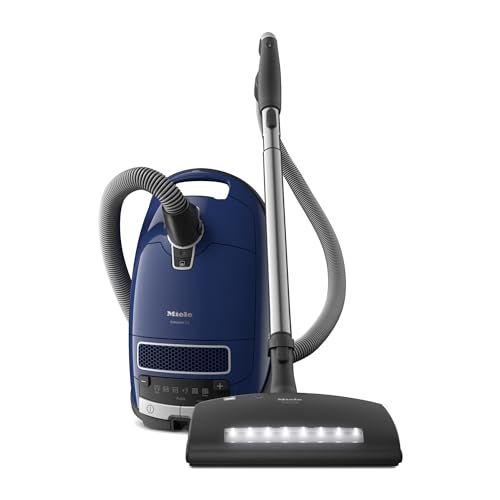
Miele Complete C3 Marin — Best Overall for Rugs
The Marin pairs Miele’s bagged Complete C3 canister with an electrobrush floorhead, and its listing states suitability for carpets and hard floors — the exact combination rug owners need. A powered brushroll matters on anything beyond the flattest rug: it works grit loose from the pile base, lifts embedded hair, and lets the canister’s suction finish the job in fewer passes. It suits homes with a mix of real rugs and hard floors, especially medium-pile area rugs that defeat suction-only heads. It is a premium-tier machine, and households with only flatweave rugs do not need its brush power.
Strengths
- Powered electrobrush agitates rug pile properly
- Bagged system seals fine dust at disposal
- One machine covers carpets and hard floors per its listing
Trade-offs
- Premium tier — overkill for flatweave-only homes
- Bags are an ongoing running cost
- Electrobrush heads are heavier to push than air-driven heads
Key specs (from the verified listing title):
- Bagged canister vacuum
- Electrobrush floorhead — powered brushroll
- Listing states suitable for carpets and hard floors
- Marine Blue
The honest case for the Marin is time. On a medium-pile rug, a suction-only head needs slow, repeated passes and still leaves the base grit that shortens rug life; the electrobrush gets the same rug genuinely clean in a normal cleaning rhythm. That difference compounds weekly across years of rug ownership. The bagged design supports it — suction stays consistent through the bag’s life, so the last room cleans like the first. If your rugs are valuable enough to protect, this is the machine in the guide built to protect them.
Best for: medium-pile rugs and mixed carpet and hard-floor homes / Not suited for: flatweave-only homes on a tight budget
Check the current price on Amazon

Miele Complete C3 Calima — Best for Low-to-Medium Pile
The Calima’s listing does something refreshingly precise: it matches its turbobrush floorhead to low-medium pile carpet and hard floors. A turbobrush spins its brushroll from the vacuum’s own airflow, which makes the head lighter and simpler than a powered electrobrush, at the cost of agitation strength on deep pile. For the enormous installed base of low and medium-pile rugs — most modern area rugs live in this range — that trade is well judged. It suits rug owners who found powered heads heavy, and homes where rugs top hard floors throughout. Deep shag owners should take the Marin instead.
Strengths
- Floorhead honestly matched to low-medium pile in the listing
- Lighter head than powered alternatives
- Bagged Miele platform with consistent suction
Trade-offs
- Air-driven brush can slow on thicker pile
- Not the tool for deep or shag rugs
- Premium tier with ongoing bag costs
Key specs (from the verified listing title):
- Bagged canister vacuum
- Turbobrush floorhead — air-driven brushroll
- Listing states suitable for low-medium pile carpet and hard floors
- Curry Yellow
Turbobrushes get dismissed as the lesser option, which misses how most rugs actually live. On low and medium pile, an air-driven brush agitates fully — the pile is not deep enough to bog it down — and the lighter head makes a whole-house clean noticeably less tiring. The Calima is the guide’s pick for the realistic middle: real rugs, real agitation, no overbuying. Check your tallest rug before ordering; if a fingertip disappears into the pile, you are in electrobrush territory, and this guide has a pick for that too.
Best for: low and medium-pile rugs over hard floors / Not suited for: deep-pile or shag rugs
Check the current price on Amazon
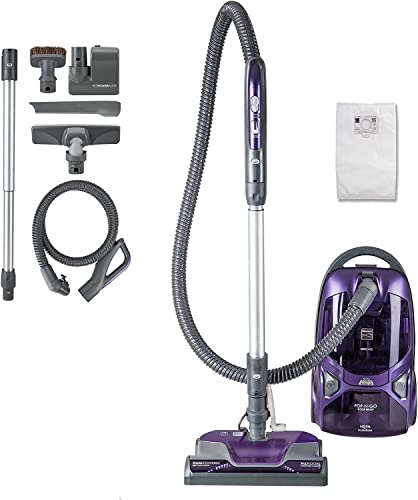
Kenmore 600 Series Bagged Canister (Pet PowerMate) — Best for Pet Hair on Rugs
Kenmore’s 600 Series listing reads like a checklist written by a pet owner: a Pet PowerMate powered head for working hair out of carpet, two-motor power suction, a HEPA Filter — reported here exactly as the listing words it — a retractable cord, and positioning for carpet, hard floors, and pet hair. Powered pet heads earn their place on rugs because hair wraps and mats into pile in a way loose dirt does not, and agitation is what frees it. It suits multi-pet homes whose rugs need weekly rescue. Buyers without pets are paying for capability they will rarely use, and the Miele picks are quieter long-term propositions.
Strengths
- Powered Pet PowerMate head for embedded hair
- HEPA Filter stated in the listing
- Retractable cord and bagged convenience
Trade-offs
- Pet-focused specification is wasted on pet-free homes
- Bagged running costs apply
- Heavier-duty build than occasional cleaners need
Key specs (from the verified listing title):
- Bagged canister, Pet Friendly positioning
- Pet PowerMate powered head; 2-motor power suction per listing
- HEPA Filter — as stated in the listing
- Retractable cord; for carpet, hard floor, and pet hair
Pet hair changes rug cleaning from a chore into a system problem: hair at the pile base holds dander and grit with it, so a machine that only skims the surface loses ground every week. The 600’s combination — powered agitation, strong stated suction, bagged capture, and listed HEPA filtration — attacks the whole chain. That is why it anchors the pet slot despite strong general picks around it. Keep the brushroll cleared of wrapped hair and the bags changed on schedule, and it holds that system together; neglect either, and no specification can save you.
Best for: multi-pet homes with carpeted rooms and rugs / Not suited for: pet-free homes wanting the simplest machine
Check the current price on Amazon

Eureka Bagged Canister 3670H — Best Budget
The Eureka 3670H is the category’s honest cheap seat: a lightweight bagged canister whose listing states power suction and a blower function, positioned across hardwood, carpet, pet, and car duties, and shipped with two bags. It has no powered brush head, so its rug work is suction cleaning of area rugs and low pile — genuinely useful, and genuinely limited, and this review keeps both halves of that sentence. It suits apartments, first homes, and anyone whose rugs sit on hard floors and need regular surface cleaning rather than deep extraction. Wall-to-wall carpet households should step up to a brush-head pick.
Strengths
- Lightweight and easy to carry between floors
- Blower function adds garage and porch utility
- Two bags included to start
Trade-offs
- No powered brushroll — surface rug cleaning only
- Not suited to deep-pile or wall-to-wall carpet
- Basic specification throughout
Key specs (from the verified listing title):
- Bagged canister vacuum, ships with 2 bags
- Listing states power suction and blower function
- Lightweight
- Positioned for hardwood floor, carpet, pet, and car use
Budget canisters fail buyers when they are oversold, not when they are simple. The 3670H cleans area rugs the way most area rugs actually need cleaning most weeks: a thorough suction pass that lifts surface dirt before it grinds in, on a machine light enough that you will actually fetch it. Its blower earns surprising loyalty for clearing porches and car footwells. Buy it with clear eyes — it is a maintenance tool, not a deep cleaner — and it is one of the best-value appliances in this guide. Expecting Marin performance from it is the only way to be disappointed.
Best for: apartments and area rugs on hard floors / Not suited for: deep carpet or heavy pet hair
Check the current price on Amazon
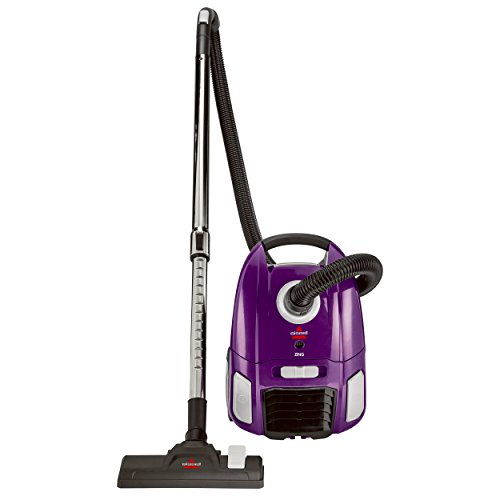
Bissell Zing Bagged Canister 2154A — Best Lightweight
The Zing’s listing is the shortest in this guide — lightweight, bagged, canister — and that brevity is its identity. This is the canister for small homes, upstairs landings, and quick passes over entry rugs, where a full-size machine’s setup time is the real obstacle to cleaning at all. Like the Eureka, it is a suction cleaner for area rugs and hard floors rather than a powered-brush deep cleaner, and it is placed here for the jobs where lightness decides whether the job happens. Larger carpeted homes will outgrow it; small-space households may never need more.
Strengths
- Very light — easy on stairs and in small homes
- Bagged capture keeps disposal tidy
- Simple specification, simple ownership
Trade-offs
- No powered brush head stated
- Small-home scale; not a whole-house deep cleaner
- Listing confirms few details beyond the basics
Key specs (from the verified listing title):
- Lightweight bagged canister vacuum
- Model 2154A
- Purple
Cleaning frequency beats cleaning power for most rugs: a light machine used twice a week keeps grit out of pile better than a powerful machine used monthly, because grit damage happens between cleans. The Zing is built for frequency. It lives in a closet corner, comes out without a sigh, and handles the traffic lanes where rugs actually wear. Pair it with a periodic deeper clean — a borrowed or rented deep clean, or a future upgrade — and small homes get a complete rug-care system for very little money or storage.
Best for: small homes, stairs, and frequent quick passes / Not suited for: large carpeted homes
Check the current price on Amazon

Miele Guard L1 Allergy Bagged Canister — Best for Allergy-Conscious Homes
The Guard L1 is Miele’s allergy-positioned bagged canister, and its listing states a HEPA Filter — the words are reported exactly as listed, and this guide makes no stronger filtration claim than the listing makes. For households where rug cleaning stirs up symptoms, the combination that matters is sealed bagged capture plus listed HEPA filtration, so the dust a rug releases does not return to the room air. One honest limit: the listing available to this guide does not specify the floorhead, so buyers with deep-pile rugs should confirm the head configuration before ordering, and low-pile and hard-floor homes can proceed with the most confidence.
Strengths
- HEPA Filter stated in the listing
- Bagged capture suits dust-sensitive homes
- Miele canister platform
Trade-offs
- Floorhead not specified in the available listing — verify for deep pile
- Premium tier
- Bags are a running cost
Key specs (from the verified listing title):
- Bagged canister vacuum
- Listing states HEPA Filter
- Allergy positioning in the model name and listing
Allergy-aware rug care is about what happens to the dust after the brush lifts it. Rugs are reservoirs: every step presses fine particles deeper, and every vacuum pass aerosolizes some of them unless the machine captures and seals them. A bagged canister with listed HEPA filtration is the architecture designed for exactly that problem, which is why this pick exists alongside the brush-focused picks. If your household’s issue is symptoms rather than pile depth, filtration is your headline feature — and where a listing’s floorhead is unspecified, a single pre-purchase check protects the whole decision.
Best for: dust-sensitive households with low-pile rugs and hard floors / Not suited for: deep-pile rugs without a floorhead check first
Check the current price on Amazon
Comparison Table
| Pick | Badge | Key spec | Best for |
|---|---|---|---|
| Miele Complete C3 Marin | Best Overall for Rugs | Electrobrush floorhead, bagged | medium-pile rugs and mixed carpet and hard-floor homes |
| Miele Complete C3 Calima | Best for Low-to-Medium Pile | Turbobrush, low-medium pile | low and medium-pile rugs over hard floors |
| Kenmore 600 Series Bagged Canister (Pet PowerMate) | Best for Pet Hair on Rugs | Pet PowerMate, HEPA Filter (as listed) | multi-pet homes with carpeted rooms and rugs |
| Eureka Bagged Canister 3670H | Best Budget | Lightweight bagged, blower function | apartments and area rugs on hard floors |
| Bissell Zing Bagged Canister 2154A | Best Lightweight | Lightweight bagged canister | small homes, stairs, and frequent quick passes |
| Miele Guard L1 Allergy Bagged Canister | Best for Allergy-Conscious Homes | HEPA Filter (as listed), bagged | dust-sensitive households with low-pile rugs and hard floors |
How to Choose the Best Canister Vacuum for Rugs
Start at the floorhead and work backwards. Deep and medium-deep pile needs a powered electrobrush; low-to-medium pile is well served by an air-driven turbobrush; flatweave and hard floors need only suction and a gentle head. The costliest error in this category is a mismatch in either direction — a suction head skating over deep pile, or a stiff powered brush worrying a delicate flatweave. The picks above are labeled by the pile they genuinely suit, so begin by honestly grading your thickest rug.
Then decide bagged versus bagless with rug dust in mind. Rugs shed fine grit and fiber dust that you do not want puffing back into the room at emptying time; bags seal that disposal, and bagged machines hold suction steadier as they fill. Bagless saves the running cost and suits hard-floor homes better than rug homes. Every pick in this guide is bagged because the keyword is rugs — the reasoning is the category, not a brand preference.
Finally, read filtration language with a lawyer’s eye. A listing that says HEPA filter is stating a filter type; it is not promising a sealed system or a medical outcome, and this guide reports the words exactly as the Kenmore and Miele Guard listings state them. If allergies drive your purchase, prioritize the combination — bagged capture plus listed HEPA filtration — and maintain both on schedule, because a clogged filter in any machine is just decoration.
Rug Types and the Heads They Need
Low-pile and flatweave rugs — most modern synthetics, kilims, and runners — clean beautifully with suction and light agitation; a turbobrush or a hard-floor head with retractable bristles covers them. Medium pile, the classic wool and wool-blend territory, is where powered agitation starts paying for itself, because dirt migrates to the pile base where suction alone leaves it. Deep pile and shag are electrobrush territory, with the brush height set so the head floats rather than seals.
Delicate rugs change the rules entirely. Antique, hand-knotted, and silk-blend rugs should be cleaned with suction only, brush off or brush removed, and many makers of fine rugs recommend against beater bars altogether. If a rug is valuable, its maker’s care guidance outranks any vacuum listing, including the ones in this guide. Everyday rugs are tougher than their owners fear; heirloom rugs are more fragile than their owners hope — grade yours honestly before choosing a head.
Keeping Suction Strong: Bags, Filters, and Brushrolls
A canister’s cleaning power on Friday depends on maintenance done on Sunday. Change bags when they feel two-thirds full to the touch, not when suction visibly dies — by then you have been under-cleaning for weeks. Check filters on the maker’s schedule and replace rather than wash anything the maker does not call washable; a HEPA filter that has been rinsed against instructions is no longer the filter its listing described.
Brushrolls need their own minute of care: cut wrapped hair and thread from powered and turbo heads monthly, because a bound brushroll agitates nothing and strains the motor that drives it. On turbobrushes, clear the air path that spins the brush — a clogged turbo head fails silently, gliding over rugs while doing suction-only work. These habits are the difference between the machine you bought and the machine it becomes in year two.
Suction, Airflow, and Agitation: The Three Forces on a Rug
Three distinct forces clean a rug, and confusing them is the root of most bad vacuum purchases. Suction is pressure difference — it lifts loose material once that material is free. Airflow is volume in motion — it carries freed material through the head and hose before it can resettle. Agitation is mechanical disturbance — the brushroll’s work of shaking the pile so that suction and airflow have something to collect. A vacuum can be mighty in one force and feeble in another, which is why motor wattage and suction claims alone cannot rank rug machines, and why this guide ranks floorheads first.
On hard floors, suction and airflow do nearly all the work, because dirt rests on a surface. In rug pile, dirt rests inside a structure — worked down by foot traffic, held by fiber friction — and agitation becomes the decisive force. That is the entire engineering case for the Marin’s powered electrobrush and the Calima’s turbobrush, and the entire explanation of why the guide’s suction-only value picks are positioned honestly as surface and low-pile cleaners. The forces also explain technique: slow passes give agitation time to work, and a second pass at right angles attacks the pile from the direction the first pass laid it down.
Filtration is the fourth act, after the cleaning is done: everything the three forces liberated must stay captured. Bagged systems capture at disposal as well as during cleaning, and listed HEPA filtration — stated on the Kenmore 600 and the Miele Guard L1, and reported here in exactly those words — addresses the finest fraction. A rug vacuum is therefore a chain, and this guide’s picks are chains with no deliberately weak links for the rug types each one claims.
Canister Technique: Stairs, Edges, and Under Furniture
The canister format’s quiet superpower is that the heavy part parks while the working part travels, and rug owners should exploit it fully. On stairs, set the canister on a step below you and work upward with the hose and a compact head; carpeted stairs collect shocking quantities of grit at their nosing edges, and they are where uprights are at their most awkward and dangerous. The lightweight picks in this guide — the Eureka and the Bissell Zing — exist partly for this terrain, where a full-size machine’s virtues become vices.
Edges are the second neglected territory. Rug dirt migrates outward under traffic and accumulates along baseboards and under the rug’s own bound edge, exactly where a floorhead’s width prevents it from reaching. A monthly crevice-tool pass around every rug’s perimeter removes the reservoir that re-seeds the center. Under furniture, the canister’s low head profile reaches where upright bodies cannot; the dust layer under a sofa is the same dust that traffic would otherwise work into the rug’s traffic lanes over the following month.
None of this technique costs money, which is why it belongs in a buying guide: the difference between two owners of the same machine is usually technique, and the difference compounds weekly. Buy the floorhead your pile needs, then work it slowly, in two directions, with attention to edges and stairs, and the machine you bought will perform like the machine you hoped for.
Above-Floor Rug Work: Furniture, Drapes, and the Dust Above the Pile
Rugs do not live at floor level alone, and a canister’s hose is the tool that connects floor care to the rest of the room. Upholstered furniture sheds the same dust and fiber that traffic works into rugs, and it sheds it downward — a sofa cleaned monthly deposits a fraction of what an uncleaned sofa rains onto the rug beneath it over a season. The canister format, with its powered head parked and its hose free, is built for this above-floor circuit in a way uprights are not, and rug owners who add ten minutes of furniture and drape care to a rug session slow the rug’s own soiling rate noticeably.
Drapes and blinds near rugs deserve the same pass, at the gentlest suction the machine allows and with a soft brush tool. Dust reservoirs above a rug are still rug dirt in transit; removing them at the reservoir is cheaper, in effort and in rug wear, than extracting them from the pile later. This is the unglamorous arithmetic of housekeeping that professionals know and product listings never mention: rugs stay clean in proportion to how clean their surroundings are kept.
Pet households feel this arithmetic most strongly, which is why the Kenmore 600’s pet tooling matters beyond the rug itself. Hair on the sofa becomes hair in the rug on a schedule set by gravity and traffic. A canister that handles both territories in one session — floorhead for the pile, tools for the furniture — closes the loop. The guide’s picks were chosen for rugs, but the household that deploys them room-wide will find the rugs themselves need deep attention less often, which is the best outcome a rug vacuum can produce.
Buying for a Decade: Parts, Bags, and the Ownership Tail
A canister vacuum is a decade-scale appliance at the Miele end of this guide and a multi-year one everywhere else, and the ownership tail — bags, filters, belts, and brushrolls — deserves a buyer’s attention equal to the purchase. Bagged machines convert their running costs into predictability: a known bag, changed on the schedule this guide describes, at a cost that should be counted in the purchase decision rather than discovered after it. Households that resent per-bag costs should still choose bagged for rugs, for the capture reasons given earlier — but they should choose with the tail priced in, eyes open.
Parts availability separates the decade machines from the disposable ones. Brushrolls wear, belts stretch, filters expire, and a machine whose wear parts are obtainable in year seven is a machine still cleaning in year eight. The brands in this guide — Miele, Kenmore, Eureka, Bissell — all support their canister lines with consumables as a matter of course, which is part of why the guide is built from them. An unbranded bargain canister with unobtainable bags is not inexpensive; it is a short rental ending in a landfill.
Keep the tail documented: a note inside the closet door with bag type, filter type, and the dates of the last changes turns maintenance from memory into system. Rug care rewards exactly this temperament — the same household that logs its filter changes is the household whose rugs reach their second decade. The machine is the visible purchase; the tail is the actual product, and it is bought, or neglected, one small scheduled act at a time.
A Final Word on Matching Machine to Rug
Every recommendation in this guide reduces to a single matching exercise: the right floorhead, on the right rug, with the right maintenance behind it. The machines differ — powered brushes, turbobrushes, pet heads, filtration-first designs — because rugs and households differ, and the guide has tried to make those differences legible rather than to crown one machine for all floors. A buyer who can say, in one sentence, what their thickest rug is and what their household tracks into it already knows which pick is theirs; the reviews exist to confirm that sentence, not to replace it.
It is also worth saying plainly what this guide did not do. It did not invent suction figures, upgrade filtration wording, or promise that any machine suits every rug — the listings were read closely and quoted carefully, including where they were silent. That restraint is the product, in a sense: a buying guide for machines that will live in your home for a decade should be at least as durable as the machines. Choose by floorhead, maintain by calendar, and your rugs will repay the discipline in the only currency they have — years of pile that still looks like the day it was laid.
What to Do in the First Month With a New Canister
A new canister earns its keep in its first month, when habits form around it. Spend the first session on technique rather than coverage: one rug, two directions, slow passes, and a check afterward of what the bag collected — the grit quantity surprises most owners and recalibrates how they think about their floors. Note the machine’s sound at full health, because a change in pitch months later is the earliest warning of a clogged path or a bound brushroll, and owners who know the healthy sound catch problems while they are still free to fix.
Use the month to build the calendar this guide keeps recommending: bag check dates, filter dates, brushroll clearing dates, written down where the machine lives. Set the above-floor circuit — furniture, drapes, stairs, edges — as a standing second half of rug sessions rather than an occasional project. By the month’s end, the machine should feel less like a purchase and more like a route you walk, and that is precisely the transformation that separates owners whose rugs improve yearly from owners whose machines gather dust beside rugs that gather grit.
One Last Technique: Reading What the Bag Tells You
Every cleaning session ends with evidence, and owners who read it clean better than owners who discard it unread. The bag of a bagged canister — and every pick in this guide is bagged — is a record: the proportion of grit to fiber, the presence of hair mats that signal a brushroll working as it should, the fine grey dust that is the pile’s oldest enemy leaving the rug for good. A session that collects mostly surface fluff from a rug that should be yielding grit is a session whose agitation failed, whatever the machine’s specifications promise, and the correct response is slower passes and a brushroll inspection, not a stronger machine.
Over months, the bag’s testimony tracks the household itself: grit declining as technique and frequency improve, hair surging in shedding season, dust changing character when a renovation or a new pet enters the home. None of this requires instruments — a glance before disposal is the entire laboratory. The owners who develop the habit describe a small, real satisfaction in it: proof, in hand, that the work worked. Rugs cannot tell you they are clean. The bag can, and it never flatters.
A Note on Noise, Weight, and Living With the Machine
Two ownership qualities never appear in specifications and always appear in year two: noise and carry weight. A canister’s body trails behind you, which puts its motor further from your ears than an upright’s — one of the format’s genuine comforts during long rug sessions — but wheels on hard floors and hoses dragged around corners write their own soundtrack, and households with sleeping children learn to schedule rug work accordingly. Weight tells its story on stairs: the full-size picks in this guide reward owners who store them on the floor they serve, while the lightweight Eureka and Zing were chosen partly for homes where the machine must travel between levels weekly. Neither quality disqualifies any pick here; both reward the buyer who thinks, for one honest minute, about where the machine will live and when it will run, before the box arrives and the question answers itself. Think about both for one honest minute, and the machine you choose will fit the life it is actually joining.
How to Vacuum Rugs So They Actually Get Clean
Vacuum rugs in two directions — with the pile, then across it — at a pace slower than feels natural. The brush needs dwell time to work grit loose; the fast back-and-forth of hard-floor cleaning mostly skims rug surfaces. Empty the traffic lanes first with extra passes, because that is where grit concentrates and where rug wear actually happens.
Set the head for the pile: powered brushes should ride on top of medium pile rather than sealing against it, and suction-only heads on delicate rugs should never carry a spinning brush. Do the edges last with the crevice tool along baseboards, where rug dirt migrates and hides. Once a season, vacuum the rug’s back as well — grit that has worked through the pile falls out from behind, and flipping the rug for a back pass extends its life more than any single product choice.
Finish by checking the machine, not just the rug: bag fullness, filter condition, brushroll freedom. Thirty seconds of inspection after each rug session is what keeps a good canister good, and it is the cheapest performance upgrade in this entire guide.
Common Buying Mistakes
Buying by motor specs instead of floorhead. Rugs are cleaned by agitation plus suction. A mighty motor behind the wrong head loses to a modest motor behind the right one.
Using a powered brush on a delicate rug. Hand-knotted and antique rugs can be damaged by beater bars. Suction only, and follow the rug maker’s guidance.
Reading ‘HEPA filter’ as a medical promise. It is a filter description, reported here exactly as listed. It is not a sealed-system guarantee or a health claim.
Letting bags overfill. Suction fades long before the bag looks full. Change at two-thirds and your rug cleaning stays honest.
Skipping the rug’s back. Grit works through pile and abrades from behind. A seasonal back pass removes what front cleaning cannot reach.
Final Recommendation
Most rug owners should start with the Miele Marin: its powered electrobrush is the surest route to genuinely clean pile, and the bagged platform keeps suction honest. Low-to-medium pile homes can save weight and money with the Calima’s turbobrush, pet homes should go straight to the Kenmore 600’s powered pet head and listed HEPA filtration, and dust-sensitive households should weigh the Guard L1’s filtration-first design. The Eureka and Bissell Zing keep small homes and area rugs covered at the value end, provided you buy them as the suction cleaners they are.
Whatever you choose, the maintenance habits in this guide — bags at two-thirds, brushrolls cleared, two-direction passes — will matter as much as the badge on the canister. Rugs reward consistency more than power. Related guides in this program cover the rest of rug care:
Best Canister Vacuums For Pet Hair
Best Canister Vacuums For Medium Pile Carpet
Best Carpet Cleaner Machine For Wool Rugs
Frequently Asked Questions
Is a canister better than an upright for rugs?
For mixed homes, often yes: the canister body follows while the head works, which makes stairs, edges, and under-furniture rug areas easier. Uprights can match brush power but carry their weight on the head. The picks here were chosen because their floorheads suit rugs, which matters more than the format debate.
Do I need a powered brushroll for area rugs?
For medium pile and pet hair, yes — agitation lifts what suction cannot. For flatweave and low-pile rugs, a turbobrush or good suction head is enough, and delicate rugs should skip powered brushes entirely.
What does HEPA filter mean in these listings?
Exactly what the words say: the machine uses a HEPA filter, as stated in the Kenmore 600 and Miele Guard L1 listings. This guide does not upgrade that wording into sealed-system or health claims, and neither should shoppers.
Bagged or bagless for rug dust?
Bagged, for most rug owners: bags seal fine grit and dust at disposal and hold suction steadier as they fill. The running cost of bags is the trade, and every pick in this guide accepts it deliberately.
Can these vacuums damage wool rugs?
Any powered brush used carelessly can worry wool pile. Use the gentler head settings, test in a corner, and follow the rug maker’s care guidance — for valuable wool rugs, suction-only cleaning is the conservative standard.
How often should rugs be vacuumed?
Traffic lanes benefit from twice-weekly passes; whole rugs, weekly. Frequency beats intensity, because grit damages pile between cleans, not during them.


