Disclosure: airfryerkitchensupply.com is reader-supported. When you buy through links on our site, we may earn an affiliate commission at no extra cost to you.
Where to buy
Bissell’s canister line is small and changes slowly, so the honest shortlist is short: every current Bissell canister confirmed in the live catalogue is reviewed below, and the sixth slot is covered in prose because no sixth current Bissell canister could be verified. Check each listing’s model number — Zing alone covers two different machines.
- Bissell Zing Bagless Canister Vacuum 2156A — Check the current price on Amazon
- Bissell Zing Bagged Canister Vacuum 2154A (Purple) — Check the current price on Amazon
- Bissell Hard Floor Expert Multi-Cyclonic Canister 1547 — Check the current price on Amazon
- Bissell BigGreen Commercial BGC3000 Portable Canister — Check the current price on Amazon
- Bissell Commercial BGC2000 Little Hercules Canister — Check the current price on Amazon
- A Sixth Current Bissell Canister (the Honest Gap) — sold through Amazon marketplace sellers; check price on Amazon under the product name
If you are searching for the best Bissell canister vacuums, here is the truth the category pages will not tell you: Bissell makes far fewer canister models than its upright range suggests, and the current line really comes down to a handful of machines. This guide reviews every Bissell canister vacuum we could verify in the live catalogue — the bagless Zing, the bagged Zing, the Hard Floor Expert Multi-Cyclonic, and two Bissell Commercial canisters — and covers the sixth slot in prose rather than padding the list with another brand wearing a Bissell search term.
That honesty matters because canister shoppers are usually fleeing something: an upright too heavy for stairs, a stick vacuum too weak for rugs, or bare floors that scatter debris under a spinning brush. Each review below names the floor types and homes the machine genuinely serves, and where a Bissell canister is the wrong tool — deep-pile carpet households, mainly — we say so and explain why.
One structural note before the picks: Bissell’s domestic canisters are lightweight, hard-floor-leaning machines, while its Commercial line trades household polish for durability. Both families are represented here because real shortlists include both, and the right answer depends on whether you vacuum a flat or a facility.
In this guide
Quick Picks
Bissell Zing Bagless Canister Vacuum 2156A — Best Overall — check price on Amazon
The lightweight bagless Zing — the default Bissell canister for hard floors, area rugs and small homes.
Bissell Zing Bagged Canister Vacuum 2154A (Purple) — Best for Allergies — check price on Amazon
The bagged twin of the Zing — same light body, cleaner disposal and better dust containment.
Bissell Hard Floor Expert Multi-Cyclonic Canister 1547 — Best for Hard Floors — check price on Amazon
A multi-cyclonic bagless canister tuned specifically for bare floors — the specialist pick for wood, tile and laminate homes.
Bissell BigGreen Commercial BGC3000 Portable Canister — Best Commercial Duty — check price on Amazon
A portable commercial canister from Bissell’s BigGreen line — built for janitorial and heavy household duty.
Bissell Commercial BGC2000 Little Hercules Canister — Best Compact Commercial — check price on Amazon
The Little Hercules — a compact commercial canister for tight spaces, vehicles, workshops and above-floor cleaning.
A Sixth Current Bissell Canister (the Honest Gap) — Unlinked — No Verified Model — check price on Amazon by name (unlinked pick, see the review below)
There is no sixth verified pick: Bissell’s current canister range is genuinely this short, and we will not pad it with another brand.
How These Picks Were Chosen
Models were verified by searching the live catalogue specifically for Bissell canister machines and matching model numbers in the returned titles — 2156A, 2154A, 1547, BGC3000 and BGC2000. Non-Bissell canisters that surface in the same searches (other brands’ machines are common in these results) were excluded from the picks; this is a Bissell guide.
Each machine was then placed by its actual design centre: bagged versus bagless, cyclonic versus straight suction, domestic versus commercial duty. Where Bissell’s range simply has no entry — there is no current Bissell canister with a powered carpet brush head in these results — the guide says so in the open instead of implying one of these machines is something it is not.
The Best Bissell Canister Vacuums You Can Buy Now
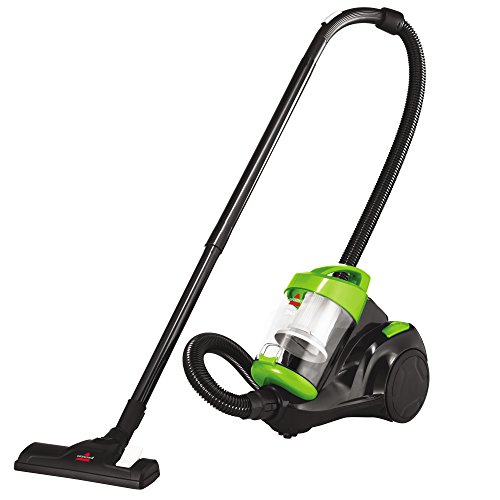
Bissell Zing Bagless Canister Vacuum 2156A — Best Overall
The Zing bagless is the machine most people mean by a Bissell canister: a compact body you carry room to room, cyclonic bagless dirt separation, and a floor tool that handles hard floors and low rugs without drama. Apartments, first homes and anyone adding a canister beside a big upright will feel at home here.
Strengths
- Bagless — no consumable bags to buy or run out of
- Lightweight body is genuinely easy on stairs and between rooms
- Cyclonic action keeps suction steadier as the cup fills
Trade-offs
- No powered brush head — deep-pile carpet is beyond its design
- Small dirt cup means frequent emptying in larger homes
- Bagless emptying puffs dust; allergy households may prefer the bagged Zing
| Detail | What to know |
|---|---|
| Model | Zing 2156A |
| Type | Bagless canister, cyclonic |
| Best surfaces | Hard floors, low-pile rugs |
| Dirt handling | Bagless cup, washable filters per model documentation |
The Zing’s virtue is the absence of friction: pull it out, vacuum the kitchen and hall, empty the cup, put it away. Its suction is tuned for bare floors and the edges of rugs, where a canister’s floor tool glides and seals well, and the retractable cord and carry handle make it the vacuum that actually gets used on weeknights rather than admired on Saturdays.
Know its ceiling. Thick carpet needs a rotating powered brush to dig out embedded grit, and the Zing drives its tool by suction alone. If your home is wall-to-wall plush, this is your hard-floor partner, not your only vacuum — a distinction Bissell itself draws by where it aims the model.
Best for: Apartments and hard-floor homes needing a light daily canister / Not suited for: Deep-pile carpet as the main vacuum
Check on Amazon — check the current price on Amazon before you decide, because configurations and finishes change.
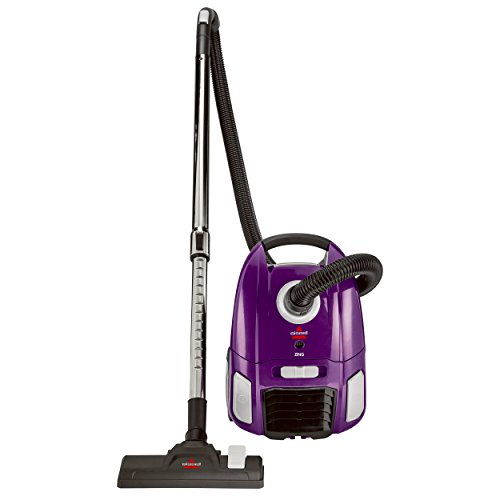
Bissell Zing Bagged Canister Vacuum 2154A (Purple) — Best for Allergies
Mechanically this is the Zing story with one decisive change: dirt goes into a disposable bag instead of a cup. For households with dust sensitivity, pet dander concerns, or a simple hatred of emptying cups over the bin, the bagged 2154A is the better Zing.
Strengths
- Bagged disposal seals dust away — the allergy-friendlier Zing
- Same lightweight, stair-friendly body as the bagless model
- Bags extend the interval between messy maintenance moments
Trade-offs
- Ongoing bag cost and the need to keep spares on hand
- Slightly less instant feedback than a clear dirt cup
- Same suction-tool limits on thick carpet as its twin
| Detail | What to know |
|---|---|
| Model | Zing 2154A |
| Type | Bagged canister |
| Colour | Purple (per listing) |
| Best surfaces | Hard floors, low-pile rugs |
Bagged versus bagless is the oldest argument in vacuums, and the bagged side wins wherever air quality during emptying matters. You pull a sealed bag and bin it; nothing puffs back into the room you just cleaned. In a canister this light, the bag also acts as a large first-stage filter, which helps the machine keep its manners as it fills.
The running cost is real but modest, and it buys a cleaner garage shelf too — no cup to wash and dry. Households that vacuum pet hair daily on hard floors will find the bagged Zing the calmer long-term companion of the two.
Best for: Allergy-aware and pet-hair households on hard floors / Not suited for: Anyone who refuses consumables on principle
Check on Amazon — check the current price on Amazon before you decide, because configurations and finishes change.
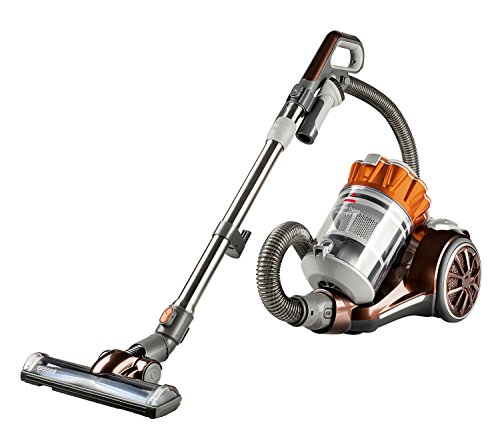
Bissell Hard Floor Expert Multi-Cyclonic Canister 1547 — Best for Hard Floors
The name is the review: this machine exists for homes that are mostly hard flooring. Its multi-cyclonic system separates fine dust efficiently — the dust bare floors specialise in — and its floor tool is designed to hug flat surfaces rather than bounce over them.
Strengths
- Multi-cyclonic separation handles fine hard-floor dust well
- Purpose-built floor tool for wood, tile and laminate
- Bagless with the easy-empty convenience of the format
Trade-offs
- A specialist: carpet performance is secondary by design
- Corded — plan your outlet route in big open plans
- Still no powered brush for deep carpet cleaning
| Detail | What to know |
|---|---|
| Model | Hard Floor Expert 1547 |
| Type | Bagless multi-cyclonic canister |
| Power | Corded |
| Best surfaces | Hardwood, tile, laminate, low rugs |
Hard floors punish the wrong vacuum in a specific way: debris skitters ahead of a brush roll and fine dust escapes weak filtration to resettle as film. A suction-led canister with a sealing floor head and strong cyclonic separation is the correct mechanical answer, and the 1547 is Bissell’s version of it. Owners of older timber floors also appreciate a tool that cleans by suction and soft contact rather than aggressive bristles.
If your home is ninety percent bare floor with a few flatweave rugs, this is arguably the best-matched Bissell canister here — more so than the generalist Zing. The remaining ten percent, if it includes a thick bedroom carpet, still wants a second machine or an upright’s help.
Best for: Mostly-hard-floor homes wanting a dedicated specialist / Not suited for: Mixed homes with substantial plush carpet
Check on Amazon — check the current price on Amazon before you decide, because configurations and finishes change.
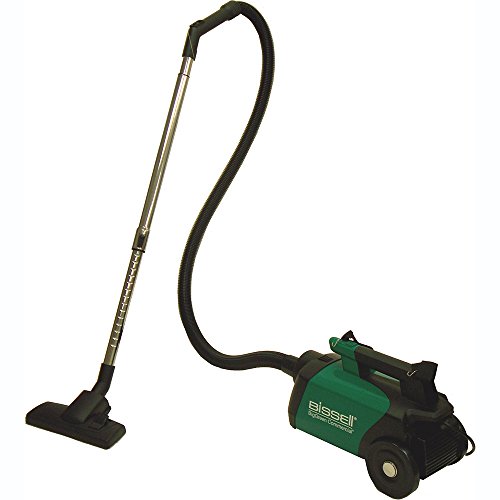
Bissell BigGreen Commercial BGC3000 Portable Canister — Best Commercial Duty
The BigGreen BGC3000 comes from the division of Bissell that sells to people who vacuum for a living. It is a portable canister meant to be carried through offices, shops, places of worship and large homes, with commercial expectations for cord length, durability and serviceability.
Strengths
- Commercial build expectations — made to work daily
- Portable format suits stairs, pews, offices and multi-room sites
- Simple, serviceable design over household gadgetry
Trade-offs
- Utilitarian finish and noise manners versus domestic models
- Feature set is workmanlike: fewer household comforts
- Overkill for a small flat’s weekly clean
| Detail | What to know |
|---|---|
| Model | BigGreen BGC3000 |
| Line | Bissell Commercial |
| Type | Portable canister |
| Use | Commercial and heavy-duty household |
Commercial machines earn their keep differently: they assume eight-hour weeks, bumped doorframes and operators who will not baby them. The BGC3000’s appeal to serious households is exactly that indifference to abuse — buy it for a rental portfolio, a big house with hard floors and stairs, or a small business, and it treats the workload as normal.
What you give up is domestic refinement: the styling is functional, the accessory set is practical rather than delightful, and there is no attempt at whisper-quiet operation. For the buyers this machine targets, those are not criticisms — they are the spec sheet working as intended.
Best for: Small businesses, landlords and heavy-duty home use / Not suited for: Small flats or quiet-hour vacuuming
Check on Amazon — check the current price on Amazon before you decide, because configurations and finishes change.

Bissell Commercial BGC2000 Little Hercules Canister — Best Compact Commercial
Little Hercules is the canister as a carried tool: compact enough for car interiors, shop benches, stair runs and the tops of things. Where the BGC3000 is a site vacuum, the BGC2000 is the one that lives in a cupboard and comes out for the jobs a full-size machine makes awkward.
Strengths
- Compact body excels at stairs, cars and above-floor work
- Commercial lineage means it tolerates rough handling
- Corded power — no battery runtime ceiling for big jobs
Trade-offs
- Small capacity suits detail work, not whole-house marathons
- Household buyers get fewer comfort features
- Name aside, it is a specialist — pair it with a main vacuum
| Detail | What to know |
|---|---|
| Model | BGC2000 Little Hercules |
| Line | Bissell Commercial |
| Type | Compact canister, corded |
| Use | Detail, stairs, vehicles, workshops |
Every home accumulates cleaning jobs that are too small for the main vacuum and too dusty for a brush: the car footwells, the workshop floor, the stairs themselves, a rental turnover’s corners. A compact commercial canister is the professional answer to all of them, and the Little Hercules is Bissell’s — tough, simple, and sized to be carried in one hand while the hose works in the other.
Judge it as a second vacuum and it shines; judge it as a family home’s only vacuum and its capacity will frustrate you. That clarity is a feature of this guide, not a flaw in the machine.
Best for: Detail work, stairs, cars and workshops / Not suited for: A large home’s sole vacuum
Check on Amazon — check the current price on Amazon before you decide, because configurations and finishes change.
A Sixth Current Bissell Canister (the Honest Gap) — Unlinked — No Verified Model
This slot exists to tell you something useful: if a shopping page shows you twelve ‘Bissell canisters’, most are other brands, old stock, or marketplace ghosts. Bissell’s real canister family is the Zing twins, the Hard Floor Expert, and the Commercial line — plus older discontinued models that surface used and refurbished.
Strengths
- Knowing the real range protects you from mislabelled listings
- Discontinued Bissell canisters appear refurbished — buyable with open eyes
- The five verified picks above cover every real use case in the line
Trade-offs
- Refurbished older models carry warranty and parts uncertainty
- No current Bissell canister offers a powered carpet head in this catalogue
- Buyers needing one do-everything machine must look beyond this brand
Older Bissell canisters — earlier Zing generations and discontinued household models — circulate through refurbished and marketplace channels. They can be fair value, but verify the exact model number, bag or filter availability, and return terms before paying; a cheap canister whose bags no longer exist is not cheap. We list none of them with a purchase link because we could not confirm a current, correctly titled listing for a specific sixth model.
If your requirements are a single canister that deep-cleans plush carpet with a powered head, the honest conclusion of this entire guide is that Bissell’s current canister line is not built for you — its strengths are light weight, hard floors and value. Choose one of the five above for what it does well, or widen the brand search with that one requirement at the top.
Best for: Shoppers who value an honest shortlist / Not suited for: Anyone determined to buy six Bissells today
This pick is covered without a link: we could not confirm a current listing through the product database we verify against, so there is no purchase link — search Amazon by the exact product name if you want to track one down.
Comparison Table
| Pick | Badge | Key spec | Best for |
|---|---|---|---|
| Bissell Zing Bagless Canister Vacuum 2156A | Best Overall | Bagless cyclonic, model 2156A | Apartments and hard-floor homes needing a light daily canister |
| Bissell Zing Bagged Canister Vacuum 2154A (Purple) | Best for Allergies | Bagged canister, model 2154A | Allergy-aware and pet-hair households on hard floors |
| Bissell Hard Floor Expert Multi-Cyclonic Canister 1547 | Best for Hard Floors | Multi-cyclonic bagless, model 1547 | Mostly-hard-floor homes wanting a dedicated specialist |
| Bissell BigGreen Commercial BGC3000 Portable Canister | Best Commercial Duty | Commercial portable canister, BGC3000 | Small businesses, landlords and heavy-duty home use |
| Bissell Commercial BGC2000 Little Hercules Canister | Best Compact Commercial | Compact commercial canister, BGC2000 | Detail work, stairs, cars and workshops |
| A Sixth Current Bissell Canister (the Honest Gap) | Unlinked — No Verified Model | No verified sixth model — see review | Shoppers who value an honest shortlist |
Bagged vs Bagless in the Bissell Line
The Zing twins make this choice unusually clean because the machine underneath is essentially shared. Bagless (2156A) costs nothing to feed and shows you the dirt, but emptying releases a puff of the finest dust back into the air and the cup and filters want periodic washing. Bagged (2154A) seals the mess away, suits allergy-aware homes, and asks only for a supply of bags and the discipline not to run it overfull.
Decide by your reaction to emptying day. If you dread the cup, the bagged model’s small running cost buys years of goodwill toward vacuuming itself — and a vacuum you like using cleans more often than a theoretically better one you avoid.
The Hard Truth About Canisters and Carpet
Canisters clean carpet two ways: suction-only floor tools, which surface-clean and suit low pile and flatweave, and powered brush heads, which agitate deep pile and extract embedded grit. Bissell’s current canisters in this catalogue are suction-led machines. On low-pile carpet and rugs they are genuinely effective; on plush, high-pile carpet they will leave the deep dirt behind no matter how many passes you make.
So the buying question is really a flooring census. Mostly hard floors with area rugs: any pick here works, the Hard Floor Expert best of all. Half plush carpet: pair a Zing with an upright, or shop for a powered-head canister from a brand that builds one. Pretending otherwise is how returns happen.
Domestic vs Bissell Commercial: Which Family Fits You?
Bissell’s domestic canisters optimise for weight, price and household manners. The Commercial BigGreen machines optimise for duty cycle: longer work, rougher handling, simpler service. Households vacuuming a normal home weekly get more joy from the domestic line; landlords, cleaners, businesses and very large homes get more years from the Commercial one.
Note the accessory philosophy difference too. Domestic kits chase household niches; commercial kits chase durability and standard fittings. If you already own commercial-standard tools, the BigGreen models slot into that ecosystem naturally.
How to Choose the Best Bissell Canister Vacuum for Your Home
Run the checklist in order: floor census (hard-floor share decides Zing vs Hard Floor Expert vs look-elsewhere), dust sensitivity (bagged Zing), duty level (Commercial if the machine will work for a living), and second-vacuum status (Little Hercules as the detail partner). Then confirm the exact model number on the listing — the Zing name spans two machines and the difference is the bag.
Finally, price the consumables with the machine: bags for the 2154A, filters for the bagless models. A canister’s five-year cost is the honest number, and in this range it stays refreshingly small either way.
How to Get the Most From a Canister Vacuum
Canisters reward technique more than uprights do. These habits close most of the performance gap owners blame on the machine.
- Work from the far corner toward the door, and let the canister trail behind you — pull it by the hose gently rather than dragging it by force, and it will follow without tipping.
- Slow your passes on hard floors: a canister’s suction seal works when the head sits flat and moves steadily; fast strokes skitter debris ahead of the tool.
- Overlap strokes by a third, and vacuum rugs in two directions — pile releases grit differently across and along its grain.
- Empty the cup or check the bag before it passes two-thirds full; cyclonic and bagged machines alike lose their manners when overfilled.
- Wash or replace filters on the model’s stated rhythm, and let washable filters dry fully before refitting — a damp filter strangles airflow.
- Clear the floor tool’s neck and wheels of wrapped hair monthly; the blockage you cannot see is the one costing you suction.
- Store with the cord fully retracted by guiding it in, not letting it snap — cord reels last years longer when fed rather than whipped.
Do these and a light Bissell canister will feel like a stronger machine than its size suggests. Technique is the cheapest upgrade in vacuuming.
Common Buying Mistakes
Buying a suction-only canister for plush carpet
No amount of passes substitutes for a powered brush in deep pile. Match the machine to the flooring census honestly, or pair the canister with an upright for carpet duty.
Confusing the two Zings
2156A is bagless; 2154A is bagged. They share a name and a silhouette and nothing about their running costs. Read the model number on the listing, not the headline.
Judging by wattage claims alone
Cleaning performance lives in airflow, sealing and the floor tool — not the biggest number on the box. A well-sealed light canister out-cleans a leaky powerful one on hard floors.
Letting bags and filters go stale
An overfull bag or clogged filter quietly halves performance and strains the motor. Consumable discipline is the maintenance; there is barely any other.
Dragging the canister by its hose
Hoses split at their cuffs from exactly this. Move the body with its handle, guide it around corners, and the machine will outlast the habit by years.
Final Recommendation
Most buyers should take a Zing and choose their side in the bag debate: the bagless 2156A for zero consumables, the bagged 2154A for cleaner disposal. Hard-floor purists step sideways to the Hard Floor Expert 1547, and anyone vacuuming for a living — or cleaning like it — should go straight to the BigGreen BGC3000, with the Little Hercules as the detail-work partner.
And keep the honest framing: Bissell’s canister line is a specialist’s shortlist, not a supermarket shelf. Within its specialty — light, affordable, hard-floor-first cleaning — these five machines cover the ground completely. The guides below cover the floor-care neighbours of this category.
Best All Around Vacuums Best Affordable Upright Bagless Vacuums Best 12volt Vacuums Best Affordable Pool Vacuums
Canister Technique: Why the Same Vacuum Cleans Better or Worse
Owners routinely rate a canister by its first week, when technique is worst and expectations are vaguest. The machine’s real performance emerges with method. The floor tool cleans by maintaining a seal against the floor while air rushes beneath it; lifting the head at the end of each stroke — the upright habit — breaks that seal and leaves the debris line you then blame on suction. Glide, overlap, and let the head stay down through the turn.
Direction matters on rugs. A suction tool pulls fibres toward itself, so strokes toward you clean differently from strokes away; working a rug from two directions lifts measurably more grit than doubling passes in one. On hard floors, the perimeter deserves its own pass with the tool’s edge or the crevice tool, because that is where dust migrates and where a floor head’s seal is weakest against the skirting board.
Above-floor work is where canisters quietly outclass every upright: the body stays on the floor while the hose and wand take the stairs, the shelves, the tops of doors and the car interior. Households that exploit this — using the canister as a system rather than a floor appliance with a hose attached — consistently rate the same machine a full class higher than households that do not.
Filters, Bags and the Real Cost of Owning a Zing
A canister’s purchase price is its smallest cost story, but the honest arithmetic is still worth doing because it differs by model. The bagged Zing converts money into bags at a rate set by your home’s size and shedding population: a small flat might use a bag every couple of months; a pet-heavy house, one a month. In exchange it asks almost nothing else — filters last longer when the bag does the first-stage work, and there is no cup to wash.
The bagless models invert the ledger: no bags, but filters that must be washed or replaced on rhythm and a cup that wants rinsing to stay honest. Let a washable filter go a month too long and the machine’s suction fades so gradually that owners shop for a new vacuum instead of a new filter. The maintenance calendar, not the motor, is the lifespan of most small canisters.
Either way, the five-year consumable cost of this entire category is modest — typically less than the price difference between the canister and the premium upright it sits beside. Choose bagged or bagless by your tolerance for the emptying moment, not by spreadsheet heroics; both ledgers end happily if they are kept at all.
When a Bissell Canister Is the Wrong Purchase
A buying guide earns trust at the moments it talks a reader out of a purchase, so here are this line’s three honest disqualifications. First, deep carpet: if most of your floors are plush carpet and you expect one machine to deep-clean them, no current Bissell canister in this catalogue is built for that job, and buying one anyway manufactures a return. Second, cordless expectations: these are corded machines with a cord’s unlimited runtime and a cord’s geography; a household that has tasted cordless freedom in a large home may find the outlet dance genuinely annoying rather than trivially habitual.
Third, whole-estate duty: a very large home with mixed flooring asks more than a light canister’s capacity and tool set want to give daily. That is BigGreen territory at minimum, and arguably a two-machine household — canister for hard floors and above-floor, upright for carpet — which is, not coincidentally, how professional cleaners organise the same problem.
None of this diminishes the five machines reviewed here inside their design brief. It simply marks the brief’s borders in ink, so the buyers inside them can purchase with both eyes open.
Bissell’s Lineage: Why the Canister Range Looks Like This
Bissell’s identity was built on carpet — the company began with carpet sweepers in the nineteenth century — and its modern range still tilts toward uprights for America’s carpeted homes. The canister line is the deliberate exception: a compact family aimed at the hard-floor, apartment and above-floor niches where an upright is the wrong shape. Understanding that intent explains the range’s virtues and its gaps in one stroke: the machines are light, simple and hard-floor-leaning because that is the assignment they were given.
The Commercial division operates under different orders. BigGreen machines are specified by people who buy cleaning equipment the way businesses buy vehicles — on duty cycle and serviceability — which is why the BGC3000 and the Little Hercules feel like tools rather than appliances. Their presence in a household guide is not an accident of search results; it reflects how many serious home users have discovered that commercial-spec simplicity outlasts domestic feature lists.
For the shopper, the lineage lesson is practical: buy the domestic line for domestic virtues, the commercial line for commercial ones, and do not expect either to apologise for the other’s priorities. The five picks in this guide were placed exactly on that map.
Stairs: the Canister’s Home Turf
Stairs are where uprights go to be endured and canisters go to be appreciated, and the technique is worth stating because it is the difference between a chore and a system. The canister sits on a step two or three below your work, its weight stable on the tread, while the wand takes the steps above and below in turn; halfway up, you lift the body past you and continue. A light machine like the Zing makes the lift a one-hand event; the Little Hercules was practically designed around it.
Frequency transforms the result: stairs vacuumed weekly with a canister take four minutes and never develop the ground-in edge dirt that makes stair carpet age in visible stripes. The household that owns a canister and still dreads its stairs is usually a household storing the canister too far from them — keep it in the cupboard nearest the staircase and the geography of the chore disappears.
Pet Hair on Hard Floors: a Specific Report
Pet hair on hard flooring behaves differently from pet hair on carpet: it does not embed, it migrates — collecting in tumbleweed drifts along baseboards and under furniture, exactly where a suction canister with a perimeter pass excels. The bagged Zing earns its allergy badge here twice over, because the hair it collects leaves the house sealed in a bag rather than puffing from a cup at emptying time, which for a shedding household is a weekly event, not a monthly one.
The honest limit is upholstered furniture and carpeted stairs, where hair weaves itself in and suction alone negotiates rather than conquers. The canister’s upholstery tool handles maintenance between deeper cleans, and pairing the canister with occasional upright passes on soft surfaces is the two-machine rhythm this guide keeps recommending because it keeps being true.
Noise, Storage and the Small-Home Calculus
Canisters store the way small homes need appliances to store: the body tucks into a cupboard’s floor, the hose loops, the wand shortens — a complete vacuum in the footprint of a laundry basket. For flats where an upright would live permanently in a corner of the living room, that invisibility is a quality-of-life feature no specification table captures. The Zing format was clearly designed by people who understood the assignment: light to carry out, quick to put away, nothing to trip over between uses.
Noise follows the same small-home logic. A canister’s motor sits on the floor behind you rather than at hand height, and its sound, while not whisper-class in this tier, reads as further away than an upright’s. Early-morning and nap-time vacuuming remain acts of optimism, but the canister is the least offensive instrument for them in its price class.
Reading Bissell Model Numbers Without Fear
Bissell’s naming invites one specific confusion this guide exists to prevent: the same friendly name — Zing — covers machines with different dirt systems, and the model number is the only reliable identity. The pattern generalises across the line: marketing names describe families; numbers describe machines. Bags, filters and parts are all sold against numbers, so the number on your machine’s rating plate is the key to its entire aftermarket life, and photographing it on purchase day is a thirty-second investment in every future consumable order.
The Commercial line’s BGC numbers follow the same discipline with even less poetry. When a listing, a review or a parts page says ‘Zing’ without a number, treat the sentence as unfinished and find the number before acting on it. That single habit prevents the majority of wrong-part, wrong-bag and wrong-machine stories in this category.
The Two-Vacuum Household, Justified
This guide has recommended pairing a canister with an upright often enough to owe the reader the full argument. Homes contain two cleaning problems wearing one name: flat surfaces and above-floor areas that reward suction, glide and reach; and soft surfaces that reward agitation. One machine optimised for both is a compromise priced like a premium; two machines each optimised for one are, together, frequently cheaper and individually better. The canister half of that system is what Bissell’s line sells, at prices that make the system arithmetic easy.
The division of labour also extends both machines’ lives — each works in the conditions it was built for, neither is forced through the other’s worst work — and it ends the purchase anxiety that one vacuum must be perfect. Buy the Zing or the Hard Floor Expert for the floors it loves, keep or buy an upright for the carpet, and the question ‘which single vacuum’ dissolves, which is the correct fate for a badly posed question.
The Verdict, Compressed
Bissell’s canister line asks to be judged as what it is: a short, honest family of light machines for hard floors, stairs and above-floor work, plus a commercial wing for people who clean seriously. Inside that brief, the bagless Zing is the default, the bagged Zing is the allergy-aware twin, the Hard Floor Expert is the bare-floor specialist, the BGC3000 is the workhorse and the Little Hercules is the detail tool. Outside that brief — deep carpet, cordless dreams, estate-scale duty — this guide has told you plainly to look elsewhere or to pair machines, because a guide that will not mark its own borders is a sales page wearing a guide’s clothes. Buy inside the brief and these five machines will not disappoint you; that is the whole review, and it is enough.
Care Calendar for a Bissell Canister
Pin this rhythm to the inside of the cupboard where the canister lives. Weekly, in a shedding home: check the cup or bag by eye. Monthly: inspect filters, clear the floor tool’s neck of wrapped hair, and wipe the machine’s vents. Quarterly: wash washable filters and let them dry a full day before refitting; check the hose cuffs for the small splits that announce themselves as whistling. Annually: replace wear filters, inspect the cord along its length, and run the machine empty while listening — a new noise is information, and catching it early is the difference between a part and a replacement. Five habits, none longer than ten minutes, and a light canister’s service life stretches to meet machines twice its price.
One Last Consideration: Parts and the Long Game
A vacuum’s second life is written by its parts catalogue, and here Bissell’s scale quietly serves the canister owner. Bags for the 2154A, filters for the bagless models and the common wear items for the Commercial line are stocked by a manufacturer that sells machines by the million, which means the consumable you need in year four exists, is findable by model number, and arrives without archaeology. That infrastructure is invisible at purchase and decisive at ownership, and it is a genuine argument for choosing a giant’s small line over a boutique brand’s flagship. Buy the machine for your floors; keep it for its parts shelf.
And If You Are Furnishing a Whole Cleaning Cupboard
Readers equipping a home from zero should know how this guide’s picks compose with the rest of a sane cupboard. The canister — a Zing for most, the Hard Floor Expert for the bare-floor devoted — is the foundation. Add a simple upright when carpet enters the picture, a handheld or the Little Hercules logic for cars and workshops, and a mop system for the floors the canister keeps crumb-free. Bought in that order, each purchase covers the previous one’s confessed limits, and no machine is ever asked to be a hero outside its design. That, in one paragraph, is the philosophy behind every pick and every unlinked honesty in this guide.
One more practical word belongs here: run the new machine over your hardest floor on its first day — the kitchen after dinner, the hallway after the dog — while the return window is wide open and your impressions are honest. A canister that delights on that floor will delight for years; one that disappoints there will not improve with familiarity, and the window is the cheapest place to learn it.
Related guides
- Best Canister Vacuums With Adjustable Height
- Best Bissell Vacuums Under $100
- Best New Canister Vacuums
Frequently Asked Questions
Is the Bissell Zing good for carpet?
For low-pile carpet and area rugs, yes — its suction floor tool handles them well. For plush or high-pile carpet it is not the right tool, because it has no powered brush head to agitate deep pile.
What is the difference between the Zing 2156A and 2154A?
The 2156A is the bagless cyclonic model with a dirt cup; the 2154A is the bagged model in purple. The bagged version disposes more cleanly for allergy-aware homes; the bagless version has no bag costs.
Are Bissell Commercial canisters worth it for home use?
For large homes, landlords and anyone who vacuums heavily, yes — the BigGreen line trades household polish for durability. For a small flat’s weekly clean, a domestic Zing is lighter, pleasanter and sufficient.
How long do Bissell canister bags and filters last?
Bags last until roughly two-thirds full — weeks to a couple of months depending on home size and pets. Filters should be checked monthly and washed or replaced on the model’s stated schedule; clogged filtration is the top cause of lost suction.
Can a Bissell canister replace my upright?
In a mostly-hard-floor home, yes — that is exactly the use case. In a carpet-heavy home, treat the canister as the hard-floor and above-floor partner to an upright rather than a full replacement.
Does Bissell make a canister with a powered carpet brush?
No current model with a powered brush head appeared in the verified catalogue for this guide. If deep-pile carpet cleaning from one canister is your top requirement, you will need to look at other brands’ powered-head canisters.


