Disclosure: airfryerkitchensupply.com is reader-supported. When you buy through links on our site, we may earn an affiliate commission at no extra cost to you.
The best books on composting toilets earn their shelf space because a composting toilet is not an appliance you unbox — it is a small biological system you run. Get the carbon-to-nitrogen balance wrong, mismanage moisture, or misunderstand what ‘finished’ compost actually requires, and the system that promised odourless sustainability delivers odour and doubt. The right book prevents that: it teaches the underlying process, helps you choose or build the right system for a cabin, boat, tiny home or off-grid house, and tells you the truth about regulations, timelines and what to do with the end product. The six books below are the working library, each verified as a real, listed title.
Know what kind of reader you are before choosing, because this shelf splits into distinct kinds of book. There is the foundational text that treats human manure composting as a complete discipline, science and philosophy included. There is the technical handbook aimed at people specifying or building systems. There is the practical guide to choosing, planning and maintaining commercial and site-built systems. And there are the short, cheap introductions and DIY build guides that get a single project done. None of these is a failed version of the others — they are different tools, and the badges below assign each to the job it actually does.
One honest expectation to set: composting toilet knowledge has a folk-wisdom problem. Forum advice contradicts itself because climate, usage and system type change every answer. The value of the established books — several here are in later editions precisely because the authors kept correcting and expanding them — is that they state their conditions and their reasoning, so you can adapt their guidance to your situation instead of copying instructions written for someone else’s cabin in someone else’s climate.
Where to buy
All six confirmed books are sold through Amazon, where you can check the current price on Amazon for each title, confirm the edition and format on the listing — several exist in more than one edition, and the edition matters — and arrange delivery. Start with these confirmed options:
- The Humanure Handbook, 4th Edition — Best Overall: Check the current price on Amazon
- The Compost Toilet Handbook — Best Technical Handbook: Check the current price on Amazon
- Composting Toilet System Book — Best for Choosing and Maintaining a System: Check the current price on Amazon
- Essential Composting Toilets — Best Design and Options Guide: Check the current price on Amazon
- The Ultimate Composting Toilet Guide — Best Budget Introduction: Check the current price on Amazon
- The Floating Empire Composting Toilet Book (DIY Build Guide) — Best DIY Build: Check the current price on Amazon
Always re-check the listing for the exact edition before ordering. This category’s key titles exist in multiple editions with meaningfully different content, and marketplace listings for older editions sit alongside the current ones under similar titles.
In this guide
Quick Picks
- Best Overall: The Humanure Handbook, 4th Edition — The foundational text of the whole field — composting science, system practice and the philosophy of closing the nutrient loop, in its fourth edition. Check price on Amazon
- Best Technical Handbook: The Compost Toilet Handbook — A modern technical handbook treatment — systems, design and operation presented as an engineering subject. Check price on Amazon
- Best for Choosing and Maintaining a System: Composting Toilet System Book — Its subtitle is its promise: choosing, planning and maintaining — the practical lifecycle guide for system owners. Check price on Amazon
- Best Design and Options Guide: Essential Composting Toilets — Options, design, installation and use, from a sustainable-building series — the architecturally minded tour of the whole landscape. Check price on Amazon
- Best Budget Introduction: The Ultimate Composting Toilet Guide — A short, inexpensive primer covering the essentials — the low-commitment way to get oriented before deeper reading. Check price on Amazon
- Best DIY Build: The Floating Empire Composting Toilet Book (DIY Build Guide) — A build-it-yourself guide: a urine-diverting composting toilet from simple materials — the hands-on route for boats, vans and cabins. Check price on Amazon
How These Picks Were Chosen
Every book here was verified through the airfry site Amazon listing data in a dedicated search, with the Amazon title confirming the book, and its edition where the title states one. No title was included on reputation alone without a confirmed current listing. From that verified shelf, books were ranked on the criteria that decide usefulness: depth and accuracy of the composting science, practical coverage of choosing, building, installing and maintaining real systems, honesty about regulations and end-product handling, and how well each book serves the reader it claims to serve.
Two filters shaped the list. First, pure memoir and lifestyle titles — books about living off-grid in which a composting toilet appears as scenery — were cut; every pick here is substantially about the systems themselves. Second, duplicate editions were resolved in favour of the current one: where an older edition of a title also lists, the guide recommends the latest, because composting guidance, regulations and product landscapes move, and the newest edition is the author correcting their own record.
A note on formats: several of these titles list in both print and digital editions, and the listing result include digital-first titles alongside print ones. The reviews judge the content, not the binding — but a book you will consult beside a half-built toilet, with damp hands, argues for print, and that practical note is made where it matters.
The 6 Best Books on Composting Toilets

The Humanure Handbook, 4th Edition — Best Overall
If this shelf has a cornerstone, it is this book. The Humanure Handbook essentially created the modern humanure movement: it treats composting human manure as a complete, learnable discipline — the microbiology of thermophilic composting, the design and management of compost piles and collection systems, and the case for returning sanitised nutrients to soil rather than flushing them into water. The fourth edition, subtitled ‘Shit in a Nutshell’, is the author’s mature revision of a text refined across decades of practice. Anyone serious about composting toilets — not just owning one, but understanding it — starts here.
Strengths
- The deepest treatment of composting science in the category
- Covers the full cycle: collection, composting, and safe use of the end product
- A fourth edition refined by decades of real-world practice and feedback
Trade-offs
- Comprehensive means long — it asks more of the reader than a quick-start guide
- Its centre of gravity is compost-pile systems, less the sealed commercial units
- The philosophy chapters will engage some readers and be skipped by others
| Edition | 4th Edition (per Amazon title) |
| Subtitle | Shit in a Nutshell (per Amazon title) |
| Focus | Human manure composting — science and practice |
What separates this book from every quick guide is that it teaches the process rather than a product. A reader who finishes it can diagnose their own system: why a pile is not heating, what the carbon cover material is actually doing, how long and how hot compost must be before its end product is safe, and which shortcuts are harmless and which defeat the entire purpose. That diagnostic ability is what composting toilet ownership actually consists of, because no two installations share a climate, a user count or a cover material — and rules copied without understanding fail silently.
Its treatment of safety is the other reason it leads this guide. The book is rigorous about pathogen destruction — temperatures, times, and the difference between compost that has merely sat and compost that has genuinely sanitised — and equally rigorous about the limits of what a household system should claim. In a category where breezy reassurance is common, that rigour is the credential that matters, and it is why practitioners cite this text rather than blog posts when the end product’s destination is a garden.
Buy it as the library’s foundation even if you also buy a slimmer guide for the build weekend. The quick guide will get your system running; this book is what you will reach for in month three, when something smells wrong, a pile runs cold, or a neighbour asks a hard question about what you are doing — and you want the real answer, not a reassuring one.
Best for: anyone serious about understanding and running a composting system properly, especially compost-pile and off-grid setups / Not suited for: readers who only want a weekend build plan with no science or philosophy
The Compost Toilet Handbook — Best Technical Handbook
The Compost Toilet Handbook is the shelf’s modern technical entry: where the Humanure Handbook is a movement’s founding text, this is a handbook in the professional sense — organised around systems, design decisions and operational requirements, written for readers who are specifying, building or approving a composting toilet installation and need the subject treated as engineering rather than lifestyle. Homeowners planning a permitted installation, builders and designers adding waterless sanitation to a project, and off-grid planners comparing system architectures will find its register exactly right.
Strengths
- Technical, systems-first organisation suits planners and builders
- Treats design and operation as engineering decisions with trade-offs
- Modern coverage reflecting current systems and expectations
Trade-offs
- Less of the founding text’s narrative warmth and philosophy
- Technical depth is more than a casual cabin owner needs
- Print reference pricing reflects its handbook positioning
| Format | Handbook (per Amazon title) |
| Focus | Compost toilet systems — design and operation |
The handbook approach pays off most at the planning stage, where composting toilet projects actually succeed or fail. Siting, ventilation paths, urine management strategy, capacity versus user load, maintenance access, freeze behaviour — these are decided on paper or suffered in person, and a handbook that walks them as a connected system, rather than as product features, is the difference between an installation that works in February and one that worked in the brochure. Readers coming from a building or engineering background will feel immediately at home; the book respects their habits of mind.
It also serves a reader the other picks underserve: the person who must convince someone else. A partner, a building official, a lender or an insurer asking ‘is this legitimate?’ is better answered from a technical handbook’s measured treatment than from a movement text’s enthusiasm. Keep it beside the Humanure Handbook and the two cover each other’s gaps — one supplies the why and the biology, the other the how and the specification.
Choose it if your project has drawings, a budget line and possibly a permit. If your project is a bucket system for a garden studio, it is more book than the job needs — the slimmer picks below exist for you — but for any installation intended to serve a household for decades, this is the reference that will still be on the shelf, consulted, in year ten.
Best for: planners, builders and homeowners specifying a serious or permitted installation / Not suited for: casual readers wanting a quick, light introduction

Composting Toilet System Book — Best for Choosing and Maintaining a System
This book’s subtitle, confirmed in its Amazon title, is the most honest piece of positioning on the shelf: ‘A Practical Guide to Choosing, Planning and Maintaining Composting Toilet Systems’. It is aimed at the owner-operator’s full journey — the reader who has decided on a composting toilet in principle and now faces the real questions: which type of system suits this site and this many users, what the installation actually involves, and what the weekly, monthly and yearly maintenance rhythm looks like when the novelty has worn off. Cabin owners, tiny-home builders and homesteaders mid-decision are its natural readers.
Strengths
- Covers the whole ownership lifecycle: choose, plan, maintain
- Practical register aimed at owners rather than theorists
- Maintenance coverage — the phase most guides underwrite
Trade-offs
- Less composting-science depth than the Humanure Handbook
- Product landscapes date; use its criteria, not just its examples
- Planning emphasis is wasted on readers who have already installed
| Subtitle | A Practical Guide to Choosing, Planning and Maintaining Composting Toilet Systems (per Amazon title) |
| Focus | System selection, planning and maintenance |
The maintenance emphasis is this book’s distinguishing virtue, and it reflects a truth about the category: composting toilets rarely fail at installation and frequently fail at month six, when an undersized system meets a full house, a vent fan goes unreplaced, or a finishing drawer is emptied on hope rather than schedule. A guide that treats maintenance as a first-class topic — rhythms, consumables, seasonal adjustments, what to inspect — is writing about the phase where ownership is actually decided, and readers consistently underrate that until they have lived it.
Its choosing framework is the other reason to own it before purchase rather than after. System types differ fundamentally — self-contained units, central systems, urine-diverting designs, batch versus continuous — and the wrong architecture for a site’s user count, climate and power situation cannot be fixed by diligent maintenance. Work through a structured choosing process before money moves, and the rest of the ownership story gets dramatically easier; this book exists to structure exactly that process.
Buy it alongside, not instead of, the science: the ideal shelf for a new off-grid household is this book for the decision and the routine, plus the Humanure Handbook for the underlying biology. If budget forces one, choose by your gap — undecided about systems, take this one; decided but unsure of the process, take the Handbook.
Best for: buyers mid-decision who want choosing, planning and maintenance in one practical volume / Not suited for: readers wanting deep composting microbiology or a pure DIY build manual

Essential Composting Toilets — Best Design and Options Guide
Part of the Sustainable Building Essentials series per its Amazon title, Essential Composting Toilets approaches the subject from the building side: the range of options, how they are designed, how they install into real structures, and how they are used day to day. That series pedigree shapes its strengths — it situates composting toilets within whole-building thinking about water, waste and codes, which makes it the pick for readers designing a home, cabin or ADU where the toilet is one system among several being decided at once. Its coverage of options is the shelf’s best map of the landscape.
Strengths
- Best overview of the options landscape and how designs differ
- Building-integration perspective: installation in real structures
- Series pedigree in sustainable building practice
Trade-offs
- Landscape tours date as products change — principles endure, models move
- Building focus is broader than a single-toilet owner may need
- Less operational troubleshooting depth than owner-focused guides
| Series | Sustainable Building Essentials Series, Book 10 (per Amazon title) |
| Coverage | Options, design, installation, and use (per Amazon title) |
Every library needs one book that shows the whole chessboard, and this is it. Readers new to the category often fixate on the first system type they encounter — a friend’s unit, a video’s build — and decide in ignorance of the alternatives. A structured tour of the options, with the design logic of each made plain, converts that fixation into a choice. Even readers who end up with a simple system make a better simple choice for knowing what they declined and why, and they specify the supporting details — vent routing, access, drainage decisions — with the whole-building awareness this book teaches.
Its installation coverage deserves note because it addresses the interface where composting toilets meet ordinary construction: floor structures, vent penetrations, service access, and the unglamorous clearances that determine whether maintenance is a pleasure or a contortion. Product manuals tell you how to install their unit; this book tells you how to house any unit well, which is knowledge that survives product changes.
Choose it at the design stage of a build or a major renovation, or as the second book for an owner who suspects their first system was chosen too narrowly. It pairs naturally with the technical handbook for specification and with the Humanure Handbook for process — the three together are the professional shelf on this subject.
Best for: designers, builders and renovators deciding a toilet within a whole-building project / Not suited for: owners of an installed system wanting only operating and troubleshooting help
The Ultimate Composting Toilet Guide — Best Budget Introduction
Not every reader needs the professional shelf. The Ultimate Composting Toilet Guide is the budget-tier introduction: a compact primer that walks a newcomer through what compost toilets are, the main types, and the basic decisions, at a price and length that ask almost nothing of the reader. It suits the curious at the very start of research — the vanlife planner sketching a build, the gardener considering a studio toilet, the homeowner who wants the vocabulary and the lay of the land before committing to the big texts. Treat it as orientation, not authority, and it serves honestly.
Strengths
- Short and inexpensive — orientation in an evening
- Covers the essential concepts and types for a newcomer
- Low risk way to test whether the subject deserves deeper reading
Trade-offs
- Depth is introductory; it will not run your system alone
- Grand title, modest scope — calibrate expectations
- Less editorial pedigree than the established texts
| Subtitle | Everything You Need To Know About Compost Toilets (per Amazon title) |
| Focus | Introductory overview |
Short primers earn their place by respecting the reader’s sequence. Most people do not need thermophilic microbiology on day one; they need to know whether a composting toilet is even plausible for their situation, what the main forks in the road are, and what questions to ask next. A compact guide that answers those three things in an evening has done real work — it either graduates the reader to the serious shelf with confidence, or saves them the serious shelf’s price by revealing a poor fit early. Both outcomes are value.
The calibration matters, though: do not run a system on a primer’s say-so. Moisture management, compost maturity and end-product safety are subjects where the difference between an overview and the Humanure Handbook’s treatment is the difference between a summary and an education. Read this for the map; read the foundation text before you handle finished compost or feed a household’s full-time system.
As a gift or a first purchase for the composting-curious, it is the easiest recommendation on this shelf — cheap, quick, and honest about its level if you read this review’s framing rather than its own cover line. Libraries built in the right order start with exactly such a book.
Best for: newcomers wanting a fast, cheap orientation before deeper research / Not suited for: anyone planning to operate a full-time system on this book alone
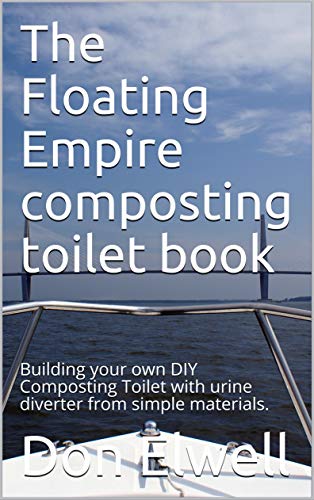
The Floating Empire Composting Toilet Book (DIY Build Guide) — Best DIY Build
The final pick is the maker’s route: a compact DIY guide to building your own composting toilet with a urine diverter from simple materials. Urine diversion is the design decision that makes simple DIY systems work — separating urine at the source is what keeps a basic solids chamber dry, low-odour and manageable — and this book builds a complete toilet around that principle with materials a home workshop already holds. It suits boat owners, van builders, cabin tinkerers and anyone whose budget or space rules out commercial units but whose standards rule out a plain bucket.
Strengths
- Complete DIY build centred on urine diversion — the key design principle
- Simple materials keep cost and complexity low
- Compact format suits boats, vans and small cabins
Trade-offs
- A short digital-format guide, not a comprehensive reference
- DIY means your craftsmanship sets the quality ceiling
- No commercial system’s testing, warranty or certifications
| Focus | DIY build with urine diverter, from simple materials (per Amazon title) |
| Format | Digital book (per listing format) |
Urine diversion deserves the spotlight this little book gives it. Mix urine into a solids chamber and you create the moisture and nitrogen load that produces smell and fly problems; divert it — to a bottle, a drain or a soakaway where appropriate — and the solids chamber becomes a dry, easily managed store that a carbon cover keeps sweet. Commercial urine-diverting toilets charge handsomely for embodying that principle in moulded plastic. A builder who understands it can embody it in plywood and a diverter insert for a fraction of the cost, which is the entire proposition here.
Set expectations by format: this is a project guide, not an education. It will get a toilet built; it will not teach you composting science, and a DIY system still needs an end-game for its solids — a composting arrangement run on the principles the Humanure Handbook teaches, or disposal per local rules. The honest DIY shelf is this guide in the hand and the foundation text on the bench, and the two together cost less than the diverter insert of a premium commercial unit.
Choose it if you are building for a boat, van or off-grid nook and enjoy making things. Respect its limits — your ventilation, your diverter geometry and your sealing decide whether the result is a triumph or a lesson — and test the finished unit in low-stakes use before a long trip depends on it. Makers who do that tend to end up evangelists, and their toilets, deservedly, come up in every harbour conversation.
Best for: DIY builders making a urine-diverting toilet for a boat, van or cabin from simple materials / Not suited for: readers wanting a certified commercial system or a complete composting education
Comparison Table
| Pick | Badge | Key spec | Best for |
|---|---|---|---|
| The Humanure Handbook, 4th Edition | Best Overall | 4th edition foundational text | anyone serious about understanding and running a composting system properly, especially compost-pile and off-grid setups |
| The Compost Toilet Handbook | Best Technical Handbook | Technical systems handbook | planners, builders and homeowners specifying a serious or permitted installation |
| Composting Toilet System Book | Best for Choosing and Maintaining a System | Choosing / planning / maintaining guide | buyers mid-decision who want choosing, planning and maintenance in one practical volume |
| Essential Composting Toilets | Best Design and Options Guide | Options + design + installation tour | designers, builders and renovators deciding a toilet within a whole-building project |
| The Ultimate Composting Toilet Guide | Best Budget Introduction | Short budget primer | newcomers wanting a fast, cheap orientation before deeper research |
| The Floating Empire Composting Toilet Book (DIY Build Guide) | Best DIY Build | DIY urine-diverter build guide | DIY builders making a urine-diverting toilet for a boat, van or cabin from simple materials |
How to Choose the Best Books on Composting Toilets for Your Project
Match the book to the stage of your project, because each stage has a different knowledge bottleneck. At the curiosity stage, the bottleneck is orientation — types, plausibility, vocabulary — and the budget primer answers it in an evening. At the decision stage, the bottleneck is architecture: which system type fits your site, users and climate, and the choosing-and-maintaining guide and the options tour earn their place. At the build or install stage, the bottleneck is specification and construction detail — the technical handbook, or the DIY guide if you are making your own. At the operating stage, the bottleneck is process mastery, and that belongs to the Humanure Handbook alone.
Budget honestly across the shelf rather than within a single purchase. The realistic library for a serious off-grid household is two or three of these books, and their combined cost is a rounding error against the price of a commercial composting toilet or a failed installation. Buying the foundation text plus the stage-specific guide for wherever you are now covers both the immediate job and the month-three questions; buying only the stage guide leaves you fluent in procedure and illiterate in process, which is the profile of owners whose systems drift into trouble they cannot diagnose.
Finally, prefer current editions and treat undated advice — in any medium — with suspicion. Regulations on composting toilets and greywater vary by jurisdiction and change; product landscapes turn over; and the established authors revise. The fourth edition of the field’s foundation text exists because its author kept learning. Build your shelf the same way: current editions, principles over product lists, and a standing scepticism toward any source, however confident, that does not state its conditions.
What a Good Composting Toilet Book Must Teach
Judge any book in this category against a short syllabus. First, the biology: what composting is, the role of carbon-rich cover material, moisture balance, oxygen, and the temperature-and-time requirements that make an end product safe. A book vague on this syllabus is a brochure, not a guide. Second, urine management — diversion, drainage or mixing — because it is the design fork that determines odour, capacity and maintenance more than any other. Third, ventilation, the quiet system that carries moisture and smell away and whose failure masquerades as a toilet failure.
Fourth, capacity realism: how user count, visitors and climate change emptying intervals, and what ‘full’ looks like before it becomes an emergency. Fifth, the end product’s honest pathway — curing, handling, where finished compost may and may not go, and the local rules that govern it. Sixth, troubleshooting written from experience: odour causes in order of likelihood, fly management, cold-weather behaviour, and the recovery procedures for a system that has gone wrong. The picks in this guide, between them, cover the syllabus completely; the foundation text covers most of it alone.
Hold web advice to the same syllabus and its poverty becomes obvious — which is the deepest argument for this shelf. A composting toilet is a decade-long commitment to a biological process in your home. The households that thrive with one are, without exception, the households that learned the process properly once. These books are how that learning happens.
Print, Digital and Editions: Practical Buying Notes
Format is a practical decision in this category. A book consulted during a build — measuring, cutting, fitting a diverter — wants to be print: it tolerates damp hands, open-flat use and pencil notes, and it never runs out of battery at the far end of a boathouse. A book read for education, on the other hand, travels perfectly well digitally, and several titles here list in digital editions that arrive in minutes. Many serious households end up with the foundation text in print for the shelf by the system, and the primers digitally for research on the move.
Editions deserve one more emphasis because this category’s listings are a thicket of them: the foundation text alone appears in second, third and fourth editions across the marketplace. The fourth is the one this guide recommends and links; older editions are not worthless — the core science changes slowly — but they miss decades of accumulated correction and reader feedback, and their regulatory and product references age worst. When a listing’s edition is ambiguous, treat that as a reason to slow down, not to click faster.
A closing note on building the shelf over time: start with the stage you are in, add the foundation text when the system becomes real, and let the specialist volumes — technical handbook, options tour — arrive with the projects that need them. A library assembled in that order is read; a library bought all at once, however impressive, is furniture.
The Shelf by Situation: Cabins, Boats, Tiny Homes and Gardens
Different composting situations lean on different volumes, and it is worth mapping them plainly. The remote cabin, used in bursts by varying guests, lives or dies on capacity realism and a maintenance rhythm that survives absence — the choosing guide for the architecture, the foundation text for the process, and a laminated routine card that owes everything to both. The boat, where space is measured in centimetres and the system may be a compact urine-diverting unit, leans on the DIY guide for the build and the foundation text for the shore-side composting end-game, because what leaves the boat must go somewhere lawful and well-run.
The tiny home and the full-time off-grid house are the heavy-use cases, and they justify the full shelf: options tour at design time, technical handbook at specification, choosing guide for the operating rhythm, foundation text for the biology — because a system serving a household daily, in all seasons, will eventually present every problem in the troubleshooting chapters, and the household that owns the library treats those as weather rather than disaster. The garden studio or allotment toilet, finally, is the light case: a primer, a simple diverting build, and the foundation text’s safety chapters are a complete and proportionate education for a part-time system.
Notice what that mapping implies: the foundation text appears in every situation, at every scale. That is the mark of a genuine cornerstone book, and it is why this guide’s final recommendation puts it first regardless of which situation is yours.
How to Use These Books to Plan Your First Composting Toilet
Read in the right order, this shelf takes you from curiosity to a working system without a wrong purchase. Treat the sequence below as the project plan the books themselves would write for you.
- Orient first: read the budget primer or the options tour to learn the system types — self-contained, central, urine-diverting, batch and continuous — and write down which two types plausibly fit your site, user count and power situation.
- Decide the architecture with the choosing guide: work its criteria against your real numbers — daily users, peak visitors, coldest month, available vent path, and your honest maintenance appetite. Eliminate on facts, not on photographs.
- Learn the process before the product arrives: read the Humanure Handbook’s core chapters on composting science, cover materials and safety. This is the step owners skip and regret; the system you are about to run is biological, and you are its operator.
- Specify and install with the technical handbook or, for a self-build, the DIY guide open beside you. Ventilation routing, access for maintenance and urine management get decided here — slowly, on paper first.
- Commission the system gently: start with correct cover material in generous quantity, brief every user on the two rules that matter — always add cover, never add chemicals the book forbids — and keep a simple log for the first season.
- Run the first season as a student: note odour events, moisture, fill rates and temperatures against the books’ troubleshooting chapters. By the second season the log becomes a rhythm, and the rhythm becomes the system working as designed.
- Close the loop deliberately: when the first batch finishes, follow the foundation text’s curing and handling guidance exactly, and check your local rules on end-product use before the garden gets a vote.
Common Buying Mistakes
Buying a product before learning the process. A composting toilet is operated, not merely owned. Read the foundation text before or alongside any purchase, or every later problem will be undiagnosable.
Choosing a system type on photographs. Architecture — diversion, batch versus continuous, capacity — decides ownership. Choose with the choosing guide’s criteria against your real user count and climate.
Reading only the quick primer. Primers orient; they do not teach safe compost maturity or end-product handling. Operating a full-time system on an overview is how confident mistakes happen.
Buying an old edition to save a little. In this category editions are corrections. The newest edition of a title carries decades of accumulated fixes; the saving on a superseded one is small and the staleness is real.
Skipping the local rules. Composting toilet legality, installation requirements and end-product use vary by jurisdiction. The books teach principles; your local code has the final word, and it is checkable before you build.
Expecting the book to be the maintenance. No text empties a chamber or replaces a fan. The guides give you the rhythm; the rhythm only works if someone keeps it.
Final Recommendation
Build the shelf in the order your project demands. Everyone serious should own the Humanure Handbook, 4th Edition — it is the field’s foundation and this guide’s clear first recommendation. Deciding readers add the Composting Toilet System Book; designing readers add Essential Composting Toilets; specifying readers add The Compost Toilet Handbook; the merely curious start with The Ultimate Composting Toilet Guide; and makers build with the Floating Empire DIY guide in hand. Each book is the best at its job, and the jobs are genuinely different.
What unites the shelf is a respect for the process: composting done with understanding is clean, safe and quietly satisfying, and composting done by imitation is none of those things. These six books are how the understanding is acquired — choose the ones your stage requires, read them before the system depends on you, and your composting toilet will be the part of off-grid life you end up recommending to others. That outcome — the owner who becomes the local expert, whose cabin system runs sweetly in its fifth winter while a neighbour’s identical unit was abandoned in its first — is almost never about the hardware. It is about the winter the owner spent reading. This shelf is that winter, organised.
- The Humanure Handbook, 4th Edition — Best Overall: Check the current price on Amazon
- The Compost Toilet Handbook — Best Technical Handbook: Check the current price on Amazon
- Composting Toilet System Book — Best for Choosing and Maintaining a System: Check the current price on Amazon
Keep researching the cluster: Best Composting Toilets Best Boat Toilets Best Portable Toilets Best Toilets Best Bidets For Long Toilets Best Macerating Toilets
Related guides
Frequently Asked Questions
What is the best book for a complete beginner on composting toilets?
Start with The Ultimate Composting Toilet Guide for a fast, inexpensive orientation, then graduate to The Humanure Handbook, 4th Edition for the real education. The primer teaches the vocabulary and the options in an evening; the Handbook teaches the process you will actually operate. Reading them in that order is the beginner path this guide recommends, and it takes most readers from first curiosity to a defensible system choice in about a week of evenings.
Is The Humanure Handbook still the definitive book?
Yes — its fourth edition remains the field’s foundation text, covering composting science, system practice and safe end-product handling with a rigour the shorter guides do not attempt. Other books beat it for specific jobs — choosing a commercial system, technical specification, a single DIY build — which is why this guide recommends companions rather than a replacement.
I want to build my own composting toilet. Which book do I need?
The Floating Empire DIY guide for the build itself — it constructs a urine-diverting toilet from simple materials — paired with the Humanure Handbook for what happens after the build: composting the output safely. A build guide alone leaves the end-game untaught, and the end-game is where DIY systems succeed or fail.
Do these books cover commercial composting toilets or only DIY systems?
Both, in different volumes. The Composting Toilet System Book and Essential Composting Toilets address choosing and installing commercial and site-built systems; the Humanure Handbook centres on compost-pile practice; the Floating Empire guide is purely DIY. Check each review’s badge and best-for line for the coverage you need.
Are composting toilets legal, and do the books cover regulations?
Legality varies by jurisdiction — some areas permit them freely, others regulate installation, and end-product use has local rules almost everywhere. The established books discuss the regulatory landscape and good practice, but your local code is the authority. Read the books for principles, then verify your specific situation with your local building or health department before installing.
Should I buy print or digital editions of these books?
Print for any book you will consult during a build or beside the system — it tolerates damp hands, notes and battery-free use. Digital suits the reading-first titles and arrives instantly. Edition matters more than format: confirm you are ordering the current edition, especially for the Humanure Handbook, where older editions also circulate.


