Disclosure: airfryerkitchensupply.com is reader-supported. When you buy through links on our site, we may earn an affiliate commission at no extra cost to you.
Where to buy
For best approved composting toilets, start here. There is no single government stamp that approves a composting toilet for every use, and this guide will not pretend otherwise. The picks below are established, verifiable models from Nature’s Head, Separett, OGO and Compo Closet — verified — of the designs that marinas, RV parks, cabin jurisdictions and off-grid inspectors most commonly accept, with the approval question answered honestly for each setting.
Start here: Nature’s Head Self Contained Composting Toilet — Spider Handle · Nature’s Head Self Contained Composting Toilet — Foot-Spider Handle · Separett Villa Urine-Separating Compost Toilet — check price on Amazon on each listing.
Best Approved Composting Toilets: What “Approved” Honestly Means
The best approved composting toilets begin with an honest definition, because “approved” is the most abused word in this category. No universal authority certifies a composting toilet for all places and purposes. What exists instead is a patchwork: marine sanitation rules that accept self-contained and composting devices aboard vessels, RV and tiny-home practice that accepts them as self-contained sanitation, building and health codes that vary by jurisdiction for cabins and residences, and park or marina rules set by operators. A toilet earns its place on this list by being a real, established, urine-diverting or self-contained design from a maker who publishes its specifications — the kind of unit that survives an inspector’s, a marina’s or a lender’s questions — not by carrying a badge a marketing department invented.
That framing matters because the category’s other end is full of uncertifiable improvisation: unvented boxes, bag buckets calling themselves composters, and imports with no published specifications at all. Those are the units that get a cabin red-tagged, a boat refused, or a tiny home’s sanitation plan rejected. The six picks below are the opposite: documented designs with real diversion, real venting and track records in exactly the settings where approval gets asked about — boats, RVs and campervans, cabins and off-grid homes.
Read the guide section on approval by setting before you buy: the right question is never “is it approved?” but “approved by whom, for what, where I will use it?” The picks give you the hardware that answers that question well; the section gives you the questions themselves.
In this guide
Quick Picks
Six established composting toilets across the three working designs — mixing chamber, urine-separating with bags, and compact electric — each a documented model an inspector can look up.
- Nature’s Head Self Contained Composting Toilet — Spider Handle — Best Overall: the established standard: documented, diverting, vented, everywhere in boats and vans. — Check the current price on Amazon
- Nature’s Head Self Contained Composting Toilet — Foot-Spider Handle — Best for Boats: the same proven unit with the foot-spider handle for marine installs. — Check the current price on Amazon
- Separett Villa Urine-Separating Compost Toilet — Best for Cabins: the cabin standard: separation without medium, sized for a household. — Check the current price on Amazon
- Separett Tiny Self-Contained Urine-Separating Toilet — Best for Vans and Tiny Homes: Separett separation shrunk for vehicles, with an emptying sensor. — Check the current price on Amazon
- OGO Origin Compact Composting Toilet — Best Compact Electric: a 15-inch footprint composter with push-button agitation. — Check the current price on Amazon
- Compo Closet Cuddy Composting Toilet — Best Value Documented: the converter’s composter: self-contained, filtered, chemical-free. — Check the current price on Amazon
How These Picks Were Chosen
Eligibility required three proofs. First, identity: the model was verified by brand and model, ASIN taken from the matching Amazon title. Second, documentation: the maker publishes the design’s working principle — urine diversion or separation, venting, capacity — in its own listing, so an authority reviewing the install can see what the device is. Third, establishment: the design has a real installed base in boats, RVs, cabins or tiny homes, the settings where approval questions actually arise.
Designs were excluded for failing any leg of that stool: no diversion and no venting (a bucket with a seat), no published specification, or no maker standing behind the product. Within the eligible pool, picks were spread across the three working architectures and the size range from van-compact to cabin-capacity, because approval is setting-specific and so is fit.
The 6 Best Approved Composting Toilets
Two mixing-chamber standards, two urine-separating designs, and two compact units for vehicles and tiny spaces — the documented field from which inspectors, marinas and owners actually choose.
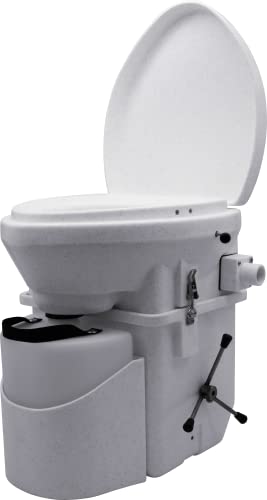
Nature’s Head Self Contained Composting Toilet — Spider Handle — Best Overall
The Nature’s Head is the composting toilet against which approval conversations are calibrated, because it is the unit officials and marina operators have already seen a thousand times. It is self-contained and urine-diverting, fan-vented, and built around a mixing chamber with a hand agitator — here in the close-quarters spider-handle version that fits van and boat cabinets. Its documentation, installed base and parts support make it the safest answer wherever the question “what toilet is that?” gets asked by someone with a clipboard.
Strengths
- The category’s deepest track record in boats, RVs and off-grid homes
- True urine diversion plus fan venting: the design inspectors expect
- Spares, medium guidance and maker support are mature and published
Trade-offs
- Requires a proper vent run and constant small fan draw
- Medium moisture discipline is the owner’s ongoing job
- Premium tier among composting toilets
| Specification | Detail |
|---|---|
| Type | Self-contained composting toilet (per Amazon title) |
| Handle | Close quarters spider handle (per Amazon title) |
| System | Urine-diverting, fan-vented mixing chamber |
Approval, in practice, is a documentation exercise: can the owner show what the device is, how it separates and vents, and who makes it? The Nature’s Head passes that exercise on its reputation alone in most marinas and RV contexts, and on its published specifications everywhere else. That is worth real money in the settings this search serves — a cabin build awaiting a sanitation sign-off, a boat whose holding arrangements are inspected, a tiny home whose lender asks questions.
As a working toilet it remains the benchmark from this program’s campervan guide: weeks between solids service for a couple, a urine bottle on a daily rhythm, and no black water anywhere in its life. Buy the spider-handle version wherever a cabinet wall crowds the crank’s swing, which in vehicles and boats is nearly everywhere.
Ownership note: register the unit and keep its manual with the vessel or property documents; the Nature’s Head’s documentation trail is part of its resale and inspection value, and it costs nothing but a folder to maintain.
The spider handle’s close-quarters geometry also suits the boat head’s reality, where the crank must clear a hull’s curve rather than a cabinet’s wall — the same problem wearing a different curve, solved by the same thoughtful handle.
Best for: boats, RVs, cabins and tiny homes wanting the most established documented composter / Not suited for: buyers wanting the bag system’s simpler solids handling
Check on Amazon — check price on Amazon before you order, and confirm the exact variant and tank size on the listing.

Nature’s Head Self Contained Composting Toilet — Foot-Spider Handle — Best for Boats
This Nature’s Head variant swaps the hand crank’s geometry for the foot-spider handle arrangement many boat owners prefer, where the toilet sits low in a head compartment and a foot-operated agitator suits the space and the motion of a vessel. Everything else — diversion, venting, chamber, documentation — is the established design above, which is precisely the point: on a boat, boring and proven is the highest specification.
Strengths
- Foot-spider operation suits low marine head compartments
- Identical proven chamber, diversion and venting to the standard model
- Marine sanitation practice accepts self-contained composting devices of this documented type
Trade-offs
- Handle variant availability varies; confirm the exact version on the listing
- Same vent and fan install requirements as the standard model
- Premium tier, as with the sibling pick
| Specification | Detail |
|---|---|
| Type | Self-contained composting toilet (per Amazon title) |
| Handle | Foot-spider handle (per Amazon title) |
| System | Urine-diverting, fan-vented mixing chamber |
Marine heads are where composting toilets earned their legitimacy: a composting device replaces a holding tank, a pump-out schedule and a through-hull with a sealed, vented box whose contents leave in a bag at the dock bin. Harbor authorities and surveyors know the Nature’s Head by sight, and that familiarity is a practical approval asset no newer design can claim on day one.
Choose between the two Nature’s Head picks on ergonomics alone — the space your install gives the handle and the motion you prefer — and spend the saved deliberation on the vent run, which on a boat deserves the same care as any other through-hull decision: short, sealed, and exiting where the breeze takes it away from the cockpit.
Ownership note: on a boat, add the head’s vent and fan to the pre-departure checklist alongside the seacocks; a composting head checked in the same breath as the through-hulls stays the boat’s most reliable system.
For charter and guest-heavy boats the foot-spider variant has a briefing advantage: the operation is demonstrated in one motion, and a system a guest understands in five seconds is a system that survives the weekend intact.
Best for: sail and power boats replacing a holding-tank head with a documented composter / Not suited for: installs where the standard spider handle’s swing already fits perfectly
Check on Amazon — check price on Amazon before you order, and confirm the exact variant and tank size on the listing.

Separett Villa Urine-Separating Compost Toilet — Best for Cabins
The Separett Villa is the urine-separating design at household scale: urine diverts to a container or drain, solids collect in a bag-lined chamber behind a closing view screen, and there is no medium to manage and nothing to crank. Its own listing names its settings — homestead, schoolie, cottage — and its high-capacity design suits the fixed install where a composting toilet must serve as the property’s only sanitation, the situation where approval questions are most formal.
Strengths
- No additives or mixing: the simplest operating discipline at cabin scale
- High-capacity design suits a household’s only-toilet duty
- Separation design is documented and long-established in Scandinavian off-grid use
Trade-offs
- Solids leave in bags: an ongoing consumable and a local-rules check for disposal
- Urine handling needs a plan — container rhythm or a drain arrangement
- Larger footprint than the vehicle-compact picks
| Specification | Detail |
|---|---|
| Type | Urine-separating compost toilet (per Amazon title) |
| Medium | None — no additives or mixing needed (per Amazon title) |
| Settings | Homestead, schoolie, cottage (per Amazon title) |
The Villa’s approval strength is the legibility of its system: separation is visible, venting is built in, and the waste streams are exactly what local rules for dry toilets contemplate — urine managed as liquid, solids contained and removed. For a cabin or homestead working through a county conversation about sanitation, that legibility, from an established Swedish maker with published documentation, is the difference between a discussion and an argument.
Operationally it is the lowest-discipline full-size option here: no moisture to balance, no agitator, just bag changes on rhythm and urine on schedule. Households that want composting’s independence without composting’s craft will find the Villa the honest fit, at homestead scale rather than van scale.
Ownership note: keep a season’s supply of the correct bags at the property; a cabin whose consumables are stocked is a cabin whose system never gets improvised around, which is when documented systems quietly become undocumented ones.
The Villa’s screen mechanism also serves the multi-generational homestead: the chamber is never on display, which keeps the property’s only toilet presentable to every visitor without a word of explanation or apology.
Best for: cabins, homesteads and cottages needing a documented full-size dry toilet / Not suited for: small vehicles, where the Tiny below is the same idea at van scale
Check on Amazon — check price on Amazon before you order, and confirm the exact variant and tank size on the listing.

Separett Tiny Self-Contained Urine-Separating Toilet — Best for Vans and Tiny Homes
The Tiny carries the Villa’s separation principle into the spaces where approval and fit collide most often — vans, RVs, boats and tiny homes, per its own listing. The urine container is built in with an emptying sensor, solids collect bagged behind the screen, and no medium or mixing is involved. For a tiny home on wheels whose sanitation may be reviewed by a park, a marina or a certifier, it is a documented, established design in a footprint that actually fits.
Strengths
- Vehicle-scale footprint from an established documentation-rich maker
- Built-in urine container with sensor suits hidden, built-in installs
- No medium or mixing: the simplest discipline in the smallest serious unit
Trade-offs
- Bag rhythm is more frequent than a mixing chamber’s service interval
- Fan vent install is required, as with every serious unit here
- Premium tier for its size class
| Specification | Detail |
|---|---|
| Type | Self-contained urine-separating compost toilet (per Amazon title) |
| Urine | Built-in container with emptying sensor (per Amazon title) |
| Settings | Vans, RVs, cabins and boats (per Amazon title) |
Tiny homes live and die by their paperwork: the toilet is one of the systems a park or certifier actually asks about, and “a Separett” is an answer with a datasheet behind it. The Tiny’s sensor-equipped container and self-contained design make the install presentable as well as functional — no external urine plumbing to explain, no improvised vent to defend.
As daily equipment it asks the least of its owner of any pick here relative to its size: sit correctly, mind the sensor, change bags on rhythm. In a van or tiny home where the toilet shares a wall with the bed, that quiet competence — backed by a fan that never sleeps — is the whole product.
Ownership note: the emptying sensor rewards an owner who treats it as the schedule rather than a suggestion; containers emptied on the sensor’s word never become the overflow story that gives separators an undeserved reputation.
In a tiny home the Tiny’s sensor quietly performs a second duty: it makes the invisible visible in a space with no utility room, so the home’s smallest system reports itself before it can surprise anyone.
Best for: tiny homes, vans and boats needing a documented separator that fits / Not suited for: households wanting the longest solids interval over compactness
Check on Amazon — check price on Amazon before you order, and confirm the exact variant and tank size on the listing.
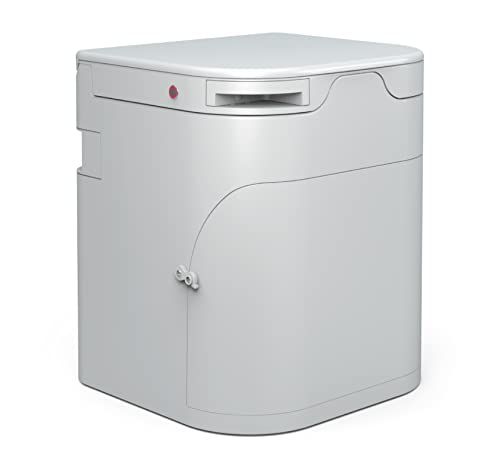
OGO Origin Compact Composting Toilet — Best Compact Electric
The OGO Origin is the compact mixing-chamber entry: a 15-inch footprint — stated in its own title — with urine diversion, fan venting and push-button electric agitation, designed from the start for vans, RVs and boats. For small-space owners who prefer a true composting chamber over bag separation, it is the documented compact option that does not ask for a crank’s swing room.
Strengths
- Footprint engineered for vehicles, not adapted from a cabin unit
- Push-button agitation removes the chore owners most often skip
- Full diversion and venting in the smallest mixing design here
Trade-offs
- Electric agitation means a 12V install with a constant small draw
- Newer maker than Nature’s Head or Separett: check spares for long seasons
- Medium discipline still applies in full
| Specification | Detail |
|---|---|
| Type | Compact composting toilet (per Amazon title) |
| Footprint | 15 inch (per Amazon title) |
| Settings | Van, RV and boat (per Amazon title) |
The Origin’s contribution to the approval conversation is that it is a real composter at a size where the market mostly offers buckets: diversion, venting, a genuine medium chamber, and a maker publishing the design for vehicle use. A van build or a small boat head fitted with an OGO presents to any reviewer as sanitation, not improvisation — the distinction this search exists to protect.
Its electric agitation deserves the honest note: it trades a hand chore for a wiring requirement, which in a vehicle with a house battery is usually the right trade and in an unpowered shed is the wrong one. Match it to a powered install and it is the easiest compact composter here to keep correctly agitated — which is to say, correctly composting.
Ownership note: put the agitator button on the same mental checklist as the lid; the OGO’s electric convenience removes the crank’s effort but not the habit, and the chamber can always tell whether the habit survived.
The Origin’s button agitation also standardizes the chamber’s treatment across users — every visit, the same agitation — removing the variable that hand-crank systems depend on memory to supply.
Best for: powered vans, RVs and boats wanting true composting in 15 inches / Not suited for: unpowered installs, which should take a manual design
Check on Amazon — check price on Amazon before you order, and confirm the exact variant and tank size on the listing.

Compo Closet Cuddy Composting Toilet — Best Value Documented
The Cuddy closes the list as the value-side documented design: a self-contained, waterless composting toilet with a 3.9-gallon capacity, a 12V fan and a carbon filter, specified by its maker for RVs, vans, boats, tiny homes and off-grid use, with no chemicals anywhere in its operation. It is the unit self-builders fit when the budget is real but the sanitation still has to be a system, not a bucket.
Strengths
- Complete documented system — diversion, fan, filter — at a value tier
- 12V fan and carbon filter specified for vehicle and tiny-home installs
- Waterless and chemical-free: nothing to freeze, dose or explain
Trade-offs
- Solids rhythm is steadier than the largest chambers’
- Spares channel is online rather than dealer-shelf
- Fan wiring and venting still require a careful install hour
| Specification | Detail |
|---|---|
| Type | Self-contained composting toilet (per Amazon title) |
| Capacity | 3.9 gallon (per Amazon title) |
| Vent | 12V fan with carbon filter (per Amazon title) |
Value in this category is dangerous when it is achieved by deleting the system — the vent, the diversion, the seal — and the Cuddy’s merit is that it deletes none of them. The carbon filter on the vent is a thoughtful touch for vehicles and tiny homes, polishing the exhaust air where the outlet must sit near living space, and the whole unit presents to a reviewer as what it is: a designed appliance with a maker and a manual.
For the off-grid cabin annex, the skoolie mid-budget build, or the van that cannot stretch to the premium tier, the Cuddy is the floor below which this guide will not go — because below it, what is being sold is no longer a composting toilet in any sense an inspector would recognize.
Ownership note: pencil the carbon filter’s change date on the unit at install; the Cuddy’s exhaust stays polished only while the filter is alive, and the filter’s whole weakness is that everybody forgets it exists.
The Cuddy’s easy-clean design respects the off-grid reality that water for cleaning is itself a budget; a unit that wipes clean with little water belongs in the places this search serves.
Best for: budget-conscious off-grid, skoolie and van builds needing a real system / Not suited for: owners wanting the deepest track record regardless of tier
Check on Amazon — check price on Amazon before you order, and confirm the exact variant and tank size on the listing.
Comparison Table
Design type and stated settings come from the verified listings. The approval column in your own decision should be filled by your setting’s authority — the guide below tells you which authority that is.
| Pick | Badge | Key spec | Best for |
|---|---|---|---|
| Nature’s Head Self Contained Composting Toilet — Spider Handle | Best Overall | Self-contained urine-diverting composter; spider handle for tight installs | boats, RVs, cabins and tiny homes wanting the most established documented composter |
| Nature’s Head Self Contained Composting Toilet — Foot-Spider Handle | Best for Boats | Self-contained composter; foot-spider handle variant | sail and power boats replacing a holding-tank head with a documented composter |
| Separett Villa Urine-Separating Compost Toilet | Best for Cabins | Urine-separating; no additives or mixing; high capacity; homestead and cottage | cabins, homesteads and cottages needing a documented full-size dry toilet |
| Separett Tiny Self-Contained Urine-Separating Toilet | Best for Vans and Tiny Homes | Urine-separating; built-in container with sensor; vans, RVs, cabins, boats | tiny homes, vans and boats needing a documented separator that fits |
| OGO Origin Compact Composting Toilet | Best Compact Electric | 15-inch footprint; compact composting for van, RV and boat | powered vans, RVs and boats wanting true composting in 15 inches |
| Compo Closet Cuddy Composting Toilet | Best Value Documented | 3.9 gal; 12V fan; carbon filter; waterless, no chemicals | budget-conscious off-grid, skoolie and van builds needing a real system |
What “Approved” Means, Setting by Setting
On a boat, marine sanitation law in most jurisdictions accepts self-contained and composting devices as an alternative to a holding tank with pump-out, provided waste is not discharged overboard; a documented unit like the Nature’s Head is the standard way liveaboards satisfy that framework. In RVs and campervans, self-contained composting toilets are accepted practice rather than a regulated category — the questions come from parks and campgrounds, whose rules the established designs here are built to satisfy.
On land, cabins and residences are where formality peaks: many counties regulate composting and dry toilets through health or building codes that reference recognized standards and manufacturer documentation, and some require the device to appear on a state list. The working method is universal: identify your authority — county health, marina, park, certifier — ask what documentation they want, and buy a published, established design whose maker can supply it. Every pick here clears that bar; the unbranded end of the market cannot, which is the practical meaning of “approved” in this guide’s title.
Mixing Chamber vs Urine Separation: Choosing Your System
Mixing-chamber composters — Nature’s Head, OGO — combine solids with a medium and agitate, producing the longest service intervals and a finished material handled in bulk. They ask for moisture discipline and a vent that never rests. Urine-separating designs — the Separetts, and the Cuddy in its self-contained form — keep the streams apart from the start: urine to a container or drain, solids bagged or chambered dry, with no medium craft to learn and a steadier, simpler rhythm of smaller services.
Approval-wise both architectures are legitimate and documented; the choice is operational. Long unattended intervals and bulk handling favor mixing; simplicity, guests and minimal learning curve favor separation. What neither architecture permits is the deletion of venting or diversion — the two features that make the device a sanitation system in any authority’s eyes.
Installing for Inspection: Venting, Access and Records
Install as if someone will review it, because in the settings this search serves, someone may. Vent the unit exactly per the maker’s routing, keep the fan on a circuit that stays live in service, mount the unit so its chambers can be serviced without demolition, and manage the urine stream by the maker’s stated method — container or drain — never by improvisation.
Keep the paperwork with the property or vessel: manual, model and serial details, and your authority’s correspondence if any. Records are the cheapest approval insurance in existence, and they transfer with the cabin, boat or tiny home when it sells — a documented sanitation system is a feature in a listing, while an undocumented one is a question.
Costs of Ownership: Medium, Bags, Fans and Time
Approval aside, the systems here carry different running ledgers, and honesty about them belongs in a buying guide. Mixing chambers spend on medium — a modest, predictable consumable — and on a fan every few years. Separators spend on bags at a steadier rhythm and on nothing else mechanical. All of them spend a little of the owner’s attention weekly, which is the currency this category actually trades in, and all of them save the alternative ledgers entirely: no water, no sewer or septic load, no pump-out fees, no holding-tank chemicals.
Time is the line item newcomers misjudge in both directions. The weekly reality of a well-run composter is minutes — a bottle emptied, a screen checked, a crank turned — and the periodic reality is an hour’s service a few times a year for mixing chambers, or two-minute bag changes on rhythm for separators. Owners who budget that attention honestly report the category as low-maintenance; owners who expected a flush-and-forget appliance report disappointment that no design in this guide could have prevented.
End of Life and Upgrades: A Documented System Ages Well
A documented composting toilet is also the easiest sanitation system to retire or upgrade. There is no tank to pump, no plumbing to cap beyond a vent hole, and the unit itself — a self-contained appliance — unbolts and leaves with its manual, often to a second life in another cabin, boat or build, because established designs hold resale value in exactly the communities that use them. The undocumented improvisation, by contrast, leaves as waste and leaves its questions behind it.
Upgrading within the category follows the same documentation logic: a household that starts with the Cuddy’s value system and later moves to a Nature’s Head or a Villa keeps its vent, its mounting discipline and its paperwork habits — the install knowledge transfers even when the appliance changes. That continuity is a quiet argument for entering the category at the documented level rather than below it: everything you learn and build remains useful.
Teaching the Household: The Human Side of a Documented System
Every composting toilet in this guide is, in the end, operated by people — partners, children, guests, crew — and the systems that stay sweet and defensible are the ones whose humans were taught once, kindly and completely. The curriculum is short: how diversion works and why posture matters, what may enter the bowl (paper, nothing else), what the fan’s hum means and why it must never be switched off, and what the service rhythm looks like so nobody is surprised by it. Written on a card in the unit’s space, it survives the teacher’s absence.
Guests deserve a particular honesty: a thirty-second briefing delivered as hospitality — “the boat’s toilet works like this, it’s easy” — rather than as warning. Households and crews that normalize the briefing find their system’s failure rate falls to the floor, because nearly every composting horror story in circulation begins with an unbriefed user and a fan switched off for quiet. The documented system includes its documentation of use; the card on the wall is part of the appliance.
Children, taught early, are reliably the best operators in any household — the routine is a game with rules, and rules are a child’s native country. The households that struggle are the ones that treat the toilet as self-explanatory. It is not, and neither is a flush toilet to anyone who has never met one; the difference is only that the composting version’s lesson is yours to give.
Power, Venting and the Boat or Cabin’s Electrical Reality
Every serious unit in this guide breathes through a small electric fan, which makes the composting decision partly an electrical one. The draw is genuinely small — a fan sipping from a house battery or a cabin’s solar bank — but it is constant, and constant small draws are the ones that size off-grid systems. Honest planning counts it: the fan’s daily consumption joins the lights and the pump in the energy budget, and a system that cannot spare it is a system that should choose its toilet with that fact admitted rather than discovered in February.
Boats distribute the question differently: the fan joins the anchor light and the bilge pump in the always-on family, and it deserves the same fused, labeled, corrosion-aware wiring those circuits get. Cabins on solar meet it seasonally — a winterized cabin’s fan can rest with the building, per the storage discipline in this guide, while a lived-in winter cabin’s fan simply becomes one more quiet line in the load table. None of this is an argument against the category; it is the argument for treating the toilet as the appliance it is, wired and budgeted like one.
The payoff for that honesty is the category’s core freedom: a sanitation system whose entire infrastructure is a vent, a whisper of power and the owner’s rhythm — no water, no sewer, no tank, no pump-out — which is why, once the electrical sentence is written into the plan, the approval conversations in this guide so consistently end in a signature.
Resale and Handover: The Documented System as an Asset
When a boat, cabin or tiny home changes hands, its sanitation system is one of the first things a serious buyer or surveyor examines — and the documented composting toilet is one of the few systems that can add confidence instead of questions. The handover that achieves that is simple: the unit clean and serviced, the manual and model details in the property’s file, the vent and fan demonstrated running, and the service rhythm explained in the same thirty-second briefing this guide recommends for guests. A buyer who understands the system in one demonstration prices it as equipment; a buyer who meets an undocumented box prices it as a removal job.
Sellers of off-grid properties make the same discovery from the other side: “composting toilet, Nature’s Head, vented, serviced” is a listing line that reassures, while an unnamed arrangement invites the discount that uncertainty always extracts. The documented system’s final dividend is paid at the exit — one more reason the category’s established designs are worth their tier over the improvisations they replace.
How to Set Up a Composting Toilet Correctly
Correct setup is what makes any of these units perform — and read, to any reviewer, as the system it claims to be. The sequence below is the shared discipline, with architecture notes where they differ.
- Mount to structure. Bolt or bracket the unit so road or sea motion cannot work its seals and vent joint loose. A composting toilet is an appliance; install it like one.
- Run the vent as specified. Shortest practical route, joints sealed, outlet placed where air moves away from living space. Confirm fan airflow before first use — this is the odor system and the inspection detail most often checked.
- Wire the fan to stay live. Fused 12V feed on a circuit that remains on whenever the toilet is in service. A composter whose fan sleeps is a composter failing slowly.
- Prepare the chamber honestly. Mixing designs: hydrate medium to the maker’s description before first use. Separating designs: fit the bag smoothly and confirm the view screen closes fully.
- Set the urine routine. Container systems get a daily travel-day check; drain systems get their routing verified once, carefully, at install. The sensor on the Separett Tiny exists because this rhythm matters.
- Brief every user, once. Sit fully for diversion, add nothing but paper, agitate or close the screen as the design requires. Thirty seconds of briefing is the difference between a system and a smell.
Service on schedule rather than on symptoms, keep the manual with the unit, and the toilet will hold up its end of every approval conversation: a clean, documented, correctly vented appliance doing exactly what its maker published.
Common Buying Mistakes
Believing a badge instead of asking the authority. No sticker substitutes for your county, marina or park’s actual requirement. One phone call before purchase is worth more than any certification claim printed on a box.
Buying an unvented “composter”. A sealed box with a seat is a bucket. Without diversion and venting it will smell, and it will not satisfy any reviewer who opens the manual that does not exist.
Deleting the vent to keep a cabinet pretty. The vent is the system. Every odor failure and most approval failures in this category trace to a vent that was shortened, kinked or never run.
Dumping urine or bagged solids wherever is convenient. Follow the maker’s and the locality’s disposal guidance — containers emptied to proper facilities, bags disposed of as local rules direct. The system’s legitimacy includes its outputs.
Letting the fan share a switched-off circuit. Wire it live, fuse it, and check it on every service rhythm. A stalled fan converts the best unit on this list into the worst experience in the category.
Final Recommendation
If the setting is a boat, an RV or a cabin where the toilet must simply be right, take the Nature’s Head in the handle variant that fits your install — its documentation and track record are the category’s reference. Households wanting separation’s simplicity at scale take the Separett Villa; vehicles and tiny homes take the Tiny or the OGO Origin by their power and space; and budget builds take the Cuddy rather than anything cheaper that deletes the system. Then make the one phone call this guide keeps recommending: confirm with your own authority what they want to see, and keep the answer with the manual.
Nature’s Head Self Contained Composting Toilet — Spider Handle — check price on Amazon. Nature’s Head Self Contained Composting Toilet — Foot-Spider Handle — check price on Amazon. Separett Villa Urine-Separating Compost Toilet — check price on Amazon. Separett Tiny Self-Contained Urine-Separating Toilet — check price on Amazon. OGO Origin Compact Composting Toilet — check price on Amazon. Compo Closet Cuddy Composting Toilet — check price on Amazon.
Keep reading in this series: Best Camper Van Toilets Best Composting Toilets For Boats Best Toilets For Tiny Homes Best Toilets For Cabins Best Off Grid Toilets
Related guides
Frequently Asked Questions
Is there an official approval for composting toilets?
Not a single universal one. Approval is setting-specific: marine rules accept documented self-contained composting devices, land use is governed by local health and building codes that often reference standards and manufacturer documentation, and parks or marinas set their own rules. Buy an established, published design and confirm with your authority.
Which composting toilet is most widely accepted?
The Nature’s Head, by installed base and familiarity: it is the unit marinas, surveyors and RV contexts have encountered most, and its documentation is mature. Separett’s designs hold the equivalent position in Scandinavian-influenced off-grid building.
Do composting toilets need a vent?
Yes — venting with a small fan is integral to every legitimate design in this guide. It manages moisture and odor, and an unvented unit is not a composting system in any sense an inspector or an owner should accept.
What happens to the waste from a composting toilet?
Urine is emptied from its container to a proper facility or managed through an approved drain arrangement; solids from mixing chambers are removed on schedule and handled per local guidance, and bagged solids from separators are disposed of as local rules direct. The maker’s manual and your locality’s rules together define the routine.
Can a composting toilet be a home’s only toilet?
In many off-grid and some code jurisdictions, yes — full-size designs like the Separett Villa and Nature’s Head are built for that duty — but the local health or building authority decides for your address. Confirm before the build, not after the inspection.
Do composting toilets work in winter?
Yes, with slowed biology: the chamber composts more slowly in the cold while diversion and venting keep the unit odor-free. There is no water to freeze, which is why cabins and winter-stored boats favor them over plumbed fixtures.
How long do composting toilets last, and what wears out?
The unit itself is a long-lived appliance: the molded body and chamber of the established designs here have no inherent expiry, and service lives well past a decade are ordinary in boats and cabins. What wears is the supporting cast, on predictable schedules — the fan, which is a small motor with a finite life measured in years; seals and gaskets, which age like any seal; the agitator’s moving parts on mixing designs; and consumables, which are not wear but rhythm. Every one of those items is a published spare on the picks in this guide, which returns the discussion to this article’s central test: a composting toilet you can maintain from its maker’s parts list is an appliance, while one you cannot is a countdown. Buy the appliance, keep its manual and its service dates with the property’s records, and the system will outlast several of the roofs it sits under.


