Disclosure: airfryerkitchensupply.com is reader-supported. When you buy through links on our site, we may earn an affiliate commission at no extra cost to you.
Where to buy
Start here if you are shopping for the best blenders for shakes and smoothies: every pick in this guide was verified, and every specification quoted comes from the verified listing for that exact model.
Every blender in this guide was verified, and the picks span the real spectrum of the keyword — personal cup blenders built for a daily smoothie, full-size jars for family shake nights, and one model whose listing names a dedicated Smoothie cycle.
The six machines in this guide are: nutribullet Pro+ N12-1001MK, 1200W, pulse, 32 oz & 24 oz cups, Ninja Nutri-Blender Pro BN401, 1100 peak W, Auto-iQ, (2) 24-oz cups, Vitamix Propel Series 510, 48 oz, Black, Ninja Professional Blender BL610, 1000W, 72 oz, KitchenAid Pure Power Blender KSB2078, 1700W peak, 68 oz + 2 personal jars, Hamilton Beach Portable Blender 51172G, 300W peak, 14 oz travel jar. Check the current price on Amazon for the model you choose, and check price on Amazon again before ordering if you are comparing configurations, because capacities, included accessories and finishes vary by listing.
Introduction: Shakes and Smoothies Are Two Different Blending Jobs
The best blenders for shakes and smoothies have to master two textures that pull in opposite directions. A smoothie wants total pulverisation: frozen fruit, ice, leafy greens and seeds reduced to a drink with no chew and no grit. A shake wants body: ice cream or frozen banana blended just enough to be thick and spoonable, where thirty extra seconds turns dessert into soup. Machines that do both well combine real crushing power with either a dedicated program or the control to stop at thick.
Format is the second decision. Personal blenders — cups you blend in and drink from — dominate daily smoothie routines because the cup is the washing-up. Full-size jars win when shakes are a family event or smoothies are meal-prep batches. This guide includes both, plus a hybrid with personal jars included alongside a full-size jar, so the format can follow your routine rather than the other way round.
All picks are listing-verified with specs drawn from their listings; several listings state smoothie or shake suitability outright, including a nutribullet described as perfect for shakes and smoothies and a Hamilton Beach cup blender whose jars are made for the commute. No prices or fixed scores are printed — check the current price on Amazon.
In this guide
Quick Picks
Best Overall Personal Blender — nutribullet Pro+ N12-1001MK, 1200W, pulse, 32 oz & 24 oz cups: nutribullet’s Pro+: 1200W with a pulse button and 32 oz and 24 oz to-go cups — the listing calls it a personal blender, and the pulse is what keeps shakes thick. Check the current price on Amazon.
Best with Auto Programs — Ninja Nutri-Blender Pro BN401, 1100 peak W, Auto-iQ, (2) 24-oz cups: Ninja’s BN401: 1100 peak watts and two Auto-iQ programs across two 24-oz cups — press a button and the machine ramps, pulses and stops at smoothie texture. Check the current price on Amazon.
Best Premium Personal Scale — Vitamix Propel Series 510, 48 oz, Black: Vitamix’s Propel 510: a 48 oz container, three programs, pulse and variable speed — full Vitamix smoothie quality in the size a two-person household actually uses. Check the current price on Amazon.
Best Family Jar — Ninja Professional Blender BL610, 1000W, 72 oz: Ninja’s BL610 Professional: 1000W Total Crushing technology in a 72 oz pitcher — the listing credits it with crushing ice and blending smoothies and sauces for family batches. Check the current price on Amazon.
Best Hybrid — KitchenAid Pure Power Blender KSB2078, 1700W peak, 68 oz + 2 personal jars: KitchenAid’s Pure Power: a 68 oz jar plus two 16-oz personal jars, 1700W peak power and a named Smoothie cycle — one base for family batches and solo cups. Check the current price on Amazon.
Best Budget Commuter — Hamilton Beach Portable Blender 51172G, 300W peak, 14 oz travel jar: Hamilton Beach’s portable: a 14 oz travel jar with stainless blades and 300W peak power — blend, lid, and leave, at the gentlest positioning in this guide. Check the current price on Amazon.
How These Picks Were Chosen
Selection weighed frozen performance first — ice and frozen fruit are the daily load — using only what verified listings support: crushing technologies, frozen-blending claims, smoothie programs and cup or jar sizes.
Second, routine fit: cup counts and sizes for personal blenders, jar capacity for family machines, and dishwasher-friendly simplicity, because a smoothie blender lives or dies by weekday-morning friction.
Third, texture control for shakes: programs, pulse, or speed ranges that let a thick shake stay thick. Pure power without an off-ramp makes milkshakes thinner, not better.
The 6 Best Blenders for Shakes and Smoothies

1. nutribullet Pro+ N12-1001MK, 1200W, pulse, 32 oz & 24 oz cups — Best Overall Personal Blender
The Pro+ is the daily-routine champion: 1200W in a personal format, two cup sizes for smoothie versus shake portions, travel lids for the commute, and — unusually for the format — a pulse button, which is the shake-maker’s most important control.
Strengths
- 1200W is serious power in a blend-and-go cup format
- Pulse button gives shake texture a manual off-ramp
- 32 oz and 24 oz cups cover meal smoothies and smaller shakes
Trade-offs
- Cups cap single batches — family shake night means rounds
- Push-format blending is less finessed than a variable dial
- Frozen loads work best with adequate liquid in the cup
| Specification | Detail |
|---|---|
| Power | 1200W |
| Cups | 32 oz & 24 oz to-go cups with travel lids |
| Controls | Pulse button, push-to-blend |
For smoothies, the Pro+ pulverises frozen fruit and greens in the big cup without the counter footprint of a full system; for shakes, pulse in bursts and stop while the mixture still mounds. That one button is why it leads this guide instead of merely joining it.
Ownership is weekday-proof: cups and lids rinse in seconds, and the base wipes clean. Daily appliances are won and lost on exactly those margins.
Best for: daily smoothie drinkers who also make thick shakes / Not suited for: one-batch family shake production
Check on Amazon — check the current price on Amazon before you buy.
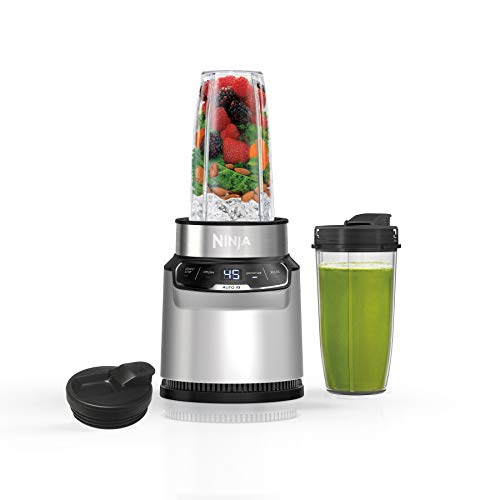
2. Ninja Nutri-Blender Pro BN401, 1100 peak W, Auto-iQ, (2) 24-oz cups — Best with Auto Programs
Auto-iQ’s value for shakes and smoothies is timing intelligence: the program pulses to break frozen loads down, ramps to pulverise, and stops before a shake over-thins. Two 24-oz cups keep partners’ smoothies separate and sequential.
Strengths
- Auto-iQ programs automate the shake and smoothie texture curve
- 1100-peak-watt motor handles frozen fruit confidently
- Two 24-oz cups suit couples’ separate routines
Trade-offs
- Programs decide the texture — manual moods need the pulse discipline of rivals
- 24 oz ceiling per batch
- Cups, not a jar: no large-format blending at all
| Specification | Detail |
|---|---|
| Power | 1100 peak watts |
| Cups | (2) 24-oz cups |
| Programs | 2 Auto-iQ programs (smoothies, salsa and dips) |
For households where the smoothie maker is half-awake, a program that lands the texture every time beats artisanal control. The BN401 is the set-it-right pick: load, press, dress for work, drink.
Its salsa program is a genuine bonus in a smoothie appliance — the same pulse intelligence, aimed at a different texture.
Best for: routine-driven households wanting program-perfect smoothies / Not suited for: cooks who want full manual texture control
Check on Amazon — check the current price on Amazon before you buy.

3. Vitamix Propel Series 510, 48 oz, Black — Best Premium Personal Scale
Not every premium smoothie household needs 64 ounces. The Propel 510 puts three programs and variable speed into a 48 oz container that pulverises green smoothies to silk and stops shakes at spoonable, in a footprint friendlier to smaller kitchens.
Strengths
- Three programs plus variable speed cover auto and manual moods
- 48 oz container is the right scale for one to two people
- Vitamix vortex eliminates green-smoothie grit
Trade-offs
- Premium positioning for a mid-size container
- Thick shakes still reward tamper attention
- Family batches mean two rounds
| Specification | Detail |
|---|---|
| Container | 48 oz |
| Programs | 3 programs |
| Controls | Pulse, variable speed, self-cleaning |
Green smoothies are the Propel’s party trick: kale and frozen mango emerge without the leaf flecks that betray lesser machines, because the vortex keeps everything in the blade path until it is truly smooth.
Choose it when smoothie quality is a daily standard rather than an occasional treat, and your batch size is personal rather than familial.
Best for: quality-first smoothie drinkers in one-to-two-person households / Not suited for: large-family batch blending
Check on Amazon — check the current price on Amazon before you buy.
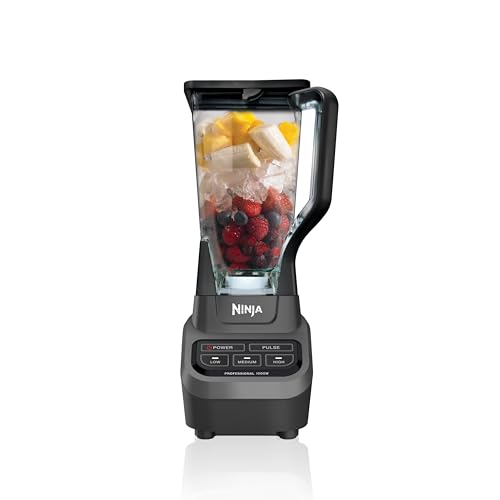
4. Ninja Professional Blender BL610, 1000W, 72 oz — Best Family Jar
Shake night for five is a jar job, and the BL610 is the value family pick: Total Crushing blades that the listing credits with ice crushing and smoothie blending, in a 72 oz pitcher with dishwasher-safe parts.
Strengths
- 72 oz pitcher serves the whole family in one batch
- Total Crushing technology built for ice and frozen fruit
- Dishwasher-safe parts keep family cleanup simple
Trade-offs
- Stepped controls give less shake-thickness finesse than pulse or dials
- Big pitcher is clumsy for a single small smoothie
- Loud at full power, like all ice-crushing designs
| Specification | Detail |
|---|---|
| Power | 1000W |
| Pitcher | 72 oz |
| Technology | Total Crushing |
| Care | Dishwasher-safe parts |
Load order is the BL610 technique: liquids and soft ingredients first, frozen last, then let the crushing blades work down through the load. Smoothies emerge uniform; shakes stay thick if you stop the moment the vortex smooths — watch, do not wander.
As the family’s single blender it also covers sauces and frozen drinks, which is the honest reason most households buy exactly this class of machine.
Best for: families blending smoothies and shakes in full batches / Not suited for: solo drinkers wanting a cup-format routine
Check on Amazon — check the current price on Amazon before you buy.

5. KitchenAid Pure Power Blender KSB2078, 1700W peak, 68 oz + 2 personal jars — Best Hybrid
The hybrid answer: blend the family’s shakes in the 68 oz jar on Saturday, then blend weekday smoothies in the personal jars on the same base. The listing names a Smoothie cycle and precision speed control, with 1700W of peak power behind both formats.
Strengths
- Full-size jar plus two personal jars on one base
- Named Smoothie cycle in the verified listing
- 1700 Watt peak power is the highest here
Trade-offs
- Peak power is a headline figure; technique still decides texture
- Most parts of any hybrid — storage for jars and cups adds up
- Newer model line: verify included jars on the exact listing
| Specification | Detail |
|---|---|
| Power | 1700 Watt peak power |
| Jars | 68 oz blending jar + 2 x 16-oz personal jars |
| Controls | Precision speed control knob, Smoothie cycle |
Hybrids fail when the second format is an afterthought; here the personal jars are sized for real smoothies and the smoothie cycle is a named program, so both halves of the brief are genuinely served.
For households split between solo weekday smoothies and family weekend shakes, this is the one-purchase answer.
Best for: households split between solo smoothies and family shakes / Not suited for: minimalists who want exactly one vessel
Check on Amazon — check the current price on Amazon before you buy.

6. Hamilton Beach Portable Blender 51172G, 300W peak, 14 oz travel jar — Best Budget Commuter
The budget pick optimises for one job: a single smoothie or shake blended in the jar you carry out the door. Stainless blades, a BPA-free jar and lid, and 300 peak watts sized honestly for soft-fruit and protein-shake work.
Strengths
- Blend-in travel jar eliminates washing a pitcher
- BPA Free jar and lid stated in the listing
- Compact footprint suits dorms, desks and small kitchens
Trade-offs
- 300W peak is for soft ingredients — heavy ice loads are beyond it
- 14 oz is one modest serving, no more
- Shake thickness control is purely start-stop timing
| Specification | Detail |
|---|---|
| Jar | 14 oz travel jar, BPA Free |
| Power | 300 Watts peak power |
| Blades | Stainless steel |
Set expectations by its design: protein shakes, banana smoothies and soft-fruit blends are its home; frozen-fruit green smoothies belong to the 1000W-plus picks above. Within its brief it is unbeatable on friction — blend, rinse, go.
It is also the natural second blender for an office or dorm, where a full machine would never be allowed to live.
Best for: commuters and dorm users blending single soft smoothies / Not suited for: frozen-fruit and ice-heavy blending
Check on Amazon — check the current price on Amazon before you buy.
Comparison Table
| Pick | Badge | Key spec | Best for |
|---|---|---|---|
| nutribullet Pro+ N12-1001MK, 1200W, pulse, 32 oz & 24 oz cups | Best Overall Personal Blender | 1200W, 32+24 oz cups, pulse | daily smoothie drinkers who also make thick shakes |
| Ninja Nutri-Blender Pro BN401, 1100 peak W, Auto-iQ, (2) 24-oz cups | Best with Auto Programs | 1100PW, Auto-iQ, 24-oz cups | routine-driven households wanting program-perfect smoothies |
| Vitamix Propel Series 510, 48 oz, Black | Best Premium Personal Scale | 48 oz, 3 programs | quality-first smoothie drinkers in one-to-two-person households |
| Ninja Professional Blender BL610, 1000W, 72 oz | Best Family Jar | 1000W, 72 oz pitcher | families blending smoothies and shakes in full batches |
| KitchenAid Pure Power Blender KSB2078, 1700W peak, 68 oz + 2 personal jars | Best Hybrid | 68 oz + personal jars, Smoothie cycle | households split between solo smoothies and family shakes |
| Hamilton Beach Portable Blender 51172G, 300W peak, 14 oz travel jar | Best Budget Commuter | 14 oz travel jar, 300W peak | commuters and dorm users blending single soft smoothies |
Green Smoothies Without the Grit
Grit in a green smoothie has three causes: fibrous greens that never fully entered the vortex, seeds that needed more time, and a machine stopped ten seconds too early. The fixes are procedural. Blend greens with the liquid alone for the first fifteen seconds — a green base with no frozen obstacles — then add fruit and ice and run the full cycle. What emerges is a uniform green drink instead of a sweet drink with leaf confetti.
Machine class still matters: the vortex strength of the Vitamix and high-power personal picks physically pulls the mixture through the blades more times per second. But technique closes most of the gap — a mid-range blender given the two-stage method and the full minute will out-smooth a flagship given thirty careless seconds.
Protein Shakes: Texture, Foam and the Powder Problem
Protein powder is a texture saboteur: added dry on top it clumps, blended long it foams, and in a personal cup it can pressurise the blend with air. The working order is liquid first, powder second — onto the liquid, not the cup wall — then ice and soft ingredients. Blend just until uniform; every extra second whips in foam that turns a shake into a mousse you have to wait out.
For thickness without ice cream, frozen banana is the professional base: it sweetens, bodies and chills in one ingredient. Greek-yogurt-style thickness comes from frozen fruit plus patience at the pulse button — which is why the Pro+’s pulse, rare in personal blenders, earns its badge in this guide.
Meal-Prep Smoothies: Freezer Packs and Morning Systems
The freezer-pack system is why personal blenders dominate weekday mornings: fruit, greens and seeds portioned into bags on Sunday, then one bag plus liquid per morning, blended in the cup you carry out. The blender’s job in this system is to handle a fully frozen pack without complaint — the duty the 1000W-plus personal picks and the Auto-iQ programs here are built for.
Two details make the system stick. First, keep the liquid out of the pack; it stores separately and goes in fresh. Second, standardise the pack size to your cup with headroom for liquid — an overfilled cup cannot vortex, and a failed Monday-morning smoothie is how systems die. Size the pack to the vessel, and the habit runs itself.
Milkshake Architecture: Ratios That Hold a Spoon
A milkshake is a ratio before it is a recipe: roughly three parts frozen base — ice cream or frozen banana — to one part liquid, blended just to unity. More liquid and it drinks; less and it will not move. The machine’s role is to reach unity in seconds, because every second past it is melt and air working against body. This is why pulse control headlines this guide: the shake is finished by stopping, and the Pro+’s pulse button and the BN401’s timed programs are stopping technologies.
Flavour architecture sits on top of the ratio: a base flavour, a texture element — cookie pieces, nut butter swirls — added in the final two pulses so it survives as texture, and a temperature discipline that keeps everything freezer-cold until the moment of blending. Warm ingredients are a shake’s silent failure; the blend cannot re-chill what the counter warmed.
Glasses matter more than garnish: a frosted glass holds a shake’s body for the ten minutes it takes to drink it, while a warm glass starts melting the base on contact. The recipe ends at the pour, not at the blender’s stop button.
Smoothie Bowls and Spoonable Blends
The smoothie bowl is a smoothie that refused to be a drink: half the liquid, all of the frozen fruit, and a blend that must be coaxed rather than poured. It is the sternest test in this search’s territory — a weak vortex cavitates, spinning a hole while the mixture sits unmoved — and it separates machines with tampers and strong circulation from the rest. The Propel 510’s variable vortex and the K400-style tamper discipline are the tools; cup blenders manage single bowls if the load is modest and shaken down once mid-blend.
Technique carries the bowl: liquids first and minimal, frozen fruit in two additions, tamper or stop-and-press between them, and the patience to let the vortex catch rather than adding liquid in panic. The liquid you add to rescue a struggling bowl is the difference between a bowl and a smoothie — sometimes that trade is right, but make it as a decision, not a reflex.
Toppings are structure, not decoration: granola, fresh fruit and seeds give the spoon something to do, and they are added after the blend, never into it. A bowl blended with its toppings is just a thick smoothie with regrets.
Kids, Breakfasts and the School-Morning System
The school-morning smoothie is a logistics product: it must be blendable by a tired adult in ninety seconds, drinkable by a child in ten minutes, and substantial enough to count as breakfast. The systems that survive are the freezer packs from the earlier section, sized to the cup, with the liquid measured once and marked on the cup with tape if necessary. Personal blenders dominate this use because the cup goes from base to backpack cupholder without a transfer or a second vessel to wash.
Nutritionally the pattern is simple and blender-friendly: fruit for sweetness, a protein element, a fat element for staying power, and greens smuggled under mango’s charisma. The machine’s contribution is texture — a gritty smoothie is a refused smoothie, which is why the full-cycle discipline matters more in this use than in any dessert context.
Shakes occupy the other end of the family day — the earned dessert — and the same machine serves both without confusion, provided the stopping discipline is learned: smoothies run long, shakes stop early. Teach that one sentence and the whole household can drive the blender.
Sweetness, Ice Cream Alternatives and Dietary Swaps
Modern shake making runs on swaps: frozen banana for ice cream, yogurt for body, nut milks for dairy, dates and ripe fruit for sweeteners. The blender’s demands shift with each swap — banana bases blend thick and easy; yogurt bases thin quickly and reward a shorter blend; nut-milk bases need frozen fruit for body or they drink like flavoured water. None of these are compromises when the technique adjusts; all of them fail when blended like the dairy originals they replace.
Protein and supplement additions follow the powder rule from the earlier section: onto the liquid, never onto the cup wall, and blended briefly. Greens powders and seeds disappear best when blended with the liquid base first, before the frozen load arrives to slow the vortex.
The honest summary is that the machines in this guide are swap-agnostic — power and control serve any ingredient list — but recipes are not. Keep a card of your household’s working ratios per base, and the swaps become a repertoire instead of a series of experiments.
Troubleshooting: Seven Shake and Smoothie Failures
Too thin: the blend ran long, the base was warm, or the liquid ratio crept. Fix forward — add frozen fruit and pulse twice — and write the corrected ratio down. Too thick to move: the vortex cavitated; stop, press the mixture down, add liquid by the spoon, and restart low. Gritty: the cycle was short or the greens went in with the frozen load; blend the greens in liquid first next time.
Foamy: protein powder plus time. Blend powders briefly and rest the shake two minutes before judging — half the foam is patience-soluble. Separated: the smoothie sat; a five-second re-blend restores it, and a little fat or banana in the recipe slows the separation. Bitter greens: the ratio of leaf to fruit drifted; sweetness and a pinch of salt restore the balance.
Warm smoothie, the saddest failure: everything was room temperature and the ice was old. Chill the liquid, freeze the fruit, and remember that a blender can only spend the cold you give it.
The Two-Blender Household and Other Escalations
Many smoothie households end up with two machines — a personal blender for the weekday ritual and a jar blender for weekends — and this guide’s structure quietly endorses that: the formats solve different problems, and the combined cost of a good cup machine and a mid-range jar often undercuts one flagship asked to do both jobs badly. The sin is not owning two; it is owning one that matches neither routine.
Escalation within a format follows use, not reviews: the commuter whose 300W cup struggles with frozen packs has outgrown it honestly; the family whose jar blender leaves green smoothies gritty despite correct technique has a real case for the premium vortex. Upgrade when a named, repeated failure points at the machine — not when a newer model merely exists.
And keep the old machine if it still does one job well: the retired personal blender at the office, the jar in the holiday house. Blenders die slowly and work for years in second roles, which is the most sustainable sentence in this entire guide.
Buying the Machine You Will Still Use in March
Smoothie habits are famously perishable — January’s resolution is March’s cupboard clutter — and the machines that survive are the ones whose friction fits the life around them. Blend-in cups survive because the washing is trivial. Programs survive because the texture is reliable at 6 a.m. Big jars survive in families because Saturday shake night is a ritual, not a resolution.
So the final buying question is not which blender is best in the abstract — this guide has ranked those — but which routine in your actual week will still exist in March. Buy the machine that serves that routine with the least friction, at the highest quality your budget reaches, and the habit will do the rest.
Check the current price on Amazon on the two finalists that fit your routine, choose once, and put the machine where you will see it every morning. Visibility is a feature. The counter is the commitment.
The Freezer Stash: An Inventory That Runs Itself
A smoothie household runs on its freezer inventory: bananas peeled and halved before freezing, berries bought in season or on offer and frozen flat, greens washed and frozen in pack portions, and a small stock of frozen yogurt cubes or coconut milk cubes for body. The inventory rule is visibility — clear bags, front of the freezer, oldest forward — because a stash you cannot see is a stash you will not use.
Restocking follows the market rather than the calendar: fruit at its cheapest and ripest is fruit at its best for freezing, which makes the smoothie habit one of the few genuinely seasonal pleasures in a modern kitchen. The blender does not care which month the mango was frozen in; the palate notices only that it was ripe.
Keep one emergency layer — a bag of mixed fruit that needs no thought — for the mornings when portioning failed. Systems survive on their fallbacks, and the fallback smoothie, however plain, is infinitely better than the skipped one.
Blending for One, Two, or a Houseful: Scaling Sense
Recipes scale in smoothies more gracefully than in shakes: double a smoothie and the vortex still forms in a jar with headroom; double a shake and the thickness window narrows because the mass holds its cold differently and the blend must run longer to unify it. Scale shakes in batches rather than in ambition — two honest batches beat one heroic one — and scale smoothies by the jar’s line and no further.
For two people with different tastes, the personal-cup format is the peace treaty: a shared base, divided, finished separately — hers with ginger, his with extra banana — without a second washing of the big jar. Households fight about smoothies less than about most things, but the cup system removes even that friction.
Ratios written per serving, on the card, end scaling arguments permanently. Multiply the card, respect the fill line, and let arithmetic do what memory cannot at 6 a.m.
The Sound of the Morning: Noise Etiquette
Blenders are the loudest alarm clock a household owns, and in flats, dorms and early-shift homes the noise is a genuine selection criterion. Personal blenders run shorter cycles — the noise is briefer even when it is not quieter — and blending the night before, then re-blending for five seconds in the morning, is a legitimate system for the truly noise-bound, with a small texture cost most drinkers accept.
A towel under the base, a door closed, and the frozen load given two minutes in the liquid to soften all reduce both noise and time. What does not work is apologising to the machine by under-blending: a gritty smoothie made quietly is still a gritty smoothie.
If mornings are permanently early and walls are permanently thin, weight the program-driven picks: they finish decisively instead of wandering, and decisive is shorter, and shorter is quieter in the only way that counts — duration.
What to Do When the Habit Sticks
Three months in, a surviving smoothie habit starts generating its own momentum: the freezer stash deepens, the cards accumulate, and the machine’s cost per use drops toward the trivial. This is the moment households consider the upgrade question honestly — not from novelty, but from a named friction: the cup that is too small for the new two-person routine, the jar that leaves the green smoothie gritty despite perfect technique.
Upgrade then, with the data of a hundred blends behind the decision, and the old machine retires to the office or the relatives with honour. The guide’s rankings will still be here, and you will read them with the one thing no review can give you: your own evidence.
Until that moment, resist the itch. A machine in daily use is worth more than a better machine in a box, and the best blender for shakes and smoothies — the title this guide set out to award — is finally the one that is still blending in March.
A Short Defence of the Simple Smoothie
Recipe culture complicates smoothies past recognition — twelve ingredients, three powders, a philosophy. The simple smoothie defends itself: fruit, liquid, something green, something with body, blended fully. Four components, ninety seconds, a breakfast that respects the morning. Every pick in this guide makes it beautifully, and no upgrade changes its nature.
Complexity has its place — the bowl, the shake architecture, the café imitations all earn their sections — but the daily smoothie is infrastructure, and infrastructure should be boring in the best way: reliable, quick, and clean. Judge your machine by the simple smoothie on a tired Tuesday, not by the spectacular one on a rested Sunday.
That is the standard this guide quietly applied throughout: not which blender can do the most, but which will do the daily thing, daily, without friction or failure. Choose by that light and the rest of the repertoire follows.
The Invitation at the End of the Guide
Every guide in this series ends with homework, and this one’s is pleasant: one week of mornings. Monday, the simple smoothie by the book — liquid, greens first, frozen fruit, full cycle. Tuesday, the same smoothie, one variable changed. Wednesday, a shake, pulsed and stopped early, to feel the opposite discipline in the same machine. Thursday, a freezer pack assembled for Friday. Friday, the pack, blended half-awake, judged honestly.
By the weekend you will know three things no ranking can tell you: whether your format was right, whether your machine’s texture satisfies your palate, and whether the habit fits your life. If the answers are yes, you own the right blender and this guide has done its work. If one answer is no, you now know exactly which variable to change — and changing one variable, as the salsa card taught us, is how every kitchen system in this series improves. Start Monday. The bananas are already in the freezer.
Blades, Jars and the Decade View
A smoothie blender asked to work daily should be judged on its decade, not its demo. The wear items are knowable in advance: gaskets soften and want replacing, blade assemblies dull their fracture edges under years of ice, and jars cloud with micro-scratches that no cleaning reverses. None of these is a scandal — they are the maintenance profile of a machine that does the hardest daily work in the kitchen — but brands differ enormously in whether those parts are sold, priced sanely and replaceable without tools or a service visit.
Before you buy, spend three minutes on the maker’s parts page for your finalist: jar, gasket, blade assembly, tamper, cups. If all five exist as purchasable items, you are buying a platform; if none do, you are buying a lifespan. The picks in this guide come from makers with real parts ecosystems, which is part of what their positioning pays for — and the reason a well-kept machine from this list can still be blending, unremarkably and daily, when the next decade’s guides are written.
How to Choose a Blender for Shakes and Smoothies
Format follows routine
Daily solo smoothie: a personal blender whose cup you drink from. Family shakes and batch smoothies: a 68–72 oz jar. Both lives in one house: a hybrid or accept two rounds. The format decision matters more than any spec below it.
Power for frozen, control for thick
Frozen fruit and ice want roughly the 1000W class and up in full-size machines, or strong personal motors with enough liquid. Shakes want the opposite virtue — a pulse, a program, or a dial that stops at thick. The best picks here offer both virtues in one machine.
Cup and jar sizes in real servings
A meal smoothie is 16–24 oz; a shake serving is 12–16 oz. A 24-oz cup is one generous smoothie; a 72 oz jar is four to five shakes. Match vessel to serving math, not to the biggest number on the box.
Cleanup decides consistency of use
Dishwasher-safe parts, self-cleaning cycles and blend-in cups all reduce the friction that quietly ends smoothie habits by week three. Weight cleanup features as heavily as power.
How to Blend Smoothies Silky and Keep Shakes Thick
Two techniques, one machine: the loading order and stopping discipline below work across every format in this guide.
Load in order: liquid, soft, frozen last
Liquid at the blades starts the vortex; soft ingredients feed it; frozen items on top get pulled down gradually instead of jamming the blades at start-up.
Give smoothies the full cycle
Let programs finish, or blend manual smoothies a full 45–60 seconds. Grit disappears in the last fifteen seconds, when the vortex finally processes the seeds and leaf flecks.
Pulse shakes, and stop early
For shakes, blend in short bursts and stop while the mixture still mounds on a spoon. You can always add five seconds; you cannot un-blend a thin shake.
Use frozen fruit as your thickener
Frozen banana, mango or berries thicken shakes and smoothies without diluting flavour the way extra ice does. Keep a freezer stash of peeled ripe bananas as the house base.
Rinse or self-clean immediately
Smoothie residue dries like cement. A ten-second rinse now, or a warm-water self-clean cycle, is the whole difference between a blender that lives on the counter and one that lives in a cupboard.
Common Buying Mistakes
Overfilling personal cups
Cups blended past their line cannot form a vortex and strain the motor. Split into two rounds instead.
Blending shakes on the smoothie program
Programs optimise for drinkable, not spoonable. Use pulse or the shortest cycle for shakes.
Skipping liquid in frozen smoothies
Even powerful motors need liquid to circulate a frozen load. Add liquid first and let the vortex form.
Judging power by peak watts alone
Peak figures are momentary. Sustained crushing behaviour — blade design and programs — decides your daily texture.
Letting the blender sit dirty
Dried smoothie residue is the top reason home blenders get abandoned. Clean in the moment.
Final Recommendation
If you want the shortest possible shortlist, start with these three: nutribullet Pro+ N12-1001MK, 1200W, pulse, 32 oz & 24 oz cups, Ninja Nutri-Blender Pro BN401, 1100 peak W, Auto-iQ, (2) 24-oz cups, Vitamix Propel Series 510, 48 oz, Black. Each links to its Amazon listing, where you can check the current price on Amazon and confirm the exact configuration before deciding.
The nutribullet Pro+ leads on the strength of one button: pulse control in a powerful personal format that serves both silky smoothies and thick shakes. The Ninja BN401 is the program-driven alternative, and the Propel 510 is the premium personal-scale jar.
Families should take the BL610’s 72 oz value or the KitchenAid hybrid’s two-format flexibility, while commuters and dorm cooks get honest service from the Hamilton Beach travel-jar pick. Check the current price on Amazon, and buy for the routine you will actually repeat tomorrow morning.
Keep exploring the cluster: Best Blenders For Shakes With Ice Best Blenders For Slushies Best Blenders For Salsa Best Blenders For Sauces Best Air Fryers Non Toxic
Frequently Asked Questions
What is the difference between a shake and a smoothie in blending terms?
A smoothie is blended to a fully drinkable uniformity, seeds and all. A shake is blended only to thick smoothness and must stop early — the same machine, opposite stopping points. Pulse control or a program is what lets one blender do both.
How much power do I need for frozen fruit smoothies?
In full-size jars, the 1000W class with crushing blade designs handles frozen loads comfortably. Personal blenders in the 900–1200W range do the same in cup-size batches, provided liquid goes in first.
Are personal blenders or jar blenders better for smoothies?
For a daily solo smoothie, personal blenders win on friction: blend, lid, go, rinse. For families and batches, jars win on volume. Hybrids exist for households that live both lives.
Why is my smoothie gritty?
Usually time and order: not enough liquid at the start, or stopping before the vortex finishes the seeds and greens. Blend the full cycle — the last fifteen seconds do the polishing.
How do I make shakes thicker without ice cream overload?
Frozen banana or frozen fruit as the base, minimal liquid, and pulse-to-thick discipline. Thickness comes from frozen solids and restraint, not from longer blending.
Can these blenders crush ice for smoothies?
The crushing-focused picks — Ninja’s Total Crushing models and the high-power personal blenders — are built for it per their listings. The 300W budget commuter is not; keep its loads soft.


