Disclosure: airfryerkitchensupply.com is reader-supported. When you buy through links on our site, we may earn an affiliate commission at no extra cost to you.
Where to buy
Start here if you are shopping for the best blenders for salsa: every pick in this guide was verified, and every specification quoted comes from the verified listing for that exact model.
Salsa blenders live and die by pulse control, and the models here were verified — including one whose listing names a dedicated Salsa auto program, and another whose Auto-iQ programs explicitly cover salsa and dips.
The six machines in this guide are: Oster Vortex Glass Blender, 800W, 54 oz glass jar, 3 iBlend auto programs, reversible blades, Ninja Kitchen System Pro BL770, 1500W, 72 oz + 8-cup processor, Ninja Nutri-Blender Pro BN401, 1100 peak W, Auto-iQ, (2) 24-oz cups, Vitamix 5200 Professional-Grade Blender, 64 oz, Black, KitchenAid K400 with Tamper KSB4028, Contour Silver, Hamilton Beach Power Elite 58148AG, 700W, 40 oz glass jar. Check the current price on Amazon for the model you choose, and check price on Amazon again before ordering if you are comparing configurations, because capacities, included accessories and finishes vary by listing.
Introduction: Salsa Is a Texture Problem, Not a Power Problem
Finding the best blenders for salsa starts with a counterintuitive truth: salsa is ruined by too much blending far more often than by too little. Restaurant-style salsa wants discernible pieces of tomato, onion and pepper suspended in juice — a texture made by short pulses and a wide jar that lets chunks circulate without liquefying. Pico de gallo wants even more restraint. Only smooth salsas — a salsa roja blended silky, a tomatillo salsa verde — reward a full-speed blend, and even they take under a minute.
That is why this guide ranks pulse control, jar geometry and dedicated salsa programs above raw wattage. Two picks state salsa capability in their verified listings outright: the Oster Vortex carries a Salsa iBlend auto program, and Ninja’s BN401 lists salsa and dips among its Auto-iQ programs. The Ninja BL770 adds a food processor bowl for true chunk work. The remaining picks earn their places on manual control — tamper, variable speed, and jars that chop before they puree.
Every ASIN was confirmed, specs come only from verified titles, and no prices or fixed scores appear — check the current price on Amazon for the configuration you choose.
In this guide
Quick Picks
Best Overall — Oster Vortex Glass Blender, 800W, 54 oz glass jar, 3 iBlend auto programs, reversible blades: the only pick with a Salsa auto program in its verified listing: Oster’s Vortex pairs reversible steel blades and 3 iBlend programs with an 800W motor and a 54 oz glass jar. Check the current price on Amazon.
Best for Chunky Salsa — Ninja Kitchen System Pro BL770, 1500W, 72 oz + 8-cup processor: Ninja’s BL770 Kitchen System adds an 8-cup food processor bowl to its 1500W, 72 oz platform — the processor bowl is the chunk-keeper’s real salsa tool. Check the current price on Amazon.
Best Personal Blender for Salsa — Ninja Nutri-Blender Pro BN401, 1100 peak W, Auto-iQ, (2) 24-oz cups: Ninja’s BN401 Nutri-Blender Pro states salsa and dips in its Auto-iQ programs, with an 1100-peak-watt motor and two 24-oz cups — small-batch salsa with a program that knows the texture. Check the current price on Amazon.
Best for Smooth Salsas — Vitamix 5200 Professional-Grade Blender, 64 oz, Black: the Vitamix 5200: 64 oz, variable speed and a tamper — when the goal is a silken salsa roja or verde, nothing here controls the vortex like it. Check the current price on Amazon.
Best Mid-Range All-Rounder — KitchenAid K400 with Tamper KSB4028, Contour Silver: KitchenAid’s K400 brings preset recipe programs — Ice Crush, Icy Drinks and Smoothie — plus a 5-speed variable dial and Intelli-Speed motor control, with a tamper in this configuration. Check the current price on Amazon.
Best Budget Glass Jar — Hamilton Beach Power Elite 58148AG, 700W, 40 oz glass jar: Hamilton Beach’s Power Elite: a 40 oz glass jar, Wave Action circulation, 12 functions including puree and ice crush, at 700 watts — the value route to decent salsa. Check the current price on Amazon.
How These Picks Were Chosen
Selection began with salsa evidence: a named salsa program, a processor-bowl option, or manual controls fine enough to pulse in one-second bursts without the mixture collapsing into soup.
Jar geometry came second. Wide jars circulate chunks for even chopping; narrow personal cups puree quickly and suit smooth salsas for one or two people. Both styles appear here, labelled honestly for the salsa type they serve.
We also weighed the rest of the blender’s life — smoothies, sauces, frozen drinks — because a salsa specialist that cannot do anything else is a hard sell for most kitchens.
The 6 Best Blenders for Salsa

1. Oster Vortex Glass Blender, 800W, 54 oz glass jar, 3 iBlend auto programs, reversible blades — Best Overall
A blender whose listing literally names a Salsa program earns the top spot in a salsa guide. The Oster Vortex’s iBlend set — Milkshake, Salsa, Smoothie — runs programmed pulse patterns so the chop stays chunky, and its reversible blades pull ingredients down then push them back for even pieces.
Strengths
- Dedicated Salsa iBlend auto program, verified in the listing
- Reversible steel blades designed for even chopping circulation
- 54 oz glass jar will not stain or hold pepper odours
Trade-offs
- 800W is mid-power: frozen work is fine, heavy nut butters are not its brief
- Glass jar is heavier and breakable compared with plastic pitchers
- Auto program texture is fixed; fussy cooks may still prefer manual pulsing
| Specification | Detail |
|---|---|
| Jar | 54 oz glass jar |
| Power | 800 Watt |
| Programs | 3 iBlend auto programs: Milkshake, Salsa, Smoothie |
| Blades | Reversible steel blades |
The Salsa program’s pulse pattern solves the beginner’s dilemma — how long is long enough — by stopping at a chopped consistency instead of a puree. Run it once for chunky, and if your tomatoes were watery, a second short cycle tightens the texture without crossing into soup.
Glass matters for salsa specifically: tomato acids and chilli oils stain and scent plastic over time, while glass rinses clean and neutral. For households making salsa weekly through tomato season, that alone justifies the pick.
Best for: weekly salsa makers who want a named salsa program in a glass jar / Not suited for: high-volume frozen-drink blending
Check on Amazon — check the current price on Amazon before you buy.

2. Ninja Kitchen System Pro BL770, 1500W, 72 oz + 8-cup processor — Best for Chunky Salsa
For pico-style and chunky restaurant salsas, the honest best tool in this guide is the BL770’s 8-cup processor bowl: wide, shallow chopping geometry that dices instead of pureeing. The 72 oz pitcher then covers smooth salsas and everything else a 1500W kitchen system does.
Strengths
- 8-cup processor bowl gives true chunk control for pico-style salsas
- 1500W platform with 72 oz pitcher for smooth salsas and big batches
- Two 16-oz cups extend it to smoothies and small smooth salsas
Trade-offs
- Most parts of any pick here — counter footprint is the system’s tax
- Processor bowl results still depend on not over-pulsing
- Pitcher blending will liquefy chunky salsa if you let it run
| Specification | Detail |
|---|---|
| System | 1500W kitchen system |
| Pitcher | 72 oz |
| Processor bowl | 8-cup |
| Cups | (2) 16-oz cups |
Use the processor bowl with discipline: quartered onions and peppers, three to five one-second pulses, check, repeat. That rhythm produces the even, spoonable chop jar blenders struggle to match, because the bowl’s geometry keeps pieces moving horizontally instead of vortexing them into the blades.
Then let the pitcher do what it is for — silky roja, verde, and the smoothies and doughs the system also handles. As a two-texture salsa station, nothing else in this guide covers both ends as completely.
Best for: chunky-salsa lovers who want processor control plus a full blender / Not suited for: minimalists with no storage for a multi-part system
Check on Amazon — check the current price on Amazon before you buy.
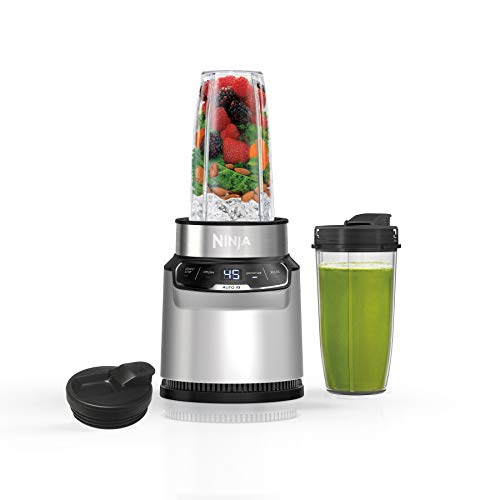
3. Ninja Nutri-Blender Pro BN401, 1100 peak W, Auto-iQ, (2) 24-oz cups — Best Personal Blender for Salsa
Personal blenders usually puree everything, but the BN401’s verified listing names salsa and dips among its two Auto-iQ programs — programmed pulsing sized for one batch of salsa for two to four people, in cups that go straight to the table or fridge.
Strengths
- Auto-iQ programs explicitly include salsa and dips, per the listing
- 1100-peak-watt motor chops confidently in small batches
- Two 24-oz cups blend, serve and store in the same vessel
Trade-offs
- 24-oz cups cap batch size — party salsa needs two rounds
- Narrow cups puree faster than wide jars, so watch smooth blends
- No large pitcher for family-scale smooth salsas
| Specification | Detail |
|---|---|
| Power | 1100 peak watts |
| Cups | (2) 24-oz cups |
| Programs | 2 Auto-iQ programs for smoothies, salsa and dips |
Small-batch salsa is fresher salsa: a cup blended tonight beats a jar ageing all week. The BN401’s salsa program pulses to a dippable chop, and because the cup is the storage vessel, leftovers go straight into the fridge with a lid.
It suits couples and small households whose salsa habit is a side dish, not a production run — and whose counter cannot host a full system.
Best for: couples and small households making fresh small-batch salsa / Not suited for: party-scale batch production
Check on Amazon — check the current price on Amazon before you buy.

4. Vitamix 5200 Professional-Grade Blender, 64 oz, Black — Best for Smooth Salsas
Smooth salsas are a different discipline: roasted tomatoes, tomatillos and chillies blended to a pourable silk, sometimes emulsified with a thread of oil. The 5200’s variable speed lets you start slow to chop, then climb to a full vortex while the tamper keeps the mixture moving — the professional’s salsa roja workflow.
Strengths
- Variable speed gives full manual control from chop to silk
- Tamper keeps thick roasted mixtures circulating without stopping
- 64 oz container handles double batches for canning-day salsas
Trade-offs
- Manual control means the texture is your responsibility — no salsa program
- Premium positioning, the highest among these picks
- Tall container stores awkwardly under low cabinets
| Specification | Detail |
|---|---|
| Container | 64 oz |
| Controls | Variable speed with high-speed switch |
| Blades | Stainless steel |
| Extras | Self-cleaning; tamper workflow |
For salsa verde especially — tomatillos, serranos, onion, cilantro — the 5200 produces the glossy, unified texture that bottled versions imitate. Start at low speed until the mixture catches, then let the vortex run twenty to thirty seconds.
It is overkill bought for salsa alone, but as the anchor appliance of a blending-heavy kitchen it earns its place in this guide on smooth-salsa supremacy.
Best for: smooth-salsa specialists and high-volume home cooks / Not suited for: set-and-forget cooks who want a salsa button
Check on Amazon — check the current price on Amazon before you buy.

5. KitchenAid K400 with Tamper KSB4028, Contour Silver — Best Mid-Range All-Rounder
The K400 has no salsa button, so it earns its place on control: a five-speed dial for manual pulse-chopping and Intelli-Speed motor control that holds blade speed as the load thickens — the moment where lesser blenders bog down mid-salsa.
Strengths
- Intelli-Speed holds power steady as salsa thickens
- Five-speed dial supports deliberate manual pulsing
- Tamper included in this configuration for thick mixtures
Trade-offs
- No dedicated salsa program — texture is manual
- Chunky results need short pulses and attention
- Configuration and colour vary by listing; verify at checkout
| Specification | Detail |
|---|---|
| Programs | Preset recipe programs: Ice Crush, Icy Drinks, Smoothie |
| Controls | 5-speed variable dial |
| Motor control | Intelli-Speed Motor Control |
| Included | Tamper (KSB4028 configuration) |
Work the K400 in bursts: two or three pulses at low speed for a chop, rest, look, then decide. Its steady motor makes each pulse consistent, which is what manual salsa technique actually needs — predictability.
Outside salsa it is a complete mid-range blender for smoothies and icy drinks, which is why it suits households wanting one machine rather than a system.
Best for: one-blender households that pulse manually and value steady power / Not suited for: cooks who want a dedicated salsa program
Check on Amazon — check the current price on Amazon before you buy.

6. Hamilton Beach Power Elite 58148AG, 700W, 40 oz glass jar — Best Budget Glass Jar
The budget pick keeps the two features salsa cares about — a glass jar that resists tomato staining, and a Wave Action system that pulls mixture down for more even chopping — across twelve functions at 700 watts.
Strengths
- Glass jar resists salsa staining and odour retention
- Wave Action system circulates chunks for even chops
- 12 functions including puree and crush ice cover the basics
Trade-offs
- 700W is the gentlest motor here; thick mixtures need patience
- Chunk control is fully manual — pulse in short bursts
- 40 oz jar is mid-size for party batches
| Specification | Detail |
|---|---|
| Jar | 40 oz glass jar |
| Power | 700 Watts |
| Functions | 12, including Puree and Crush Ice |
| System | Wave Action |
Technique carries this blender: pulse once per second, four to six times, scraping once if pieces ride the sides. The Wave Action design reduces the riding, and the glass jar keeps last week’s salsa from flavouring this week’s.
As an entry point — first apartment, occasional salsa, mostly smoothies — it delivers the essentials without the premium positioning of the rest of the guide.
Best for: budget buyers who still want a glass jar for salsa / Not suited for: heavy frozen or thick-mixture blending
Check on Amazon — check the current price on Amazon before you buy.
Comparison Table
| Pick | Badge | Key spec | Best for |
|---|---|---|---|
| Oster Vortex Glass Blender, 800W, 54 oz glass jar, 3 iBlend auto programs, reversible blades | Best Overall | 54 oz glass, Salsa auto program | weekly salsa makers who want a named salsa program in a glass jar |
| Ninja Kitchen System Pro BL770, 1500W, 72 oz + 8-cup processor | Best for Chunky Salsa | 72 oz + 8-cup processor bowl | chunky-salsa lovers who want processor control plus a full blender |
| Ninja Nutri-Blender Pro BN401, 1100 peak W, Auto-iQ, (2) 24-oz cups | Best Personal Blender for Salsa | 1100PW, Auto-iQ salsa program | couples and small households making fresh small-batch salsa |
| Vitamix 5200 Professional-Grade Blender, 64 oz, Black | Best for Smooth Salsas | 64 oz, variable speed, tamper | smooth-salsa specialists and high-volume home cooks |
| KitchenAid K400 with Tamper KSB4028, Contour Silver | Best Mid-Range All-Rounder | 5-speed dial, Intelli-Speed | one-blender households that pulse manually and value steady power |
| Hamilton Beach Power Elite 58148AG, 700W, 40 oz glass jar | Best Budget Glass Jar | 40 oz glass, 700W | budget buyers who still want a glass jar for salsa |
The Four Salsa Textures and How to Hit Each One
Pico de gallo is not blended at all in strict tradition — it is knife work — but a processor bowl with three disciplined pulses is the closest machine approximation, and the BL770’s bowl exists in this guide for exactly that. Restaurant-style salsa sits one step smoother: discernible pieces in a juicy body, the territory of the Oster’s Salsa program and the BN401’s Auto-iQ salsa cycle. Both are pulse arts, and both are destroyed by ten seconds of inattention.
Salsa roja, blended smooth, wants the opposite treatment: roasted ingredients, a full vortex, and twenty to thirty seconds at high speed until the surface turns glossy. Salsa verde follows the same path with tomatillos, and both reward blending while warm. Know which of the four textures you are making before the lid goes on — the machine settings follow from the answer, never the reverse.
Tomatoes, Peppers and the Water Problem
Most disappointing homemade salsa is a water problem wearing a flavour costume. Fresh tomatoes vary from meaty paste types to juice balloons, and blending ruptures every cell wall it touches. The countermeasures are mechanical: drain chopped tomatoes, blend the aromatics first and the tomato last, and salt after blending so osmosis does not thin the batch while it spins.
Pepper choice shapes both heat and body: jalapeños bring green freshness, serranos bring sharper heat in a smaller package, and dried chillies — rehydrated and blended smooth — build the deep roja base that fresh peppers cannot. A blender handles all three, but the dried-chilli route is where high-performance machines earn their keep, grinding skins and seeds into the body instead of leaving them as flecks.
Batch Salsa, Freezing and Canning-Day Notes
Salsa scales gracefully: a 72 oz pitcher or a processor bowl turns a market haul of tomatoes into a week of salsa in minutes. Refrigerated fresh salsa peaks within days, which argues for the personal-blender rhythm of small fresh batches for table use — and for cooking the big batches, since a briefly simmered blender salsa keeps longer and deepens in flavour.
Freezing works better than its reputation: freeze smooth salsas flat in bags and they thaw into near-fresh condition for cooking and dipping; chunky salsas thaw softer, so freeze those as cooking ingredients rather than as pico. What no blender changes is food safety — follow tested recipes and processes for any shelf-stable canning, and treat blender salsa as a fresh or frozen food by default.
Knife vs Machine: An Honest Texture Audit
A knife-cut pico has a quality no machine fully reproduces: clean-cut pieces that weep slowly and stay distinct for hours. Machine chopping bruises as it cuts, releasing juice faster, which is why blender salsa tastes best in its first day while knife pico holds its structure into the second. This is not a reason to abandon the machine — it is a reason to match the tool to the serving time. Salsa for tonight’s tacos: pulse away. Salsa for tomorrow’s party platter: consider the knife, or pulse the machine batch and refresh it with hand-chopped tomato at serving time.
The processor bowl narrows the gap most, because its wide, shallow geometry slices pieces off the pile instead of hammering the whole mass through a vortex. That is why the BL770 anchors the chunky end of this guide, and why the salsa-program machines — which pulse in coded bursts rather than running — anchor the jar end. Every tool here is honest about which texture it owns.
Smooth salsas reverse the audit completely: no knife produces a roja’s silk, and no food processor emulsifies like a vortex blender. The four-texture map from the earlier section is the whole decision — name your texture, and the tool chooses itself.
Building a House Salsa: A Repeatable Method
A house salsa — the one your kitchen is known for — comes from a written ratio, not inspiration. Start with a base of four parts tomato to one part onion, half a part pepper by heat preference, garlic by the clove, lime by the half, salt by the pinch, cilantro by the handful. Blend or pulse to your texture, taste cold — salsa is served cold, and warm tasting lies — then adjust exactly one variable and write down what you changed.
Three batches in, the ratio becomes yours: the serrano count your household actually enjoys, the lime level that survives your tomatoes’ sweetness, the rest time that melds it. The machine’s contribution to this process is consistency — the Oster’s program or the BN401’s Auto-iQ cycle pulses the same way every batch, removing the largest variable so your adjustments mean something.
Keep the card with the machine. It sounds precious until the first time a guest asks for the recipe and you can actually give it — measured, repeatable, and credited to the unglamorous discipline of changing one thing at a time.
Salsa Verde and Roja: Two Worked Examples
Verde first: husked tomatillos, simmered or roasted until they turn olive, blended warm with serrano, white onion, garlic and cilantro. In a high-performance blender, thirty seconds at full vortex produces the glossy, unified verde that coats a taco evenly; in a personal cup, blend in two stages — tomatillos first, aromatics pulsed in after — so the herbs stay green instead of blackening.
Roja is the roasted path: tomatoes, onion, garlic and dried or fresh chillies blackened in a dry pan or under a broiler, then blended with their juices and a pinch of salt. Roasting concentrates sugars, so roja needs less help — and it blends silkier while warm, which is why the hot-blending discipline from the sauces guide applies here too: half-fill, vent, start slow.
Both examples expose the same machine truth: verde rewards restraint at the end of the blend, roja rewards commitment through it. A variable-speed machine walks both paths with one dial; a program machine walks them with two different buttons. Either way, the cook who knows the destination texture drives — the blender is transportation.
Troubleshooting Salsa: Six Fixes
Too watery: drain the tomatoes next time; this time, stir in a spoon of tomato paste for body or serve with a slotted spoon and call it rustic. Too thin after salting is the classic sequencing error — the fixes in the mistakes section exist because everyone makes it once. Too bitter: the herbs were over-blended, or a pepper’s seeds and membranes dominated; next batch, pulse the cilantro in at the end and taste before the final pulse.
Too hot: do not add sugar in panic. Add tomato and onion volume, a little lime, and time — heat mellows measurably in an hour of resting. Too bland: it is almost never heat that is missing; it is salt, then acid, in that order, added in small increments with a cold taste between each. Flat colour: the blend ran long enough to oxidise the herbs — shorten the final pulses.
Foamy salsa — a real blender artefact — settles with ten minutes of rest and a stir. If it recurs, your pulses are too long and the vortex is whipping air; shorten them and let gravity help between bursts.
Salsa Beyond the Dip: Cooking with What You Made
A batch of blender salsa is a sauce base wearing a dip’s clothes. Simmered for ten minutes it becomes the poaching liquid for eggs, chicken or fish in the shakshuka-adjacent style; thinned with stock it is an instant enchilada sauce; spooned over grilled anything it does the work of a fresh relish and a sauce simultaneously. The smooth rojas and verdis in particular are cooking sauces that happen to dip well.
This dual life argues for making salsa in the machine whose other talents you use: the Vitamix that purees your roja also simmers your soups; the BL770 that chops your pico also processes the dough for the empanadas the salsa will accompany. Kitchen systems earn their footprint by connecting meals, not by winning single-dish contests.
Freeze the surplus smooth salsa in flat bags and the connection extends across weeks: a Tuesday taco night reaches back to the August tomato glut, and the blender that made both batches has quietly become the most economical appliance you own.
Jar Care for the Salsa Household
Salsa is hard on jars in two specific ways: pigments stain, and chilli-garlic oils scent. Glass — the Oster Vortex and the Hamilton Beach in this guide — shrugs both off, which is a genuine ownership advantage that compounds weekly. Plastic jars need the immediate-rinse discipline: the moment salsa leaves the jar, warm water and a drop of soap go in, and the self-clean cycle or a soft sponge finishes before pigments set.
Blades and gaskets hold flavour too. A gasket that smells of garlic will perfume a strawberry smoothie, so salsa households benefit from a dedicated gasket or jar for the savoury work — one of the quiet arguments for the multi-cup systems, where one cup can be the salsa cup forever.
Dried-on salsa is the enemy of blade assemblies: soak the jar assembled for ten minutes rather than scrubbing around blades. The machines here are built to be cleaned by their own vortex — use it, every time, immediately, and the salsa habit stays a pleasure instead of becoming a sink negotiation.
When to Skip the Blender Entirely
Honesty completes this guide: for a small bowl of pico for two, the knife is faster than washing any machine, and its texture is better. For a single serving of smooth salsa, a personal cup wins. The blender’s territory is the middle and the volume — family batches, party quantities, smooth sauces — and the cooks who love their machines are the ones who deploy them there and reach for the knife without guilt when the batch is small.
There is also a category of salsa the blender should never touch: the chunky, hand-cut table salsas served as a condiment salad, where the pieces are the point. Recognising that boundary is not a failure of the appliance; it is the sign of a cook who owns tools instead of being owned by them.
Buy the blender for the batches that justify it, use it joyfully at that scale, and let the small jobs stay small. That restraint is what keeps a salsa blender in service for a decade instead of in the cupboard by March.
Regional Styles Worth Your Blender’s Time
Salsa is a continent, not a recipe. The Yucatecan habanero style is thin, fiery and citrus-led — a smooth blend where the personal blenders shine and restraint with the pepper is the whole skill. The northern Mexican carne-asada salsas are chunky, char-heavy and processor-bowl territory. Guatemalan chirmol is a roasted tomato salsa of beautiful simplicity that a variable-speed machine purees to order, coarse or fine.
Exploring one style per month is the pleasantest way to learn your machine’s full range: each style asks for a different texture, and texture range is what you paid for. Keep the house-salsa card method running — one variable at a time, written down — and the regional tour builds a repertoire instead of a pile of anecdotes.
Heat management across styles follows one rule: you can blend more pepper in, but you cannot blend it out. Start below your target, taste cold, and climb. The households that fear their own salsa are the ones that seasoned by bravado instead of by spoon.
Salsa for Special Diets and Gentle Palates
Low-heat salsas are a craft of their own: peppers chosen for flavour over fire — poblanos, Anaheims, bells roasted until sweet — with the aromatic structure carried by onion, garlic, lime and herbs. A blender handles them identically to the fiery versions; the recipe, not the machine, sets the temperature. For mixed households, blend the base mild and stir a minced hot pepper into half the batch at serving time.
Low-sodium salsas lean on acid and char for the brightness salt usually provides: extra lime, a splash of vinegar, and deeply roasted vegetables. The blender’s contribution is texture precision — a salsa with the right body tastes seasoned beyond its sodium, because texture is a flavour carrier.
For texture-sensitive eaters, the smooth end of the map is a kindness: a fully pureed, briefly simmered salsa has all the flavour of the table version with none of the pieces. The same machine makes both, minutes apart, which is the quiet argument for owning one good blender instead of apologising for it.
From Jar to Table: Serving and Storing Craft
Salsa improves for fifteen minutes and peaks within the day: the rest melds the aromatics, and after that the fresh edges dull gracefully. Serve it in a bowl that shows its colour, at cool room temperature rather than fridge-cold, because cold mutes both heat and brightness — pull it out twenty minutes before the meal, the way you would a cheese.
Storage is a glass-jar argument one last time: salsa keeps best in glass, sealed, with its surface smooth. If a skin forms or the top darkens, it is oxidation, not spoilage — stir it under or skim it, and trust your nose for the real verdict. Frozen smooth salsa thaws into a sauce; plan its second life accordingly.
Presentation is the final pulse: a spoon of hand-chopped fresh tomato, pepper and cilantro folded into a machine salsa at serving time gives it the just-made look and a texture contrast no single method achieves. The machine did the work; the hand does the garnish; the table notices neither seam.
Your First Five Batches: A Practice Ladder
Batch one: the Oster-program or pulse-method classic — tomato, onion, jalapeño, lime, salt — made exactly by the how-to. Batch two: the same salsa, one variable changed. Batch three: a verde, to learn the warm blend. Batch four: a roasted roja, to learn the full vortex. Batch five: your house ratio, written on the card, made from memory.
By batch five you will know your machine’s pulse count the way you know your stove’s hot corner — by feel, repeatable, and slightly personal. That fluency, not any single recipe, is what this guide was selling. The blender was the tuition; the ladder is the education.
Keep the card, keep the rhythm, and let tomato season find you ready.
A Note on Seeds, Skins and Straining
Blenders fine enough to puree seeds and skins — the high-performance end of this guide — change salsa’s texture contract: nothing needs peeling or seeding, because the machine makes those structures disappear. Mid-range machines leave a pleasant rusticity that many cooks prefer, and there is no hierarchy here, only preference honestly labelled.
Straining is the third path: a smooth salsa passed through a sieve emerges with a sauce’s elegance, at the cost of volume and a minute’s work. Restaurants strain; households mostly do not, and the difference is labour, not virtue. If you strain, do it for the smooth styles and never for the chunky ones, whose entire identity is what a sieve would remove.
Dried chillies are the exception that rewards the powerful machines absolutely: their skins resist mid-range blades and fleck the sauce. Soak them thoroughly, blend them warm, and if your machine is a modest one, give them their own first blend with liquid before the other ingredients join.
The Card on the Fridge
It is fitting to end where the method lives: a card on the fridge with a ratio, a pulse count and a pepper count, amended in pencil as the household’s palate evolves. That card is worth more than any single pick in this guide, because it converts a machine into a tradition. Make the first batch this weekend, start the card, and let the seasons argue about tomatoes while your salsa stays exactly, defiantly, yours.
How to Choose a Blender for Salsa
Decide your salsa style first
Chunky pico and restaurant-style salsas need pulse control or a processor bowl; smooth roja and verde need vortex power and a tamper. Most households make both eventually, which is why the system and premium picks cover two textures — but buy for the salsa you make monthly, not the one you made once.
Programs vs manual control
A named salsa program encodes the pulse pattern for you — ideal for consistency and beginners. Manual control with a good dial or variable speed reaches any texture but demands attention in one-second bursts. There is no shame in the button; consistency is a virtue in a house salsa.
Jar material and size
Glass resists the staining and odour retention that tomato-and-chilli work causes in plastic, at the cost of weight. Size follows batch: 24-oz cups for couples, 54–72 oz jars for families and parties, a processor bowl when chunk is king.
Power is the least important spec — within reason
Salsa ingredients are soft; even the 700W budget pick chops them. Power matters for the blender’s other jobs — ice, frozen fruit, nut butters — so judge wattage against your full blending life, not your salsa.
How to Make Great Salsa in a Blender
These steps work in every pick in this guide; adjust pulse counts to your machine and your tomatoes.
Load liquids and soft items first
Tomatoes and any juices go in first, then onion, peppers, garlic and herbs on top. Liquid at the blades creates the vortex that pulls chunks down evenly instead of leaving them riding the jar walls.
Pulse, never run — for chunky salsa
Use one-second pulses, four to eight total, checking after every two. The mixture crosses from chopped to pureed in seconds, and there is no road back from soup.
Salt and lime after blending
Acid and salt draw moisture and change texture as they sit. Blend the body first, then stir in lime and salt by hand and rest the salsa fifteen minutes before final seasoning.
Drain watery tomatoes for thicker salsa
Fresh tomatoes vary hugely in water content. If your salsa pools, blend the other ingredients first and add tomato in two stages, or drain chopped tomato for ten minutes before blending.
For smooth salsa, blend in two speeds
Start low until the mixture catches, then run high for twenty to thirty seconds. Roasted ingredients blend silkier warm than cold — blend salsa roja while the roasted vegetables are still warm.
Common Buying Mistakes
Holding the button down
Continuous blending is how salsa becomes gazpacho. Pulse in seconds and check constantly.
Blending cilantro to death
Herbs blacken and turn bitter under long blending. Add cilantro in the final one or two pulses, or stir it in chopped by hand.
Filling the jar to the top
Chunks need room to circulate and fall. Blend in two batches rather than one overfilled one.
Seasoning before blending
Salt draws water out during blending and thins the result. Season after, rest, then adjust.
Buying maximum wattage for salsa alone
Salsa is a control task. Spend on pulse quality, jar geometry and the rest of your blending needs instead.
Final Recommendation
If you want the shortest possible shortlist, start with these three: Oster Vortex Glass Blender, 800W, 54 oz glass jar, 3 iBlend auto programs, reversible blades, Ninja Kitchen System Pro BL770, 1500W, 72 oz + 8-cup processor, Ninja Nutri-Blender Pro BN401, 1100 peak W, Auto-iQ, (2) 24-oz cups. Each links to its Amazon listing, where you can check the current price on Amazon and confirm the exact configuration before deciding.
Start with the Oster Vortex if you want the surest salsa result: a named Salsa program in a glass jar. Choose the Ninja BL770 when chunky pico is your house style and you value the processor bowl, or the BN401 for fresh small batches with its own salsa program.
The Vitamix 5200 owns smooth salsas, the K400 is the steady mid-range all-rounder, and the Hamilton Beach proves glass-jar salsa does not require premium positioning. Check the current price on Amazon for your pick, and make a batch this weekend — salsa rewards practice more than equipment.
Keep exploring the cluster: Best Blenders For Sauces Best Blenders For Shakes And Smoothies Best Blenders For Slushies Best Air Fryers Ovens Best Blenders For Shakes With Ice
Frequently Asked Questions
Can a blender really make chunky salsa?
Yes, with pulse discipline or the right tool: a dedicated salsa program pulses in a coded pattern, a processor bowl chops in a wide shallow geometry, and any decent blender chops if you pulse in one-second bursts and stop early.
Blender or food processor for salsa?
For pico and chunky styles, a processor’s wide bowl chops more evenly — which is why the BL770 system, with both vessels, ranks so highly here. For smooth salsas, a blender’s vortex wins outright.
Why does my salsa turn out watery?
Usually tomato water plus over-blending breaking cell walls. Drain watery tomatoes, pulse less, and salt after blending. A short rest also lets the texture settle before you judge it.
How do I keep salsa from staining my jar?
Choose glass — two picks here use glass jars — or rinse plastic jars immediately and store them unsealed. Tomato and chilli pigments fade from plastic over time but rarely fully leave it.
Should salsa ingredients be raw or roasted?
Both are legitimate styles. Raw gives brightness; roasting tomatoes, peppers and garlic first gives the deeper, sweeter roja profile — and roasted ingredients also blend into smooth salsas more silkily while warm.
How long does homemade blender salsa keep?
Refrigerated in a sealed container, fresh salsa is at its best for three to five days. The personal-blender approach — small fresh batches — exists precisely because fresh salsa outclasses stored salsa.


