Disclosure: airfryerkitchensupply.com is reader-supported. When you buy through links on our site, we may earn an affiliate commission at no extra cost to you.
Where to buy
Every linked pick in this guide to the best blankets to use as rugs was verified against Amazon’s catalog on 2026-11-22, so the fiber contents, sizes, and weights quoted below come from the manufacturers’ own listings. Start with the Arcturus Backwoods Military Wool Blanket if you want the thickest, heaviest blanket-rug of the group, the Del Mex Classic Mexican Blanket for the traditional woven falsa style, or the Pendleton National Park Blanket if you want a premium 100% wool heirloom that happens to work beautifully on a floor. Check the current price on Amazon from any pick’s link, because colors and sizes rotate between listings.
The best blankets to use as rugs share three traits that ordinary bed blankets do not: weight, density, and a weave tight enough to lie flat and stay put. Using a blanket as a rug is an old, practical idea — Mexican falsa blankets have covered floors, truck seats, and picnic grounds for generations, and heavy wool camp blankets have lined cabin floors just as long. It works because a dense wool or woven blanket protects the floor beneath, adds warmth and texture, costs far less than a woven rug of the same size, and can be picked up, shaken out, washed, and moved between rooms in a way no real rug allows. It fails when the blanket is thin, slippery, or stretchy: a lightweight fleece throw on a hallway floor is a sliding hazard wearing a rug costume.
So this guide applies a rug standard, not a bedding standard. Every pick below is heavy or dense enough to lie flat, large enough to matter on a floor, and made of fibers that tolerate foot traffic. We will also be direct about the limits: a blanket has no rug backing, so it needs a rug pad or a low-traffic placement; its edges can curl; and it will never cushion like a pile rug. Used in the right rooms — bedrooms, reading corners, cabins, dorms, under a coffee table, beside a bed — the picks below are genuinely good floor coverings, not a compromise you apologize for.
In this guide
Quick Picks
| Pick | Badge | Why it stands out |
|---|---|---|
| Arcturus Backwoods Military Wool Blanket | Best Overall | 80% wool at 550 GSM, 64″ x 88″, 4.5 lb — the densest, flattest-lying blanket here |
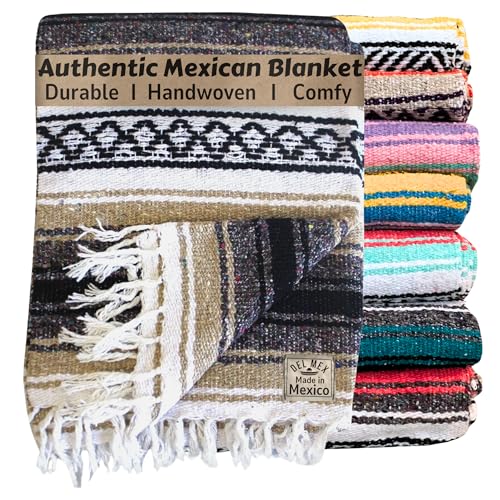
| Del Mex Classic Mexican Blanket | Best Traditional Woven | Authentic woven falsa throw, 70″ x 50″, the classic blanket-as-rug style |
| Pendleton National Park Blanket | Best Premium | 100% wool, iconic park stripes, napped texture with heirloom build quality |
| Arcturus Tahoe Wool Bed Blanket | Best Large Coverage | Queen size 90″ x 96″, thick and washable — the biggest floor footprint in the guide |
| Molithe 100% Wool Blanket | Best All-Wool Value | 100% wool, 62″ x 86″, thick military-style weave at an honest tier |
| YOUR MOON 100% Merino Wool Blanket | Best Soft Underfoot | 100% merino wool, queen 90 x 90 in, 360 GSM — softest feel for low-traffic rooms |
Two of these picks come from Arcturus — the Backwoods and the Tahoe are different models with different weaves and purposes, and we flag that openly rather than pretend the guide spans six brands. Wool dominates the list for a simple reason: no other common blanket fiber combines this much weight, abrasion tolerance, and natural flat-lying behavior.
How These Picks Were Chosen
Every pick was cross-checked against Amazon listing data before it earned a link. Fiber percentages, GSM weights, dimensions, and blanket weights in this article are quoted from the verified listing titles — where a listing does not state a figure, this article does not invent one, and the _SOURCES file for this guide notes any gap.
The criteria were rug criteria. Weight per area (GSM or total pounds) came first, because a blanket under roughly 400 GSM tends to ripple, creep, and curl at the corners underfoot. Fiber came second: wool leads because it is dense, naturally resilient, and lies flat; traditional woven falsa blankets earn their place through a tight, heavy weave rather than lofty softness. Size came third — a blanket-rug should cover meaningful floor, so most picks are at least roughly 5 by 7 feet in coverage or close to it. Finally, care: a floor blanket gets dirty like a floor, so washability or easy shake-out care scored well. Thin fleece throws, heated blankets, and weighted blankets were excluded by design — the first is a slip hazard, the second has cords and controllers no floor needs, and the third is engineered to stay on a body, not under feet. A later section of this guide explains those exclusions in full, because each of those categories gets searched for as a rug candidate and each fails for a concrete, nameable reason rather than a matter of taste.
The 6 Best Blankets to Use as Rugs

Arcturus Backwoods Military Wool Blanket — Best Overall
The Arcturus Backwoods is the most rug-like blanket in this guide by the numbers that matter: 80% wool woven to 550 GSM, sized 64″ x 88″, and weighing 4.5 pounds. That density is the whole story. Spread on a floor, it lies flat with minimal corner curl, resists creeping across hardwood better than any lightweight alternative, and presents a firm, tight surface that chairs and feet do not bunch up. The listing notes it is triple-washed, which softens the military-blanket scratchiness people remember, and wool’s natural resilience means the weave springs back instead of packing down in traffic lanes.
Strengths
- 550 GSM density and 4.5 lb weight make it the flattest-lying, least slippery pick here — the closest to a real rug’s behavior.
- 64″ x 88″ covers a genuine floor area: beside a bed, under a coffee table, or as the centerpiece of a small room.
- Triple-washed wool is softer than traditional surplus blankets while keeping the hard-wearing military weave.
Trade-offs
- It is 80% wool, not 100% — purists who want an all-wool blanket should look at the Molithe or Pendleton picks.
- The firm, dense hand that makes it rug-like also makes it the least cuddly pick if you plan to double it as a sofa throw.
- Like every blanket here, it has no backing; on slick hardwood in a traffic lane it still wants a thin rug pad beneath it.
Key specs (from the verified listing): 80% wool; 550 GSM; 64″ x 88″; 4.5 lb; triple-washed; the listing also describes it as warm even when wet and naturally fire-retardant, properties carried over from its outdoor design.
As a floor covering, the Backwoods suits the rooms where blanket-rugs make the most sense: cabins, bedrooms, dens, and rental spaces where you want warmth and floor protection without committing to a rug. Its weight also makes it the safest choice in this guide for a spot with moderate foot traffic — it simply has the most mass resisting movement.
Best for: the most rug-like performance — flat lie, minimal creep, real coverage / Not suited for: anyone wanting a plush, soft pile feel underfoot
Check on Amazon — check the current price on Amazon, and confirm the colorway in the listing.
Del Mex Classic Mexican Blanket — Best Traditional Woven
The Del Mex Classic is the blanket that defined this entire use case: an authentic woven falsa throw, 70″ x 50″, in the traditional striped Southwest style. Falsa blankets have been used as floor coverings, saddle blankets, beach and picnic groundsheets, and yoga mats for generations precisely because the tight woven construction tolerates abrasion and the weight of the weave keeps it in place better than knit or fleece blankets. At 70 by 50 inches it is a runner-and-accent size rather than a room anchor — think entryway-adjacent (inside, not at a wet door), alongside a bed, under a desk chair zone, or layered over a larger plain rug for pattern.
Strengths
- The traditional tight falsa weave is genuinely abrasion-tolerant — this is the construction that made blanket-rugs a folk standard.
- Striped Southwest pattern hides the dust and lint that floors collect between cleanings better than any solid color.
- Doubles effortlessly as a throw, picnic blanket, or yoga surface, so it earns its keep in several roles.
Trade-offs
- At 70″ x 50″ it is the smallest coverage in this guide — a zone rug, not a room rug.
- The listing does not state a fiber percentage or GSM, so we do not claim one; traditional falsa blankets are typically a blended weave, and buyers who need a certified fiber content should choose a wool pick instead.
- Woven falsa edges can fray over years of floor use; rotating the blanket spreads the wear.
Key specs (from the verified listing): authentic woven falsa throw; 70″ x 50″; Southwest artisan style; listed for beach, yoga, and outdoor use as well as décor. Fiber content and weight are not stated in the listing title and are not claimed here.
Choose the Del Mex when the look is part of the point — it brings pattern and color that the wool picks, for all their performance, do not. In a dorm, a rental, or a boho bedroom, it is the blanket-rug people picture first, and its weave justifies the picture.
Best for: traditional style, small zones, layering over plain rugs, multi-role use / Not suited for: large-room coverage or buyers who need a stated fiber content
Check on Amazon — check the current price on Amazon, and note the color options in the listing.

Pendleton National Park Blanket — Best Premium
The Pendleton National Park Blanket is the heirloom pick: 100% wool with the iconic park stripes, a napped texture, and the build quality that has made Pendleton blankets multi-decade possessions. As a rug, its virtues are density, weight, and a surface that wears in rather than wearing out — wool fibers flex underfoot instead of breaking, and the napped finish gives shoes and socks a grip that slick synthetics lack. This is the blanket-rug for a room you are furnishing for years: a reading corner, a cabin great room, the floor space in front of a fireplace.
Strengths
- 100% wool with Pendleton’s dense weave — the fiber and construction most proven for decades of hard use.
- Napped texture adds underfoot grip and hides footprints and lint between cleanings.
- The park stripe designs are genuine classics that anchor a room’s décor rather than merely covering its floor.
Trade-offs
- Premium tier pricing — this costs like the heirloom it is, and using it on a floor is a decision to spend its beauty where feet go.
- Wool care applies: shake out regularly, spot clean promptly, and follow the maker’s cleaning guidance rather than treating it like a washable throw.
- The listing title does not state dimensions, so confirm the size in the listing before ordering — do not assume a coverage area.
Key specs (from the verified listing): 100% wool blanket; iconic National Park stripes; napped texture. Dimensions are not stated in the verified listing title and are not claimed in this article — check the listing’s size options.
Honesty requires saying plainly: many owners will decide this blanket is too fine for the floor, and that is a legitimate call. But as a floor covering it is superb, and in low-traffic, high-visibility spots — where a real woven rug of this quality would cost far more — it earns its badge.
Best for: premium, long-term rooms and classic décor / Not suited for: mudrooms, kids’ spill zones, or tight budgets
Check on Amazon — check the current price on Amazon, and confirm the park design and size in the listing.

Arcturus Tahoe Wool Bed Blanket — Best Large Coverage
The Arcturus Tahoe is the second Arcturus model in this guide, chosen for a different reason than the Backwoods: sheer coverage. In queen size it measures 90″ x 96″ — a floor footprint larger than many area rugs — and the listing describes it as thick and washable, a combination that matters when the “rug” is this big and this close to the ground. Where the Backwoods is a dense military weave, the Tahoe is a softer bed-blanket construction scaled up; on the floor it reads as a broad, warm, quiet surface for a bedroom or a nursery-adjacent space where bare feet land first thing in the morning.
Strengths
- 90″ x 96″ queen coverage anchors a whole bedroom floor zone, not just a strip beside the bed.
- Washable construction — a floor covering this size that can actually be laundered is a practical rarity.
- Softer hand than the military-weave picks, so it doubles comfortably as a bed blanket when guests arrive.
Trade-offs
- A softer weave is less armor-like than the Backwoods; in heavy traffic lanes it will show wear sooner.
- The listing title does not state a wool percentage or GSM, so we describe it as the listing does — a wool bed blanket, thick and washable — without inventing figures.
- Big blankets are heavy when wet; laundering needs a large-capacity machine.
Key specs (from the verified listing): wool bed blanket; queen size 90″ x 96″; described as thick and washable; Stone Gray colorway in the verified listing.
We include two Arcturus models deliberately and transparently: the brand’s blankets happen to fit this niche at two different points — maximum density and maximum coverage. If your room needs a big, soft, washable floor layer more than it needs a hard-wearing weave, the Tahoe is the pick.
Best for: bedrooms and large soft-coverage zones / Not suited for: entryways or high-traffic lanes
Check on Amazon — check the current price on Amazon before ordering.

Molithe 100% Wool Blanket — Best All-Wool Value
The Molithe is the straightforward all-wool option: 100% wool, 62″ x 86″, described in its listing as warm and thick in the military blanket tradition. That size is a true rug footprint for a small room or a generous zone in a larger one, and the all-wool construction delivers the flat lie, resilience, and natural soil-hiding that make wool the default fiber for this job. It sits in a mid tier — not the premium of the Pendleton, not a bargain-bin blend — which is exactly where honest value lives in this category.
Strengths
- 100% wool at a mid tier — no blend ambiguity for buyers who want the fiber pure.
- 62″ x 86″ is real coverage: under a desk setup, beside a bed, or defining a reading corner.
- Thick military-style weave tolerates foot traffic and chair legs better than soft bed blankets.
Trade-offs
- Military-style wool has a firmer, less plush hand than the merino pick — function over softness.
- The listing does not state GSM or total weight, so we do not quote them; judge density by the wool content and weave style described.
- Wool care rules apply — shake out, spot clean, and air it rather than machine-washing casually.
Key specs (from the verified listing): 100% wool blanket; 62″ x 86″; described as warm and thick, military style; listed for camping and outdoor use as well as home use.
The Molithe is the pick we would hand to someone who asked for “a wool blanket that can live on the floor” without qualifiers: honest fiber, honest size, honest tier. It also travels well — the same blanket that covers a dorm floor all semester can go camping in June.
Best for: all-wool purists at a sensible tier, dorms and cabins / Not suited for: buyers who prioritize a soft, plush feel
Check on Amazon — check the current price on Amazon before ordering.

YOUR MOON 100% Merino Wool Blanket — Best Soft Underfoot
The YOUR MOON blanket is the softness pick, with a clear-eyed caveat. It is 100% merino wool in a queen 90 x 90 inch size at 360 GSM. Merino’s finer fibers give it the gentlest underfoot feel in this guide, and the queen footprint is generous. But 360 GSM is noticeably lighter than the Backwoods’ 550 GSM, and lightness is the enemy of flat lie and creep resistance. So this pick comes with a placement condition: it belongs in low-traffic, barefoot rooms — a bedroom, a yoga and stretching space, a nursery floor for tummy time over a pad — ideally over a thin rug pad, and not in a hallway or entry where shoes and momentum will skate it around.
Strengths
- 100% merino wool is the softest surface in the guide — the barefoot luxury option.
- Queen 90 x 90 inch coverage is a true room-scale footprint.
- Merino’s natural temperature regulation makes the floor feel warm in winter without overheating in summer.
Trade-offs
- 360 GSM is the lightest weave here; it needs a rug pad beneath it and a low-traffic placement to stay put.
- Fine merino fibers are less abrasion-armored than military weaves — keep chair casters and grit off it.
- Plaid pattern options are décor-specific; check the listing’s colorways against your room.
Key specs (from the verified listing): 100% merino wool blanket; queen 90 x 90 in; 360 GSM; Australian merino wool per the listing.
Judged as a bed blanket, this is a lovely object. Judged as a rug, it is a specialist: the softest floor layer in the guide for the calmest rooms. We would rather tell you that plainly than pretend every wool blanket behaves identically on a floor.
Best for: bedrooms, yoga spaces, and barefoot low-traffic rooms over a pad / Not suited for: hallways, entries, or anywhere with shoe traffic
Check on Amazon — check the current price on Amazon before ordering.
Comparison Table
| Pick | Badge | Key spec | Best for |
|---|---|---|---|
| Arcturus Backwoods Wool Blanket | Best Overall | 80% wool, 550 GSM, 64″ x 88″, 4.5 lb | Flattest lie, moderate traffic |
| Del Mex Mexican Blanket | Best Traditional Woven | Woven falsa, 70″ x 50″ | Pattern, small zones, layering |
| Pendleton National Park Blanket | Best Premium | 100% wool, napped, park stripes | Heirloom rooms, classic décor |
| Arcturus Tahoe Wool Blanket | Best Large Coverage | Queen 90″ x 96″, washable | Bedrooms, big soft coverage |
| Molithe Wool Blanket | Best All-Wool Value | 100% wool, 62″ x 86″, thick weave | Dorms, cabins, honest value |
| YOUR MOON Merino Blanket | Best Soft Underfoot | 100% merino, 90 x 90 in, 360 GSM | Barefoot low-traffic rooms |
The pattern in the table is the lesson of the category: as GSM and total weight rise, rug behavior improves and softness falls. Choose your point on that trade deliberately, and put a pad under anything at the lighter end.
How to Choose a Blanket to Use as a Rug
Weight is the first specification — always
A rug stays where you put it because it is heavy and stiff. A blanket earns rug duty the same way. Look for GSM figures, total weight, or both: around 500 GSM and above behaves like a floor covering; 350–450 GSM works in calm rooms over a pad; below that, you are laying a slip hazard with good intentions. When a listing hides its weight entirely, treat that as information too — heavy blankets advertise their weight because it is a selling point.
Fiber decides durability and care
Wool is the benchmark fiber for blanket-rugs: dense, resilient, naturally soil-resistant, and slow to show wear. Traditional woven falsa blankets — typically blended weaves — trade some of wool’s resilience for pattern, price, and a proven folk record on floors. Cotton blankets lie flat and wash easily but pack down and show soil faster. Fleece and microfiber plush blankets fail the rug test almost completely: too light, too slippery, too stretchy. Whatever fiber you choose, remember the blanket will live a floor’s life — grit is abrasive, so a weave that tolerates shaking out and spot cleaning beats a delicate one every time.
Size and placement: zones, not wall-to-wall
Blanket-rugs work as zones: the rectangle beside a bed, the square under a coffee table, the reading-corner anchor, the dorm floor’s center. Measure the zone, then buy the blanket that covers it with a few inches to spare on the sides that matter. Avoid placing any blanket-rug where momentum is high and grip is critical — the bottom of stairs, a wet entry, a kitchen work triangle. In those places, buy a real rug with a backing and no ambiguity.
Color and pattern: the floor is a big canvas
A blanket-rug covers enough floor to set a room’s palette, so choose its colors with the floor’s life in mind. Mid-tone patterns — the falsa stripes, the Pendleton park stripes, a plaid like the YOUR MOON’s — are the forgiving end of the spectrum: they hide lint, pet hair, and the faint traffic shading that any floor textile develops between cleanings. Solid pale colors are the demanding end, announcing every crumb. If your household includes a shedding dog or a toddler, pattern is not a style preference; it is a maintenance strategy, and the traditional weaves in this guide earned their patterns honestly, in exactly those households, long before anyone wrote a buying guide about it.
The rug pad question (do not skip it)
A thin rug pad under a blanket-rug does three jobs: it stops creep, adds the cushion blankets lack, and protects the floor finish from grit trapped under the weave. Felt or felt-and-rubber pads suit this role best. If you are putting a blanket over hardwood, our companion guide goes deep on pad selection: Best Rug Pads For Polyester Rugs On Hardwood Floors — the same felt-versus-gripper logic applies to blanket layers. On top of existing carpet, a blanket usually stays put by friction alone and a pad is optional.
Blanket Rugs Room by Room: Where Each Pick Belongs
Bedrooms: the natural home of the blanket-rug
The bedroom is where this idea performs best. Traffic is barefoot and unhurried, the floor zone beside and around the bed is exactly blanket-sized, and the warmth of wool underfoot on a cold morning is the entire point. The Tahoe’s queen coverage or the YOUR MOON merino over a pad are the bedroom specialists in this guide; the Molithe suits a smaller room or a bedside zone. Keep the blanket clear of the door swing path, where a kicked corner becomes a nightly annoyance.
Nurseries and kids’ rooms: soft landing, honest rules
A dense wool blanket over a proper rug pad makes a soft, warm play surface that can be shaken out and laundered — a real advantage in rooms where spills are a schedule, not an accident. Two rules keep it sensible: the blanket must lie over a grippy pad so it cannot bunch under running feet, and it belongs on the floor as a play layer, not inside a crib — loose blankets are not sleep items for infants, full stop. For a toddler’s play corner in a calm room, the washable Tahoe is the pragmatic pick.
Dorms and first apartments: maximum floor per dollar
Institutional floors are cold, ugly, and not yours to change — the exact problem a falsa or military wool blanket solves for the least money. The Del Mex brings pattern that hides a semester of dust; the Molithe brings warmth and a size that defines the room’s living zone. Both roll up and leave with you in May, which no rug in this price class does as gracefully.
Cabins and dens: the traditional setting
Wood floors, wood stoves, and wool blankets are a century-old combination because wool tolerates the grit that cabin life tracks in and insulates against cold floors better than synthetics. The Backwoods and the Pendleton are the cabin picks — one for hard-wearing value, one for the room you are proud of. Shake them out on the porch, air them in the sun, and they will outlast the furniture.
Home offices: one caution
A blanket under a desk chair looks inviting and mostly disappoints: rolling casters chew woven textiles and bunch any unbacked layer within a day. If you want the look, use the densest pick — the Backwoods — keep the chair’s rolling zone on the bare floor or a chair mat, and let the blanket dress the rest of the room. Do not place any blanket in this guide directly under working casters.
Test the idea with a blanket you already own
Before spending anything, run the experiment this guide is built on: take the heaviest woven or wool blanket you already own, lay it over a thin pad in a calm room, and live with it for a week. You will learn your household’s real answers faster than any review can teach them — whether the corners stay down with your traffic pattern, whether the dog claims it, whether the color hides your floor’s dust or advertises it, and whether you actually shake it out or quietly resent it. If the trial blanket is too light and still works in your calmest room, you have learned the idea suits you and the denser picks here will only behave better. If the trial fails because the room is simply too busy, you have learned something equally valuable for the price of nothing: that room wants a real rug, and the blanket budget belongs in a bedroom instead. Either outcome is a success — the only failure mode in this category is buying blind for a high-traffic room and concluding the whole idea is bad, when the placement was the problem all along.
How to Set Up and Care for a Blanket Rug
- Start with a clean floor. Sweep or vacuum thoroughly; grit left under a blanket becomes sandpaper that wears both the blanket and the finish.
- Lay the pad first, if you use one. Trim it an inch smaller than the blanket on every side so it stays invisible.
- Roll the blanket out, do not drag it. Unroll it into place, then smooth from the center outward to push air and ripples to the edges.
- Anchor the corners with furniture where you can. A blanket edge under a bookshelf, bed frame, or sofa leg stays put far better than a free edge in a walkway.
- Give it a day to relax. Woven and wool blankets arrive with fold creases; most flatten within a day under their own weight. A low, cool steam pass helps stubborn creases — check the fiber’s care guidance first.
- Shake it out weekly. Take the blanket outside and shake hard, or vacuum it with an upholstery tool. This is the blanket-rug’s great advantage over a real rug: full cleaning takes minutes.
- Rotate it monthly. A quarter-turn redistributes traffic wear and sun exposure, doubling the even life of the weave.
- Spot clean spills immediately. Blot, never rub; wool especially felts when scrubbed wet. Follow the maker’s washing guidance for full cleans, and dry flat.
What About Heated, Weighted, and Fleece Blankets?
Because this guide is strict about which blankets qualify, it is worth explaining the exclusions directly — each of these categories gets searched for as a rug candidate, and each fails for a concrete reason.
Heated blankets contain wiring, connectors, and a controller. Underfoot traffic flexes and crushes those elements, the cord creates a trip ridge, and no heated blanket is designed to bear weight across its heating elements. Never use one on a floor, even unplugged — the internal structure is the problem, not the electricity. Weighted blankets are engineered to drape and stay on a body; their glass-bead or pellet fill shifts underfoot, creates an uneven, ankle-hostile surface, and their quilting is not built for abrasion. Fleece and plush throws fail on physics: too light to stay put, too slippery against hard floors, and too stretchy to lie flat — they bunch under the first chair leg and skate under the first quick step. Quilts and comforters sit in between: a heavy quilt can work as a play-mat layer in a nursery over a pad, but lofty comforters bunch and their stitching wears fast under traffic. The picks in this guide — dense wool weaves and the traditional falsa weave — are what remain when every category that cannot do the job is honestly removed, which is exactly how a buying guide should be built.
Blanket Rugs vs Real Rugs: An Honest Comparison
It is worth stating plainly where a blanket-rug wins against a real rug and where it loses, because the honest answer is “it depends on the room” — and this guide exists to help you place the idea only where it wins.
Where the blanket wins
Cost per square foot is the obvious win: a queen wool blanket covers more floor than most area rugs at a fraction of the tier, and a falsa blanket costs less than a decent rug pad in some cases. Washability is the second win — a blanket can be shaken out weekly and laundered when the maker allows, while most real rugs get a vacuum, a hopeful spot clean, and a professional cleaning every year or two. Portability is the third: renters, dorm residents, and cabin owners can roll a blanket-rug up, move it between rooms or homes, and store it in a closet. And there is a fourth, quieter win: softness and warmth. A wool blanket underfoot in a bedroom has a warmth that low-pile synthetic rugs do not match, which is why the practice survives in cold-climate cabins long after its owners could afford “real” rugs.
Where the real rug wins
Grip and safety, first and always: a backed rug with a pad stays where it is put in traffic, on stairs-adjacent landings, and under running children and dogs. Cushion is second — a pile rug over a pad softens a floor in a way no blanket can. Edge behavior is third: rugs have bound, weighted edges that lie flat for years; blanket corners curl, fold, and get kicked. And durability under casters and dining chairs belongs to rugs entirely. The mature setup in many homes is both: real rugs where traffic and safety demand them, blanket-rugs in the calm rooms where their softness, washability, and price make them the smarter layer. Nothing in this guide should talk you out of a real rug for a hallway — and nothing about a hallway should talk you out of a wool blanket on a bedroom floor.
A note on layering
The two ideas combine well. A falsa blanket layered over a plain, inexpensive flat-weave rug gives you pattern and color that can be swapped seasonally, while the rug beneath supplies the grip, cushion, and flat edges the blanket lacks. Several stylists use exactly this trick in rentals. If you already own a boring rug that will not die, a Del Mex or a striped wool blanket over it is the cheapest room refresh in this entire guide.
Common Buying Mistakes
Choosing a thin fashion throw. The single most common failure: a pretty, lightweight throw that ripples, bunches, and slides. If the blanket would blow off a picnic table in a breeze, it will not stay on your floor.
Putting a blanket-rug in a high-risk spot. Stair landings, wet entries, and kitchen work zones need backed rugs. A blanket in those places is not thrifty; it is a fall waiting for a witness.
Skipping the pad on hardwood. Without a pad, even a heavy blanket creeps, and trapped grit scratches the finish you were trying to protect. The pad is part of the system, not an upsell.
Assuming “wool” on the label means all wool. Blends are common and not necessarily bad — the Backwoods pick in this guide is 80% wool and excellent — but know the actual percentage before you pay an all-wool price. Our picks state the verified fiber content or say plainly when the listing does not.
Buying for the bed size instead of the floor zone. “Queen” describes a mattress, not your floor plan. Measure the zone; a 62″ x 86″ blanket may cover your reading corner better than a queen that drapes over furniture feet.
Forgetting the care reality. A floor blanket gets floor dirty. If you will not shake it out weekly and spot clean honestly, choose the most washable pick — or choose a real washable rug instead.
Final Recommendation
For most people trying this idea, the Arcturus Backwoods is the right first blanket-rug: the density and weight make it behave most like a rug, and its price tier forgives the experiment. For pattern and tradition, the Del Mex falsa blanket remains the classic. The Pendleton National Park Blanket is the premium, keep-it-for-decades choice; the Arcturus Tahoe covers the most floor and washes; the Molithe is the all-wool value; and the YOUR MOON merino is the barefoot-soft specialist for calm rooms over a pad. Whichever you choose, pair it with the right pad — see Best Rug Pads To Use For Area Rugs for pad basics — and you may also want Best Blankets Anti Shed if low lint matters in the rest of your bedding, or Best 8 X 10 Wool Area Rugs if you decide a true woven rug suits the room better after all.
Frequently Asked Questions
Will a blanket used as a rug damage hardwood floors?
Not by itself — but grit trapped underneath can scratch finish as the blanket shifts, and a blanket that creeps invites that shifting. A felt or felt-and-rubber rug pad beneath the blanket solves both problems: it stops movement and keeps grit off the finish. Shake the blanket out weekly so grit never accumulates in the first place.
How do I stop a blanket rug from sliding?
Weight first — heavier blankets slide less. Then a rug pad with grip, furniture anchoring at the edges, and placement away from high-momentum paths. If a blanket still skates after those steps, the honest answer is that it is too light for floor duty in that room; move it to a calmer spot or to the bed it came from.
Can I put a blanket rug under a dining table?
You can, with the densest picks — the Backwoods class — and low expectations. Chairs sliding in and out will work any unbacked blanket into ripples, and food spills land on a textile that needs prompt blotting. It works best under a breakfast nook or a rarely used formal table. For a family dining table in daily use, a flat-weave real rug is the better tool.
Are wool blankets better than Mexican blankets as rugs?
They excel at different things. Wool blankets like the Backwoods and Molithe are denser, flatter-lying, and more resilient in traffic. Mexican falsa blankets bring pattern, tradition, and a tight weave that tolerates abrasion well at a friendlier tier, in smaller sizes. Choose wool for performance, falsa for style and value — both are legitimate, generations-tested answers.
How do I wash a blanket that lives on the floor?
Shake it out first — thoroughly — so you are not washing embedded grit into the weave. Then follow the maker’s guidance: the Tahoe in this guide is listed as washable, while dense wool blankets generally prefer spot cleaning, gentle cycles only if the maker allows, and flat drying. When in doubt, treat it like the wool garment it is, not like a bath towel.
Can I use a blanket as a rug over carpet?
Yes — this is actually the easiest placement of all. Carpet’s friction holds a blanket in place without a pad, and layering a patterned blanket over plain wall-to-wall carpet is a classic renter’s refresh. Choose a denser pick so the layer reads as intentional rather than draped, keep it out of the main traffic lane where edges can still fold, and vacuum it in place with an upholstery tool rather than a beater bar, which can chew woven edges.
How long will a blanket last as a rug?
It depends on fiber, traffic, and rotation. A dense wool blanket in a bedroom, shaken weekly and rotated monthly, can serve for years — wool work blankets have multi-decade service records in far harsher roles. The same blanket in a hallway under shoe grit might look tired in a year. Grit is the real lifespan variable: it cuts fibers at the weave’s base every time it is ground in by a step, which is why the shake-out routine matters more than any other care step.
What rooms should never get a blanket rug?
Bathrooms (constant moisture), the base of stairs, wet-weather entries, and kitchen work triangles. Those spaces need backed, grippy, purpose-built rugs. Blanket-rugs belong in dry, calm rooms: bedrooms, dens, reading corners, cabins, dorms, and nurseries with a pad beneath.


