Disclosure: airfryerkitchensupply.com is reader-supported. When you buy through links on our site, we may earn an affiliate commission at no extra cost to you.
Where to buy
Every grinder in this roundup is sold through Amazon in the United States, which makes comparing configurations, plate options and warranty terms straightforward before you commit. Use the links below to check price on Amazon for each model, confirm whether sausage tubes and extra plates are in the box, and verify the exact size — a #8, #12 and #22 grinder are very different machines despite looking similar in photos. If a grinder is out of stock in one configuration, check the same listing for the alternate size from the same American brand rather than substituting an unknown import.
- LEM BigBite Dual Grind #22 Meat Grinder, 1.0 HP — Best Overall for High Volume: Check the current price on Amazon
- Weston #12 Electric Meat Grinder & Sausage Stuffer, 750 Watt, 1 HP Motor (33-1301-W) — Best for Most Home Butchers: Check the current price on Amazon
- STX International Turboforce 3000 Series Electric Meat Grinder — Best Value: Check the current price on Amazon
- LEM #8 Countertop Meat Grinder, 575 Watt — Best Compact: Check the current price on Amazon
- Cuisinart Electric Meat Grinder, Stainless Steel (MG-100) — Best for Beginners and Light Use: Check the current price on Amazon
- KitchenAid KSMMGA Metal Food Grinder Attachment — Best for KitchenAid Owners: Check the current price on Amazon
If you are shopping for the best american meat grinders, the first thing to understand is what “American” honestly means in this category. The strongest grinders sold in the United States come from long-established American companies — LEM Products in Ohio, Weston in Ohio, MEAT! and STX International — that design their machines here, stock parts here, answer the phone here, and warranty the work here. Final assembly varies by model and price tier, and no honest guide should pretend otherwise. What American brands reliably give you is accountability: replacement plates, knives and gears you can actually order five years from now, manuals written for American cuts and American sausage recipes, and support that understands what a deer season or a bulk beef grind actually demands.
That matters more for a meat grinder than for most kitchen tools, because a grinder is a wear machine. Plates dull, knives chip, gears take real torque, and a grinder that cannot be serviced becomes disposable. The six picks below are all sold and supported through established American channels, and every model with a link was verified against Amazon’s own catalog data for this site before a link was added. They span the full realistic range: a serious #22 dual-grind machine for high-volume hunters, dependable #12 grinders for regular home butchery, a compact #8 for occasional small batches, a familiar countertop name for light use, and a metal attachment that turns a stand mixer you may already own into a capable grinder.
One warning before the picks: headline wattage is the least honest number in this category. Import-style listings advertise peak wattage figures that say almost nothing about grinding performance. American brands are not immune to marketing, but the useful numbers are the ones used throughout this guide — grinder size (#5, #8, #12, #22), rated pounds per minute on a first grind, motor type, and whether the gears are metal. Judge by those, by plate and knife quality, and by parts availability, and you will end up with a machine that still earns its counter space a decade from now. The reviews below are deliberately blunt about who each grinder is not for, because the most common grinder regret in American kitchens is not buying a bad machine — it is buying a good machine in the wrong size.
In this guide
Quick Picks
Short on time? These are the six grinders to shortlist first. Each badge reflects the job the machine does best, not a generic ranking, so start with the badge that matches how you actually process meat.
LEM BigBite Dual Grind #22 Meat Grinder, 1.0 HP — Best Overall for High Volume. LEM’s dual-grind #22 passes meat through two plates in one run, which keeps big batches colder and cuts a full handling step out of processing day. It is the grinder to buy when deer season, not weeknight burgers, sets the workload. Check price on Amazon.
Weston #12 Electric Meat Grinder & Sausage Stuffer, 750 Watt, 1 HP Motor (33-1301-W) — Best for Most Home Butchers. The classic American home-butcher choice: a #12 with a 1 HP-class motor, stainless plates and stuffing capability in a machine one person can lift, clean and store without drama. Check price on Amazon.
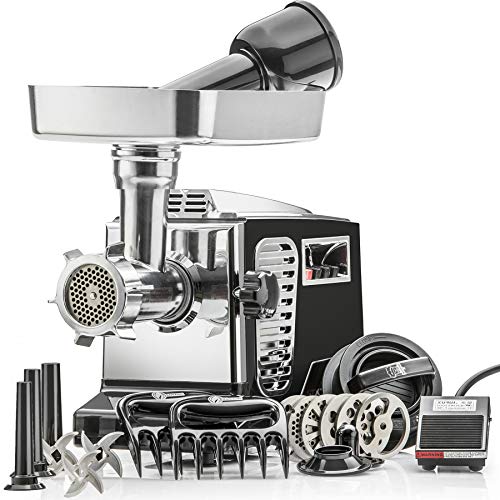
STX International Turboforce 3000 Series Electric Meat Grinder — Best Value. A feature-loaded American-sold grinder with three speeds, multiple plates and blades, stuffing and kubbe hardware included — the most complete box in this roundup for buyers who want options without stepping up a tier. Check price on Amazon.
LEM #8 Countertop Meat Grinder, 575 Watt — Best Compact. LEM quality in a cabinet-friendly #8: the right grinder for apartments, small kitchens and households that grind modest batches but still want an American brand with real parts support. Check price on Amazon.
Cuisinart Electric Meat Grinder, Stainless Steel (MG-100) — Best for Beginners and Light Use. A familiar American kitchen brand’s straightforward stainless countertop grinder — the gentle on-ramp for cooks who grind occasionally and value simplicity and easy cleanup over throughput. Check price on Amazon.
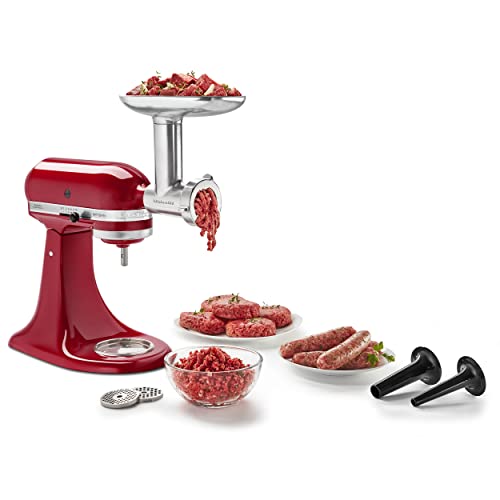
KitchenAid KSMMGA Metal Food Grinder Attachment — Best for KitchenAid Owners. If a KitchenAid stand mixer already lives on your counter, this all-metal attachment is the smartest grinder purchase available — no second motor to store, with tray, pusher, plates and stuffer tubes included. Check price on Amazon.
How These Picks Were Chosen
We built this list around the way American home processors actually grind: deer and elk after a hunt, bulk ground beef when chuck goes on sale, pork shoulder for sausage, and smaller weekly batches for burgers and meatballs. Every candidate was checked against Amazon’s catalog through this site’s verification system, and the ASIN, exact model name and configuration were confirmed before any link was added. Models that could not be confirmed were left out or written about without a purchase link rather than guessed at.
Four criteria decided the final six. First, sustained grinding ability: throat size, plate diameter and realistic throughput matter more than peak watts, so each pick is identified by its standard grinder size. Second, build where it counts — metal gears, a properly hardened knife and plate, and a housing that does not flex under load. Third, the ownership ecosystem: can you buy a replacement knife, a finer or coarser plate, stuffer tubes and a foot switch from the same brand without hunting through marketplaces? American brands score heavily here, and that is deliberate. Fourth, honest fit: a #22 grinder is a wonderful tool and a terrible purchase for someone who grinds five pounds twice a year, so the list deliberately includes compact and attachment options alongside the heavy machines.
We also excluded anything with an unresolved safety concern and anything sold only through channels with no meaningful United States support. Prices move constantly in this category, especially around hunting season, so this guide never prints a fixed price — each pick says to check price on Amazon instead, and the buying guide further down explains the budget tiers in plain terms so you can judge a deal when you see one.
The 6 Best American Meat Grinders

LEM BigBite Dual Grind #22 Meat Grinder, 1.0 HP — Best Overall for High Volume
The LEM BigBite Dual Grind #22 — Best Overall for High Volume — exists for a specific and common American problem: a successful hunting season or a bulk-buy weekend produces more meat than a household grinder can process before it warms up. LEM, based in Ohio and long established in home processing, answers that problem with the BigBite auger, which pulls meat in aggressively, and a dual-grind head that runs the meat through a coarse and then a finer plate in one continuous pass. The result is a finished grind in roughly half the handling of a conventional machine, with the meat spending far less time out of the cold.
Strengths
- Dual-grind design produces a finished second grind in a single pass, keeping meat colder
- #22 throat accepts larger cubes and sustains serious throughput
- LEM’s US parts and accessory ecosystem is the deepest in home grinding
Trade-offs
- Premium-tier cost, and #22 plates and accessories cost more too
- Heavy and large — it wants a permanent spot, not cabinet storage
- Overkill for occasional small batches, where it is slower to clean than a #8
| Specification | Detail |
|---|---|
| Grinder size | #22 |
| Motor | 1.0 HP (per Amazon title) |
| Design | Dual Grind — two plates, single pass |
| Construction | Stainless steel (per Amazon title) |
In practical terms, the single-pass design changes processing day more than the headline horsepower does. A conventional workflow — coarse grind, pan the meat, change plates, grind again — exposes the batch to warm hands, warm air and a warming grinder head. The Dual Grind compresses that into one run, and texture benefits directly: fat stays distinct, the grind stays even, and sausage mixes come out ready to season rather than needing recovery time in the freezer. The #22 throat also accepts noticeably larger cubes than a #12, which shortens the knife work before grinding even starts.
Ownership is where LEM separates itself from import alternatives. Plates, knives, stuffing tubes, foot switches and replacement parts are catalogued by model and orderable in the United States, and LEM publishes guidance written for American processing — deer, elk, pork and beef in the quantities home processors actually handle. The honest costs are size, weight and price tier: this is a premium machine that wants counter space or a sturdy processing table, and its accessories are priced to match the #22 class. Buy it when your volume is proven, and it is the kind of purchase that ends the search for a decade. Buy it aspirationally, and a smaller LEM would have served you better.
Best for: Hunters and bulk processors grinding large volumes every season / Not suited for: Small households grinding a few pounds at a time
Check on Amazon to check price on Amazon and confirm the current configuration before you buy.

Weston #12 Electric Meat Grinder & Sausage Stuffer, 750 Watt, 1 HP Motor (33-1301-W) — Best for Most Home Butchers
The Weston #12 — Best for Most Home Butchers — is the machine this guide would hand to the widest range of American households. Weston is an Ohio company built around home processing, and the 33-1301-W reflects that focus: a #12 head that is fast enough for a deer without turning the session into an endurance event, a motor rated by the manufacturer at four pounds per minute, stainless grinding plates in the box, and sausage-stuffing hardware included so a first batch of links does not require a second purchase.
Strengths
- Balanced #12 size suits both hunting season and weekly grinding
- Stainless grinding plates included, per the verified listing
- Grinder and sausage stuffer in one footprint for new sausage makers
Trade-offs
- Die-cast aluminum body rather than full stainless construction
- Slower than a #22 on genuinely large processing days
- Stuffing through a grinder is a starting point, not a match for a dedicated stuffer
| Specification | Detail |
|---|---|
| Grinder size | #12 |
| Motor | 750 watt, 1 HP (per Amazon title) |
| Rated throughput | Grinds 4 lbs per minute (per Amazon title) |
| Body | Die-cast aluminum (per Amazon title) |
What makes the #12 size so satisfying is the absence of friction. The machine is light enough to move with one hand, small enough for a cabinet or pantry shelf, and quick to disassemble and wash. Yet on a real batch — a pork shoulder for sausage, a bulk pack of chuck for burgers, a deer broken down over an afternoon — it never feels like the bottleneck. Feed it well-chilled, sensibly cubed meat and it settles into a steady rhythm that smaller #5 and #8 machines cannot match and that most households will never outgrow.
The compromises are honest ones. The die-cast aluminum body keeps weight and cost down but asks for hand-washing and reasonable care rather than dishwasher abuse. On a multi-animal day, a #22 will finish meaningfully sooner. And like every grinder-stuffer combination, stuffing is serviceable rather than excellent — fine for learning, worth upgrading to a dedicated stuffer if sausage becomes a weekly craft. None of that undermines the central case: for the American household that grinds regularly and processes a season’s harvest without drama, this is the size, the brand support and the feature set that fit.
Best for: Regular home grinding, one or two deer a season, first sausage projects / Not suited for: Commercial volumes or multi-animal processing days
Check on Amazon to check price on Amazon and confirm the current configuration before you buy.

STX International Turboforce 3000 Series Electric Meat Grinder — Best Value
The STX Turboforce 3000 — Best Value — takes the opposite approach to LEM and Weston: instead of a stripped, heavy machine, it sells completeness. The verified listing describes a three-speed grinder with five grinding dies, three stainless blades, sausage stuffing hardware and a kubbe maker in the box. For a buyer who wants to experiment — burgers one week, coarse chili grind the next, a first attempt at stuffed kubbe after that — that breadth has genuine appeal, and STX International sells and supports the line in the American market.
Strengths
- Generous included kit: multiple plates, blades, stuffer and kubbe maker
- Three speeds give useful control for different meats and tasks
- Strong value positioning within the American-sold market
Trade-offs
- Headline wattage is a peak marketing figure — judge it by real grinding, not the number
- Not built to the same heavy standard as LEM or Weston #12/#22 machines
- Accessory-heavy box means more small parts to store and keep track of
| Specification | Detail |
|---|---|
| Speeds | 3-speed (per Amazon title) |
| Plates | 5 grinding dies (per Amazon title) |
| Blades | 3 stainless steel blades (per Amazon title) |
| Kit | Sausage stuffer and kubbe maker included (per Amazon title) |
Judge this grinder correctly and it satisfies. The “3000W max” in its name is a peak figure of the kind this guide warns about throughout; the meaningful facts are the three speeds, the plate selection and how it handles cold, well-prepared meat, which is competently. Where it cannot match the American heavyweights is in sheer drivetrain mass and long-haul build — it is a household machine, not a processing-day workhorse, and hunters planning multi-deer sessions should buy the Weston or LEM instead and feel no regret.
Within its intended job, though, the value case is real. Most households grind modest batches, value versatility, and appreciate not making three follow-up accessory purchases before they can try sausage. The Turboforce answers all of that in one box at a mid-market tier. Keep meat cold, do not force the fine plates with warm or oversized pieces, clean and dry the parts promptly, and it will handle the normal American household grinding calendar — bulk beef days, pork for meatballs, chicken for homemade nuggets — without complaint.
Best for: Value-focused households that want a complete kit in one purchase / Not suited for: Buyers who prioritize all-metal heavy-duty construction above kit value
Check on Amazon to check price on Amazon and confirm the current configuration before you buy.

LEM #8 Countertop Meat Grinder, 575 Watt — Best Compact
The LEM #8 Countertop — Best Compact — is the grinder for the household that wants to grind its own burgers and the occasional pork shoulder, but has a kitchen measured in inches rather than feet. It carries the LEM name, LEM’s American support and LEM’s accessory catalog in a machine that fits in a cabinet and comes out without a sigh. That combination — small size without abandoning brand accountability — is rarer than it should be, because the compact end of the market is where no-name imports are thickest.
Strengths
- Compact footprint stores where a #12 or #22 simply cannot
- Same LEM parts and support ecosystem as the larger machines
- Plenty of capacity for burgers, meatballs and small sausage batches
Trade-offs
- #8 throughput makes large batches a slow, warming process
- Aluminum construction (per Amazon title) asks for hand care
- Frequent grinders will outgrow it and buy twice
| Specification | Detail |
|---|---|
| Grinder size | #8 |
| Power | 575 watt (per Amazon title) |
| Construction | Aluminum (per Amazon title) |
Performance expectations should be set by the #8 plate. Small batches are genuinely pleasant: a few pounds of chuck becomes burger grind in minutes, cleanup is quick, and the machine’s modest appetite encourages the good habit of grinding fresh rather than freezing large quantities. Push it into hunter-season territory, though, and the limits arrive as heat and time — long sessions warm the head, warm the meat, and test patience. Work in chilled sub-batches with freezer breaks and it copes; plan around it regularly and you bought the wrong size.
As a deliberate choice for a small household, it is easy to defend. The build is honest aluminum rather than flimsy plastic, the design is a straightforward countertop appliance rather than a kit of attachments, and when a knife dulls or a different plate is wanted, LEM sells the part by name. Apartment cooks, couples, and anyone whose grinding ambitions are real but modest will get more use — and more pleasure — from this right-sized machine than from a #22 gathering dust.
Best for: Small households, apartments and occasional grinding in modest batches / Not suited for: Hunters processing whole animals or bulk buyers grinding weekly
Check on Amazon to check price on Amazon and confirm the current configuration before you buy.

Cuisinart Electric Meat Grinder, Stainless Steel (MG-100) — Best for Beginners and Light Use
The Cuisinart MG-100 — Best for Beginners and Light Use — is the grinder for the cook who wants to try grinding without reorganizing the kitchen around the hobby. Cuisinart is one of the most familiar American countertop brands, and the MG-100 follows its house style: a compact stainless-finished unit, straightforward controls, and a design brief centered on occasional small batches — chicken for homemade meatballs, a couple of pounds of pork for dumplings, beef trim for a fresh burger night.
Strengths
- Simple, approachable operation from a familiar American kitchen brand
- Compact countertop format suits occasional use and easy storage
- Stainless-look finish wipes down quickly after small batches
Trade-offs
- Light-duty design is not intended for large or frequent batches
- Smaller accessory and plate ecosystem than LEM or Weston
- Serious home butchers will outgrow its pace quickly
| Specification | Detail |
|---|---|
| Format | Countertop electric meat grinder |
| Finish | Stainless steel (per Amazon title) |
Within that brief it does its job cleanly. Setup is minimal, the parts count is low, and cleanup after a small batch is a few minutes rather than a project — which matters, because the best predictor of whether a light-use appliance gets used is how much friction surrounds it. The grinder asks only for the universal disciplines: cold meat, sensible cube size, steady feeding. Treat it that way and results are properly fresh-tasting and evenly textured.
The limits are the flip side of the design. This is not the machine for a deer, a bulk-buy weekend or a sausage-making habit, and its plate and accessory ecosystem is thinner than the processing specialists offer. Buyers who suspect grinding will become a real practice should start at the Weston #12 instead and skip a step. Buyers who know their pattern — small, occasional, convenience-first — will find the MG-100 an honest, tidy answer from a brand that will still be answering for it in five years.
Best for: Beginners and light, occasional grinding in small batches / Not suited for: Hunting season, bulk grinding or sausage production
Check on Amazon to check price on Amazon and confirm the current configuration before you buy.
KitchenAid KSMMGA Metal Food Grinder Attachment — Best for KitchenAid Owners
The KitchenAid KSMMGA — Best for KitchenAid Owners — reframes the purchase entirely. Instead of buying a second motor, you buy a metal grinding head that runs off the stand mixer already anchoring millions of American counters. The verified listing confirms the important details: compatibility with all KitchenAid stand mixers, and a box that includes the food tray, pusher, grinding plates and sausage stuffer tubes — a complete kit, not a bare attachment that nickel-and-dimes you afterward.
Strengths
- Uses the mixer motor you already own — nothing extra to store
- Metal construction, a clear step above plastic attachment grinders
- Includes food tray, pusher, grinding plates and sausage stuffer tubes
Trade-offs
- Performance depends entirely on your mixer’s power and condition
- Output pace is set by the mixer, not by a dedicated grinder motor
- Ties up the mixer during grinding and adds wear to a second appliance
| Specification | Detail |
|---|---|
| Compatibility | All KitchenAid stand mixers (per Amazon title) |
| Includes | Food tray, pusher, grinding plates, sausage stuffer tubes and plate (per Amazon title) |
The metal construction is the headline for anyone who remembers older plastic grinder attachments. A metal head chills properly in the freezer — a genuine texture advantage, since cold metal against cold meat is the whole game — and it tolerates the torque of real grinding without the flex and creaks of plastic housings. For the classic attachment workload — a few pounds of beef for burgers, pork for a sausage experiment, chicken and vegetables for a homemade blend — it performs with a steadiness that surprises people who expected a compromise tool.
Honesty requires the boundaries. Your mixer is the motor, so an older or smaller mixer sets the ceiling, and long heavy sessions are both slow and an imposition on an appliance with other jobs. Volume hunters should buy a dedicated #12 and keep the mixer for baking. But for the large population of KitchenAid households whose grinding is occasional and modest, the KSMMGA is arguably the best-value entry in this entire roundup: American brand support, real metal, complete kit, zero additional counter footprint.
Best for: KitchenAid owners who grind small to medium batches occasionally / Not suited for: Anyone without a KitchenAid mixer, or high-volume processors
Check on Amazon to check price on Amazon and confirm the current configuration before you buy.
Comparison Table
Use this table to separate the machines by the two things that matter most — grinder size and the job each one is genuinely built for — before reading the detailed reviews above again with fresh eyes.
| Pick | Badge | Key spec | Best for |
|---|---|---|---|
| LEM BigBite Dual Grind #22 Meat Grinder, 1.0 HP | Best Overall for High Volume | #22, 1.0 HP, dual-grind single pass | Hunters and bulk processors grinding large volumes every season |
| Weston #12 Electric Meat Grinder & Sausage Stuffer, 750 Watt, 1 HP Motor (33-1301-W) | Best for Most Home Butchers | #12, 750W / 1 HP motor, 4 lb per minute (per Amazon title) | Regular home grinding, one or two deer a season, first sausage projects |
| STX International Turboforce 3000 Series Electric Meat Grinder | Best Value | 3000W max (manufacturer rating), 3-speed, 5 grinding dies, 3 blades (per Amazon title) | Value-focused households that want a complete kit in one purchase |
| LEM #8 Countertop Meat Grinder, 575 Watt | Best Compact | #8, 575 watt (per Amazon title) | Small households, apartments and occasional grinding in modest batches |
| Cuisinart Electric Meat Grinder, Stainless Steel (MG-100) | Best for Beginners and Light Use | Countertop electric grinder, stainless steel finish (per Amazon title) | Beginners and light, occasional grinding in small batches |
| KitchenAid KSMMGA Metal Food Grinder Attachment | Best for KitchenAid Owners | Metal attachment for all KitchenAid stand mixers (per Amazon title) | KitchenAid owners who grind small to medium batches occasionally |
How to Choose the Best American Meat Grinders for Your Kitchen
Start with grinder size, because it decides almost everything else. The number — #5, #8, #12, #22, #32 — refers to the diameter of the grinding plate and the throat that feeds it. A #8 machine like the LEM countertop models handles household batches comfortably and stores in a cabinet. A #12 is the sweet spot for most serious home users: fast enough for a deer in a reasonable session, small enough to lift without thinking twice. A #22 is a different class of tool, built for people who process multiple animals or grind in true bulk; it is faster, heavier, and far more expensive to feed with accessories. Buying one size up from your real need is reasonable headroom. Buying two sizes up is how grinders end up resold.
Next, look past wattage to motor and gear construction. A permanently lubricated motor with metal gears will outlast a higher-wattage machine with plastic drive parts every time, because grinding is a torque job, not a speed job. Frozen-tendoned venison, partially frozen pork and dense beef trim all punish weak drivetrains. Reverse function is worth having — it clears most jams without disassembly — but treat it as a convenience, not a license to force meat through a plate that is too fine for a first grind.
Then consider the plate and knife ecosystem. Most home grinding happens on a coarse plate first and a medium plate second, so a machine that includes both saves an immediate second purchase. Check what a replacement knife costs and whether the brand sells plates in stainless as well as carbon steel. Finally, be honest about sausage: if you plan to stuff, a dedicated stuffer outperforms grinder-stuffing attachments for texture and speed, but a grinder with good tubes is a perfectly sensible place to start for your first season.
Understanding Budget Tiers for American Meat Grinders
American grinders fall into three broad tiers, and the differences are real rather than cosmetic. The entry tier is the attachment and light countertop zone: stand-mixer attachments and small electric units meant for occasional batches, weeknight burgers and first experiments with sausage. They are the right buy when volume is low and storage is tight, and the wrong buy when a hunting season depends on them. The mid tier is where most satisfied owners land: #8 and #12 electric grinders from LEM, Weston and STX with metal gears, useful plate selections and parts support. For a household that grinds regularly, this tier offers the best cost per year of service by a wide margin.
The premium tier is #22 territory and dual-grind designs, where you are paying for throughput, larger throats that accept bigger cubes, and build quality aimed at a decade of heavy seasons. The jump is worth it only if your volume is real — multiple deer, whole-animal processing, or regular bulk grinding for a large family. Everyone else gets more value from a mid-tier grinder plus the accessories that actually improve results: a good selection of plates, a chilled meat lug, a foot pedal switch, and eventually a separate sausage stuffer. Spend on the workflow, not just the motor.
Keeping an American Grinder Working for a Decade
A grinder bought from an American brand is a ten-year appliance if you treat the wear parts as wear parts. The knife and plate work as a matched pair, grinding against each other every second the machine runs, so replace or professionally service them together rather than pairing a fresh knife with a worn plate. Dullness announces itself honestly: grinding slows, meat extrudes as paste instead of distinct strands, and the head warms faster than it used to. Those symptoms call for a knife and plate, not a new grinder, and with an American brand the parts are a model-number lookup away rather than a marketplace treasure hunt.
Storage matters as much as washing. Dry every component fully, give carbon steel plates a whisper of food-safe mineral oil, and store plates separated by cloth so edges are not chipping against each other in a drawer. Keep the manual — the day you need a gear, a bushing or a replacement pusher, that model number is the difference between a five-minute order and a guessing game. Finally, respect the duty cycle: even the best home grinders are built for sessions, not shifts. Work in batches, let a warm motor rest, rotate chilled meat from the freezer as you go, and a mid-tier machine will repay the courtesy with years of uncomplaining service. That long, supported working life — not any single specification — is the real return on buying from an established American brand.
One more habit separates owners who love their grinders from owners who tolerate them: grind in seasonally appropriate batches and freeze with intention. Grind only what you will use or freeze that day, portion the finished grind into flat, clearly labeled packs that thaw quickly and stack efficiently, and keep a simple log of what went into each batch — cut, fat source and ratio. A month later, when one batch of burgers is noticeably better than another, that log tells you why, and your grinding improves every season instead of resetting to guesswork each time the machine comes out.
How to Use a Meat Grinder Safely and Get a Better Grind
Great ground meat is mostly temperature and preparation; the grinder does the easy part. Follow this sequence and even a mid-tier machine will produce a grind that looks and cooks like it came from a good butcher counter.
Step 1: Chill everything. Put the grinder head, knife, plate and auger in the freezer for at least thirty minutes, and keep your cubed meat just shy of frozen — firm and icy at the edges, roughly the texture of a firm sorbet. Warm meat smears fat instead of cutting it, and smeared fat is the single most common cause of mushy burgers and broken sausage texture.
Step 2: Cube and sort. Cut meat into strips or cubes that fit the throat without forcing — about one-inch pieces for #8 and #12 machines, slightly larger for a #22. Remove heavy silverskin and glands as you go; no grinder improves connective tissue, it only distributes it.
Step 3: Grind coarse first. For burgers and most sausage, pass the meat once through a coarse plate, spread it in a chilled pan, season if the recipe calls for it, then grind a second time through a medium plate only if a finer texture is wanted. Dual-grind machines do both passes in one, which is their real advantage. Keep the receiving bowl set over ice for long sessions.
Step 4: Feed steadily, never force. Let the auger pull meat in at its own pace and use only the pusher that came with the machine. Fingers never go near the throat, and loose sleeves, jewelry and long hair stay away from the machine entirely. If the motor strains, stop, reverse briefly, and check for a wrapped tendon rather than pushing harder.
Step 5: Clean immediately and dry completely. Disassemble, wash in hot soapy water, and dry every part the moment you finish — plates and knives left damp will rust or pit, including many sold as stainless if they sit in a wet sink. A light wipe of food-safe mineral oil on carbon steel plates before storage keeps them ready for the next session.
Common Buying Mistakes
Buying by peak wattage. A four-digit wattage claim tells you nothing about torque, gears or plate quality. Compare grinder size, stated pounds per minute and drivetrain materials instead, and be suspicious of any listing that leads with watts and hides everything else.
Grinding warm meat. Room-temperature meat smears, heats the head, and produces a paste-like texture no seasoning can rescue. If the batch warms up mid-session, stop and re-chill. Ten minutes in the freezer saves the whole grind.
Skipping the coarse grind. Sending large cubes straight through a fine plate strains the motor, heats the meat and gives an uneven texture. Coarse first, then finer, is not tradition for its own sake — it is how the machine is designed to work.
Ignoring parts availability. A cheap grinder with no source for a replacement knife is expensive the first time the knife dulls. American brands earn their premium largely here: plates, knives, gears and tubes you can order by model number years later.
Buying a #22 for a #8 life. Oversized grinders are heavy, loud, hungry for storage space and slower to clean for small batches. Match the machine to your true annual volume and you will use it more and enjoy it more.
Final Recommendation
For most American home processors, the Weston #12 Electric Meat Grinder is the balanced buy: real throughput, honest construction and a size that suits both hunting season and bulk beef days. If your volume is genuinely high, step up to the LEM BigBite Dual Grind #22 and enjoy single-pass grinding at scale. If you already own a KitchenAid stand mixer and grind occasionally, the KitchenAid KSMMGA Metal Food Grinder Attachment is the smartest money in the whole roundup. Round out your research with our related guides: Best 1hp Meat Grinders, Best Meat Grinders Under $200, Best Electric Meat Grinders, and Best Meat Grinders For Deer.
Frequently Asked Questions
Are American meat grinder brands actually made in the USA?
It varies by model, and any guide that gives a single answer for a whole brand is oversimplifying. The American brands in this roundup are United States companies that design, support and warranty their grinders domestically, and they stock parts in the US. Manufacturing location differs across price tiers. What you are reliably buying from an American brand is domestic accountability — service, parts and support — which for a wear machine like a grinder is usually the part that matters most over a ten-year ownership span.
What size meat grinder do most home users need?
A #12 is the most versatile answer for households that grind regularly, including hunters processing one or two deer a season. A #8 suits smaller, less frequent batches and stores more easily. A #22 only makes sense when volume is genuinely high — multiple animals, whole-animal processing or regular bulk grinding — because the machine, its accessories and its storage footprint are all substantially larger.
Is a dual-grind grinder worth it?
For high-volume users, yes. A dual-grind design passes meat through two plates in a single run, which removes an entire handling step, keeps meat colder because it spends less time out of refrigeration, and noticeably speeds up a long processing day. For someone grinding a few pounds at a time, the benefit is small and a conventional single-plate machine plus a second manual pass does the same job for far less money.
Can I grind bones in these grinders?
Soft, small bones for pet food are within the ability of the heavier machines in this list when the manufacturer allows it, but hard bones, frozen-solid blocks and antler or joint material are not. Always check the manual for your exact model. When in doubt, treat bone grinding as a specialist task and keep a general-purpose grinder for meat, where it will last far longer.
How do I stop ground meat from turning mushy?
Temperature is almost always the answer. Chill the grinder parts, work with meat that is firm and icy at the edges, grind coarse before fine, and set the receiving bowl over ice during long sessions. A dull knife produces the same symptom, so if texture degrades over a season despite cold meat, replace or professionally sharpen the knife and inspect the plate for wear.
Should I buy a separate sausage stuffer?
Eventually, if sausage becomes a regular project, yes — a dedicated vertical stuffer gives better texture, less air in the casing and far less frustration than stuffing through a grinder. For a first season or occasional batches, the stuffing tubes included with grinders like the Weston and STX models are a sensible way to learn before committing counter space and budget to a second machine.