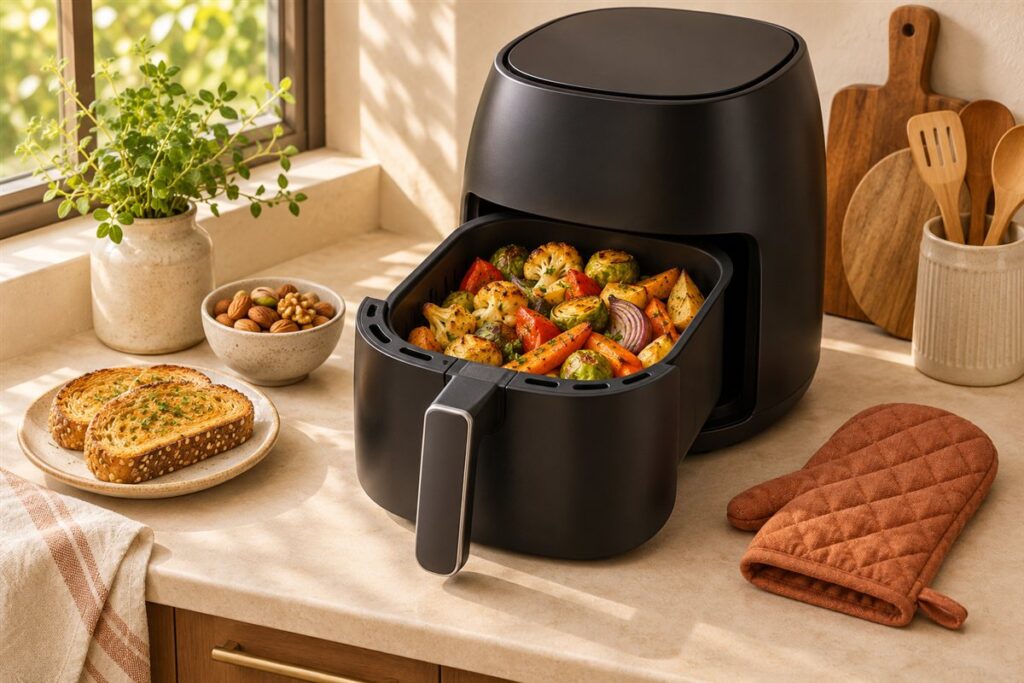
For one or two people, a compact or mid-size air fryer is usually enough, since most meals are small. Capacity is listed differently by each maker, so look at basket dimensions and your cooking habits instead of the number alone.
How Capacity Is Listed
Makers often give capacity in quarts or liters, but the numbers do not tell the whole story. Basket shape matters as much as volume: a wide, shallow basket gives more surface area for a single layer than a deep, narrow one. Check the interior width and depth in the product details, and compare them to the food you cook, such as chicken thighs, fish fillets, or a handful of fries.
Questions That Guide the Choice
- How many portions do you cook at once? One person may need only a small basket.
- Do you cook for guests sometimes? If so, a mid-size unit may save time.
- Do you reheat leftovers or bake small items? Wider baskets help.
- How much counter or cabinet space do you have?
- Do you prefer batch cooking for the week, or cooking fresh each day?
Size Factors Compared
| Factor | Why it matters | What to check |
|---|---|---|
| Basket width | Sets the single-layer area | Dimensions listed by the maker |
| Basket depth | Limits bulky foods | Whether a whole small chicken or tall pan fits |
| Outer footprint | Counter and storage space | Width, depth, and height with clearance |
| Weight | Moving it in and out | Whether you will store it away |
| Cleaning | Smaller parts are easier to wash | Sink or dishwasher fit |
Recommendation by Use Case
- Single person, simple meals: A compact unit saves space and heats quickly.
- Couple who cooks one meal at a time: A compact to mid-size unit is typically enough.
- Couple who entertains or batch cooks: Consider a mid-size basket so you rarely need a second round.
- Tight kitchen: Measure the spot first and keep the clearances your manual asks for.
A slightly larger basket can be useful, but a huge unit for two people may waste counter space and energy.
Common Mistakes When Sizing
People often buy on the capacity number alone, then find the basket too deep for a single layer. Others choose a very large unit and rarely fill it. Measure the space you have, think about what you cook most days, and read the basket dimensions. A modest unit used often is better than a large one stored away.
Cooking Habits of a Single Person
When you cook for one, the biggest risk is buying more air fryer than your meals can use. A single portion of chicken thighs, a fillet with vegetables, or a handful of fries takes little floor space. A compact basket heats a smaller air volume, so it may feel quicker for snacks and small sides, and it is easier to clean and store.
Think about how you cook beyond one plate. Do you batch cook on weekends and reheat through the week? Do you make a meal for friends now and then? If so, a slightly larger basket may save time on those occasions. If you only ever cook a single portion, a compact model usually covers your needs with room to spare.
Questions to settle before choosing:
- How many portions do you cook at once on a typical day?
- Do you reheat leftovers, and how bulky are the containers?
- Will you bake or roast, which needs room for pans?
- Is counter space limited, so a small footprint is a priority?
Also consider the type of food. Items that lie flat, such as fillets and cutlets, need floor area, while loose items like fries can stack a little. A small but wide basket often serves a solo cook better than a tall, narrow one.
Couples and Shared Meals
For two people, the question is whether you cook the main and side together or in separate rounds. A compact to mid-size basket can handle a main and a side if they cook at similar settings, or you can cook the longer item first and add the quick one afterward. If you like to eat at the same time and do not want to juggle, a mid-size or dual-drawer model may feel more relaxed.
Consider differences in appetite and diet. If each person eats a different dish, you may need to cook two items with different timing. A divider can help, though flavors and moisture can mix. Dual-drawer designs address this better, but they take up more counter space and may have limits on simultaneous use, so check the manual.
Helpful points for couples:
- Cook in the order that suits the timing of each dish.
- Keep finished food warm in an oven-safe dish if allowed.
- Look at the width of the basket for two portions of protein.
- Consider whether you will entertain, since a bigger unit helps with guests.
A mid-size unit often gives couples flexibility without crowding the counter. Review the basket dimensions and compare them with the dishes you cook most often.
Compact Footprints and Small Kitchens
Many people who cook for one or two have small kitchens, so the outer size of the appliance matters. Look at the footprint, the height with the drawer or lid open, and the weight. A unit that is easy to lift is easier to store, but a unit that stays on the counter needs a safe, level spot with space for airflow.
Compact models vary in layout. Some are tall and narrow, which saves counter depth but may limit pan size. Others are wide and shallow, which suits flat foods but takes more width. Check the cord length, the vent location, and how far you need to pull a drawer out to use it comfortably.
When space is tight, think about:
- Whether you have a heat-safe spot at least a hand’s width from walls and cabinets.
- Whether the unit fits in your cabinet if you plan to store it.
- Where you will set the hot basket while you plate food.
- Whether the basket and accessories fit your sink and drying rack.
It can help to mark the footprint on the counter with tape and check that you can still use your prep space. A modest unit used often is more useful than a big unit that makes your kitchen feel cramped.
Foods That Affect the Size You Need
Some foods are more demanding than others. Whole chickens, large roasts, and big pans need height and width that compact baskets rarely offer. If you often cook these, you may need a bigger unit, even for a small household. If you mostly cook fillets, cutlets, vegetables, frozen snacks, and reheated leftovers, a small to mid-size basket handles them well.
Baking is another factor. A small cake pan or a few ramekins fit in many baskets, but a casserole dish or loaf tin may not. Check the interior dimensions in the listing and compare them with your pans. Also consider skewers, racks, and accessories you may want to add, since they take room too.
Match common foods to size needs:
- Fillets and cutlets: need floor space, so a wide basket works well.
- Fries and vegetables: can be shaken, so depth helps a little.
- Baking: needs room for the pan with a gap around it.
- Roasts and whole birds: need height and width, so check the listing.
List your five most common meals and test each against the basket dimensions on paper. This quick exercise often settles the choice.
Planning for Changing Needs
Your household may change, and so may your cooking. Guests come for dinner, you may start meal prepping, or a partner may move in. It is reasonable to think a little ahead, but avoid buying a large unit for a rare occasion. For most people, cooking in two rounds a few times a year is a smaller inconvenience than storing a big appliance every day.
If you want some room to grow, consider a mid-size basket or a dual-drawer model that handles both small and larger meals. These cost more and take more space, so weigh them against your kitchen. Consider whether a second small appliance, such as an oven or toaster oven, already covers larger tasks.
Ask yourself these questions:
- How often do I cook for more than two people?
- Would I use the extra capacity weekly, or only rarely?
- Could I cook in batches on those occasions?
- Do I have the space to keep a larger unit out?
If you buy small and find it too tight, a larger model can be added later, and a compact unit still has uses, such as quick snacks. If you buy large and it never fits your routine, you may end up not using it at all.
FAQ
Can a small air fryer cook a whole meal?
Often yes, in two rounds. Cook the longer item first and the quick item after, or choose foods that cook together.
Is bigger always better?
No. Larger units take more space and may take longer to heat. Match the size to how you cook.
Can one person use a large air fryer?
Yes, but it takes more counter space and may take longer to heat a larger volume for small portions. A compact unit often fits solo cooking better.
Is a dual-drawer model worth it for two people?
It can be, if you often cook two foods with different timing. It needs more space, so check the footprint and your habits first.
Will a small air fryer fit a whole chicken?
Usually not. Check the interior height and width in the listing, since most compact units suit pieces and fillets rather than whole birds.
How can I tell if the basket is too small?
If you often cook in several rounds, food comes out soggy from crowding, or pans never fit, the basket may be too small for your habits.
Do I need a liner for a small basket?
Not always. Liners can help with sticky foods and cleanup, but they should fit and not block airflow. Follow your manual.
Should I buy for the biggest meal I ever cook?
Usually no. Choose for your typical meals, and use batches for rare larger ones. A modest unit used often tends to be more useful.
The Short Version
One or two people are usually well served by a compact or mid-size unit. Look at basket dimensions and your habits, and choose the smallest size that lets you cook your typical meal in a single layer.