Disclosure: airfryerkitchensupply.com is reader-supported. When you buy through links on our site, we may earn an affiliate commission at no extra cost to you.
Where to buy
Every pick in this guide to the best affordable can openers is sold on Amazon, and that is where we recommend buying. Can openers are small, light and easy to return, so there is little reason to hunt specialty kitchen stores for the models below. Use the links in this section for the fastest route to each pick, or use the Check on Amazon buttons inside each review if you want to read the full listing first. Prices on small kitchen tools move often, so check the current price on Amazon rather than trusting any number you saw in a screenshot or an older roundup.
- OXO Good Grips Manual Can Opener — Best Overall: Check the current price on Amazon
- Zulay Kitchen Manual Can Opener Heavy Duty — Best Budget: Check the current price on Amazon
- Amazon Basics 3-In-1 Electric Can Opener — Best Electric Value: Check the current price on Amazon
- GoodCook Safe-Cut Can Opener — Best Smooth-Edge Value: Check the current price on Amazon
- Zyliss MagiCan Manual Can Opener — Best Compact: Check the current price on Amazon
- Kitchen Mama Auto Electric Can Opener — Best Hands-Free Value: Check the current price on Amazon
A quick note before the picks: affordable does not have to mean disposable. The openers below were chosen because they cut cleanly, survive regular washing, and do not ask you to fight the can. A cheap opener that slips, rusts or leaves a jagged lid is not a bargain at any price, and several very cheap no-name openers were cut from this list for exactly that reason.
Introduction
Finding the best affordable can openers sounds simple until you actually shop for one. The bottom shelf of the can opener market is crowded with thin stamped-metal tools that flex in your hand, cutting wheels that rust after a few washes, and electric models with motors too weak to finish a large can. At the same time, you genuinely do not need to spend premium money here. A can opener has one job, the engineering behind a good one is well understood, and several long-running models from established kitchen brands sit comfortably in the budget tier while still cutting cleanly for years. This guide separates those two groups. Every pick below is a real, currently sold model that we verified individually, and the list deliberately mixes manual and electric designs, because the right affordable opener depends less on price than on your hands, your cans and how much counter space you can spare.
Three honest observations about this market shaped the whole list. First, manual openers dominate the true budget tier, and that is fine: a well-made manual opener has no motor to burn out, no cord to store and no batteries to replace, and it will usually outlast a cheap electric. Second, the cheapest electrics are a gamble. The one electric on this list earned its place because it comes from a retailer brand with consistent manufacturing and a sensible feature set, not because it was the lowest number on the page. Third, smooth-edge cutting, where the lid comes off with no sharp edge, used to be a premium feature. It is not anymore, and one pick below brings it into the budget tier. If your household opens cans daily, if anyone cooking has sore or weak hands, or if you are stocking a first apartment, a rental or an RV, there is a pick here matched to that situation, and the buying guide further down explains the trade-offs in plain terms.
In this guide
Quick Picks
Short on time? These are the six affordable openers we would buy with our own money, each with a clear job. The badge next to each name is the same badge used in its full review below, so you can jump straight to the detail that matters to you.
- OXO Good Grips Manual Can Opener — Best Overall. The safe default for most kitchens. Soft, cushioned handles, a sharp stainless cutting wheel and a smooth turning knob add up to an opener that simply works can after can. Check on Amazon
- Zulay Kitchen Manual Can Opener Heavy Duty — Best Budget. The lowest-cost pick we are comfortable recommending. Stainless steel construction, an oversized turn knob and soft-touch handles make it far better than gas-station-grade openers. Check on Amazon
- Amazon Basics 3-In-1 Electric Can Opener — Best Electric Value. A countertop electric that also opens bottles and sharpens knives, with a magnetic lid holder and a stainless steel blade, at a budget-tier position. Check on Amazon
- GoodCook Safe-Cut Can Opener — Best Smooth-Edge Value. A manual side-cut design that leaves no sharp edges on the lid or the can, with an easy-turn knob that suits smaller or sore hands. Check on Amazon
- Zyliss MagiCan Manual Can Opener — Best Compact. A small, light manual opener with a lid-release feature, made for drawers, dorms, campers and anyone who hates bulky tools. Check on Amazon
- Kitchen Mama Auto Electric Can Opener — Best Hands-Free Value. A battery-operated opener that walks around the can by itself and leaves a smooth edge, for cooks who cannot squeeze or crank a manual tool. Check on Amazon
Notice what is not on this list: the very cheapest unbranded openers sold in multipacks. We looked at them. Thin handles, wobbly gears and wheels that dull quickly are common in that tier, and an opener that fails mid-can is worse than no opener. Every pick above comes from a brand that sells the same model year after year, which matters for replacements and for consistent quality.
How These Picks Were Chosen
We started with the full field of budget and mid-budget can openers sold on Amazon, then narrowed it with four filters. The first filter was verification: every model in this guide was confirmed as a real, current listing, with the brand and model matched against the listing title. If we could not verify a model cleanly, it did not get a buying link, full stop. The second filter was design sanity. We favoured openers with stainless steel cutting wheels, handles shaped for a real grip, and mechanisms that have been in production long enough to prove themselves. One-off designs with no track record were passed over even when they looked clever.
The third filter was hand comfort across the price range. Affordable openers are often bought for exactly the kitchens where hands hurt most: family kitchens doing high volume, older cooks, students cooking in shared spaces. So each pick was assessed for squeeze force, knob size and turning effort, and the list deliberately includes a smooth-edge manual, a big-knob budget model and a fully hands-free battery model so that grip strength is never the reason a pick fails you. The fourth filter was total cost of ownership, not sticker price. A manual opener that lasts a decade costs less per year than a bargain electric that dies in eighteen months, and a battery model adds an ongoing battery cost that we flag honestly in its review. Where a tier was thin, we said so rather than padding the list. There is exactly one hands-free pick here because, in the budget tier, it is the one we can stand behind.
The 6 Best Affordable Can Openers

OXO Good Grips Manual Can Opener — Best Overall
If you want one affordable opener that suits almost everybody, this is it. The OXO Good Grips pairs a traditional top-cut mechanism with the two things cheap openers usually skip: genuinely comfortable handles and a cutting wheel that stays sharp. The soft, cushioned grips spread the squeeze pressure across your palm instead of digging into your fingers, and the oversized turning knob gives your other hand something substantial to hold. It suits family kitchens, shared houses and anyone replacing a flimsy opener for the third time and wanting to stop. It is less suited to people who specifically want a smooth-edge cut, since this is a classic top-cut design, and to cooks with very limited grip strength, who should look at the hands-free pick instead.
Strengths
- Cushioned, non-slip handles that stay comfortable through a stack of cans
- Sharp stainless steel cutting wheel that bites the rim cleanly without skating
- Built-in bottle opener in the head, so one less tool lives in the drawer
Trade-offs
- Top-cut design leaves the familiar thin, sharp lid edge to handle carefully
- Bulkier handles take more drawer space than minimalist openers
- Costs more than the true bargain tier, though it stays firmly in budget territory
| Spec snapshot | |
|---|---|
| Type | Manual, top-cut |
| Handle | Soft easy-grip cushioned handle |
| Extra | Built-in bottle opener |
In daily use the OXO earns its Best Overall badge through a lack of drama. The wheel engages the rim on the first squeeze rather than needing a second attempt, the knob turns with steady resistance instead of the gritty, skipping feel of stamped-metal gears, and the whole tool rinses clean without rust spots appearing around the wheel. That last point matters more than it sounds: the most common way budget openers die is corrosion on the cutting wheel after repeated washing, and the OXO’s materials hold up noticeably better than the bargain tier. For households that open cans most days, tomatoes, beans, tuna, pet food, this is the pick that disappears into the routine, which is the highest compliment a can opener can earn.
Best for: most households that want one reliable manual opener / Not suited for: cooks who need a smooth-edge cut or fully hands-free operation.

Zulay Kitchen Manual Can Opener Heavy Duty — Best Budget
The Zulay is the pick for anyone whose budget is the first filter: a first apartment, a rental kitchen, a cabin, a second opener for the garage or the camping box. Bargain-tier openers usually fail on materials, and this one pushes back with stainless steel construction, a properly sharp cutting blade and an oversized turn knob that is easy on the wrist. The soft-touch handles are not as plush as the OXO’s, but they are a clear step above the bare metal handles still common at this tier. It suits students, new cooks and anyone stocking a kitchen from scratch. It does not suit high-volume cooks who open dozens of cans a week and will wear a budget mechanism faster, or anyone who wants a smooth-edge lid.
Strengths
- Stainless steel build with a sharp cutting blade at a true budget position
- Oversized turn knob reduces wrist effort compared with small stamped knobs
- Soft-touch handles plus a built-in bottle opener round out a complete tool
Trade-offs
- Traditional top-cut leaves a sharp lid edge, like most manual openers
- Long-term gear wear is the open question at this tier; treat it as a value pick, not a lifetime tool
- Hand-washing and prompt drying matter more here to keep the wheel rust-free
| Spec snapshot | |
|---|---|
| Type | Manual, top-cut |
| Material | Stainless steel |
| Knob | Oversized easy-turn knob |
| Extra | Built-in bottle opener |
What surprised us about the Zulay is how normal it feels. Cheap openers usually announce themselves the moment you clamp one on: the handles flex, the wheel wanders, the knob fights back. The Zulay clamps, cuts and turns like a tool from the tier above, and that is exactly why it holds the Best Budget badge instead of the even cheaper no-name options. Keep expectations calibrated, dry it after washing, and it will cover the needs of a light-to-moderate can household for a long time. If you later upgrade, it retires gracefully to the camping kit or the spare drawer, which is more than most budget tools manage.
Best for: first kitchens, students and spare-drawer duty on a tight budget / Not suited for: heavy daily volume or smooth-edge devotees.
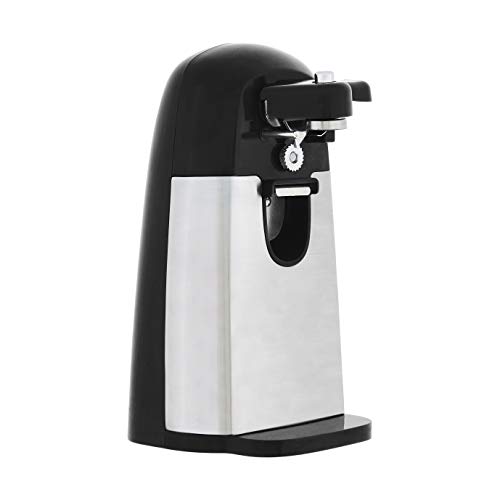
Amazon Basics 3-In-1 Electric Can Opener — Best Electric Value
Some kitchens should skip manual openers entirely: sore hands, big batch cooking, or simply a cook who opens cans while doing three other things. The Amazon Basics 3-in-1 is the budget-tier electric we can recommend without caveats about the brand behind it. It combines a countertop electric opener with a bottle opener and a knife sharpener, uses a stainless steel blade, and holds the lid with a magnet so it does not drop into the food. It suits busy family kitchens, cooks with reduced grip strength who still have counter space, and anyone who wants electric convenience without moving into the premium tier. It does not suit tiny kitchens with no spare counter or outlet, campers, or minimalists who dislike multi-function tools.
Strengths
- Electric cutting removes squeezing and cranking entirely
- Magnetic lid holder keeps the cut lid out of the food
- Bottle opener and knife sharpener built in, useful in small kitchens
Trade-offs
- Needs counter space and an outlet, unlike drawer-friendly manual picks
- Top-cut mechanism leaves a sharp lid edge, as with most countertop electrics
- More parts to wipe down around the cutting assembly after messy cans
| Spec snapshot | |
|---|---|
| Type | Countertop electric, top-cut |
| Power | 50W, corded |
| Blade | Stainless steel |
| Extras | Magnetic lid holder, bottle opener, knife sharpener |
The honest context for this pick: budget electrics are where can opener quality goes to die, and the graveyard is full of weak motors and wobbly cutting heads. This model avoids the worst of it because the design is conservative: a proven countertop format, a straightforward lever action, and a retailer brand with a reputation to protect. It will not feel as solid as the premium electrics in our auto opener guide, and tall or oversized cans deserve a steadying hand, but for standard cans at family volume it does the job at a budget position. If your cans are mostly standard size and your hands would rather not crank, this is the affordable way to go electric.
Best for: cooks who want electric help at a budget position / Not suited for: kitchens with no counter space or mostly oversized cans.

GoodCook Safe-Cut Can Opener — Best Smooth-Edge Value
Smooth-edge openers cut around the side of the rim instead of through the top of the lid, so the lid lifts away with no sharp edge and the can rim stays smooth too. That design used to cost real money. The GoodCook Safe-Cut brings it into the budget tier in a manual format with an easy-turn knob and a cutting approach that keeps the wheel away from the food surface. It suits households with kids helping in the kitchen, anyone who has been nicked by a jagged lid, and cooks who reseal cans with plastic lids, since a smooth rim takes a storage lid better. It does not suit people who drain cans by pressing the lid down into the can, a trick that needs a traditional top-cut lid, or anyone who dislikes the slightly different technique side-cutters require on the first few cans.
Strengths
- No sharp edges on lid or can, safer for kids, recycling and bare hands
- Easy-turn knob keeps hand effort low for a manual opener
- Cutting wheel stays clear of the food, a cleaner way to open
Trade-offs
- Side-cut technique takes two or three cans to feel natural
- You cannot use the lid to strain or press liquid out of the can
- The lid stays sealed-looking after cutting, so check the rim before assuming a can is unopened
| Spec snapshot | |
|---|---|
| Type | Manual, side-cut smooth edge |
| Knob | Easy-turn knob |
| Edge result | No sharp edges on lid or can |
In practice, the Safe-Cut is the pick we hand to people who say can openers scare them a little, and there are more of those people than admit it. The cut is quiet and controlled, the lid comes away in one smooth piece, and empty cans go into the recycling without the usual careful two-finger grip. Families teaching kids to cook get real value here, because the dangerous part of can opening simply disappears. The trade-off list is honest but short, and none of it matters to a cook who was never straining tuna with the lid in the first place. At a budget position, this is the most safety you can buy in a manual opener.
Best for: families, cautious cooks and anyone who hates sharp lids / Not suited for: cooks who strain cans with the lid.

Zyliss MagiCan Manual Can Opener — Best Compact
Not every kitchen has a deep tool drawer, and not every opener needs to live in a kitchen at all. The MagiCan is Zyliss’s compact manual opener: small, light and simple, with a lid-release feature that lets you drop the cut lid into the bin without touching its edge. It suits dorm rooms, RVs and campers, office kitchens, travel cooking kits and anyone whose drawer is already full. It also works well as the second opener in a busy house, the one that lives where the main opener never seems to be. It does not suit cooks with weak hands, since a compact tool gives you less leverage and smaller grips than the full-size picks, or high-volume kitchens that need a workhorse.
Strengths
- Genuinely compact and light, fits shallow drawers and travel kits
- Lid-release feature drops the lid without finger contact
- Simple mechanism with little to go wrong or rust out
Trade-offs
- Smaller handles mean more hand effort than full-size openers
- Traditional cut leaves a sharp lid edge, partly offset by the touch-free release
- Not the tool for opening a dozen cans in a row
| Spec snapshot | |
|---|---|
| Type | Manual, compact |
| Feature | Lid release for touch-free disposal |
| Design | Compact, lightweight body |
The MagiCan’s appeal is that it respects small spaces instead of apologising for them. In an RV galley or a dorm, a full-size opener with wide cushioned handles is not better, it is just bigger, and it will fight everything else in the drawer. The MagiCan opens standard cans competently, wipes clean in seconds and disappears into a corner of the drawer. Zyliss has sold compact openers for a long time, and that shows in the details: the wheel engages positively, and the lid release actually works rather than existing as a brochure claim. Buy it for the space you actually have, not the kitchen in a catalogue.
Best for: small kitchens, RVs, dorms and travel kits / Not suited for: weak hands or high-volume opening.

Kitchen Mama Auto Electric Can Opener — Best Hands-Free Value
The Kitchen Mama Auto is a different species from everything above: a small battery-operated opener that sits on top of the can, walks itself around the rim at the press of a button, and stops with the lid held ready to lift away, leaving a smooth edge. There is nothing to squeeze and nothing to crank, which is why it matters. In the budget tier it is the one hands-free model we verified from an established specialist brand, and it suits cooks with arthritis, carpal tunnel, post-surgery hand limits, or anyone cooking one-handed while holding a child, a phone or a dog at bay. It does not suit cooks who open very large or oddly shaped cans all day, or anyone who refuses to keep spare batteries in the house.
Strengths
- Fully hands-free operation, press the button and it walks the rim itself
- Smooth-edge cut with no sharp lid to handle afterwards
- Small battery body stores in a drawer, no counter space or outlet needed
Trade-offs
- Runs on batteries, an ongoing cost and a failure point if they run flat
- Slower per can than a confident manual opener
- Very large, heavy or dented cans can challenge the walking mechanism
| Spec snapshot | |
|---|---|
| Type | Battery-operated automatic, smooth edge |
| Operation | Hands-free, self-propelled around the rim |
| Storage | Drawer-size, cordless |
Position this pick honestly: it sits at the top of this guide’s budget range, and we still call it a value pick because the alternative for a cook who cannot use a manual opener is not a cheaper opener, it is not opening cans independently at all. Judged that way, the Kitchen Mama is inexpensive independence. Keep fresh batteries in it, use it on standard cans, and it does exactly what it promises. Cooks whose hands are fine will find it slower than the OXO, and that is fine too: this badge is Best Hands-Free Value, and for the kitchen it serves, nothing else on this list competes.
Best for: sore, weak or busy hands that need hands-free opening / Not suited for: very large cans or battery-free households.
Comparison Table
| Pick | Badge | Key spec | Best for |
|---|---|---|---|
| OXO Good Grips Manual Can Opener | Best Overall | Manual top-cut, cushioned grip | Most households |
| Zulay Kitchen Manual Can Opener Heavy Duty | Best Budget | Stainless steel, oversized knob | Tightest budgets, first kitchens |
| Amazon Basics 3-In-1 Electric Can Opener | Best Electric Value | 50W electric, magnetic lid holder | Electric convenience on a budget |
| GoodCook Safe-Cut Can Opener | Best Smooth-Edge Value | Side-cut, no sharp edges | Families and cautious cooks |
| Zyliss MagiCan Manual Can Opener | Best Compact | Compact body, lid release | Small drawers, RVs, travel |
| Kitchen Mama Auto Electric Can Opener | Best Hands-Free Value | Battery automatic, smooth edge | Weak or sore hands |
Read the table as a decision shortcut: start with your hands, then your space, then your budget, and only then compare the small feature differences between the models that remain on your shortlist. Healthy hands and a normal drawer point to the OXO or the Zulay. Safety worries point to the GoodCook. No grip to spare points to the Kitchen Mama, with the Amazon Basics as the corded middle ground.
How to Choose an Affordable Can Opener
Start with the cut, because it decides your daily experience more than any other feature. A top-cut opener slices through the lid just inside the rim. The lid comes out as a separate disc with a thin sharp edge, the can rim keeps a small lip, and you can press the lid down into the can to drain tuna or beans. A side-cut, or smooth-edge, opener slices around the outside of the rim. The whole lid lifts away sealed-edge intact, nothing sharp remains on either piece, and the wheel never touches the food, but you lose the draining trick and the first few cans feel unfamiliar. Neither cut is better in the abstract. Households with kids, recycling bins and bare feet should lean smooth-edge. Cooks who drain a lot of cans should lean top-cut. Everyone else can choose on hand comfort alone.
Next, be honest about your hands. Opening a can with a manual opener takes two efforts: the squeeze to bite the wheel into the rim, and the sustained turning of the knob. If either one hurts, a cheaper manual opener is not a saving, it is a toll you pay every day. Big knobs reduce turning effort, cushioned handles reduce squeeze pain, and both features appear in this guide’s budget picks for a reason. If both efforts are a problem, skip manual entirely: the battery hands-free pick or the countertop electric will serve you better than any amount of ergonomic shaping. There is no prize for struggling with a tool three times a day.
Then think about where the opener will live. Manual openers live in drawers and ask nothing. Countertop electrics ask for a permanent patch of counter and a nearby outlet, and in a small kitchen that rent has to be earned with daily use. Battery walk-around models live in drawers like manuals but trade the outlet for a battery habit. Match the tool to the kitchen you have: the best affordable opener is the one whose storage and power needs you will still be happy with in six months.
Manual vs Electric: What the Budget Tier Really Offers
At higher prices the manual-versus-electric debate is about preference. In the budget tier it is about risk. A manual opener has one moving mechanism, and a decent one is very hard to kill: the wheel dulls slowly, the gears are simple, and a wash and dry keeps rust away. That is why four of our six picks are manual. A budget electric adds a motor, a drive gear and usually a plastic housing to the same job, and each addition is a place for cost-cutting to hide. Weak motors stall on large cans, plastic gears wear, and the failure is total rather than gradual.
That does not make budget electrics pointless. It makes brand and design maturity the deciding factors, which is why our electric picks come from a major retailer brand and a specialist hands-free brand rather than from the cheapest listings on the page. If you go electric on a budget, buy the proven design, keep the cutting head clean, and accept that its realistic lifespan is shorter than a good manual’s. If you go manual, spend the small extra on cushioned handles and a stainless wheel, the two upgrades that separate a decade-long tool from a one-year tool. Either way, the budget tier rewards boring, established designs and punishes novelty.
How to Use a Can Opener Cleanly and Safely
Good technique makes even a budget opener cut better and last longer. Work through these steps and the whole job takes under a minute.
- Wipe the top of the can before opening. Dust and storage grime live on lids, and the first thing a top-cut lid does is fall towards the food.
- Seat the opener fully. For a manual top-cut, clamp the handles firmly so the wheel bites the rim, not the label. For a side-cut, rest the opener flat on the lid so its wheel meets the outer rim. For the hands-free model, centre it on the lid and let its magnet find the rim.
- Turn, press or start the cut, and keep steady pressure all the way around. Stopping and restarting mid-can is what leaves the lid hanging by a sharp tab.
- Finish the cut completely, then lift the lid away with the opener, a fork or the lid-release feature, never with bare fingertips on a top-cut edge.
- Tip the contents out, then rinse the opener’s wheel and head straight away. Tomato and fish residue left overnight is what corrodes budget cutting wheels.
- Dry the opener before it goes back in the drawer. Thirty seconds with a towel is the cheapest maintenance any tool in your kitchen will ever ask for.
One safety habit deserves its own line: treat every top-cut lid as a blade. Drop it straight into the bin or back inside the empty can before the can goes into recycling, and never fish a fallen lid out of food with your fingers. Smooth-edge converts get to skip this worry, which is a fair part of why they convert.
Making a Budget Opener Last: Care, Storage and Replacement Signs
The difference between an affordable opener and a cheap one is often not the purchase, it is the next twelve months. Budget tools use honest materials but thinner protective finishes than premium tools, so a small amount of care goes a long way. The routine is simple. Wash or rinse the cutting head after use, especially after acidic foods like tomatoes and oily foods like tuna, because both attack the wheel’s finish while they sit. Dry the tool fully before storing it. If your opener goes in the dishwasher, place it so the wheel is not rattling against other metal, and still dry it when the cycle ends, because a warm damp drawer is where budget wheels pick up their first rust spots. Store manual openers dry and loose rather than buried under heavier tools that can bend a handle or chip a knob over time.
Electric and battery picks ask for two extra habits. On a countertop electric, pop off or wipe the cutting assembly weekly if you open cans daily; dried food builds up exactly where the wheel meets the can, and that build-up, not motor wear, is behind most complaints about an electric that suddenly cuts badly. On the battery hands-free model, treat batteries as part of the tool: fresh cells make the walk-around mechanism confident, tired cells make it hesitate mid-rim, and removing the batteries entirely is the right move if the opener will sit unused in a camper or holiday home for months.
Know the replacement signs, too, because a dying opener announces itself. If the wheel starts skating across the rim instead of biting, if you need a second clamp to start the cut, if the knob develops a gritty catch at the same point on every turn, or if rust appears on the cutting edge itself rather than the body, the tool is done. A dull or corroded wheel does not just work badly, it works dangerously, because the extra force it demands is exactly how hands slip. At budget prices, replacement is the correct repair: there is no sharpening service that makes sense for a tool in this tier, and every pick in this guide is cheap enough that replacing it after years of service still keeps your cost per year tiny. That is the real arithmetic of affordable: buy a defensible tool, care for it lightly, replace it without regret when it finally wears, and your decade of can opening still costs less than one premium appliance accessory.
Common Buying Mistakes
Buying the absolute cheapest opener on the page. Below a certain point the savings buy thin metal, dull wheels and gears that skip. The Best Budget pick in this guide exists because it is the floor we can defend; going lower is false economy.
Ignoring your hands until they complain. People buy the opener that looks tidy, then dread using it. If squeezing or cranking already bothers you, choose the ergonomic or hands-free pick now, not after months of avoidance.
Forgetting the draining question. Smooth-edge lids cannot press liquid out of a can. If you open a lot of tuna, beans or canned fruit, either keep a cheap top-cut as a second tool or choose a top-cut main opener.
Letting the wheel rust. The most common cause of death for affordable openers is not wear, it is corrosion from being put away wet or left soaking. Rinse, dry, done.
Buying a countertop electric for a counterless kitchen. If the only home for it is a cupboard, you will stop getting it out, and the drawer manual will win by default. Match the format to the space honestly.
Expecting one opener to do every job. A compact travel opener and a family workhorse are different tools. Several households in our research keep two: a main pick and a compact or specialty second. At these prices, that is reasonable rather than extravagant.
Final Recommendation
For most people reading a guide to the best affordable can openers, the answer is the OXO Good Grips: comfortable, durable and sensibly priced, it is the pick we would hand to a friend without asking follow-up questions. On the tightest budget, the Zulay Kitchen manual covers the basics properly for less. If sharp lids worry you, the GoodCook Safe-Cut removes them from your life at a budget position. If your hands need real help, go straight to the Kitchen Mama Auto for hands-free opening, or the Amazon Basics electric if you have counter space and prefer a cord. And if space is the binding constraint, the Zyliss MagiCan is small in the drawer and competent on the can.
Still deciding between formats? Our wider roundup of the Best Can Openers covers premium and specialty models beyond this budget list. If automatic operation is your priority, see the Best Auto Can Openers guide and the closely related Best Automatic Can Openers picks. Cooks shopping mainly for easier daily use should also read the Best Can Openers For Seniors and Best Can Openers For Arthritis guides, and anyone who wants cordless convenience can compare the Best Battery Operated Can Openers next.
Related guides
Frequently Asked Questions
How much should a good affordable can opener cost?
Enough to buy stainless steel and a real brand, and no more. The budget tier contains durable manual openers and a couple of sensible electrics, while the very cheapest unbranded tools tend to flex, rust or dull quickly. Think in cost per year: a slightly better manual opener that lasts a decade is cheaper than replacing a bargain tool every year or two. Check the current price on Amazon for each pick, since small-tool pricing moves often.
Are smooth-edge can openers worth it?
For many households, yes. They remove the sharp lid edge entirely, keep the cutting wheel out of the food and make empties safer to handle and recycle. The honest costs are a short learning curve and losing the trick of draining a can by pressing its lid down. If neither bothers you, a smooth-edge pick like the GoodCook Safe-Cut or the Kitchen Mama Auto is an easy recommendation.
Can an affordable electric can opener handle large cans?
Standard cans, yes. Very tall or heavy cans are where budget electrics work hardest, and a steadying hand on the can helps any countertop model. If most of your cans are oversized, a sturdy manual opener or a tall-can electric design is the safer buy. The countertop pick in this guide handles everyday family cans well, which is the job it was chosen for.
How do I stop a cheap can opener from rusting?
Rinse the cutting wheel and head right after use, dry the whole tool with a towel, and store it dry. Do not leave it soaking in the sink, and do not put it away wet in a closed drawer. Rust starts on the wheel, where it dulls the cut and flakes towards food, so those thirty seconds of drying are the entire maintenance programme for a manual opener.
What is the best affordable can opener for arthritis or weak hands?
The Kitchen Mama Auto, because it removes both efforts that hurt: there is no squeeze to engage the cut and no knob to crank. Press the button, let it walk around the can, lift the smooth-edged lid away. If you prefer a manual tool, choose the biggest knob and the most cushioned handles you can, which in this guide means the OXO Good Grips or the oversized-knob Zulay.
Do I still need a can opener if most cans have pull tabs?
Yes, and the pull tab itself is half the reason. Pull tabs snap off, bend without breaking the seal, and leave a half-open lid that is sharper and harder to handle than anything a can opener produces. Plenty of cans still ship without tabs, including many store-brand vegetables, large soup cans and imported goods. A budget opener in the drawer is cheap insurance for the day a tab fails mid-recipe, and it also opens the tabbed can cleanly when the tab does fail. Keep the opener even if you only reach for it twice a month; those two times will be exactly when you have no alternative.
Which opener works best for large or tall cans?
For manual opening, any full-size pick in this guide handles tall cans well because your hand supplies the leverage and you can reposition as you go. The constraint is mainly electric: compact walk-around battery models are happiest on standard cans, and a countertop electric needs enough clearance under its cutting head for the can to stand straight. If your pantry leans on large tomato and family-size cans, favour the OXO or Zulay manual, or check that an electric pick is specifically built in an extra-tall format before buying.
Should I buy a manual or electric opener first?
Buy the manual first unless your hands say otherwise. A good manual opener is cheaper, smaller, needs no power and lasts longer, and it remains useful as a backup even if you add an electric later. Buy electric first only when grip strength, hand pain or sheer daily volume makes manual opening a genuine burden, because that is the problem electrics actually solve.


