Disclosure: airfryerkitchensupply.com is reader-supported. When you buy through links on our site, we may earn an affiliate commission at no extra cost to you.
Where to buy
The machines in this guide to the best 4 oz coffee makers are all sold through Amazon, where you can check the current price on Amazon for each model, confirm the exact variant, and read the manufacturer’s full listing before you buy. Prices and availability in this category move often, so this guide never prints a fixed price — use the links below to see today’s figure for the pick you choose.
- Breville Nespresso Essenza Mini Espresso Machine — Check the current price on Amazon
- Mr. Coffee 4-Shot Steam Espresso Cappuccino Latte Maker — Check the current price on Amazon
- Primula Classic Stovetop Espresso Maker, 3 Espresso Cups — Check the current price on Amazon
- KEENSTAR 3.5 Bar Espresso Machine, 4-Cup — Check the current price on Amazon
- Bialetti Moka Express, 6 Cups — Check the current price on Amazon
- IMUSA Electric Espresso Maker, 6 or 3 Cup — Check the current price on Amazon
The best 4 oz coffee makers are not small drip machines — a 4-ounce serving is a different drink entirely. Four ounces is a double espresso with headroom, a cafecito for two, or one small strong mug, and the machines that make it are espresso makers, moka pots, and capsule brewers. This guide treats the keyword as what it most sensibly means: the best machines for brewing coffee in true 4-ounce servings.
That framing matters because the technologies genuinely differ. Below are the verified best options across pump espresso, steam espresso, electric moka, and stovetop moka — each judged on the quality of the small strong cup it produces, the honesty of its serving size, and what it asks of you in ritual and running cost.
In this guide
Quick Picks: The Best 4 oz Coffee Makers
- Best Overall — Breville Nespresso Essenza Mini Espresso Machine: 19-bar pump, 25-second heat-up, espresso + lungo. Check price on Amazon
- Best for Milk Drinks — Mr. Coffee 4-Shot Steam Espresso Cappuccino Latte Maker: Steam espresso, 4 shots, frothing wand + pitcher. Check price on Amazon
- Best Budget — Primula Classic Stovetop Espresso Maker, 3 Espresso Cups: Stovetop moka pot, no electricity needed. Check price on Amazon
- Best Compact Electric — KEENSTAR 3.5 Bar Espresso Machine, 4-Cup: 3.5-bar steam, 800W, milk frother wand. Check price on Amazon
- Best for Serving a Table — Bialetti Moka Express, 6 Cups: The original moka pot design, Italian-made icon. Check price on Amazon
- Best Without a Stove — IMUSA Electric Espresso Maker, 6 or 3 Cup: Electric moka-style, detachable base, Cuban coffee. Check price on Amazon
How These Picks Were Chosen
Every machine in this guide to the best 4 oz coffee makers was checked against the manufacturer’s own listing through Amazon’s catalogue data before it earned a place. That verification step matters more in this corner of the market than in most, because small brewers are sold under shifting model names, colour variants get listed as separate products, and capacity claims are notoriously elastic. If a model’s identity or capacity could not be confirmed, it did not get a link — full stop.
From the verified shortlist, machines were shortlisted on five criteria. First, honest capacity: the carafe or brew size had to match the size class in the search, using the coffee industry’s small ‘cup’ measure rather than mug marketing. Second, the features people actually use weekly — pause-and-pour, reusable filters, readable water windows, auto shut-off — counted for more than novelty extras. Third, parts and carafe availability were weighed, because a small brewer with an unreplaceable glass pot is a disposable product. Fourth, footprint and loading style were matched to the kitchens these machines live in: under cabinets, in dorms, on desks. Fifth, each pick had to own a distinct job. Six near-identical black boxes would be a worse guide than six machines that each win for a different household.
Selection for a serving-size keyword inverted the usual process: instead of shortlisting by machine type, every candidate was first audited for what a ‘serving’ actually means in its listing — espresso shots, demitasse cups, or ounces — and only machines whose native serving honestly brackets 4 ounces were eligible. Drip machines were excluded not as inferior but as off-brief: a 20-ounce pot is not a 4-ounce coffee maker no matter how little water you pour in it.
One more rule governed the final list: nothing with a known safety recall was eligible, and no machine was included on the strength of a headline feature its listing could not support. Where a size tier turned out to be thin or effectively empty in today’s market, this guide says so in plain language rather than padding the list with oversized machines relabelled as small ones.
The Best 4 oz Coffee Makers Reviewed
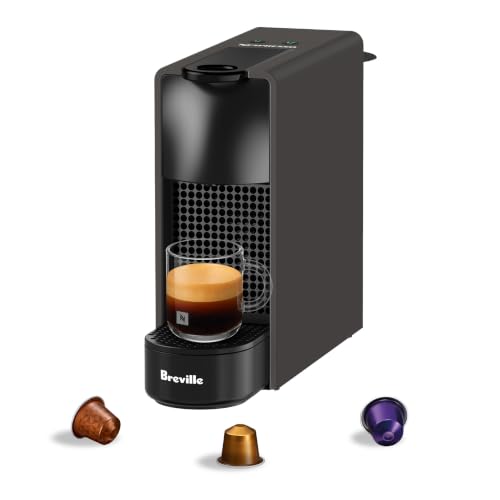
Breville Nespresso Essenza Mini Espresso Machine — Best Overall
The Essenza Mini is what a 4-ounce coffee looks like when it is engineered rather than improvised: a 19-bar pump, a heat-up measured in seconds, and two programmable buttons for a standard espresso or a longer lungo. It is also genuinely tiny — the machine disappears into a corner that a drip brewer would dominate. For the drinker whose coffee is a single strong shot in the morning, it replaces a whole category of larger machines with one button press.
The Essenza Mini is the 4-ounce serving perfected: a 19-bar pump, a heat-up in seconds, and programmable espresso and lungo buttons that make the small strong cup a one-touch event. Nothing else here matches its pressure or its consistency, and its footprint is closer to a kettle’s than a coffee machine’s.
Strengths
- A real 19-bar pump — proper espresso pressure the steam machines cannot reach
- 25-second heat-up and one-button operation make a 4-ounce drink nearly effortless
- One of the smallest footprints of any pump espresso machine, ever
Trade-offs
- Locked to Nespresso Original capsules — ongoing capsule cost and waste
- No milk frother in the box; lattes need a separate frother
- Espresso and lungo only — it will never brew a big American mug
| Pressure | 19-bar pump (manufacturer listing) |
| Heat-up | About 25 seconds (manufacturer listing) |
| Servings | Two programmable cup sizes — espresso and lungo (manufacturer listing) |
The trade is the capsule bargain, stated plainly: convenience and consistency in exchange for per-cup cost, packaging waste, and being limited to the Nespresso Original capsule ecosystem. There is no frother included, so milk drinks mean a second appliance. Judged purely as a small-serving espresso device, though, nothing else in this roundup matches its combination of pressure, speed, and size — it is the premium answer to the 4-ounce question.
Essenza ownership is the capsule bargain in daily form: almost no cleaning beyond emptying the capsule container and an occasional descale, in exchange for buying capsules forever and storing them somewhere. The machine’s small water tank wants frequent refills with fresh water — a feature disguised as a chore, since small tanks keep water fresher.
Best for: Espresso purists with minimal counter space / Not suited for: Anyone who dislikes capsule ecosystems on principle or cost
Check the current price on Amazon

Mr. Coffee 4-Shot Steam Espresso Cappuccino Latte Maker — Best for Milk Drinks
This Mr. Coffee steam machine is the classic starter espresso maker: load the portafilter, brew up to four shots into the carafe, then swing the frothing wand to a pitcher of milk for cappuccinos and lattes. Steam-powered brewing is the oldest home espresso method, and while it will never match a pump machine’s pressure, it produces a strong, concentrated coffee that stands up to milk perfectly well — which is what most buyers at this tier actually drink.
Four ounces of steam-brewed espresso plus a frothing wand and an included pitcher equals two proper cappuccinos — the Mr. Coffee’s whole argument. For households whose small coffee arrives under foam, it delivers the complete drink in one appliance at the starter tier.
Strengths
- Brews up to four shots at once — enough for two cappuccinos from one cycle
- Integrated frothing wand and included stainless pitcher cover lattes and cappuccinos out of the box
- Steam machines are mechanically simple and historically long-lived
Trade-offs
- Steam pressure cannot match pump espresso — expect a milder, less crema-rich shot
- Frothing wand needs purging and wiping after every use or milk residue builds up
- Glassware and shot measurement are on you — there is no dosing automation
| Capacity | Brews up to 4 espresso shots per cycle |
| Milk | Integrated frothing wand, stainless steel pitcher included (manufacturer listing) |
| Method | Steam-powered espresso brewing (manufacturer listing) |
The ritual is part of the deal: you measure, you watch the carafe, you steam, you wipe the wand immediately. Skip the wipe-down and yesterday’s milk becomes today’s problem. Within those expectations the machine is capable and durable, and the included stainless pitcher saves a separate purchase many starter kits forget. For cafecito drinkers and milk-drink-first households it remains the most direct route to a 4-ounce coffee-shop-style drink at home.
Steam-machine ownership is a wipe-down discipline: purge and wipe the wand after every milk session, empty and rinse the carafe, and descale the boiler on schedule. In return the mechanism is simple enough to serve for many years. Keep a dedicated cloth by the machine — the habit forms faster when the tool is within reach.
Best for: Cappuccino and latte drinkers starting home espresso on a budget / Not suited for: Espresso purists chasing thick crema and precise pressure
Check the current price on Amazon
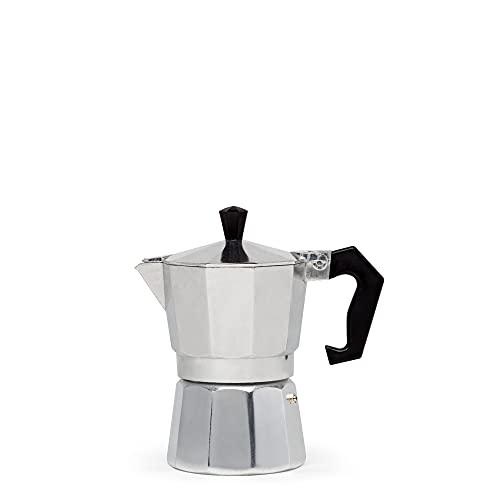
Primula Classic Stovetop Espresso Maker, 3 Espresso Cups — Best Budget
The Primula Classic 3-cup moka pot is the oldest technology in this roundup and, for small strong coffee, arguably still the most honest. Fill the base with water, the basket with grounds, set it on the stove, and steam pressure pushes a rich, concentrated brew into the top chamber — about three small espresso-style cups per cycle. There is nothing to program, nothing to descale with chemicals, and nothing electronic to fail, which is why moka pots get handed down rather than thrown out.
The Primula 3-cup moka pot brews roughly three small servings — the heart of the 4-ounce world — for the price of a few café visits, with no electricity and a lifespan measured in decades. As a first step into small strong coffee, nothing in this guide risks less or teaches more.
Strengths
- No electricity, no pump, no electronics — works on any stove and even over a campfire
- The 3-cup size lands right at a small strong serving for one or two people
- Aluminium moka pots routinely serve for decades with only gasket replacements
Trade-offs
- Stovetop means supervision — walk away and the coffee over-extracts or the pot boils dry
- Moka coffee is strong and rich but is not true pump espresso
- Aluminium needs hand-washing and thorough drying to stay tasting clean
| Capacity | 3 espresso cups per brew |
| Method | Stovetop moka pot — no electricity required (manufacturer listing) |
| Use | Italian and Cuban café style brewing (manufacturer listing) |
The craft is in the heat: medium flame, remove the pot the moment the stream turns pale and starts to sputter, and the cup is sweet and intense; leave it blasting and it turns bitter. Aluminium construction keeps it light and inexpensive but asks for hand-washing. For cafecito drinkers, Italian-style households, and anyone whose power outlet situation is a campfire, this little pot is not a compromise — it is the original appliance for exactly this size of coffee.
A moka pot’s ownership is measured in gaskets: replace the rubber seal when the brew starts to sputter sideways, keep the safety valve clear, and never put it away wet. There is no descale chemical ritual and no cord to fail. Owners routinely report these pots outliving the kitchens they were bought for — the aluminium asks only for respect and a dry cupboard.
Best for: Cafecito and Italian-style coffee drinkers, campers, and minimalists / Not suited for: Anyone who wants to press a button and walk away
Check the current price on Amazon

KEENSTAR 3.5 Bar Espresso Machine, 4-Cup — Best Compact Electric
The KEENSTAR is a compact steam espresso machine built around the 4-cup espresso format — small, strong servings rather than diner mugs. Its 3.5-bar steam system brews the shot and powers the frothing wand, and the whole machine is sized for a corner of counter rather than a coffee station. For a first step into espresso-style drinks, or for households where espresso means a small Cuban-style coffee, the format makes immediate sense.
The KEENSTAR packages steam espresso and a milk wand into the smallest electric footprint here, sized around the 4-cup espresso format. Apartment dwellers who want an appliance rather than a stovetop ritual — and who drink their espresso with milk — are its natural owners.
Strengths
- Compact 4-cup format sized for small espresso servings rather than big mugs
- Steam wand handles cappuccino foam and latte milk without a separate frother
- Fast-heating 800W system suits quick single servings before work
Trade-offs
- 3.5-bar steam pressure is a starter level — rich in milk drinks, limited for straight shots
- Lesser-known brand, so long-term parts and support are uncertain
- Small water capacity means refills are part of the routine for back-to-back drinks
| Capacity | 4-cup espresso maker |
| Power | 800W, 3.5-bar steam system (manufacturer listing) |
| Milk | Steam wand milk frother (manufacturer listing) |
Set expectations by the physics: steam pressure at this level makes a concentrated, mellow shot that shines with milk and sugar and shows its limits drunk straight against a pump machine’s output. The brand is not a household name, so treat support as email-grade rather than parts-counter-grade. As an inexpensive way to learn whether you enjoy the espresso ritual at all, though, it is a sensible, honestly specced little machine.
The KEENSTAR asks the same steam-machine disciplines as its Mr. Coffee rival — wand hygiene above all — with a smaller support footprint behind it. Buy it with eyes open: care for it well, because a well-kept steam boiler is durable, and sourcing obscure parts for a minor brand is the risk you accept for the price and size.
Best for: Beginners testing whether home espresso fits their routine / Not suited for: Experienced home baristas upgrading from a pump machine
Check the current price on Amazon

Bialetti Moka Express, 6 Cups — Best for Serving a Table
Every moka pot since 1933 is a commentary on this one. The Bialetti Moka Express in the 6-cup size brews a full small pot of concentrated stovetop espresso — enough for two large servings or several small ones — with the same aluminium silhouette that has sat on Italian stoves for generations. Buying the original gets you the category’s best gasket and parts availability and a casting quality the imitators aim at.
When the 4-ounce round is for guests, the Bialetti Moka Express brews six small cups of the original stovetop espresso in one go. It is the premium moka: the casting, the gasket availability, and the sheer heritage make it the buy-once version of the category’s founding design.
Strengths
- The original moka design from the company that invented the category
- Six-cup yield covers two generous servings or a small group in one brew
- Cast aluminium body with a multi-decade service reputation and available gaskets
Trade-offs
- Costs more than functionally similar moka pots — you pay for the original
- Stovetop supervision is required, as with every moka pot
- Not induction-ready in this classic aluminium version
| Capacity | 6 espresso cups per brew |
| Method | Stovetop moka pot (manufacturer listing) |
| Design | Moka Express — the original 1930s design (manufacturer listing) |
The brewing guidance is identical to any moka pot — medium heat, pull it off as the stream pales — but the ownership experience is where the premium shows: the handle, the knob, the safety valve, and the spare-parts pipeline are all a grade better. If a moka pot is a once-a-decade purchase for you, the arithmetic of paying a little more for the original is easy to defend. If it is a first experiment, the Primula above teaches the same lessons for less.
Bialetti ownership comes with the category’s best support tail: gaskets, handles, and funnels are standard spares, and the ritual care is identical to any moka pot — dry storage, gentle washing, no dishwasher heroics. The aluminium will darken and patina over the years; owners read that as a service record, not damage.
Best for: Moka devotees who want the original, buy-it-once version / Not suited for: First-time experimenters watching every dollar
Check the current price on Amazon

IMUSA Electric Espresso Maker, 6 or 3 Cup — Best Without a Stove
The IMUSA electric espresso maker takes the moka pot off the stove and puts it on a powered base — the format Cuban-coffee households have quietly loved for years. It brews either a 3-cup or a 6-cup batch of concentrated coffee, then lifts off its base with a cool-touch handle for serving. For drinkers who want stovetop-style coffee without standing over a burner — or whose stove is an induction hob that aluminium pots cannot use — it solves a real problem.
The IMUSA takes the moka format electric — a detachable powered base, 3-cup or 6-cup batches, and a cool-touch handle for table service. Kitchenettes, offices, and induction-only kitchens that cannot run a stovetop pot get the same cafecito tradition in appliance form.
Strengths
- Electric base frees you from stove-watching — moka flavour with appliance convenience
- Brews a 3-cup or 6-cup batch, covering solo mornings and entertaining
- Detachable base makes pouring and serving at the table easy
Trade-offs
- Electric moka is still moka — concentrated coffee, not drip and not pump espresso
- Cast aluminium chamber needs hand care and full drying
- A niche format: fewer community recipes and tips than for stovetop pots
| Capacity | Brews 6 or 3 cups (manufacturer listing) |
| Design | Detachable cool-touch base, cast aluminium finish (manufacturer listing) |
| Use | Positioned for Cuban coffee (manufacturer listing) |
Everything said about moka flavour applies: rich, strong, and best with milk, sugar, or hot water to taste. The electric base adds convenience but also the category’s usual caveat — a heating element and a cord are parts a stovetop pot simply does not have to fail. As a dedicated cafecito station for a home or office kitchenette without a usable stove, though, it has very little competition.
The IMUSA’s electric base adds one ownership rule to moka care: keep the base and its contacts dry, and never immerse them. The aluminium chamber wants the usual hand-washing and full drying. In return there is no stove compatibility to worry about — ownership is simpler than a stovetop pot for induction and kitchenette households.
Best for: Cuban-coffee drinkers without a suitable stove / Not suited for: Drip drinkers looking for a mild electric pot
Check the current price on Amazon
Comparison Table
| Pick | Badge | Key spec | Best for |
|---|---|---|---|
| Breville Nespresso Essenza Mini Espresso Machine | Best Overall | 19-bar pump, 25-second heat-up, espresso + lungo | Espresso purists with minimal counter space |
| Mr. Coffee 4-Shot Steam Espresso Cappuccino Latte Maker | Best for Milk Drinks | Steam espresso, 4 shots, frothing wand + pitcher | Cappuccino and latte drinkers starting home espresso on a budget |
| Primula Classic Stovetop Espresso Maker, 3 Espresso Cups | Best Budget | Stovetop moka pot, no electricity needed | Cafecito and Italian-style coffee drinkers, campers, and minimalists |
| KEENSTAR 3.5 Bar Espresso Machine, 4-Cup | Best Compact Electric | 3.5-bar steam, 800W, milk frother wand | Beginners testing whether home espresso fits their routine |
| Bialetti Moka Express, 6 Cups | Best for Serving a Table | The original moka pot design, Italian-made icon | Moka devotees who want the original, buy-it-once version |
| IMUSA Electric Espresso Maker, 6 or 3 Cup | Best Without a Stove | Electric moka-style, detachable base, Cuban coffee | Cuban-coffee drinkers without a suitable stove |
How to Choose a Maker for Small, Strong Coffee
The 4-ounce coffee world splits into three technologies, and choosing between them matters more than choosing between brands. Pump espresso machines push water through coffee at high pressure for a true espresso with crema — the Essenza Mini’s 19-bar pump is the real article in capsule form. Steam machines use boiler pressure alone: milder, milk-friendly, and inexpensive, represented here by the Mr. Coffee and KEENSTAR. Moka pots sit in between, using stovetop steam for a concentrated brew that is neither drip nor true espresso. All three make a legitimate small strong coffee; they differ in cost, ritual, and how they treat milk.
Serving Size, Decoded
Espresso servings confuse everyone because the word ‘cup’ shrinks again. A single espresso is about one ounce of liquid; a double — the standard café serving and the base of most milk drinks — is about two ounces; a 4-ounce pour is therefore a double-double, a cafecito for two, or one strong small mug’s worth. Moka pot ‘cups’ are demitasse cups of roughly two ounces. When a moka pot says 3 cups or 6 cups, picture small strong servings, not diner mugs — and size your purchase to the number of espresso drinkers, not the number of coffee drinkers.
Milk Changes the Answer
If your 4 ounces usually arrive as a cappuccino or latte, the frothing system is the product. Steam wands on the Mr. Coffee and KEENSTAR handle milk in the same appliance; the Essenza Mini needs a separate frother; moka pots need a saucepan and a whisk or a standalone frother. Straight-shot drinkers should invert the priority: pressure and consistency first, milk hardware never. Being honest about your milk habit before buying prevents the classic mistake of a beautiful espresso setup that cannot make the drink you actually order.
Budget Tiers for Small-Format Machines
The entry tier is stovetop: a moka pot costs little, lasts decades, and asks only for your attention while it brews. The middle tier is steam machines and electric moka makers — countertop convenience and milk frothing at modest prices, with espresso quality that suits milk drinks. The premium tier in this guide is the capsule pump machine: real pressure, real convenience, and a per-cup cost that continues for as long as you own it. Each tier is defensible; the mistake is buying one tier while expecting another tier’s results.
What the Listings Do Not Tell You
Listings for small espresso-format machines photograph beautifully and explain badly. Three translations help. First, ‘cups’ in this world are demitasse servings of about two ounces, never mugs — a 6-cup moka pot is a two-mug appliance wearing ceremonial dress. Second, ‘bar’ figures describe maximum pump or steam pressure, not a guarantee of flavour; technique — fresh coffee, right grind, correct heat — decides more than the number does. Third, every frothing wand photograph omits the thirty seconds of wiping that follows; budget those seconds into the ritual or choose the capsule route, where the ritual is intentionally absent.
The other unlisted truth is about water. Small boilers and moka bases scale faster per litre than large machines because the same minerals concentrate in less water, and a scaled steam machine loses exactly the pressure that is its whole reason to exist. Use filtered water if your tap is hard, empty and dry the machine after use, and the small-format machine you bought for intensity will keep delivering it.
Small Servings and Sustainability, Briefly
The 4-ounce habit is inherently low-waste at the cup level: nothing is brewed that will not be drunk, and nothing sits warming into undrinkability. The formats differ in their packaging footprint — moka pots and steam machines run on loose coffee with almost no waste beyond grounds, while capsule convenience is paid for in per-cup packaging that continues for the life of the machine. Grounds from every format here are compostable. As with all coffee equipment, the greenest machine remains the one you keep for a decade, which argues for buying the format whose ritual you genuinely enjoy.
How to Use a Small Espresso or Moka Maker, Step by Step
Step 1 — Start with hot water where the method allows. For moka pots, filling the base with just-boiled water shortens stove time and keeps the grounds from cooking before the brew starts — a small step that makes a visibly sweeter cup.
Step 2 — Fill the basket level, do not tamp hard. Moka and steam machines want a level, lightly settled bed of fine-medium grounds. Tamping like a pump machine chokes the low-pressure system and forces bitter, slow extraction.
Step 3 — Use medium heat and watch the stream. The brew should flow in a steady, honey-coloured stream. The moment it pales and starts to sputter, pull a moka pot off the heat or stop a steam machine — everything after that point is bitterness being added to a finished drink.
Step 4 — Froth milk immediately, wipe the wand immediately. Steam milk right after brewing while the machine is at temperature, and wipe and purge the wand the second you finish. Milk baked onto a wand is the number-one maintenance failure of small espresso machines.
Step 5 — Cool, empty, dry. Let parts cool before handling, knock out the grounds, rinse without detergent for moka aluminium, and dry fully before reassembly. A moka pot stored wet will taste like it was stored wet.
A Short Defence of the 4-Ounce Cup
Large servings dominate modern coffee marketing, but the 4-ounce format has history on its side: it is the size of the original espresso culture, the Cuban cafecito shared among friends, and the Greek and Turkish small-cup traditions that predate the mug entirely. Small servings are not a compromise made by people with small machines; they are a deliberate ratio of intensity to volume, drunk fresh in minutes rather than nursed for an hour. A 4-ounce coffee is also, not coincidentally, the serving at which freshness is total — there is no second half of the cup to go cold or oxidise while you answer email.
Practically, the format rewards the machines in this guide in proportion to their honesty about it. The capsule pump makes it effortless, the steam machines make it milky, and the moka pots make it ritual — three legitimate relationships with the same four ounces. Choosing among them is choosing how you want those minutes to feel, which is a more enjoyable question than most appliance purchases offer.
Technique Notes: Getting the Most From Each Format
For moka pots, three variables decide the cup: grind, heat, and the moment of removal. The grind should be fine-medium — finer than drip, coarser than true espresso — and the basket filled level without tamping. Heat belongs at medium: a violent flame races the water through before it can extract, then scorches what it made. Removal is the master’s move — the pot leaves the heat as the stream turns pale and begins to sputter, and the base can be set on a cold wet towel to stop the brew dead. Master those three and a fifteen-dollar pot produces coffee that embarrasses machines.
For steam machines, the parallel disciplines are dose consistency and milk order. Steam pressure varies with fill level, so measure the water the same way every time; an inconsistent fill is an inconsistent shot. Brew the espresso first, then steam the milk while the boiler is at full voice, and texture the milk to glossy paint rather than stiff foam — steam wands at this level reward patience over power. And wipe the wand immediately: every other maintenance task on these machines is monthly, but that one is per-drink, and skipping it is how good machines become unpleasant ones.
Capsules Versus Craft: An Honest Word
The Essenza Mini and the moka pots in this guide represent two philosophies that their owners tend to defend like football clubs, so let the record be neutral. Capsules buy consistency and speed at a per-cup cost and a packaging stream; craft formats buy economy and ritual at the cost of your attention for three minutes. Neither is a moral position. The drinker who loves the ritual should never be sold a capsule machine ‘for convenience’ — they will miss the making of it. The drinker who wants a perfect small cup while dressing for work should never be sold a moka pot ‘for authenticity’ — they will abandon it by February. Buy the relationship with the process that you will actually keep, and the 4-ounce cup will take care of itself.
Choosing Coffee for Small, Strong Servings
Concentrated formats amplify bean choice, because there is no volume to dilute a mistake. For moka pots and steam machines, medium and medium-dark roasts are the forgiving centre: their developed sugars read as richness at high concentration, while very light roasts can turn sharp and sour in a moka pot’s high-temperature finish. Freshness matters more than pedigree — a recently opened bag of honest coffee beats a stale bag of famous coffee in every format in this guide, and small servings make staleness impossible to hide.
Grind is the second lever, and the formats split here. Moka wants fine-medium and forgives supermarket pre-ground espresso blends surprisingly well, which is one reason the format thrives in households that never buy a grinder. Steam machines want a similar fineness but punish stale pre-ground faster, since their low pressure needs the bed’s resistance to build what little pressure exists. Capsules remove the variable entirely — the grind decision was made at the factory, for better and for worse.
Storage closes the triangle: small servings mean a bag lasts longer in the cupboard, which means airtight, cool, and dark storage stops being advice and becomes the difference between week one’s cup and week three’s. Decant what you will use in a few days, seal the rest tightly, and the 4-ounce ritual will taste like a decision rather than a decline.
Building the 4-Ounce Habit Into a Morning
The small strong coffee rewards being made a ritual with a fixed place in the morning rather than an improvisation. Capsule owners get this free — the machine’s speed inserts itself anywhere — but moka and steam drinkers should give the ritual a station: pot, coffee, and cup living together, water measured the night before where the format allows, and the three attentive minutes treated as the point rather than the price. Drinkers who frame it that way keep the habit for decades; drinkers who frame it as a slower route to caffeine quietly revert to whatever is fastest by spring.
There is also a social geometry to the format worth naming: a 4-ounce coffee is short enough to be offered to anyone who crosses your threshold — a neighbour, a courier, a friend passing through — and made fresh for them in minutes. The big pot serves the household; the small strong cup serves the moment. Households that discover that tend to keep a moka pot or a small machine long after their main brewer has been upgraded twice, because some drinks are not about the caffeine at all.
One Last Thing: Respect the Serving
The 4-ounce coffee asks one thing of its drinker: to be drunk as it was made — immediately, attentively, and at the size it was brewed. It is not a small portion of a big drink; it is a complete drink with its own centuries of culture behind it, from the cafecito passed hand to hand to the espresso standing at a marble counter. Choose the machine whose ritual fits your mornings, keep its water fresh and its wand wiped, and this smallest of coffee formats will repay you out of all proportion to its ounces.
A practical footnote for the undecided: start where the risk is smallest. A moka pot costs little, teaches the format honestly, and remains useful forever as a second brewer even if a pump machine later becomes the daily driver. The reverse journey — capsule first, craft later — works too, but the pot’s tuition is cheaper and its lessons transfer to every format in this guide. Either way, begin this week: four ounces is a small commitment with an outsized return.
And if your household contains both kinds of drinker — one who wants the ritual, one who wants the button — the honest answer is both machines, bought in that order: the pot now, the pump when the habit has proven itself. Counters have held stranger truces, and few appliances earn their space as completely as a small machine used every single day.
Common Buying Mistakes
Expecting café espresso from steam pressure. Steam machines make good milk drinks and mellow shots; they cannot make pump-pressure espresso. Buy the technology that matches the drink you actually want.
Counting moka cups as mugs. A 6-cup moka pot makes about six small demitasse servings — roughly two generous mugs of strong coffee. Size by ounces and drinkers, not by the number printed largest on the box.
Skipping the gasket budget. Moka pots and steam machines seal with rubber gaskets that harden over the years. They are cheap and replaceable — but only if you buy a model whose gaskets are actually sold.
Forgetting the milk hardware. A capsule machine without a frother makes espresso, not lattes. If milk drinks are the goal, the frothing solution belongs in the purchase, not in a later apology.
Storing a moka pot wet. Aluminium stored damp develops stale, metallic flavours that no amount of coffee can mask. Dry it fully, store it loosely assembled, and it will outlast the kitchen around it.
Final Recommendation
For the purest 4-ounce cup, the Essenza Mini stands alone on pressure and ease. For milk drinks, take the Mr. Coffee steam machine; for ritual and value, the Primula; for a table of guests, the Bialetti; and for a kitchen without a usable stove, the IMUSA electric. The format is small — the choice is not.
Start with Breville Nespresso Essenza Mini Espresso Machine, Mr. Coffee 4-Shot Steam Espresso Cappuccino Latte Maker, Primula Classic Stovetop Espresso Maker, 3 Espresso Cups — the three picks most readers of this guide end up choosing between.
Related guides in this series: Best 5 Cup Coffee Makers; Best 4 Cup Coffee Makers; Best 6 Cup Coffee Makers; Best 1 Cup Coffee Makers; Best 4 5 Cup Coffee Makers.
Frequently Asked Questions
What kind of coffee is a 4 oz serving?
A strong, concentrated one: roughly a double-double espresso, two standard espresso shots lengthened slightly, or a small cafecito. It is not a small mug of drip coffee — the machines in this guide brew at espresso or moka concentration.
Is moka pot coffee the same as espresso?
No, and the difference is pressure. Pump machines like the Essenza Mini brew at high pressure and produce crema; moka pots brew at low pressure and produce a rich, strong coffee without true crema. Both are excellent; they are cousins, not twins.
How many moka ‘cups’ equal one 4 oz serving?
About two demitasse cups. A 3-cup moka pot therefore makes roughly one generous 4-ounce serving plus a taste, or two small cafecitos — which is why the 3-cup and 6-cup pots bracket this serving size so neatly for one and two drinkers.
Can a steam espresso machine make a good straight shot?
A decent one — strong and smooth, but mellower and with less crema than a pump shot. Steam machines earn their place with milk drinks, where the shot is a base rather than the whole performance. Straight-shot purists should buy the pump.
What are the running costs of a 4 oz coffee habit?
Moka pots are the cheapest coffee habit in this guide: ground coffee and an occasional gasket. Steam machines cost the same coffee plus milk. Capsule machines invert it — the coffee itself becomes the major cost, per cup, indefinitely. All three are cheaper than a café habit.
Do I need a special grinder for these machines?
Moka pots and steam machines are forgiving: fine-medium pre-ground coffee works well. Capsule machines need no grinder at all. If you later move to a pump machine with a portafilter, a burr grinder becomes the essential partner — but nothing in this guide requires one on day one.


