Disclosure: airfryerkitchensupply.com is reader-supported. When you buy through links on our site, we may earn an affiliate commission at no extra cost to you.
Where to buy
Every machine in this roundup is sold on Amazon, and most are available with fast shipping. Prices in this category move around constantly with promotions, so instead of printing numbers that would be stale within weeks, each verified pick below links straight to its Amazon listing — use the links to check the current price on Amazon before you buy. If a model is covered without a link, that is deliberate: we could not verify its current listing through our product data feed, and we would rather tell you that than send you to the wrong product.
- Keurig K-Mini — check the current price on Amazon
- Keurig K-Express — check the current price on Amazon
- Hamilton Beach The Scoop — check the current price on Amazon
- Nespresso Essenza Mini by Breville — check the current price on Amazon
- Chefman Single Serve Coffee Maker — check the current price on Amazon
- Keurig K-Slim — check the current price on Amazon
Finding the best 1 cup coffee makers sounds simple until you start shopping and realize the category splits into three completely different kinds of machine: pod brewers that use K-Cup capsules, grounds brewers that work like a tiny drip machine, and compact espresso makers that happen to serve one cup at a time. They all make a single cup, but they differ enormously in running cost, cleanup, counter footprint and how much control you get over the coffee itself. This guide sorts the best options in each camp so you can pick based on how you actually drink coffee, not on marketing copy.
One honest note before the picks: a true one-cup machine is a specialist tool. It gives up the economy of brewing a full pot, and per-cup costs — especially with pods — are higher than batch brewing. What you get back is zero waste: no half pot going stale on a warmer, no reheating yesterday’s coffee in the microwave. For solo drinkers, dorm rooms, small offices and anyone whose household drinks coffee at different times of day, that trade is usually worth it. Every product below was verified against Amazon’s own product data feed for this site, and where a listing could not be confirmed, the pick is clearly marked as unlinked with no purchase link.
We also kept the focus tight: to qualify here, a machine has to brew one cup well as its primary job — not as an afterthought mode on a full-size brewer. Dual machines that pair a carafe with a single-serve side are covered in our companion guide to 12-cup and K-Cup combo brewers instead.
In this guide
Quick Picks
Short on time? These are the six machines we would shortlist first, each with a clear job. The full reviews below explain who each one suits and where each one compromises.
- Keurig K-Mini — Best Overall: The classic one-cup pod brewer: fill the reservoir with exactly one cup of water, drop in any K-Cup pod, and get coffee in minutes with almost zero cleanup. — Check on Amazon
- Keurig K-Express — Best for Multi-Cup Days: A K-Mini with the two things it lacks: a 42 oz removable reservoir for several cups between refills, and a Strong Brew button for a bolder cup. — Check on Amazon
- Hamilton Beach The Scoop — Best for Ground Coffee: A pod-free single-serve brewer that uses a scoop-shaped filter filled with your own ground coffee — cheaper per cup, less waste, and a 40 oz reservoir on this version. — Check on Amazon
- Nespresso Essenza Mini by Breville — Best for Espresso: A genuinely tiny espresso machine: 19-bar pump, 25-second heat-up, and two programmable sizes (espresso and lungo) from Nespresso Original capsules. — Check on Amazon
- Chefman Single Serve Coffee Maker — Best Budget Flexibility: The hedge-your-bets machine: brews K-Cup pods or your own grounds with the included filter, backed by a 40 oz reservoir, at a budget-tier price point. — Check on Amazon
- Keurig K-Slim — Best Slim Design: Under 5 inches wide with a 46 oz reservoir — the Keurig for counters where depth and width are both spoken for, with MultiStream extraction for a more even brew. — Check on Amazon
How These Picks Were Chosen
We built the shortlist from the single-serve models that dominate this category on Amazon, then verified each one product feed attached to this site, matching brand and model names against live listing titles before assigning any link. A pick only carries an Amazon link when that match was certain; anything less certain is written up without a link and flagged in the review.
The criteria, in order: (1) genuine one-cup competence — the machine must brew a satisfying single cup as its main function; (2) footprint, because most one-cup buyers are short on counter space; (3) running cost and waste, including whether it accepts ground coffee as an escape from pod prices; (4) reservoir practicality — fill-every-time versus a tank that covers several days; and (5) cleanup burden, because a machine that is annoying to descale or rinse gets abandoned. Badges were assigned after the comparison, not before, so each badge describes the role the machine actually fills best.
The 6 Best 1 Cup Coffee Makers

Keurig K-Mini — Best Overall
The K-Mini is the default answer for a reason. It suits the solo drinker who wants the absolute simplest path from sleepy to coffee: one mug of water in, one pod in, one button. It is equally at home in a dorm room, a small apartment kitchen, an RV or a desk corner. It does not suit households — there is no reservoir to share and no carafe — and it does not suit anyone trying to escape pod costs, because pods are the only thing it brews.
Strengths
- Tiny footprint with cord storage, so it genuinely fits counters where a full brewer cannot
- Brews any size from 6 to 12 oz using the water you pour in — no stale tank water
- Works with the entire K-Cup universe, including tea, cocoa and iced-drink pods
Trade-offs
- Pods only: no ground-coffee option without a separate reusable filter accessory
- One-cup reservoir means refilling before every single brew
- No strength or temperature adjustment — the cup you get is the cup it makes
| Brew sizes | 6 to 12 oz (uses the water you add) |
| Coffee format | K-Cup pods |
| Reservoir | Single-cup, fill per brew |
| Footprint notes | Cord storage built in |
What makes the K-Mini the overall pick is not any single feature — it is the absence of friction. There is no tank to keep topped up, no carafe to wash, and no settings menu to learn. The one-cup-at-a-time reservoir, which reads as a limitation on a spec sheet, is actually the hygiene-friendly design: water never sits in the machine for days. Brew quality is standard Keurig — consistent, hot and unremarkable in the best sense — and the 12 oz ceiling covers most mugs. Travel mugs are the one squeeze: taller mugs may need the drip tray removed. Running cost is the real long-term consideration. Pods cost more per cup than ground coffee, every time, forever. If you drink one cup a day, that premium is modest; at three or four cups a day it adds up fast, and a grounds-capable machine further down this list becomes the smarter buy. Keurig also sells a reusable My K-Cup filter that fits this machine, which softens the pod lock-in, though it adds a small rinse-and-fill step to each brew.
Ownership is where the K-Mini quietly wins. There are no proprietary parts to hunt down beyond standard K-Cup accessories, the exterior wipes clean, and the whole machine can be carried to the sink one-handed for descaling. It also travels well — campers and RV owners like that it sips power compared with a full-size brewer and stores its own cord. If it has a long-term weakness, it is the same one all sealed pod brewers share: when the pump eventually tires after years of daily use, the machine is replaced rather than repaired. At its budget-adjacent tier, that is an acceptable lifecycle, and it is why so many owners simply buy a second one for the office or the guest room.
Best for: solo pod drinkers, dorms, RVs and tight counters who value simplicity over everything / Not suited for: multi-cup households or anyone committed to avoiding pod costs

Keurig K-Express — Best for Multi-Cup Days
Choose the K-Express if your one-cup habit is really a three-cup habit spread across the morning. The removable 42 oz tank means you fill once and brew repeatedly, which makes it the better pick for home offices and couples who drink at different times. It still brews one cup at a time, so it does not suit anyone who needs a pot for guests, and like all pod machines it keeps you in the pod economy.
Strengths
- 42 oz removable reservoir covers multiple cups before refilling
- Strong Brew button noticeably deepens flavor for darker-roast drinkers
- Travel-mug friendly design with three set brew sizes (8, 10, 12 oz)
Trade-offs
- Larger footprint than the K-Mini — the tank needs its space
- Tank water can sit for days if you brew infrequently; needs regular refreshing
- Still pods-only out of the box
| Brew sizes | 8, 10 or 12 oz |
| Reservoir | 42 oz, removable |
| Coffee format | K-Cup pods |
| Extras | Strong Brew button |
The K-Express is what the K-Mini grows into when the refill-every-time routine starts to grate. The Strong Brew button is the meaningful upgrade: it slows the water’s pass through the pod and produces a cup that stands up better to milk and to darker roasts. In side-by-side terms, drinkers who found standard Keurig output a little thin usually prefer the Strong setting as their default. The removable reservoir lifts out for filling at the sink, which sounds minor and is actually the difference between a machine you keep clean and one you don’t. Descaling matters more on tank machines — mineral build-up slows brew time and cools the cup — so budget a descale cycle every few months depending on your water. Against the K-Slim below, the Express trades a slightly wider body for a lower everyday tier and a simpler control layout; against the K-Mini it trades minimalism for convenience. For most one-person households that brew daily, this is the sweet spot of the Keurig line.
A detail worth knowing: the K-Express auto-off feature shuts the heater down after a period of inactivity, which saves energy but means the first cup after a long idle takes the full heat-up time. Most owners never notice; the brew is still quick. The machine also accepts the Keurig reusable filter accessory, so the grounds escape hatch exists here too — worth the small add-on cost if you want pod convenience on weekdays and bag coffee on weekends. Drip tray removal buys the clearance for most travel mugs, and the reservoir’s wide mouth makes it one of the easier tanks to scrub, which matters more than any feature on the box over a year of ownership.
Best for: daily pod drinkers who brew several cups across the morning / Not suited for: occasional drinkers (tank water goes stale) or the smallest counters

Hamilton Beach The Scoop — Best for Ground Coffee
The Scoop is for the drinker who likes the one-cup format but refuses the pod tax. You scoop ground coffee into the reusable filter — the scoop is the filter — choose a size, and brew. It suits budget-conscious solo drinkers and anyone reducing plastic waste. It does not suit pod loyalists (it cannot use K-Cups) or anyone who wants push-button zero-effort mornings, because measuring grounds is part of the deal.
Strengths
- No pods to buy or throw away — ground coffee costs a fraction per cup
- Scoop filter doubles as the measuring tool, so dosing stays consistent
- This reservoir version brews 8 to 14 oz cups and suits travel mugs
Trade-offs
- More hands-on than a pod machine: fill, brew, dump grounds, rinse
- Brew strength depends on your scoop discipline — underfill and the cup is weak
- Not compatible with K-Cup pods at all
| Brew sizes | 8 to 14 oz |
| Coffee format | Ground coffee (reusable scoop filter) |
| Reservoir | 40 oz, removable (this version) |
| Filter | Permanent mesh scoop filter |
The Scoop’s idea is disarmingly simple: the measuring scoop is the brew basket, so the ritual is scoop, dock, brew, rinse. Because you control the dose, you also control strength in a way pod machines cannot match — a heaped scoop of a fresh medium roast produces a cup with noticeably more body than a standard pod. The 40 oz reservoir version listed here removes the original model’s fill-every-time chore while keeping the same brew head, and the adjustable cup rest handles everything from a small mug to a tall travel tumbler. Cleanup is the honest cost: grounds go in the compost or bin, the scoop gets a rinse, and the showerhead area wants a wipe every week or two to keep stray grounds from migrating into the next cup. There is no clock, no programming and no auto-start — this is a manual machine for people who are awake before they brew. Judged purely on cost per cup over a year of daily use, it beats every pod machine in this roundup by a wide margin.
Two ownership notes separate happy Scoop owners from frustrated ones. First, grind size matters more here than in a basket drip machine: too fine and the mesh filter slows to a drip and over-extracts; a medium grind, like coarse sand, is the sweet spot. Second, the scoop filter rewards a quick rinse immediately after brewing — grounds left to dry in the mesh are noticeably harder to shift. Get those two habits right and the machine is close to maintenance-free beyond descaling. Hamilton Beach has sold versions of this brewer for years, so replacement scoops and parts are easy to find, which cannot be said for many budget single-serve machines.
Best for: grounds drinkers who want one-cup convenience without pod costs or waste / Not suited for: pod users, or anyone who wants coffee waiting when they wake up
Nespresso Essenza Mini by Breville — Best for Espresso
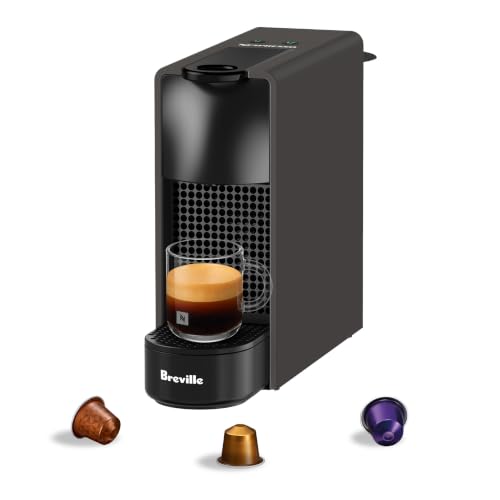
Pick the Essenza Mini if your ‘one cup’ is an espresso, a lungo or the base for a latte you froth separately. It is the smallest serious espresso option here and suits small kitchens, espresso-first drinkers and anyone upgrading from instant. It does not brew American-style mug coffee — the lungo is as long as it gets — and it locks you into Nespresso Original capsules, so drip-coffee households should look elsewhere.
Strengths
- Real espresso extraction from a 19-bar pump in a machine barely wider than a mug
- Heats up in about 25 seconds — the fastest route to a cup in this roundup
- Two programmable cup sizes let you set your preferred espresso and lungo volumes
Trade-offs
- Capsule system only, and Original-line capsules are a closed ecosystem
- No milk frother included — lattes need a separate frother
- Small water tank means frequent refills for multi-espresso days
| Pump pressure | 19 bar |
| Heat-up time | About 25 seconds |
| Cup sizes | Espresso and lungo, programmable |
| Coffee format | Nespresso Original capsules |
The Essenza Mini earns its place by being an espresso machine first and a one-cup machine by consequence. The 19-bar pump and fast thermoblock heating deliver the pressure and temperature espresso needs, and the capsule format removes the grinder, dosing and tamping variables entirely — every cup is repeatable, which is precisely what most home espresso drinkers actually want at 7 a.m. Breville and De’Longhi both manufacture versions of this machine for Nespresso; the Breville-built listing verified here carries the same core spec. Two practical notes: the drip tray and capsule container are small, so empty used capsules every handful of shots, and the machine’s water tank is compact by design — if you regularly pull four or five lungos a day you will refill often. Running costs sit between drip grounds and premium café prices: capsules cost more than beans, less than a coffee shop. For drip drinkers this is the wrong machine, but for espresso drinkers with a small counter it is close to a default recommendation.
Living with the Essenza Mini means living with the Nespresso ecosystem, and for most owners that is a feature: capsules arrive by subscription, used capsules can be recycled through the brand’s bag program, and the machine itself asks for almost nothing beyond a rinse cycle and occasional descaling. The used-capsule container holds only a handful of capsules, so build the empty-and-rinse habit early. Also note the two manufacturers: Breville-built and De’Longhi-built Essenza Minis are functionally near-identical, so buy whichever verified listing suits you rather than hunting a specific builder at a premium. What neither version does is steam milk — pair it with a standalone frother if lattes are the goal.
Best for: espresso and lungo drinkers with minimal counter space / Not suited for: mug-of-drip drinkers or anyone avoiding capsule systems

Chefman Single Serve Coffee Maker — Best Budget Flexibility
The Chefman suits households that cannot decide between pods and grounds — or whose members disagree. One person runs pods on rushed mornings; another uses the included reusable filter with grounds on weekends. It is a sensible first single-serve machine for renters and dorm-adjacent setups. It does not suit buyers who want a premium brand’s long-term parts support, and heavy daily users may outgrow its pace.
Strengths
- Brews both K-Cup pods and ground coffee — no format lock-in
- 40 oz reservoir at a budget tier where rivals are fill-every-time
- Cup lift raises small cups to reduce splashing
Trade-offs
- Build feel is firmly budget-tier; fit and finish trail Keurig
- Brew temperature and extraction are adequate rather than class-leading
- Brand ecosystem for replacement parts is thinner than the big names
| Brew sizes | 6 to 12 oz |
| Coffee format | K-Cup pods or ground coffee (filter included) |
| Reservoir | 40 oz |
| Extras | Cup lift for smaller mugs |
Chefman’s pitch is flexibility at the low end of the market, and the spec sheet backs it: dual-format brewing and a 40 oz tank are features that usually cost a tier more. In daily use the machine behaves like a straightforward pod brewer with a grounds option rather than the other way around — the pod path is the polished one, while the grounds basket rewards a level, medium-fine fill and punishes overpacking with a slow, weak cup. The cup lift is a small thing that matters: raising an 8 oz mug toward the spout stops the splatter that plagues budget brewers. Where the savings show is in materials and refinement — the plastics feel lighter, the buttons are basic, and there is no strength control. None of that stops it making a perfectly decent cup. Treat it as the value play it is: if it lasts a few years of daily service it has more than earned its tier, and its dual-format design means your coffee buying is never held hostage to one format’s pricing.
The Chefman’s dual-format design has one subtle benefit owners discover over time: it decouples you from pod price swings. When pods are on promotion, stock up; when they are not, a bag of grounds carries you through. The grounds basket works best filled to its line with a medium grind — overfilling is the main cause of the weak, slow brews that budget dual-format machines get blamed for. Keep the pod holder and the grounds basket both rinsed and dry between uses, because swapping a wet basket for a pod is how stray grounds end up in a pod cup. Support is via Chefman’s standard channels; keep the receipt, as with any budget-tier appliance.
Best for: budget buyers and mixed pod/grounds households / Not suited for: buyers prioritizing premium build or advanced brew controls
Keurig K-Slim — Best Slim Design
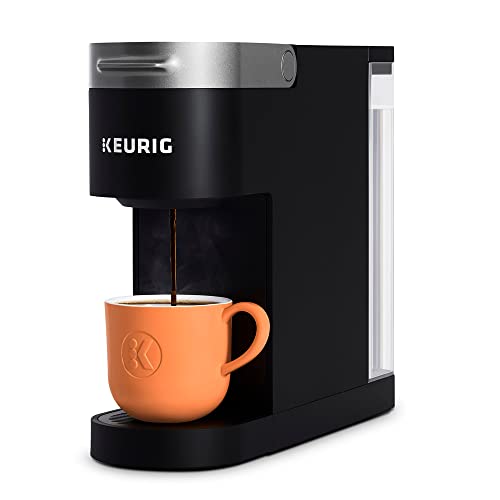
The K-Slim is the answer when the counter slot is narrow but the habit is daily: it slides into gaps a standard brewer cannot use, yet still carries the largest reservoir in this roundup. It suits apartment kitchens, office nooks and anyone whose counter is a negotiation. It does not suit buyers who want strength or temperature controls, and its slim body still needs vertical clearance to open the lid.
Strengths
- Less than 5 inches wide — fits slots other brewers cannot
- 46 oz removable reservoir is the biggest here despite the slim body
- MultiStream Technology wets the pod more evenly for better extraction
Trade-offs
- Tall and narrow proportions need overhead clearance for the lid
- No Strong Brew button — brew sizes are the only control
- Pods only, like the rest of the Keurig single-serve line
| Brew sizes | 8, 10 or 12 oz |
| Reservoir | 46 oz, removable |
| Width | Less than 5 inches |
| Technology | MultiStream extraction |
Keurig’s MultiStream system is the quiet headline here: instead of a single needle stream punching through the pod, multiple streams saturate the grounds more evenly, which in practice means fewer watery cups from pods that would otherwise channel. Paired with a 46 oz tank, the K-Slim is effectively a full-time household brewer that happens to be skinny. Measure before buying — not just the width. The machine is tall, the lid swings up, and under-cabinet placement needs the full open height plus room to lift pods in and out. The reservoir removes for sink filling, and the drip tray comes out to fit travel mugs up to roughly seven inches. Compared with the K-Express, you trade the Strong Brew button for the slimmer profile and the MultiStream head; compared with the K-Mini, you trade ultimate minimalism for days of water capacity. If your kitchen has exactly one narrow gap for a coffee machine, this is the one engineered for it.
The K-Slim’s party trick — full-size capacity in a five-inch width — does come with one planning caveat: the reservoir fills from the top-back, so if the machine lives under low cabinets you will be sliding it forward to refill unless you remove the tank and carry it to the sink (which, to be fair, is the better habit anyway). Energy use is typical Keurig: it heats on demand rather than holding a tank at temperature all day, so running costs stay modest. Pair it with a reusable filter and it becomes the narrowest grounds-or-pods brewer in this roundup — a combination no other pick here matches for genuinely tight kitchens.
Best for: narrow counters and daily pod drinkers who hate refilling / Not suited for: low-clearance under-cabinet spots or control seekers
Comparison Table
| Pick | Badge | Key spec | Best for |
|---|---|---|---|
| Keurig K-Mini | Best Overall | 6–12 oz brews, single-cup reservoir | solo pod drinkers, dorms, RVs and tight counters who value simplicity over everything |
| Keurig K-Express | Best for Multi-Cup Days | 42 oz removable reservoir, Strong Brew | daily pod drinkers who brew several cups across the morning |
| Hamilton Beach The Scoop | Best for Ground Coffee | Grounds-only, 8–14 oz, scoop filter | grounds drinkers who want one-cup convenience without pod costs or waste |
| Nespresso Essenza Mini by Breville | Best for Espresso | 19-bar espresso, 25-second heat-up | espresso and lungo drinkers with minimal counter space |
| Chefman Single Serve Coffee Maker | Best Budget Flexibility | Pods + grounds, 40 oz reservoir | budget buyers and mixed pod/grounds households |
| Keurig K-Slim | Best Slim Design | Under 5 in wide, 46 oz reservoir | narrow counters and daily pod drinkers who hate refilling |
Use the table to compare roles at a glance, then read the full review of any pick you are seriously considering — the trade-offs matter more than the headline spec.
How to Choose the Best 1 Cup Coffee Maker for Your Routine
The right one-cup machine is the one that matches your coffee format, your counter and your tolerance for morning effort. Work through the four decisions below in order and the shortlist narrows itself.
Decision 1: Pods, Grounds or Capsules
Pods (K-Cup) are the convenience champions: hundreds of varieties, zero measuring, a quick wipe of cleanup. The cost is paid per cup, forever, and the waste is real even with recycling programs. Grounds machines like the Hamilton Beach Scoop flip the equation — pennies per cup and no plastic, in exchange for a minute of measuring and rinsing. Espresso capsules (Nespresso) are a third format entirely: they make a different drink, not a cheaper or faster version of drip. Decide the format first, because almost every other feature is secondary.
Decision 2: Reservoir or Fill-Every-Time
A reservoir machine (K-Express, K-Slim, Chefman) is faster on repeat cups and better for households brewing at staggered times, but the water sits — refill with fresh water every couple of days and descale on schedule. A fill-every-time machine (K-Mini) uses fresh water for every cup and never needs its tank scrubbed, at the price of a small ritual before each brew. Neither is wrong; match it to whether you brew once a day or all day.
Decision 3: Measure the Counter, Not the Marketing Photo
Single-serve machines are bought for small spaces, then returned because the lid will not open under the cabinet. Measure three things: the width of the slot, the depth including the cord bend behind the machine, and the vertical clearance with the lid fully open and a pod in your hand. The K-Slim exists precisely because width is the binding constraint in many kitchens; the K-Mini wins when total volume matters more than any single dimension.
What One Cup Actually Means: Sizes and Strength
Manufacturers count a ‘cup’ as anywhere from 6 to 12 ounces in this category, which makes headline capacities nearly meaningless. What matters is the largest brew size versus your actual mug. If your morning vessel is a 14 oz travel tumbler, only machines that brew 12 oz or offer a 14 oz setting (the Scoop) will fill it in one pass — otherwise you are brewing twice or topping up with hot water and diluting the cup.
Strength control in this class is mostly dose control. Pod machines with a Strong button genuinely help; grounds machines give you full control via how much coffee you load; capsule espresso is fixed by the capsule. If you drink your coffee with a lot of milk, prioritize the strong-brew options — a standard pod under a heavy pour of milk disappears.
Running Costs: The Math Nobody Does at Checkout
A one-cup machine’s purchase price is the small number. The big number is per-cup cost multiplied by your habit. Pod coffee typically costs several times more per cup than the same coffee bought as grounds, and espresso capsules sit in between. At one cup a day the difference is a modest monthly sum; at four cups a day across a household it becomes the price of another appliance every year or two. This is why dual-format machines like the Chefman, and reusable filters for Keurig machines, matter: they let you buy convenience on rushed days and economy on relaxed ones, instead of marrying one cost structure.
Budget Tiers in This Category, Explained Honestly
One-cup machines fall into three rough tiers. The budget tier (where the Chefman and Elite Gourmet-style machines live) buys you the format and the convenience with basic materials and few controls. The mid tier (most Keurig models, the Scoop) adds reservoirs, stronger build and small but real features like Strong Brew. The premium tier (Nespresso machines, design-led models) charges for the drink quality, the brand ecosystem or the industrial design — sometimes all three. None of the tiers is a trap, but the mismatch is: buyers who pay premium-tier money expecting premium drip coffee from a pod machine are the ones who end up disappointed, because pods cap the ceiling no matter what the machine costs.
Our advice: spend at the tier of the feature you will use daily. A reservoir you refill weekly is worth money. A dozen drink presets you will never touch are not. And always price the first year of coffee — pods, capsules or grounds — into the comparison, because at this end of the market the coffee habit routinely costs more than the machine within the first year.
Who Should Skip a 1 Cup Machine Entirely
Honesty section: some households should not buy any of these. If two or more people drink coffee at the same time every morning, a 10 or 12 cup drip brewer will serve you better and cheaper — see our full-size guides linked at the end of this article. If you drink coffee all day at home, a thermal carafe machine keeps a batch fresh without a warmer plate cooking it. And if your ‘one cup’ is really about variety — different drinks for different people at different times — a dual carafe-and-pod machine covers both worlds in one footprint. The one-cup format shines for solo, staggered and space-poor routines; outside those, it is a compromise dressed as a convenience.
How to Use a 1 Cup Coffee Maker for a Better Cup
Single-serve machines reward a few small habits disproportionately. Follow these steps and the same machine makes a noticeably better cup:
- Start with fresh, cold water. If your machine has a reservoir, empty and refill it every two days; standing water picks up off-flavors and slows heating. Fill-every-time machines get this right by design.
- Preheat the mug. A quick rinse of hot water in the mug stops the cup from stealing heat — small volumes of coffee lose temperature faster than a full pot.
- Match the brew size to the format. For pods, the middle size is usually the extraction sweet spot; the largest size stretches the same grounds thinner. For grounds machines, fill the scoop level and consistent — heaped one day, scant the next is why cups vary.
- Run a water-only cycle weekly. A plain hot-water brew flushes coffee oils from the brew head and needles, which is where stale flavors live.
- Descale on schedule. Every three months or so (more often with hard water), run the manufacturer’s descaling process with their solution or a citric-acid mix. Slow brewing and lukewarm cups are almost always scale, not a dying machine.
- Store pods and grounds away from the machine’s heat. The top of a warm brewer is the worst shelf in the kitchen for coffee freshness.
Cleaning and Descaling: Keeping a Small Brewer Tasting Right
Small brewers fail quietly: not by breaking, but by slowly making worse coffee as scale and old oils build up. A light routine prevents almost all of it. Daily, empty the drip tray and give the pod holder or grounds basket a rinse. Weekly, run one water-only brew cycle and wipe the brew head area where grounds and spray collect. Monthly, wash removable reservoirs with warm soapy water — tank slime is real and it flavors everything. Every three months or so, descale: pod machines usually have a dedicated descale mode and a warning light; follow it with the manufacturer’s solution or a citric-acid mix, then run two or three plain-water cycles before brewing coffee again. If your water is hard, halve the interval. The payoff is measurable: full brew temperature, proper brew speed, and cups that taste like the coffee you bought rather than the machine it passed through.
Common Buying Mistakes
Most one-cup disappointments are buying mistakes, not machine failures. The patterns we see again and again:
- Buying pods-only when you hate pod prices. The machine is cheap; the habit is expensive. If per-cup cost already annoys you, choose a grounds or dual-format machine now.
- Ignoring lid clearance. A brewer that cannot open under your cabinets will live on the counter edge forever. Measure the open height, not the closed height.
- Assuming ‘1 cup’ means your mug. Check the maximum brew size against your actual favorite mug or travel tumbler before buying.
- Never descaling. Scale is the number-one cause of slow, lukewarm, weak cups — and it is preventable with a ten-minute cycle a few times a year.
- Leaving water in the reservoir for a week. Stale tank water makes stale coffee, and it is the main reason reservoir machines get a bad name.
- Buying espresso when you wanted drip. A lungo is not a mug of coffee. If you drink 12 oz at a time, an espresso machine will frustrate you no matter how good it is.
Avoid those six and almost any machine in this roundup will serve you well — the differences that remain are preference, not quality traps.
Final Recommendation
For most solo drinkers, the Keurig K-Mini is the safest recommendation: it is tiny, honest and effortless, and it brews the full K-Cup library. If you brew repeatedly through the day, step up to the K-Express for its reservoir and Strong Brew button, or the K-Slim if your counter slot is narrow. Grounds drinkers should skip pods entirely and take the Hamilton Beach The Scoop — it is the cheapest cup in this guide by a wide margin. Espresso drinkers get the Essenza Mini, and anyone torn between formats gets the dual-format Chefman.
Brewing for a household instead? Look at full-size machines in our related guides:
- Best Overall: Keurig K-Mini
- Best for Multi-Cup Days: Keurig K-Express
- Best for Ground Coffee: Hamilton Beach The Scoop
- Best for Espresso: Nespresso Essenza Mini by Breville
- Best Budget Flexibility: Chefman Single Serve Coffee Maker
- Best Slim Design: Keurig K-Slim
Best 12 Cup Coffee Makers Best 12 Cup And K Cup Coffee Makers Best 1 Cup Pour Over Coffee Makers Best 10 Cup Coffee Makers Best 12 Cup Programmable Drip Coffee Makers
Related guides
- Best 4 6 Cup Coffee Makers For Home
- Best Coffee Makers For Teachers Lounges
- Best Coffee Makers For Visually Impaired
- Best Coffee Makers Kitchenaid Kcm1202wh
Frequently Asked Questions
What is the difference between a 1 cup coffee maker and a single-serve brewer?
They are the same category described two ways. Both brew one serving at a time — roughly 6 to 14 ounces — rather than a carafe. ‘Single-serve’ usually implies pods or capsules, while ‘1 cup’ also covers small grounds brewers like the Hamilton Beach Scoop.
Can 1 cup coffee makers use ground coffee instead of pods?
Some can. Dual-format machines such as the Chefman brew both K-Cup pods and grounds, Keurig machines accept a reusable My K-Cup filter accessory, and the Hamilton Beach Scoop is grounds-only by design. Pure pod machines without a reusable filter cannot.
How much coffee does a 1 cup coffee maker actually make?
Most brew between 6 and 12 ounces per cycle; grounds models like the Scoop reach 14 ounces. Check the maximum brew size against your mug — a ‘cup’ in manufacturer language is often smaller than a real mug.
Are pod machines more expensive to run than grounds machines?
Yes, per cup. Pods typically cost several times more per serving than ground coffee, and the gap compounds with daily use. Grounds and dual-format machines are the economical choice; pods buy you speed and zero measuring.
How often should I descale a single-serve coffee maker?
Roughly every three months with typical tap water, sooner if your water is hard or the machine brews slowly and the coffee tastes off. Follow the manufacturer’s descaling mode if it has one.
Is a Nespresso machine a good 1 cup coffee maker?
For espresso drinkers, yes — it makes an excellent single cup of espresso or lungo. For drip drinkers, no: its longest drink is a lungo of about 3.7 ounces, which will not fill a mug. Choose based on the drink you actually want.
Can I use a 1 cup coffee maker in an RV or dorm room?
Yes — this category is a dorm and RV staple precisely because the machines are small, simple and sip power compared with full-size brewers. The K-Mini is the usual pick: it stores its own cord, needs no standing reservoir, and brews from whatever mug of water you pour in. Check your dorm’s appliance rules first, since some residences restrict heating appliances or require auto-shutoff models.


