Disclosure: airfryerkitchensupply.com is reader-supported. When you buy through links on our site, we may earn an affiliate commission at no extra cost to you.
Where to buy
If you are shopping for the best 151 mixers, start with the shortlist below. Every pick in this guide is sold through Amazon, which is where we recommend stocking a tiki shelf: bottled mixes, purees and syrups arrive sealed and dated, and you can confirm sizes and ingredients on the listing before ordering. Start with a hurricane mix and a bottle of orgeat if you are building the shelf from zero, and check the current price on Amazon for the pack configuration you want, because several picks are sold singly and in multi-packs.
- Finest Call Premium Hurricane Drink Mix — check the current price on Amazon and confirm the exact configuration on the listing before you order.
- Collins Hurricane Mix — check the current price on Amazon and confirm the exact configuration on the listing before you order.
- Finest Call Premium Passion Fruit Puree — check the current price on Amazon and confirm the exact configuration on the listing before you order.
- Dole 100% Pineapple Juice (46 oz) — check the current price on Amazon and confirm the exact configuration on the listing before you order.
- Liber & Co. Almond Orgeat Syrup — check the current price on Amazon and confirm the exact configuration on the listing before you order.
- Barsmith Grenadine Syrup — check the current price on Amazon and confirm the exact configuration on the listing before you order.
The best 151 mixers exist to solve a specific problem: 151-proof rum is not a spirit you build drinks around the way you would a standard rum. At roughly double the strength, it brings heat and intensity that crush delicate flavours, and the classic drinks designed for it — the Hurricane, the Zombie, the jet-fuel end of the tiki canon — answer that strength with bold, sweet, acidic mixers in kind. Weak mixers do not tame 151; they get erased by it, leaving a drink that tastes of alcohol and regret.
A responsible framing note, stated once and plainly: 151 rum is an overproof spirit, several famous bottlings have been discontinued over the years, and the drinks in this tradition are strong by design. The mixers in this guide are chosen to build those drinks properly — balanced, flavourful, and made with measured pours — not to disguise how strong they are. Measure your pours, serve these drinks in their traditional generous-but-single servings, and treat the float of 151 as the accent it is meant to be rather than a challenge.
All six picks were verified as current Amazon listings on 2026-11-20, and they cover the working parts of the 151 repertoire: two complete hurricane mixes, the passion fruit puree at the heart of the style, the pineapple juice that lengthens half the canon, the orgeat that gives tiki drinks their body, and a real grenadine for colour and pomegranate depth. Together they are a shelf, not just a list.
In this guide
Quick Picks
Best Overall — Finest Call Premium Hurricane Drink Mix. The working bartender’s hurricane base: a New Orleans-style fruit juice blend in litre bottles, sold as a 3-pack, from the bar-supply brand whose mixes stock professional rails. Against 151 it keeps its fruit structure where lighter mixes collapse, which is the whole test in this category.
Best Small-Batch Alternative — Collins Hurricane Mix. The home-bar-sized hurricane mix, made with real passion fruit, pineapple and lemon juice, from Collins — a cocktail-ingredient house whose name has been on bar staples for generations. The pick when you want the drink without committing to three litres.
Best for Scratch Tiki Drinks — Finest Call Premium Passion Fruit Puree. The ingredient the whole style runs on, in pure form: a litre of passion fruit puree for building Hurricanes, Zombies and your own tiki drinks from scratch. If you take one step beyond bottled mixes in this category, this is the step.
Best Juice Staple — Dole 100% Pineapple Juice (46 oz). The unglamorous essential: 100% pineapple juice with no added sugar, in the big can every tiki recipe quietly assumes. Pineapple is the lengthener of the 151 repertoire — it gives strong drinks volume and tropical body without watering them into submission.
Best for Body and Depth — Liber & Co. Almond Orgeat Syrup. The texture ingredient: a real-almond orgeat from roasted California almonds with orange blossom water, used by the half-ounce to give tiki drinks their silky body. It is the difference between a drink that tastes right and a drink that also feels right.
Best Grenadine — Barsmith Grenadine Syrup. Grenadine as it should be: pomegranate-led, without artificial flavours, for the colour and tart depth that Zombies and rum punches get from it. A teaspoon-to-tablespoon ingredient that makes strong drinks look as dramatic as they taste.
How These Picks Were Chosen
We chose these picks by working backwards from the drinks. The Hurricane needs passion fruit, citrus and a mixer that can hold its structure against overproof rum; the Zombie needs layered juices, spice and sweetness; the whole tiki family leans on pineapple, orgeat and grenadine in supporting roles. Each candidate was judged on flavour intensity — the first requirement against 151 — and on whether it is a real ingredient a bartender would recognise, rather than a flavoured syrup trading on a cocktail name.
Verification followed the usual discipline: each product was matched to a live Amazon listing, and the descriptions in this guide come from those listings. We favoured mixes built on actual juice and puree, and syrups from makers who publish their ingredients proudly. Neon, ingredient-free ‘tiki mixes’ of the kind sold on novelty value were excluded; against 151 they fail on flavour before they fail on principle.
The 6 Best 151 Mixers for Overproof Rum

Finest Call Premium Hurricane Drink Mix — Best Overall
Choose Finest Call if the Hurricane is your house drink or you serve rum punches to a group. The litre format and 3-pack configuration are party economics: a Hurricane is a big drink, and a shelf that runs dry mid-evening is a failed shelf. Finest Call’s professional positioning shows in the consistency — bottle to bottle, the blend tastes the same, which is what you want from a mix whose job is to be the reliable half of a strong drink.
Strengths
- Professional bar-supply brand with consistent, repeatable flavour
- Fruit intensity holds its structure against overproof rum
- 3-pack of litre bottles suits parties and regular serving
Trade-offs
- A mix sets the drink’s sweetness for you — scratch bartenders will want the puree route below
- Three litres is a commitment for the occasional hurricane drinker
- Refrigerate after opening and use while fresh, as with any juice-based mix
| Spec | Detail |
|---|---|
| Format | 1 litre bottles, 3-pack (per listing) |
| Style | New Orleans-style fruit juice blend (per listing) |
| Use | Hurricanes and fruit-forward rum punches |
| Features | Easy-pour spout (per listing) |
The Hurricane is the definitive 151 drink — born in New Orleans, built on passion fruit and citrus, and traditionally finished with high-proof rum — and it is also the drink where mixer quality is most exposed, because there is nowhere for a weak mix to hide. Finest Call’s blend has the two things the drink demands: genuine fruit body, and enough acidity to keep a sweet, strong drink from cloying. Built with a measured pour of rum and plenty of ice in the traditional large glass, it produces the recognisable article. For most home bartenders, this bottle plus rum and ice is the shortest honest path to a real Hurricane.
Best for: Hurricane drinkers and hosts who serve rum punch to groups / Not suited for: Scratch purists who build every drink from individual juices and purees
Check the current price on Amazon for the Finest Call Premium Hurricane Drink Mix.
Collins Hurricane Mix — Best Small-Batch Alternative
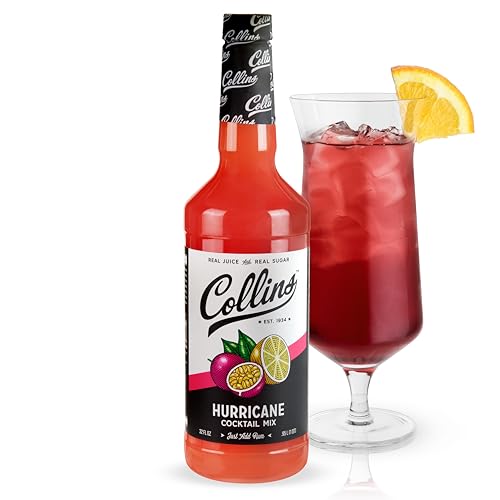
Collins suits the drinker who makes hurricanes occasionally and well. The 32-ounce bottle is a home quantity: enough for a round of proper Hurricanes with friends, small enough to finish while it is fresh. The ingredient list — real passion fruit, pineapple and lemon — is the argument; against 151, real juice reads as flavour where flavouring reads as sweetness. If the Finest Call 3-pack is the party choice, this is the connoisseur’s weeknight choice.
Strengths
- Real passion fruit, pineapple and lemon juice on the label
- Home-friendly 32 oz size that gets finished fresh
- Heritage cocktail-ingredient brand
Trade-offs
- Smaller bottle runs out faster at a party — plan two for a group
- Like all mixes, the sweetness profile is fixed by the maker
- Less widely bundled than the bar-supply brands
| Spec | Detail |
|---|---|
| Format | 32 fl oz bottle |
| Ingredients note | Made with real passion fruit, pineapple and lemon juice (per listing) |
| Style | New Orleans hurricane mix |
| Use | Single-bottle home-bar quantity |
Comparing the two hurricane mixes in this guide is a study in formats rather than quality: both are legitimate, juice-based versions of the drink’s base. Collins earns its slot on ingredient transparency and scale. Passion fruit is the soul of the Hurricane and the ingredient cheap mixes fake most shamelessly; a label that leads with real passion fruit, pineapple and lemon is a label written by people who expect to be read. Against a measured float of 151, the Collins mix keeps its tropical shape and finishes with genuine citrus lift. For a shelf that serves two to four drinks at a time, it is the proportionate buy.
Best for: Occasional hurricane drinkers who value real-juice ingredients and a home-sized bottle / Not suited for: Party hosts, who will empty it before the evening finds its rhythm
Check the current price on Amazon for the Collins Hurricane Mix.

Finest Call Premium Passion Fruit Puree — Best for Scratch Tiki Drinks
Buy the puree if you build drinks rather than assemble them. With passion fruit puree, fresh citrus, a sweetener you control and 151 used with respect, you can make every passion-fruit drink in the canon at bar quality, adjusted to your own palate — drier than a mix, brighter, more yours. It is also the most economical way to serve the style regularly, since a litre of puree works across dozens of drinks in small, measured amounts.
Strengths
- Pure core ingredient — total control over sweetness and balance
- One bottle serves the entire passion-fruit repertoire
- Professional format with a long working life in the fridge door
Trade-offs
- Requires the rest of the drink — citrus, sweetener, technique — from you
- Puree intensity varies your first drinks while you learn your ratios
- Not a finished drink base; beginners should start with a mix above
| Spec | Detail |
|---|---|
| Format | 1 litre bottle (33.8 fl oz) |
| Style | Passion fruit puree drink mix |
| Use | Hurricanes, Zombies and scratch tiki builds |
| Role | The core flavour ingredient, not a finished mix |
Every tiki bartender’s shelf has a centre of gravity, and it is passion fruit. The puree is what separates a drink that tastes like a Hurricane from a drink that tastes like fruit punch near a rum bottle: it brings the tart, aromatic, almost floral intensity that survives dilution and stands up to overproof spirit. Finest Call’s version is the working standard — consistent, available, and formatted for bar use. Learning to build with it takes two or three drinks of ratio adjustment, after which the bottled mixes in this guide become your convenience option rather than your ceiling.
Best for: Home bartenders ready to build tiki drinks from real ingredients / Not suited for: Anyone who wants the drink finished in one pour
Check the current price on Amazon for the Finest Call Premium Passion Fruit Puree.

Dole 100% Pineapple Juice (46 oz) — Best Juice Staple
Every 151 shelf needs pineapple juice, and this is the standard form of it: a large can of straight juice, nothing added, that you open for a session and work through. In Zombies and punches it is the ingredient that lets multiple strong elements coexist in a tall glass; in simpler serves it turns a shot of overproof rum and ice into an actual drink. Buy it alongside whichever headline mix you choose — it is the supporting player that appears in more recipes than any headline name.
Strengths
- 100% juice with no added sugar — sweetness you control yourself
- The format tiki recipes are written around
- Works across the whole canon, not one drink
Trade-offs
- A 46 oz can wants a group or a session to finish at its best
- Canned juice is a step below fresh pineapple, as all canned juice is
- Plain on its own — it is an ingredient, not a finished mixer
| Spec | Detail |
|---|---|
| Format | 46 fl oz can |
| Contents | 100% pineapple juice, no added sugar (per listing) |
| Use | Lengthening tiki drinks; Zombie and punch builds |
| Role | The canon’s workhorse juice |
Pineapple juice’s role against 151 is structural. Overproof rum drinks are built tall because the spirit needs length, and length has to come from something with its own flavour and body or the drink dilutes into heat. Pineapple brings both, plus an acidity that keeps sweet builds honest. The Dole can is the reference version — consistent, unsweetened, and available everywhere including in this guide’s verified listings. Fresh pineapple juice is better on its best day and worse on its average day; for a home tiki shelf, the can’s consistency wins, and the money saved goes toward the puree and orgeat that differentiate the drinks.
Best for: Every tiki shelf — the staple juice the repertoire assumes / Not suited for: Nobody, as an ingredient; it is only miscast if expected to be a finished drink alone
Check the current price on Amazon for the Dole 100% Pineapple Juice (46 oz).

Liber & Co. Almond Orgeat Syrup — Best for Body and Depth
Orgeat is for the bartender who has noticed that their tiki drinks taste close but feel thin. A small measure rounds the edges of overproof spirit, adds almond depth that reads as richness, and gives the drink the body that juice alone cannot. Liber & Co. makes the craft version — real roasted almonds rather than flavouring — and a bottle lasts through dozens of drinks because the dose is small. If you build Mai Tais or Zombies from scratch, this is not optional equipment.
Strengths
- Real roasted-almond recipe — depth that flavoured syrups imitate poorly
- Small doses make a bottle economical despite craft positioning
- Adds the body that juice-based builds lack against strong spirit
Trade-offs
- Craft-tier purchase for an ingredient used by the half-ounce
- Almond is a real ingredient — mind guests with nut allergies, and label the drink
- Does nothing alone; it is a supporting ingredient, not a mix
| Spec | Detail |
|---|---|
| Format | 12.7 oz bottle; makes about 25 drinks (per listing) |
| Ingredients note | Custom roasted California almonds and orange blossom water (per listing) |
| Use | Mai Tais, Zombies and tiki builds needing body |
| Role | Texture and almond depth in small doses |
Orgeat is tiki’s secret architecture. The famous drinks balance on it in measures small enough to miss on an ingredient list and large enough to feel in the glass: silkiness, a whisper of almond, a softening of the spirit’s edges that lets the fruit speak. Against 151 specifically, that softening is functional — it integrates the heat into the drink instead of letting it sit on top. Liber & Co.’s version earns the craft premium honestly, with roasted nuts and orange blossom water doing work that cheaper almond syrups gesture at. Buy it once and the bottle will quietly improve every tiki drink you make for months.
Best for: Scratch tiki bartenders building Mai Tais and Zombies with real structure / Not suited for: Mix-and-pour drinkers, for whom the bottled mixes above are the right tool
Check the current price on Amazon for the Liber & Co. Almond Orgeat Syrup.
Barsmith Grenadine Syrup — Best Grenadine
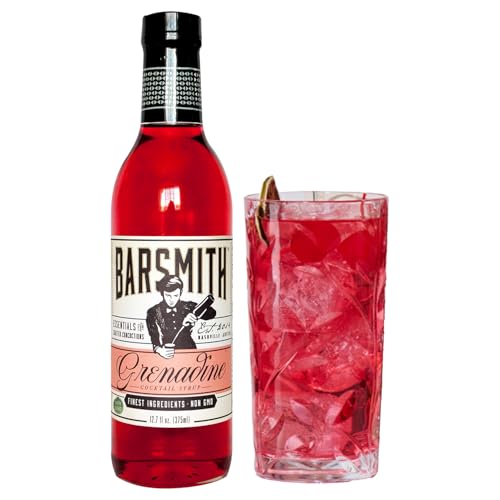
Choose the Barsmith if your current grenadine is a neon-red corn-syrup bottle — the upgrade is visible and tastable. Real grenadine brings pomegranate’s tartness along with its colour, which matters in 151 drinks where every sweet element needs an acidic counterweight. It is a small bottle because the dose is small; a Zombie takes a spoonful, a punch a modest pour. For a shelf being built properly, this is the grenadine slot filled correctly.
Strengths
- Pomegranate character with tartness, not just red sweetness
- No artificial flavours, per the listing
- Small-dose ingredient — one bottle serves many drinks
Trade-offs
- Colour is a natural, deeper red rather than neon — drinks look different, correctly
- Premium over the commodity grenadine it replaces
- Like orgeat, it supports the drink rather than carrying it
| Spec | Detail |
|---|---|
| Format | 12.7 oz bottle |
| Profile | Pomegranate with sweet cherry notes (per listing) |
| Ingredients note | No artificial flavours, non-GMO (per listing) |
| Use | Colour and pomegranate depth in Zombies and punches |
Grenadine’s fall from grace is a parable of the mixer shelf: an ingredient that began as pomegranate syrup became, in its cheapest forms, red sweetener with a picture of fruit. In strong drinks the difference is not cosmetic. Real grenadine’s tartness participates in the balance — in a Zombie it is one of the acidic voices keeping a sweet, powerful drink upright — while the imitation adds only sugar and colour, pushing an already strong drink toward cloying. Barsmith’s version is the accessible correction: honestly made, properly sized, and priced like an ingredient rather than a novelty.
Best for: Anyone upgrading a tiki shelf from commodity syrups to real ingredients / Not suited for: Drinkers who only want the neon colour and do not build the drinks that use grenadine properly
Check the current price on Amazon for the Barsmith Grenadine Syrup.
Comparison Table
| Pick | Badge | Key spec | Best for |
|---|---|---|---|
| Finest Call Premium Hurricane Drink Mix | Best Overall | New Orleans-style hurricane mix, 1L x 3 | Hurricane drinkers and hosts who serve rum punch to groups |
| Collins Hurricane Mix | Best Small-Batch Alternative | Hurricane mix with real passion fruit and pineapple, 32 oz | Occasional hurricane drinkers who value real-juice ingredients and a home-sized bottle |
| Finest Call Premium Passion Fruit Puree | Best for Scratch Tiki Drinks | Passion fruit puree in a 1L bar bottle | Home bartenders ready to build tiki drinks from real ingredients |
| Dole 100% Pineapple Juice (46 oz) | Best Juice Staple | 100% pineapple juice in the classic 46 oz can | Every tiki shelf — the staple juice the repertoire assumes |
| Liber & Co. Almond Orgeat Syrup | Best for Body and Depth | Real-almond orgeat for tiki texture | Scratch tiki bartenders building Mai Tais and Zombies with real structure |
| Barsmith Grenadine Syrup | Best Grenadine | Real grenadine with pomegranate character, 12.7 oz | Anyone upgrading a tiki shelf from commodity syrups to real ingredients |
How to Choose a Mixer for 151 Rum
Why 151 needs stronger mixers than standard rum
Alcohol is a flavour carrier and a flavour bully at once. At 151 proof, the spirit’s heat and intensity overwhelm the delicate end of the mixer shelf — light sodas, subtle juices, anything whose flavour lives in nuance. The classic response, developed over decades of tiki bartending, is to answer strength with strength: passion fruit’s tart intensity, pineapple’s body, citrus acidity, and syrups with real depth. When you shop for this spirit, shop for intensity first; a mixer that tastes bold in the glass alone is merely adequate once the 151 lands.
The architecture of the classic 151 drinks
Learn the pattern and you can judge any mixer. A Hurricane is passion fruit, citrus and sweetness carrying the rum. A Zombie layers multiple juices, spice and grenadine under a float of 151 that is meant to be sipped through, not shot. A tiki punch lengthens with pineapple and lets orgeat and grenadine build the middle. In every case the mixers are doing structural work — volume, acid, body — and the picks in this guide map onto those jobs one by one. Buy for the jobs and the drinks follow.
Mixes versus ingredients: the honest trade
Bottled hurricane mixes, like the Finest Call and Collins picks, trade control for consistency and speed: the drink is balanced by the maker, and your job is measure, ice and serve. Ingredients — the puree, the orgeat, the real grenadine — trade that ease for drinks that are unmistakably yours and usually brighter. Neither is the correct shelf; most good home bars hold both, using mixes for parties and ingredients for the drinks they make for themselves. Start where your patience is, and let the shelf grow.
Measure the spirit; respect the proof
With standard rum, a free-poured extra half-ounce is a rounding error. With 151 it is a different drink and a different evening. Use a jigger, follow the classic recipes’ modest measures for the overproof component — often it is a float or a partial measure within a blend of rums — and serve these drinks in their traditional single, generous format rather than in rounds. The mixers in this guide are chosen to make properly measured drinks taste complete, which is the only kind worth making at this proof.
Budget tiers on the tiki shelf
The staple tier is juice: the big can of pineapple costs little and works everywhere. The working tier is the bar-supply mixes — Finest Call’s litre bottles are priced for people who serve drinks regularly. The craft tier is the syrups, Liber & Co. and Barsmith, where small bottles and small doses make the arithmetic kinder than the shelf price suggests. Spend in that order: staples first, a mix second, craft syrups as your bartending deepens. A shelf built in that sequence is never wasted money.
Beyond the Hurricane: Three More Drinks This Shelf Builds
A shelf bought for one drink should earn its keep across the repertoire. These three builds use the picks in this guide in their classic roles, and each teaches a different part of the 151 method.
The Zombie: layering under a float
The Zombie is tiki’s layering exercise: citrus, the passion fruit puree from this guide, pineapple juice for length, a spoonful of grenadine for depth and colour, spice if your shelf runs to it — and the 151 reserved for a measured float on top. Build it over crushed ice in a tall glass and sip through a straw, so the float meets the drink gradually. The lesson of the Zombie is that the overproof rum is the crown, not the foundation; the mixers underneath are the drink.
The Mai Tai variation: orgeat’s home ground
The classic Mai Tai is not a 151 drink, but a float of overproof rum is a recognised bartender’s variation, and it is where the Liber & Co. orgeat in this guide does its defining work: almond body under lime and rum, with the float adding aroma and heat at the top of the glass. Build the drink properly first — the orgeat is structural, not a garnish — and float the 151 last, in a measured amount, over the back of a spoon.
The rum punch: the shelf at party scale
Punch is the tiki shelf’s group format: pineapple juice as the base length, passion fruit puree for the signature flavour, grenadine for colour and tartness, citrus to keep it honest, and rum — with the 151 used as a measured fraction of the rum total, never the whole of it. Build the bowl, taste it before the spirit goes in, then add the rums and taste again. Punch rewards the batch tasting habit that single drinks forgive you for skipping.
The simple highball: 151 with respect
Not every serve needs architecture. A measured pour of overproof rum over a full glass of ice, lengthened with pineapple juice and finished with a squeeze of lime, is a legitimate drink — the juice’s body and acidity doing the same structural work as in the classics. It is also the serve that teaches proportion fastest: make it once too strong and the lesson stays with you. Measure, ice generously, and let the juice lead.
Building the Rest of the Tiki Shelf Around These Mixers
Six picks make a working shelf, but tiki is a repertoire, and readers building toward it ask what comes next and what can be improvised. This section covers the shelf’s second layer and the substitutions that respect the drinks.
The citrus rule: fresh, always
If one ingredient in this entire guide’s world must never be a bottle, it is citrus. Bottled lemon and lime juices are oxidised shadows of the fruit, and in drinks where acid is a structural voice — every drink in the 151 canon — that dullness flattens the whole glass. Buy lemons and limes with the same standing-order seriousness as the mixes themselves. A hand press lives next to the shelf; it is the most-used tool in tiki and the cheapest.
Spice and the supporting syrups
After the six picks, the shelf grows by small bottles: a cinnamon syrup for the Zombie family, a falernum for the spiced-lime note, an allspice dram if your tastes run to the Donn Beach end of the canon. Buy them one drink at a time — learn the drink that calls for the bottle, then buy the bottle — and the shelf stays a working tool rather than becoming a museum of intentions. Each is used by the spoonful and keeps well refrigerated.
Substitutions that respect the drink
Improvisation is legitimate when it honours the ingredient’s job. No passion fruit puree: a hurricane mix from this guide covers the role at a fixed sweetness. No orgeat: the drink loses body that nothing in the juice family replaces — make a different drink rather than a thinner version of the same one. No real grenadine: a smaller measure of the commodity kind plus a squeeze of citrus approximates the balance. Knowing which substitutions are honest and which are evasions is most of what bartending judgement is.
How to Build a Proper Hurricane with 151 Rum
The Hurricane is the drink this category exists for, and it teaches the whole 151 method in one glass: bold mixer, real ice, measured spirit, and a serve that is generous in size and singular in number. The method below works with either hurricane mix in this guide.
- Chill your mix and prepare a large glass — the traditional hurricane glass if you have it, any tall glass if you do not. This drink is served big and cold.
- Fill the glass completely with ice, ideally crushed or cracked. Dilution is an ingredient in overproof drinks; it opens the flavours and brings the strength into balance as you drink.
- Measure the hurricane mix — a generous measure, per the bottle’s guidance — over the ice. Mixes are formulated to carry the drink’s fruit and sweetness at a known ratio; trust it the first time.
- Add fresh lemon juice if the mix and your palate want brightness; most scratch-minded drinkers add a small squeeze even to a good mix.
- Measure the rum with a jigger. If you are blending — the classic approach — use your standard rum for the body and reserve the 151 for a measured float on top, poured gently over the back of a spoon.
- Stir briefly to integrate and chill; garnish with an orange slice and a cherry in the traditional style, which is part of the drink’s identity, not decoration.
- Serve with a straw, and serve one. The Hurricane’s format — large, cold, sipped slowly — is the responsible shape of an overproof drink.
- Taste and learn: if the drink reads hot, the fix next time is more ice and a touch more mix, not less flavour. If it reads sweet, fresh citrus is the correction. Adjust one variable per drink and your ratios become yours.
The same discipline builds the rest of the repertoire: the Zombie is this method with more layers, the punch is this method in a bowl. Measure, chill, balance — and the strongest spirit on your shelf becomes one of the most interesting to work with.
Troubleshooting
Problem: the drink tastes of pure alcohol heat. The balance has failed in a specific direction: not enough length or acid for the proof. Add ice first — dilution is the fastest correction — then a squeeze of citrus, then a touch more of the base mix or juice. If it is still hot, the pour was too generous; note the corrected measure for next time rather than rescuing this glass repeatedly.
Problem: the drink is sweet and flabby despite good ingredients. Sweetness without acidity reads as flabbiness. The missing voice is almost always citrus — fresh lemon or lime, added in small squeezes and tasted between them. Real grenadine’s tartness helps here too, which is one reason the imitation syrups disappoint: they add sugar where the drink needed acid.
Problem: the float sinks and disappears instead of layering. Technique: pour the 151 slowly over the back of a spoon held just above the drink’s surface, onto a drink that is already cold and still. A rushed pour mixes rather than floats. And manage expectations kindly — a float is an aromatic accent for the first sips, not a permanent separate layer.
Common Buying Mistakes
Using delicate mixers against an overproof spirit
Light sodas, subtle juices and anything designed for standard-proof drinks disappear under 151, leaving heat and sweetness with nothing between them. The fix is the category itself: bold, tart, full-flavoured mixers of the kind in this guide, chosen for intensity first.
Free-pouring the 151
At this proof, pouring by eye is how a balanced drink becomes an ordeal. The classic recipes use the overproof rum precisely — often as one component among other rums — and a jigger is the difference between bartending and guessing. Measure every time; the drinks taste better and the evening lasts longer.
Confusing the float with the drink
The 151 float on a Zombie is an aromatic accent you sip through, not a layer to be shot or stirred in thoughtlessly. Drinks built with the whole measure of 151 stirred through are unbalanced by design. Respect the architecture: float it, sip through it, and let it do its small, intense job.
Buying neon syrups for a real shelf
Imitation grenadine and almond-flavoured syrup undo the balance these drinks depend on, adding sugar without the tartness or depth the real ingredients bring. The craft bottles in this guide cost more per ounce and are used by the spoonful; the arithmetic and the drinks both favour the real thing.
Skimping on ice
Overproof drinks are engineered around dilution. A half-filled glass of cubes melts fast, warms, and leaves the spirit exposed; a full glass of ice keeps the drink cold and balanced to the bottom. Ice is the cheapest ingredient in this entire guide and the one whose absence is tasted most.
Final Recommendation
Build the shelf in this order: a hurricane mix — Finest Call for parties and regular serving, Collins for smaller, ingredient-led batches — and the Dole pineapple can as your staple. Add the Finest Call passion fruit puree when you are ready to build from scratch, then the Liber & Co. orgeat and Barsmith grenadine to give your drinks body and depth. That sequence takes you from your first proper Hurricane to a tiki shelf that can make the canon.
Above all, keep the method: bold mixers, full ice, measured pours. 151 rum rewards bartenders who respect it with some of the most characterful drinks in the rum world — and the mixers in this guide are how that respect tastes.
Start with the Finest Call Premium Hurricane Drink Mix and the Dole 100% Pineapple Juice (46 oz); the pair builds the signature drink and half the repertoire on day one. The Liber & Co. Almond Orgeat Syrup is the first upgrade, and it is the one that will most change how your drinks feel.
A closing thought on what this shelf represents, because 151 mixers are really a small lesson in how classic drinks work. The tiki canon survived decades of fashion — neglect, parody, revival — because its drinks are engineered, not decorated: every ingredient has a job, every job is done by the ingredient best suited to it, and the balance holds even when the spirit is the strongest one in the building. When you stock the six picks in this guide, you are not buying flavours; you are buying functions — length, acid, body, depth, colour, and the signature fruit the whole style leans on. That is why the guide is organised the way it is, and why the same shelf, with the overproof rum swapped for a standard bottle, still makes excellent drinks: the architecture does not depend on the proof, it accommodates it. Learn the functions and you can walk into any bar-supply shop, any supermarket in a strange city, and rebuild the repertoire from what is on the shelves. That literacy — not any single bottle — is the real purchase here, and it will outlast every mixer on the list. Measure carefully, serve generously, and welcome to the most demanding and rewarding corner of the rum world.
Keep exploring the cluster: Best 0cal Mixers For Rum Best 4 Mixers For Cocktails Best 10 Top Mixers Best Affordable Stand Mixers Best 12 Channel Mixers
Frequently Asked Questions
What drinks is 151 rum actually used in?
The classics are the Hurricane, where high-proof rum finishes a passion-fruit build; the Zombie, where a float of 151 crowns a layered tiki drink; and a family of punches and jet-fuel-era tiki serves. In most of them the 151 is one component — often a float or partial measure alongside standard rums — rather than the whole spirit bill, which is exactly how the mixers in this guide are chosen to work.
Can I just use regular cocktail mixers with 151 rum?
You can, and the drink will usually disappoint: standard mixes are balanced for standard proof, so the overproof spirit overwhelms their flavour and the result tastes hot and thin. The mixers in this guide are selected for intensity — real passion fruit, full juices, proper syrups — precisely because that is what the proof demands.
Is 151 rum still available?
Availability varies and some famous bottlings have been discontinued over the years, which is worth knowing before you plan a shelf around a specific bottle. Overproof rums as a class remain available from several producers. The mixers in this guide are proof-agnostic within the overproof family — they work with whichever 151-style rum you can buy, used in the measured way the drinks intend.
What is the most important mixer for a 151 shelf?
Passion fruit, in whichever form fits your style: a good hurricane mix for ease, or the puree for scratch building. It is the flavour the signature drink is built on and the one whose intensity best matches the spirit. Pineapple juice is the close second, because it lengthens more drinks in the repertoire than any other single ingredient.
How should 151 drinks be served responsibly?
Measured, iced generously, and served as the large single drinks the tradition intends — not as shots or in rapid rounds. The overproof component is typically a float or partial measure within the drink. Hosts should also flag drinks containing orgeat for guests with nut allergies, since real orgeat is an almond ingredient, as noted in its review above.
What does orgeat actually do in these drinks?
It provides body and integration: a small measure of real almond orgeat gives tiki drinks a silky texture and rounds the edges of strong spirit, letting the fruit flavours present as one drink instead of layers. It is used in half-ounce measures, which is why a small craft bottle lasts through dozens of drinks.
What is a falernum, and do I need it for 151 drinks?
Falernum is a spiced, lime-kissed syrup from the Caribbean side of the tiki family — a flavouring accent used in small measures in drinks like the Zombie’s extended family. It is a second-shelf purchase: the six picks in this guide build the core repertoire without it, and it earns its place once you are varying the classics rather than learning them.
How long do the bottled mixes keep once opened?
Treat juice-based mixes and purees as fresh ingredients: refrigerate after opening and use them while their flavour is bright — weeks, not seasons. Syrups like orgeat and grenadine keep longer thanks to their sugar content, also refrigerated. When a mix smells dull or tastes flat, it is done; against 151 there is nowhere for a tired mixer to hide.
Do I need crushed ice specifically for these drinks?
It is the traditional form for the Zombie and much of the tiki canon, because crushed ice chills fast, dilutes at the right rate for overproof builds, and gives the drinks their frosty texture. Cubes from a tray work respectably in a Hurricane; for crushed, a bag and a mallet — or a blender’s pulse — gets a home bartender there. What matters more than the form is the quantity: fill the glass completely, whichever ice you use.


