Disclosure: airfryerkitchensupply.com is reader-supported. When you buy through links on our site, we may earn an affiliate commission at no extra cost to you.
Where to buy
All six models in this roundup of the best 110 volt garage heaters were verified on Amazon through the Creators API before earning their place. Heater pricing is strongly seasonal, so no prices appear in this article — check the current price on Amazon through the links, and double-check each listing’s wattage and mounting style, since several brands sell lookalike 240V versions of the same heaters.
- BEYOND HEAT Electric Garage Heater 120V 1500W Radiant (2-Pack) — Best for Two-Car Garages
- Dr. Infrared Heater 1500W Portable Infrared Heater (Freestanding/Ceiling/Mount) — Most Flexible Mounting
- Buyplus Greenhouse Heater with Digital Thermostat 1500W — Best Thermostat Control
- KELDFORD 1600W PTC Portable Heater — Best Tilting Workshop Heater
- Dr. Infrared Heater Portable Infrared Heater (Without Thermostat) — Best Simple Infrared
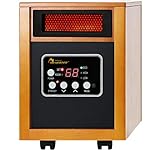
- Dr. Infrared Heater DR-968 Portable Space Heater (Cherry) — Best for Garage-Plus-Living Spaces
A good list of the best 110 volt garage heaters has to start by sorting the category into what these heaters can and cannot do, because the difference between a happy owner and a returned heater is almost always expectations. Every heater that plugs into a standard 110–120V outlet is limited to roughly 1,500 watts — about 5,100 BTU — by the capacity of a normal household circuit. That output is genuinely useful: it transforms a workbench zone, protects a workshop or greenhouse from frost, and makes an insulated one-car garage comfortable. It is not, and cannot be, a furnace for a large uninsulated garage in a cold snap, which is why the heavy ceiling units in this category run on 240V.
Within that honest frame, this roundup compares heaters the way owners actually choose them: by heating method and by the job. Radiant and infrared models warm people and surfaces directly and shrug off draughts. Forced-air and ceramic models move warm air and suit smaller, better-sealed spaces. Ceiling-mounted units trade a small installation job for permanently clear floors, while portables go wherever the work goes. Two-pack and multi-zone thinking gets its own pick, because two separated work areas are the norm in real garages.
All six heaters below run on standard household current — verified, model by model, through the Creators API — and every specification in the spec boxes comes from the confirmed listing for that exact product. If you are also weighing a single all-purpose purchase, the companion guide in this series narrows the same field to one default recommendation; this roundup is the wider comparison.
In this guide
Quick Picks
Best for Two-Car Garages — BEYOND HEAT Electric Garage Heater 120V 1500W Radiant (2-Pack): Two ceiling-mounted radiant heaters in one purchase — one per bay — each with 90° tilt, a work light and overheat protection. The two-zone answer for two-car garages.
Most Flexible Mounting — Dr. Infrared Heater 1500W Portable Infrared Heater (Freestanding/Ceiling/Mount): A 1,500W infrared heater that can stand free, mount on the ceiling or fix in place, with remote control — for garages, patios and workshops that change their minds.
Best Thermostat Control — Buyplus Greenhouse Heater with Digital Thermostat 1500W: A 1,500W heater with a digital thermostat for precise temperature holding — the frost-protection and greenhouse specialist that also keeps a garage workspace steady.
Best Tilting Workshop Heater — KELDFORD 1600W PTC Portable Heater: A metal-housed PTC heater with a 90° tilt head, three settings and tip-over protection, in high-visibility yellow — built to be aimed at the job and knocked without drama.
Best Simple Infrared — Dr. Infrared Heater Portable Infrared Heater (Without Thermostat): The straightforward infrared: remote-controlled radiant heat for garage and patio with no thermostat complexity — switch it on, feel warm, switch it off.
Best for Garage-Plus-Living Spaces — Dr. Infrared Heater DR-968 Portable Space Heater (Cherry): The cabinet-finished classic: a 1,500W infrared space heater in a cherry wood-style cabinet — the heater for garages that double as gyms, studios or hangout space.
How These Picks Were Chosen
Verification came first: each heater was searched by brand and model through this site’s Creators API connection, and an ASIN was attached only when the returned title matched the intended product, wattage class and use. That process cut several well-known garage heaters from contention — their verified listings showed 240V hardwired designs, which are fine products but not 110 volt heaters, and this list does not blur that line.
The surviving field was then arranged to span the category rather than repeat it: a two-pack of ceiling radiant units for two-bay garages, a mount-it-anywhere infrared cabinet, a thermostat-controlled greenhouse-and-garage portable, a tilting PTC workshop heater, a remote-controlled infrared for owners who value convenience, and a furniture-finished infrared cabinet for garages that double as living space. Method, mounting and control style differ across all six, deliberately.
Judgement weighted thermostat control, overheat protection and independent certification where listings state them, and treated coverage claims with uniform scepticism — the guide section gives the watts-per-square-foot arithmetic we applied, so you can re-run it for your own garage.
The 6 Best 110 Volt Garage Heaters for Every Kind of Garage

BEYOND HEAT Electric Garage Heater 120V 1500W Radiant (2-Pack) — Best for Two-Car Garages
Two-car garages defeat single heaters by geography: the work happens in both bays, and one 1,500W source can only be in one place. This matched pair of ceiling radiant units is the straightforward fix — a warm, lit zone over each bay.
Strengths
- Two matched zones cover how two-car garages are actually used
- Ceiling mounting keeps floors clear and heaters away from knocks
- Tilt adjustment aims each zone precisely at its bench or bay
Trade-offs
- The pair must run on separate circuits — two 1,500W loads cannot share one
- Two ceiling mounts means a doubled, if small, installation job
- Radiant zones warm people and surfaces, not the whole air volume
| Power | 120V, 1500W per unit |
| Mounting | Ceiling mount, 90° adjustable tilt |
| Extras | Halogen work light (per listing title) |
| Safety | Overheat protection, safety metal grille |
| Pack | 2 units |
This two-pack earns the top slot in a plural-heaters roundup because it is the only configuration that respects both the physics and the geography of the problem. The physics: plug-in output is capped, so coverage comes from placement, not power. The geography: benches, cars and projects spread across two bays. Ceiling mounting adds the third virtue — permanence without floor cost — and the integrated work lights mean each zone is lit as well as warmed, which on dark winter evenings is half the battle. The discipline required is electrical. Each unit needs its own circuit; plug them into outlets on the same breaker and the breaker will educate you. Garages wired with two circuits — common where a freezer or tools already live — are ready-made for this setup. If yours has only one, run one unit at a time or have an electrician add a circuit when the 240V conversation happens anyway.
Long-term, the pair’s value compounds in an unglamorous way: redundancy. If one unit ever fails mid-winter, the garage still has a heated zone while you sort a replacement — a resilience no single heater of any size provides. Maintenance is minimal and shared: keep the grilles dust-free, confirm the tilts still point where your benches actually are (workshops drift over the years), and check the cords each autumn. Owners of two-bay garages who install this configuration rarely revisit the heating question again, which is the strongest verdict a roundup can give a setup.
Best for: Two-car garages with two work zones and two available circuits / Not suited for: Single-circuit garages, or renters who cannot mount to the ceiling
Check the current price on Amazon

Dr. Infrared Heater 1500W Portable Infrared Heater (Freestanding/Ceiling/Mount) — Most Flexible Mounting
Some garages are workshops in winter and parking in summer, and their heater needs to move between roles. This Dr. Infrared unit is the shape-shifter of the list: freestanding today, ceiling-mounted when the layout settles, remote-controlled throughout.
Strengths
- Three placement options in one product — stand it, mount it, fix it
- Infrared output warms people and surfaces directly, ideal for draughty garages
- Remote control suits ceiling mounting and lazy adjustments alike
Trade-offs
- Versatility means it is master of no single role — dedicated units edge it out per job
- Infrared zones rather than whole-room air heating, as always
- Check the listing for the thermostat variant — a sibling model differs on exactly that point
| Power | 1500W plug-in class |
| Mounting | Freestanding / ceiling / mounting options (per listing title) |
| Controls | Remote control |
| Use | Garage, patio, commercial and residential (per listing title) |
Dr. Infrared sells this heater in thermostat and non-thermostat variants, and the listing for this pick is the remote-controlled 1,500W model that can freestand or mount — verify the variant in your cart matches the job, because in a frost-protection role a thermostat is close to essential while at a supervised bench it is a convenience. On substance, infrared remains the garage-friendly technology: instant perceived warmth, no fan noise, no output wasted on air escaping under the door. The mounting flexibility is more than a gimmick for owners whose garage layout evolves — start freestanding by the bench, and when the workshop layout becomes permanent, lift it to the ceiling and keep the floor. As a single purchase that survives changing plans, it is the most adaptable heater in this roundup.
The mounting flexibility also future-proofs against the most common garage story: the layout changes. A bench moves, a car arrives, a corner becomes a workshop. A heater that can follow the work — floor this year, ceiling next — survives those changes without replacement, and its remote control keeps it convenient in every position. When comparing it against dedicated units, price that adaptability honestly: a specialist heater is better at its one job, and this one is better at every job your garage has not thought of yet.
Best for: Evolving workshops and garages that also host patio duty / Not suited for: Buyers who want one fixed, dedicated installation from day one
Check the current price on Amazon

Buyplus Greenhouse Heater with Digital Thermostat 1500W — Best Thermostat Control
Frost protection is a precision job: hold a space a few degrees above freezing, all night, all winter, without cooking it or the electricity bill. A digital thermostat is the tool for that job, and it is this heater’s headline.
Strengths
- Digital thermostat holds a set temperature accurately — ideal for frost duty
- Overheat protection for unattended running
- Fast heat-up when you do want a warm workspace quickly
Trade-offs
- Positioned for greenhouse and patio use — garage owners should check dimensions and mounting
- Precision control is wasted on a draughty space that can never hold temperature
- Compact class output, like every plug-in heater here
| Power | 1500W |
| Controls | Digital thermostat |
| Safety | Overheat protection |
| Use | Garage, greenhouse, patio (per listing title) |
| Heating | Fast heating (per listing title) |
Most garage heaters have thermostats; fewer have digital ones worth the name, and the difference shows in exactly the role this heater is built for. Holding 5°C in a greenhouse or just above freezing around stored paint, batteries and a classic car’s cooling system is a game of small margins — too cold risks damage, too warm wastes money for months. A digital thermostat plays that game properly. In a garage context the same precision serves the workshop owner who wants the space at a steady working temperature by morning. Pair it with the safety basics — overheat protection is present — and direct wall-outlet power, and this is the set-and-monitor pick of the six. Owners of draughty, uninsulated spaces should fix the draughts first; no thermostat can hold a temperature the building will not keep.
Digital-thermostat ownership teaches one habit worth passing on: log the temperature. A cheap min-max thermometer in the space tells you, after the first cold week, whether your set point is holding and what the building actually does overnight — knowledge that turns the second winter into a solved problem. The Buyplus’s precision is only as useful as the feedback loop you close around it. Closed properly, this is the heater that lets a greenhouse owner sleep through a frost warning, and that peace of mind is the product being bought.
Best for: Frost protection, greenhouses, and garages needing steady held temperatures / Not suited for: Spot-heating a single bench in a large cold garage
Check the current price on Amazon

KELDFORD 1600W PTC Portable Heater — Best Tilting Workshop Heater
Workshop heat is often a direction problem: you are under the car, at the vice, at the saw. The KELDFORD’s tilting head and tough metal housing make it the aim-it-at-the-work pick, in a yellow finish that is easy to spot before you trip over it.
Strengths
- 90° tilt directs heat up at a bench or down at floor-level work
- Metal housing suits knocks, dust and workshop life
- Tip-over protection is the right safety feature for a floor unit in a busy space
Trade-offs
- Listed at a 1600W class — check the listing and your circuit; full-load plug-in heaters belong on their own circuit
- Manual settings only — no thermostat finesse for unattended duty
- Fan-based PTC heat moves air, so draughts tax it like any fan heater
| Type | PTC ceramic, portable |
| Settings | 3 manual settings |
| Head | 90° tilt |
| Body | Metal housing |
| Safety | Tip-over protection (per listing title) |
A candid note on the wattage: this model is listed in a 1600W class, above the usual 1,500W plug-in ceiling. In practice that means two things — confirm the exact rating on the listing before ordering, and be doubly careful that it gets a circuit to itself, since it will draw at the top of what household wiring offers. The product itself is well-aimed at its niche. PTC ceramic elements heat in seconds and self-limit their temperature, the tilt head solves the real workshop problem of heat direction, and the metal case plus tip-over cut-off acknowledge that garage floors are busy places where heaters get clipped by boots and brooms. It is a supervised-session heater rather than an unattended frost guard, and judged in that role it is one of the most practical shapes in this roundup.
The KELDFORD’s yellow metal housing has one more virtue worth naming: visibility is safety in a workshop. A heater you can see is a heater you do not back into, trip over or bury under a sheet of plywood — the three accidents that floor heaters actually suffer. Its tilt head also makes it the best car-work heater in this list: aimed up from the floor, it warms the mechanic on the creeper, the one worker no ceiling or bench heater serves well. Niche, certainly — but garages are collections of niches, and this one is served properly here.
Best for: Active workshop sessions where heat needs aiming at the task / Not suited for: Unattended overnight frost protection
Check the current price on Amazon

Dr. Infrared Heater Portable Infrared Heater (Without Thermostat) — Best Simple Infrared
This listing does something rare in the heater aisle: it tells you in its own title what the product does not have. No thermostat — just remote-controlled infrared heat for supervised use, which for a bench or patio session is honestly all many owners need.
Strengths
- Radient infrared warmth is immediate at the bench or patio seat
- Remote control without app or thermostat complexity
- One less system to configure or fail — simplicity is the feature
Trade-offs
- No thermostat means no unattended frost-protection role
- Manual on/off only — it will not hold a temperature by itself
- Zone heating, like all infrared: aim it or waste it
| Type | Infrared radiant, portable |
| Controls | Remote control |
| Thermostat | None — stated plainly in the listing title |
| Use | Garage, patio, commercial and residential (per listing title) |
There is a real buyer for this heater: the owner who works in the garage in defined sessions, wants to feel warm within a minute of switching on, and has no interest in programming anything. Infrared delivers that session experience better than any fan heater — heat at the speed of light, literally, felt on skin and clothing the moment the element glows. The missing thermostat honestly disqualifies it from the overnight and frost-guard roles that the Buyplus above owns, and this guide will not pretend otherwise. What it offers instead is the simplest possible ownership: a remote, an element, a zone of warmth. On a patio in the shoulder seasons the same formula extends evenings comfortably. Buy it for supervised warmth and it will not disappoint; buy it to guard a greenhouse and you have chosen the wrong sibling.
Simplicity ages gracefully. A heater with no thermostat has no thermostat to fail, drift or be programmed wrongly; its entire control contract is on, off, and where you point it. For supervised sessions — the majority of garage heating, honestly — that contract is complete. The discipline it demands is equally simple: it is a heater you switch off when you leave, every time, and households that build that habit get years of uneventful warmth from the simplest machine in this roundup. Judge it by that role and it is not the stripped-down option; it is the honest one.
Best for: Supervised garage and patio sessions wanting instant radiant warmth / Not suited for: Any unattended or temperature-holding duty
Check the current price on Amazon

Dr. Infrared Heater DR-968 Portable Space Heater (Cherry) — Best for Garage-Plus-Living Spaces
Not every garage is a workshop. For the garage that is also a home gym, a band room or a hangout, a steel utility heater looks like a trespasser — and the cabinet-finished DR-968, a long-running 1,500W infrared design, is the heater that belongs there.
Strengths
- Furniture-style cabinet suits living-adjacent spaces
- Infrared cabinet heaters distribute gentle, even-feeling warmth
- A long-established model line with a deep ownership base
Trade-offs
- Cabinet format is bulkier than utility heaters and less knock-proof
- Workshop owners get more from the rugged picks above
- Whole-room ambitions still meet the 1,500W physics ceiling
| Power | 1500 watt |
| Type | Infrared, portable cabinet |
| Finish | Cherry (per listing title) |
| Brand | Dr. Infrared Heater |
The DR-968 has been sold in this form for years, which in heater terms is evidence: the formula of infrared elements in a furniture cabinet, moving warmed air gently into a room, works for the spaces it targets. In a converted or dual-purpose garage — insulated, floored, used daily as living space — that gentle whole-zone warmth and a finish that does not shout “workshop” are exactly right. It is the wrong tool for a draughty mechanic’s garage, where radiant-at-the-bench or a steel utility heater serves better, and this guide places it last precisely because its brief is the narrowest of the six. But for the growing class of garages that are really rooms, it is the heater that fits the room. As ever, confirm the current listing’s specification at purchase, since long-running models are revised over time.
The DR-968’s cabinet format has a final, underappreciated virtue for dual-purpose garages: it can stay out all year. Utility heaters get stored in summer and forgotten; a furniture-finished heater simply becomes part of the room, ready for the first cold evening without a trip to the attic. In a home gym or studio that is used daily, that permanence translates into the heater actually being used — and a heater that is used, at thermostat, in a sealed insulated room, is the most efficient plug-in heating arrangement this entire guide can describe.
Best for: Insulated garages used as gyms, studios or living space / Not suited for: Draughty working garages and workshops
Comparison Table
| Pick | Badge | Key spec | Best for |
|---|---|---|---|
| BEYOND HEAT Electric Garage Heater 120V 1500W Radiant (2-Pack) | Best for Two-Car Garages | 120V 1500W radiant ×2, ceiling mount, 90° tilt | Two-car garages with two work zones and two available circuits |
| Dr. Infrared Heater 1500W Portable Infrared Heater (Freestanding/Ceiling/Mount) | Most Flexible Mounting | 1500W infrared, freestanding or ceiling mount, remote | Evolving workshops and garages that also host patio duty |
| Buyplus Greenhouse Heater with Digital Thermostat 1500W | Best Thermostat Control | 1500W, digital thermostat, overheat protection | Frost protection, greenhouses, and garages needing steady held temperatures |
| KELDFORD 1600W PTC Portable Heater | Best Tilting Workshop Heater | 1600W-class PTC, 90° tilt, metal housing, tip-over safe | Active workshop sessions where heat needs aiming at the task |
| Dr. Infrared Heater Portable Infrared Heater (Without Thermostat) | Best Simple Infrared | Infrared, remote control, no thermostat | Supervised garage and patio sessions wanting instant radiant warmth |
| Dr. Infrared Heater DR-968 Portable Space Heater (Cherry) | Best for Garage-Plus-Living Spaces | 1500W infrared, cabinet finish, portable | Insulated garages used as gyms, studios or living space |
Garage Heater Types Compared: Radiant, Infrared, Forced Air and Ceramic
Radiant and infrared heaters — the majority of this list — transfer heat to people and objects in their line of sight. They feel instant, ignore draughts, and are silent or near-silent. Their limitation is geometry: step out of the zone and the warmth stays behind. Forced-air heaters warm the air itself and spread it with a fan; they suit small, sealed spaces and feel less instant, and garage draughts tax them continuously. Ceramic PTC heaters are the compact, fast members of the forced-air family, with self-limiting elements that are a safety plus.
Mounting is the second axis. Ceiling-mounted radiant units are the professional workshop solution at plug-in scale: permanent, aimed, and off the floor. Portables trade that permanence for flexibility — the same heater can serve the bench today and a frozen-pipe emergency tonight. Neither axis has a universal winner; the picks above are labelled so you can match method and mounting to your garage’s actual life.
Sizing Honestly: The Only Maths That Matters
Here is the whole of garage-heater sizing in one paragraph. Plug-in heaters deliver at most ~1,500W ≈ 5,100 BTU. Comfortable heating of an insulated space in cold weather takes roughly 10W per square foot. So one plug-in heater properly heats about 150 insulated square feet, warms a work zone in a larger space, and merely takes the edge off anything bigger or uninsulated. Claims beyond that are marketing, and the correct response to a “heats 500 sq ft” plug-in listing is amusement, not purchase.
Insulation changes the equation more than any product choice: a sealed door, insulated walls and a mat underfoot can double the effective comfort from the same heater. Spend on the building first and the heater second, and if the building cannot be improved and the space is large, the honest upgrade is a 240V hardwired unit installed by an electrician — not a more optimistic plug-in purchase.
- ~1,500W maximum from any standard outlet — no exceptions
- ~10W per sq ft for real comfort in an insulated space
- Zone heating beats whole-space hoping at this power level
- Two zones need two circuits, not one heroic heater
- Insulation and door seals outperform heater upgrades
Controls, Thermostats and Safety Features Worth Paying For
A thermostat is the dividing line between session heaters and duty heaters. For frost protection or holding a workshop at temperature, a thermostat — digital for precision — is essential, and overheat protection is non-negotiable for anything run unattended. Tip-over cut-offs matter for floor portables in busy spaces; ceiling and wall mounting removes that risk class entirely.
Remotes are a genuine convenience on mounted heaters and a pleasant extra on portables. Timers help pre-heat a workspace before a session. What none of these features change is the electrical rule: a full-power plug-in heater gets its own wall outlet and its own circuit where possible, never a power strip, and never a coiled extension lead.
Running Costs: What a Winter of Garage Heating Actually Adds Up To
Owners fear the bill more than the cold, so here is the arithmetic in the open. A plug-in heater at full power uses 1.5 kWh per hour. A thermostat holding a workable temperature in a sealed, insulated garage might run that element a third of the time across a working day — call it the equivalent of three to four full-power hours for a long session day, and far less for frost-holding duty, where the target is a few degrees rather than comfort. Zone heating shrinks the number further: warming the bench area for the hours you are in it is a fundamentally smaller purchase than warming the whole building all winter.
The comparison that matters is against the alternatives. Heating a whole house harder so one garage feels tolerable costs more. A 240V installation costs far more upfront and similar money per hour at comfort. And the unheated garage has its own costs — in projects not done, in a car that hates cold starts, in paint and adhesives ruined by one hard freeze. Run with a thermostat, in zones, in a sealed space, plug-in garage heating is one of the cheaper comforts a house can buy.
When One Heater Is Not Enough: Zoning Strategies That Work
The instinct when one heater disappoints is to buy a bigger one; in this category there is no bigger one, so the correct instinct is to buy a second zone. Zoning works when it follows the map of your actual activity: one radiant zone over the bench, one over the second bay or the car you are restoring, a thermostat-held background heater keeping the whole space above frost. Each zone is modest; together they cover a garage the way lighting covers it — where the people are.
The constraints are electrical and they are absolute: each full-power heater needs its own circuit, full stop. Garages with a freezer, a compressor or door openers already spread across circuits often have the capacity hiding in the panel; a quick breaker-mapping exercise — switch them off one at a time and see what dies — tells you your zoning budget before you spend anything. If the panel cannot support the zones your garage needs, that is the genuine trigger for the electrician conversation, and it is better discovered with a plan than with a tripped breaker in January.
Garage Heating for Electric Vehicles and Modern Garages
A growing share of garages now house an EV, and it changes the heating brief in two ways. First, EVs and their batteries prefer a garage that never gets truly cold, which makes thermostat-held background heat — the frost-duty pattern in this guide — a vehicle-care measure as much as a comfort one. Second, an EV charger is itself a major electrical load, often on the very panel capacity your heater zones want. The circuit-mapping exercise in the zoning section stops being advice and becomes arithmetic: charger, heaters and tools must be planned together, ideally with the charger’s installer aware of the heating plan.
The practical arrangement that emerges: background frost-holding on a thermostat model, session heat in the work zone, and the discipline never to run every load at once on a cold evening when the car is also charging. Modern garages are electrical systems as much as rooms, and the households that treat them that way are the ones whose breakers stay silent.
Matching Heaters to Garage Archetypes: A Quick Reference
Four garage archetypes cover most readers, and each maps to this list cleanly. The mechanic’s garage — draughty, tool-dense, work at a bench and under a car: radiant at the bench, the tilting KELDFORD for floor work, no whole-room ambitions. The two-car family garage — projects in both bays, cars in and out: the ceiling two-pack on separate circuits, zones lit and warm where life happens. The workshop-garden garage — greenhouse bench, stored plants, frost anxiety: the digital-thermostat Buyplus holding the number, with a session heater for the human hours.
And the converted garage — gym, studio, office, hangout: the cabinet DR-968 or a room-heater approach entirely, because the building has stopped being a garage in every way that matters to heating. Naming your archetype before shopping collapses this roundup to one or two candidates instantly, which is the service a comparison article owes its readers: not six heaters to weigh forever, but your heater, identified.
Installation Notes for Ceiling and Wall Mounting
Mounted heaters reward ten minutes of structural thought. A ceiling bracket must fix into joists, not plasterboard — find them with a stud finder, mark them, and use the fixings the manual specifies for the unit’s weight plus vibration. Route the power cord along the joist or wall in clips, never draped across the heater’s own hot surfaces, and leave the plug reachable: a mounted heater you cannot unplug without a ladder is a heater installed one step short of finished.
Height and aim follow the manual’s clearances first and comfort second: the radiant zone should land where people stand, which usually means the unit centred over the work area with its tilt compensating for the joist’s actual position. Test the zone before final tightening by standing in it — warmth on the shoulders and the bench top is the target. Wall-mounted units add one consideration: keep them clear of the door’s swing and the ladder’s storage spot, the two moving objects in every garage. Done once, done properly, a mounted heater disappears into the building’s furniture and simply works for a decade.
A Short Buyer’s Checklist Before You Order
Run this list against any garage heater — in this roundup or beyond it — and the category holds no traps. One: is the voltage genuinely household plug-in, stated in the listing, not implied by the product family? Two: does the output match the universal ceiling, and does any claim beyond it come with an explanation you believe? Three: are the thermostat and protections the job requires actually named — thermostat for holding duty, tip-over for floor units, certification for unattended spaces? Four: does your garage have the circuit the heater needs, free of other heavy loads? Five: does the heating method match your building — radiant for draughts, fan for sealed small spaces? A heater that passes all five is a sound purchase whatever badge it wears; the six in this article were chosen because they do.
The Bottom Line for Garage Heater Shoppers
Everything in this roundup reduces to one sentence: match the heater to the zone, the method to the building, and the controls to the duty — and a plug-in heater will serve a garage faithfully for years. The six models above were chosen so that every common garage has its match among them. Buy yours by that sentence, not by the largest number on any box, and winter in the garage becomes a season you use rather than a season you endure.
How to Heat a Garage Efficiently with Plug-In Heaters
Efficiency at 1,500W is a strategy, not a setting. These are the habits that separate warm workshops from disappointing ones.
- Audit the space first: measure it, note insulation, and seal the door gaps — this decides what any heater can achieve before you spend anything.
- Define your zones honestly: the bench, the bay you work in, the storage you merely need frost-free. Different zones may want different picks from this list.
- Give each full-power heater its own circuit and a direct wall outlet; label the breakers so the whole household knows the plan.
- Mount radiant units over the zones they serve and aim them at standing and sitting positions, not at the car or the storage shelves.
- Use thermostats and timers to pre-heat before sessions instead of blasting from cold when you arrive.
- Put a mat or rug where you stand — feet on cold concrete will call you a liar no matter what the air temperature says.
- Reassess after two weeks of real use and move one heater before buying another; placement fixes more problems than purchases do.
If two weeks of good placement in a sealed space still leave you cold, the building is giving you the answer: insulate, or step up to a hardwired 240V system. Another plug-in heater on the same circuit is the one option that is never correct.
Common Buying Mistakes
Shopping by coverage claims. A plug-in heater claiming family-room coverage of a huge garage is claiming impossible physics. Run the 10W-per-square-foot check yourself.
Putting two heaters on one circuit. The breaker will trip, repeatedly, by design. Two zones require two circuits — plan the electrics before the purchase.
Buying a session heater for frost duty. No thermostat means no temperature holding. Match the control set to the job, not the other way round.
Heating air in a draughty garage. Fan heaters in leaky spaces warm the neighbourhood. Radiant heat, aimed at you, is the draught-proof answer.
Skipping the door seal to afford a bigger heater. There is no bigger plug-in heater. The seal is the upgrade; the heater is already at its ceiling.
Final Recommendation
If your garage has two bays and two circuits, the BEYOND HEAT two-pack is the configuration this roundup exists to recommend — matched radiant zones, mounted once, enjoyed for years. Single-zone owners should choose by method: the flexible Dr. Infrared for evolving layouts, the Buyplus where thermostat precision and frost duty matter, the KELDFORD for aimed workshop sessions, its thermostat-free Dr. Infrared sibling for the simplest possible radiant warmth, and the DR-968 cabinet where the garage is really a room.
Readers who want one default answer rather than a comparison should use the companion guide in this series, which narrows this same field to a single first choice. Either way, buy the heater that matches your building and your zones — in this category, honesty about both is what warmth is made of.
Start with BEYOND HEAT Electric Garage Heater 120V 1500W Radiant (2-Pack), or Dr. Infrared Heater 1500W Portable Infrared Heater (Freestanding/Ceiling/Mount) if your needs are narrower, and keep Buyplus Greenhouse Heater with Digital Thermostat 1500W on the shortlist as the alternative.
Related guides in this series: Best 110 Volt Garage Heater, Best 110 Volt Electric Garage Heaters, Best 110 Volt Heater, Best 110 Volt Heaters, Best 110 Volt Electric Heater, Best 110 Volt Baseboard Heater.
Frequently Asked Questions
How many watts can a 110 volt garage heater actually have?
About 1,500W is the practical maximum. A standard 15-amp household circuit cannot safely sustain more as a continuous load, which is why every genuine plug-in heater clusters at that figure — and why claims of much higher plug-in wattage deserve scrutiny of the listing and the circuit alike.
What size garage can one plug-in heater warm?
Properly warm: roughly 150 square feet if insulated. Usefully zone-warm: a workbench or single bay in a larger space. A two-car garage generally wants two zones — and two circuits — or a 240V hardwired heater if whole-space comfort is the goal.
Are infrared heaters better than fan heaters for garages?
For draughty garages and bench work, usually yes: infrared warms people and surfaces directly and loses little to air leaks. Fan heaters suit small, well-sealed spaces. Most owners’ garages leak enough that radiant is the safer default, which is why this list leans radiant.
Can I leave a garage heater running unattended?
Only models with thermostats and overheat protection should be considered for unattended frost duty, plugged directly into a wall outlet with clear space around them and periodic checks. Session heaters without thermostats are for supervised use, and this guide labels them as such.
Do I need an electrician for a garage heater?
Not for anything in this guide — they all plug into standard outlets. You need an electrician when you step up to a 240V hardwired ceiling heater, or if you want an extra circuit added so two plug-in zones can run together safely.
Why does my breaker trip when the heater runs?
Because the circuit is doing its job: a 1,500W heater plus anything else substantial — a saw, a freezer, a second heater — exceeds a 15-amp circuit. Give the heater its own circuit, and move other loads elsewhere rather than defeating the protection.


