Disclosure: airfryerkitchensupply.com is reader-supported. When you buy through links on our site, we may earn an affiliate commission at no extra cost to you.
Where to buy
Every unit in this guide was verified against Amazon’s own catalog data before inclusion, and each is sold through Amazon. Use the links below to check the current price on Amazon. All six plug into a standard North American household outlet, the class of power this keyword describes whether a listing labels it 110V or 120V, so confirm the watt rating in the listing matches the pick described here.
- APC UPS Battery Backup & Surge Protector BX1500M – Check the current price on Amazon
- CyberPower CP1500PFCLCD PFC Sinewave UPS – Check the current price on Amazon
- APC UPS Battery Backup BE600M1 – Check the current price on Amazon
- APC UPS Battery Backup BE425M – Check the current price on Amazon
- CyberPower EC850LCD Ecologic UPS – Check the current price on Amazon
- Anker SOLIX C1000 Gen 2 Portable Power Station – Check the current price on Amazon
The search phrase best 110 volt battery back is everyday language for a battery backup, and the first thing to know is that two different products hide inside it. The classic answer is a UPS, an uninterruptible power supply: a box that sits between the wall and your computer or router, keeps its battery charged, and takes over instantly when the power fails so your gear never sees the gap. The newer answer is a portable power station, a big rechargeable battery with household outlets, which trades instant switchover for hours of capacity. This guide covers both, because which one is best depends entirely on whether your outages last seconds or evenings. Every model here was verified against Amazon’s own catalog data, and every capacity figure below comes from the manufacturer’s listing.
A translation note, since this keyword says 110 volt: household power in North America is nominally 120 volts today, and every UPS and power station in this guide plugs into a standard household outlet regardless of whether a given listing says 110V or 120V. What actually differentiates these products is volt-amps versus watts, waveform, outlet count, and battery size, and those are the terms this guide will teach you to read. Get them right and a battery backup is one of the most satisfying purchases in a home: the next outage becomes a non-event instead of a lost file, a rebooted router, or a dark house.
The six picks map to the six real jobs. Two 1500VA towers anchor the desk, one mainstream and one pure sine wave for modern gaming power supplies. Two compact APC units cover the budget desk and the all-important router-and-modem shelf. A mid-size CyberPower with ECO outlets serves the desk that has outgrown the small units. And a 1,024Wh Anker power station closes the guide for buyers whose outages are measured in hours. After the reviews, a comparison table, a sizing guide, setup steps, common mistakes, and an FAQ will help you land on the right one, whether your problem is a blinking router, a gaming PC, or a house that goes dark for hours at a time.
In this guide
Quick Picks
- Best Overall: APC UPS Battery Backup & Surge Protector BX1500M — a 1500VA/900W tower with AVR, an LCD, and a user-replaceable battery for a full desk setup. Check the current price on Amazon
- Best Pure Sine Wave: CyberPower CP1500PFCLCD PFC Sinewave UPS — a 1500VA/1000W pure sine wave tower with 12 outlets for modern PCs and gaming rigs. Check the current price on Amazon
- Best Budget for Essentials: APC UPS Battery Backup BE600M1 — a 600VA/330W compact unit with 7 outlets and USB charging for a router, NAS, or light PC. Check the current price on Amazon
- Best for Router and Modem: APC UPS Battery Backup BE425M — a 425VA/255W compact backup the listing itself positions for Wi-Fi routers and modems. Check the current price on Amazon
- Best Compact with ECO Mode: CyberPower EC850LCD Ecologic UPS — an 850VA/510W compact unit with 12 outlets, an LCD, and ECO outlets that cut standby draw. Check the current price on Amazon
- Best Portable Battery Backup: Anker SOLIX C1000 Gen 2 Portable Power Station — a 1,024Wh LiFePO4 power station with 2,000W output and a UPS mode for whole-room backup. Check the current price on Amazon
How These Picks Were Chosen
Picks were chosen by starting from the loads people actually protect and working backward to verified products. Every candidate had to appear in Amazon’s catalog data with its capacity stated in the listing itself, because VA and watt figures are the entire substance of this category and cannot be guessed. Models were then sorted by job: full desk, sine-wave-sensitive desk, light desk, network shelf, mid-size desk, and long-outage backup, and the strongest established option in each job was kept. APC and CyberPower dominate the UPS picks because they dominate the category’s installed base, parts availability, and replacement-battery ecosystem; the Anker earns its place as the verified capacity option for long outages.
Deliberately excluded were no-name units with unverifiable capacity claims, replacement batteries masquerading as complete backups, and car inverters, which are a different product that answers a different search. Within each job, preference went to user-replaceable batteries, automatic voltage regulation where the class offers it, and honest outlet counts. The result is a ladder from a small router backup to a whole-room power station, so the right purchase is a matter of locating your load on that ladder rather than buying the biggest box on the page.
The 6 Best Options for Best 110 Volt Battery Back

APC UPS Battery Backup & Surge Protector BX1500M — Best Overall
The phrase best 110 volt battery back is how most people describe what the industry calls a UPS, an uninterruptible power supply, and the APC BX1500M is the model that defines the mainstream of that category. At 1500VA and 900 watts it carries a typical desktop PC, a monitor or two, and the small peripherals around them through an outage long enough to save work and shut down cleanly, which is the actual job. It adds automatic voltage regulation, so it also smooths the brownouts and small sags that never quite become outages but still stress a power supply over time. The LCD shows load and estimated runtime at a glance, and the battery is user-replaceable, which matters more than any single feature because it turns a dead UPS in four years into a battery swap instead of a new purchase.
Strengths
- 900W capacity covers a real desktop setup, not just a router
- AVR corrects sags and surges without draining the battery
- User-replaceable battery extends the life of the whole unit
Trade-offs
- Simulated sine wave output, which a minority of sensitive power supplies dislike
- Tower size needs floor or desk space beside the PC, not under a monitor
- Runtime at full load is measured in minutes; it is a bridge, not a generator
| Spec | Detail |
|---|---|
| Capacity | 1500VA / 900W |
| Outlets | 10 |
| Voltage regulation | AVR |
| Display | LCD |
| Battery | User-replaceable |
| Surge protection | 789J (per listing) |
Sizing is where UPS buying usually goes wrong, and this model forgives the common version of the mistake. Most home office desktops draw far less than their power supply’s label suggests, so a 900W UPS typically runs a PC and monitors at a fraction of its capacity, which stretches runtime from a few minutes into the comfortable zone where an outage becomes an inconvenience instead of a data-loss event. The right way to use it is selective: PC and monitor on the battery outlets, printer and speakers on surge-only or a plain strip, because a laser printer’s heater surge is exactly what a UPS battery should never feed. APC’s software shutdown over USB is the other half of the value: if the outage happens while you are away from the desk, the PC closes files and powers down itself. Add the replaceable battery, which is the difference between a four-year appliance and a ten-year one, and the BX1500M is the pick to beat for a conventional desk.
Best for: a full home-office desk that needs clean shutdown time and voltage regulation / Not suited for: tiny loads like a lone router, where it is oversized and oversized-looking
Check the current price on Amazon
CyberPower CP1500PFCLCD PFC Sinewave UPS — Best Pure Sine Wave
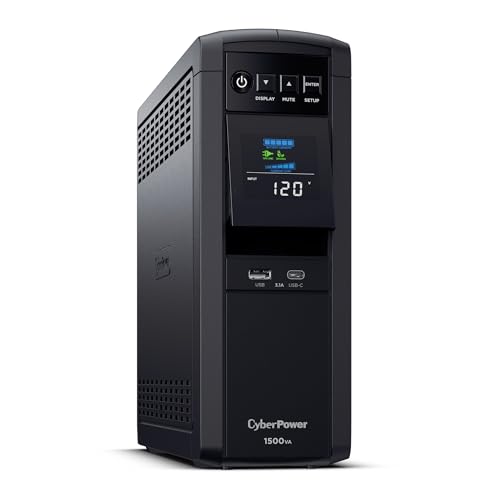
If your PC was built in the last decade, there is a real chance its power supply uses active power factor correction, and active PFC supplies can be fussy about the simulated sine wave that budget UPS units produce on battery. The CyberPower CP1500PFCLCD exists for exactly that concern: it outputs a true pure sine wave, at 1500VA and a full 1000 watts, through 12 outlets in a mini tower. That makes it the natural best 110 volt battery back pick for gaming rigs, workstations, and any setup where you do not want to discover a compatibility quirk in the middle of the first real outage. The extra 100 watts over the APC above is a small bonus; the waveform is the point.
Strengths
- Pure sine wave output suits active PFC power supplies and sensitive gear
- 1000W is the highest wattage in this roundup
- 12 outlets give battery and surge coverage to a crowded desk
Trade-offs
- Costs more than simulated-sine models of the same VA class
- Mini tower is still a substantial box to place and ventilate
- Like all desktop UPS units, runtime at gaming loads is a safe-shutdown window, not play-through power
| Spec | Detail |
|---|---|
| Capacity | 1500VA / 1000W |
| Waveform | Pure sine wave |
| Outlets | 12 |
| Voltage regulation | AVR |
| Form | Mini tower |
The honest framing of pure sine wave is insurance, not magic. Many active PFC supplies run fine on simulated sine wave for the short minutes a UPS carries them, and many do not; the failure mode is an abrupt shutdown or a supply that refuses the battery input at all. If your machine is a several-hundred-watt gaming PC that you cannot afford to have drop mid-render or mid-match, paying the sine wave premium once is cheaper than learning the answer experimentally. Beyond the waveform, this is a well-rounded tower: AVR for everyday sags, an LCD for load and runtime, and enough outlets that the router, monitor, and console can share the protection sensibly. Put the PC and one monitor on battery, keep the total battery load honest, and it delivers the calm, boring outage experience a UPS is supposed to deliver.
Best for: gaming PCs, workstations, and any active PFC power supply / Not suited for: a basic router-and-laptop corner where pure sine wave buys nothing
Check the current price on Amazon
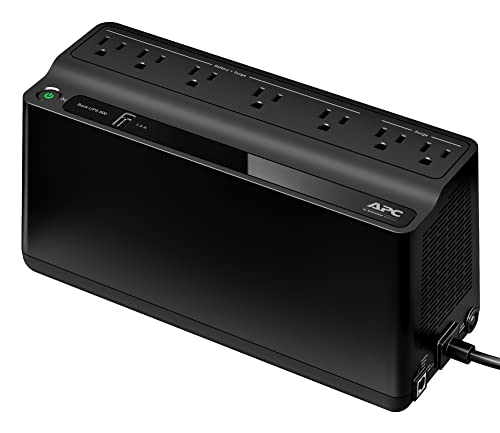
APC UPS Battery Backup BE600M1 — Best Budget for Essentials
Not every battery backup job is a gaming rig. The most common real-world need is keeping the internet alive and a small NAS or light desktop protected, and that is the BE600M1’s exact brief. At 600VA and 330 watts it will not carry a hungry desktop under load, but a router, modem, and network drive together draw a small fraction of that, which translates into long, useful runtime for the gear that keeps a household connected during an outage. It packs 7 outlets and a USB charging port into a compact body, and the battery is replaceable, which at this size and role is the feature that separates a keeper from a disposable.
Strengths
- Right-sized and priced for network gear and light loads
- Replaceable battery, uncommon value at the compact end
- USB charging port adds everyday usefulness on a desk or shelf
Trade-offs
- 330W ceiling excludes gaming PCs and big desktops under load
- No LCD, so runtime information is basic
- Fewer outlets than the tower models for a sprawling desk
| Spec | Detail |
|---|---|
| Capacity | 600VA / 330W |
| Outlets | 7 |
| Surge protection | 490J (per listing) |
| Battery | Replaceable |
| Extras | USB charging port |
The discipline this model rewards is load honesty. Put the modem, router, and NAS on it and it is a small appliance that quietly does a big job: the network stays up, the NAS never loses power mid-write, and a laptop user can keep working through a flicker without noticing. Try to stretch it onto a desktop tower and monitor under real load and you will find its ceiling quickly, in the form of overload warnings and short runtime. That is not a flaw; it is a size class. Buyers who measure their actual load, even roughly, will find this the most cost-effective protection in the guide. It is also a sensible second UPS: many homes end up with one tower at the desk and one compact unit at the network shelf, and this is the compact unit to standardize on.
Best for: internet gear, a NAS, and light loads that need long runtime more than raw watts / Not suited for: a gaming PC or any desktop that draws heavily under load
Check the current price on Amazon

APC UPS Battery Backup BE425M — Best for Router and Modem
There is a specific, modern frustration this little unit solves: the power blinks, the lights come back in two seconds, and the router takes five minutes to reboot while every call, stream, and smart device in the house stumbles. The BE425M is a 425VA, 255-watt battery backup that APC positions directly at routers, modems, and office electronics. Loads that small sip power, so even this compact battery keeps a typical modem-and-router pair running far longer than the big towers keep a desktop alive. The quick-mute alarm matters more than it sounds: a UPS that beeps through a nighttime outage in a bedroom-adjacent network closet gets unplugged, and an unplugged UPS protects nothing.
Strengths
- Purpose-sized for routers and modems with long runtime on tiny loads
- Quick-mute alarms keep it livable in a home setting
- Compact footprint fits a network shelf or entertainment unit
Trade-offs
- 255W is strictly small-load territory; no desktop PCs
- Basic feature set with no display
- Battery is the consumable heart of the unit and will need replacement in time
| Spec | Detail |
|---|---|
| Capacity | 425VA / 255W |
| Positioning | Routers, modems, office electronics |
| Alarms | Quick-mute |
| Certification | UL Certified (per listing) |
Think of this as the highest-value-per-problem pick in the guide. Internet gear is the load every household member notices, it draws almost nothing, and it hates hard power cuts and slow reboots. A small UPS erases all three problems at once, and it also protects the security cameras, smart hubs, and voice-over-IP phones that quietly depend on the same connection. Placement is the only real decision: close to the modem and router, ventilated, and plugged into the wall rather than a power strip chain. If your outage plan also includes a laptop, remember the laptop has its own battery; the BE425M keeping the network alive is what makes that laptop useful through the evening. For a single purchase that the whole household will thank you for during the first storm, this is a strong candidate.
Best for: households whose priority is Wi-Fi, cameras, and connected gear staying up / Not suited for: anyone needing to carry a desktop computer through an outage
Check the current price on Amazon

CyberPower EC850LCD Ecologic UPS — Best Compact with ECO Mode
The EC850LCD occupies the sensible middle of this category: 850VA and 510 watts, enough for a mid-range desktop or a generous network-and-entertainment stack, in a compact body with a full 12 outlets and an LCD. Its signature feature is ECO Mode, in which designated outlets power down peripherals when the main device sleeps or shuts off, trimming the standby draw that printers, speakers, and monitors quietly consume all day. For a buyer whose desk has outgrown a 600VA unit but does not need a 1500VA tower, this is the balanced answer to the best 110 volt battery back question, with a small ongoing efficiency dividend the towers do not offer.
Strengths
- 510W covers mid-range desktops the budget picks cannot
- ECO outlets reduce standby power waste automatically
- 12 outlets and an LCD at a compact size
Trade-offs
- Simulated sine wave output, so very sensitive PFC supplies should look at the PFC models
- Compact body means a smaller battery and shorter runtime at high load
- ECO behavior needs a minute of setup thought so the right devices are on the controlled outlets
| Spec | Detail |
|---|---|
| Capacity | 850VA / 510W |
| Outlets | 12 |
| Display | LCD |
| Special feature | ECO Mode outlets |
| Certification | UL Certified (per listing) |
What makes this model easy to recommend is that its compromises are visible and manageable. The waveform is the standard simulated type, fine for the large majority of home loads; the battery is modest, so it is a save-and-shutdown device rather than a work-through device at desktop loads; and in exchange you get outlet count, a display, and the ECO feature in a box that fits where towers do not. The ECO outlets deserve a sentence of practical advice: put the PC or TV as the control device and the printer, speakers, and secondary monitor on the ECO outlets, and the desk’s idle draw drops every night without you remembering a switch. For a family PC, a student desk, or an entertainment stack with a console and streaming box, this is often the sweet spot of the whole category.
Best for: mid-size desks and entertainment stacks that value outlets and efficiency / Not suited for: high-draw gaming rigs or buyers who specifically need pure sine wave
Check the current price on Amazon
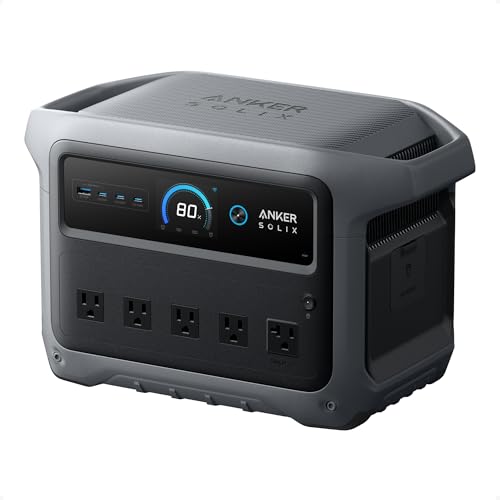
Anker SOLIX C1000 Gen 2 Portable Power Station — Best Portable Battery Backup
A desktop UPS bridges minutes; a portable power station bridges hours, and the Anker SOLIX C1000 Gen 2 is the pick for buyers whose battery back question is really about riding out a long outage. It stores 1,024 watt-hours in a lithium iron phosphate battery, outputs 2,000 watts with a higher peak, and the listing explicitly includes UPS use among its roles, alongside emergency and outdoor power. That capacity changes the conversation: instead of choosing what gets five more minutes, you are choosing what runs for the evening, a refrigerator in intervals, lights, phones, a laptop, a router, even a CPAP through the night. It recharges from a wall outlet fast when power returns and can take solar input when it does not.
Strengths
- 1,024Wh capacity is measured in hours, not shutdown minutes
- 2,000W output runs appliances a desktop UPS cannot touch
- LiFePO4 chemistry is built for long cycle life and home storage
Trade-offs
- Costs far more than any desktop UPS in this guide
- UPS switchover on a power station is not the same spec as a dedicated line-interactive UPS; verify it suits sensitive desktops
- Portable only in the luggable sense; it is a substantial unit to move
| Spec | Detail |
|---|---|
| Capacity | 1,024Wh |
| Chemistry | LiFePO4 |
| Output | 2,000W (peak 3,000W per listing) |
| Roles | UPS, emergency, outdoor (per listing) |
The right way to choose between this and the towers above is by outage length and load type. If your fear is the two-second blink that corrupts a file or reboots the router, a small UPS solves it for a fraction of the cost. If your reality is storm outages that last an evening or a day, or a household member whose equipment must not stop, capacity is the whole game and this is the class of device that plays it. Do the watt-hour math before buying: add the watts of what you plan to run, and divide 1,024 by that number for a rough hours figure, then discount it for conversion losses. A router and lights are an all-night load; a fridge cycles and stretches further than its label suggests; a desktop PC is the load that eats the budget. Used with that honesty, the C1000 is the most capable battery backup in this guide by a wide margin.
Best for: long outages and whole-room backup where hours matter more than milliseconds / Not suited for: a simple desk that only needs a clean five-minute shutdown
Check the current price on Amazon
Comparison Table
| Pick | Badge | Key spec | Best for |
|---|---|---|---|
| APC UPS Battery Backup & Surge Protector BX1500M | Best Overall | 1500VA/900W, 10 outlets, AVR, LCD | Home office desktops with monitor and peripherals |
| CyberPower CP1500PFCLCD PFC Sinewave UPS | Best Pure Sine Wave | 1500VA/1000W, pure sine wave, 12 outlets | Gaming PCs and PCs with active PFC power supplies |
| APC UPS Battery Backup BE600M1 | Best Budget for Essentials | 600VA/330W, 7 outlets, USB charging | Routers, NAS drives, and light desktop loads |
| APC UPS Battery Backup BE425M | Best for Router and Modem | 425VA/255W, compact, quick-mute alarms | Keeping Wi-Fi and internet alive in an outage |
| CyberPower EC850LCD Ecologic UPS | Best Compact with ECO Mode | 850VA/510W, 12 outlets, ECO Mode, LCD | Mid-size desks that want efficiency and outlet count |
| Anker SOLIX C1000 Gen 2 Portable Power Station | Best Portable Battery Backup | 1,024Wh LiFePO4, 2,000W output, UPS mode | Long outages, medical-adjacent loads, and portable power |
How to Choose the Best 110 Volt Battery Back: VA, Watts, and Runtime
Every UPS wears two numbers, and the smaller one is the one that matters. Volt-amps (VA) is the headline figure; watts is the real load the unit can carry, and it is always lower, 900W on a 1500VA unit, 330W on a 600VA unit, as the picks above show. Add up the watts of what you intend to put on battery, not the size of your PC’s power supply, because a 750W power supply in a PC that browses the web may draw 120W in practice. Keep the battery load comfortably under the watt rating, ideally at half or less, because runtime collapses as load climbs toward the ceiling.
Runtime is the second discipline. A desktop UPS is a bridge: at a moderate desk load it buys the minutes needed to save and shut down, or to ride through the blinks and short outages that make up most real events. It is not sized to work through a two-hour outage, and no honest listing claims otherwise. If riding out long outages is the goal, the unit of measure changes from VA to watt-hours and the product changes from a UPS to a power station like the Anker in this guide. Naming your outage type first, blink, short outage, or long outage, is the single most useful step in this purchase.
Finally, decide what actually goes on battery. The disciplined setup is short: computer and one monitor, or modem and router, or the NAS. Printers, speakers, lamps, and heaters belong on surge protection only. Every unnecessary watt on the battery outlets shortens the runtime of the devices that matter.
Waveform, AVR, and the Features That Actually Matter
Waveform is the feature with the most confusion per dollar. When a UPS runs on battery it synthesizes AC power, and budget units produce a stepped approximation called simulated sine wave. Most equipment runs happily on it for the few minutes involved. The exception that matters is a PC power supply with active power factor correction, common in gaming and workstation builds, which may shut down or refuse simulated input. If that describes your machine, the pure sine wave CyberPower in this guide is the safe answer; if it does not, simulated sine wave is a sensible place to save money.
Automatic voltage regulation, AVR, is the quiet workhorse feature. Outages are rare; sags, brownouts, and small surges are common, and each one your UPS corrects from the wall instead of the battery saves battery wear and spares your equipment a stress event. Both 1500VA towers and the sine wave mid-tower class include it. Below those classes, look for a replaceable battery as the longevity feature that counts, because the battery is a consumable with a service life of a few years and a unit you cannot re-battery is a unit you will replace whole.
Displays and software are the third tier: genuinely useful, rarely decisive. An LCD that shows load percentage teaches you your real consumption in one glance, and USB shutdown software that closes your PC gracefully when you are away is worth setting up once. Buy capacity and waveform first; let the display break ties.
UPS vs. Portable Power Station: Which Battery Backup Do You Need?
The two product families in this guide overlap at exactly one point, keeping things running when the wall goes dead, and diverge everywhere else. A UPS watches the power continuously and switches in milliseconds, so a desktop never reboots; it is always plugged in, always ready, and its battery is sized in minutes. A power station is a battery with outlets: far larger capacity, far slower to engage as an automatic backup, and designed to be carried to the problem, whether that is a fridge during a storm, a campsite, or a work site. Its UPS mode, where offered, suits keeping loads alive through an outage you are present for, but a dedicated UPS remains the correct guardian for a desktop you leave running unattended.
Many households eventually own both, and the order matters. Buy the UPS first if data and connectivity are the pain: it is inexpensive insurance that works every day against sags and blinks. Add the power station when outage duration becomes the pain, or when a load like a CPAP, a fridge, or a sump controller must run for hours. The picks in this guide are arranged so you can enter at either point without buying the wrong tool for the job you actually have.
Where a Battery Backup Earns Its Keep Beyond the Desk
Once you think in terms of loads that hate interruption, uses multiply. The network shelf is the highest-value small load in the house: modem, router, and any smart-home hub together draw so little that even the BE425M carries them through long outages, keeping cameras, Wi-Fi calling, and connected locks alive. A NAS or home server is the second classic load, because hard power loss during a write is how storage arrays get corrupted. Entertainment stacks benefit more from surge protection and AVR than from battery minutes, though keeping a game console’s standby state safe is a real perk.
There are also loads to keep off a desktop UPS entirely. Anything with a heating element or a motor surge, space heaters, laser printers, refrigerators, power tools, belongs on a plain outlet or, for the fridge-in-a-long-outage case, on a power station sized for it. A UPS that alarms and overloads during its first real event teaches the lesson expensively; the load discipline in the sizing section above is what prevents it.
Sizing Worked Examples: Three Real Setups
Abstract rules land better with concrete desks. Consider first the remote worker: a mid-range laptop on its own battery, a docking station, one external monitor, and the household router. The laptop needs no backup at all, the monitor and dock draw modestly, and the router draws almost nothing. A BE600M1 at the desk plus nothing else solves this worker completely, because the laptop rides its own battery while the UPS keeps the monitor and internet alive; the work session simply continues through most outages.
Second, the gaming desk: a tower that can pull several hundred watts under load, two monitors, and a console. This is 1500VA tower territory, and the waveform question becomes real, which is why the pure sine wave CyberPower exists in this guide. Put the tower and the primary monitor on battery, the second monitor and console on surge, and accept that the goal is a graceful exit from the game and a clean shutdown, not finishing the match on battery. Buyers who internalize that goal are happy with a UPS; buyers who secretly expect to play through a storm outage need a power station and a much larger budget.
Third, the household infrastructure shelf: modem, router, a small NAS, and a security hub. The combined draw is small enough that even the BE425M delivers hours, and the value per dollar is the best in this entire category, because everything the household notices during an outage, Wi-Fi, cameras, stored files, flows from that shelf. If you can only afford one unit this year, measure these three setups against your own home and buy for the one whose failure would hurt most; the ladder in this guide is arranged so each answer is a complete solution for its job, not a compromise toward the next tier up.
How to Set Up a Battery Backup Correctly
Setup takes fifteen minutes and repays care. Place the UPS on a ventilated surface near the gear it protects, not inside a closed cabinet where its battery will cook. Plug the UPS itself directly into a wall outlet, never into a power strip or another UPS. Then sort your devices: the computer and one monitor, or the modem and router, go into the outlets labeled battery backup; everything else goes into surge-only outlets if provided, or a separate strip. Keep the total battery load modest, and leave laser printers off the battery outlets entirely.
Next, connect the USB cable between the UPS and the computer and install the manufacturer’s shutdown software, then actually configure it: set it to save and shut down after a few minutes on battery, and test the arrangement once by unplugging the UPS from the wall while the computer idles. Watching a controlled test succeed is worth more than any assumption, and it also teaches you the alarm sounds while the stakes are zero. Note the battery’s install date on a label on the unit; when runtime noticeably shrinks in a few years, that label tells you it is battery-replacement time rather than a mystery failure.
One more setup habit separates a system that works from one that merely exists: label the battery outlets. Most UPS models mix battery-backed and surge-only outlets on the same rear panel, and six months from now nobody remembers which is which when a new device gets plugged in during a tidy-up. A strip of tape or a note on the unit listing what belongs on battery prevents the classic failure where the PC ends up on a surge-only outlet and the printer, of all things, ends up protected. While you are there, confirm the UPS is not sharing its wall outlet with a space heater or other heavy load on a splitter; the UPS should have the wall to itself.
For a power station, the routine is different: keep it charged, cycle it occasionally rather than storing it dead, and write down your outage load list in advance, what gets plugged in, in what order, with rough watt figures. An outage is a bad time to do arithmetic. Finally, for both device types, revisit the setup when the desk changes. A new, hungrier PC on an old, small UPS is the most common way these systems silently stop protecting anything.
Common Buying Mistakes
- Reading VA as watts. The watt rating is the real ceiling and is always lower. Size against watts or the unit will overload during the first outage.
- Putting a laser printer or heater on battery outlets. Their surge and draw will trip or drain the UPS exactly when it is needed.
- Plugging the UPS into a power strip. A UPS goes directly into the wall; chaining it voids the protection logic and can cause faults.
- Expecting a desktop UPS to run through a long outage. It is a bridge for safe shutdown. Hours of runtime means a power station, sized in watt-hours.
- Ignoring the battery’s age. Batteries are consumables. A five-year-old UPS with its original battery may offer seconds, not minutes; replaceable-battery models exist for this reason.
- Skipping the shutdown software. An unattended PC gains little from a UPS that cannot tell it to save and shut down. Ten minutes of setup completes the system.
Final Recommendation
Start by naming your load. For a typical home-office desk, the APC BX1500M is the default recommendation: honest capacity, AVR, and a replaceable battery. For a gaming rig or any PC with an active PFC power supply, step to the CyberPower CP1500PFCLCD and its pure sine wave output. For the network shelf, the APC BE425M is the highest-value purchase in this guide, and the BE600M1 covers a NAS or light desk that needs a little more. Mid-size desks that want outlets and efficiency should take the CyberPower EC850LCD. And when the outage itself is the problem, hours long and whole-room wide, the Anker SOLIX C1000 Gen 2 is in a different league from everything above it. Whichever you choose, keep the battery load disciplined, plug the unit straight into the wall, and set up the shutdown software the same day; a battery backup configured once, correctly, quietly pays for itself at the first flicker. Few home purchases divide so cleanly into before and after: before, every outage is an event; after, most of them pass unnoticed.
Best 110 Volt Portable Battery Back Best 110 Volt Battery Best 110 To 12 Volt Converter Best 110 Volt Air Conditioner Best 110 Volt Compressor
Frequently Asked Questions
What does battery back mean in this keyword?
It is everyday phrasing for a battery backup: a device that keeps your electronics running when wall power fails. For a desk or router that means a UPS, which switches to its battery instantly. For long outages it can also mean a portable power station, a much larger battery with household outlets. This guide covers both because the right answer depends on how long your outages last.
Is a 110 volt battery backup the same as a 120 volt one?
Yes. North American household power is nominally 120V today, and backup units are labeled 110V or 120V interchangeably across brands and listing generations. Every pick in this guide plugs into a standard household outlet. The numbers that matter are the watt rating and, for power stations, the watt-hour capacity.
How big a UPS do I need for my computer?
Add the real watts your computer and one monitor draw, which is usually far below the power supply’s label rating, then choose a UPS whose watt rating is comfortably above that total, ideally double. A light office PC is fine on a 600VA/330W unit; a gaming PC under load belongs on a 1500VA tower. Keeping the load near half the rating is what buys useful runtime.
How long will a UPS keep my router running?
Much longer than it keeps a PC running, because a modem and router together draw very little power. Even a compact 425VA unit like the BE425M in this guide can carry typical network gear through outages measured in hours rather than minutes, which is why a small UPS at the network shelf is such a high-value purchase.
What is the difference between VA and watts on a UPS?
Volt-amps is the headline capacity; watts is the actual load the UPS can support, and it is always the smaller number, for example 900W on a 1500VA model. Size your purchase against the watt rating. If the combined watts of the devices on the battery outlets exceed it, the UPS will alarm or shut down during an outage.
Can a battery backup run a refrigerator or CPAP?
A desktop UPS should not: a refrigerator’s compressor surge and a night of CPAP use both exceed what a shutdown bridge is built for. A portable power station is the correct tool, sized in watt-hours against the load’s draw over the hours you need. The Anker C1000 Gen 2 in this guide, at 1,024Wh, is the class of device to evaluate for those jobs, and the watt-hour math in the buying guide shows how to check a specific load.
When should I replace a UPS battery?
Batteries are consumables with a service life of a few years depending on heat and how often they discharge. The practical signal is runtime: when a unit that used to give you comfortable shutdown time starts giving you almost none, the battery is due. Models with user-replaceable batteries, several of which are in this guide, turn that into a quick swap instead of a whole new unit.