A universal grill cover is made to fit many grills rather than one brand. Instead of an exact pattern, it comes in a handful of size classes, and a good one protects the burners, the lid and the grates from rain, dust and sun when the grill sits outside. A good fit stays put in wind, which a loose cover never does.
The six covers below range from heavy-duty fabrics to simpler everyday covers. We have not used these products ourselves, so confirm the stated length, width and height on the current listing against your own grill before buying. Measure with the lid closed and include side tables and handles.
As an Amazon Associate we earn from qualifying purchases. Links below are affiliate links, and they do not change the product information we give.
What to Look For
| Feature | Why it matters |
|---|---|
| Fit | Compare the cover’s length, width and height to your grill |
| Fabric | Thicker, coated fabric resists rain and sun better |
| Straps | Buckles and straps keep the cover on in wind |
| Vents | Vents let moisture escape and reduce mildew |
| Handles | Handles make the cover easier to pull off |
In this guide
Specs at a Glance
| Cover | Fabric | Size class | Notes |
|---|---|---|---|
| Classic Accessories Veranda | Weather-resistant fabric | Several size classes | Vented, with a drawcord |
| Unicook Heavy Duty Waterproof | Heavy-duty fabric | Several size classes | Straps and handles |
| Weber Premium | Weather-resistant fabric | Model-specific sizes | Straps included |
| Char-Broil Universal | Polyester fabric | Several size classes | Vented design |
| Kingsford Premium | Weather-resistant fabric | Several size classes | Charcoal-friendly sizing |
| Arcedo Grill Cover | Waterproof fabric | Several size classes | Straps and handles |
The 6 Best Universal Grill Covers
Top pickBest for patio grills
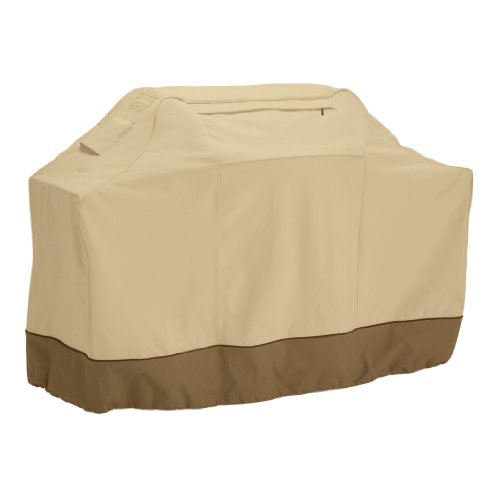
1. Classic Accessories Veranda Grill Cover
A Classic Accessories cover in the Veranda line, a long-running series of patio covers. It comes in several sizes, so you pick the one that matches your grill. Sizes are offered by grill length, so compare each number to your own grill.
Suits: patio grills. Strengths: a trusted outdoor brand and several sizes. Weaknesses: fabric weight varies by size. Skip it if your grill is oddly shaped.

Best for windy yards
2. Unicook Heavy Duty Waterproof Grill Cover
A Unicook cover sold under a heavy-duty, waterproof label. It uses straps to hold the cover in place during wind. Check how the straps and buckles attach, because they matter on windy days.
Suits: windy yards. Strengths: straps that secure the cover. Weaknesses: the claims are the maker’s own. Skip it if you want a brand with a long history.
View Unicook Heavy Duty Waterproof on Amazon

Best for weber and similar grills
3. Weber Premium Grill Cover
A Weber cover sold in several sizes. Weber makes grills, so its covers follow Weber dimensions, though some owners of other grills use them. Some owners of other grill brands use it, but compare the stated dimensions first.
Suits: Weber and similar grills. Strengths: a brand known for grills. Weaknesses: pick the size carefully. Skip it if your grill is far from a Weber shape.

Best for everyday protection
4. Char-Broil Universal Grill Cover
A Char-Broil cover made to fit a range of Char-Broil and similar grills. It is a straightforward, everyday cover. The vents help air move through and cut down on condensation.
Suits: everyday protection. Strengths: a brand known for grills. Weaknesses: limited detail on fabric weight. Skip it if you need a premium finish.
View Char-Broil Universal on Amazon
Best for charcoal grills
5. Kingsford Premium Grill Cover
A Kingsford cover that suits many charcoal kettle and cart grills. The brand is best known for charcoal. Check whether your grill has side shelves, because they change the fit.
Suits: charcoal grills. Strengths: a size range for charcoal grills. Weaknesses: less suited to big gas carts. Skip it if you own a large side-burner grill.
View Kingsford Premium on Amazon
Best for budget-friendly setups
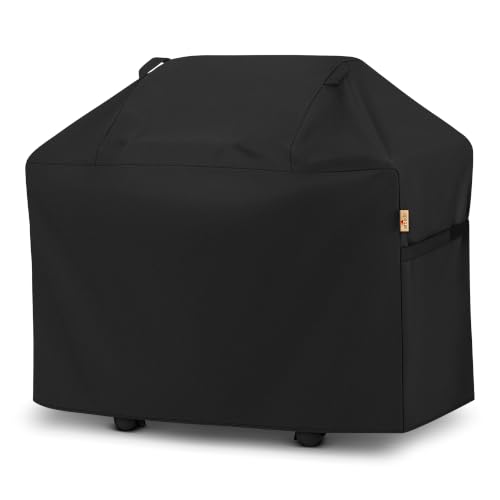
6. Arcedo Grill Cover
An Arcedo cover aimed at gas and charcoal grills, with a waterproof fabric and fastening straps. Reading owner comments on the listing is a good way to judge how it holds up.
Suits: budget-friendly setups. Strengths: useful extras like straps. Weaknesses: brand history is shorter. Skip it if you want an established name.
Care and Setup
- Let the grill cool fully before covering it.
- Shake off water and dry the cover when it gets wet.
- Fasten the straps in windy weather.
- Wash the cover with mild soap and let it air dry.
- Store the cover indoors during harsh winter months if you can.
Mistakes to Avoid
- Covering a warm grill and trapping heat.
- Measuring without the side tables or handles.
- Choosing a size that is too tight.
- Leaving the cover wet for days.
How to Measure Your Grill
Fit is the most important quality of any grill cover, and it starts with careful measuring. Close the lid, then measure the full width from the farthest left point to the farthest right. Include side tables, side burners and handles if they stick out. Next measure the depth from the front of the grill to the back, again including anything that protrudes such as a lid handle or a tank holder. Finally measure the height from the ground, or from the base of the wheels, to the highest point of the lid.
Write the three numbers down and compare them with the length, width and height on the cover listing. Different makers sometimes list dimensions in different orders, so read the labels carefully. If your grill falls between two sizes, many people prefer the slightly larger one so the cover goes on without strain, though too much extra fabric can flap in wind unless straps pull it tight.
- Measure with the lid closed and shelves up.
- Include the chimney, handles and any side equipment.
- Do not rely on the grill brand name alone; use measurements.
- If the cover is rated for a range of sizes, check the details.
Keep the numbers handy for the next time you shop, since a cover may need replacing every few seasons.
Fabric, Coatings and Seams
The fabric determines how well a cover handles rain, sun and daily wear. Common materials include polyester and similar woven synthetics, sometimes with a coating on the inside to resist water. Thicker fabric generally feels sturdier and resists tearing, while lighter fabric is easier to handle and fold. Fabric weight is sometimes given on the listing as a denier number or a thickness description. These figures are the maker’s own, so treat them as a guide and not as a measured result.
Look at the seams as well. Water can enter through stitching, so some covers use sealed or taped seams, while others rely on the coating and a snug fit. A cover that is described as water-resistant is not necessarily fully waterproof, and no cover is guaranteed to keep out every drop in a storm. Reading the product description will show how the maker describes the claim.
Sun is the other threat. Ultraviolet light can weaken fabric and fade color over time. Look for descriptions of UV resistance, and keep expectations realistic. A cover left in constant sun will likely wear faster than one stored under a roof overhang. Lighter colors may reflect more heat, while darker colors can hide dirt, though results depend on the product.
Wind Security and Fastening
A cover that blows off does nothing, so look at how it stays on. Straps with buckles are common, and they usually wrap beneath the grill body or around the cart. Drawcords or elastic hems add grip at the bottom edge. Some covers include small clips or hook-and-loop closures. For windy yards, a combination of straps and a close fit works best.
Check where the straps sit. Straps positioned too high may slide up the cover in a gust, while lower straps hold the hem close to the cart. Test the buckles when the cover arrives and adjust them until the fabric is snug without being stretched over sharp corners. Some people also add weights or ties to the legs of the grill for extra security, but check that nothing hot or flammable is near the cover.
Vents also play a role. Vent openings let air pass through so the cover does not balloon in wind, and they let moisture escape, which cuts down on mildew. Handles on the hem make it easier to pull the cover off in a gust. If wind is a regular problem, favor features that secure the cover over fabric thickness alone.
Safe Use and Storage Habits
Safety comes first with any grill cover. Never put a cover on a grill that is still hot. Fabric can melt or catch fire on a hot lid or grates, and trapped heat can damage the cover. Let the grill cool completely, which can take a good while, and brush off ash and food debris before covering it. Take the cover off before lighting the grill every time.
Moisture is the next concern. Covering a grill that is damp inside or has leftover grease can encourage mildew, odors and rust. Wipe the grill when it is cool and let it dry first. If the cover gets wet, shake it out and let it air-dry before using it again, instead of folding it into a damp heap.
Keep the cover itself clean. Many makers say to wipe it with a damp cloth and mild soap, then air-dry. Avoid harsh cleaners or machine washing unless the label allows it. In winter or the off-season, a dry storage spot such as a garage or shed extends cover life, and a cover can be used inside a shelter as dust protection. Also keep propane tanks, if present, stored according to the grill manual and local rules.
Budget Tiers and Replacement Signs
Grill covers vary in thickness, features and coverage terms. Lower-priced covers tend to use lighter fabric with basic elastic or drawcord fastening. Mid-range options often add thicker material, straps with buckles, vents and handles. Higher tiers may use heavier fabrics, sealed seams and longer coverage terms. Buy for your climate: a mild area with a covered patio needs less than an exposed yard with heavy rain, strong sun or wind.
Questions to ask before buying: What are the exact length, width and height? Does it have straps and vents? How does the maker describe water resistance? Is there a warranty, and what does it cover? Can I return it if it does not fit?
Signs it is time to replace a cover include cracking or flaking coating on the inside, fabric that tears easily, faded and brittle material, broken buckles, torn seams, and a cover that no longer stays on even when strapped. A stiff, chalky surface suggests sun damage. If the cover lets water collect inside or leaves the grill damp, it is no longer doing its job. Replace it before the grill suffers rust or ash-stained grates.
Measure Your Grill Before You Order a Cover
The word universal means the cover is made to suit many grills, not that it suits yours. A cover that is too tight tears at the seams, and one that is too loose flaps in the wind. A tape measure and a few minutes solve most fit problems.
- Width: measure from one side of the grill to the other, including side tables and handles.
- Depth: measure from the front handle to the back of the grill, including any rear burner or chimney.
- Height: measure from the ground or the base to the top of the lid, including a thermometer or a chimney.
- Stand or cart: note any parts that stick out, such as folding shelves or side burners.
- Wheels or legs: decide whether the cover should reach the ground.
Compare your numbers to the dimensions of the cover, allowing a little extra for easy fitting. If your measurements fall between two sizes, the larger usually gives a looser, easier fit, but check the maker’s sizing notes.
Cover Features Compared
| Feature | What it does | Why it helps |
|---|---|---|
| Waterproof backing | Sheds rain | Protects metal and finishes |
| Vents | Lets moisture escape | Reduces condensation and mildew risk |
| Straps or buckles | Hold the cover in wind | Prevents it flapping off |
| Handles | Make removal easier | Helps with taller covers |
| Reinforced seams | Reduce tearing | Extends the life of the cover |
No cover is a promise against weather, but good features help it last. Choose according to your climate: windy places call for straps, and wet places call for waterproofing and vents.
Fabric and Climate
Cover materials differ in how they handle sun, rain, snow and cold. UV exposure can fade and weaken fabrics over time, so look for fabrics described as UV resistant if your grill sits in direct sun. In rainy climates, check how the seams are sealed. In cold climates, flexible fabrics are easier to handle, while some materials stiffen in low temperatures.
- Choose a thicker fabric if your grill is exposed to wind and debris.
- Choose a lighter fabric if you remove the cover often.
- Look for colors that reflect heat if the sun is strong.
- Check how the cover looks after seasons outdoors, based on the maker’s description.
Putting a Cover On Safely
Always let the grill cool completely before covering it. A hot grill can melt or damage the cover and may create a fire risk. Check that the grill is turned off, the fuel supply is closed, and any hot grease or coals are cold. For gas grills, close the cylinder valve as the manual directs.
Cover the grill on a dry day if you can, and make sure the surface is dry underneath. Pull the cover over the grill, secure the straps and check that the vents are not blocked. If the cover slides off in the wind, adjust the straps or add clips as the maker allows.
Cleaning and Storing the Cover
Brush off leaves and debris, and wipe the cover with a damp cloth and mild soap as the care label advises. Let it dry fully before putting it on the grill, since a damp cover can encourage mildew. In winter, shake off snow, and avoid using hot water on frozen fabric. If the cover has become stiff or cracked, it may be time to replace it.
When you are not using the cover, for example on a day you cook, fold it neatly and store it in a dry place away from the grill’s heat. Do not leave a cover lying in a puddle or on the ground, where it can pick up dirt and moisture.
When a Custom Fit Might Be Better
If your grill has an unusual shape, or you want a very tight fit, a cover made for your exact model may be worth considering. Check the maker’s website for a model-specific cover. A cover that fits closely tends to blow around less and protects the grill’s details more completely, but it costs more and has fewer uses if you change grills.
Tie-Downs, Wind and Keeping a Cover in Place
Wind is the biggest enemy of a grill cover. Even a well-fitted cover can fly off if it catches a gust. Use the straps and buckles that come with the cover, and fasten them snugly but not so tight that they strain seams. If your cover has no straps, use cords or clips that the maker approves, and take care not to scratch the grill.
- Fasten any straps under the grill body or around the cart legs.
- Check that the cover is not wrapped around a hot burner or side table.
- Pull the hem down evenly on all sides.
- Use extra clips in very windy areas.
- Check the cover after storms.
If the cover keeps slipping, a smaller size or a different style with an elastic hem may suit your grill better. Look for covers with a drawstring or hem cord, which let you adjust the fit.
Where the Grill Lives and What That Means for the Cover
A grill on a covered porch needs less weather protection than one in an open yard. A grill near trees collects leaves and sap, and one near a coast may face salt air. Choose a cover that suits your site, and clean the grill itself before covering it. A dirty grill under a cover can trap moisture and grease, which encourages rust and odors. Clean grates, empty ash and drip trays, and make sure everything is dry.
When you are away for a long time, such as over winter, consider moving the grill to a sheltered spot such as a garage or shed, following the manual and local safety rules for storing fuel cylinders.
How to Choose in Practice: A Step-by-Step Decision Sequence
Most shoppers start with a shortlist of models and a handful of features, but a more reliable way to choose a grill cover is to work through a short sequence of practical decisions in order. The sequence below is built around keeping rain, dust and sun off the grill so it lights cleanly and lasts longer. Each step removes some options from contention, so by the end you are comparing a small number of genuinely suitable picks from the reviews above rather than trying to rank everything at once — and you will have settled the first question of all, which size class your grill honestly falls into once its tables, handles and chimney are counted.
Step one: start with the space, not the product
Measure first and shop second. For this category, that means checking the grill’s full width including side tables and handles, the depth from front handle to the back including any chimney or rear burner, the height from the ground to the top of the closed lid, and any parts that stick out such as folding shelves, side burners or a tank holder. Measure with the lid closed and the shelves in their normal position, and write the three numbers down in the same order the listing uses — makers list dimensions in different orders, which is how correctly measured grills end up with wrongly sized covers. If your grill falls between two sizes, favour the slightly larger cover with straps that can pull the extra fabric in, over the smaller one stretched tight over corners it will eventually tear on.
Step two: list your three most common uses
Next, be honest about what the cover will face most weeks. In this category the everyday work usually includes standing through rain and sun on an open patio, coming off and going back on several times a week in grilling season, surviving wind that funnels through the yard, and keeping dust, pollen and leaves off between cooks. Write down your own three most frequent conditions, in order, and judge every pick against those three first. Fabric weight only matters in relation to those conditions: a covered porch asks little of a cover, while an exposed, windy yard asks everything. This single habit prevents the most common buying error in the category: paying for heavy fabric while ignoring the straps, or buying straps for a yard whose real enemy is sun.
Step three: match handling to the people who will use it
Consider who else will handle the cover: a partner, older children, or whoever grills when you are away. A cover is handled with greasy hands, in the dark, and sometimes in a hurry before rain. Handles that make it easier to pull off, buckles that can be worked without tools, and a weight of fabric that one person can manage all matter more than they appear to in a listing. If one person does most of the grilling, their routine should carry extra weight in the decision, but the cover should still be removable by whoever is sent out to start dinner.
Step four: plan the upkeep and the installation before you buy
Every option in this guide asks for some routine care, and the differences matter. In general that means letting the grill cool fully before covering it, shaking off water and drying the cover when it gets wet, fastening the straps in windy weather, washing the cover with mild soap and letting it air dry, and storing the cover indoors during harsh winter months if you can. Ask yourself where the cover will live while you cook — draped over a chair invites puddles and dirt — and where the grill itself will spend the off-season. Before you commit, also confirm what is actually being sold: the exact size class, the fastening included, and how the maker describes its water resistance, because the words waterproof and water-resistant are not the same promise.
Real Households, Real Use Cases
The same grill cover can be an excellent buy for one household and a poor one for another. The scenarios below describe how the choice plays out in common situations, so you can find the one closest to your own life and borrow its priorities.
The exposed yard with weather from every direction
When the grill stands in the open, the priorities are fabric that shrugs off rain, seams that do not leak at the stitching, and fastening that survives the yard’s worst gust rather than its average day. For keeping rain, dust and sun off the grill so it lights cleanly and lasts longer, that usually means a heavier cover with straps and vents, fitted closely enough that wind cannot get underneath and balloon it. It also means keeping the cover working: straps fastened every time, not just when a storm is forecast, and water shaken off rather than left pooling in a sagging top. Judge the picks in this guide by your wettest, windiest week.
The covered patio or porch grill
A grill under a roof needs protection from dust, pollen and drifting rain rather than from direct weather. Think about how the cover handles that role: lighter fabric that comes off easily for frequent cooks, handles that help in a tight corner, and vents that still matter because humidity gathers under roofs too. Planning helps here — a cover you can remove one-handed gets used; a heavy, stiff one gets left off, and an uncovered grill under a porch still collects everything the wind carries in.
The seasonal grill that sits for months
Where the grill hibernates, the priorities are a clean, dry start and a cover that keeps nesting pests and winter moisture out. Look at the hem and how closely it closes at the bottom, store the grill clean and dry as the guide above advises, and consider whether the grill itself should move to a sheltered spot for the off-season, following the manual and local rules for fuel cylinders. A cover is the second line of defence for a stored grill; the first is putting it away clean.
Getting the Best from It Day to Day
Good results with a grill cover depend as much on small habits as on the cover you choose. The guidance here is general good practice for the category; always follow the care label and the grill manual for your specific products where they differ.
Start with the basics of use: letting the grill cool completely before the cover goes on, brushing off ash and food debris first, pulling the cover down evenly on all sides, and fastening the straps snugly without straining the seams over sharp corners. The first few weeks are a learning period. Note how the cover behaves in your yard’s wind, whether water pools anywhere on top, and whether the vents sit clear rather than blocked against the grill. Most disappointment in this category comes not from faulty products but from a cover thrown over a warm, dirty grill and left wet for days.
Think about routine. After each cook, the rhythm is cool, brush, dry, cover, strap. After rain, shake the water off and let the fabric air rather than folding it away damp. Keep the cover’s storage spot — a dry place away from the grill’s heat — as part of the routine, so it is never left in a heap on wet ground where it picks up the dirt and mildew it exists to keep off the grill.
Finally, keep safety habits automatic. Never cook with the cover on, never cover a grill that is still warm, and close the fuel supply as the grill manual directs before the cover goes on. Keep the cover away from anything hot or flammable while it is off, and check after storms that it is still in place and undamaged. If a strap or buckle breaks, repair or replace it promptly, because a cover that cannot be fastened is a cover halfway to the neighbour’s yard.
Cleaning, Care and Storage: Keeping It Working Well
Regular care is light for any grill cover, and mostly about dryness and sun. The core routine is: letting the grill cool fully before covering it, shaking off water and drying the cover when it gets wet, fastening the straps in windy weather, washing the cover with mild soap and letting it air dry, and storing the cover indoors during harsh winter months if you can. Done little and often, these jobs take minutes. Left for months, a damp cover quietly grows mildew against the grill it protects, and sun quietly embrittles fabric that looked fine in spring.
Set a rhythm that matches your climate: a wash whenever the cover looks grubby or after pollen season, a shake and airing after heavy rain, and an inspection of seams, straps and coating at the start and end of the grilling season. Clean with mild soap and a cloth as the care label advises, rinse, and air-dry fully — never fold a damp cover away. Check the inside coating for cracking or flaking while you clean, since that is where water resistance quietly dies first.
Be careful with materials and methods. Avoid harsh cleaners and machine washing unless the label allows them, keep the cover off hot surfaces, and store it folded neatly in a dry place away from the grill’s heat. In winter, shake off snow rather than letting it sit and freeze into the fabric. Keep the grill’s own manual and your cover measurements together, so the next cover — covers are consumables on a multi-season cycle — can be ordered from your notes instead of from a fresh measuring session.
Signs it is time for attention
Learn the early warning signs in this category: cracking or flaking coating on the inside, fabric that tears easily or feels faded and brittle, broken buckles or torn seams, and a cover that no longer stays on even when strapped or that leaves the grill damp underneath. Any of these is a prompt to act before the grill pays for the cover’s decline in rust and stained grates. A stiff, chalky surface suggests sun damage that no washing will reverse. Replacing a tired cover on time is the cheapest grill maintenance there is, and your saved measurements make it a five-minute job.
Comparing the Picks in This Guide, Side by Side in Words
The reviews above present each pick for a slightly different grill and yard, and the fairest comparison is not to declare one winner for everyone. It is to match the description, the stated strengths and the stated limits of each option to your own priorities for keeping rain, dust and sun off the grill so it lights cleanly and lasts longer. Read the notes below together with the detailed reviews earlier in this guide, and use them to narrow the list to one or two finalists before you check a current listing.
Classic Accessories Veranda Grill Cover: who it fits in this line-up
As the guide describes it, this is a Classic Accessories cover in the Veranda line, a long-running series of patio covers that comes in several sizes offered by grill length, so you pick the one that matches your grill and compare each number to your own, and it suits patio grills. Its stated strengths are a trusted outdoor brand and several sizes; its stated weakness is that fabric weight varies by size, so the guide suggests skipping it if your grill is oddly shaped. In practice, it is the established-name, many-sizes benchmark of this list.
Unicook Heavy Duty Waterproof Grill Cover: who it fits in this line-up
As the guide describes it, this is a Unicook cover sold under a heavy-duty, waterproof label that uses straps to hold the cover in place during wind, where you should check how the straps and buckles attach because they matter on windy days, and it suits windy yards. Its stated strength is straps that secure the cover; its stated weakness is that the claims are the maker’s own, so the guide suggests skipping it if you want a brand with a long history. In practice, it is the wind-first candidate, bought for its fastening as much as its fabric.
Weber Premium Grill Cover: who it fits in this line-up
As the guide describes it, this is a Weber cover sold in several sizes; Weber makes grills, so its covers follow Weber dimensions, though some owners of other grills use them — compare the stated dimensions first — and it suits Weber and similar grills. Its stated strength is a brand known for grills; its stated weakness is that you should pick the size carefully, so the guide suggests skipping it if your grill is far from a Weber shape. In practice, it is the natural first look for a Weber-shaped grill and a measured gamble for anything else.
Char-Broil Universal Grill Cover: who it fits in this line-up
As the guide describes it, this is a Char-Broil cover made to fit a range of Char-Broil and similar grills, a straightforward, everyday cover whose vents help air move through and cut down on condensation, and it suits everyday protection. Its stated strength is a brand known for grills; its stated weakness is limited detail on fabric weight, so the guide suggests skipping it if you need a premium finish. In practice, it is the honest everyday option from a grill maker, neither the heaviest nor the most featured here.
Kingsford Premium Grill Cover: who it fits in this line-up
As the guide describes it, this is a Kingsford cover that suits many charcoal kettle and cart grills from the brand best known for charcoal, where you should check whether your grill has side shelves because they change the fit, and it suits charcoal grills. Its stated strength is a size range for charcoal grills; its stated weakness is that it is less suited to big gas carts, so the guide suggests skipping it if you own a large side-burner grill. In practice, it is the charcoal specialist of the list, shaped by the grills its brand lives beside.
Arcedo Grill Cover: who it fits in this line-up
As the guide describes it, this is an Arcedo cover aimed at gas and charcoal grills with a waterproof fabric and fastening straps, where reading owner comments on the listing is a good way to judge how it holds up, and it suits budget-friendly setups. Its stated strength is useful extras like straps; its stated weakness is that the brand history is shorter, so the guide suggests skipping it if you want an established name. In practice, it is the value candidate whose straps give it a claim beyond its name.
Compare the finalists on total fit rather than on a single headline figure. The right cover is the one whose three dimensions honestly match your grill, whose fastening matches your wind, and whose fabric matches your sun and rain. A well-matched everyday cover, fastened every time, usually serves a grill better than a premium one a size too large, flapping itself to pieces.
Mistakes to Avoid, Expanded
Measuring once, casually
A single quick measurement is how covers end up torn at the seams or pooled with water on top. Measure the grill twice, properly, and include the full width including side tables and handles, the depth from front handle to the back including any chimney or rear burner, the height from the ground to the top of the closed lid, and any parts that stick out such as folding shelves, side burners or a tank holder. Compare the numbers in the listing’s own order. If your grill falls between sizes, treat that as a decision about straps and fit, not a coin flip.
Choosing by headline figure alone
A single impressive waterproof claim can hide vents that do not exist and straps that cannot hold. Judge the whole purchase — fit, fabric, seams, fastening and the care routine — because you will live with all of it. A cover you love should survive contact with that routine; if its size class assumes a grill shape unlike yours, or its water claim is vaguer than it first sounded, its value falls quickly. Read how the maker words the water resistance, because resistant and waterproof promise different things in a storm.
Neglecting the straps, vents and small parts
Most covers in this category live or fail at their fastening and their seams. A broken buckle and a seam that has started to split are the two quiet causes of a cover found in the garden and a grill found wet. Fasten straps every time, keep vents unblocked, inspect seams at the season’s start, and deal with the small parts — buckles, drawcords, handles — before small damage becomes a lost cover. They do much of the real work, and they are usually the cheapest things to put right.
More Questions Buyers Ask
How do I know if a grill cover is the right size for my grill?
Start with your grill’s measurements rather than with its brand name. Think about the full width including side tables and handles, the depth from front handle to the back including any chimney or rear burner, the height from the ground to the top of the closed lid, and any parts that stick out such as folding shelves, side burners or a tank holder. Compare those three numbers with the cover’s stated length, width and height, in the listing’s own order. A cover that goes on without strain and can be strapped snug is the right size.
What should I check in my yard before I order?
Check the exact place the grill lives — an open patio, a covered porch, or a sheltered corner, with its wind, sun and rain exposure honestly assessed — because those conditions choose the fabric and fastening for you. Photograph the grill with a tape measure across it and write the measurements down so you can compare them directly with the dimensions given by the seller. Doing this before ordering avoids most returns and fit surprises.
How much upkeep does a grill cover need in normal use?
Expect a light routine rather than occasional deep rescue jobs: letting the grill cool fully before covering it, shaking off water and drying the cover when it gets wet, fastening the straps in windy weather, washing the cover with mild soap and letting it air dry, and storing it indoors during harsh months if you can. Small, regular care prevents mildew and keeps the coating working. Follow the care label for your exact cover, because washing guidance differs between fabrics.
Can I fit or adjust this myself?
Yes — fitting a cover is entirely an owner’s job: pull it over the cooled grill, even the hem on all sides, and adjust the straps or drawcord until the fabric is snug without straining seams. If the cover keeps slipping in wind, the maker-approved clips or a different size are the next steps. No tools or professionals are involved, which is exactly why the measuring step deserves the care usually reserved for harder jobs.
What should I do in the first week with a new cover?
Try it on the cooled grill and check the fit at every corner, adjust the straps, and confirm the vents sit clear. Through the first week, watch how it behaves in your yard’s ordinary wind and after the first rain: does water pool, does a corner lift, does moisture gather underneath? Note the answers, adjust the fastening once, and write your grill’s three measurements on a note kept with the grill manual so the next cover is a reorder, not a research project.
Planning Notes: Delivery Day and First Fitting
When the cover arrives, try it on a cool, clean, dry grill rather than judging it from the packaging. Check the fit at the corners and over the highest point, work every buckle and strap, and confirm the vents are where the listing described them. Keep the packaging until you are satisfied the size is right, since fit is the one thing a return window exists for. If the cover is clearly the wrong size class for your grill, contact the seller promptly rather than forcing it over corners it will tear on.
Universal Grill Cover FAQ
Are universal covers really universal?
They fit many grills, but not all. The size listed on each cover is the best guide.
Does a waterproof cover stop rust?
It helps by keeping rain off, but moisture can still form under the cover, so vents help.
Should I remove the cover to cook?
Yes. Never cook with the cover on, and let the grill cool before replacing it.
How do I choose a size?
Measure the grill’s width, depth and height with the lid closed and add room for side tables.
How long do grill covers last?
Life depends on sun, rain and fabric weight. A cover with UV-resistant fabric tends to last longer.
Can I use a universal cover on a pellet grill or smoker?
Possibly, if the dimensions fit including the hopper, chimney and handles. Measure the full shape and compare it with the listing, since these grills often have different profiles.
Should I cover my grill in winter?
Many owners do, because covers protect against snow, rain and debris. Make sure the grill is clean and dry first, and consider dry storage if you can.
Can a cover cause rust?
A cover that traps moisture can contribute to rust, particularly if the grill is damp when covered. Vents, a dry grill and an occasional airing help.
How do I wash a grill cover?
Check the care label. Most guidance suggests wiping with mild soapy water, rinsing and air-drying, and avoiding harsh chemicals or high heat.
What if my grill is between sizes?
Compare the measurements on both listings and consider the slightly larger one if it has adjustable straps. Check the return policy in case the fit is wrong.
Do I need a cover for a grill under a patio roof?
A covered spot reduces exposure to rain and sun, but dust, pollen and humidity still reach the grill. A light cover can still be useful.
Why does my cover collect water on top?
Pooling can happen when fabric sags or when the cover is too loose. A snug fit and straps help water run off.
The Short Version
For a patio, the Classic Accessories Veranda. For wind, the Unicook Heavy Duty. For a grill-maker brand, the Weber Premium. For an everyday cover, the Char-Broil Universal. For charcoal grills, the Kingsford Premium. For simple straps, the Arcedo.