Storage tubs are the plain workhorses of closets, basements and garages. A good one stacks without crushing, closes tightly, and survives a move. Some are clear so you can see inside, some are heavy-duty and built for tools, and a few have gasketed lids made to keep out water and dust.
The six here include stackable plastic totes with lids, a tough garage tub, and a weather-resistant latching box for damp spots. We have not used these ourselves, and tub sizes, colors and packs differ between listings. Please confirm capacity and what is included on the current listing before you buy.
As an Amazon Associate we earn from qualifying purchases. Links below are affiliate links, and they do not change the product information we give.
What to Look For
| Feature | Why it matters |
|---|---|
| Lid and latches | Secure latches keep dust and pests out and let you stack safely |
| Strength | Thicker plastic carries weight in a garage; thin totes suit clothing |
| Clear or opaque | Clear shows contents; opaque hides clutter and blocks light |
| Seal | A gasket helps against water, but check what the maker claims |
| Size | Pick a common size so tubs line up neatly on a shelf |
In this guide
Specs at a Glance
| Tub | Type | Lid | Notes |
|---|---|---|---|
| Sterilite 18 Gallon latching tote | Plastic tote | Latching lid | Common household size |
| IRIS USA WEATHERPRO latching box | Clear tote | Gasket lid, per the maker | Made for damp areas |
| Rubbermaid Roughneck tote | Heavy-duty tote | Snap lid | Built for garage use |
| Rubbermaid ActionPacker | Heavy-duty tote | Lid with latches | Rugged and stackable |
| Rubbermaid Brute Tote | Commercial tote | Lid sold separately on some | Very tough build |
| IRIS USA Stack and Pull box | Clear tote | Latching lid | Stack and pull design |
The 6 Best Storage Tubs

Top pickBest for closets and bedrooms
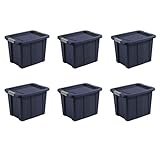
1. Sterilite 18 Gallon Latching Tote
The tote many people picture when they hear plastic storage tub. It is a plain latching box in a common mid size, and it is easy to find in matching sets for a closet or a spare room.
Suits: closets and bedrooms. Strengths: a familiar size and a low cost. Weaknesses: thin walls for heavy loads. Skip it if you plan to fill it with tools.
Best for basements and sheds
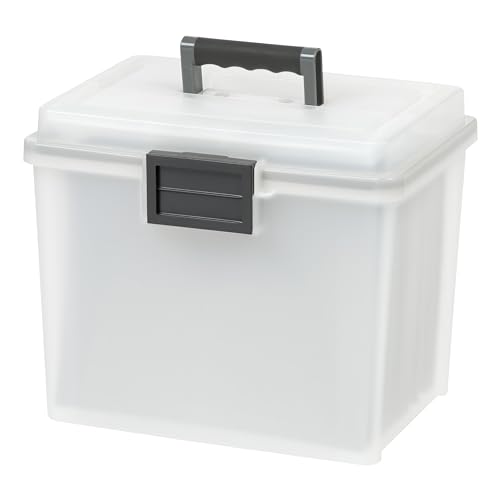
2. IRIS USA WEATHERPRO Latching Box
A clear tote with a gasket in the lid, made to resist water and dust. It is the nearest thing here to a waterproof storage tub, though you should read the maker’s claim closely before trusting it in a flood-prone spot.
Suits: basements and sheds. Strengths: a gasketed seal. Weaknesses: not fully watertight in every case. Skip it if you want the lowest price.

Best for garage and workshop gear
3. Rubbermaid Roughneck Storage Tote
A thick-walled tote designed for garages, workshops and heavy items. The Roughneck is a stackable garage tub that takes bumps and weight better than lighter household totes.
Suits: garage and workshop gear. Strengths: a sturdy build. Weaknesses: opaque on most versions. Skip it if you want to see inside.
View Rubbermaid Roughneck Tote on Amazon
Best for moving and heavy gear
4. Rubbermaid ActionPacker Storage Tote
A rugged lidded tub with built-in handles and a lid that locks. It carries tools, holiday decor and camping gear, and the shape stacks well when the lids are on.
Suits: moving and heavy gear. Strengths: locking lid and sturdy handles. Weaknesses: bulky for small shelves. Skip it if you want a light tote.
View Rubbermaid ActionPacker Tote on Amazon

Best for the toughest jobs
5. Rubbermaid Commercial Brute Tote
A commercial-grade tub with a very thick wall, used in kitchens, warehouses and garages. Check the listing for whether the lid comes in the box or must be bought separately.
Suits: the toughest jobs. Strengths: extreme durability. Weaknesses: the lid may cost extra. Skip it if you only store sweaters.

Best for closets and shelves
6. IRIS USA Clear Stack and Pull Storage Box
A clear box with latches and handles, made to stack in sets and pull out one at a time. It suits shelves and closets where you want to see contents and still keep a tidy stack.
Suits: closets and shelves. Strengths: clear walls and stacking. Weaknesses: less rugged than a garage tub. Skip it if the tubs will carry heavy tools.
View IRIS USA Stack and Pull Box on Amazon
Care and Setup
- Label the lid and one side so you can read it when stacked.
- Put the heaviest tubs on the bottom of a stack.
- Keep tubs off a concrete floor with a pallet or shelf if the room gets damp.
- Wipe the inside before storing seasonal items.
Mistakes to Avoid
- Overfilling a light tote and cracking the lid.
- Mixing different tub brands in one stack, which can wobble.
- Trusting a lid to stay dry in a flood.
- Storing food or damp fabric in a sealed box.
Questions to Ask Before You Buy
- What will go inside, and how heavy will a full tub be when I need to lift it?
- Will the tubs sit on a shelf, in a closet, or stacked on the floor, and what are the opening and depth limits there?
- Do the lids lock down firmly, and does the listing say how they hold when stacked?
- Do I want to see the contents, or will labels do?
- Do the handles suit my grip, with or without gloves?
- Does the maker’s listing mention the material and any limits on temperature?
Matching It to Your Space
Measure the spot first. Closet shelves, under-bed gaps and garage racks all have different clearances, and a tub that looks right online can be a few inches too tall once it is in your hands. Rectangular shapes use space well, while tapered sides nest for storage when empty but waste room when full.
Think about how often you open the contents. Holiday decor can go on a high shelf, while school supplies or tools need a spot at waist height. Matching sizes make stacking tidy, and a shared lid style keeps things simple.
Who Should Skip It
Anyone storing paper records, fabric heirlooms or food items should read the maker’s listing and instructions before assuming a tub suits the job. Plastic can hold odors, and damp spaces call for extra care. If your goal is to keep items in view or add a decorative look, open baskets or shelving might fit better than closed tubs.
People who rarely need extra storage may do better to sort and donate before buying anything new.
Matching Tub Type to What You Store
The right tub depends on what goes inside. Clothing, linens and soft goods are light, so a standard latching tote does the job and the thinner walls are not a concern. Holiday decor often mixes fragile and bulky items, and it benefits from a sturdier tub that will not buckle under a stack. Tools, camping gear and automotive supplies are heavy and sharp-edged, which is where thick-walled garage totes earn their place.
Paper, photos and keepsakes call for a different mindset. Moisture is the main enemy, so a lid that seals well and a spot off the floor matter more than raw strength. Read the maker’s description to see whether a tub is suited to documents or acid-free needs, and do not assume a plastic tub is archival. For food-adjacent items such as pantry overflow, check whether the listing says the plastic is suitable for contact, since many storage totes are not intended for it.
Children’s toys are a good fit for clear tubs or open-top bins, because small hands and quick searches favor visibility. Seasonal clothes work well in a mid-size tote that is easy to lift. Matching the tub to the contents also helps you avoid overfilling, which is the usual reason lids crack and latches fail.
Lids, Latches and Seals Compared
Lids come in a few styles, and each one has trade-offs. Snap-on lids press down around the rim and are quick to use, but they can pop off if the tub is overfilled. Latching lids use clips on the sides or handles to hold the lid firmly, which helps when stacking and moving. Gasketed lids add a rubber or foam seal to cut down on dust and water, though no seal is perfect, so confirm what the maker actually claims.
When you compare options, think about how often you will open the tub. If you open it weekly, tight latches become tiresome, and an easy snap lid might serve better. If you open it once a year, a firmer lock is worth the bother. Handles matter too. Built-in handles on the sides make stacked tubs easier to pull, while recessed grips keep the profile compact.
- Check whether the lid fits the tub it comes with and whether lids are interchangeable across the same line.
- Look at whether the lid is flat enough to carry another tub on top.
- Note whether a lid is sold separately, as some commercial tubs are.
Stacking and Organizing Safely
Stacking is where most storage mistakes happen. Place the heaviest tubs at the bottom and the lightest on top, and keep stacks to a height that you can reach without a step stool or a wobble. A tall stack of mixed brands can lean, since the lid profiles do not always interlock. Keep stacks near a wall or inside a shelving unit if you can, and avoid blocking exits, water heaters or electrical panels.
Labels make a big difference. Put a label on the side that faces out and another on the lid, so you can read it from the front and from above. A simple system of names, dates or categories saves you from opening each box. Some people use a color for each category, such as one for holiday decor and one for tools, while others rely on contents lists taped inside.
Leave a little space between tubs and walls for air movement, especially in basements and garages. If a shelf is metal or wire, check that the tub feet sit securely and do not slip through the gaps. Where floors may get wet, raise tubs on pallets or shelves so water does not pool beneath them.
Choosing by Room and Climate
Where the tub lives matters almost as much as what is in it. In a closet or under a bed, appearance and size are the main questions, and clear or neutral tubs help the space look tidy. In an attic, temperature swings are a concern, and some plastics can become brittle or warp with heat or cold, so look at the maker’s notes on temperature limits. In a garage or shed, expect dust, dirt and the occasional bump, so a thick wall and a firm lid are worth having.
Basements bring damp air, and condensation can form inside a closed tub. Add a small moisture absorber if the maker allows it, and avoid packing fabrics that are not fully dry. Outdoor storage needs special caution, because sun can fade and weaken plastic over time. Consider a covered location rather than leaving tubs exposed.
If pests are a worry, look for lids that close firmly and avoid storing food in tubs unless the listing says it is suitable. In all cases, check the manual or listing for use guidance, and do not rely on a tub to keep out water in a flood-prone area.
Budget Tiers and Signs of Wear
Storage tubs span a range from basic to heavy-duty, and what you pay for is mostly wall thickness, lid design and handle quality. Basic totes suit lighter loads and occasional moves, and they are often sold in multipacks so you can build a matching set. Mid-tier tubs usually add sturdier latches and thicker plastic. Commercial-grade options handle the toughest jobs, but they can be heavy when empty and sometimes sell lids separately, which affects the total cost.
Think about the long run. A tub that survives a few moves and many seasons costs less per year than a cheap one that cracks. At the same time, there is no need to over-buy. If you store a few sweaters, a heavy-duty garage tub is more than you need.
Signs it is time to replace a tub include cracks in the wall or lid, latches that no longer hold, warped lids that will not sit flat, and persistent odors. A tub with a small crack may still work for light items in a dry spot, but should not carry anything valuable or heavy. Recycle damaged plastic where local rules allow.
Clear, Opaque or Heavy-Duty: Which Suits the Job
Storage tubs look alike until you begin using them. The right choice depends on what goes inside and where the tubs will live. Clear tubs let you see the contents at a glance, opaque tubs hide clutter, and heavy-duty tubs stand up to rough handling and weight.
| Use | Tub idea |
|---|---|
| Closet clothes and linens | Clear tubs with snug lids |
| Garage tools and seasonal gear | Heavy-duty with latches |
| Holiday decorations | Stackable tubs that nest |
| Kids toys | Open bins or tubs with simple lids |
Label every tub, even clear ones, so you can find things later without opening them.
Reading Capacity and Stacking Details
Capacity is usually listed in quarts or gallons, but the outer dimensions matter just as much for shelves. Measure the shelf or closet space and compare it with the tub footprint. Check the weight limit and the stacking notes, since not every tub can carry a full tower.
- Look for lids designed to lock onto the tub below.
- Check whether the lid shape makes the tub stable when stacked.
- Note whether the tubs nest when empty, saving space.
- Test the handles with the load you expect.
Keeping Contents Protected
For items that may attract moisture, such as clothing or papers, look for tubs described as having a tight seal, but remember that no tub is a perfect barrier. Add a clean cloth or other protection for delicate items, and keep tubs off damp floors by placing them on a shelf or pallet. Do not store food items in tubs that are not made for it.
Care and Mistakes to Skip
Wipe tubs with a damp cloth and mild soap, and let them dry before closing the lid. Avoid stacking beyond the maker limit, and avoid placing tubs where heat could warp the plastic, such as beside a water heater or in direct sun. Check the lids for cracks before each season, and replace any that no longer close securely. Keep a list of what each tub holds, so you do not have to unstack everything to find one item.
A Decision Guide by Room
Each room asks something different from a storage tub. Think about humidity, traffic and how often you open the lid.
- Bedrooms and closets favor lighter tubs that slide under a bed or onto a shelf.
- Garages favor tough tubs with latches that can handle dust and temperature swings.
- Basements favor lifted storage off the floor and tubs with tight seals.
- Attics call for tubs that tolerate heat, so read the maker notes before packing delicate items.
Choose a consistent size across a room, so tubs stack neatly and shelves stay organized. Using a mix of shapes wastes space. Decide on a labeling system before you buy a stack, whether that is adhesive labels, a marker on a label window or a card in a holder.
One last habit pays off: keep a short inventory on your phone or on a sheet taped inside the closet door. Note the tub number, the room it lives in and the main contents. When a season changes, you can swap tubs in minutes instead of opening every lid, and you will notice quickly when something should be donated rather than stored again.
Choosing storage tubs With Confidence: A Deeper Look
Start with the job, not the product. Before comparing any storage tubs, write down what yours actually has to do in a normal week: who uses it, how often, for how long at a stretch, and what has frustrated you about the option you are replacing. That short list becomes the filter for everything else in this guide. Features that do not serve your list are decoration, while the two or three things on it deserve most of your attention and most of your budget. Readers who skip this step usually end up with an storage tub that is impressive on paper and slightly wrong in daily life, which is the most common reason good products get returned.
Next, audit the space and the routine it has to fit. Measure where the storage tub will live and where it will be stored, note the surfaces, light, moisture, heat or traffic it will face in garages, attics and cupboards, and think about who else will handle it. A choice that fits the room but fights the routine still fails, so picture the busiest, messiest, most rushed version of your day rather than the tidiest one. If other people in the household will use it, their habits count too: the best storage tub for anyone trying to reclaim space without losing track of what they own is the one everyone can use correctly without a lesson every time.
Lid seal and latch strength
The lid decides whether a tub protects or merely contains. Look for latches that pull the lid down evenly and a rim that does not flex when you press the middle. In dusty garages and damp sheds that seal is the difference between clean contents and a musty surprise next season.
Wall stiffness when stacked
Thin walls bow under stacking weight and eventually crack at the corners. Press the side of an empty tub and pick it up by one handle while imagining it full. A tub that feels rigid empty usually survives years of being buried at the bottom of a stack in the attic.
Shape that matches your shelves
Straight sides waste less shelf space than heavily tapered designs, while tapered tubs nest neatly when empty. Measure your shelf depth and ceiling height in the storage spot, then choose the footprint that fills it without forcing. A tub that almost fits is a tub that lives on the floor forever.
Handles you can trust loaded
Handles and grip points matter most when the tub is full of books, tools or decorations and you are carrying it down stairs. Look for grips that suit gloved or small hands and that do not rely on the lid staying shut. Test your grip on the style in store if you can.
Clarity versus toughness
Clear tubs make contents visible at a glance, which saves endless opening, while opaque heavy-duty tubs often tolerate rougher handling and sunlight better. Many households mix both: clear for craft, clothing and seasonal items indoors, tougher opaque tubs for the garage, shed and camping gear.
Compatibility is the quiet deal-breaker. Check the requirements that sit around the storage tub itself: the fittings, power, mounting points, accessories, consumables or companion pieces it assumes, and whether your current setup already provides them. Confirming these details before ordering is dull and decisive in equal measure. It is far cheaper to discover a mismatch on a listing page than on the floor with the packaging open. Keep the product manual or listing open while you check, and measure twice wherever a dimension decides whether something fits, connects or closes properly.
Storage tubs in Real Life: Common Situations
Seasonal decorations rotation
Decorations spend most of the year stacked and a few weeks being raided daily. Sturdy latches, stackable shapes and honest labelling matter most here. Pack the items you need first at the top, keep fragile pieces in their own smaller tub, and photograph the contents before sealing if your memory is optimistic.
Garage and shed overflow
Garages add heat, dust, pests and the occasional knock from a car door. Choose tougher walls and better seals for this zone, keep tubs off the floor on shelving or pallets where damp creeps in, and reserve your lightest-duty tubs for indoor cupboards instead.
Kids’ gear and hand-me-downs
Clothing and toys cycle fast in growing families. Clear tubs sorted by size or season make hand-me-downs findable in minutes. Wash and fully dry clothing before sealing it away, and add a note of what is inside on the outside, because future you will not remember which tub holds the winter coats.
Moving house and temporary storage
For a move, uniform tub sizes stack safely in a truck and survive being carried repeatedly. Fill heavy items into smaller tubs so no single box defeats the person lifting it, and keep one clearly marked tub for first-night essentials so the kettle and bedding are not buried under garden tools.
How the Picks in This Guide Compare
Use the picks in this guide as a shortlist, not a ranking to obey blindly. Read the review of each option with your own list beside it, and notice which pick keeps answering your specific frustrations. The first pick in a list is rarely the right pick for every reader; it is simply a strong starting point. Cross off options that miss a requirement entirely, however appealing their other qualities are, then compare what remains on the two or three criteria you care about most. That process usually leaves one obvious candidate and one sensible runner-up, which is exactly where a buying decision should end up.
The shortlist above, Sterilite 18 Gallon Latching Tote, IRIS USA WEATHERPRO Latching Box, Rubbermaid Roughneck Storage Tote, Rubbermaid ActionPacker Storage Tote, Rubbermaid Commercial Brute Tote, and IRIS USA Clear Stack and Pull Storage Box, covers the main directions a buyer in this category usually faces. Rather than treating them as a ladder from best to worst, treat them as answers to different priorities. Work through them in the order of your own list: find the pick whose review speaks to your biggest frustration first, then check whether its trade-offs touch anything you care about. A trade-off that lands on something you never do is free; a trade-off that lands on your daily routine is a reason to move to the next pick, whatever its position in the list.
Who should start with the Sterilite 18 Gallon Latching Tote
Start with the Sterilite 18 Gallon Latching Tote if its review above matches the way you actually live with storage tubs: the setting it suits, the routine it fits and the compromises it makes. Read its limitations as carefully as its strengths, because every pick in this guide gives something up to be good at something else. If its limitation sits in an area you barely use, it may be your best value in the list. If its strength duplicates something you already own or never need, keep moving, since the right pick is the one whose strengths land on your week, not the one with the longest feature list.
Who should start with the IRIS USA WEATHERPRO Latching Box
Start with the IRIS USA WEATHERPRO Latching Box if its review above matches the way you actually live with storage tubs: the setting it suits, the routine it fits and the compromises it makes. Read its limitations as carefully as its strengths, because every pick in this guide gives something up to be good at something else. If its limitation sits in an area you barely use, it may be your best value in the list. If its strength duplicates something you already own or never need, keep moving, since the right pick is the one whose strengths land on your week, not the one with the longest feature list.
Who should start with the Rubbermaid Roughneck Storage Tote
Start with the Rubbermaid Roughneck Storage Tote if its review above matches the way you actually live with storage tubs: the setting it suits, the routine it fits and the compromises it makes. Read its limitations as carefully as its strengths, because every pick in this guide gives something up to be good at something else. If its limitation sits in an area you barely use, it may be your best value in the list. If its strength duplicates something you already own or never need, keep moving, since the right pick is the one whose strengths land on your week, not the one with the longest feature list.
Who should start with the Rubbermaid ActionPacker Storage Tote
Start with the Rubbermaid ActionPacker Storage Tote if its review above matches the way you actually live with storage tubs: the setting it suits, the routine it fits and the compromises it makes. Read its limitations as carefully as its strengths, because every pick in this guide gives something up to be good at something else. If its limitation sits in an area you barely use, it may be your best value in the list. If its strength duplicates something you already own or never need, keep moving, since the right pick is the one whose strengths land on your week, not the one with the longest feature list.
Who should start with the Rubbermaid Commercial Brute Tote
Start with the Rubbermaid Commercial Brute Tote if its review above matches the way you actually live with storage tubs: the setting it suits, the routine it fits and the compromises it makes. Read its limitations as carefully as its strengths, because every pick in this guide gives something up to be good at something else. If its limitation sits in an area you barely use, it may be your best value in the list. If its strength duplicates something you already own or never need, keep moving, since the right pick is the one whose strengths land on your week, not the one with the longest feature list.
Who should start with the IRIS USA Clear Stack and Pull Storage Box
Start with the IRIS USA Clear Stack and Pull Storage Box if its review above matches the way you actually live with storage tubs: the setting it suits, the routine it fits and the compromises it makes. Read its limitations as carefully as its strengths, because every pick in this guide gives something up to be good at something else. If its limitation sits in an area you barely use, it may be your best value in the list. If its strength duplicates something you already own or never need, keep moving, since the right pick is the one whose strengths land on your week, not the one with the longest feature list.
Setup, First Use and Everyday Technique
The first days with a new storage tub tell you most of what you need to know, so treat them as a test period rather than a honeymoon. Set it up properly, use it for its real jobs instead of gentle trials, and notice where you hesitate, adjust or work around it. Small annoyances in week one rarely shrink with familiarity; they usually grow. If something feels wrong, check fit, setup and technique before blaming the product, because a surprising share of disappointments trace back to one skipped step in the instructions or one assumption carried over from the old one.
Care, Cleaning and Storage That Protect Your Storage tub
Clean and dry before filling
Dust and moisture sealed inside a tub travel with your belongings all year. Wipe tubs out, let them dry completely, and only pack items that are clean and dry themselves. This single habit prevents most musty smells and mildew surprises when tubs are reopened.
Label for the person you will be
Label two sides and the lid, in plain words, while you pack rather than afterwards. Include the room or season, not just a category. Labels facing outward on the shelf turn a storage wall into an index instead of an excavation project.
Stack with weight in mind
Heaviest tubs go at the bottom, lightest and most fragile on top, and no stack should wobble when nudged. Avoid stacking higher than you can safely lift the top tub down. If a lid bows under the tub above, that stack is already too ambitious.
Keep seals and latches working
Check latches when you reorganise, because a cracked latch quietly downgrades a good tub. Keep spare lids with their tubs, store empty tubs nested with lids separate so they do not vacuum-lock together, and keep tubs out of prolonged direct sun, which makes many plastics brittle.
Do a yearly honest cull
Once a year, open the tubs you never touched. Storage works when it serves your life, not when it preserves clutter in tidy form. Passing unused items on frees the best tubs for things you actually value and keeps stacks at a height you can manage.
Keep a simple ownership rhythm. A quick wipe, check or tidy after use, a slightly deeper clean on a regular cycle, and a periodic inspection for wear will keep most storage tubs performing the way they did when they arrived. Problems caught early, a loose fitting, a fraying edge, a strange noise, a part that no longer moves freely, are almost always cheaper and easier to fix than the same problems discovered months later. Tie the routine to something you already do, like a weekly clean or a seasonal clear-out, so it actually happens instead of living on a list of good intentions.
Storage is part of ownership, not an afterthought. Where an storage tub rests between uses decides how fast it ages: damp, heat, crushing weight and direct sun quietly undo good materials, while a clean, dry, sensible spot preserves them. Keep the parts that belong together actually together, including the small accessories that vanish into junk drawers and are only missed mid-task. If the original packaging or a simple labelled container suits the shape, use it. Future you, searching at the moment of need, will be grateful for every boring storage decision you make now.
Mistakes That Quietly Ruin a Good Choice
Overfilling until the lid strains
A lid forced down over bulging contents will warp, pop its latches or crack. Leave headroom, especially for soft items that expand, and use a second tub rather than sitting on the first to close it. The tub you save is usually the one you needed most.
Mixing categories in one big tub
One giant tub of miscellaneous household things guarantees that finding anything means emptying everything. Smaller, single-purpose tubs cost a little more shelf discipline and save far more time. Group by how and when you use items, not by what happened to be nearby on packing day.
Storing heavy tubs up high
Books, tools and tinned supplies in a tub overhead are an injury waiting for a tired moment. Heavy storage belongs low, light and bulky storage belongs high. Rearranging a stack once is easier than recovering from a dropped tub.
Forgetting what the space does to contents
Attics bake, garages freeze and sheds breathe damp. Photographs, electronics, candles and leather all suffer in the wrong zone regardless of the tub. Match sensitive contents to the mildest storage space you have, and let the tub handle dust and stacking, not climate extremes.
Problems, Safety and Getting Years of Use
When something goes wrong, troubleshoot in a ladder instead of jumping to replacement. First, check the obvious: correct setup, correct supplies, nothing blocked, worn or installed backwards. Second, return to the manual section for that symptom, because makers document the common failures for their own designs. Third, change one thing at a time so you know what fixed it. If a problem affects safety, involves damage you cannot explain, or keeps returning after honest troubleshooting, stop and get professional help or contact the maker rather than improvising around it.
Safety deserves a deliberate pass with any storage tub. Read the warnings that apply to your household, especially where children, older relatives, pets, water, heat or heights are involved, and set the storage tub up so the safe way is also the easy way. Store accessories and any sharp, hot or heavy parts out of casual reach, and never defeat a guard, lock or limit because it slows you down. Most accidents with household gear happen during rushed, familiar routines, not during careful first uses, so build the habit while you are still paying attention.
Finally, know what finished looks like. An storage tub has done its job when it fades into your routine: it works, it is maintained without drama, and it no longer asks for thought. Replace or upgrade when wear changes performance, when your needs genuinely change, or when repairs stop making sense, not simply because a newer version exists. Keeping notes on what you bought, when, and what you liked or disliked about it turns the next purchase into a five-minute decision instead of a fresh research project, and that, more than any single feature, is what a good guide is for.
One More Round of Practical Checks
A useful extra test is the two-week question: imagine living with this choice on an ordinary, slightly chaotic day a fortnight from now, not on the day it arrives. Novelty hides flaws; routine exposes them. Picture the cleaning, the storage, the other people involved and the moment something small goes wrong. If the choice still looks easy under those conditions, it is probably right. If your imagination keeps adding workarounds, believe it, and look again at the pick you crossed off earlier, because the runner-up often wins once daily reality gets a vote.
Budget thinking works better in reverse. Instead of asking what the cheapest acceptable version costs, ask what failure would cost you: a replacement within the year, a repair, damage to something the product touches, or simply a chore you stop doing because the tool makes it unpleasant. Spending a little more to avoid a likely failure is usually the economical move, while spending more on features your routine never touches is not. The picks in this guide sit at different levels for a reason, and matching the level to your actual frequency of use is the whole game.
If you are choosing for more than one person, gather the complaints before you gather opinions on products. Everyone describes the problem differently, and the shared frustration underneath is the real specification. A choice that answers the shared problem tends to satisfy the whole household, even where tastes differ on looks or extras. Where one person will use the item far more than anyone else, weight their experience heaviest, but do not ignore the person who cleans, stores or maintains it, because their friction decides whether the routine survives.
Storage Tub FAQ
Are clear tubs better than opaque ones?
Clear tubs show what is inside. Opaque tubs hide clutter and block light from fading contents.
Are plastic tubs waterproof?
Not by default. Look for a gasket and read the maker’s own claim.
What size is best for the garage?
A mid-size heavy-duty tote is easier to lift than one that is filled to the brim.
How many tubs should I stack?
Stack only as high as you can reach safely, and keep the heaviest ones at the bottom. Mixed brands can wobble, so use matching tubs when you can and check the listing for stacking notes.
Can I store clothes in a plastic tub long term?
Many people do, but make sure the clothes are clean and fully dry first. Avoid sealing in anything damp, and open the tub from time to time to let it air.
Do clear tubs fade what is inside?
Light can fade some fabrics and papers over time. If that concerns you, keep clear tubs in a dark closet or choose opaque ones for items that are sensitive to sun.
Is it safe to store food in a storage tub?
Only if the maker's listing says the plastic is suitable for food use. Most general storage totes are not designed for that, so check before you use one for pantry items.
What does a gasket do?
A gasket is a rubber or foam seal in the lid that helps keep out dust and moisture. Results vary by product, so read the maker's claims and do not assume a tub is fully watertight.
Can a tub go in the attic?
It can, though heat and cold may affect plastic. Look for temperature guidance on the listing, and avoid storing items there that are harmed by extreme temperatures.
How do I clean a storage tub?
Wipe it with a mild soap and water solution, rinse and let it dry fully before packing. Check the maker's care notes if you want to use stronger cleaners.
Should I buy extra lids?
Lids can crack or go missing, so having a spare is handy if the maker sells them. Confirm the lid fits your exact tub model before you order.
How do I stop stored clothes smelling musty?
Start with clothes washed and completely dry, a clean dry tub, and a storage spot that is not damp. Air the tub before packing and avoid sealing in scented products against fabric for months. When you reopen, a day of airing usually refreshes contents that were stored properly in the first place.
Can storage tubs live outside?
Only designs made for it cope for long, and even they age in sun and weather. A covered, shaded spot off the ground is the minimum. For anything you care about, indoor or shed storage in a well-sealed tub is kinder, and outdoor tubs are best reserved for garden and outdoor gear.
What size tub is most useful overall?
Mid-sized tubs win for most households because they stay liftable when full and fit standard shelving. Very large tubs suit light bulky items like bedding and decorations. Buy sizes that stack together in one system rather than a jumble of near-matches that waste shelf space and topple.
Should I vacuum-seal soft items before tubbing them?
For seasonal bedding and clothing, compressing soft items first can free remarkable space, and the tub then protects the bags from punctures and dust. Keep the bags away from sharp tub edges and do not compress delicate or structured items that resent being flattened for months.
How many tubs should match exactly?
Uniform tubs stack straighter, nest better and make shelving predictable, so a core set in one or two sizes is worth planning. Add specialty sizes only for proven needs. A wall of identical tubs with honest labels is the system people actually maintain.
What should never go in a sealed tub?
Anything damp, dirty, perishable or still giving off fumes from cleaning products. Batteries, fuel and chemicals belong in their own appropriate storage, never in a general household tub. If an item needs ventilation or temperature control, a sealed tub in a hot attic is the opposite of care.
The Short Version
For everyday closets, the Sterilite. For damp spots, the IRIS WEATHERPRO. For garage gear, the Roughneck or the ActionPacker. For extreme use, the Brute Tote. For see-through stacking, the IRIS Stack and Pull.