A large charcoal grill gives you room for a full cookout, with space to sear burgers over direct heat while ribs or chicken finish on the cooler side. Charcoal adds smoky flavor that gas cannot match, and the bigger the grate, the more flexible your fire layout becomes.
The six grills below cover kettle, barrel and ceramic designs. We have not used these products ourselves, and every detail should be confirmed on the current listing before you buy, since cooking area, accessories and assembly requirements differ between versions. Charcoal grills also need a safe outdoor spot, a metal ash bucket and a plan for disposing of cold ash.
As an Amazon Associate we earn from qualifying purchases. Links below are affiliate links, and they do not change the product information we give.
What to Look For
| Feature | Why it matters |
|---|---|
| Cooking area | A larger grate lets you build two heat zones |
| Vents | Top and bottom vents control airflow and temperature |
| Build | Heavy steel or ceramic holds heat and resists warping |
| Ash handling | A removable ash catcher makes cleanup far simpler |
In this guide
Specs at a Glance
| Grill | Style | Material | Notes |
|---|---|---|---|
| Weber Original Kettle 26 | Kettle | Steel with porcelain finish | Large round grate |
| Weber Performer Deluxe | Kettle with cart | Steel with porcelain finish | Work table and ash catcher |
| Dyna-Glo barrel charcoal grill | Barrel | Steel | Large grate with adjustable height |
| Royal Gourmet charcoal grill | Barrel with offset | Steel | Side firebox on many versions |
| Kamado Joe Classic Joe | Ceramic kamado | Ceramic | Heavy, strong heat retention |
| Char-Griller Patio Pro | Barrel | Steel | Compact for a barrel grill |
The 6 Best Large Charcoal Grills
Top pickBest for all-around cooking
1. Weber Original Kettle Premium 26 Inch
The large version of the classic Weber kettle, with a round grate that gives plenty of room for two-zone cooking. It is a long-running design known for even heat and simple use.
Suits: all-around cooking. Strengths: proven design and wide accessory support. Weaknesses: no side tables. Skip it if you want a built-in work surface.
View Weber Original Kettle 26 on Amazon
Best for convenience seekers
2. Weber Performer Deluxe Charcoal Grill
A kettle grill built into a cart with a work table and an ash catcher. Many versions also add a gas ignition for lighting the charcoal.
Suits: convenience seekers. Strengths: storage, prep space and easy ash cleanup. Weaknesses: a bigger footprint. Skip it if you want a basic kettle.
View Weber Performer Deluxe on Amazon
Best for big cookouts
3. Dyna-Glo Barrel Charcoal Grill
A large barrel style charcoal grill with a long cooking area and an adjustable height charcoal tray. It is good for ribs, sausages and group cooks.
Suits: big cookouts. Strengths: long grate and height control. Weaknesses: thin steel on some versions. Skip it if you need a ceramic body.
View Dyna-Glo Barrel Charcoal Grill on Amazon

Best for grill and smoke
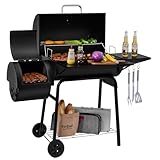
4. Royal Gourmet Charcoal Grill with Offset Smoker
A barrel grill with a side firebox, which lets you grill and smoke on one unit. Multiple versions exist, so check the listing for the exact size and features.
Suits: grill and smoke. Strengths: extra smoking capability. Weaknesses: steel thickness varies. Skip it if you want ceramic heat retention.

Best for serious charcoal cooking
5. Kamado Joe Classic Joe
A full size ceramic kamado with a thick body that holds a steady temperature for hours. It is also used for smoking and baking, not just grilling.
Suits: serious charcoal cooking. Strengths: great heat retention and efficiency. Weaknesses: weight and a larger footprint. Skip it if you want a light, cheap grill.


Best for backyard cooks
6. Char-Griller Patio Pro Charcoal Grill
A steel barrel grill with a firebox and a generous grate for its class. It is a practical pick for backyards where a full ceramic cooker would be too much.
Suits: backyard cooks. Strengths: simple design and room to cook. Weaknesses: steel may need care over time. Skip it if you want a precision cooker.

Care and Setup
- Empty ash after the grill is fully cold, using a metal container.
- Brush the grate while warm, then wipe it with a thin coat of oil.
- Keep the lid on between uses, or use a cover to guard against rain.
- Check vents and hinges at the start of each season.
Mistakes to Avoid
- Using too much lighter fluid and tainting the food.
- Closing the top vent while the fire is still lit.
- Grilling on a deck or near walls without clearance.
- Dumping warm ash in a household bin.
Kettle, Barrel and Kamado Designs Compared
The three shapes in this roundup solve the same problem, which is cooking over charcoal, in different ways. A kettle grill is a round bowl with a domed lid and a round grate. Its shape circulates heat well, it is simple to use, and the round grate makes a natural two-zone layout, with coals banked on one side. Larger kettles add space but are still easiest for direct grilling and moderate indirect cooking.
A barrel grill has a long, half-cylinder body. The extra length gives a wide cooking surface for sausages, skewers, ribs and many items at once, and a side firebox, where present, lets it work as an offset smoker. Thinner steel designs heat quickly but lose heat quickly too, so they respond fast to vent changes and wind. They shine with large spreads of food but can take more tending for long, low cooks.
A kamado is a thick-walled ceramic cooker, shaped like an egg or a rounded pot. The ceramic body insulates well and holds steady temperatures for hours with little fuel, which makes it good for long smokes and also for high-heat searing and baking. The trade-offs are weight, the care needed to avoid chipping or cracking the ceramic, and a slower response when you want to change temperature quickly.
Think about the way you cook. If you want one grill for burgers and chicken with occasional roasts, a kettle is a flexible, familiar choice. If you cook for crowds and want a long grate, a barrel makes sense. If you plan to smoke often and value fuel efficiency and stable temperature, consider a kamado. Combine this with your budget and space, since the three styles differ in size, weight and the effort of assembly.
Planning Grate Space and Heat Zones
Large grills are valuable only if you use the space well. Estimate how much food you cook at once, and picture it laid out. A dozen burgers, a few racks of ribs or two whole chickens each need a different amount of room, and you also want to reserve part of the grate as a cooler zone. The cooler zone gives you somewhere to move food that is browning too quickly and a place to rest items while the rest finishes.
Heat zoning works the same in all three designs. Bank the coals to one side and leave the other empty for a two-zone fire. For searing and roasting together, pile coals high on one side and leave a gap. For long, low cooks, a smaller fire with controlled air does the job. Having a larger grate makes zoning easier, because the cool side is far from the heat, and a hot zone can be small and intense.
Check how the grate and fire bed are arranged. Adjustable-height charcoal trays or grates let you change the distance to the heat without rebuilding the fire. Hinged grate sections let you add fuel while cooking. Multi-level grates and racks expand capacity but make cooking times uneven, since food higher in the grill meets different air flow. Consider how much space the lid needs to close over the food.
Look at real dimensions on the listing, such as grate diameter or length and width, and compare similar models. Some listings count warming racks and firebox areas in the total, which inflates the figure. A bigger number is not always better if it is mostly warming space. Choose a main grate that suits your typical cook, and treat extra area as a bonus.
Materials, Weight and What Assembly Involves
Material shapes how a large grill performs and ages. Steel bodies are lighter, heat up quickly and are available at many price points, but thinner steel loses heat faster and can warp or rust over time. Porcelain-enameled steel resists rust better, but chips can expose metal underneath. Heavier gauges and double-wall designs hold heat better. Ceramic bodies insulate strongly but are heavy and can crack if mishandled or exposed to sudden extreme changes.
Weight affects more than moving the grill. A heavy kamado needs a sturdy base and often a cart, and it may take two people to lift into place. Barrel grills on carts need a stable, level spot because they are top-heavy when loaded. Check shipping weight and assembly requirements on the listing. If you will move the grill often, wheels and a manageable size matter.
Assembly differs by design. Kettles are usually straightforward, with a handful of parts. Barrel grills with carts, shelves and fireboxes have many pieces and take time, and gaps from loose assembly leak heat and smoke. A kamado often arrives with fragile parts, and following the instructions for setup, including how to seat the gasket and tighten the bands, is important. Set aside time and have the right tools.
Look at the details that wear out. Gaskets, hinges, handles, grates and vents are components that suffer from heat and weather. Find out whether replacement parts are available, as the post’s picks come from makers with a range of support. A grill with a good parts supply is easier to keep running for many years. Also check what the listing says about warranty, and keep your purchase details.
Fuel Amounts and Fire Management in a Big Grill
A large grill needs a plan for fuel. A big pile of coals gives high heat but burns quickly, while a smaller, well-managed fire can last longer. Briquettes burn evenly and predictably, which is useful for long cooks, while lump charcoal lights faster, burns hotter and leaves less ash. Many cooks mix them. Whatever you use, keep it dry, and pick quality charcoal without excessive dust and fillers.
Light the fire safely and well. A chimney starter gets coals going evenly without the taste of lighter fluid. Wait until the top coals are covered in gray ash before pouring them into the grill. For a long cook in a kettle or barrel, add lit coals to unlit ones on one side so the fire spreads gradually. In a kamado, light a small area and let the fire grow slowly, because overshooting the temperature in a thick ceramic body means waiting a long time for it to cool.
Air is your control. Open vents to raise temperature and close them to lower it, and make small changes. Thin steel grills react quickly, so check often. Ceramic grills react slowly, so adjust early and avoid big swings. Wind affects all designs, so position the grill so wind does not blow straight into the intake. A probe thermometer at grate level gives a more accurate reading than a lid gauge.
Plan for refueling. Check coal levels during long cooks and add pre-lit coals as needed to avoid temperature drops. Add wood chunks for smoke at the start of a cook, since food takes on smoke most readily when it is cold. Keep a record of how much fuel you used and how long it lasted, so you can plan better each time.
Placement, Safety and the Real Cost of Owning a Big Grill
Large charcoal grills need room and care in placement. Set the grill on a firm, level, non-combustible surface, well away from walls, fences, railings, low branches and anything that can burn. Do not use it on or under flammable structures, and never inside a garage, tent or any enclosed space, since charcoal produces carbon monoxide. Check any rules from your building or community about open flames. Keep children and pets back.
Think about the weight of the grill and of the surface it sits on. A heavy kamado or loaded barrel can crush weak pavers or damage a deck. Make sure the base is level and stable so that it cannot tip. Locking wheels, where present, should be engaged during use. Leave space around the grill for the lid to open fully and for you to move safely with hot food.
Ownership includes more than the grill itself. A cover protects against weather, a chimney starter and a metal ash container make fire handling safer, and a probe thermometer, long tongs, gloves and a grate brush are everyday tools. Replacement grates, gaskets and ash tools are periodic purchases. Fuel is an ongoing cost, and bigger grills use more of it.
Finally, plan for upkeep. Clean ash after each cook once everything is cold, wipe or brush grates, check vents and hinges at the start of each season and touch up chipped paint on steel. Store charcoal dry. Inspect ceramic for cracks and check gaskets for wear. When parts fail repeatedly, rust spreads through the body or the lid no longer seals, weigh the repair effort against replacing the grill.
Planning a Cookout for a Crowd on a Large Charcoal Grill
A big grill gives you options, but it also demands a plan. Charcoal does not respond to a dial, so decisions about fuel and layout happen before the food goes on. Use this sequence as a framework the next time you host.
- List the menu by cooking time. Ribs, chicken pieces and sausages need longer than burgers and vegetables.
- Divide the grate. Pile coals on one side for searing and leave the other side empty for gentle, indirect heat.
- Light enough fuel for the longest item. Adding charcoal mid-cook is possible, but only if your grill has access doors or a design that makes it easy.
- Stage the food. Keep a tray for raw items and a separate clean one for cooked food, and use different utensils for each.
- Place a thermometer where the heat is steady and use a probe thermometer to check meat rather than guessing by color.
- Shut down carefully. Close the vents, let the coals burn out and keep the area clear of children and pets until everything is cold.
Food safety temperatures and fire safety rules differ by region, so rely on official guidance and the instructions that came with the grill rather than rules of thumb.
Small Choices That Matter on a Large Grill
Some details only show up after a season of use. The table pairs common choices with what they mean in daily life.
| Detail | Why it matters |
|---|---|
| Height-adjustable charcoal tray | Lets you move coals closer to or farther from the food. |
| Side access door or fuel hatch | Makes adding charcoal easier during a long cook. |
| Thick lid and body | Holds heat steadier in wind and cool weather. |
| Cast iron or heavy grates | Hold heat and sear well, but need oiling to resist rust. |
| Ash removal system | Saves time and reduces mess at cleanup. |
| Wheels and handles | Matter when the grill must be rolled over uneven ground. |
| Shelves and hooks | Give you a place for tools, plates and a spare thermometer. |
Think about weight and assembly as well. A large grill arrives in many parts, and putting it together takes patience and often a helper. Read the steps before opening the box, clear a flat area for the build, and keep the small hardware sorted in a tray so no screws disappear in the grass. Once the grill is built, season or wipe the grates as the maker directs, and do a short practice burn so that you know how the vents behave before guests arrive.
Large Charcoal Grill FAQ
Is charcoal or gas better for large grilling?
Gas is faster and easier to control. Charcoal is better for flavor and high heat searing.
How big a grate do I need?
If you cook for groups, choose a grate large enough to hold a hot zone and a cool zone.
Can I smoke on a large charcoal grill?
Yes, by banking coals to one side and adding wood chunks, or by using an offset firebox.
Do I need a chimney starter?
It is the cleanest way to light charcoal, and most cooks find it easier than fluid.
Which is easiest for a first large charcoal grill?
A kettle is generally the simplest to learn, with two vents and a lid. Barrels and kamados offer more specialized strengths. Choose by the way you plan to cook.
Can a kamado also grill hot and fast?
Yes, it can reach high temperatures for searing, but it takes time to heat and to cool. Plan ahead and manage vents carefully. Follow the manual.
Do large grills use more charcoal?
A bigger fire bed uses more fuel to heat the whole grate, though you can light only part of it. Fuel use depends on design, weather and how you manage the vents. Ceramic bodies are often more fuel-efficient.
How do I stop a barrel grill from losing heat?
Close gaps, check that the lid seats, shield it from wind and use thicker fuel loads for long cooks. Some owners add gasket material. Keep the lid closed as much as possible.
Is it safe to leave a charcoal grill unattended?
No. Stay nearby while it is lit, and make sure the fire is fully out before leaving. Keep it away from children and pets.
How do I clean a large grill grate?
Brush it while it is warm, then wipe it with a thin coat of oil if the material calls for it. Deep clean periodically with warm water and a non-metal brush if the grate is coated. Follow the maker's instructions.
Do I need a cover for a large grill?
A cover helps protect against rain, sun and dirt, which slows rust and fading. Choose one that fits your model. Let the grill cool completely before covering it.
What accessories matter most for a large grill?
A chimney starter, a probe thermometer, heat-resistant gloves and a good grate brush cover most needs. A metal ash container is important for safe disposal. Add others as your cooking grows.
How to Judge Large charcoal grills by the Way You Cook Outdoors
Outdoor cooking rewards honesty about your habits. The right choice among large charcoal grills depends on how often you cook outside, how many people you usually feed, and whether you enjoy tending a fire or prefer to set things up and socialise. A grill or smoker that fits a weekly family routine is a different proposition from one bought for two large parties a year. Start by listing the meals you genuinely cook outdoors, burgers and sausages, whole joints, vegetables, fish, low and slow cuts, and match the cooking surface, fuel style and layout in this guide to that list rather than to an imagined repertoire.
Think about the cooking area in terms of a real meal, not a headline figure. Picture the largest single cook you do regularly and lay it out in your mind: the main item, the sides that share the grate, and the food that needs a cooler or hotter zone. Two-zone cooking, a hot side and a gentler side, is the technique that makes outdoor food reliable, so check how each pick in this guide lets you arrange fuel or burners to create it, using the listing and manual descriptions. A slightly smaller surface you can zone well beats a vast one you cannot control.
Fuel and running routine deserve as much thought as the cooking itself. Charcoal, gas and pellet or wood styles each bring their own setup time, storage needs, ash or grease management and flavour. None is universally better; the best fuel is the one whose routine you will still enjoy in your twentieth cook, in your weather, in your space. Read the care and fuel sections of this guide alongside the product descriptions, and picture the full cycle, buying and storing fuel, lighting, cooking, cooling, cleaning and covering, before you choose.
Use Cases Worth Planning For
Weeknight grilling
On a weeknight, speed and simplicity decide whether outdoor cooking happens at all. A setup that lights quickly, a grate that is ready without a long ritual and a cleanup that can be finished the same evening will be used weekly; a demanding routine will not. When comparing large charcoal grills, time the whole job honestly, from walking outside to sitting down, including the part where the grill cools and gets covered. The model whose routine fits a Tuesday is the one that earns its place.
Weekend gatherings
Feeding a group is a timing exercise. Food comes off the grill in waves, guests eat at different speeds, and the cook still wants to be part of the occasion. Plan which dishes the grill owns, which can be cooked ahead and held, and which belong to the kitchen. Side shelves, warming areas and a sensible place to rest cooked food matter more here than raw size. Check how each pick in this guide handles staging and resting space in its listing description, and rehearse the layout with trays and tools before the day.
Low, slow and project cooking
Long cooks are about stability and patience. Whether it is a smoker session or a slow roast, you need a setup that holds a steady temperature, fuel that lasts the session, and a way to check progress without losing all the heat. Think about where the unit sits for hours at a time, shelter from wind, distance from fences and play areas, and how you will monitor it. The picks in this guide approach long cooking in different ways, so match the method to how hands-on you actually want to be.
Setup, Placement and Safety Basics
Choose the spot before the unit arrives. Outdoor cooking appliances belong on a level, non-combustible surface, outdoors and well clear of buildings, fences, overhanging branches and anything that can catch or melt, following the clearances in the manual for your model. Think about wind, which pushes heat and smoke in one direction, about where smoke will drift relative to windows and neighbours, and about the route between kitchen and grill, which you will walk carrying hot trays. Good placement is a safety feature and a convenience feature at the same time.
Assemble and season patiently. Work through the manual in order, check every fitting twice, and do any initial burn-off or seasoning the maker describes before food goes on. The first cooks should be simple and familiar, so you learn how your unit heats, where its hot spots are and how its vents or controls respond, without the pressure of guests. Take notes, even rough ones, on fuel amounts, timings and vent positions for dishes you will repeat; outdoor conditions vary, and your own record is the fastest route to consistent results.
Keep the safety basics non-negotiable. Never use or store an outdoor cooking appliance in an enclosed space, keep children and pets at a sensible distance while it is hot, and have the right tools to hand: long tongs, heat-resistant gloves and a stable surface for hot trays. Know how to shut your unit down properly, whether that means closing vents, turning off the gas supply at the source as the manual directs, or letting fuel burn out safely. Coals and ash can stay hot far longer than they look; dispose of them only when fully cold, in a metal container.
Cleaning, Care and Storing Between Cooks
A grill that is cleaned in small steps stays a pleasure. While the grate is still warm after cooking, brush or scrape away residue as the maker recommends, empty grease catchers before they overflow, and once everything is cold, wipe surfaces and check for ash or grease build-up in the body. Grease management is not housekeeping vanity: built-up grease is the most common cause of flare-ups and unpleasant smoke, and ash left damp in a steel body invites corrosion. The manual for your model sets out what can be washed, what should only be wiped, and what must be kept dry.
Protect the unit between cooks and across seasons. A cover that fits properly, used on a clean and dry appliance, keeps rain and debris off without trapping moisture against the surfaces. Store fuel dry, charcoal and pellets especially suffer when damp, and keep accessories together in one place so the next cook starts without a search. Before the first cook after a break, inspect the whole unit: grates, burners or firebox, hoses and connections where fitted, and the ignition if it has one, following the checks the manual describes.
Treat wear honestly. Grates, seals, igniters and finishes are working parts in a hard environment of heat, weather and grease, and some will need attention or replacement over the years. Catching a small problem early, a perished seal, a clogged burner port, rust starting at a chipped edge, keeps it small. When you compare the picks in this guide, consider how their parts come apart for cleaning and whether replacement parts are described as available on the listing, because maintainability decides how long the appliance stays good to use.
Comparing the Picks in This Guide, One by One
Weber Original Kettle Premium 26 Inch: what to check before you choose it
Look at the Weber Original Kettle Premium 26 Inch through the questions this guide has built up. Start with how its overall size and shape will sit in the space you have measured, and whether its day-to-day routine matches the way your household actually works. Then re-read the original description of this pick earlier in the article, including who it suits and the honest limitation noted there, and test those points against your own notes rather than against a general idea of what a good purchase looks like. If the strength named for the Weber Original Kettle Premium 26 Inch answers your main problem and its limitation touches something you rarely do, it is a strong candidate. If the reverse is true, keep moving, even if the pick is popular.
Weber Performer Deluxe Charcoal Grill: what to check before you choose it
Look at the Weber Performer Deluxe Charcoal Grill through the questions this guide has built up. Start with what its listing says about the parts you will handle and wash most often, and whether that cleaning routine is one you will keep up without resentment. Then re-read the original description of this pick earlier in the article, including who it suits and the honest limitation noted there, and test those points against your own notes rather than against a general idea of what a good purchase looks like. If the strength named for the Weber Performer Deluxe Charcoal Grill answers your main problem and its limitation touches something you rarely do, it is a strong candidate. If the reverse is true, keep moving, even if the pick is popular.
Dyna-Glo Barrel Charcoal Grill: what to check before you choose it
Look at the Dyna-Glo Barrel Charcoal Grill through the questions this guide has built up. Start with how its format lines up with the use cases described earlier in this guide, especially the meals or loads you repeat every week rather than the ones you cook once a year. Then re-read the original description of this pick earlier in the article, including who it suits and the honest limitation noted there, and test those points against your own notes rather than against a general idea of what a good purchase looks like. If the strength named for the Dyna-Glo Barrel Charcoal Grill answers your main problem and its limitation touches something you rarely do, it is a strong candidate. If the reverse is true, keep moving, even if the pick is popular.
Royal Gourmet Charcoal Grill with Offset Smoker: what to check before you choose it
Look at the Royal Gourmet Charcoal Grill with Offset Smoker through the questions this guide has built up. Start with whether the controls and layout described for it suit the person who will use it most, including anyone who cooks less confidently and needs a setup that explains itself. Then re-read the original description of this pick earlier in the article, including who it suits and the honest limitation noted there, and test those points against your own notes rather than against a general idea of what a good purchase looks like. If the strength named for the Royal Gourmet Charcoal Grill with Offset Smoker answers your main problem and its limitation touches something you rarely do, it is a strong candidate. If the reverse is true, keep moving, even if the pick is popular.
Kamado Joe Classic Joe: what to check before you choose it
Look at the Kamado Joe Classic Joe through the questions this guide has built up. Start with what is actually included in the box according to the current listing, since versions and bundles change, and whether anything you are counting on is listed as an optional extra. Then re-read the original description of this pick earlier in the article, including who it suits and the honest limitation noted there, and test those points against your own notes rather than against a general idea of what a good purchase looks like. If the strength named for the Kamado Joe Classic Joe answers your main problem and its limitation touches something you rarely do, it is a strong candidate. If the reverse is true, keep moving, even if the pick is popular.
Char-Griller Patio Pro Charcoal Grill: what to check before you choose it
Look at the Char-Griller Patio Pro Charcoal Grill through the questions this guide has built up. Start with how it compares with the pick listed just before and just after it in this guide on the single question that matters most to you, because narrowing by your top priority is the fastest honest way to choose. Then re-read the original description of this pick earlier in the article, including who it suits and the honest limitation noted there, and test those points against your own notes rather than against a general idea of what a good purchase looks like. If the strength named for the Char-Griller Patio Pro Charcoal Grill answers your main problem and its limitation touches something you rarely do, it is a strong candidate. If the reverse is true, keep moving, even if the pick is popular.
Mistakes That Spoil Outdoor Cooking
Cooking everything over maximum heat
High heat has its place, for searing and for foods that cook in minutes, but a whole meal cooked at full blast arrives burnt outside and raw inside. Learn to build or set two zones, use the gentler side for thicker items and vegetables, and let food rest before serving. A food thermometer removes the guesswork for meat and poultry. Most outdoor cooking improves the moment the cook stops treating the grill as an on-off device and starts managing heat as an ingredient.
Lifting the lid and poking constantly
Every look costs heat and adds time, and constant turning or pressing squeezes juices out of food and onto the fire. Set the food down, give it time to release and colour, turn it when it is ready, and use the waiting time to prepare the next stage. For long cooks, check on a schedule rather than on impulse. The discipline feels passive, but it is the difference between food that is managed and food that is merely worried over.
Neglecting grease and ash until it matters
The cook who empties the grease catcher only after a flare-up, or leaves ash sitting through a wet month, is borrowing trouble. Build the small habits into the end of every session: food off, grate cleaned while warm, unit closed down properly, and grease and ash dealt with once cold. Ten minutes of routine after each cook protects the appliance, the food and, on the grease side, safety itself.
A Calm Final Decision Worksheet
Before you order, answer five questions in writing. How often will I honestly cook outdoors, and for how many people? Which fuel routine fits my patience and my storage space? Where will the unit stand, and does that spot meet the clearances and give me a safe, practical working area? How does the cleaning routine look after a greasy cook? And which pick in this guide matches those answers with the fewest compromises? Working through the same questions for each pick turns a tempting specification into a decision grounded in your garden and your habits.
Finally, re-read the current listing for the model you choose on the day you buy. Included grates, covers, tools and configurations vary, and the listing states exactly what is supplied. Confirm the cooking area, fuel type and assembly requirements match your expectations, and plan assembly time honestly rather than starting an hour before guests arrive. Keep the manual somewhere you will find it at the start of the season. If two picks still feel equal, choose the one whose lighting, cleaning and storage routine you mind least; you will repeat that routine far more often than you will admire any single feature.
Cooking Outdoors Through the Seasons
Outdoor cooking changes character with the weather, and adjusting to that is part of the craft. Cold and wind steal heat and lengthen timings, so fuel plans and patience both need to grow, and food benefits from coming off the coldest part of the day where you can manage it. In hot weather the challenges flip: keeping raw food safely cool before it cooks, keeping the cook hydrated and shaded, and managing a fire that is already starting from a warm baseline. None of this should put you off; it simply means the notes you keep should record the conditions alongside the timings.
Shelter and light decide how much of the year the appliance gets used. A spot that is pleasant in June can be exposed in November, and a cook who cannot see the food properly will not cook well after dark. Think about where you stand, not just where the unit stands, and whether a simple change of position for the winter months makes the routine kinder. The more comfortable the setup is in ordinary weather, the more often it will be used, and frequency is what turns an occasional purchase into a household fixture.
Keep a modest kit together so every cook starts ready: fuel, lighting method, tongs, a thermometer, gloves, a tray for raw food and a clean tray for cooked food, kept separate as food hygiene requires. Restocking that kit as part of the clean-down, rather than discovering an empty fuel store with guests arriving, is one of those invisible habits that separates relaxed outdoor cooks from frantic ones. A short checklist on the inside of a cupboard door sounds excessive until the first time it saves a meal.
More Questions Buyers Ask About Large charcoal grills
How much cooking space do I really need?
Lay out your most common outdoor meal on paper: the main item, the sides that share the heat and anything that needs a cooler zone. That layout, plus a little working room, is your real requirement. Headline area figures treat every corner as equal, but edges run cooler and shapes matter, so a well-zoned smaller surface often cooks a family meal better than a larger one used as a single hot plate.
How do I control temperature more reliably?
Start with fuel amount and arrangement, or burner settings, then use vents and lid position as the manual describes, changing one thing at a time and allowing the temperature to settle before judging. Wind and weather shift results, so note what worked. A thermometer you trust, for the grill and for the food, turns guesswork into a repeatable method within a few cooks.
What is the safest place to put it?
On a level, non-combustible surface outdoors, with the clearances from buildings, fences and overhangs that the manual specifies, and never in a garage, porch enclosure or tent. Think about smoke drift, the walking route with hot food, and keeping children and pets clear. If the only available spot fails the clearance checks, the honest answer is a different spot or a different appliance, not a compromise.
How do I stop flare-ups?
Most flare-ups come from grease, either dripping from very fatty food or built up in the body of the grill. Trim excess fat where the recipe allows, keep the grease path and catcher clean, cook fatty items over the gentler zone, and move food rather than pressing it when flames rise. If flames persist, close the lid or vents as the manual directs to starve them, and never use water on a grease fire.
When should I clean the grate, before or after cooking?
Both habits help: a brush-down while the grate is still warm after cooking removes most residue easily, and a quick pass during preheating deals with anything left. Follow the maker guidance on tools for your grate material, since coatings and cast iron have different needs. What matters is that residue does not accumulate across cooks, where it smokes, sticks and flavours the next meal.
Can I leave it outside all year?
Many outdoor appliances are built to live outside with a proper cover, but weather is hard on finishes, fittings and fuel. Use a cover that fits, on a clean dry unit, store fuel somewhere dry, and inspect everything before the first cook of the season. If you have sheltered storage and the unit moves easily, bringing it under cover for the worst months will extend its life; check the manual for what the maker recommends.
What should I cook first on a new grill or smoker?
Something familiar and forgiving that you have cooked before by another method, so differences you notice are about the appliance. Learn its hot spots with a simple, even load, note fuel and vent settings, and keep the first long cook for a day without guests. Confidence outdoors comes from a few documented successes, not from attempting the most ambitious recipe first.
The Short Version
For a classic, the Weber Original Kettle 26. For a work table and ash catcher, the Weber Performer Deluxe. For a long grate, the Dyna-Glo barrel. For grill and smoker in one, the Royal Gourmet. For ceramic heat, the Kamado Joe Classic Joe. For a simple backyard grill, the Char-Griller Patio Pro. Check the exact size before ordering.


