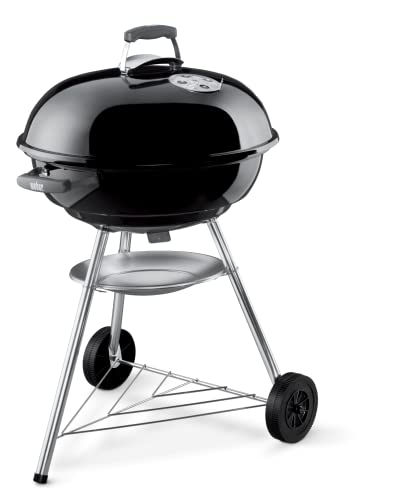
A kettle charcoal grill is a round, lidded grill on legs, with a bowl for the coals and vents to control airflow. It is simple, easy to light and good at everything from burgers to roasts and low smoking with a few tricks.
The six grills below include classic Weber kettles and rivals from other brands. We have not used these products ourselves, and each name covers several packages, so confirm the size, ash catcher and included parts on the current listing before buying.
As an Amazon Associate we earn from qualifying purchases. Links below are affiliate links, and they do not change the product information we give.
What to Look For
| Feature | Why it matters |
|---|---|
| Size | A 22 inch-class kettle is the most common choice for families |
| Ash handling | An ash catcher makes cleanup far easier |
| Vents | Smooth top and bottom vents set the heat |
| Grate | A hinged grate allows adding charcoal mid-cook |
| Work space | A table or side shelf helps when plating and prepping |
In this guide
Specs at a Glance
| Grill | Size | Notes | Extras |
|---|---|---|---|
| Weber Master-Touch | 22 inch class | Gourmet-style grate | Ash catcher and thermometer |
| Weber Performer Deluxe | 22 inch class | Side table | Gas-assisted ignition per the maker |
| Weber Original Kettle Premium | 22 inch class | Classic kettle | Ash catcher and lid thermometer |
| Char-Broil Kettleman | 22 inch class | Kettle shape | Check the listing for ash handling |
| Oklahoma Joe’s Rambler | 22 inch class | Portable-style kettle | Compact body |
| Napoleon Charcoal Kettle | 22 inch class | Classic kettle | Ash pan per the maker |
The 6 Best Kettle Charcoal Grills
Top pickBest for all-round kettle cooks
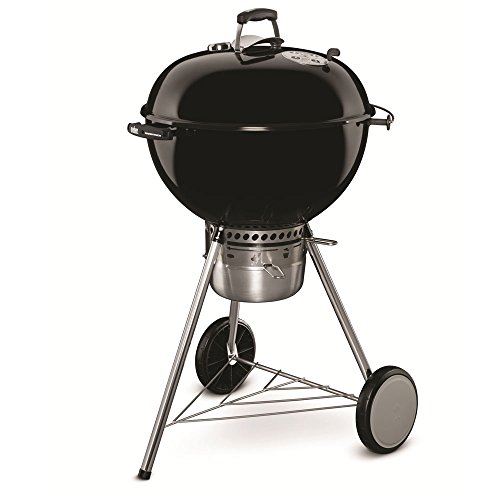
1. Weber Master-Touch Charcoal Grill 22 inch
A 22 inch-class Weber kettle with a hinged cooking grate system, a lid thermometer and an ash catcher, as described by the maker. It is a step up from the entry kettle, with a few extras that make long cooks and cleanup easier.
Suits: all-round kettle cooks. Strengths: strong features and a classic shape. Weaknesses: a larger footprint than basic kettles. Skip it if you want a bare-bones grill.
Best for cooks who like a work surface
2. Weber Performer Deluxe Charcoal Grill
A Weber kettle on a cart with a side table and a gas-assisted ignition system according to the maker. It is built for convenience, and the cart keeps the grill steady on uneven ground.
Suits: cooks who like a work surface. Strengths: a work table and easy ignition. Weaknesses: bigger and heavier. Skip it if you want a very simple grill.
View Weber Performer Deluxe on Amazon
Best for first-time kettle owners
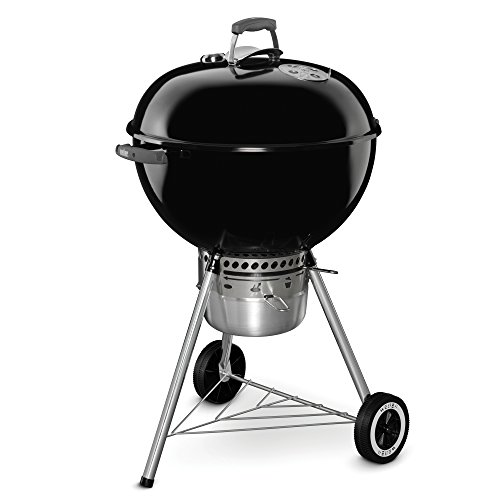
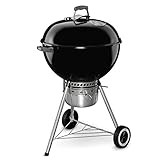
3. Weber Original Kettle Premium 22 inch
The classic 22 inch-class Weber kettle in its Premium version, with an ash catcher and lid thermometer as described by the maker. Check the listing for colors and features, because Weber sells several versions of this kettle.
Suits: first-time kettle owners. Strengths: a time-tested design. Weaknesses: fewer extras than larger models. Skip it if you want a side table.
Best for those who want an alternative
4. Char-Broil Kettleman Charcoal Grill
A Char-Broil kettle-style charcoal grill with a classic round shape. Check the listing for ash handling and vents, which can differ from Weber’s design, and look at how the lid and legs are attached.
Suits: those who want an alternative. Strengths: a familiar kettle layout. Weaknesses: less brand-name recognition. Skip it if you want Weber parts support.
View Char-Broil Kettleman on Amazon

Best for small patios
5. Oklahoma Joe’s Rambler Charcoal Grill
A compact charcoal grill from Oklahoma Joe’s with a kettle-style round body. It suits small patios, but check the listing for the cooking area and how the lid vents work.
Suits: small patios. Strengths: a compact size. Weaknesses: a smaller surface. Skip it if you cook for a crowd.

Best for those who want a different brand
6. Napoleon 22 inch Charcoal Kettle Grill
A 22 inch-class charcoal kettle from Napoleon with an ash pan and lid vents, per the maker. Check the listing for stand style and parts, and compare the ash pan with the Weber ash catcher.
Suits: those who want a different brand. Strengths: a familiar shape with extras. Weaknesses: less common than Weber. Skip it if you want a traditional Weber.
View Napoleon Charcoal Kettle on Amazon
Care and Setup
- Empty the ash catcher after each cook.
- Brush the grate while it is warm.
- Wipe the lid inside to prevent flaking grease.
- Keep vents free of ash.
- Cover the grill when not in use, and store the charcoal in a dry place.
Mistakes to Avoid
- Lighting too much charcoal for a short cook.
- Closing the lid with the vents shut.
- Using lighter fluid heavily.
- Skipping the two-zone setup.
- Letting ash build up and block the vents.
Two-Zone Fires and Vent Control
The kettle’s biggest strength is how much heat control you get from a simple design. Two vents do almost all of the work. The bottom vents feed air to the coals, and the lid vent lets hot air and smoke leave. More air means a hotter fire, and less air means a cooler one. Open both vents for searing and high heat, and close them partway to hold a lower temperature. Make small changes and wait a few minutes before adjusting again, because the kettle responds slowly.
A two-zone fire gives you a hot side and a cooler side. Pile the lit coals on one half of the charcoal grate, or split them into two banks along the sides, and leave the rest empty. Sear steaks, burgers and chops over the hot side, then move them to the cool side to finish cooking gently without burning. Thicker cuts, bone-in chicken and sausages benefit most from this approach. For indirect cooking, such as roasts, place the food on the cool side with the lid on and the vent above the food, which draws heat and smoke across it.
A few habits help you stay in control:
- Keep the lid on whenever you are not flipping food, since every lift lets heat escape.
- Set the lid vent over the food for indirect cooking so smoke passes across it.
- Close the vents to put out the coals when you are finished, and save unburned charcoal if the grill holds it.
- Use a thermometer in the lid or the food rather than guessing.
Lighting Methods and Fuel Choices
How you light the coals changes both the flavor and the convenience of cooking. A chimney starter is a metal cylinder that you fill with charcoal and light from below with paper or a fire starter. The coals ignite by themselves, and when the top ones are covered in gray ash they are ready to pour. This avoids the chemical taste that heavy use of lighter fluid can add. Other options include electric starters and solid fire cubes. Whichever you pick, follow the product directions and never add liquid fuel to hot coals.
Charcoal itself comes in two main forms. Briquettes are uniform, burn steadily and are easier to predict, which suits beginners and longer cooks. Lump charcoal is made from whole pieces of carbonized wood, lights fast and burns hotter, but pieces vary in size and burn time. Neither is better in every case. Some cooks use briquettes for steady heat and add lump for searing. Check the bag for additives if you care about it, and store charcoal in a dry place, since damp fuel is hard to light and smokes badly.
Quantity matters. A full chimney is plenty for most burger or steak cooks, while a long roast needs a steady supply of fuel. Start with a modest amount and add more as needed, using a hinged grate or by dropping lit coals through the side. Too much charcoal for a short cook wastes fuel and makes it hard to hold a low temperature.
- Chimney starters avoid heavy lighter fluid flavor.
- Briquettes: steady and predictable. Lump: hot and fast, with more variation.
- Keep fuel dry and sealed.
Low and Slow Cooking and Smoking on a Kettle
A kettle is not a dedicated smoker, but with some technique it can handle ribs, pork shoulder, chicken and other slow-cooked foods. The goal is a small, steady fire in a closed chamber. One popular approach is to bank unlit charcoal in a ring or a crescent around one side of the grate and light a few coals at the start, so the fire gradually spreads along the line. Another is to build a small fire on one side and add fuel in stages. Place the food on the opposite side from the coals, with a pan below it to catch drips, and set the lid vent above the food.
Smoke flavor comes from adding small chunks of hardwood to the coals. Chunks burn slower than chips and give steadier smoke. Start with a few pieces rather than a large pile, because too much smoke can taste bitter. Mild fruit woods suit poultry and pork, and stronger woods suit beef, but taste is personal. Wait until the smoke looks thin and pale before adding food, because thick white smoke early in the burn can leave a harsh flavor.
Temperature is the challenge. Check it regularly and make small vent changes. Wind, cold weather and the amount of food all affect how the fire behaves. Plan to be at the grill, since a kettle needs more attention than a dedicated smoker. Use a leave-in probe thermometer to watch the meat without lifting the lid.
- Use indirect heat with a drip pan beneath the food.
- Add small wood chunks, not big piles.
- Make small vent adjustments and wait to see the effect.
- Expect to add fuel on longer cooks.
Accessories and Setup That Help
A kettle works well without any extras, but a few accessories solve common problems. A chimney starter is the most useful, followed by a reliable thermometer, since many lid thermometers read the air at the top of the dome rather than at the food. Long-handled tongs and a stiff grill brush keep you safe and keep grates clean. Charcoal baskets or dividers hold the fire on one side and make two-zone cooking neater and more repeatable. A drip pan under the food catches fat and helps with indirect cooking.
Think about what the grill sits on. A stand with a work surface helps when you plate and prep, and a cart keeps the grill steady on uneven patios. Grates with a hinged section let you add coals during the cook without moving the food. Consider whether you want a lid hook or a holder so the hot lid has somewhere safe to go.
Check what is included with the model you buy. Some come with an ash catcher, a lid thermometer and a hinged grate, while others do not, and extras often cost more if bought separately. Compare the listed parts with what you need rather than assuming. Also look at the size of the cooking grate against the number of people you cook for. A 22 inch-class grill holds a lot, but remember it is a kettle, so the cooking area is round and shrinks when you set up a two-zone fire.
- Must-haves: chimney starter, long tongs and a grill brush.
- Helpful: a probe thermometer, a drip pan and charcoal dividers.
- Nice to have: a side table, a lid holder and a cover.
Rust Prevention, Cleaning and Wear Signs
A kettle lives outdoors, so moisture is its main enemy. Ash is mildly corrosive when wet, so empty the ash catcher after every cook once the ash is cold. Check it before cooking, too, because a full catcher can block airflow and restrict the vents. Brush the grates while they are still warm, and wipe them with a little oil if the manual allows it. Wipe the inside of the lid when it is cool to remove grease and soot, which can flake and look like peeling paint. It is usually just built-up carbon and grease, not the finish.
A cover keeps off rain and dust, but only put it on once the grill has cooled. Store the charcoal indoors or in a sealed bin. In humid or wet climates, check the bottom bowl for pooled water and make sure the vents are not stuck. Touch up chipped paint with high-heat paint if the maker approves, since bare metal rusts faster.
It may be time to replace the grill or its parts when you notice:
- Rust that has eaten through the bowl or lid rather than sitting on the surface.
- Vents or dampers that are warped or no longer open and close smoothly.
- A grate that is badly corroded, bent or no longer holds food safely.
- Wobbly legs or a frame that will not stay stable.
- A lid that no longer seats properly and leaks smoke around the edge.
Many parts, such as grates, ash catchers and handles, can be replaced individually if the maker sells them. Check parts availability before committing to a brand or model, especially if you want to keep the grill for many years.
Size, Vents and Lid Features Worth Comparing
Kettle grills share a round shape, but the details differ. Cooking diameter is the first number to check. A smaller kettle suits a couple or a balcony, while a larger one makes room for big gatherings and for setting up a hot zone and a cooler zone side by side. Vents control airflow, so look at how many there are and how easily they move. A lid with a built-in thermometer, a hinge or a hook to hang it makes everyday use easier.
- Cooking grate diameter and whether it is hinged for adding charcoal.
- Bottom and lid vents that open and close smoothly.
- Ash catcher design and how easy it is to empty.
- Handle material that stays comfortable near heat.
- Leg and wheel setup for moving and storage.
Direct and Indirect Cooking on a Kettle
A kettle is flexible because you can arrange the coals to suit the food. For direct cooking, coals sit under the food, which suits burgers, sausages and vegetables. For indirect cooking, coals are pushed to the sides or to one half, and the food sits away from the fire under the closed lid, which works for larger cuts and longer cooks. Learning both setups with your particular grill is one of the best skills you can develop.
| Method | Coal layout | Good for |
|---|---|---|
| Direct | Coals spread under the food | Burgers, hot dogs, vegetables |
| Indirect | Coals at the sides or one half | Roasts, whole chickens, ribs |
| Two zone | Coals on one side only | Searing plus a cooler resting area |
Charcoal Safety and Care Notes
Charcoal grills must be used outdoors in an open area, well away from structures, overhangs and anything that can burn. Never use a grill indoors, in a garage or in a tent, because burning charcoal produces carbon monoxide. Follow the manufacturer instructions for lighting, and never add lighter fluid to hot coals. Keep children and pets away, and check local fire rules, since some areas limit open flame in dry seasons.
When you finish, close the vents and let the coals burn out fully. Dispose of ash only after it is completely cold, using a metal container as official guidance recommends. Brush the grate while warm, wipe the lid and keep the kettle covered between uses. A dry, covered grill resists rust and lasts for many seasons, and an occasional wash of the lid interior removes flaking grease. Check hardware for looseness from time to time, particularly the legs and handles.
Quick Checklist for Choosing a Kettle Grill
Before you order, take a few minutes to walk through your own setup. Where will the grill live, and how will you move it? Consider the surface under the legs, because a grill should sit on level, non-flammable ground. Think about how many people you usually feed and whether you want room for a side dish on the grate.
- Choose a diameter that matches your typical guest list.
- Check that the lid fits snugly with a smooth hinge or hanger.
- Look at the ash catcher and how it comes out.
- Read how the maker advises assembly and the time it takes.
Choosing Kettle charcoal grills: The Criteria That Matter Most in Daily Use
Listings for kettle charcoal grills tend to lead with headline features, but the details that decide whether you stay happy with a purchase are usually quieter ones. Start with fit. Measure the space where the product will live, including the room needed to open doors, lift lids, pull out parts, or stand in front of it comfortably, and compare those measurements with the dimensions on the listing before anything else. A model that looks perfect on a product page can become a daily irritation if it crowds a walkway, blocks a cabinet, or leaves no sensible place for the accessories you use with it.
Next, think honestly about capacity and workload. Households tend to buy for the biggest gathering they can imagine rather than the meals and routines they repeat every week, and that mismatch cuts both ways. Too small, and you end up working in batches, reheating, or improvising workarounds that erase the convenience you paid for. Too large, and you give up storage, counter room, or yard space to a product that runs half empty most of the time and takes longer to clean. The right size for kettle charcoal grills is the one that handles your ordinary week with a little headroom, not the one built for a once-a-year event.
Materials and construction deserve a slower look than they usually get. Where listings describe the body, finish, hinges, handles, seals, or cooking and contact surfaces, read those notes as clues about cleaning and longevity rather than as decoration. Surfaces you touch every day should wipe down easily and tolerate the cleaners you already own. Parts that move, fold, latch, or bear weight should feel like the maker’s priority, because those are the points that loosen, stain, or wear first. If a listing is vague about a part you know you will handle constantly, treat that vagueness as information and compare it with a listing that explains the same part clearly.
Controls and everyday ergonomics matter just as much. Ask yourself how the product behaves in imperfect real conditions: wet or greasy hands, low light, a crowded room, a rushed weeknight. Controls you can understand at a glance, markings you can read without leaning in, and parts that go back together in only one obvious way all reduce small mistakes. For kettle charcoal grills, the best choice is rarely the one with the longest feature list. It is the one whose way of working matches your habits so closely that using it correctly feels like the path of least resistance.
Kettle charcoal grills in Real Life: Four Situations Worth Picturing Before You Buy
Picture an ordinary weeknight first. You are tired, time is short, and the product has to earn its place without a long setup ritual or a complicated cleanup afterward. In that moment, the qualities that matter are fast readiness, predictable results, and parts that can be dealt with in a few minutes at the sink or with a cloth. When you compare the picks in this guide, ask which one you would still choose on your most tired evening, because that answer usually predicts long-term satisfaction better than any feature comparison made in a relaxed weekend mood.
Now picture the bigger occasion: guests, a family gathering, or a weekend project where the product runs longer, gets used back to back, or has to handle more than usual. This is where headroom, stability, and heat or airflow management show their value. A model that is perfectly adequate for two people can feel stretched when the pace picks up and there is no pause between rounds. You do not need to buy purely for this scenario, but it is worth knowing which pick in the list gives you the most graceful step up when the workload grows, and which one is really a smaller-scale specialist.
A third situation is the small or shared space: a compact kitchen, a narrow patio, an apartment balcony, or a room that has to serve several purposes. Here, footprint, storage, noise, and how the product behaves around other people matter as much as raw performance. Think about where it will sit when it is not in use, whether it can be moved by one person, and how much clearance it needs around it to work safely and comfortably. Many returns and regrets with kettle charcoal grills come not from poor quality but from a product that never had a natural home in the space it was bought for.
Finally, picture the routine a few months from now, when the novelty has worn off. The filters, seals, trays, grates, baskets, or surfaces that needed attention will have needed it several times. The storage spot you chose will have been used dozens of times. The shortcut you discovered will have become your habit. Buying well means choosing the model whose maintenance rhythm and everyday handling you can live with on that ordinary future day, not just the one that excites you on delivery day. A product that stays pleasant to live with is the one that keeps getting used, and regular use is what turns a purchase into value.
Setup and First Use: Getting Kettle charcoal grills Off to a Good Start
When your choice arrives, resist the urge to put it straight to work. Unpack it where you have room to lay everything out, check each part against the maker’s parts list, and look over seams, edges, and fittings before anything gets hot, wet, plugged in, or filled. Small shipping damage and missing accessories are far easier to sort out before first use than after. Keep the packaging until you have run the product once and confirmed that everything works as described, and photograph the unboxing if anything looks questionable, so you have a clear record if you need to contact the seller.
Placement is the next decision, and it deserves more care than it usually gets. Follow the maker’s guidance on clearance, ventilation, level surfaces, and distance from walls, curtains, cabinets, or other heat and moisture sources, because those instructions are written around how the product actually behaves. Check that cords, hoses, vents, or doors can move the way they need to without being pinched or forced. If the product will live somewhere different from where it is used, walk that route once with your hands full in mind, and make sure the move is realistic rather than a chore you will start avoiding.
Most kettle charcoal grills benefit from a gentle first run before you rely on them for an important meal or occasion. Read the manual’s first-use steps, wash or wipe the parts the maker says to prepare, and run the product through a simple, low-stakes task so you can learn its sounds, smells, timing, and handling without pressure. This is also the moment to note the small things: how the display or markings read in your light, how parts align when you reassemble them, and where drips, steam, crumbs, or ash tend to collect in your particular setup. Ten unhurried minutes now prevent most first-week frustrations.
Keep a simple note of what works during your first few uses: settings you chose, quantities, timing, and the result. It sounds old-fashioned, but a short record on your phone turns guesswork into a pattern surprisingly quickly, especially with products where small adjustments change the outcome. Within a few sessions you will know your own defaults instead of relearning them each time. You will also have a useful baseline if performance ever changes later, because you can compare what the product does now with what it did when it was new and working exactly as expected.
Cleaning, Care and Storage for Kettle charcoal grills
Regular light cleaning beats occasional heroic cleaning with almost every product in this category. After each use, once things have cooled or settled as the maker directs, remove loose residue, wipe the surfaces that collected splashes or dust, and let parts dry fully before you close, cover, or put anything away. Trapped moisture is a quiet cause of odors, staining, and corrosion, and it usually comes from storing a product that looked dry on the outside while seams, seals, and undersides were still damp. A few extra minutes of air drying protects both hygiene and finish.
Schedule a deeper clean around how often you actually use the product rather than by the calendar alone. Heavy users may need to descale, degrease, empty, brush out, or wash removable parts far more often than occasional users, and the maker’s manual is the right guide for which cleaners and tools are safe. Avoid abrasive pads, harsh chemicals, or soaking any part the maker does not clearly describe as washable, and never use water around electrical parts beyond what the instructions allow. When in doubt, a soft cloth, warm water, and patience will handle most jobs without risking the finish or the seals.
Storage is part of care, not an afterthought. Keep kettle charcoal grills in a dry place where air can circulate, with cords loosely coiled rather than tightly wound, small accessories kept together so they are not lost, and covers or cases used only on a clean, fully dry product. If the product lives outdoors or in a garage, check it after long gaps: look for pests, dust buildup, stiff or cracked seals, and anything that has shifted since you last used it. A quick inspection before a busy cooking day is far better than discovering a problem with guests already on their way.
Learn the early signs that something needs attention. New noises, slower performance, uneven results, lingering odors, loose fittings, or controls that feel different from before are all messages, and they are cheapest to act on early. Start with the simple checks the manual lists: correct assembly, clean filters or vents where fitted, clear passages, and parts seated properly. Many apparent faults are really maintenance asking to be done. If a problem persists after those checks, contact the maker with your notes about when it started and what changed, because that detail helps support teams help you faster.
How the Picks Above Compare When You Live With Them
The picks in this guide are not ranked by a single score, because the differences that matter most only appear in use. Take Weber Master-Touch Charcoal Grill 22 inch and Weber Performer Deluxe Charcoal Grill, the first two options above. On paper they may look close, but the descriptions point to different priorities: one leans toward buyers who want the most established or fully featured route, while the other suits people who prefer a simpler or more focused tool for the same job. Neither reading is wrong. The useful question is which set of strengths you will actually exercise every week, and which weaknesses you are genuinely willing to live with rather than hoping you will not notice.
Move down the list and the pattern continues. Weber Original Kettle Premium 22 inch makes its case in the guide through a particular strength described in its section above, and that strength matters most if your cooking or routine regularly creates the situation it is built for. Char-Broil Kettleman Charcoal Grill, by contrast, is the kind of pick whose appeal grows on buyers who value straightforward day-to-day handling over standout features. When two descriptions sound similar, reread the suits and skip-it notes in each section: those short lines are the most honest summary in the whole guide of who each product is really for.
If your shortlist includes Oklahoma Joe’s Rambler Charcoal Grill or Napoleon 22 inch Charcoal Kettle Grill, compare them on ownership rather than on first impressions. Think about the size of load each will usually carry in your home, the space each needs, and how much cleaning each design implies after a typical session. A pick that looks like the exciting option today can become the one you avoid if its upkeep does not fit your routine, while a plainer pick that is quick to clean and easy to store quietly becomes the household favorite. The guide’s per-product notes on strengths and limitations are written to help exactly this comparison, so weigh them more heavily than the order the products happen to appear in.
A practical way to decide is to score your own priorities before you look at the list again. Write down your top three: perhaps capacity, easy cleaning, compact storage, simple controls, or suitability for a particular kind of cooking. Then read only the sections of the two or three picks that match those priorities and see which description sounds most like your household. Buyers who decide this way rarely regret the choice, because the product was selected against their real life rather than against an abstract idea of the best. If two picks still tie, choose the one whose everyday handling you prefer, since you will repeat that handling hundreds of times.
Buying Mistakes That Lead to Returns and Regrets
The most common mistake with kettle charcoal grills is measuring once, casually, or not at all. Doorways, counter depth, cabinet height, patio gates, and storage cupboards all have a say in whether a product works in your home, and listings cannot know any of them. Measure the space, measure the route the product takes to reach it, and leave honest clearance rather than planning for a perfect squeeze. The second most common mistake is buying for features instead of habits: paying for capacity, programs, or accessories that sound appealing in a listing and then go untouched for the life of the product.
A third mistake is ignoring the unglamorous requirements. Some products in this category need ventilation, a particular kind of outlet or fuel, a level surface, drainage, headroom, or a safe distance from things that heat, steam, or splashes can damage. These requirements are in the manual and usually hinted at in the listing, but they are easy to skim past when you are focused on the headline features. Check them before you order, not while the box is open on your floor. Discovering a basic mismatch after delivery turns a good product into a bad purchase through no fault of its own.
- Skipping the manual’s setup and first-use steps, then judging the product on a poor first result.
- Choosing by headline features alone instead of by cleaning, storage, and daily handling.
- Forgetting to check what is included in the box, and assuming accessories from photos are standard.
- Placing the product somewhere convenient rather than somewhere that meets its clearance and ventilation needs.
- Waiting until a special occasion to use a new product for the first time.
None of these mistakes is about intelligence; they are about pace. Listings are designed to move you quickly, while good ownership decisions are made slowly, with a tape measure, the manual, and an honest picture of your own routine. Give this purchase that slower half hour. With kettle charcoal grills, the difference between a product you recommend to friends and one you quietly stop using is almost always decided before the order is placed, in the fit between the product and the life it is about to join.
Living With Kettle charcoal grills Over the Long Term
Ownership changes character after the first few months. Routines settle, shortcuts appear, and you learn which of the product’s qualities you lean on and which you barely touch. That knowledge is useful beyond this one purchase: it tells you what to prioritize if you ever replace or add to what you own, and it helps you advise friends honestly instead of repeating listing language. If a feature you paid for has gone unused all season, note it without regret and let it sharpen the next decision rather than souring this one.
Seasons also change what you ask of kettle charcoal grills. Heavy-use periods reward the preparation habits described earlier in this guide: a clean, inspected, correctly placed product at the start of a busy stretch prevents most mid-season problems. Quieter periods are the right time for the deeper clean, the accessory sort-out, and the honest check of seals, fittings, and surfaces while there is no pressure to use the product that day. Treating the off-season as maintenance time, rather than forgetting the product entirely, is one of the simplest ways owners extend useful life without spending anything.
Finally, keep the paperwork and your own notes together: the manual, proof of purchase, and the short record of settings and routines that worked for you. If you ever contact the maker, sell the product on, or hand it to someone else in the household, that small bundle answers most questions immediately. Good ownership of kettle charcoal grills is mostly this kind of quiet administration: nothing dramatic, just a product that is ready when you reach for it, season after season, because someone paid attention at the unglamorous moments.
Kettle Charcoal Grill FAQ
What size is best for a family?
A 22 inch-class kettle suits most families.
Can a kettle smoke meat?
Yes, with a two-zone fire and a few wood chunks, though it takes practice.
Do I need a chimney starter?
It is not required but is a popular way to light coals without lighter fluid.
Is a kettle hard to clean?
Not usually, especially with an ash catcher.
How much charcoal should I light?
Start with a modest amount, such as a chimney starter filled partway, and add more as needed. A short cook of burgers needs far less than a long roast.
What is the difference between lump charcoal and briquettes?
Briquettes are uniform and burn steadily, while lump charcoal lights faster and burns hotter but varies more. Many cooks choose based on the cook they are planning.
Why is my kettle running too hot?
Too much air or fuel is the usual reason. Close the bottom vents partway, keep the lid on and use less charcoal next time.
Where should I put the lid vent for indirect cooking?
Many cooks set it over the food, so heat and smoke are drawn across it. Check your recipe or manual for the setup that suits the dish.
Is rust on the inside of the lid normal?
Flaking on the lid is often built-up grease and carbon rather than peeling paint, and it can be wiped away. Rust that eats through metal is a reason to replace the part.
Can I leave charcoal in the grill after cooking?
Close the vents to extinguish it and let it cool completely. Unburned charcoal can be reused if it stays dry, but ash should be removed before the next cook.
Should I use lighter fluid?
A chimney starter or fire starter cubes avoid the taste risk and are safer. If you do use lighter fluid, follow the label, let it burn off fully and never add it to lit coals.
More Questions About Kettle charcoal grills
How long should kettle charcoal grills last with normal home use?
Longevity depends far more on care and frequency of use than on any single feature. Products in this category that are cleaned regularly, stored dry, and used within the maker’s guidance generally serve a household for many seasons, while neglected seals, vents, and surfaces shorten that life considerably. Follow the manual’s maintenance schedule, deal with small issues early, and check the listing and maker’s pages for the current warranty terms, since those details can change and are the authoritative source if you ever need support.
What should I check first if results are disappointing?
Start with setup rather than assuming the product is at fault. Confirm that everything is assembled and seated as the manual describes, that vents, filters, or passages are clean, and that placement gives the product the clearance it needs. Then repeat a simple task you know well, changing only one variable at a time, and note the result. Many disappointing first results trace back to a rushed first use, an overloaded load, or a skipped preparation step, and they improve quickly once the routine settles.
Are accessories and replacement parts easy to get?
It varies by maker, so check before you buy if accessories matter to you. Established brands usually list compatible accessories and common replacement parts on their own pages, while lesser-known models may rely on generic alternatives. Look at what is included in the box as described on the listing, note which extras the photos show that are sold separately, and factor the accessories you genuinely need into your comparison rather than discovering the extra purchases after delivery.
Can I use kettle charcoal grills in a small home or apartment?
Often yes, provided you choose with the space in mind. Measure carefully, consider where the product will be stored as well as where it will be used, and pay attention to noise, steam, heat, or odors if you share walls or live in an open-plan layout. Smaller or simpler picks in this guide may suit compact homes better than the largest options. Also check any building or lease rules that apply to the kind of product you are considering, since those rules, not the product itself, occasionally decide the question.
What is the best way to clean kettle charcoal grills after a messy session?
Let everything cool or settle as the maker directs, remove loose residue first, then wash or wipe parts in the order the manual recommends, working from the least soiled areas to the dirtiest. Use only cleaners and tools the maker approves for the surfaces involved, rinse or wipe away cleaner residue, and dry every part fully before reassembly or storage. If a stain or odor survives a normal clean, repeat a gentle clean rather than reaching for something abrasive that could damage the finish and make the next mess stick harder.
How do I decide between two very similar picks in this guide?
Reread the two sections and list the differences that would still matter after a month of ownership: size in your space, how each is cleaned, how each is stored, and the specific strength each description claims. Ignore differences you would only notice on the first day. Then choose based on your most common routine rather than your most ambitious one. If the tie persists, the pick whose handling, controls, or upkeep sounds simpler in its description is usually the one that gets used more, and used more is what makes it the better buy.
The Short Version
For a premium Weber kettle, the Weber Master-Touch. For a kettle with a work table, the Weber Performer Deluxe. For the classic Weber kettle, the Weber Original Kettle Premium. For a Char-Broil kettle, the Char-Broil Kettleman. For a compact kettle, the Oklahoma Joe’s Rambler. For a Napoleon kettle, the Napoleon Charcoal Kettle.