An electric convection oven uses a fan to move hot air around the food, which helps baking, roasting and toasting finish more evenly and often a little faster. Countertop models are the most common, and many also handle air frying.
The six ovens below are well-known countertop models. We have not used these products ourselves, so please confirm the interior size, rack count and accessories on the current listing before buying. Measure your counter and the clearance above it.
As an Amazon Associate we earn from qualifying purchases. Links below are affiliate links, and they do not change the product information we give.
What to Look For
| Feature | Why it matters |
|---|---|
| Interior size | Check whether a pizza or a sheet pan actually fits inside, since listed capacities can be generous |
| Fan control | Adjustable convection speed helps with delicate bakes |
| Functions | Toast, bake, broil and air fry presets save guesswork |
| Controls | Dials are simple; digital panels offer more precision |
| Cleanup | A crumb tray and a nonstick interior make cleanup easier |
In this guide
Specs at a Glance
| Oven | Type | Size class | Notes |
|---|---|---|---|
| Breville Smart Oven Pro | Countertop convection | Large | Element IQ control |
| Cuisinart TOB-260N1 | Countertop convection | Large | Dial controls |
| Oster Extra Large Digital | Countertop convection | Extra large | Digital panel |
| Hamilton Beach Sure-Crisp | Countertop convection | Mid to large | Air fry function |
| BLACK+DECKER Extra Wide | Countertop convection | Extra wide | Check the model |
| Ninja Foodi Digital Air Fry Oven | Flip-up convection | Mid to large | Flips up to store |
The 6 Best Electric Convection Ovens
Top pickBest for avid home cooks
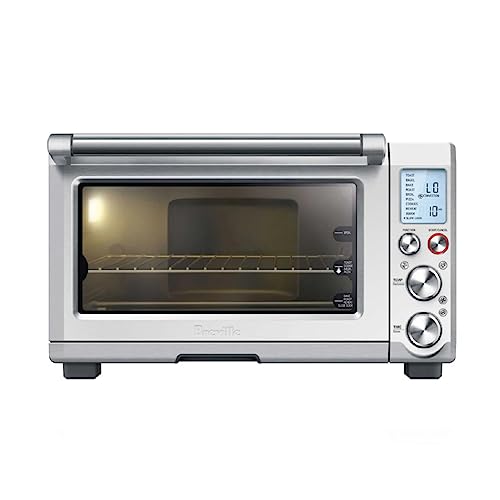
1. Breville Smart Oven Pro
The Smart Oven Pro is a long-running Breville convection oven with several presets and adjustable controls, and it handles toast, bakes and roasts. It is a favorite of home cooks who want a capable small oven.
Suits: avid home cooks. Strengths: precise controls and strong reviews. Weaknesses: costs more than basic models. Skip it if you want the simplest oven.
Best for everyday family cooking
2. Cuisinart Chef’s Convection Toaster Oven
A stainless Cuisinart countertop oven with convection, a pizza-friendly interior and classic dial controls. Confirm the capacity on the current listing.
Suits: everyday family cooking. Strengths: dial controls and a large interior. Weaknesses: bulky on the counter. Skip it if you want a digital panel.
View Cuisinart Chef’s Convection Toaster Oven on Amazon
Best for big batches and families
3. Oster Extra Large Digital Countertop Oven
Oster sells an extra large digital convection oven that can hold bigger pans and multiple racks. Check the listing for the exact interior size and the number of racks.
Suits: big batches and families. Strengths: a roomy interior. Weaknesses: takes up lots of space. Skip it if you have a small counter.
View Oster Extra Large Digital Countertop Oven on Amazon
Best for air fry and bake in one
4. Hamilton Beach Sure-Crisp Air Fry Toaster Oven
Hamilton Beach pairs convection with an air fry setting in this countertop oven, using a basket or tray depending on the version. It suits households that want both functions in one appliance.
Suits: air fry and bake in one. Strengths: versatile settings. Weaknesses: details vary by version. Skip it if you want a plain toaster oven.
View Hamilton Beach Sure-Crisp Air Fry Toaster Oven on Amazon

Best for family cooking on a budget
5. BLACK+DECKER Extra Wide Convection Oven
An extra wide countertop oven from BLACK+DECKER with convection. It is built to fit a large pizza or a family-size tray, so check the interior size.
Suits: family cooking on a budget. Strengths: a wide interior. Weaknesses: less refined controls. Skip it if you want a premium finish.

Best for small kitchens
6. Ninja Foodi Digital Air Fry Oven
Ninja’s flip-up oven offers convection and air fry modes, and it flips up against the wall to save counter space. Confirm the capacity on the listing.
Suits: small kitchens. Strengths: a space-saving flip design. Weaknesses: specs vary by model. Skip it if you want a traditional layout.
View Ninja Foodi Digital Air Fry Oven on Amazon
Care and Setup
- Empty the crumb tray after each use to avoid smoke.
- Let the oven cool before wiping the interior, and use a soft cloth on any nonstick coating.
- Keep space around the oven for airflow, and never push it flush against the wall.
- Check racks and trays for warping with heavy use.
Mistakes to Avoid
- Putting foil over the entire rack and blocking airflow.
- Not lowering recipe temperatures for convection.
- Crowding the pan so air cannot circulate.
- Skipping a size check before buying, then finding the sheet pan does not fit.
Oven Types: Toaster, Convection and Air Fry Combinations
Countertop ovens blur together in marketing, so it helps to separate the main types. A basic toaster oven has heating elements and no fan, and it suits toast, reheating and small bakes. A convection toaster oven adds a fan to circulate air, which speeds browning and helps with evenness. An air fry oven is a convection oven with a stronger fan or a different airflow design and often comes with a basket or mesh tray to promote crisping. Many models combine these in one body, with separate modes for toast, bake, roast, broil and air fry.
The key differences lie in fan strength, element layout and interior shape. A strong fan and an open tray give a crisp, fried-style surface on foods such as wings and potatoes, while a gentler fan suits cakes and delicate bakes. Ovens with several elements top and bottom can adjust browning, whereas simpler ones heat from fewer points and may brown unevenly. Dial controls are straightforward and durable, while digital panels offer precise settings, presets and timers, though they can be less intuitive and may fail sooner.
- Mostly toast and reheating: a basic or simple convection model is enough.
- Baking and roasting: look for a fan you can adjust and a roomy interior.
- Crisping and frying-style foods: an air fry mode with a basket or mesh tray.
- Tight counters: consider a flip-up or compact design.
Decide which tasks you will do weekly, and pay for those features rather than every mode on the dial.
Checking Interior Fit Before You Buy
Capacity claims on listings are often given in terms of pizza size, toast slices or a roast chicken, and these are only rough guides. The real question is whether your own pans and dishes fit. Measure the pans you use most, including handles, and compare them with the interior width, depth and height stated on the listing or the manual. A quarter-sheet pan fits many ovens, while a full half-sheet pan may not. Tall dishes, such as a casserole or loaf pan, may touch the upper heating elements in a low-roofed oven.
Look at the rack positions as well. More positions give flexibility, since you can move food closer to or farther from the elements to adjust browning. Check whether the racks are sturdy and can slide out partway, as this makes handling hot dishes safer. If you plan to cook with two trays at once, check whether the oven has spacing for both, and remember that a tightly packed oven gives uneven results because air cannot circulate.
- Measure pans, pizza stones and casserole dishes you own.
- Check the clearance between the rack and the top element.
- Note the outside dimensions, the door swing and the cord length.
- Check that there is enough room above and behind the oven for heat to escape.
Outside size matters too. A roomy interior makes a large body, so measure the counter, the cabinet above and the space for the door before ordering.
Power Draw, Circuits and Placement
Countertop ovens draw a lot of electricity, because they use high-wattage elements. Check the wattage on the listing and compare it with the circuit you plan to use. A kitchen circuit that also feeds a kettle, microwave or toaster may trip when a large oven is running at the same time. Plug the oven directly into a wall outlet, and avoid extension cords and power strips unless the manual allows them. If you notice that breakers trip, move the oven to a different circuit, or avoid running other high-power appliances at the same time.
Placement affects both safety and performance. Put the oven on a stable, level, heat-resistant counter with clearance on the sides, back and top, as stated in the manual. Heat escapes from the top and sides, so do not push it against a wall or place it under a cabinet that could be damaged. Keep it away from the edge of the counter, the sink and curtains, and make sure the cord does not hang where it can be pulled or touch the hot oven surface. Do not store items on top while it is running.
- Check the plug type and voltage.
- Keep the vents clear for airflow.
- Use oven mitts, since the door, glass and outer panels can become hot.
- Unplug the oven when not in use for long periods.
In an apartment or a rental, check building rules for appliances and the capacity of your wiring.
Everyday Cooking: Roasting, Reheating and Air Frying
A convection oven earns its counter space with daily tasks more than special occasions. It heats up faster than a full-size oven, which saves time and energy for small meals. It excels at roasting vegetables, cooking chicken pieces, baking small casseroles and reheating leftovers so they stay crisp instead of soggy, as a microwave might leave them. Frozen foods such as fries and nuggets crisp well in a convection or air fry setting, as the moving air removes surface moisture.
For roasting, spread food in a single layer on a shallow tray, so air can reach every surface. Crowding creates steam and prevents browning. Use a rimmed tray to catch drips, and avoid covering the whole rack with foil, because it blocks airflow and can interfere with the fan. For reheating, use a lower temperature and check often, since small ovens can overcook leftovers quickly. For air frying, shake or turn food halfway through, and use the basket or tray the maker provides.
- Pat food dry before roasting for better browning.
- Use a small amount of oil, as the recipe suggests, to help crisping.
- Check food earlier than a recipe says, since convection cooks faster.
- Use a thermometer to check that meat reaches a safe internal temperature.
Some ovens include extra modes such as dehydrate, proof or slow cook, which can be handy for variety, but make sure the core functions are strong first.
Cleaning, Wear and When to Replace
Because countertop ovens are small and cook greasy food at high heat, they collect residue fast. Unplug and cool the oven, then remove the crumb tray and empty it after every few uses. Wipe the interior with a damp cloth and mild soap. A nonstick or enamel interior needs a soft cloth, since abrasive pads scratch it. Wash racks, trays and baskets by hand or follow the manual on dishwasher use. Wipe the door glass, and take care not to spray cleaner into vents or controls.
Built-up grease can smoke, give food off flavors and become a fire risk, so do not let it accumulate on the elements or the interior walls. Check that the fan is free of grease and lint, as these can slow it down, but do not open sealed panels yourself. Look at the door gasket or seal for wear, since a loose door loses heat and cooks unevenly.
Signs it is time to replace:
- The oven no longer reaches the set temperature or heats unevenly, even when clean.
- An element is cracked, blistered or fails to glow.
- The fan is noisy, wobbling or stops turning.
- The door does not close tightly or the glass is cracked.
- The controls are unreliable, or the cord and plug are damaged.
Check whether replacement racks, trays and baskets are sold, since these wear out sooner than the oven.
Convection Versus Standard Bake: Adjusting Your Recipes
A fan moves hot air around the food, and that changes how quickly things cook and brown. Many recipes written for standard ovens need a small adjustment when you move to a countertop convection model. Some makers suggest lowering the temperature a little or shortening the time, while others build that tweak into the controls. The manual that comes with your oven is the best guide, and it is worth reading before the first roast.
Because countertop cavities are small, the heating element sits close to the food. Pans placed near the top will brown faster than those in the middle, so rotate trays halfway through when a recipe calls for even color. Keep an eye on the first few batches and note what works, because every oven has its own habits.
Accessories You Will Actually Use
Most models arrive with a wire rack, a baking pan and a crumb tray, and a few add an air fry basket. Before buying extras, find out what already fits. The table below lists common accessories and the jobs they suit.
| Accessory | Handy for | Check first |
|---|---|---|
| Wire rack | Toast, reheating, crisp finishes | Position slots in the oven |
| Baking pan | Cookies, vegetables, sheet-style meals | Whether it fits flat inside |
| Air fry basket | Crisp snacks with little oil | Whether it nests on the pan |
| Small cake pan or loaf pan | Brownies, bread, casseroles | Clearance from the top element |
| Oven mitts | Handling hot trays | Length that covers your wrists |
Measure the interior before you buy any bakeware, and confirm that the pan clears the heating elements with room to spare. Only use cookware the maker says is suitable for the oven.
Who Gains the Most From a Countertop Convection Oven
Small households often find that a countertop model handles most of their meals without warming a full-size range. Students, couples in apartments and people with small kitchens are natural fits. It also suits families who want a second oven for holidays, since extra capacity helps when side dishes need to cook at the same time as the main course.
If you regularly roast large birds or bake for a crowd, check the interior carefully, because countertop space is limited. Likewise, a household that rarely cooks beyond toast may find a smaller toaster oven more sensible. Honest thinking about your habits will serve you better than any feature list.
Placement and Day-to-Day Care
Give the oven plenty of room. Most makers ask for open space around the sides, back and top, so heat can escape safely, and they advise against placing the unit under low cabinets. Use a counter that tolerates warmth and avoid putting the appliance directly beside items that could be damaged by radiated heat.
After the oven cools, empty the crumb tray and wipe the interior as the manual suggests. Keep the glass door clean with a soft cloth so you can watch your food without opening it. If you notice damage to the cord, a loose door or sparks, stop using the oven and contact the maker or a qualified technician for help.
A Short Checklist for the Day the Oven Arrives
- Remove all packing film, cardboard and foam from inside the cavity and around the elements.
- Wash the rack, pan and any basket with warm soapy water, then dry them thoroughly.
- Read the manual’s note about a first run, since some makers suggest running the empty oven briefly to clear any manufacturing smell.
- Open a window or run a kitchen fan during that first run.
- Learn the buttons or dial before cooking, especially the difference between bake, convection and air fry modes.
- Set a timer every time until you know how fast the oven works.
These few minutes of preparation make the first meal calmer and help you spot any problem early, while the return window is still open.
Choosing a Electric convection oven Around How You Really Cook
With a electric convection oven, the purchase decision is really three decisions at once: the cooking surface, the size and layout, and the installation it demands . Start with how you cook. Large pans, stockpots, and multi-pan meals need a layout where big cookware fits without crowding, while a single person reheating and simmering needs far less. Look at the burner or element arrangement described for each pick above and picture your three most-used pans sitting on it at once. If they do not fit on paper, they will not fit in life.
Size and fit come next, and they are unforgiving. For countertop models, measure the counter depth and the clearance under cabinets. For built-in cooktops, wall ovens, and ranges, measure the existing cutout or cavity, the electrical supply, and the route the appliance takes into the kitchen, including doorways. The picks above are grouped by size class in their descriptions, but the exact dimensions on the listing and in the installation guide are what decide whether installation day is calm or chaotic.
Controls shape daily satisfaction more than most specifications. Knobs are easy to use with wet or greasy hands and give immediate feedback. Touch controls look sleek and wipe clean but can be fussy with damp fingers and sometimes need a deliberate press that frustrates impatient cooks. Think about who cooks in your household, whether children can reach the controls, and whether features such as control locks, timers, or convection modes match how you will genuinely cook rather than how the brochure imagines you might.
Finally, weigh the running reality: how the surface cleans, how the oven cavity handles your largest trays, and what the appliance asks of your electrical system. Many of the models in this guide are significant electrical appliances that need an appropriate circuit, and that is a question for the installation guide and, where needed, a qualified electrician. A electric convection oven that fits your wiring, your pans, and your cleaning tolerance will satisfy you long after headline features are forgotten.
Where a Electric convection oven Earns Its Keep
Everyday family cooking
For most households the test is a weeknight: pasta water boiling, a sauce simmering, and something in the oven at the same time. Layouts that let you run a large pot and a frying pan together without handles colliding are worth more than an extra specialty mode. If this is your main use, favour the picks whose descriptions emphasise straightforward controls and easy-clean surfaces.
Small kitchens and secondary cooking spaces
Countertop and compact models earn their keep in small flats, annexes, offices, and as overflow capacity during holidays. Check that the surface beneath is stable and heat-safe, that there is room for steam to escape, and that the unit can be stored without its cord being crushed. A compact electric convection oven that is easy to get out gets used; one buried in a cupboard does not.
Baking and roasting enthusiasts
If baking is your priority, oven behaviour matters most: how evenly the cavity holds temperature, how the racks are arranged, and whether your favourite trays and Dutch ovens physically fit. Convection, where a pick offers it, helps air circulate for more even results across trays. Measure your biggest roasting tin before you fall for any model, because cavity dimensions vary more than exterior ones suggest.
Replacing an existing appliance
A replacement purchase should start from the old appliance: its cutout, its electrical supply, and its venting arrangement if it has one. Matching those constraints narrows the field quickly and honestly. Take photographs of the existing installation and the rating plate before you shop, and compare them against the installation requirements in the listings above.
Setup, Placement and Safety Basics
Installation planning for a electric convection oven begins with the manual, not the toolbox. Built-in and freestanding electric cooking appliances commonly need a dedicated electrical supply sized to the unit, correct clearances from combustible surfaces, and a level, stable base. If any of that is uncertain in your kitchen, a qualified electrician and, for built-ins, an experienced installer are money well spent. Keep the packaging and fittings until the appliance has run through its first full cooking session and you are sure everything works.
For countertop models the setup is simpler but not thoughtless. Place the unit on a flat, heat-resistant surface with space around it for ventilation, keep the cord away from the cooking surface and the sink, and never run it under low cabinets where rising heat and steam collect. Before the first meal, wash removable parts as directed, wipe the cooking surface, and run the appliance briefly as the manual suggests to clear any new-appliance smells.
Whatever the type, do a deliberate first check: every element or burner heating, the oven light and fan behaving if fitted, controls responding as expected, and no unusual smells beyond the faint newness that the manual warns about. Register the appliance if the manufacturer offers it, keep the receipt and manual together, and photograph the rating plate so model details are at hand if you ever need parts or service.
Getting the Best From It Day to Day
Electric cooking rewards a slightly different technique from gas. Elements and ovens respond more gradually, so preheat properly, give pans time to come up to temperature, and remember that a heavy pan holds heat after the control is turned down. For boiling and frying, matching the pan base to the element size wastes less energy and heats more evenly. On smooth tops, lift pans rather than sliding them, both to protect the surface and to avoid dragging grit across it.
In the oven, positioning matters. Use the rack levels the manual suggests for baking, roasting, and grilling, and leave space around dishes so air can circulate, especially with convection cooking. Avoid lining cavities or covering racks in ways the manufacturer warns against, since blocked airflow changes results and can create hot spots. An inexpensive oven thermometer is a useful reality check while you learn how your particular electric convection oven behaves compared with the dial.
Build a few repeatable habits: preheat with the pan for searing, bring liquids to the boil on a higher setting then drop to a simmer rather than leaving them at a rolling boil, and use residual heat at the end of cooking where the appliance design allows it. Within a few weeks these habits make electric cooking feel precise rather than slow, because you are working with the appliance’s rhythm instead of against it.
Cleaning, Care and Storage
Cleaning a electric convection oven is easiest when it is little and often. Wipe spills once the surface is cool enough to touch safely, because sugary or acidic spills left to bake on become far harder to remove. For smooth glass-ceramic surfaces, use the type of cleaner the manufacturer recommends and a soft cloth or suitable pad; for coil elements and drip areas, remove and wash the parts the manual identifies as removable. Never pour cold water onto a hot surface, and keep water away from controls and electrical connections.
Oven cavities benefit from the same philosophy. Wipe the door seal and the area around it, clean the glass with appropriate products, and use any self-cleaning function strictly as the manual directs, with the room ventilated and pets and children elsewhere. Racks usually clean more easily out of the oven in hot soapy water. If your model has filters, as downdraft designs do, treat them like range hood filters: wash them on the schedule the manual sets out, because a clogged filter quietly undermines the whole venting idea.
Long-term care is mostly inspection. Check cords and plugs on countertop models, look at seals and hinges on ovens, and watch for elements that glow unevenly or controls that become erratic, which are prompts for professional attention rather than DIY experimentation. Keep the area beneath and behind freestanding appliances reasonably clean, since crumbs and grease attract pests and nobody wants to discover that during a repair visit.
How the Picks in This Guide Compare
The six picks above are not six versions of the same idea, and comparing them well means comparing them against your own routine rather than against each other in the abstract. Work through them in the order presented, and for each one ask the same three questions: does its style and size fit my space, does the way it works fit the food I cook most, and would its cleaning and storage routine fit my patience? A electric convection oven that scores well on all three for your household is a better buy than one that wins on a single headline feature.
Consider the Breville Smart Oven Pro. Its description above sets out who it suits and where its limits lie, so measure it against your biggest regular cooking occasion and your smallest everyday one. If it handles the big occasion comfortably but feels oversized for the everyday, decide which of those two days matters more to you, because that judgement, not the feature list, is what owners end up living with.
Consider the Cuisinart Chef’s Convection Toaster Oven. Its description above sets out who it suits and where its limits lie, so measure it against your biggest regular cooking occasion and your smallest everyday one. If it handles the big occasion comfortably but feels oversized for the everyday, decide which of those two days matters more to you, because that judgement, not the feature list, is what owners end up living with.
Consider the Oster Extra Large Digital Countertop Oven. Its description above sets out who it suits and where its limits lie, so measure it against your biggest regular cooking occasion and your smallest everyday one. If it handles the big occasion comfortably but feels oversized for the everyday, decide which of those two days matters more to you, because that judgement, not the feature list, is what owners end up living with.
Consider the Hamilton Beach Sure-Crisp Air Fry Toaster Oven. Its description above sets out who it suits and where its limits lie, so measure it against your biggest regular cooking occasion and your smallest everyday one. If it handles the big occasion comfortably but feels oversized for the everyday, decide which of those two days matters more to you, because that judgement, not the feature list, is what owners end up living with.
Consider the BLACK+DECKER Extra Wide Convection Oven. Its description above sets out who it suits and where its limits lie, so measure it against your biggest regular cooking occasion and your smallest everyday one. If it handles the big occasion comfortably but feels oversized for the everyday, decide which of those two days matters more to you, because that judgement, not the feature list, is what owners end up living with.
Consider the Ninja Foodi Digital Air Fry Oven. Its description above sets out who it suits and where its limits lie, so measure it against your biggest regular cooking occasion and your smallest everyday one. If it handles the big occasion comfortably but feels oversized for the everyday, decide which of those two days matters more to you, because that judgement, not the feature list, is what owners end up living with.
If you are torn between two of the picks, choose by the routine you will repeat most often: the setup you will do weekly, the parts you will wash, and the space the electric convection oven will occupy when it is not in use. Features impress on the first day; routines decide satisfaction in the sixth month.
Problems Worth Knowing About
An element heats unevenly or not at all
On coil models, an element that is not seated properly in its socket is a common and simple cause, so switch off, let everything cool, and reseat it as the manual describes. On smooth tops and in ovens, uneven heating that persists is a job for a service technician, because the components involved are not user-serviceable.
The oven temperature seems wrong
First check the basics: the rack position, whether the door seal is intact, and whether a tray is blocking airflow. Then verify with an oven thermometer across a couple of runs. Many ovens allow a calibration adjustment described in the manual; anything beyond that belongs to a technician.
Marks and discolouration on a smooth top
Mineral marks from boiled-over water usually lift with the recommended cleaner and patience. Melted plastic or sugar damage is more serious and needs the careful removal method the manufacturer describes, done while following their safety warnings exactly. Prevention is better: keep plastic utensils and packaging away from hot surfaces.
Controls respond strangely
Touch controls can misbehave with wet hands, heavy steam condensation, or a spill across the panel. Dry the panel, let the surface cool, and try again. If a control lock has engaged accidentally, the manual’s unlock sequence solves what looks like a total failure surprisingly often.
Two Habits That Make the Biggest Difference
Before ordering any large appliance in this guide, do the doorway test in your head and then with a tape measure: front door, hallway turns, kitchen entrance, and the final few feet into position. More appliance purchases fail on the route than on the specification sheet. If delivery includes installation, confirm what it covers, because connecting, levelling, and removing the old unit are not always part of the same service.
Treat the first month as a learning period rather than a verdict. Every electric cooking appliance has a rhythm of preheating, recovery, and residual heat that differs from the one it replaced. Cooks who adjust their timing and rack positions during that month usually end up precise and happy; cooks who expect instant familiarity often blame the appliance for what is really just a new learning curve.
A Slower, More Careful Way to Decide
There is a slower way to choose a electric convection oven that works better than comparing feature lists, and it starts with a week of honest observation. Notice what you cook, how many people you cook for, and where the friction appears: the pan that never fits, the breakfast that takes three batches, the cleanup that puts you off starting. Write those moments down, because they are the specification that matters. A electric convection oven chosen against your real friction points will satisfy you in a way that one chosen against an idealised version of your cooking never will, and the picks above can then be read as answers to specific problems rather than as a league table.
Next, walk the physical reality of your space with a tape measure and your phone camera. Record the dimensions, the position of sockets, the clearance above and around the kitchen, and anything that would complicate delivery or installation. Photograph the area where the cooking surface, controls and oven cavity will need attention, because that is where ownership is won or lost: the part you must clean, fill, empty, or store decides whether the appliance stays pleasant. Compare those photographs and measurements against the descriptions in this guide before you order, and most of the classic disappointments in this category simply never happen.
Then think about the second year, not the first week. In the second year the novelty has gone, and what remains is the routine: how long setup takes when you are tired, whether spare parts and replacement pieces for the cooking surface, controls and oven cavity are easy to obtain, and whether the appliance still suits a household that may have changed around it. Designs that age well share a pattern: few parts, obvious controls, cleaning that does not need special products, and a manual that answers questions plainly. When two picks above look equal, the one with the calmer second year is usually the right choice.
Making the First Sessions Count
For your first sessions, keep the stakes deliberately low and cook a normal weeknight dinner rather than the most ambitious dish you know. The first outings teach you the appliance’s temperament: how it heats, how it responds when you adjust it, and what its normal sounds and smells are. Treat anything unexpected as information, check it against the manual, and adjust one thing at a time on the next attempt. Cooks who rush to a celebration meal on day one often blame the appliance for what is really unfamiliarity, while a couple of low-pressure practice runs turn the same appliance into a trusted tool.
Finally, build the small routine that keeps the appliance ready: a fixed home for it and its accessories, a two-minute tidy after each use rather than a monthly excavation, and a note of the settings and timings that worked for your regular dishes. Readiness is the hidden feature in this whole category. A electric convection oven that is clean, complete, and where you expect it to be gets used on ordinary Tuesdays, and ordinary Tuesdays are where good kitchen equipment quietly earns back its cost many times over.
Electric Convection Oven FAQ
What does convection do?
A fan circulates hot air so food browns more evenly and often cooks faster than in a still oven.
Do I change the temperature for convection?
Many recipes suggest lowering the temperature a little, often by about 25 degrees F. Follow the manual for your own oven.
Is a convection oven the same as an air fryer?
They are similar, but air fryers usually have stronger fans and smaller spaces.
What is the difference between convection and air fry modes?
Both use a fan, but air fry modes usually run a stronger fan and use a basket or mesh tray to crisp food. Convection bake is gentler and suits baking, roasting and general cooking.
Can a countertop convection oven replace a full-size oven?
For small and medium meals it often can. It may not fit large roasts, big baking pans or multi-dish meals, so consider it a companion to a full-size oven unless your needs are modest.
Is it safe to use foil or parchment paper?
Small pieces can be fine if they do not touch the elements or block the fan, but check the manual. Loose parchment can blow around in the fan, so weigh it down with food.
Why does my oven smoke when I use it?
Grease and crumbs on the interior, elements or tray are the usual cause. Clean the oven, empty the crumb tray and avoid cooking very fatty foods directly on the rack without a tray.
How much space does a convection oven need around it?
Follow the manual for clearance at the top, back and sides. Heat escapes from these areas, so do not place the oven under a cabinet or flush against a wall unless the maker says it is allowed.
Can I use glass or ceramic dishes?
Many are fine, but check that they are rated for oven use and fit with space around them. Avoid sudden temperature changes, which can crack glass.
How do I know when food is done?
Use a thermometer for meat, and look at color and texture for baked goods. Convection often cooks faster than conventional ovens, so check early.
Do I need a special electrical supply for an electric cooktop or oven?
Larger built-in and freestanding models generally need a dedicated circuit sized for the appliance, while small countertop models usually plug into a standard outlet. The listing and installation guide for the exact model give the requirement, and a qualified electrician should handle any new circuit work.
Can I use my existing pans?
Most pans work on coil elements, while smooth glass-ceramic tops perform best with flat-based pans that make full contact. Very warped bases heat unevenly on any electric surface. Check the cookware guidance in the manual for your model, especially for weight limits on glass surfaces.
Why does my oven cook differently from my old one?
Every oven has its own character: thermostat calibration, cavity shape, and element placement all vary. Spend the first few weeks verifying with an oven thermometer, adjust rack positions, and note the settings that work for your regular dishes rather than assuming the old oven’s numbers transfer exactly.
How do I stop a smooth top getting scratched?
Lift pans instead of sliding them, keep the base of pans clean so grit is not dragged across the glass, and clean spills with the products the manufacturer recommends. Fine marks are a normal part of life with a busy kitchen, but deep scratches usually come from sliding heavy cast iron or dragging damaged pan bases.
Is convection worth choosing?
Convection circulates hot air, which helps when you bake on several racks or roast foods you want browned evenly. If you mostly cook single dishes, a conventional cavity serves perfectly well. Decide based on the cooking you actually do, using the descriptions of each pick above.
What should I do before the installer arrives?
Measure the space and the access route, confirm the electrical supply matches the installation guide, and clear the area. Having the old appliance’s details and the new model’s requirements side by side prevents most installation-day problems.
How long should a electric convection oven last?
That depends far more on use and care than on the badge. Appliances in this category that are cleaned as the manual directs, used within their intended job, and stored dry and complete generally serve for years, while neglected ones fail early regardless of quality. Treat the care routine in this guide as part of the purchase, and judge any pick above by whether you will actually keep that routine.
What should I do on the first day I use my new electric convection oven?
Read the manual’s setup and safety pages, wash the parts it identifies, and run the simplest version of the job the appliance exists for. Keep the session short, note what surprised you, and resist judging the purchase on a single first attempt. Familiarity over the next few sessions is a fairer test, and most early frustrations turn out to be technique that a little practice fixes.
The Short Version
For avid cooks, the Breville Smart Oven Pro. For everyday cooking, the Cuisinart Chef’s Convection Toaster Oven. For big batches, the Oster Extra Large Digital Countertop Oven. For air frying too, the Hamilton Beach Sure-Crisp Air Fry Toaster Oven. For a wide tray, the BLACK+DECKER Extra Wide Convection Oven. For a space-saving design, the Ninja Foodi Digital Air Fry Oven.

