
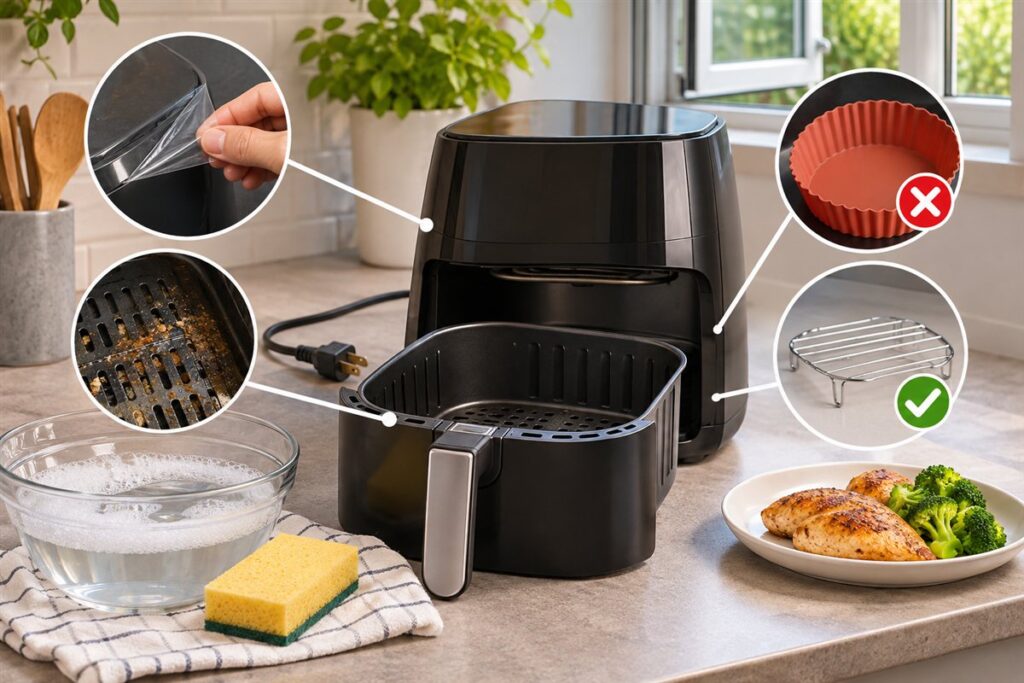
A faint plastic smell from a new air fryer is common, and it often fades after the first few uses. A strong or lasting smell is different and deserves attention. The general checks below help you sort out the cause, and the maker is the right contact for anything that seems wrong.
Common Reasons for the Smell
- New parts: coatings and packaging residue can warm up and give off an odor on early use.
- Leftover protective film or stickers left on a surface.
- Food residue or grease that has baked onto the heating area or the basket.
- A liner, tray, or accessory that touches a hot surface or blocks airflow.
- Something stored near the unit, such as a bag or cloth, that has melted or marked.
General Checks to Run
- Switch the unit off, let it cool fully, and disconnect it from the power outlet.
- Remove all packaging, film, and stickers, including inside the cooking chamber if any are present.
- Wash the basket and tray as the manual describes, and dry them fully.
- Wipe away visible food residue from reachable surfaces, following the manual.
- Check that nothing is touching the heat source and that the unit sits on a clear, flat, heat-tolerant surface.
- Follow the manual for any suggested first-use run with an empty basket, in a well-ventilated room.
When a Smell Is Not Normal
| What you notice | General guidance |
|---|---|
| Mild odor on first uses that fades | Usually expected, so ventilate and keep following the manual |
| Strong chemical or burning smell | Switch off, unplug once cool, and contact the maker |
| Visible smoke or melted parts | Stop using it and contact the maker |
| Smell that returns after cleaning | Check the manual again, then contact the maker |
What Not to Do
Do not open the housing, adjust wiring, or try to repair any electrical part. Do not keep using a unit that smells strongly of burning or gives off smoke. Follow the safety instructions in your manual, and let the maker decide whether the unit needs service or replacement.
Ventilation helps while you work through the checks. Open a window or run a kitchen fan, and keep pets and small children away from the area until the smell clears. Keep the manual and the model number close at hand, because the maker will usually ask for both when you get in touch. Take a clear photo of anything that looks marked, melted, or discolored, since it makes the conversation with the maker quicker.
Telling Different Odors Apart
Not every unpleasant smell from an air fryer points to the same cause, and learning to describe the odor helps you decide how worried to be. A new-appliance smell is usually faint, slightly sharp, and strongest in the first minutes of heating. It tends to be weaker each time you run the unit. A hot-oil or stale-grease smell is heavier and food-like, and it often means old residue is warming up. A burning-electrical smell is acrid and can catch in the throat, and it does not belong in normal use.
Pay attention to when the smell appears. If it shows up only while the heater is on, the source is probably something close to the heat. If it is noticeable even when the unit is cold, the cause may be packaging residue, a stored accessory, or a damp part that has not dried. Also note where it is strongest: near the rear vent, inside the basket, or around the handle. That detail is useful when you read the manual or talk to the maker.
- Faint and fading: typical of a new unit settling in.
- Greasy or stale: usually points to cleaning.
- Sharp, chemical, or burning and not fading: stop and contact the maker.
If you cannot tell which category you are in, treat the smell cautiously, switch the unit off, and let it cool before looking closer.
A Sensible First-Use Routine
Many odor complaints come from skipping the steps that new appliances need. Before the first meal, take everything out of the box and compare the parts against the diagram in the manual so you know nothing is missing or left inside the chamber. Peel off any film or labels the manual says to remove, but leave rating labels where they are, since they carry the model and safety information.
Wash the removable basket and tray in warm soapy water unless the manual says a part is not for washing, then dry them thoroughly. A damp part going into a hot chamber can create a steamy, musty smell of its own. Place the unit on a flat, heat-tolerant surface with open space on all sides, and ventilate the room by opening a window or running a fan.
Some manuals suggest an empty run for a short time at a stated temperature to burn off manufacturing residue. If yours does, follow those exact settings rather than guessing, and stay nearby. If the manual says nothing about an empty run, do not invent one; start with a simple, low-fat food and see whether the smell fades with use. Repeat the ventilation habit for the first several cooks, because the odor often drops off quickly once the surfaces have been through a few heat cycles.
Accessories, Liners, and Add-Ons That Can Smell
The air fryer body is not the only thing that can smell of plastic. Silicone mats, liners, baking pans, racks, and trays bought separately can carry their own odor when first heated, and some are not meant for the temperatures your cooking reaches. Check each accessory for a stated heat limit and compare it with the settings you use. If no limit is listed, that is a reason to leave the item out of the basket.
Fit matters as much as material. A mat or pan that sits too close to the heating element, covers the basket floor completely, or blocks the air path can overheat and smell, even if it is a suitable product in other settings. Light paper or flexible items can also lift in the airflow and touch hot parts. Make sure anything you add is weighed down by food or fits snugly.
To find out whether an accessory is the source, run your usual cook once without it. If the smell disappears, the accessory is the likely cause. Wash it, dry it, and try again at a lower setting only if its instructions allow. If the smell returns, retire the accessory instead of trying to push through it. Keep plastic items such as spatulas, lids, and storage tubs away from the unit while it is running or cooling, because even brief contact with a hot surface can leave a melted patch and a lasting odor.
When the Smell Gets Into the Food
A lingering odor can sometimes carry over into the taste of food, especially mild items such as bread, rice dishes, and baked goods. If you notice a flavor you do not like, stop cooking delicate foods in the unit until the issue is sorted out. Strongly seasoned foods may hide the problem, but that is not the same as fixing it, and it is not a good idea to rely on seasoning to cover a smell that may indicate a problem.
Check whether the odor clings to the basket coating or to the tray. Nonstick surfaces that are scratched or worn can hold onto grease and smell stale. Follow the maker’s advice for utensils, since metal tools can scratch coatings, and avoid abrasive pads unless the manual allows them. If the coating is flaking or visibly damaged, stop using that part and ask the maker about a replacement.
- Cook a plain, low-fat test food once the unit has been cleaned, then taste a small piece.
- Keep the unit dry between uses, with the drawer slightly open so air can circulate.
- Do not store food or open containers inside the cooking chamber.
If the taste problem continues after thorough cleaning and a few ventilated cooks, contact the maker and describe what you notice.
Documenting the Problem and Knowing Your Options
If the smell is strong, persistent, or paired with smoke or damage, gather the facts before you make contact. Write down the model number, the date you bought it, and where you bought it. Note when the smell appears, how long it lasts, and what the unit was doing at the time. Take clear photos of any melted, marked, or discolored area, and keep your receipt with the manual.
Return and warranty terms differ between sellers and makers, so look at the paperwork and the listing instead of assuming. Some sellers allow returns within a limited window, which makes it worthwhile to test a new unit soon after it arrives. Do not wait for months if the smell worries you. Ask the maker whether the odor is expected for your model and whether a replacement or service is appropriate.
While you wait for a reply, do not keep using a unit that smells strongly of burning, and do not attempt repairs. Store it unplugged in a ventilated place, away from children and pets. If you decide to replace it, check the new model’s manual for first-use steps before you start, so you know what normal looks like from the first cook.
FAQ
How long should a new air fryer smell last?
Makers differ, so check your guide. If the smell does not fade after several uses, contact the maker.
Can I mask the smell with lemon or vinegar?
Do not add anything to the machine unless the manual allows it. Masking an odor does not tell you the cause.
Is a plastic smell from an air fryer dangerous?
A faint smell on early use is common and usually fades. A strong, sharp, or burning smell, or any smoke, is a reason to stop and contact the maker. The manual is the best source for what is considered normal for your model.
Should I run the air fryer empty to remove the smell?
Only if the manual describes an empty run. If it does, use the settings it gives and ventilate the room. If it does not, start with a simple food instead of improvising.
Can a silicone liner cause the smell?
It can, particularly when first heated or if it sits too close to the heating area. Check its stated heat limit and fit, and run a cook without it to see whether the smell goes away.
Why does the smell come back after I clean the unit?
Residue may remain in places you cannot easily reach, or a part may have been put back damp. Dry everything fully and check the manual again, then contact the maker if the smell keeps returning.
Will the smell affect the taste of my food?
It can, especially with mild foods. If you notice an off flavor, stop cooking delicate items in the unit until the cause is found.
Is the smell covered by warranty?
That depends on the maker and the seller. Check the warranty terms and the return policy, and keep your receipt and model number ready.
Where should I keep the air fryer while the smell clears?
Use it in a well-ventilated area on a flat, heat-tolerant surface with open space around it. Keep it unplugged and out of reach when not in use.
The Short Version
A faint odor on new units can be normal, but a strong or lasting one is not. Run the general checks, follow the manual, and contact the maker if the smell persists.









