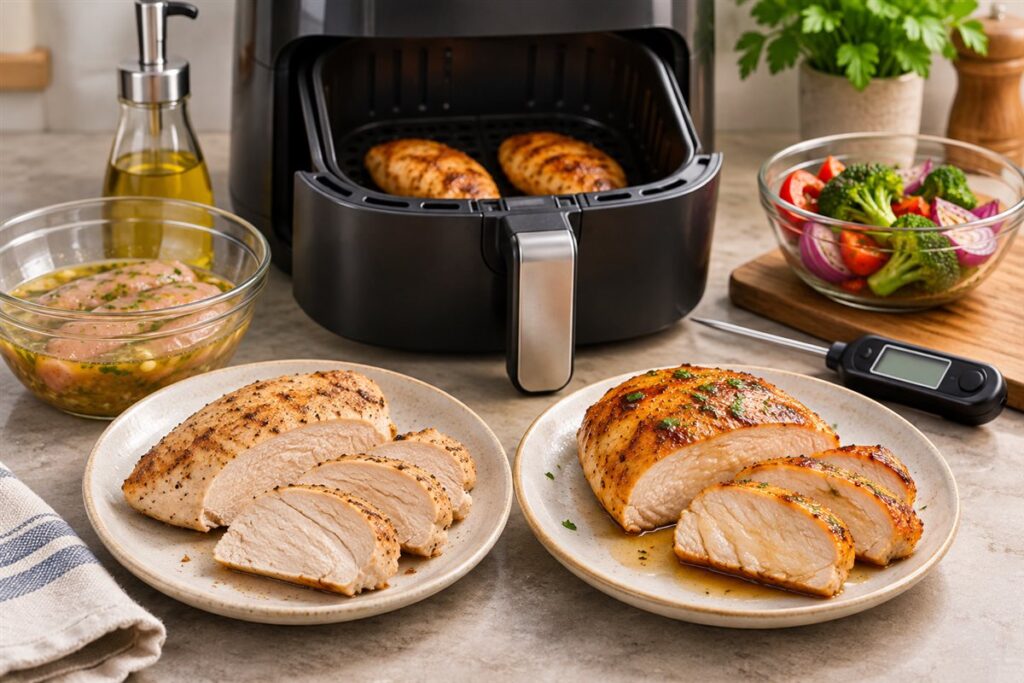
Food turns out dry in an air fryer mostly because it cooked too long, too hot, or without any fat or moisture to protect it. Shortening the cook, checking early, and resting the food afterwards fixes most cases. The steps below cover the usual causes.
What Dries Food Out
Fast-moving hot air pulls moisture from the surface quickly. Lean meats, thin cuts, and small pieces lose water faster than thick, fatty ones. A few extra minutes can be the difference between juicy and chalky.
Fixes to Try
- Check the food earlier than the recipe says, then add short extra bursts if needed.
- Lower the setting slightly for thin or lean foods so the outside does not dry before the inside is done.
- Brush or spray a light coat of oil on the surface to slow moisture loss.
- Use a marinade, brine, or a simple sauce on lean meats before cooking.
- Cut pieces thicker, or leave skin and bones in place when your recipe allows it.
- Rest the food for a few minutes after cooking so juices settle back.
Match the Approach to the Food
- Lean poultry and pork: avoid long cooks, and use a food thermometer to confirm doneness instead of guessing by time.
- Fish: it cooks fast, so check it early and take it out as soon as it is cooked through.
- Vegetables: toss with a little oil and cook just until tender and lightly browned.
- Baked goods: shield or lower the heat if the top browns before the middle sets.
- Reheated leftovers: use a lower setting for a short time, and add a splash of sauce or cover loosely.
Loose Ballpark Ranges
Most air fryer cooking falls between about 150 and 200 degrees Celsius, with times from a few minutes for small items to over 20 for larger ones. These are rough ballpark figures only. Your model, basket size, and the food itself will shift the numbers, so use your manual and look at the food while it cooks.
Check the Basics of Your Machine
If everything you cook comes out dry even with short times, check that the basket is seated properly and that the settings are what you meant to choose. If the unit seems to run far hotter than its controls suggest, stop using it and contact the maker. Do not attempt any repair yourself.
Doneness and Carryover Heat
Most dry food has been cooked past the point where it was done. Meat and fish are safe to eat at a particular internal temperature, and every minute beyond that squeezes out more moisture. The numbers for each food are published by food safety authorities and in good recipes, so check a reliable source for the figure that applies to what you are cooking instead of guessing from the color.
Food also keeps cooking after it leaves the heat. The outer layers are hotter than the center, and that heat travels inward during the first few minutes of resting, raising the core temperature a little. Because of this, thick cuts can come out of the basket slightly before the final target and finish while they rest, as long as you stay within food safety guidance.
- Use an instant-read thermometer and insert it into the thickest part, away from bone.
- Check a few minutes before the recipe suggests, since air fryers often run faster than ovens.
- Remove the food when it reaches the target for your food type, and then rest it.
- Make a note of the time that worked so the next cook starts from a known point.
Ground meat, poultry, and stuffed items need extra care to be cooked through safely, so do not take them out early based on rest time alone. For those, confirm the safe temperature first and avoid overshooting by a wide margin.
Size, Thickness, and Cut
The shape of the food decides how fast it loses moisture. A thin piece has a lot of surface compared with its volume, so air strips water from it quickly and it can go from done to dry in a minute or two. A thick piece has the opposite problem and needs more time for the center to come up to temperature, but it holds on to its juices better.
Choosing the right cut makes a big difference. Cuts with more fat or connective tissue, such as chicken thighs, pork shoulder slices, or fish with a higher oil content, tolerate high-speed air better than very lean ones such as skinless breast, loin, or white fish. Bone-in, skin-on pieces also hold moisture better because the skin and bone slow water loss.
- Even thickness: flatten thick chicken breasts slightly or cut them in half horizontally so the whole piece finishes together.
- Leave pieces larger: small cubes of lean meat dry out fast, so cut them bigger than you would for the oven.
- Do not trim all the fat: a thin edge of fat bastes the food as it renders.
- Keep vegetables in chunky pieces: thin slices shrivel, while thicker ones stay tender inside.
If a recipe was written for a larger pan or conventional oven, expect to shorten the time and lower the heat a little for the same cut.
Brines, Marinades, and Moisture Helpers
You can build in moisture before the food ever reaches the basket. A brine is a salt solution that lean meat sits in for a while, and the salt helps muscle fibers hold on to water as they cook. A dry brine works similarly: salt the surface, leave it for a time, and pat off any extra moisture. Timing varies by cut and amount of salt, so follow a trusted recipe, and remember that brined food needs less salt in the rest of the dish.
Marinades with acidic ingredients such as citrus or vinegar add flavor but can make the surface of meat mushy if left too long, and they do not carry moisture deep into the food. Oil-based and yogurt-based marinades coat the surface and give some protection. Whatever you use, wipe off dripping excess and sugar-heavy liquid before cooking so the surface does not burn.
- Glaze late: add sticky glazes in the last couple of minutes.
- Use a sauce or butter: a spoonful of sauce, flavored butter, or a pan sauce served afterwards adds moisture on the plate.
- Add vegetables with water content: onions, peppers, or tomatoes cooked alongside can add a little humidity near the food.
- Keep marinade safe: do not reuse raw meat marinade as a sauce unless it is boiled first.
Breading, Wrapping, and Small Pans
A barrier around the food slows water loss. A crumb coating, a layer of seasoned flour, or a thin batter can hold in juices in cutlets, fish, and chicken tenders. Wrapping is another route. Bacon around lean pieces, pastry around fillings, or foil parcels for fish and vegetables keep the inside gently steamed, although foil and any wrap must be used the way your manual allows, with food weighing it down and no contact with the heating parts.
Small oven-safe dishes can also help. A heatproof ramekin, small baking tin, or silicone mold made for air fryers keeps liquid from dripping through the basket, which lets you cook things like egg bakes, reheated sauced dishes, or casseroles without drying them. Check that the dish fits with space around it for airflow, and that its material is rated for the temperature you will use.
- Choose a dish that sits flat and leaves a gap around all sides.
- Cover loosely only if the manual permits and the cover cannot lift into the fan.
- Reduce the temperature a little because dishes slow the transfer of heat.
- Use heat-safe gloves or tongs when lifting, since the dish gets hot.
The Effect of Airflow and Batch Size
An air fryer is a compact convection oven, and compact means quick. A small basket with a strong fan can dry out food faster than a large oven would. A lightly loaded basket exposes each piece to more moving air than a full one, so a handful of small items can dry out sooner than a full batch of the same food. If you cook for one, you may need to shorten the time compared with a recipe written for four.
Basket position and design also change results. Models differ in where the heating element sits and how strongly air blows across the food. Learn your own unit by running the same simple food several times and noting what happens. If the top of the food always dries first, lower the heat or move the food away from the top. If the edge pieces dry first, rotate the pieces partway through.
- Start at the low end of the time range for your food type and extend in short steps.
- Keep a simple log of amount, setting, time, and result.
- Adjust one thing at a time, either temperature or time, so you can see what helped.
- Check your manual for the cooking charts that match your model.
Over a few weeks these notes turn into a personal chart that is more reliable than any generic guide.
FAQ
Can I add water to keep food moist?
Only if your manual allows it. Some makers advise against adding liquid to the basket, so check first.
Does foil or a lid help?
Loose coverings are sometimes used, but they can block airflow or touch hot parts. Follow the maker’s guidance on what may be used.
How do I know if chicken is done without cutting it open?
Use an instant-read thermometer in the thickest part, away from bone, and compare it with the safe temperature from a food safety source. Cutting is a backup, but it lets juices escape.
Why does lean fish dry out so quickly?
It has little fat and delicate protein, so heat and moving air remove moisture fast. Check early, use a lower setting, and consider a light coating or a foil parcel if your manual allows.
Is it a good idea to brine chicken breasts before air frying?
It can help keep lean meat juicy, since salt helps the meat hold on to water. Follow a trusted brining recipe for timing and rinse or pat dry afterward.
Should I cut cooking time when I use a smaller portion?
Usually yes. A small load exposes more surface to moving air, so check earlier than the recipe suggests and extend in short bursts.
Can I cook cakes or egg dishes without drying them out?
Often, with a small dish that fits the basket and a lower temperature. Cover loosely only if the manual allows, and check doneness early with a skewer or thermometer.
Does resting really make a difference?
Yes. A few minutes lets the juices redistribute through the food instead of running out when you cut. Loosely tent with foil or leave on a plate in a warm spot.
What if only some pieces turn out dry?
Pieces differ in size or sit near hotter spots. Sort them by thickness, remove the smaller ones sooner, and rotate positions partway through.
The Short Version
Cook for less time, add a little fat or marinade, and let food rest. Use a thermometer for meat, and follow the manual for your model.