Disclosure: As an Amazon Associate, airfryerkitchensupply.com earns from qualifying purchases. Links on this page are affiliate links; they cost you nothing extra. Prices and availability change often, so check the current Amazon listing before you buy.
Every honest account of vegetable chopper pros and cons runs into the same puzzle: the pros and the cons are the same facts read from different kitchens. The grid that produces perfect dice also produces the wash-up. The enclosed cut that protects your fingers also refuses your ripe tomatoes. This article lays out the vegetable chopper pros and cons as a genuine ledger — six strengths with the evidence behind them, six weaknesses with no softening — and then does the part most lists skip: translating the ledger into what it means for specific cooks, because a con that is fatal for one household is invisible to another. If you finish this page still unsure, the decision framework in how to choose a vegetable chopper will finish the job; if you finish it decided, the vegetable chopper buying guide will spend your money well.
Quick Verdict
A vegetable chopper is worth it for cooks who dice firm vegetables several times a week and will wash a blade grid without resentment; it is a poor buy for cooks whose prep is mostly slicing, soft produce, or tiny quantities, and for anyone whose knife work is already fast and even. The pros are structural — consistency, speed on repetition, contained cutting — and the cons are structural too, which is good news: structural facts can be checked against your own kitchen before you spend anything.
In this guide
Key Takeaways
- The headline pro is consistency: even dice cook evenly, and that quality difference shows up in every dish the tool touches.
- The headline con is the wash-up: grid, pusher, lid, and container, every time — the true running cost of ownership.
- Safety cuts both ways: the cut itself is enclosed and controlled, but the blades demand a strict handling routine for life.
- Range is the quiet con: a chopper dices superbly and does almost nothing else; it complements a knife rather than replacing one.
- Durability is technique-dependent: hinges last for years under sized pieces and centred pressing, and fail early under abuse.
- Fit decides everything: every pro strengthens with cooking volume and every con weakens — the ledger is personal.
Blade Safety: The Condition Attached to Every Pro Below
Before the ledger, the non-negotiable. A vegetable chopper’s blade grid is extremely sharp — many edges, close together, positioned exactly where trapped food invites a fingertip. The pros in this article exist only inside a safety routine; outside it, the tool’s risk profile changes completely.
- Press food with the pusher or lid only — never your fingers. Reposition awkward pieces with the press open. On plunger models, hands stay on the cap, never in the chamber.
- Wash blades with a brush, moving away from the edge — never bare-hand a blade grid in soapy water. A grid hidden by suds is the classic chopper injury. Keep every blade visible while washing.
- Clear stuck food with the cleaning comb or a brush from the back of the grid — never a fingertip, never a knife point.
- Store blades guarded and out of children’s reach — in the storage box or inside the lidded container, never loose in a drawer.
- Check for cracked plastic before every use. A cracked hinge or lid can give way mid-press and carry a hand toward the blades. Retire cracked parts at once.
- Keep the unit planted on a dry, flat surface with its non-slip base down; a chopper that slides under pressure is a hazard.
With those rules held, the enclosed cut is genuinely one of the safer ways to process vegetables. Break them habitually and no pro on the list below compensates.
The Pros
Pro 1: Dice So Even Your Cooking Improves
This is the pro that converts sceptics, because it is about food quality rather than gadget appeal. A blade grid cuts every piece to the same dimensions, and same-sized pieces cook at the same rate: no raw-centred potato beside a collapsing one, no burnt onion wisps beside crunchy slabs. Soups taste more integrated, curries finish as one dish, roasted and air-fried vegetables crisp uniformly — pair a chopper with how to air fry vegetables evenly and the improvement compounds. Hand dice can match this only with skill and attention sustained across the whole batch; the grid delivers it on the first press and the fiftieth alike. For many owners this consistency, not speed, is the benefit they would refuse to give back.
Pro 2: Speed That Grows With the Batch
A knife is competitive for one onion; it is not competitive for six. The press chopper’s per-piece time is a few seconds regardless of position in the batch, with no skill fade, no slowing as the pile grows, and no board management as dice accumulate in the container. Batch cooking, freezer prep, preserving days, and family-scale soups are where the arithmetic becomes dramatic — prep stages that consumed half an hour of knife work compress into minutes. Even at ordinary weeknight scale, the saving is real if less theatrical: two onions and three peppers diced while a pan heats. Speed also has a quality dimension — vegetables spend less time oxidising on a board and less time weeping before they meet the pan.
Pro 3: The Cut Happens Enclosed, Away From Your Fingers
Inside the safety routine, the press design is a genuinely protective way to cut: food is loaded stationary, the blades never travel, and your hands stay on a lid or pusher while the cut happens inside a frame. There is no blade moving toward a guiding hand, no slippery onion rotating under a knife, no fingertip in a cut path. For cooks who are nervous with knives, cooks with reduced grip strength who can press with body weight more safely than they can control a blade, and cooks teaching teenagers to help with prep under supervision, that enclosure is a substantive advantage — provided, always, that the handling rules around washing and storage are kept, because the tool’s sharpness does not disappear when the pressing stops.
Pro 4: No Skill Curve Worth the Name
Knife dice of grid quality take months of practice to learn and ongoing attention to sustain. A chopper’s technique — size the food to the grid, centre the palm, press — is learnable in one onion and identical on day one and day three hundred. That flat learning curve democratises good prep: the least experienced cook in the household produces dice as even as the most experienced, which matters in shared kitchens and matters enormously when the confident cook is ill, travelling, or simply tired. The tool also produces identical results across users, so a recipe built on “the small dice” means the same thing whoever cooked it.
Pro 5: Containment — a Tidy Counter and a Built-In Measure
Dice fall into a container instead of migrating across a board, off its edges, and onto the floor. Onion skins, pepper seeds, and carrot ends stay in one postcode. The container then carries the dice to the pan, the freezer bag, or — on lidded designs like the NutriChopper — straight to the fridge as storage. Marked containers double as rough measures for batch recipes. It sounds minor until you have cleaned carrot confetti from under a cooker for the third time; containment is the pro owners mention most in passing and would miss most in practice.
Pro 6: Onion Tears, Mostly Retired
The press chopper’s speed and enclosure drastically cut the time your face spends over cut onion, and the dice are produced before the volatile compounds build to eye-watering levels. Cooks who are particularly sensitive — the ones who weep over a single onion — describe this as the difference between cooking with onions freely and quietly designing them out of weeknight meals. It will not save you from the peeling, and a truly pungent onion still announces itself, but the long, tearful dicing session is genuinely a thing of the past with a press in the kitchen.
The Cons
Con 1: The Wash-Up Is Real, Every Single Time
There is no version of press-chopper ownership without the sink: grid, pusher, lid, and container, washed after every use, with the grid needing a brush worked across every cell. Done immediately it is roughly ninety seconds; left to dry, onion and potato residue bond to the grid and the job multiplies. This is the con that ends ownerships — not dramatically, but by erosion, as the tool is quietly passed over on tired evenings until passing over becomes permanent. Multi-insert sets multiply the burden with every extra blade that needs washing, drying, and guarded storage. If you know yourself to be a wash-it-later person, weight this con heavily; the category’s graveyard is filled with choppers owned by exactly that person.
Con 2: It Dices Brilliantly and Does Almost Nothing Else
The press chopper is a specialist in a kitchen that rewards generalists. It cannot slice a tomato for a sandwich, ribbon a cabbage, trim an artichoke, or peel anything. Its slicing inserts, where present, are the weakest part of every set. The knife it supposedly replaces remains in daily use for everything outside the firm-dice fence, which means the chopper must justify dedicated storage as an addition, not a substitution. Kitchens with severe space constraints feel this con at full strength: a bulky box that performs one family of tasks, however well, competes for room with tools that perform ten.
Con 3: Soft and Ripe Produce Defeats It
Ripe tomatoes are the emblematic failure — the grid presses before it slices, and soft flesh responds by juicing, skinning, and collapsing rather than dicing. Soft stone fruit, very ripe avocados, and overripe peppers fail the same way. Mushrooms and courgettes survive only on the larger grid. This con matters in proportion to your cuisine: a kitchen built on fresh tomato salads and soft summer produce will find the chopper idle for its favourite dishes, while a soup-and-curry kitchen may never meet the limitation in a month of cooking. Know which kitchen is yours before the purchase, because no model upgrade fixes physics.
Con 4: Plastic Under Load Has a Lifespan
The hinge and lid are moulded plastic absorbing the full force of every press, and they age accordingly. Lifespan varies enormously with design quality and technique — years for a strong hinge fed sized pieces and centred pressure, a single season for a light hinge fed whole sweet potatoes at a corner. Cracks, when they come, are a safety event as well as a failure, because a lid that gives way mid-press moves toward the blades. This con does not make the category a bad buy, but it does make it a buy-with-a-horizon: budget mentally for eventual replacement, inspect monthly, and treat the strongest hinge you can afford as the rational purchase rather than the extravagant one.
Con 5: Storage Is Bulky and Must Be Guarded
A full press set with its inserts is among the larger small-tool footprints in the kitchen, and its storage is not flexible: blades must be guarded, dry, and out of children’s reach, which rules out the casual drawer and demands a shelf, a box, and a system. Inserts stored loose lose their edges and endanger rummaging hands; inserts stored properly consume real estate. Compact designs soften this con without erasing it. In a small kitchen, storage is not an afterthought to the purchase — it is half the purchase, and it should be measured before, not discovered after.
Con 6: Results Can Disappoint When the Mechanism Is Misread
The electric branch of the family minces rather than dices, and buyers who expect cubes from a spinning blade feel cheated by physics. Plungers produce a livelier, less uniform chop than presses. Even within the press family, a grid that is not fully seated, food that overhangs the grid, or a half-hearted press produces ragged output that owners blame on the tool. This con is really a literacy problem — the category’s three mechanisms do three different things while sharing a name — but its cost is real, paid in returns and resentment, and it is the con most completely preventable by reading, which is what vegetable chopper reviews and the rest of this cluster are for.
Vegetable Chopper Pros and Cons: What the Trade-Offs Mean for You
For the batch cook and the family feeder, the ledger is not close: Pros 1 and 2 operate at maximum strength, the wash-up is amortised across a mountain of dice, and the cons reduce to a storage shelf and a hinge to inspect. Buy the strong press. For the weeknight couple, the pros still lead, but Con 1 sets the terms — choose the design that washes fastest, the single-grid press, and the ledger balances comfortably. For the solo small-space cook, Cons 2 and 5 swell while Pro 2 shrinks: a plunger or compact design keeps the containment and consistency pros at a scale your kitchen can hold, and a full press is likely a mistake. For the soft-produce, salad-led kitchen, Con 3 is decisive — your flagship dishes live outside the fence, and the honest recommendation is a superb knife and board, with slicing needs sent to mandoline slicer pros and cons for the same honest treatment. For the confident knife cook, Pros 2 and 4 barely register — you already own their benefits — and only Pro 1’s tirelessness on very large batches argues for a purchase. The ledger is the same for everyone; the weights are yours.
How the Chopper Compares With the Alternatives
| Criterion | Vegetable chopper | Chef’s knife | Food processor | Mandoline slicer |
|---|---|---|---|---|
| Even dice | Excellent — the grid guarantees it | Depends entirely on skill | Poor — pulses unevenly | Not its job |
| Slicing | Weak inserts only | Good with skill | Good in volume | Excellent — its home ground |
| Speed on batches | Excellent | Moderate, fades with fatigue | Fast but uneven output | Fast for slices |
| Wash-up | Grid routine, every use | Knife and board — lightest | Heaviest — bowl, blade, lid, tube | Blade care, moderate |
| Learning curve | One session | Months for dice quality | Moderate | Moderate, plus safety discipline |
| Soft ripe produce | Fails | Excels | Purées rather than cuts | Firm produce only, mostly |
The table’s lesson is that the chopper does not beat the alternatives overall — it beats them at one job, decisively. Purchases go wrong when a household buys the row they admire rather than the row they live in. The dedicated head-to-head with the mandoline, argued criterion by criterion, is vegetable chopper vs mandoline slicer.
How to Buy Smart If the Pros Win
If the ledger tips positive for your kitchen, spend in the order the cons dictate. First, neutralise Con 4: choose the strongest hinge in your tier — the Mueller Pro-Series is the reference — and adopt the sizing and centred-press technique that doubles hinge life. Second, minimise Con 1: prefer smooth grids, insist on a cleaning comb in the box, and consider the single-grid OXO if your dice size never varies. Third, answer Con 5 before the box arrives: measure the shelf, keep the storage box, and plan the guarded home. Fourth, respect Con 3 by keeping a good knife for the soft work rather than forcing the grid. Fifth, read bundles literally — confirm which inserts the current listing includes, since sets under one name change. The picks themselves, in prose at their tiers: the Mueller for volume, the OXO for everyday ease, the Fullstar for variety on a first purchase, the Brieftons QuickPush for small jobs, and the Ninja Express Chop if your ledger is really about mincing. The full reasoning per model is in vegetable chopper review.

Mueller Pro-Series Vegetable Chopper
The press that minimises the cons that matter most: strongest hinge against Con 4, clean-clearing pusher against Con 1’s worst moments, batch capacity that maximises Pros 1 and 2. Its own cons are size and a full grid wash. Mid tier. Best for: batch and family cooking. Not suited for: small kitchens.

OXO Good Grips Vegetable and Onion Chopper
The design that answers Con 1 directly — one grid, the fastest wash in the class — while keeping Pros 1, 3, and 6 at full strength for everyday quantities. Its con is range: one dice size, modest capacity. Mid tier. Best for: daily cooking for two to four. Not suited for: batch day or multi-cut repertoires.

Fullstar Vegetable Chopper
Maximum Pro-side breadth — dice, slice, julienne, spiralize — at an entry tier, balanced against the heaviest version of Con 1 and a hinge that asks for sized pieces and honest technique. Best for: first-time buyers exploring their habits. Not suited for: heavy daily hard-vegetable work.

Brieftons QuickPush Food Chopper
The small-job answer to Cons 2 and 5: compact, immediate, light to wash, at the cost of dice uniformity. Entry–mid tier. Best for: solo cooks and quick jobs. Not suited for: presentation dice or volume.
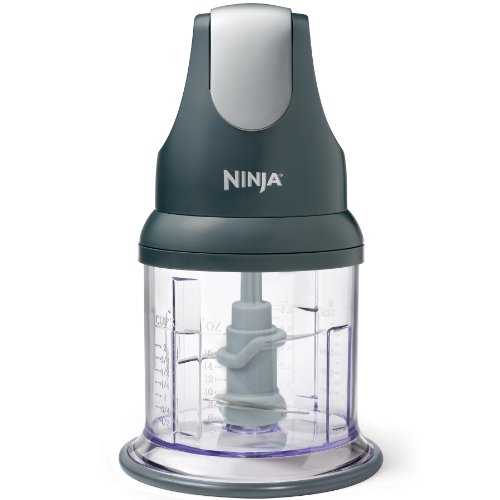
Ninja Express Chop
Included so Con 6 cannot bite: this electric minces superbly and dices not at all. If your pro list is garlic, herbs, and sauce bases, it is the strongest entry on this page; if your pro list is salsa, it does not belong on yours. Mid tier. Best for: mincing. Not suited for: any dish where the pieces show.
Setup and Care That Reduce the Cons
Half the cons are negotiable with routine. Con 1 shrinks to ninety seconds if the grid is brushed from the back under the tap immediately after use — the single highest-value habit in this article — and shrinks further if you rinse the grid between starchy batches. Con 4 recedes with sized pieces, a fully seated grid, and centred pressing, plus a monthly crack inspection that catches damage while it is still a retirement decision rather than an accident. Con 5 is answered once, properly, with a measured shelf and the storage box kept in service. Con 3 is answered by assignment: give soft produce to the knife without resentment, the way you give bread to the bread knife. Con 6 disappears with mechanism literacy. Even Pro 3’s safety dividend is routine-dependent — pusher only, brush only, guarded storage. The complete cleaning method lives in how to clean a vegetable chopper; treat it as the owner’s manual the ledger assumes.
The Pros and Cons Nobody Puts on the Box
Beyond the headline ledger sits a second tier of effects that owners discover in the first months. On the pro side: a chopper quietly expands the vegetables a household eats, because the friction of prepping them drops — carrots and celery become snackable and soup-able on a whim, and onions stop being a commitment. It standardises recipes across cooks, so a dish tastes the same whoever prepped it. It makes children’s and teenagers’ help in the kitchen genuinely useful under supervision, because the enclosed press produces good output from inexperienced hands. And it rescues tired evenings: the difference between cooking from scratch and ordering in is often fifteen minutes of prep nobody has the energy for, and the chopper is frequently the margin. On the con side of the hidden ledger: the tool can deskills a household’s knife work over time if it becomes the only cutting anyone does; the noise of a firm press on a hard vegetable is not nothing in an open-plan flat at midnight; the container’s capacity creates a subtle pressure to dice more than the recipe needs; and the inserts you do not use still demand guarded storage forever, a small permanent tax on the bundle decision. None of these decide a purchase alone, but together they explain why satisfaction surveys in this category polarise: the hidden pros accrue to frequent cooks and the hidden cons to everyone else.
Pros and Cons by Vegetable: The Field Guide Version
The ledger also reads differently per ingredient, and a quick tour sharpens the picture. Onions: nearly pure pro — speed, evenness, tears retired. Peppers: strong pro, with the skin-side-down technique as the only footnote. Carrots: pro on any sound hinge, sized first. Potatoes: pro, with a rinse between batches to keep starch from gumming the grid. Sweet potatoes: a conditional pro that becomes a con on light hinges — the single best argument for buying hinge strength. Celery: an underrated pro, dicing cleanly for soups and salads. Courgettes and cucumbers: pro on the large grid, con on the small. Mushrooms: split decision by grid and freshness. Cabbage: mostly con — ribbons belong to the knife or mandoline, though a large-grid rough chop serves cooked dishes. Apples and firm pears: a pleasant pro for salads and baking prep. Garlic and herbs: con for presses, pro for the electric — the clearest mechanism boundary in the kitchen. Ripe tomatoes and soft fruit: unambiguous con, the fence’s far side. A household can literally score its own shopping list against this tour; if your staples cluster in the pro rows, the category is aimed at you.
The Electric Branch’s Own Ledger
Electric mini-choppers deserve a separate balance sheet because their pros and cons barely overlap with the press family’s. Their pros: unmatched speed on mincing; genuine versatility across garlic, herbs, nuts, breadcrumbs, and small sauce bases; simple washing; and a small footprint. Their cons: no dice, ever; output uniformity governed by your pulse timing, so results vary until the skill is learned; juice release that weeps into dishes where a press stays dry; a cord, a motor, and noise; and a bowl capacity that caps batch ambitions. Households that frame the electric as a press alternative inherit disappointment; households that frame it as a knife-and-board alternative for mincing inherit one of the most-used small appliances they own. The Ninja Express Chop is the type’s reference design, and its correct shelf-mates are the knife and the press, not its rivals.
How the Ledger Shifts Over Time
Finally, the pros and cons are not static across ownership. In the first month, speed dominates the pro side and the wash-up barely registers against novelty. By the sixth month, novelty is gone: consistency has become the pro owners defend, the wash-up has sorted owners into brushers and avoiders, and storage has either been solved or become a daily irritation. By the second year, durability writes its verdict — hinges either still feel boring, which is triumph, or have joined the crack-check routine — and the bundle question has resolved itself into the two grids actually used, the rest being stored evidence of optimism. This trajectory is why this article weights the boring pros (consistency, hinge strength, cleaning ease) over the exciting ones (insert counts, novelty cuts): the boring pros are the ones still standing in year two, and the exciting ones are the ones being stored. Buy for month twelve, not for day one, and the ledger you sign is the ledger you keep.
Three Households Score the Same Ledger
Abstract weights become concrete when households apply them. Household one — two adults, three children, a soup-or-curry rhythm four nights a week — scores the pros at maximum: batch speed saves real time nightly, even dice visibly improves their one-pot cooking, and containment tames the chaos of family prep. Their cons are a shelf in a roomy kitchen and a hinge to inspect monthly. Verdict: the strongest buy in this article, and the Mueller’s exact constituency. Household two — a couple in a flat with one deep drawer of free space, cooking fresh, salad-led meals — scores Con 3 (soft produce) and Con 5 (guarded storage) at maximum and Pro 2 (batch speed) near zero. The same ledger that delighted household one tells this couple to buy a knife, a board, and perhaps a mandoline for their gratins. Verdict: a successful refusal. Household three — a solo cook with arthritis in one hand, cooking small cooked meals — reads Pro 3 (enclosed cutting, pressing with body weight rather than gripping a knife) as the headline and Pro 4 (no skill curve) as support; the cons shrink because quantities are small and a compact design fits both the kitchen and the workload. Verdict: a Brieftons or OXO, chosen for control, with the safety routine adapted carefully and followed without exception. One ledger, three correct and different conclusions — which is the entire argument of this page.
Ownership Costs Beyond the Purchase
A complete ledger counts the quiet costs too. Replacement: press bodies are multi-year consumables, so a household should expect — not fear — one replacement across a long cooking life, and should prefer makers who sell grids and parts separately. Consumables are otherwise nil: no filters, no bags, no proprietary refills, which compares favourably with many small appliances. Energy: manual models use none; the electric uses trivial amounts for seconds at a time. Space cost is the real rent, already counted in Con 5. Time cost is the wash-up, already counted in Con 1 — but note the offsetting time income: minutes saved at the board nightly, and the less countable income of meals cooked at home because prep felt manageable. Waste: even dice and contained prep trim vegetable waste slightly, and a tool that makes firm vegetables easier tends to move them from the crisper drawer to the pan before they spoil. Set against the purchase tier — entry to mid for every pick in this cluster — the ownership ledger is unusually clean, provided the tool is used; an unused chopper’s cost per use is infinite, which returns the verdict, one final time, to fit.
Safety, Examined as Both a Pro and a Con
Safety deserves its own honest entry because it appears on both sides of this ledger and pretending otherwise serves nobody. As a pro: the cutting action is enclosed, the food is stationary, the blades never move, and the user’s hands remain on a lid or pusher throughout the cut — a fundamentally more controlled geometry than a knife travelling toward a guiding hand, especially for tired cooks, new cooks, and cooks with grip difficulties. As a con: the tool concentrates a great deal of sharpness into grids that must be washed, cleared, and stored by hand for the whole of the tool’s life, and each of those interactions is an opportunity for a lapse. The net assessment depends on which risk a household manages better — the continuous, low-grade risk of knife work at every meal, or the episodic, routine-governed risk of blade handling at the sink. Households with strong routines get the pro nearly free; households without them should count safety as a con and choose accordingly. What is not defensible is ignoring the question, which is why this cluster repeats the full safety block in every article rather than mentioning it once and moving on.
What Would Change This Verdict
Ledgers should state their own falsification conditions. The pros-and-cons balance in this article would shift if your cooking changes — and for many households it does, which is why a chopper that was wrong at one life stage becomes right at another. A new baby and the batch-cooking that follows, a shift to soup-based winter eating, a move to a larger kitchen with storage to spare, a hand injury that makes knife work painful, a teenager joining prep duty: each of these rewrites the weights materially, and owners who bought against their old ledger often buy gladly against the new one. The balance would also shift if the tools changed — a genuinely self-cleaning grid or a hinge material with a lifetime horizon would retire Cons 1 and 4 and make this article mostly a list of pros — but buy for the tools that exist, not the ones imagined. Until then, the honest summary stands: the pros are strong, specific, and structural; the cons are real, specific, and checkable; and the distance between a delighted owner and a disappointed one is almost never the product. It is the match, and the match is knowable in advance — which is the most pro-consumer fact on this entire page.
The Ledger for Air Fryer Households Specifically
Because this site’s readers cook disproportionately with air fryers, the ledger deserves one specialised pass. Air frying rewards uniformity more than almost any other cooking method: hot air cooks exposed surfaces fast, so mixed-size pieces finish in waves — small ones desiccating while large ones are still firm at the centre. A chopper’s even dice and batons therefore buy more in an air fryer kitchen than in almost any other, strengthening Pro 1 considerably; a tray of grid-cut potato and carrot cubes seasons evenly, lies in a true single layer, and crisps as one batch. The synergy runs the other way too: air fryer cooking is weeknight, vegetable-forward cooking at exactly the volumes where Pro 2’s speed matters and Con 1’s wash-up is most easily absorbed into an already-running kitchen routine. The cons do not change — the grid still needs its brush, the tomatoes still belong to the knife — but for this readership the balance tips a notch further positive than the general case. If your air fryer is in weekly use and your basket regularly carries firm vegetables, weight the pros accordingly, and revisit air fryer cooking times for vegetables once your dice are uniform: the published times assume even pieces, and a chopper is how the assumption becomes true.
A Two-Minute Scoring Exercise
If the prose above has not settled it, arithmetic might. Score each line from your own kitchen, honestly, and total the columns. Give the pros one point each that applies: I dice firm vegetables at least three times a week; my hand-cut dice are uneven enough to notice in finished dishes; I batch-cook or cook for three or more people; onion tears genuinely bother me; my knife confidence is low or my grip is unreliable. Give the cons one point each that applies: my prep is mostly slicing or soft produce; I cook small quantities for one; I have no guarded, reachable storage for a boxed set; I know I will not brush a grid after every use; my knife work is fast, even, and enjoyable. If the pros lead by two or more, buy with confidence and spend on hinge strength. If the scores tie, buy the simplest design that covers your main job — the single-grid press or the plunger — and let a season of use cast the deciding vote. If the cons lead, close the tab with our blessing and put the money toward the tools your cooking actually describes; a pros and cons article that talks the wrong reader out of a purchase has done its job exactly as well as one that talks the right reader in.
Bottom Line
The vegetable chopper pros and cons describe a tool with strong, specific virtues and honest, specific costs, and the balance between them is set less by the model you choose than by the kitchen you run. Dice-heavy, firm-produce, batch-friendly cooking tips the ledger decisively positive; slicing-led, soft-produce, small-quantity cooking tips it negative, and no purchase should be made against the evidence of your own week. If the pros win, buy hinge strength and cleaning ease, adopt the safety and washing routines as part of the deal, and the tool will repay you in the currency it deals in: even dice, quickly, for years. If the cons win, spend the money on the knife and board you will use daily — that, too, is a successful outcome of reading a pros and cons page. The remaining question — whether the value case survives scrutiny in money-and-space terms — is taken up in is a vegetable chopper worth it.
One sentence to carry away: a vegetable chopper is a consistency machine with a washing bill, and kitchens that want the consistency and accept the bill are happy for years. Everything else on this page — the mechanisms, the models, the worked households — is commentary on that sentence, offered so you can decide which side of it your own kitchen stands on before any money moves.
The Trade-Offs in Daily Life: Where a Vegetable Chopper Earns Its Place and Where It Does Not
Buying a vegetable chopper takes an afternoon; living with it happens at the prep area, where onions, peppers and salads begin, while getting uniform pieces quickly for weeknight cooking and meal preparation, and that daily reality is what this section judges. This section therefore starts with your routine rather than the product, because features only matter once they survive contact with your space, your schedule and your household. Before anything else, settle that the blade grids match the dice and slice sizes your recipes actually use; it is the unglamorous detail that quietly decides whether the rest of the specification ever gets a chance to matter. Weekday and weekend versions of the same routine can want different things from a vegetable chopper, so check your choice against both rhythms rather than averaging them into a routine nobody actually lives.
Spaces lie in photographs and tape measures do not, so record the available dimensions, the swing and access clearances, and the route the vegetable chopper takes through the door before it ever arrives. Picture the busiest realistic version of your week, with guests arriving, children underfoot, a meal running late or the weather turning, whichever applies, and ask whether the vegetable chopper still works then. Sometimes the right purchase is smaller than planned because an existing possession covers the heavy or rare jobs, leaving the new vegetable chopper to specialise in the frequent ones. Read the included-parts list as carefully as the feature list. Many disappointing first days with a vegetable chopper are simply the discovery that an essential accessory was never in the box.
- Test the verdict against your busiest week rather than your easiest.
- Weigh daily frictions more heavily than rare inconveniences.
- Decide which trade-off your household tolerates most easily.
- Mark each disadvantage with whether a simple habit can manage it.
- Score every advantage by how often your household will feel it.
Apply this thinking to real candidates, such as the Mueller Pro-Series Vegetable Chopper or the OXO Good Grips Vegetable and Onion Chopper: open the current listing, confirm the dimensions, parts and care details, and only then judge the photographs. Plan the end at the beginning: a vegetable chopper should be repairable, passable on, recyclable or at least easy to dispose of responsibly when its service ends, and designs differ widely on this. If something does go wrong, your own notes are gold: dates, symptoms and what you already tried will get you a useful answer far faster than a general description of disappointment. Most faults that appear months in are really maintenance or setup faults wearing a disguise, so return to the basics, position, load, cleanliness and fit, before concluding anything has failed.
Where a disadvantage can be managed by a habit, such as rinsing blades immediately, using the cleaning tool and drying every part before assembly, count it as a cost in effort rather than a reason to reject the item outright. The first fortnight involves unlearning old habits as much as learning new ones, so allow the vegetable chopper that adjustment period before delivering a final verdict, unless a basic fit check has failed. Add up the minutes honestly: the washing, wiping, descaling, emptying, airing or reassembly a vegetable chopper demands each week is part of its real specification. Storage between uses is part of ownership, so decide where the vegetable chopper and anything it needs will live when idle, and be honest if the only answer is a surface you cannot spare.
Guests are an honest test: anything that needs explaining, warning or apologising for when visitors use the vegetable chopper is telling you something about its everyday fit as well. If you cannot name those things yet, you are not ready to choose, and an hour spent clarifying the routine will save more disappointment than an hour spent comparing near-identical listings. Every item leaves a footprint on the home beyond its dimensions: noise, mess, heat, moisture, effort or visual clutter. Weigh that footprint for a vegetable chopper as seriously as its size. There is no universal verdict here, only a match or a mismatch between the trade-offs of the vegetable chopper and the shape of your week.
Set a review date about a month after purchase and judge the vegetable chopper then against the three jobs you named, while adjusting, exchanging or returning is still practical. A pro you meet twice a year and a con you meet every morning are not balanced, whatever the symmetry of the list they appear in. The easiest items to own are the ones that ask for nothing between uses. If a vegetable chopper asks for something, make sure the routine gives it automatically rather than relying on memory. The most future-proof question is also the simplest: if your routine changed moderately, would this vegetable chopper adapt, or would it become the wrong tool kept out of guilt?
Edge cases matter here: chopping one small onion, where setting up and washing can exceed the saving. A vegetable chopper chosen with that situation in mind will not need replacing the first time life deviates from the brochure. Dead heats between two candidates are broken by weaknesses, not strengths: pick the vegetable chopper whose compromises fall on the jobs you do least often. Try this decision exercise: write down three non-negotiable jobs, one acceptable compromise and one walk-away flaw. If a candidate survives that list, it deserves its place on the shortlist. Think about what the vegetable chopper has to live alongside. The neighbouring furniture, fittings and appliances in your home are fixed facts, and the newcomer is the one that has to fit in.
A rotation or spare strategy suits some households, where one vegetable chopper rests, dries, charges or waits in reserve while another works, and it can double useful life for surprisingly little organisation. Photograph complicated setups before you change them and note settings that worked. With a vegetable chopper, your own records become the manual for your particular home. Decide whether the placement is permanent or provisional, and buy accordingly, because a vegetable chopper chosen for a fixed home and one chosen to move, fold or travel are different designs wearing similar names. Ask which part of the vegetable chopper will look tired first and whether that tiredness is cosmetic, cleanable, repairable or terminal, because the answer sets the realistic lifespan.
Frequently Asked Questions
What is the single biggest advantage of a vegetable chopper?
Consistency. The grid cuts every piece to the same size, and evenly sized vegetables cook evenly — the improvement shows up in soups, curries, roasts, and air-fried dishes as texture you can plan around. Speed is the advantage people buy for, but consistency is the one owners cite after a year, because it upgrades dishes rather than merely accelerating them. It is also the advantage a knife can only match with real skill sustained across a whole batch.
What is the single biggest disadvantage?
The wash-up, because it is the only con paid at every single use. Grid, pusher, lid, and container need washing each time, and the grid needs brushing rather than a casual rinse. Managed immediately, it is about ninety seconds; deferred, it becomes the chore that quietly retires the tool. Every other con is situational — storage matters if space is tight, soft-produce failure matters if your cuisine is soft — but the sink is universal, so honest self-knowledge about washing is the best predictor of satisfaction.
Is a vegetable chopper safer than a knife?
During the cut itself, yes, for most people: the food is stationary, the blades are fixed inside a frame, and your hands stay on a lid or pusher rather than guiding produce toward a moving edge. Across the whole of ownership the answer depends on routine — the blades are extremely sharp, and washing or storing them carelessly is where injuries happen. With pusher-only pressing, brush-only washing, guarded storage, and crack checks, the chopper’s overall safety case is strong. Without those habits, a knife and board may honestly be the safer tools for that household.
Do vegetable choppers wear out quickly?
The blade grids last for years; the hinge and lid set the lifespan, and technique sets the hinge’s lifespan. Strong designs fed sized pieces and pressed squarely serve for years of regular use. Light designs forced onto oversize hard vegetables can crack within a season. Monthly crack checks, sensible sizing, and retiring damaged parts promptly keep both the tool and the cook safe. Treat the press body as a multi-year consumable rather than a lifetime purchase and the economics remain firmly favourable.
Can a vegetable chopper handle tomatoes and soft fruit?
No — this is the category’s clearest limitation. A press grid pushes before it slices, and ripe, soft flesh responds by juicing and collapsing rather than forming dice. Firm, under-ripe tomatoes survive in rough form on a large grid, but for ripe tomatoes and soft fruit a sharp knife is simply the correct tool. Electric choppers reduce them to a coarse purée, which suits a sauce but not a salad. Buy a chopper for firm produce and let it be excellent there.
Who should definitely not buy a vegetable chopper?
Three households: confident, fast knife cooks whose dice are already even, because the tool duplicates their skill while adding a wash-up; salad-led, soft-produce kitchens, whose flagship dishes live outside the grid’s fence; and very small kitchens with no guarded storage to offer, where the box will migrate to a rummage drawer and become a hazard rather than a help. A fourth, honourable mention: anyone who knows they will not brush a blade grid after use. For those households the money serves better in knives, boards, or a mandoline for slicing work.
Related Reading
Continue the argument with vegetable chopper buying guide, the model evidence in vegetable chopper reviews, and the slicing specialist’s own ledger in mandoline slicer pros and cons. For the knife side of the partnership, see best chef knife sets and best cutting boards for home cooks.


