
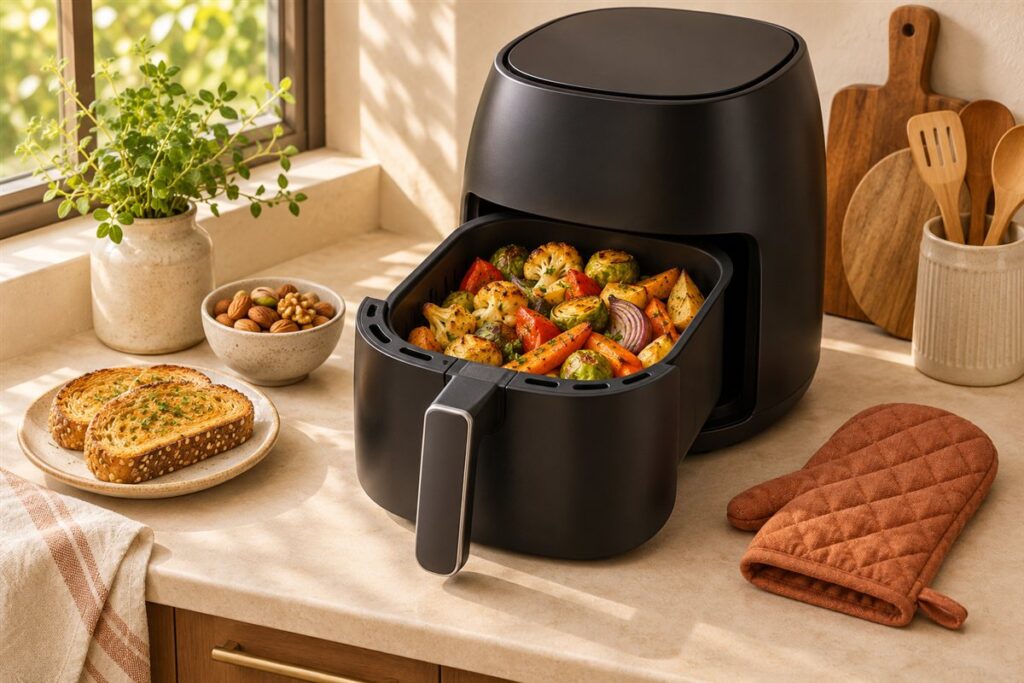
To air fry vegetables evenly, cut them to the same size, dry them well, coat them lightly with oil, and spread them in one layer. Shake or toss partway through, and check the thickest pieces near the end.
Prep for Even Cooking
Uneven results usually begin at the cutting board. Pieces of different sizes finish at different times, so the small ones burn while the large ones stay firm.
- Cut each vegetable into pieces of similar size and thickness.
- Wash and dry thoroughly. Surface water creates steam and prevents browning.
- Toss with a small amount of oil and seasoning in a bowl, not in the basket.
- Keep dense vegetables like carrots separate from quick ones like zucchini, or cut the dense ones smaller.
Step-by-Step Cooking
- Preheat if your manual suggests it.
- Add vegetables in a single layer with small gaps for air to move.
- Cook at a medium-high temperature for the first part of the time.
- Shake the basket or turn the pieces halfway.
- Check the largest piece with a fork. It should be tender with browned edges.
- Season again lightly after cooking, since salt and herbs can burn if they are added too early.
Vegetable Handling Notes
| Type | Examples | Tip |
|---|---|---|
| Dense roots | Carrots, potatoes, beets | Cut small and allow extra time |
| Florets | Broccoli, cauliflower | Leave a flat side down for browning |
| Quick soft | Zucchini, peppers, mushrooms | Cut larger so they do not dry out |
| Leafy | Kale, brussels sprout leaves | Use low heat and watch closely |
Fixing Common Problems
If the vegetables are soggy, the basket is probably too full or they were damp. Cook in two rounds and dry them better. If the outsides burn before the centers soften, lower the temperature and add time. If seasoning blows around, press it on with a little oil, and keep very light leaves weighed down or in a small covered dish that your maker allows.
Each model heats a little differently, so write down the temperature and time that gave you the result you liked.
Seasoning Tips
Add dry seasoning before cooking and fresh herbs, lemon juice, or shredded cheese after. Garlic and sugar burn quickly in hot air, so add them near the end or use a lower heat. A small squeeze of citrus right after cooking brightens the flavor. Try one new seasoning per batch, so you can tell what you like.
Cutting Guide by Vegetable
Cutting is the biggest lever you have for even cooking, and each vegetable has a shape that suits it. Dense roots such as carrots, beets, and potatoes cook slowly, so cut them into small cubes, thin sticks, or thin rounds. Softer vegetables such as zucchini, peppers, and mushrooms cook fast, so larger chunks or thick slices keep them from drying out.
For florets such as broccoli and cauliflower, cut pieces to a similar size and keep a flat side so they sit stable. Brussels sprouts do well halved, cut side down, which gives deep browning. Green beans and asparagus can be cooked whole, trimmed to similar lengths. Onions cut in wedges hold together better than thin slices, which can burn.
A quick reference for planning:
- Roots and tubers: small cubes or thin sticks, with extra time.
- Cruciferous florets: medium pieces with a flat face.
- Soft vegetables: thick slices or large chunks.
- Long thin items: leave whole and trim to match.
If you want to cook different vegetables together, cut the slow ones smaller and the fast ones larger. You can also add the quick ones partway through. Aim for pieces that are uniform within each type, because variation inside one type leads to uneven results.
Managing Moisture, Oil, and Salt
Water is the enemy of browning. Vegetables with a lot of moisture, such as zucchini, mushrooms, and tomatoes, release liquid as they heat, and that liquid turns to steam in a crowded basket. Pat vegetables dry before cooking, spread them out, and avoid salting too far ahead, since salt draws water out of the surface.
Use oil sparingly but evenly. A bowl is better than the basket for tossing, because every piece gets a thin coat. Too little oil leaves vegetables dry and pale, and too much makes them greasy and prone to smoke. Fine seasonings and dried herbs can burn or blow around in the fan, so add delicate ones after cooking.
Tips for managing moisture:
- Dry leafy or wet vegetables with a clean towel or a salad spinner.
- Salt watery vegetables just before cooking or after.
- Do not overload the basket, as crowding traps steam.
- Pour off any liquid that collects in the drawer between batches.
If a vegetable still turns out soft, try cutting it larger, drying it better, or cooking it at a slightly higher temperature for a shorter time. Each unit behaves a little differently, so notes on what works are worth keeping.
Mixing Vegetables in One Batch
Cooking a mix saves time and dishes but needs planning. Because vegetables cook at different speeds, you can stagger the start. Put the dense vegetables in first, shake, then add the quicker ones for the last part of the cook. This keeps both groups at the right doneness without burning the delicate ones.
Another approach is to group vegetables by cooking time. For example, cook roots together, then cook leafy or soft vegetables as a second batch. If you prefer one go, cut dense vegetables into smaller pieces and soft ones into larger ones so they land at about the same time.
Planning questions:
- Which vegetable takes the longest, and how can I cut it to match the rest?
- Can I add the fast ones partway through?
- Will strong flavors like onion or garlic affect milder ones?
- Is there room in the basket for everything in a single layer?
When in doubt, start with fewer types in a batch while you learn how your unit behaves. Check the largest piece near the end, and pull out any vegetables that are done earlier. A slotted spoon or tongs lets you remove finished pieces without disturbing the rest.
Frozen and Pre-Cut Vegetables
Frozen vegetables work well in an air fryer, but they come with extra moisture. Cook them straight from frozen, shake off ice crystals, and spread them in a thin layer. Following the package directions gives a good starting point, and you can adjust after the first try. Do not thaw them first unless the package says to, because thawed vegetables turn soft.
Pre-cut fresh vegetables save time but can vary in size and may be wetter than you expect. Dry them with a towel and check the size, trimming larger pieces. Packaged mixes may combine items with different cooking times, so check and separate as needed.
Handling tips:
- Use a single layer with gaps for frozen vegetables.
- Shake the basket more often to move steam away.
- Season after cooking, as ice and moisture wash off early seasoning.
- Check the package for any warnings about cooking from frozen.
Breaded frozen vegetables, like battered pieces, follow the package instructions closely. Keep an eye on them, because coatings can brown before the inside is hot. A bit of patience gives you crisp edges rather than soggy results.
Serving, Storing, and Reheating
Air fried vegetables taste best fresh from the basket, when edges are crisp. Serve them promptly, and finish with a squeeze of citrus, a sprinkle of herbs, or a light dressing. Sauces added early can make them soggy, so add them at the table or toss just before serving.
Leftovers keep well in a covered container in the refrigerator, following local food safety guidance for storage time. To reheat, spread them in a thin layer and use a moderate setting for a short time, checking often. The air fryer revives crispness better than a microwave, though some vegetables will never be as crisp as when fresh.
Points to remember:
- Cool vegetables briefly before sealing them in a container.
- Reheat only the amount you need, as repeated reheating dries them out.
- Reuse leftovers in salads, grain bowls, or omelets.
- Clean the basket promptly to prevent odors and sticky residue.
Some vegetables, such as potatoes and onions, can leave residue that is harder to remove once dry, so a quick soak helps. Dry all parts fully before putting them away.
FAQ
How much oil do vegetables need?
Often just a light coating. Too much oil can drip, smoke, and make food greasy, while too little can leave them dry.
Can I cook frozen vegetables the same way?
Yes, but cook them straight from frozen, shake off ice, and follow the package. They give off more moisture, so use a thin layer.
Why are my vegetables soggy instead of crisp?
The basket may be too full, or the vegetables may be wet. Dry them well, spread them in a single layer, and cook in batches if needed.
Should I use foil or a liner for vegetables?
Usually not needed. If you use a liner, choose one made for air fryers with holes, and check your manual about foil.
How do I stop small pieces from falling through the basket?
Cut them larger, use a perforated liner or a small tray that fits, or cook them in a pan inside the basket if your manual allows.
Can I cook leafy greens in an air fryer?
Yes, in small amounts at a low to medium setting and with close attention. They can burn quickly or blow around, so weigh them down or use a pan.
Do I need to wash vegetables before air frying?
Yes, wash them as you normally would, and then dry them thoroughly so they brown instead of steaming.
How do I get crispy brussels sprouts?
Halve them, dry them, coat lightly with oil, and place cut side down. Shake partway and check for browned edges near the end.
The Short Version
Match piece sizes, dry them well, use light oil, and shake halfway. Cook in batches whenever the basket looks crowded.









