Disclosure: As an Amazon Associate, airfryerkitchensupply.com earns from qualifying purchases. Links on this page are affiliate links; they cost you nothing extra. Prices and availability change often, so check the current Amazon listing before you buy.
This vegetable chopper review starts with a suspicion most home cooks share: that a vegetable chopper is a unitasker destined for the back of a drawer, bought in a burst of meal-prep optimism and abandoned by February. That suspicion is fair for the flimsy end of the market, and this review will be blunt about where these tools fail. But it is not fair to the category as a whole. A good press-style chopper does one job — turning onions, peppers, carrots, and potatoes into even dice — dramatically faster and more consistently than most home cooks can manage with a knife, and it does it with your hands kept well away from the cutting edges. The question this review answers is narrower and more useful than “are vegetable choppers good?” It is: what separates the choppers that earn counter space from the ones that crack, clog, and get given away, and which real models sit on the right side of that line?
The short verdict, up front: a vegetable chopper is worth owning if you cook with diced vegetables several times a week — soups, stir-fries, curries, salsas, salads, sheet-pan dinners — and if you buy a design with a sturdy hinge, a sensible blade grid, and parts you can actually clean. It is not worth owning if your knife skills are fast and you enjoy using them, if you mostly cook for one with a single onion at a time, or if the thought of washing a blade grid makes you reach for the knife anyway. Everything below exists to help you place yourself honestly in one of those two camps, and to show you what the leading designs — the Mueller Pro-Series Vegetable Chopper, the Fullstar Vegetable Chopper, the OXO Good Grips Vegetable and Onion Chopper, the Brieftons QuickPush Food Chopper, and the electric Ninja Express Chop — each get right and wrong.
Key Takeaways
- Best for: weeknight cooks who dice onions, peppers, carrots, celery, and potatoes several times a week and want even pieces that cook at the same rate.
- Not suited for: confident, fast knife users; cooks who mainly prep one small item at a time; anyone who will not wash a blade grid carefully.
- The deciding factor is not blade sharpness — every serious chopper is sharp — it is hinge and lid strength, because the whole tool works by forcing food through a grid under pressure.
- Evenness is the real product. You are not buying speed alone; you are buying dice that brown, soften, and finish together instead of a pan of half-raw, half-mushy pieces.
- Safety is a system, not a warning label: pusher-only pressing, brush-only washing, guarded storage. The full rules are set out in the safety section below and they are not optional.
- Cleaning decides long-term ownership. The chopper you rinse in ninety seconds gets used for years; the one with food welded into its grid gets used twice.
In this guide
What a Vegetable Chopper Is and Where It Fits in a Kitchen
A vegetable chopper, in the form this review concentrates on, is a hinged press: a container at the base, a grid of sharp metal blades standing in the middle, and a lid carrying a matching pusher plate. You set a halved onion or a chunk of pepper on the grid, swing the lid down with firm pressure, and the pusher forces the food through the blades so that neat dice fall into the container below. Swap the grid and the same press produces smaller dice, larger dice, or sticks, depending on the set. Around that core design sit two cousins. Push choppers, like the Brieftons QuickPush, use a spring-loaded plunging action over a smaller grid — you chop downward repeatedly rather than pressing once. Electric choppers, like the Ninja Express Chop, abandon the grid entirely: a small motor spins blades in a work bowl, closer to a mini food processor than to a press.
Where the tool fits is the gap between a knife and a food processor, and understanding that gap explains both its fans and its critics. A knife is infinitely flexible — it slices, dices, minces, and trims — but its output depends entirely on the skill and patience of the hand holding it, and for most home cooks the tenth onion of a batch-cooking Sunday is noticeably worse cut than the first. A food processor dices badly: its spinning blade produces a mix of purée at the bottom and untouched chunks at the top unless you pulse with great care, and it is a heavy, multi-part machine to wash for a single pepper. The press chopper occupies the middle with a fixed promise: one motion, one consistent cut size, a contained mess, and a wash-up measured in a few parts. It cannot slice a tomato for a sandwich or turn cabbage into ribbons. It does not try to.
The cooks who get the most from that promise share a pattern. They cook in batches, or for families, or from cuisines built on a diced foundation — the onion-pepper-celery base of a gumbo, the carrot-onion-potato body of a soup, the fine dice of a fresh salsa, the uniform cubes a curry needs so the potato finishes when the sauce does. If your cooking rarely starts with “dice two onions,” the honest advice in this review is to spend your money elsewhere, and the who-should-skip section below will not try to talk you out of that. If your cooking starts that way three nights a week, read on, because the difference between a good chopper and a bad one is the difference between a tool you reach for daily and a cautionary tale in the donation box.
Design, Build and Setup: What Actually Matters
Strip away the marketing and a press chopper is four parts working under load: the hinge and lid, the pusher plate, the blade grid, and the container. Each one has a failure mode, and the models in this review separate themselves by how well they avoid them. The hinge and lid take the full force of every press. On firm vegetables — a thick carrot round, a wedge of sweet potato — that force is considerable, and lids moulded from thin, brittle plastic flex, creak, and eventually crack at the hinge pins. Better designs use thicker, slightly forgiving plastic, metal-reinforced hinge points, or geometry that spreads the load across the whole lid instead of concentrating it at two small pivots. When you handle a chopper in a shop or read owner reports, the hinge is the first thing to interrogate, because it is the part that ends the tool’s life when it goes.
The pusher plate is the grid’s partner: a field of small fingers that pass between the blades and push the last of the food through. Its fit matters more than its material. A pusher whose fingers align cleanly with the grid clears each press completely, leaving dice in the container and almost nothing stuck in the blades. A sloppy fit leaves a mat of half-cut food trapped in the grid, which you then have to pick out — near sharp edges, with your fingers, which is precisely the situation the safety rules in this review exist to prevent. Good designs also add a small cleaning comb or a pusher underside shaped to scrape the grid clean in one pass; that humble feature does more for daily usability than any extra blade insert.
Blade grids are where variety lives. Most sets include at least a small dice and a large dice grid; broader sets add slicing and julienne inserts, graters, and sometimes a spiralizing cone, as on the Fullstar. More inserts are not automatically better. Each insert is another part to store, wash, and keep track of, and in practice most owners settle on one or two grids and use them constantly. What matters is the grid itself: blades that are firmly set in their frame, evenly spaced so dice come out uniform, and made from stainless steel that resists the staining and corrosion onions and tomatoes will happily cause. A grid that wobbles in its seat produces ragged dice and flexes under load, which feeds straight back into hinge stress.
The container sounds like the boring part and quietly decides how pleasant the tool is at the sink and in the cupboard. A container with a non-slip base stays put while you press — a chopper that skates across the counter mid-press is a safety problem, not an annoyance. A lid or storage top for the container lets you dice straight into storage for meal prep. Capacity is a balance: too small and you stop mid-onion to empty it; too large and the tool becomes a cupboard hog that is disproportionate for a single pepper. Finally, setup: a well-designed chopper goes from cupboard to first press in seconds — grid clicked in, lid on, food placed — and comes apart just as fast, because a tool that needs assembly earns a sigh before it earns use. Every model discussed below is judged against these four parts, not against the length of its feature list.
Blade Safety: The Rules That Come Before Every Recipe
Read this section before the first use, and treat it as part of the product rather than as fine print. A vegetable chopper looks harmless — cheerful plastic, a neat little tub — but inside it sits a grid of blades, and in many sets a slicing blade in the lid, that are every bit as sharp as a good chef’s knife. The grid format means many edges at once, close together, exactly where trapped food tempts you to pick with a fingertip. Almost every chopper injury happens in one of three moments: pressing, clearing the grid, or washing up. The rules below close all three.
- Press food with the pusher or lid only — never with your fingers. If a piece of food sits awkwardly on the grid, lift the lid, reposition it with the press open, and press again. Your palm belongs on the lid, spread wide, never inside the frame.
- Clear a clogged grid with a brush or the cleaning comb, never a fingertip. Turn the grid over and push residue out from the back side, away from the edges.
- Wash blades with a brush, moving away from the edge — never bare-hand a blade grid in soapy water. A grid hidden under suds is the classic way these tools cut people. Rinse it visible, brush it, set it aside to dry where you can see it.
- Store blades guarded and out of children’s reach. Inserts belong in their storage box or slotted into the container with the lid on — never loose in a drawer where a hand goes rummaging, and never on a counter a child can reach.
- Check for cracked plastic before every use. A cracked hinge, lid, or grid frame can give way mid-press and drive your hand down toward the blades. If you find a crack, retire the part. Do not press harder on a damaged tool to “finish the job.”
- Keep the base still. Use the non-slip base on a dry, flat surface; if the chopper can skate while you press, stop and fix the setup rather than chasing it across the counter.
None of this is meant to frighten you off the tool. Used with the pusher, washed with a brush, and stored guarded, a press chopper is genuinely one of the safer ways to dice, because the design keeps fingers away from edges during the cut itself — which is more than a knife and board can claim. The danger lives entirely in the shortcuts, so do not take them.
Performance in Real Use
Onions: The Test That Decides Everything
Onions are the reason most people buy a vegetable chopper, and they are the fairest test of one. Halve a peeled onion, set it flat-side down on the grid, and a good press chopper turns it into even dice in a single firm motion — no tears streaming by the third minute, no pile of mixed slabs and slivers, and no board covered in onion that escaped in layers. The evenness is what converts sceptics: dice of one size soften together, brown together, and disappear into a sauce together, where hand-cut onion gives you raw crunch and burnt wisps in the same spoonful. The small-dice grid earns its keep for salsas and garnishes; the large grid suits soups and roasts. Where choppers struggle is the onion’s papery skin and root end, which can resist the grid and hold a press together in a sheet — trim the root end off first and the problem mostly vanishes. The OXO design, built specifically around onions and similar round vegetables, handles this test with the least fuss of the manual models; the Mueller and Fullstar match it once you learn the root-end trim. An electric like the Ninja Express Chop produces a different result — a pulsed, uneven mince that weeps more juice and suits cooked bases better than fresh salsa.
Hard Vegetables: Carrots, Potatoes and Sweet Potatoes
Hard vegetables separate strong hinges from weak ones. Carrots and potatoes press cleanly on every model here provided you cut them to fit the grid first — a whole large carrot laid across a small grid asks the hinge to do work it was never meant to do, while carrot planks or rounds sized to the grid press through with a satisfying snap. Sweet potato is the stress test: dense, unyielding, and the vegetable most likely to expose a flexing lid or a wobbling grid. The practical technique is smaller pieces and steady, centred pressure — body weight through a flat palm rather than a shove. Dice quality on hard vegetables is where the category quietly shines for roasting and air frying: cubes of one size crisp at the same rate, which is exactly what you want before a tray of vegetables goes into the air fryer — see how to air fry vegetables evenly and air fryer cooking times for vegetables for what even sizing does to cooking times. A knife can match this with skill and time; the chopper matches it on your tired Tuesday, which is the honest comparison.
Soft Vegetables: Peppers, Courgettes and the Tomato Problem
Soft vegetables test blade keenness rather than frame strength. Bell peppers are a chopper’s friend — walls firm enough to take the grid, dice that fall clean for fajitas, salads, and omelettes — though the skin side should face the blades for the cleanest cut. Courgettes and cucumbers dice well on the larger grid and turn ragged on the smallest, where their watery flesh crushes as much as it cuts. Tomatoes are the category’s honest failure point, and this review will not pretend otherwise: a ripe tomato under a press grid gives you juice, skins, and a few heroic cubes, because the grid presses before it slices. Firm, under-ripe tomatoes survive better; a sharp knife or a serrated blade beats every press chopper for ripe ones. Mushrooms sit in between — the larger grid handles them, the small one mangles them. Knowing this boundary matters: a chopper that is brilliant at the firm two-thirds of your prep and honestly useless at ripe tomatoes is still a good tool, as long as nobody sold it to you as a tomato solution.
Herbs, Garlic and Small Jobs
Small items expose the difference between the press designs and the electric one. A press grid has nothing to offer a handful of parsley or two garlic cloves — the pieces are smaller than the grid, and chasing them is fiddly and pointless. This is where the Ninja Express Chop, with its spinning blade in a small bowl, genuinely earns its different mechanism: herbs, garlic, nuts, and breadcrumbs are its home ground, pulsed in seconds. Push choppers like the Brieftons sit between the two — repeated plunging handles garlic and small amounts of onion respectably, though with less even results than a full press. The lesson for buyers is to match the mechanism to the job list: if your “chopping” mostly means garlic, herbs, and a small onion for one, the electric mini-chopper or a knife serves you better than a press; if it means bowls of dice for the pot, the press wins and the small jobs stay with the knife. No single design in this review does both jobs well, and any product page claiming otherwise is selling, not informing.
Vegetable Chopper Review: The Models Worth Considering, Compared Honestly
Five designs cover most of what home cooks actually buy, and they divide neatly by mechanism and tier. All five are presented here in prose, at their qualitative tiers, so you can judge the design before the badge. Each is assessed on the four parts that matter — hinge and lid, pusher fit, grid, container — and on the jobs the performance section above put them through.

Mueller Pro-Series Vegetable Chopper
The Mueller Pro-Series is the archetypal full-size press chopper and sits in the mid tier of the category: a broad lid, a set of interchangeable dice grids, and a container sized for batch prep. Its strength is the press itself — the lid geometry spreads force well, the pusher fingers clear the grid cleanly, and hard vegetables go through with less flex than most rivals. Owners tend to settle on its two dice grids and ignore the extras, which is a compliment to the core design rather than a complaint. Its trade-offs are size and washing: it is a cupboard commitment, and the grid needs the brush routine done properly. Best for: batch cooks and families who dice in volume. Not suited for: tiny kitchens or single-portion cooking. Check the current listing for the exact insert set included, as bundles vary.

Fullstar Vegetable Chopper
The Fullstar is the category’s maximalist: an entry-tier press chopper bundled with a wide spread of inserts — dice grids, slicing and julienne blades, and a spiralizing function among them. The core press is competent rather than class-leading; the hinge and lid feel less substantial than the Mueller’s under a sweet potato, and the pusher fit is good rather than perfect. What you are buying is breadth: one box that dices, slices, and spiralizes passably, which for a first chopper or a small kitchen replacing several gadgets is a rational trade. The cost of breadth is washing and storage — many inserts, many edges, all needing the guarded-storage rule. Best for: first-time buyers who want to experiment with several cut styles in one purchase. Not suited for: heavy daily use on hard vegetables. If spiralizing turns out to be your real love, a dedicated tool does it better — see spiralizer review.

OXO Good Grips Vegetable and Onion Chopper
The OXO takes the opposite philosophy to the Fullstar: one job, refined. It is a mid-tier press chopper with a single dice grid, a soft non-slip grip, and thoughtful touches — a pour spout, measurement markings, and a pusher that sweeps the grid unusually clean. On onions, its home ground, it is the most pleasant manual chopper here to use, and its simpler grid is the quickest of the press models to wash. The limitation is written into the design: one cut size, no slicing, no sticks, and a smaller capacity that suits cooking for two to four rather than batch day. Best for: onion-heavy everyday cooking in smaller households. Not suited for: cooks who want multiple dice sizes or large batches. It is the chopper most likely to still be in daily use in five years, precisely because it asks so little of its owner.

Brieftons QuickPush Food Chopper
The Brieftons QuickPush replaces the hinged press with a spring-loaded plunger: food sits in a small chamber over a grid, and you push down repeatedly, rotating the food between pushes, until it is chopped. It sits in the entry-to-mid tier and earns its place for small-to-medium jobs — an onion, a couple of carrots, a handful of nuts — where setting up a full press feels excessive. The chopping action is genuinely quick and the whole unit is compact and easy to rinse. Its results are less uniform than a single press — repeated pushes give a spread of sizes — and the chamber size caps your batch ambitions. The plunger mechanism also means your hand works directly over the grid housing, so the pusher-only discipline matters here too. Best for: small kitchens and small jobs. Not suited for: precision dice or big batches. Think of it as a knife replacement for quick jobs rather than a batch-prep machine.
Ninja Express Chop
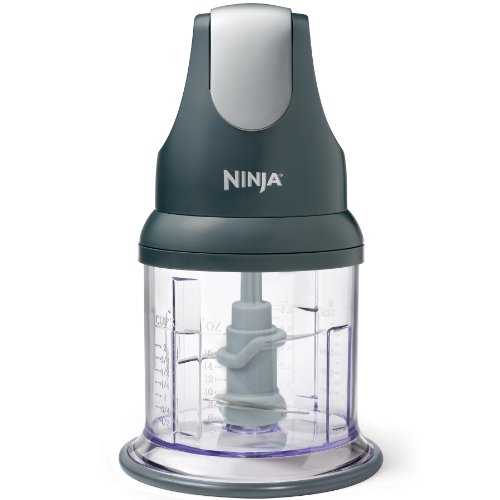
The Ninja Express Chop is the electric outlier: a compact motorised chopper with a stacked blade in a small work bowl, operated by pressing the top pod. It does not dice — it chops and minces by spinning, so output ranges from coarse chop to near-purée depending on how long you pulse, and learning that pulse timing is the whole skill of the tool. For herbs, garlic, onions for cooked bases, nuts, and breadcrumbs it is faster than any press here, and the bowl and blade wash up simply. For presentation dice — salsa, salad, garnish — its uneven, juice-releasing results are the wrong tool, and it adds a cord, a motor to store, and noise to the equation. It sits in the mid tier and is best understood as a mini food processor; if your prep leans that way, compare it against the wider category in best food processors and best compact food processors. Best for: mincing, herbs, and cooked-base prep. Not suited for: neat dice.
Strengths and Trade-Offs of the Category
Strengths
- Even dice, every time: uniform pieces cook uniformly — the single biggest quality upgrade for soups, curries, roasts, and air-fried vegetables.
- Speed on repetition: the fifth onion takes the same few seconds as the first, with no skill fade as you tire.
- Contained and comparatively safe cutting: food is enclosed, fingers stay on the lid, and there is no exposed blade travelling toward your hand as with a knife.
Trade-Offs
- A real wash-up: grid, pusher, lid, and container every time — the category’s true running cost, paid in minutes at the sink.
- Hard limits on soft produce: ripe tomatoes and very soft fruit defeat the grid; the knife keeps those jobs.
- Storage and single-purpose bulk: a full press set is a sizeable box that does one family of jobs, however well.
Who Should Buy a Vegetable Chopper — and Who Should Skip It
Buy one if your cooking regularly starts with diced firm vegetables, if you batch-cook or cook for a family, if your knife dice are uneven enough to affect how dishes cook, or if onion tears genuinely slow you down. Buy the press style for dice, the electric style for mincing, and the push style for small jobs — the performance section above maps each mechanism to its ground. Skip it if you are already fast and even with a knife and enjoy the process, if you cook mostly for one in small quantities, if your prep is dominated by slicing rather than dicing — a mandoline’s territory, covered in mandoline slicer review — or if you know honestly that a four-part wash-up means the tool will be avoided. Before buying, run this checklist: Do I dice firm vegetables at least three times a week? Do I have cupboard space for the box? Will I follow the brush-washing and guarded-storage rules every time? Is the hinge of the model I am choosing known to be sturdy? Would one dice size (the OXO route) actually cover my cooking? Five honest answers predict your satisfaction better than any feature list.
Setup, Care and Maintenance Essentials
Setup is a thirty-second ritual: click the grid firmly into its seat — a grid that is not fully seated flexes and produces ragged dice — set the container on a dry, flat surface, and check the pusher alignment with one empty press before food goes in. Cut food to fit the grid rather than forcing oversize pieces; halved onions flat-side down, carrots in planks or rounds, potatoes in slabs. Care is where ownership is won or lost. Wash promptly: vegetable residue, especially onion, dries into grids like cement and turns a ninety-second rinse into a soaking project. Brush the grid from the back, away from the edges, per the safety rules; use the pusher or cleaning comb to clear trapped pieces rather than a fingertip or a knife point, which can damage blade edges. Most parts tolerate a dishwasher’s top rack, but hand-washing the grid keeps edges keener and avoids heat stress on the plastic — and keeps sharp parts visible rather than hidden in a loaded rack. Dry every part fully before storage to protect the steel, store inserts guarded in their box or container, and inspect the hinge and lid for cracks monthly if you chop daily. A grid that has gone dull or a frame that has cracked is a part to replace, not a challenge to press harder against. For the full cleaning method, including stain and odour removal, see how to clean a vegetable chopper.
How Cut Size Changes the Dish: Getting the Most from Each Grid
The grid you choose is a cooking decision, not just a size preference, because dice size controls how fast a vegetable cooks through and how much surface it offers for browning. Small dice maximise surface area: they soften quickly, take on colour at the edges, and melt into sauces and bases, which is why the small grid is the right call for a soffritto, a salsa where the onion should whisper rather than shout, and any dish where vegetables are a foundation rather than a feature. Large dice keep their identity — a chunk of carrot in a stew, a cube of potato in a curry — and need the longer cooking time their size implies. Mixing sizes in one pan is the classic home-cooking error the chopper exists to prevent: by the time the big pieces soften, the small ones have surrendered their texture entirely.
Sticks and batons, where a set includes them, sit between the knife and the dice grids: crudités for dipping, batons for stir-fries, and uniform sticks that air fry into something close to fries. This is also where the chopper quietly serves the air fryer that gives this site its name — uniform batons and cubes season evenly, sit in a single layer without the jumble of mixed sizes, and finish together instead of in waves. The practical habit to build is choosing the grid when you plan the dish, not when you reach the counter: decide whether the vegetable is foundation or feature, pick the grid that matches, and let the tool’s consistency do the rest. Cooks who treat grid choice as part of the recipe get visibly better results from the same hardware than cooks who use whichever grid happens to be fitted.
Vegetable Chopper, Knife or Food Processor: An Honest Division of Labour
Because the three tools overlap, it is worth stating the division of labour plainly. The knife owns slicing, trimming, peeling, herbs in small quantities, ripe and soft produce, and any cut that changes mid-task. The food processor owns large-volume shredding and slicing, doughs, purées, and grating — jobs where a spinning blade and a big bowl beat a small grid. The press chopper owns exactly one territory, and owns it completely: even dice from firm vegetables, in small-to-medium batches, with minimal setup and a contained mess. The electric mini-chopper borrows the processor’s mechanism at counter scale and owns mincing — garlic, herbs, nuts, breadcrumbs — where the press grid cannot compete.
The households that feel a chopper was money well spent are the ones whose cooking actually visits that territory several times a week. The households that regret the purchase usually discover their prep was mostly slicing, or mostly tiny quantities, or mostly soft produce — all knowable in advance from the checklist in the who-should-buy section. If your kitchen already runs a food processor happily and your dice needs are occasional, the processor’s pulse button, used carefully, covers you; if the processor lives in a high cupboard and comes out twice a year, its theoretical capability is worth less than a chopper sitting ready in a drawer. Tools earn their place by being used, and the best predictor of use is the match between the tool’s one great job and your actual weeknight cooking.
What New Owners Commonly Get Wrong in the First Month
Most chopper disappointment is manufactured in the first few weeks by a handful of predictable mistakes, and every one of them is avoidable. The first is forcing oversize pieces: a whole large onion quartered too thick, a carrot laid across the grid at full length. The press then demands real force, the lid flexes, and the owner concludes the tool is weak when the setup was wrong. Size food to the grid and the same tool feels twice as strong. The second mistake is pressing off-centre — pushing down on one corner of the lid, which twists the pusher against the grid, produces slanted, ragged dice, and stresses the hinge unevenly. A flat palm, centred, pressing straight down through the shoulders is the whole technique.
The third mistake is leaving the wash-up. Onion and potato residue left overnight bonds to grids with surprising determination, and the owner who meets that welded mess the next morning starts avoiding the tool. Ninety seconds of brushing under the tap, immediately, is the price of a chopper that stays pleasant for years. The fourth is chasing soft produce — ripe tomatoes, soft peaches — through a grid designed for firm vegetables, then blaming the category for a job it never claimed. The fifth is storing inserts loose in a drawer, which dulls edges, risks fingers, and guarantees the grid you want is the one you cannot find; the storage box exists precisely because the maker knew this. Avoid these five and the first month teaches you the tool’s real rhythm: size, centre, press, brush, store. Owners who build that rhythm stop thinking about the chopper as a gadget and start thinking of it as simply how onions get diced in their kitchen — which is the exact point at which the purchase has paid off.
How This Review Judged the Models
So the judgements above are transparent: each design was weighed on the four load-bearing parts — hinge and lid strength, pusher-to-grid fit, grid quality and seating, and container practicality — and then on performance across the four job families that decide real ownership: onions, hard vegetables, soft vegetables, and small mincing jobs. Tier language is qualitative on purpose: entry, mid, and premium describe where a design sits in its category’s range and what its materials and mechanism justify, without printing prices that will be stale by the time you read this. Where a model’s bundle varies between listings — insert counts and accessories change — this review judges the core tool and tells you to confirm the exact set on the current listing before buying. No star ratings or review counts appear anywhere in this review, because those numbers move constantly and a printed figure would mislead you within weeks. What does not move is the engineering: a hinge is sturdy or it is not, a pusher clears its grid or it does not, and those are the facts worth building a decision on.
Final Verdict
A vegetable chopper is neither the miracle gadget of the product pages nor the drawer junk of the sceptics. It is a specialised tool with a clear home ground — even dice from firm vegetables, in volume, fast — and clear limits outside it. Buy a sturdy press design matched to your batch size, follow the safety system without shortcuts, and wash it promptly, and it will quietly improve every soup, curry, and tray of roast vegetables you make. For the head-to-head on the category’s two philosophies, the companion pieces vegetable chopper reviews and vegetable chopper buying guide go deeper, and vegetable chopper vs mandoline slicer settles which tool owns which job.
If you take one sentence from this entire review, take this one: match the mechanism to your actual cooking — press for dice, electric for mince, push for small jobs — and the vegetable chopper stops being a gamble and becomes one of the most predictable purchases in the kitchen. The models above cover each mechanism at its best, the safety system keeps the sharp parts boring, and the wash-up habit decides whether you are still glad you bought it next year.
Testing a Vegetable Chopper Properly: What to Check in the First Week of Use
Buying a vegetable chopper takes an afternoon; living with it happens at the prep area, where onions, peppers and salads begin, while getting uniform pieces quickly for weeknight cooking and meal preparation, and that daily reality is what this section judges. This section therefore starts with your routine rather than the product, because features only matter once they survive contact with your space, your schedule and your household. Before anything else, settle that the blade grids match the dice and slice sizes your recipes actually use; it is the unglamorous detail that quietly decides whether the rest of the specification ever gets a chance to matter. Anything heavy, hot, sharp, load-bearing or electrically powered deserves a respectful pause in the decision, and the maker’s own guidance, read before purchase, is part of the specification.
A fair test is a realistic one: full load, real timing, real users. Anything gentler is a demonstration, and demonstrations are designed to flatter. Every item leaves a footprint on the home beyond its dimensions: noise, mess, heat, moisture, effort or visual clutter. Weigh that footprint for a vegetable chopper as seriously as its size. The most future-proof question is also the simplest: if your routine changed moderately, would this vegetable chopper adapt, or would it become the wrong tool kept out of guilt? When owners give up on a vegetable chopper, the cause is often food forced through the wrong grid, bending blades and leaving half-cut pieces, not a dramatic breakdown, so treat that pattern as the main risk your decision has to answer.
- Make the keep-or-return call from your notes while you still can.
- Judge it against the three jobs named before purchase.
- Put it through the toughest ordinary use in week one.
- Re-inspect fit and moving parts once real use has settled in.
- Note every small friction point as it happens, not from memory later.
Nothing is kept forever. Favour the vegetable chopper you could repair, rehome or responsibly retire over the one that becomes an awkward problem the day it stops working. Most faults that appear months in are really maintenance or setup faults wearing a disguise, so return to the basics, position, load, cleanliness and fit, before concluding anything has failed. Picture the busiest realistic version of your week, with guests arriving, children underfoot, a meal running late or the weather turning, whichever applies, and ask whether the vegetable chopper still works then. Notice when the vegetable chopper will be used in a hurry and when it will be used with time to spare, because speed and ceremony reward different designs.
Read any review, this one included, as evidence from one household. The facts transfer; the verdict only transfers if your routine resembles the reviewer’s. There is always a learning curve, however small. Decide who in the household faces the steepest part of it with this vegetable chopper and whether the design helps or hinders them. The easiest items to own are the ones that ask for nothing between uses. If a vegetable chopper asks for something, make sure the routine gives it automatically rather than relying on memory. The care habit that matters most is simple: rinsing blades immediately, using the cleaning tool and drying every part before assembly. Built into the routine from the first week, it prevents most of the decline owners later blame on the product.
A rotation or spare strategy suits some households, where one vegetable chopper rests, dries, charges or waits in reserve while another works, and it can double useful life for surprisingly little organisation. A vegetable chopper can be excellent in isolation and wrong in your room, so judge it against the exact surroundings it will meet rather than against a showroom or a styled photograph. Idle items still occupy your home. A vegetable chopper with no proper resting place becomes clutter with a function, so settle its storage before it arrives rather than after. Flexibility is worth paying for only if you will use it. A vegetable chopper that folds, moves or converts impresses in the listing and matters only if your routine actually asks it to.
Sometimes the right purchase is smaller than planned because an existing possession covers the heavy or rare jobs, leaving the new vegetable chopper to specialise in the frequent ones. If something does go wrong, your own notes are gold: dates, symptoms and what you already tried will get you a useful answer far faster than a general description of disappointment. Delegation exposes weak choices. A vegetable chopper that only works in one person’s hands, with one person’s knack, is a fragile solution for a shared home. A slightly less capable vegetable chopper that stays clean will outperform a superior one that is neglected, which is why care burden belongs near the top of any comparison.
Frequently Asked Questions
Can a vegetable chopper really replace a knife?
No, and it should not try. A chopper replaces the knife for one family of jobs — dicing firm vegetables evenly and quickly. Slicing, trimming, peeling, and ripe tomatoes still belong to the knife, and most chopper owners keep a good chef’s knife in daily use beside it. Think of the chopper as removing the repetitive bulk work so the knife work that remains is the part you might actually enjoy. Our guide to best chef knife sets covers the other half of the partnership.
Which is better for onions: a press chopper or an electric chopper?
For dice you can see — salsa, salads, garnishes, toppings — the press wins clearly, because the grid cuts clean cubes in one motion. The electric chopper minces by spinning, releasing more juice and producing uneven pieces that suit cooked bases like sauces and soups. Many households that own both use the press for fresh preparations and the electric for the base of a cooked dish. If you can only have one and your onions mostly end up cooked, the electric is defensible; for everything else, press.
How do I stop food getting stuck in the blade grid?
Three habits fix most sticking: cut food to fit the grid so the pusher can complete its travel; press in one firm, centred motion rather than several half-presses; and clear the grid immediately after each batch with the pusher, cleaning comb, or a brush from the back side. Waxy or starchy residue from potatoes benefits from a quick rinse of the grid between batches. Never pick trapped pieces out with a fingertip — that is the exact moment these tools cut people.
Are vegetable choppers safe for beginners?
Used by the rules, yes — arguably safer than a knife for a beginner, because the cut happens enclosed with hands on the lid rather than a blade moving near fingers on a board. The conditions are the safety system in this review: pusher or lid only, never fingers; brush-only washing, never a bare hand in soapy water; blades stored guarded and away from children; and a cracked part retired immediately. A beginner who treats those as optional should stick to a knife and board until the habits stick.
How long does a good vegetable chopper last?
The blades and container of a decent model last for years; the hinge and lid decide the tool’s lifespan, because they absorb the force of every press. Treating hard vegetables gently — sizing pieces to the grid, pressing with steady centred pressure, never forcing — extends hinge life more than any other habit. Monthly crack checks catch damage early. When a hinge cracks, the honest answer is replacement of the part or tool, not pressing on and hoping, because a lid that fails mid-press fails toward the blades.
What vegetables should I never put in a press chopper?
Very ripe tomatoes and soft stone fruit crush rather than dice. Whole oversized items that overhang the grid overload the hinge — cut them down first. Very hard, dry items such as whole raw winter squash in thick slabs ask more force than home hinges are built for; smaller, thinner pieces are the workaround. Anything frozen is out — the grid is designed for fresh produce. When in doubt, the test is simple: if a piece needs you to lean your full weight on the lid, it needs the knife first.
Related Reading
Continue with the rest of this cluster: vegetable chopper pros and cons, is a vegetable chopper worth it, and how to choose a vegetable chopper. For the neighbouring tools, see mandoline slicer buying guide and keep diced vegetables crisp with a solid board from best cutting boards for home cooks.


