Disclosure: As an Amazon Associate, airfryerkitchensupply.com earns from qualifying purchases. Links on this page are affiliate links; they cost you nothing extra. Prices and availability change often, so check the current Amazon listing before you buy.
This ironing board buying guide is written for the moment before you buy, when every board looks like a rectangle on legs and the differences that will decide years of weekly use are still invisible. They are not invisible once you know where to look. This guide walks through the types, the questions that actually matter, and the mistakes that send boards back or leave them sulking in cupboards, then matches the main picks to the households they genuinely suit.
Key Takeaways
Buy stability first, cover quality second, and storage fit always. Decide your type by your dominant load: shirts, bedding, sewing or occasional pressing. Set your height range by the tallest and shortest users in the house. Treat the cover as a consumable you will replace, and choose a board whose replacement covers are easy to find. Finally, plan the board’s home before it arrives, because a board without a storage home becomes furniture you did not want.
- Non-negotiable: legs that lock fully, feet that grip, a frame that does not rock on a flat floor.
- The working surface is frame plus cover plus padding; judge all three together.
- Tabletop boards trade stability for storage; buy that trade knowingly or not at all.
- Children must never climb or hang on a board; storage that prevents it is a buying criterion.
In this guide
What an Ironing Board Does and the Main Types
Full-Size Freestanding Boards
Board shape is a quiet decision with daily consequences. The tapered nose exists so that shirts can be pulled over the end, letting you press shoulders, yoke and sleeves without fighting a square corner, and so trousers can be slipped on to press legs one layer at a time. A wider rear section gives you room for bedding, table linen and the broad panels of dresses and coats. Very wide boards feel luxurious with sheets but can be awkward in a narrow room, where you keep catching the edge as you turn. Very narrow boards store beautifully and handle shirts well, then make a duvet cover feel like wrestling a sail in a corridor.
A steady board also produces better results, which is the part people underestimate. When the surface does not bounce, the iron stays in full contact with the fabric, steam penetrates evenly instead of escaping sideways, and you need fewer passes over the same seam. Fewer passes means less heat stress on delicate fibres, less shine on dark trousers, and a session that finishes sooner. When a board flexes, you compensate by pressing harder, and pressing harder is exactly what crushes pile fabrics, flattens embroidery, and pushes creases sideways into new wrinkles a few inches away.
Wide Boards for Bedding and Sewing
Think about the garments you actually press, not the garments you imagine pressing. A household that irons work shirts and school uniforms every week lives at the nose of the board. A household whose real load is bedding, curtains and table linen lives at the wide end. Sewists and quilters are a third case again: they press fabric lengths, seams and blocks constantly, often for longer sessions, and they value a broad, rock-steady surface and a cover that grips cotton without letting it skate. Matching board shape to your dominant load is the difference between a tool that disappears into the routine and one you argue with every Sunday evening.
Bedding is the load that exposes every weakness. A duvet cover is heavy, wide and determined to slide off, so you work in sections, keep the bulk of the fabric supported rather than dragging on the floor, and rely on the wide end of the board. Sheets pick up floor dust and pet hair if they trail, so the board becomes a clean island and your technique is about keeping the fabric on it. Table linen adds stains and heirloom fragility to the problem; a clean cover is non-negotiable, because pressing a white tablecloth on a marked cover can set a mark rather than remove a crease.
Tabletop Boards
Tabletop boards deserve an honest paragraph of their own. They trade stability for storage, and that trade is sometimes right and sometimes wrong. On a solid table, with a small load of tops and tea towels, a tabletop board is quick, kind to your back in a different way, and tucks into a drawer or hangs inside a cupboard door. But it sits on whatever wobble the table already has, its short surface forces constant repositioning of anything larger than a shirt, and there is no iron rest worth the name, so the hot iron ends up sharing the table edge. Choose a tabletop board for small loads and tight storage, not as a cheaper substitute for full-size pressing.
Compact and Lightweight Boards
Weight cuts both ways. A heavier frame usually feels steadier in use and less likely to skate across a smooth floor when you pull a heavy sheet toward you. A lighter frame is kinder on stairs, easier for smaller or older users to handle, and more likely to be fetched for a single shirt rather than avoided. There is no virtue in the heaviest board if the person doing the ironing dreads lifting it. The honest question is who will move this board, how far, and how often, and the answer should steer the choice as firmly as any feature list.
Storage is where many boards lose their owners. A board that is awkward to carry, that pinches fingers when it folds, or that will not stand safely in the cupboard is a board that gets left open in the corner, gathering dust and becoming a shelf for un-ironed laundry, which is the first step toward never ironing at all. Consider where the folded board will live before you buy: a narrow gap beside a wardrobe, a hook inside a utility cupboard, flat under a bed, or standing in a laundry corner. Measure that space in the plain sense of checking it honestly, and picture carrying the board through your own doorways, because the best board for your home is the one you can set up in under a minute without a struggle.
Top Picks at a Glance from This Ironing Board Buying Guide
The picks below are presented as qualitative tiers, because the right way to use them is to match a tier to a household, not to chase a badge. Best overall means the calmest all-round character. Best for big loads means surface and stamina. Best for small homes means carrying and storage. Use the descriptions to shortlist, then confirm the current listing details before you buy.
Brabantia Ironing Board
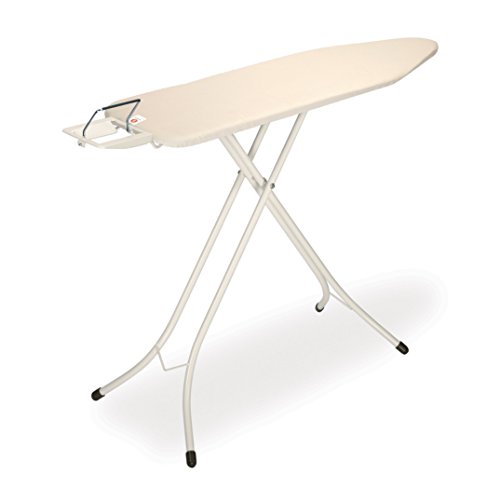
The Brabantia Ironing Board is a premium-tier board known for a sturdy frame, a smooth height action and covers that fit properly, aimed at households that iron often and want the set-up to feel effortless. In daily use, judge it the way you would judge any board in this guide: open it on a flat floor, lock the legs fully, press down near the nose to feel for flex, and run a shirt over the tapered end to see whether the shape suits your routine. Check the cover honestly too, because on this board, as on every board, a thin or tired cover will undo the good work of a decent frame.
Badge: best overall. Choose this tier if ironing is a fixed weekly rhythm and you want set-up and pressing to feel calm from the first shirt to the last.
Bartnelli Ironing Board
The Bartnelli Ironing Board is a mid-tier board that leans into a wide, shaped top and a built-in iron rest, popular with people who press a lot of shirts and bedding. In daily use, judge it the way you would judge any board in this guide: open it on a flat floor, lock the legs fully, press down near the nose to feel for flex, and run a shirt over the tapered end to see whether the shape suits your routine. Check the cover honestly too, because on this board, as on every board, a thin or tired cover will undo the good work of a decent frame.
Badge: best for big loads. Choose this tier for bedding, curtains, table linen and sewing, and only if the room and the cupboard can honestly accommodate its width.
Homemaid Living Ironing Board
The Homemaid Living Ironing Board is an entry-to-mid-tier board that keeps the design simple, light to carry and easy to store, suited to smaller homes and lighter weekly loads. In daily use, judge it the way you would judge any board in this guide: open it on a flat floor, lock the legs fully, press down near the nose to feel for flex, and run a shirt over the tapered end to see whether the shape suits your routine. Check the cover honestly too, because on this board, as on every board, a thin or tired cover will undo the good work of a decent frame.
Badge: best for small homes. Choose this tier when storage is the binding constraint and your loads are light to moderate.
Household Essentials Ironing Board
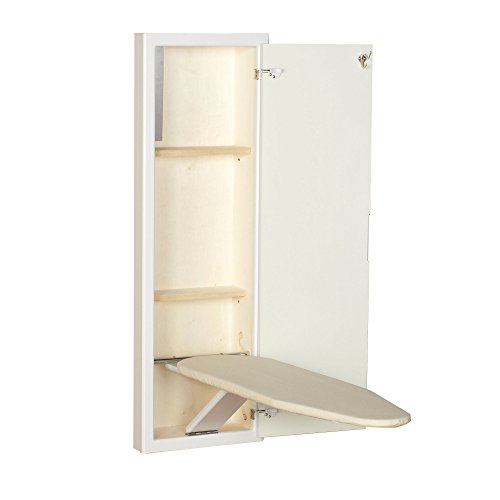
The Household Essentials Ironing Board is a practical mid-tier option in the classic mould, with straightforward folding and replacement covers that are easy to find. In daily use, judge it the way you would judge any board in this guide: open it on a flat floor, lock the legs fully, press down near the nose to feel for flex, and run a shirt over the tapered end to see whether the shape suits your routine. Check the cover honestly too, because on this board, as on every board, a thin or tired cover will undo the good work of a decent frame.
Badge: best classic value in character. Choose this tier for predictable, all-round family service and the easiest cover replacements.

Amazon Basics Ironing Board
The Amazon Basics Ironing Board is an entry-tier board for occasional pressing, spare rooms and first homes, where simple and serviceable beats elaborate. In daily use, judge it the way you would judge any board in this guide: open it on a flat floor, lock the legs fully, press down near the nose to feel for flex, and run a shirt over the tapered end to see whether the shape suits your routine. Check the cover honestly too, because on this board, as on every board, a thin or tired cover will undo the good work of a decent frame.
Badge: best for occasional use. Choose this tier for a first home, a spare room, or a household testing whether ironing becomes a habit.
How Much Stability Do You Need?
The single most important quality in any board is stability, and it is also the quality that is hardest to judge from a photograph. A board that looks solid in a listing can still rock on its feet the moment you lean into a stubborn crease, and that rocking is not a minor annoyance. A wobbling board under a hot iron is a genuine burn hazard, because your free hand instinctively reaches out to steady the surface while the other hand is holding an iron that is hot enough to scorch fabric and skin alike. Judge stability by the whole system: how widely the legs spread, how firmly the feet grip the floor, how much flex the top shows when you press down near the nose, and whether the height lock holds without creeping during a long session.
Set-up discipline matters as much as build quality. Always open a board on a flat, hard floor rather than on thick carpet where the feet can sink unevenly, and always open the legs fully until the lock engages before you place anything on the top. Never lean your body weight on the nose of the board to reach a far corner; walk around to the other side instead, or slide the garment toward you. Keep the iron in its heel rest position, standing upright on the iron rest or on its heel, whenever your hand leaves it, and route the cord so that a passing foot cannot catch it and pull the iron toward the edge.
How Much Surface Do You Actually Press On?
Board shape is a quiet decision with daily consequences. The tapered nose exists so that shirts can be pulled over the end, letting you press shoulders, yoke and sleeves without fighting a square corner, and so trousers can be slipped on to press legs one layer at a time. A wider rear section gives you room for bedding, table linen and the broad panels of dresses and coats. Very wide boards feel luxurious with sheets but can be awkward in a narrow room, where you keep catching the edge as you turn. Very narrow boards store beautifully and handle shirts well, then make a duvet cover feel like wrestling a sail in a corridor.
Shirts are the benchmark garment, and a good board makes their order of work feel natural: collar, yoke, sleeves and cuffs worked over the nose, then the body panels on the broad surface, with the garment rotated rather than the iron forced around corners. When a board is the right height and does not rock, a shirt becomes a rhythm instead of a wrestling match, and that rhythm is what turns a weekly pile into twenty calm minutes. If shirts are your main load, judge every board by how its nose, height range and iron rest serve that rhythm.
What Cover and Padding Should You Look For?
The cover and the padding beneath it are the working surface of the board, and their condition decides more of your result than the frame underneath. A thin cover lets the metal mesh pattern of the top print through onto smooth fabrics, leaving a faint grid on a shirt back that only shows up in daylight. A scorched cover is worse: scorch marks transfer heat unevenly, rough patches drag against silk and synthetics, and a brittle, heat-damaged surface can mark light-coloured garments. Be honest about the cover you own. If it is thin, shiny with wear, or yellowed and rough in the centre where the iron always parks, replacing the cover is the cheapest genuine upgrade in all of laundry care.
Padding works as a team with the cover. A felted, heat-reflective padding layer bounces steam and heat back up through the garment, so you effectively press both sides at once and can often skip flipping a shirt to do the reverse. Thin foam padding compresses quickly in the middle, creating a shallow valley where water pools and collars refuse to lie flat. When you handle a board in a shop or read a description closely, look for language about layered padding rather than a single thin sheet, and plan on the cover being a consumable: it wears, it scorches, and it is meant to be replaced long before the frame gives up.
What Height Range Suits Your Household?
Working height decides whether ironing is a chore you finish fresh or one you finish with an aching back and shoulders. The right height lets your forearm stay roughly level as the iron glides, so the weight of the iron does the pressing and your shoulder is not shrugging or pushing down on every stroke. Too low and you stoop, and the stoop creeps into your lower back within minutes. Too high and you lift the iron with your shoulder and wrist, which tires the arm and makes the iron tippy at the end of each pass. A board with a wide, easy height range serves a whole household, because the right height for one person is rarely the right height for another.
Adjust the height before you plug anything in, and test it with the motion you will actually use: stand as you would to press a shirt, rest your hand flat on the board, and check that your elbow keeps a comfortable bend. Sitting to iron is a legitimate choice for long sessions, especially when pressing sewing pieces or working through a basket slowly, and a board that lowers far enough for a chair gives you that option. What matters is that the locking mechanism holds the chosen height firmly from the first garment to the last, without the slow sinking that makes you finish the session pressing on a surface that has quietly dropped.
Where Will It Live When It Is Folded?
Storage is where many boards lose their owners. A board that is awkward to carry, that pinches fingers when it folds, or that will not stand safely in the cupboard is a board that gets left open in the corner, gathering dust and becoming a shelf for un-ironed laundry, which is the first step toward never ironing at all. Consider where the folded board will live before you buy: a narrow gap beside a wardrobe, a hook inside a utility cupboard, flat under a bed, or standing in a laundry corner. Measure that space in the plain sense of checking it honestly, and picture carrying the board through your own doorways, because the best board for your home is the one you can set up in under a minute without a struggle.
Folding mechanisms deserve a close look because they are the moving part you will operate thousands of times. The lever should be reachable without crouching blindly under a hot board, the action should be smooth rather than a sudden collapse, and the legs should fold flat enough that the board stores without springing open in the cupboard. Keep fingers clear of the scissor points of the frame as it closes; most board injuries at home are pinches and collapses during set-up and put-away, not during the pressing itself. A calm, practised fold, done the same way every time, is part of using the tool safely.
How to Prioritise by Use Case
The weekly shirt household should prioritise nose shape, height range and frame calm, in that order, because its life is rhythm and repetition. The bedding household should prioritise width and stability under heavy, dragging loads, and should be honest about room size. The sewing household should prioritise surface, grip from the cover, and the stamina to stay steady through long sessions at one height. The occasional household should prioritise carrying, storage and price of entry in character rather than features, because its board succeeds by being fetched without dread for a single garment. Each profile can borrow the others’ boards in a pinch; none should buy the others’ boards as a first choice.
The value of a board is measured in garments rescued and minutes saved, not in features. A creased shirt that goes unworn, a dress that stays in the wardrobe because it needs pressing, bedding that looks tired on the bed: these are small daily costs that a decent board quietly removes. Against that, the honest costs of ownership are space, set-up time and the discipline of putting the thing away. Households that iron weekly almost always find the exchange favourable. Households that reach for a steamer for two garments a month may honestly not, and no review should pretend otherwise.
There is also a clothing-care argument that rarely gets made. Garments that are pressed look newer for longer, seams sit where they were made to sit, and you are less tempted to replace a shirt that merely looks tired. Pressing is also an inspection: at the board you notice the loose button, the fraying cuff and the small stain while they are still small problems. A board earns its cupboard space partly as a pressing surface and partly as the place where clothes get looked after properly.
Mini-Reviews: Best For and Not Suited For
Brabantia Ironing Board. Best for: frequent ironers who value calm set-up and a surface that stays smooth. Not suited for: buyers whose storage gap is very narrow or who need the lightest possible carry up stairs. Bartnelli Ironing Board. Best for: big loads, bedding and sewing. Not suited for: small rooms where a wide top will catch on furniture at every turn. Homemaid Living Ironing Board. Best for: small homes and light weekly loads. Not suited for: duvet covers and marathon sessions. Household Essentials Ironing Board. Best for: classic family all-round use. Not suited for: anyone wanting specialist width or premium refinements. Amazon Basics Ironing Board. Best for: occasional pressing and first homes. Not suited for: heavy weekly family laundry as a long-term station.
First Setup and Care Essentials
Care of the board itself is brief but real. Let the cover cool and dry before folding the board away, especially after heavy steaming, so the padding does not stay damp in a closed cupboard. Wipe the top if starch or residue builds up, check the feet for grit that could scratch flooring, and glance at the frame and lock now and then for anything loose or bent. A board stored dry, folded correctly and kept where it will not be knocked over will serve for years; a board stored damp, forced shut or used as a general-purpose table will not, and its decline will show up as wobble, marks and frustration long before it actually breaks.
Fitting a replacement cover properly is a small skill worth learning. A cover should be pulled snug and smooth, secured so it cannot creep as you drag a heavy duvet cover across it, and free of wrinkles of its own, because every wrinkle in the cover becomes a wrinkle pressed into the garment. Elastic edges, drawstrings and fastening straps all work when they are tensioned evenly from the nose backward. Take an extra minute here; ironing on a loose cover is like writing on paper that slides around the desk, and the frustration people blame on their iron is often a loose cover underneath the work.
Children and boards do not mix, and this needs to be said plainly. Children must not climb on an ironing board, hang from its nose, or play underneath it while it is open. A board is a tall, narrow, top-heavy structure by design, and a child pulling on the edge can collapse it in a second, bringing a hot iron down with it. Fold the board away between sessions if children are in the house, store it where it cannot be pulled over, and never leave a hot iron unattended on an open board while you answer the door or check on dinner.
Mistakes to Avoid
The classic mistakes are buying the widest board for the narrowest room, buying the lightest board for the heaviest load, ignoring the cover because the frame looked strong, and never deciding where the folded board will live. Add two safety mistakes to that list, because a buying guide is the right place to prevent them: setting up on carpet or a sloped floor because it is convenient, and leaving a board open as a household surface where children climb and laundry piles gather. Every one of these mistakes is avoidable at the buying stage with five honest minutes of measuring, lifting and thinking, which is the cheapest quality control in the whole purchase.
A good session starts before the iron is hot. Sort the basket by fabric so you can work from the most delicate items, which need the least heat, up to cotton and linen, which need the most, without constantly adjusting and waiting. Fill the iron, set up the board fully, check the cover is smooth, and put a hanger rail, a chair back or the end of the board to work as a landing zone for finished pieces so they do not crease again in a pile. Pressing a garment beautifully and then dropping it in a heap is the most common way households waste the effort a board makes possible.
Technique on the board is mostly about letting the tools work. Glide with the grain of the fabric, use long strokes rather than scrubbing back and forth, lift and place rather than pushing the iron around corners, and give steam a moment to relax fibres before the soleplate flattens them. Work one section fully, then move the garment, rather than skimming the whole piece repeatedly. Stubborn creases usually need moisture and a pause, not more force; force on a board that flexes simply moves the problem. Finish each piece with a few seconds of cooling on the board or straight onto a hanger, because a crease set while the fabric is warm and then disturbed is a crease half wasted.
Fitting a replacement cover properly is a small skill worth learning. A cover should be pulled snug and smooth, secured so it cannot creep as you drag a heavy duvet cover across it, and free of wrinkles of its own, because every wrinkle in the cover becomes a wrinkle pressed into the garment. Elastic edges, drawstrings and fastening straps all work when they are tensioned evenly from the nose backward. Take an extra minute here; ironing on a loose cover is like writing on paper that slides around the desk, and the frustration people blame on their iron is often a loose cover underneath the work.
Board shape is a quiet decision with daily consequences. The tapered nose exists so that shirts can be pulled over the end, letting you press shoulders, yoke and sleeves without fighting a square corner, and so trousers can be slipped on to press legs one layer at a time. A wider rear section gives you room for bedding, table linen and the broad panels of dresses and coats. Very wide boards feel luxurious with sheets but can be awkward in a narrow room, where you keep catching the edge as you turn. Very narrow boards store beautifully and handle shirts well, then make a duvet cover feel like wrestling a sail in a corridor.
Think about the garments you actually press, not the garments you imagine pressing. A household that irons work shirts and school uniforms every week lives at the nose of the board. A household whose real load is bedding, curtains and table linen lives at the wide end. Sewists and quilters are a third case again: they press fabric lengths, seams and blocks constantly, often for longer sessions, and they value a broad, rock-steady surface and a cover that grips cotton without letting it skate. Matching board shape to your dominant load is the difference between a tool that disappears into the routine and one you argue with every Sunday evening.
Tabletop boards deserve an honest paragraph of their own. They trade stability for storage, and that trade is sometimes right and sometimes wrong. On a solid table, with a small load of tops and tea towels, a tabletop board is quick, kind to your back in a different way, and tucks into a drawer or hangs inside a cupboard door. But it sits on whatever wobble the table already has, its short surface forces constant repositioning of anything larger than a shirt, and there is no iron rest worth the name, so the hot iron ends up sharing the table edge. Choose a tabletop board for small loads and tight storage, not as a cheaper substitute for full-size pressing.
Working height decides whether ironing is a chore you finish fresh or one you finish with an aching back and shoulders. The right height lets your forearm stay roughly level as the iron glides, so the weight of the iron does the pressing and your shoulder is not shrugging or pushing down on every stroke. Too low and you stoop, and the stoop creeps into your lower back within minutes. Too high and you lift the iron with your shoulder and wrist, which tires the arm and makes the iron tippy at the end of each pass. A board with a wide, easy height range serves a whole household, because the right height for one person is rarely the right height for another.
Adjust the height before you plug anything in, and test it with the motion you will actually use: stand as you would to press a shirt, rest your hand flat on the board, and check that your elbow keeps a comfortable bend. Sitting to iron is a legitimate choice for long sessions, especially when pressing sewing pieces or working through a basket slowly, and a board that lowers far enough for a chair gives you that option. What matters is that the locking mechanism holds the chosen height firmly from the first garment to the last, without the slow sinking that makes you finish the session pressing on a surface that has quietly dropped.
Storage is where many boards lose their owners. A board that is awkward to carry, that pinches fingers when it folds, or that will not stand safely in the cupboard is a board that gets left open in the corner, gathering dust and becoming a shelf for un-ironed laundry, which is the first step toward never ironing at all. Consider where the folded board will live before you buy: a narrow gap beside a wardrobe, a hook inside a utility cupboard, flat under a bed, or standing in a laundry corner. Measure that space in the plain sense of checking it honestly, and picture carrying the board through your own doorways, because the best board for your home is the one you can set up in under a minute without a struggle.
Weight cuts both ways. A heavier frame usually feels steadier in use and less likely to skate across a smooth floor when you pull a heavy sheet toward you. A lighter frame is kinder on stairs, easier for smaller or older users to handle, and more likely to be fetched for a single shirt rather than avoided. There is no virtue in the heaviest board if the person doing the ironing dreads lifting it. The honest question is who will move this board, how far, and how often, and the answer should steer the choice as firmly as any feature list.
Folding mechanisms deserve a close look because they are the moving part you will operate thousands of times. The lever should be reachable without crouching blindly under a hot board, the action should be smooth rather than a sudden collapse, and the legs should fold flat enough that the board stores without springing open in the cupboard. Keep fingers clear of the scissor points of the frame as it closes; most board injuries at home are pinches and collapses during set-up and put-away, not during the pressing itself. A calm, practised fold, done the same way every time, is part of using the tool safely.
Different fabrics ask different things of the board. Cotton and linen reward a firm, well-padded surface and plenty of steam, and they are forgiving of a board with a broad top. Silk, viscose and delicate synthetics ask for a smooth, clean cover above all, because any roughness, residue or scorched patch will show on them or, worse, stick. Dark wool trousers show shine if you press hard on a bouncy board, so steadiness protects the finish. Pleats, whether on a skirt or a curtain heading, need the tapered nose and the patience to let each pleat cool and set before you move on, which a board that stays put makes far easier.
Bedding is the load that exposes every weakness. A duvet cover is heavy, wide and determined to slide off, so you work in sections, keep the bulk of the fabric supported rather than dragging on the floor, and rely on the wide end of the board. Sheets pick up floor dust and pet hair if they trail, so the board becomes a clean island and your technique is about keeping the fabric on it. Table linen adds stains and heirloom fragility to the problem; a clean cover is non-negotiable, because pressing a white tablecloth on a marked cover can set a mark rather than remove a crease.
Shirts are the benchmark garment, and a good board makes their order of work feel natural: collar, yoke, sleeves and cuffs worked over the nose, then the body panels on the broad surface, with the garment rotated rather than the iron forced around corners. When a board is the right height and does not rock, a shirt becomes a rhythm instead of a wrestling match, and that rhythm is what turns a weekly pile into twenty calm minutes. If shirts are your main load, judge every board by how its nose, height range and iron rest serve that rhythm.
A good session starts before the iron is hot. Sort the basket by fabric so you can work from the most delicate items, which need the least heat, up to cotton and linen, which need the most, without constantly adjusting and waiting. Fill the iron, set up the board fully, check the cover is smooth, and put a hanger rail, a chair back or the end of the board to work as a landing zone for finished pieces so they do not crease again in a pile. Pressing a garment beautifully and then dropping it in a heap is the most common way households waste the effort a board makes possible.
Technique on the board is mostly about letting the tools work. Glide with the grain of the fabric, use long strokes rather than scrubbing back and forth, lift and place rather than pushing the iron around corners, and give steam a moment to relax fibres before the soleplate flattens them. Work one section fully, then move the garment, rather than skimming the whole piece repeatedly. Stubborn creases usually need moisture and a pause, not more force; force on a board that flexes simply moves the problem. Finish each piece with a few seconds of cooling on the board or straight onto a hanger, because a crease set while the fabric is warm and then disturbed is a crease half wasted.
Care of the board itself is brief but real. Let the cover cool and dry before folding the board away, especially after heavy steaming, so the padding does not stay damp in a closed cupboard. Wipe the top if starch or residue builds up, check the feet for grit that could scratch flooring, and glance at the frame and lock now and then for anything loose or bent. A board stored dry, folded correctly and kept where it will not be knocked over will serve for years; a board stored damp, forced shut or used as a general-purpose table will not, and its decline will show up as wobble, marks and frustration long before it actually breaks.
Before You Commit: A Ironing Board Fit and Compatibility Checklist
A buying guide earns its keep in the last ten minutes before you order, when broad advice has to become a yes or no for one specific home. Use this section as that final pass for a ironing board: it turns the criteria covered earlier into checks you can physically make, in order, so the version you choose fits your space, your habits and the other items it has to work alongside.
Work through fit before features, in this exact order. First confirm the board length and height range against your own height and longest garments; write the numbers down, because memory rounds measurements in the direction of the product you already want. Then settle compatibility in plain terms: leg style stability on your floor type and the storage space when folded. Only once both pass should you compare the shortlist, and when a listing names a model such as Brabantia Ironing Board, confirm the exact variant and included parts on that listing rather than assuming every version is identical.
Now price the decision in effort rather than money. The upkeep reality is simple: washing or replacing the cover before scorch marks transfer, and checking padding wear. If that routine fits a habit you already keep, ownership will feel easy; if it demands a new ritual you know you will skip, the ironing board will age badly no matter how well it scores elsewhere. The same honesty applies to storage, setup time and the person who will actually do the cleaning, whose opinion deserves the casting vote.
Close the decision with the hardest test, not the easiest: large items like duvet covers, which test board width far more than shirts do. If the ironing board you favour handles that case and your two most frequent uses comfortably, stop researching and buy it. If it fails either test, walk away even from an attractive offer, because you will re-live that failure every time the situation repeats, long after the saving is forgotten.
A Final Decision Checklist
- Start the shortlist with size: confirm the board length and height range against your own height and longest garments before comparing any features.
- Then settle fit with what you already own: leg style stability on your floor type and the storage space when folded.
- Ask how it fails before how it shines: the usual story is a board that rocks because the feet are uneven or the floor is not level.
- Check the upkeep suits your routine, since washing or replacing the cover before scorch marks transfer, and checking padding wear.
- End with the hardest regular test, because large items like duvet covers, which test board width far more than shirts do.
- Judge finalists against your two most frequent uses, written down, not against occasional ones.
- Keep packaging and paperwork until a full week of real use has passed without a problem.
- Photograph the setup once it works well, so you can restore it after cleaning or rearranging.
- Re-check the footprint with tape on the floor for a day if space is tight, and live around the outline first.
- Verify seasonal differences, since heat, guests and holiday loads test a ironing board differently from ordinary weeks.
- Confirm the storage spot honestly: if putting it away is awkward, the ironing board will slowly stop being used.
- Confirm compatibility once more before ordering parts or accessories, remembering that leg style stability on your floor type and the storage space when folded.
- Write down and check every included part against the listing description on arrival day, while an exchange is still painless.
- Write down and check the upkeep into an existing routine, because washing or replacing the cover before scorch marks transfer only happens reliably when it rides on a habit.
- Put on the list and check sound, weight and effort during normal use, the everyday qualities that decide long-term satisfaction.
Frequently Asked Questions
What size ironing board should I buy?
Buy the size that matches your dominant load and your room. Shirt households do well with a standard full-size board and a good tapered nose. Bedding, curtain and sewing households benefit from a wider top if the room allows it. Small homes should measure the storage gap first and let that honest measurement set the ceiling on size.
Is a heavier board better?
A heavier board is often steadier, and steadiness is the top priority, but only if the person using it can carry and set it up comfortably. A board that is dreaded will be avoided, and an avoided board is worthless. The best weight is the heaviest the regular user can handle without thinking twice about fetching it.
What makes a cover good?
A good cover is smooth, snug and backed by padding thick enough that the board’s structure never prints through onto fabric. Heat-reflective padding that bounces steam back through the garment is a genuine advantage. Above all, a good cover is replaceable, because every cover eventually scorches or wears, and a board whose covers are easy to find stays good for years.
Do I need an iron rest?
An iron rest is a convenience that becomes a safety habit: it gives the hot iron a defined parking place while you reposition a garment. Whether the rest is a frame extension or you simply park the iron upright on its heel at the wide end, what matters is that the iron always has a planned, stable place to stand and is never balanced at an edge or left lying flat on the cover.
Can I iron sitting down?
Yes, if the board lowers far enough and stays locked at that height, and many people prefer it for long or gentle sessions such as sewing work. Check the low end of the height range when you buy if sitting matters to you, and use a chair that lets your forearm stay level with the surface, just as you would when standing.
What should I check in the shop before paying?
Open the board fully on the shop floor, lock the legs, set your height, and press firmly near the nose and centre to feel for rock or flex. Work the folding lever, feel the cover’s thickness over the padding, and lift the folded board as you would carry it at home. Those two minutes answer most of what a listing cannot tell you.
Related Guides and Next Reads
Keep building your laundry routine with these companion guides from the same programme: our ironing board review, the ironing board reviews roundup, ironing board pros and cons in full, is an ironing board worth it, our clothes iron review, the clothes iron buying guide, best bed sheet sets for a crisp, pressed finish, closet organisers that keep pressed clothes tidy, blackout curtains worth pressing before you hang them. Each one covers the partner decision to this one, so you can match the iron, the surface and the storage to each other instead of buying each piece in isolation.

