Disclosure: As an Amazon Associate, airfryerkitchensupply.com earns from qualifying purchases. Links on this page are affiliate links; they cost you nothing extra. Prices and availability change often, so check the current Amazon listing before you buy.
This clothes iron review guide is written for real laundry baskets, not showroom shelves. Whether your pile is school shirts on a Sunday night, linen that creases if you look at it, a single good dress for an important morning, or the steady uniforms of a working week, the questions are the same: is it safe, is it suited to your fabrics, and will it still be pleasant to use in a year. This article answers those questions in that order, with safety first, honest trade-offs throughout, and no shortcuts around fabric labels.
Key Takeaways
- Safety first: heel rest, unplug, never unattended.
- Fabric labels decide the setting, every time.
- Even heat and honest steam beat feature lists.
- A clean soleplate protects your best clothes.
The short verdict: a good clothes iron suits households that wear structured, natural-fibre clothing and will give it ten focused minutes at a board. It does not suit anyone who wants to wander off mid-session, skip label checks, or press everything on the hottest setting and hope. The rest of this review explains why, in the order you will actually feel it: setup, heat, steam, glide, and the small maintenance habits that decide whether year two feels like week two.
In this guide
What a Clothes Iron Is and Where This Clothes Iron Review Fits
The board and the space around it are part of the tool, even though they come in a different box. A board that wobbles makes you press harder to compensate, a cover that is scorched or padded unevenly prints its texture into thin fabrics, and a cramped corner invites the cord to drag across finished work. Set the board at a height that lets your forearm stay roughly level, keep a clear landing zone for finished garments, hang or fold each piece as you finish it, and keep the path between board and wardrobe free. Good ironing looks effortless mostly because the setup removes the small fights before they start.
Value in an iron is rarely about the longest feature list. It is about whether the iron heats evenly, steams when asked, feels balanced in your hand for the length of your usual session, cleans up without a fight, and keeps doing those things season after season. A modest iron that suits your fabrics and your space will serve you better than an elaborate one that is heavy, fiddly, or too large for its shelf. Read feature claims as questions to test against your own laundry: will this help with my shirts, my linen, my children’s uniforms, my occasional delicate dress? If a feature answers none of your real piles, it is decoration, not value.
Cord behaviour sounds trivial until you have pulled a finished sleeve back off the board with it. A cord that swivels, exits at a sensible angle, and is long enough to reach without tugging lets you work the full length of a board without planning every pass around it. Keep the cord off hot surfaces, never wrap it tightly around a warm iron, and inspect it now and then for fraying or damage, especially near the heel and the plug. A damaged cord is a stop-using-it problem, not a tape-it-and-carry-on problem. When you store the iron, a loose coil, a cool plate, and an empty or maker-approved tank state are the tidy, safe finish.
Steam is the working partner of heat and pressure, not a special effect. Heat relaxes fibres, pressure flattens them, and steam carries moisture into the cloth so the fibres let go of a crease instead of fighting it. That is why a shirt that resists a dry pass often smooths in one slower pass once steam is involved. It is also why more steam is not automatically better: delicate fabrics, dark cottons that can shine, and garments with glued details may need less moisture, a lower setting, or a press cloth between the soleplate and the surface. Learning when to add steam and when to hold it back is the real skill of ironing, and it matters more than chasing the most powerful burst on a box.
Safety First: The Rules That Come Before Any Clothes Iron Review
A hot iron is never left face-down on fabric or on the board, and it is never left unattended while it is hot or plugged in. When you pause, even briefly, stand the iron upright on its heel rest, away from the edge of the board, and when you finish, unplug it and let it cool completely in a safe place. Auto shut-off, where a model has it, is a backstop for a forgotten moment, not permission to walk away, start another job in another room, or leave children near the board. Keep the iron and its cord away from children at all times, treat every steam burst as something that can burn skin, and keep your free hand clear of the plate and the steam path. Check the fabric label before you iron anything, every time, because melted synthetics are the classic, avoidable failure. If any of these habits feel excessive, remember that they take seconds and that burns and house fires do not give second chances.
The board and the space around it are part of the tool, even though they come in a different box. A board that wobbles makes you press harder to compensate, a cover that is scorched or padded unevenly prints its texture into thin fabrics, and a cramped corner invites the cord to drag across finished work. Set the board at a height that lets your forearm stay roughly level, keep a clear landing zone for finished garments, hang or fold each piece as you finish it, and keep the path between board and wardrobe free. Good ironing looks effortless mostly because the setup removes the small fights before they start.
The soleplate is the part that actually touches your clothes, so its material and condition shape almost everything you feel at the board. A smooth plate glides, distributes heat evenly, and is easier to wipe clean, while a scratched, sticky, or mineral-crusted plate drags, snags, and can leave marks that were not on the garment when you started. Run a fingertip, when the iron is completely cold and unplugged, lightly over the surface and around the steam holes. Roughness you can feel is roughness your best shirt will feel too. Treat the soleplate gently, never scour it with anything abrasive unless the maker specifically allows it, and never use the iron to pry, prop, or press anything that is not fabric.
Design, Build and Setup
Linen and cotton reward patience and punish hurry in opposite ways. Linen creases the moment you look at it, yet it also takes a crisp, beautiful finish when it is slightly damp, pressed with confident steam, and hung immediately. Cotton is more forgiving, but heavy cotton and denim need heat, time, and moisture working together, and rushing them with repeated dry passes tends to polish the surface rather than remove the crease. For both, the trick is to press, lift, inspect, and move on rather than camping on one area. A garment that will be worn within the hour does not need a museum finish; a garment for a photograph, an interview, or a ceremony deserves the extra pass.
A dress shirt is a small curriculum in itself: collar first while it is flat and accessible, then yoke, cuffs, sleeves, and finally the body panels, or any order that keeps finished areas from being crushed by unfinished ones. Buttons demand respect; iron around them or on the reverse side rather than grinding the soleplate over them, which can crack a button, melt a thread, or leave a round impression on the placket. Sleeve creases are a matter of taste and household tradition, but a doubled, accidental crease is nobody’s taste. Align the seam, smooth the sleeve flat, and press once with intention rather than twice by accident.
Uniforms and workwear repay a rhythm. When several similar garments need the same finish, set the heat once, check the first item carefully, and then work steadily through the set, inspecting as you go rather than re-deciding every shirt from scratch. School shirts, work blouses, and service uniforms usually share fabrics, so a tested routine, collar, cuffs, sleeves, body, hang immediately, becomes faster each week without becoming careless. Keep spare hangers at the board, not in another room, because the walk to fetch them is when finished garments slide, crease, and quietly undo your work. A rhythm is not rushing; it is removing the pauses where wrinkles and accidents both get in.
Travel changes the calculation without changing the physics. A hotel iron of unknown history, a borrowed iron with a stained plate, or a cramped board in a strange room all call for extra caution: test on a towel first, check what comes out of the steam vents before the plate meets your only clean shirt, and wipe the cold plate if it looks marked. At home, a compact travel iron can suit small flats and occasional use, but it will usually ask for more refills and more patience on bedding and heavy cotton. Choose for the work you actually do most weeks, not for the one trip you imagine, and let the travel case be the exception rather than the rule.
Performance in Real Use
Shirts and Structured Cottons
Fabric labels are not decoration, and checking them before the soleplate touches cloth is the single habit that prevents the classic ironing disaster. Synthetics can melt, gloss, or stick under heat meant for cotton, silk can water-spot and scorch, wool can shine if pressed hard without a cloth, and prints, sequins, and transfers can crack or lift. When a label is missing, start low, test an inside seam or hidden hem, and raise the heat slowly only if the fabric tolerates it. Sorting a laundry basket into low, medium, and high heat piles before you plug in takes a minute and saves the frantic mid-session dial changes that lead to mistakes.
Uniforms and workwear repay a rhythm. When several similar garments need the same finish, set the heat once, check the first item carefully, and then work steadily through the set, inspecting as you go rather than re-deciding every shirt from scratch. School shirts, work blouses, and service uniforms usually share fabrics, so a tested routine, collar, cuffs, sleeves, body, hang immediately, becomes faster each week without becoming careless. Keep spare hangers at the board, not in another room, because the walk to fetch them is when finished garments slide, crease, and quietly undo your work. A rhythm is not rushing; it is removing the pauses where wrinkles and accidents both get in.
The honest cost of ironing is time and attention, and planning for both makes the chore smaller. A short, regular session for a few garments is almost always pleasanter than a monthly mountain that fills an afternoon and a spare bed. Ironing straight from the line or dryer, while fabrics are not yet set into hard creases, cuts the work dramatically, as does shaking garments out and hanging them promptly after washing. Batch by heat setting, keep water and the press cloth within reach before you start, and stop when the pile is done rather than hunting for extra items to justify the setup. Systems beat heroics in laundry, as in most of the house.
Linen, Bedding and Heavy Fabrics
Steam is the working partner of heat and pressure, not a special effect. Heat relaxes fibres, pressure flattens them, and steam carries moisture into the cloth so the fibres let go of a crease instead of fighting it. That is why a shirt that resists a dry pass often smooths in one slower pass once steam is involved. It is also why more steam is not automatically better: delicate fabrics, dark cottons that can shine, and garments with glued details may need less moisture, a lower setting, or a press cloth between the soleplate and the surface. Learning when to add steam and when to hold it back is the real skill of ironing, and it matters more than chasing the most powerful burst on a box.
How an iron lives between sessions decides how long it stays pleasant to use. Store it upright on its heel rest, fully cool, unplugged, with the cord loose and the tank dealt with as the maker directs. Keep it where it cannot be knocked off a shelf by a reaching child or a curious pet, and where the soleplate will not rest against plastic, wood finishes, or other fabrics. A clean, dry, upright iron taken down for the next session feels like a tool that is ready; an iron stored face down, warm, and tangled in its own cord feels like an argument waiting to happen, and eventually it becomes one.
The soleplate is the part that actually touches your clothes, so its material and condition shape almost everything you feel at the board. A smooth plate glides, distributes heat evenly, and is easier to wipe clean, while a scratched, sticky, or mineral-crusted plate drags, snags, and can leave marks that were not on the garment when you started. Run a fingertip, when the iron is completely cold and unplugged, lightly over the surface and around the steam holes. Roughness you can feel is roughness your best shirt will feel too. Treat the soleplate gently, never scour it with anything abrasive unless the maker specifically allows it, and never use the iron to pry, prop, or press anything that is not fabric.
Delicates and Synthetics
The honest cost of ironing is time and attention, and planning for both makes the chore smaller. A short, regular session for a few garments is almost always pleasanter than a monthly mountain that fills an afternoon and a spare bed. Ironing straight from the line or dryer, while fabrics are not yet set into hard creases, cuts the work dramatically, as does shaking garments out and hanging them promptly after washing. Batch by heat setting, keep water and the press cloth within reach before you start, and stop when the pile is done rather than hunting for extra items to justify the setup. Systems beat heroics in laundry, as in most of the house.
The soleplate is the part that actually touches your clothes, so its material and condition shape almost everything you feel at the board. A smooth plate glides, distributes heat evenly, and is easier to wipe clean, while a scratched, sticky, or mineral-crusted plate drags, snags, and can leave marks that were not on the garment when you started. Run a fingertip, when the iron is completely cold and unplugged, lightly over the surface and around the steam holes. Roughness you can feel is roughness your best shirt will feel too. Treat the soleplate gently, never scour it with anything abrasive unless the maker specifically allows it, and never use the iron to pry, prop, or press anything that is not fabric.
Maintenance is mostly small, regular kindnesses rather than occasional rescues. Wipe the cold soleplate with a soft, damp cloth when it picks up starch, dust, or a faint film. Keep the steam vents clear, descale only as the maker directs, and never pour anything into the tank that the manual does not approve, however confident a tip on the internet sounds. Check the water you are using, empty and dry the tank as directed, and give the cord and plug a glance each month. An iron that is maintained in minutes rarely needs the long, uncertain cleaning session that a neglected one eventually demands, usually on the morning of an important day.
Strengths and Trade-Offs
- Strength: a sharp, structured finish no hanging method matches.
- Strength: works across cotton, linen, and blends with label-led settings.
- Strength: a single tool handles creases, collars, and pleats.
- Trade-off: demands a board, setup, and full attention.
- Trade-off: heat can damage synthetics and delicates if rushed.
- Trade-off: needs regular cleaning and descaling to stay clean-steaming.
A dress shirt is a small curriculum in itself: collar first while it is flat and accessible, then yoke, cuffs, sleeves, and finally the body panels, or any order that keeps finished areas from being crushed by unfinished ones. Buttons demand respect; iron around them or on the reverse side rather than grinding the soleplate over them, which can crack a button, melt a thread, or leave a round impression on the placket. Sleeve creases are a matter of taste and household tradition, but a doubled, accidental crease is nobody’s taste. Align the seam, smooth the sleeve flat, and press once with intention rather than twice by accident.
Cord behaviour sounds trivial until you have pulled a finished sleeve back off the board with it. A cord that swivels, exits at a sensible angle, and is long enough to reach without tugging lets you work the full length of a board without planning every pass around it. Keep the cord off hot surfaces, never wrap it tightly around a warm iron, and inspect it now and then for fraying or damage, especially near the heel and the plug. A damaged cord is a stop-using-it problem, not a tape-it-and-carry-on problem. When you store the iron, a loose coil, a cool plate, and an empty or maker-approved tank state are the tidy, safe finish.
How It Compares
The board and the space around it are part of the tool, even though they come in a different box. A board that wobbles makes you press harder to compensate, a cover that is scorched or padded unevenly prints its texture into thin fabrics, and a cramped corner invites the cord to drag across finished work. Set the board at a height that lets your forearm stay roughly level, keep a clear landing zone for finished garments, hang or fold each piece as you finish it, and keep the path between board and wardrobe free. Good ironing looks effortless mostly because the setup removes the small fights before they start.
Delicate garments ask for a different temperament: lower heat, a press cloth, the inside surface where possible, and the humility to stop early. Silk, chiffon, lace, and embellished pieces are often better steamed at a careful distance, pressed inside out, or taken to a professional when the label says so, and there is no shame in that judgement. The expensive mistake is treating every item in the basket as if it were a cotton tea towel. Keep a clean, plain press cloth near the board, use it whenever you are unsure, and remember that a slight softness left in a delicate blouse is a far better outcome than a shine mark that will never leave it.
Water choice quietly decides how much cleaning an iron will need. Many makers allow ordinary tap water, some recommend a mix, and some warn against certain treated or scented waters, so the manual for your exact model is the authority, not a neighbour’s habit. What is universal is the pattern: minerals left behind by evaporating water build up inside the tank and around the steam vents, and that build-up eventually spits, sputters, or leaves pale deposits on dark clothes. Emptying the tank after a session, where the maker advises it, and descaling on the maker’s schedule keeps steam clean and predictable instead of surprising you on a white shirt.
Against a garment steamer, the iron wins on structure and loses on speed for hanging delicates. Against pressing services, it wins on cost over time and immediacy, and loses on effort for large, difficult pieces. Against doing nothing and choosing forgiving fabrics, it wins whenever appearance matters for work, school, or occasions. None of those comparisons is absolute; your wardrobe decides which column matters.
Models Worth a Closer Look
Use them to sharpen your checklist rather than as linked recommendations.

Rowenta Focus Steam Iron
Judge it first on the basics that decide daily use: even heat, honest steam, a clean soleplate, a handle that suits your hand, and controls you can understand without studying the manual at the board.
Best for: households whose fabrics and routine match what the Rowenta Focus Steam Iron is generally built to do, and who will maintain it as the maker directs. Not suited for: anyone expecting it to rescue a routine that ignores fabric labels, leaves a hot iron unattended, or skips cleaning until the vents are crusted. Check the current listing carefully before you buy, confirm the exact model name, and read the maker’s own care instructions for water, descaling, and storage.

CHI Steam Iron
Judge it first on the basics that decide daily use: even heat, honest steam, a clean soleplate, a handle that suits your hand, and controls you can understand without studying the manual at the board.
Best for: households whose fabrics and routine match what the CHI Steam Iron is generally built to do, and who will maintain it as the maker directs. Not suited for: anyone expecting it to rescue a routine that ignores fabric labels, leaves a hot iron unattended, or skips cleaning until the vents are crusted. Check the current listing carefully before you buy, confirm the exact model name, and read the maker’s own care instructions for water, descaling, and storage.
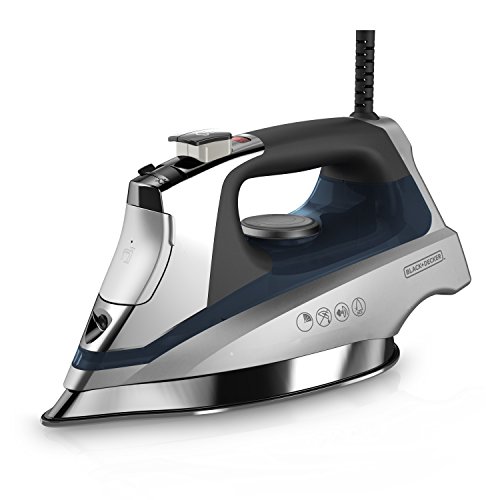
BLACK+DECKER Steam Iron
Judge it first on the basics that decide daily use: even heat, honest steam, a clean soleplate, a handle that suits your hand, and controls you can understand without studying the manual at the board.
Best for: households whose fabrics and routine match what the BLACK+DECKER Steam Iron is generally built to do, and who will maintain it as the maker directs. Not suited for: anyone expecting it to rescue a routine that ignores fabric labels, leaves a hot iron unattended, or skips cleaning until the vents are crusted. Check the current listing carefully before you buy, confirm the exact model name, and read the maker’s own care instructions for water, descaling, and storage.

Philips Azur Steam Iron
Judge it first on the basics that decide daily use: even heat, honest steam, a clean soleplate, a handle that suits your hand, and controls you can understand without studying the manual at the board.
Best for: households whose fabrics and routine match what the Philips Azur Steam Iron is generally built to do, and who will maintain it as the maker directs. Not suited for: anyone expecting it to rescue a routine that ignores fabric labels, leaves a hot iron unattended, or skips cleaning until the vents are crusted. Check the current listing carefully before you buy, confirm the exact model name, and read the maker’s own care instructions for water, descaling, and storage.

Sunbeam Steam Iron
Judge it first on the basics that decide daily use: even heat, honest steam, a clean soleplate, a handle that suits your hand, and controls you can understand without studying the manual at the board.
Best for: households whose fabrics and routine match what the Sunbeam Steam Iron is generally built to do, and who will maintain it as the maker directs. Not suited for: anyone expecting it to rescue a routine that ignores fabric labels, leaves a hot iron unattended, or skips cleaning until the vents are crusted. Check the current listing carefully before you buy, confirm the exact model name, and read the maker’s own care instructions for water, descaling, and storage.
Mueller Steam Iron
Judge it first on the basics that decide daily use: even heat, honest steam, a clean soleplate, a handle that suits your hand, and controls you can understand without studying the manual at the board.
Best for: households whose fabrics and routine match what the Mueller Steam Iron is generally built to do, and who will maintain it as the maker directs. Not suited for: anyone expecting it to rescue a routine that ignores fabric labels, leaves a hot iron unattended, or skips cleaning until the vents are crusted. Check the current listing carefully before you buy, confirm the exact model name, and read the maker’s own care instructions for water, descaling, and storage.
Who Should Buy It and Who Should Skip It
Water choice quietly decides how much cleaning an iron will need. Many makers allow ordinary tap water, some recommend a mix, and some warn against certain treated or scented waters, so the manual for your exact model is the authority, not a neighbour’s habit. What is universal is the pattern: minerals left behind by evaporating water build up inside the tank and around the steam vents, and that build-up eventually spits, sputters, or leaves pale deposits on dark clothes. Emptying the tank after a session, where the maker advises it, and descaling on the maker’s schedule keeps steam clean and predictable instead of surprising you on a white shirt.
Steam is the working partner of heat and pressure, not a special effect. Heat relaxes fibres, pressure flattens them, and steam carries moisture into the cloth so the fibres let go of a crease instead of fighting it. That is why a shirt that resists a dry pass often smooths in one slower pass once steam is involved. It is also why more steam is not automatically better: delicate fabrics, dark cottons that can shine, and garments with glued details may need less moisture, a lower setting, or a press cloth between the soleplate and the surface. Learning when to add steam and when to hold it back is the real skill of ironing, and it matters more than chasing the most powerful burst on a box.
Maintenance is mostly small, regular kindnesses rather than occasional rescues. Wipe the cold soleplate with a soft, damp cloth when it picks up starch, dust, or a faint film. Keep the steam vents clear, descale only as the maker directs, and never pour anything into the tank that the manual does not approve, however confident a tip on the internet sounds. Check the water you are using, empty and dry the tank as directed, and give the cord and plug a glance each month. An iron that is maintained in minutes rarely needs the long, uncertain cleaning session that a neglected one eventually demands, usually on the morning of an important day.
Setup, Care and Maintenance Essentials
A hot iron is never left face-down on fabric or on the board, and it is never left unattended while it is hot or plugged in. When you pause, even briefly, stand the iron upright on its heel rest, away from the edge of the board, and when you finish, unplug it and let it cool completely in a safe place. Auto shut-off, where a model has it, is a backstop for a forgotten moment, not permission to walk away, start another job in another room, or leave children near the board. Keep the iron and its cord away from children at all times, treat every steam burst as something that can burn skin, and keep your free hand clear of the plate and the steam path. Check the fabric label before you iron anything, every time, because melted synthetics are the classic, avoidable failure. If any of these habits feel excessive, remember that they take seconds and that burns and house fires do not give second chances.
A garment steamer and a clothes iron solve overlapping problems with different strengths, and many households sensibly own both. A steamer relaxes wrinkles from hanging garments quickly and kindly, especially delicates and drapes, but it cannot put a sharp crease into a trouser leg or give a shirt collar that pressed, structured finish. An iron can do both the relaxing and the structuring, at the cost of a board, a setup, and more attention. Neither tool makes the other obsolete; they divide the laundry basket between them. If your wardrobe is mostly structured cotton, linen, and uniforms, the iron leads. If it is mostly flowing, delicate, and hang-dried, the steamer may do the daily work.
Bedding is where iron size, water capacity, and patience are tested together. Sheets and duvet covers are large, repetitive, and oddly satisfying: fold them lengthwise to fit the board, work in panels, and accept that a fitted sheet will never look like a hotel advertisement and does not need to. Pillowcases and the top, visible edge of a flat sheet give most of the visual reward for a fraction of the effort, which is a perfectly respectable strategy on a busy week. Cotton bedding that will be slept on tonight needs freshness and smoothness, not perfection, and knowing where to stop is part of doing laundry well for a household rather than for a photograph.
Value in an iron is rarely about the longest feature list. It is about whether the iron heats evenly, steams when asked, feels balanced in your hand for the length of your usual session, cleans up without a fight, and keeps doing those things season after season. A modest iron that suits your fabrics and your space will serve you better than an elaborate one that is heavy, fiddly, or too large for its shelf. Read feature claims as questions to test against your own laundry: will this help with my shirts, my linen, my children’s uniforms, my occasional delicate dress? If a feature answers none of your real piles, it is decoration, not value.
Final Verdict
A clothes iron earns its shelf when your wardrobe contains clothes that look and feel better pressed, and when the household will follow the simple safety routine without exception. Buy for your fabrics, your hand, and your storage, maintain it in small regular steps, and it will repay you every single week. Skip it, or pair it with a steamer, if your clothes are mostly delicate, flowing, and hang-dried, and be honest about that rather than buying a tool that will gather dust and resentment in equal measure.
clothes iron pros and cons in full
whether a clothes iron is worth it
the garment steamer review for comparison
garment steamer vs clothes iron compared
best bed sheet sets for a crisp finish
closet organisers for finished laundry
closet storage for a tidy laundry routine
More Detail From the Ironing Board
Delicate garments ask for a different temperament: lower heat, a press cloth, the inside surface where possible, and the humility to stop early. Silk, chiffon, lace, and embellished pieces are often better steamed at a careful distance, pressed inside out, or taken to a professional when the label says so, and there is no shame in that judgement. The expensive mistake is treating every item in the basket as if it were a cotton tea towel. Keep a clean, plain press cloth near the board, use it whenever you are unsure, and remember that a slight softness left in a delicate blouse is a far better outcome than a shine mark that will never leave it.
Water choice quietly decides how much cleaning an iron will need. Many makers allow ordinary tap water, some recommend a mix, and some warn against certain treated or scented waters, so the manual for your exact model is the authority, not a neighbour’s habit. What is universal is the pattern: minerals left behind by evaporating water build up inside the tank and around the steam vents, and that build-up eventually spits, sputters, or leaves pale deposits on dark clothes. Emptying the tank after a session, where the maker advises it, and descaling on the maker’s schedule keeps steam clean and predictable instead of surprising you on a white shirt.
Technique beats force. Long, steady passes with the weight of the iron doing the work will out-perform short, hard scrubbing every time, and scrubbing back and forth over the same spot mostly adds heat where you do not want it and shine where you least expect it. Work in sections, smooth the fabric flat with your free hand well away from the plate, keep the iron moving when it is face down on cloth, and lift and reset rather than dragging sideways across buttons, zips, and seams. Iron the parts that wrinkle if they wait, such as collars, cuffs, and plackets, in a sensible order, and let each finished section cool and set before it is folded or hung.
Cord behaviour sounds trivial until you have pulled a finished sleeve back off the board with it. A cord that swivels, exits at a sensible angle, and is long enough to reach without tugging lets you work the full length of a board without planning every pass around it. Keep the cord off hot surfaces, never wrap it tightly around a warm iron, and inspect it now and then for fraying or damage, especially near the heel and the plug. A damaged cord is a stop-using-it problem, not a tape-it-and-carry-on problem. When you store the iron, a loose coil, a cool plate, and an empty or maker-approved tank state are the tidy, safe finish.
Reading the Fine Print on a Clothes iron: Detail Checks That Decide Satisfaction
A close reading of any single clothes iron should go beyond the headline description and ask how the details behave once the novelty wears off. The checks below are the ones experienced owners wish they had made at the start, all of them grounded in the laundry routine and fabrics it will face each week. None of them requires specialist knowledge; they require looking at the listing, the room and your own routine at the same time, and being honest about where they do not line up.
Look past the headline claims and examine this detail closely. Start with fit, because fit failures cannot be fixed by enthusiasm later. In practice that means three things: look at cord length and swivel, because ironing boards rarely sit beside a socket; decide whether vertical steam matters for hanging garments and curtains in your home; and check the soleplate material against your fabrics, since glide and heat recovery differ. Write the answers down rather than holding them in your head, because a clothes iron is usually chosen over several browsing sessions, and the constraint you checked on Monday is the one forgotten by Friday. If any of the three checks produces an awkward answer, treat it as information about format, not as a problem to wave away — a different format of clothes iron often removes the conflict entirely, while a compromise on fit tends to be re-litigated every time the product is used.
This is the sort of detail a quick hands-on check would reveal. Then picture the product in its real situations rather than its best one. The routine cases are easy to imagine: heavy linen and cotton that need sustained steam to relax creases, or occasional sewing projects, where pressing seams matters as much as clothing. The more useful exercise is the harder day: ironing over zips, buttons and prints, which can scratch the plate or melt decoration; and leaving the iron standing on a garment while answering the door, the classic scorch scenario. A clothes iron does not need to be perfect in those moments, but it does need a workable answer to them — a way to be moved, covered, adjusted, cleaned or simply tolerated until conditions improve. If the honest answer is that the hard day would make you stop using it altogether, that is a decision-grade fact, and it is far cheaper to learn it now than after delivery.
Owners notice this within the first month, not the first day. Most disappointments trace back to a short list of avoidable errors. The common ones here are: ironing dirty or starched fabric that bakes residue onto the soleplate; storing the iron with water inside, which encourages leaks and stale smells; and using the highest setting as a default and creeping through delicate fabrics. Notice that none of them is really about build quality. They are sequencing errors — deciding before measuring, assuming instead of checking, or copying someone else’s setup whose space and habits differ from yours. Reading any listing for a clothes iron with those three errors in mind is a fast filter: if the page in front of you encourages one of them, slow down and return to your own measurements and routine.
A careful listing read answers part of this; the rest is inference. Ownership also has a rhythm, and it is worth pricing that rhythm in before you commit. For a clothes iron, the upkeep that keeps it pleasant is modest but specific: wipe the cooled soleplate with a soft cloth to remove fibre and starch build-up; store it upright on its heel so the plate is protected and residual water cannot seep; and empty the tank after use and let the iron cool fully before putting it away. None of that is onerous on its own. The question is whether it attaches to a routine you already have — a weekly clean, a seasonal tidy, a habit of putting things away properly — or whether it requires a new routine invented from scratch, which is the kind that quietly lapses by the second month.
Frequently Asked Questions
Do I need steam for every garment?
No. Steam helps most natural fibres relax and smooth, but some delicates, dark fabrics prone to shine, and items with glued or printed details do better with less steam, a lower setting, or a press cloth. Let the fabric label lead, test a hidden area when you are unsure, and remember that heat, moisture, and pressure are three separate dials in your technique even when the iron combines them.
Can I leave an iron with auto shut-off alone?
No. Auto shut-off is a backstop that reduces risk if a session is interrupted, not permission to leave a hot iron unattended. Stand the iron on its heel rest when you pause, keep it and its cord away from children, unplug it when you finish, and let it cool fully before you clean it, move it to storage, or leave the room for good.
Why did my iron leave a shiny mark?
Shine usually means too much heat, too much pressure, or both for that fabric, and it is common on synthetics, wool, and dark cottons pressed without protection. A press cloth, a lower setting, ironing on the reverse side, and lifting rather than scrubbing can prevent it. Check labels first, because a melted or glazed synthetic surface generally cannot be restored, which is why prevention matters so much.
What water should I use?
Follow the manual for your exact model. Makers differ on tap water, mixed water, and treated water, and the wrong habit can add mineral build-up or void the care routine the iron was designed around. What never changes is the pattern: minerals build up over time, so empty the tank as directed and descale on the maker’s schedule rather than waiting for spitting or pale deposits on dark clothes.
How do I know a fabric is safe to iron?
Read its label before the iron touches it, look for the ironing symbol and any restriction, and when there is no label, start at the lowest setting and test an inside seam. Synthetics, silk, embellished pieces, and prints deserve the most caution. If a garment is valuable, unfamiliar, or marked dry-clean only in a way that worries you, professional care is a sensible choice, not a defeat.
When should an iron be replaced rather than cleaned?
Replace rather than persist when the cord or plug is damaged, the soleplate is deeply scratched or warped, the iron leaks persistently, heats unevenly despite proper cleaning, or behaves unpredictably. Cleaning solves mineral build-up and surface film; it does not solve electrical damage or a failing thermostat. Unplug a suspect iron, let it cool, and do not keep coaxing a tool that handles heat and water together into one more session.