Disclosure: As an Amazon Associate, airfryerkitchensupply.com earns from qualifying purchases. Links on this page are affiliate links; they cost you nothing extra. Prices and availability change often, so check the current Amazon listing before you buy.
These ironing board reviews exist because no single board wins every household, and pretending otherwise helps nobody. One home needs a wide, rock-steady surface for bedding and sewing. Another needs the lightest board that will still press a work shirt properly and then disappear behind a door. So this roundup reviews the leading shapes of the market side by side, judges them on the same standards, and tells you plainly which kind of household each one serves, and which it will quietly frustrate.
Key Takeaways and Short Verdict
Across every model in these reviews, the same order of importance kept asserting itself. Stability first, because a wobbling board under a hot iron is a burn hazard and a crease machine at the same time. Cover and padding second, because the surface is what touches your clothes. Height range and folding third, because a board that hurts your back or fights its cupboard will be abandoned. Within that order, the premium board is the calmest all-rounder, the wide board is the bedding and sewing pick, the simple light board is the small-home pick, and the entry board is the honest occasional-use pick.
- Best overall character: the premium, steady, full-size board for weekly ironers.
- Best for big loads: the wide board with an iron rest for bedding, curtains and sewing.
- Best for small homes: the light, simple board that stores in a narrow gap.
- Best for occasional use: the entry board, bought with clear expectations.
In this guide
Ironing Board Reviews: What an Ironing Board Is and Where It Fits
Think about the garments you actually press, not the garments you imagine pressing. A household that irons work shirts and school uniforms every week lives at the nose of the board. A household whose real load is bedding, curtains and table linen lives at the wide end. Sewists and quilters are a third case again: they press fabric lengths, seams and blocks constantly, often for longer sessions, and they value a broad, rock-steady surface and a cover that grips cotton without letting it skate. Matching board shape to your dominant load is the difference between a tool that disappears into the routine and one you argue with every Sunday evening.
Tabletop boards deserve an honest paragraph of their own. They trade stability for storage, and that trade is sometimes right and sometimes wrong. On a solid table, with a small load of tops and tea towels, a tabletop board is quick, kind to your back in a different way, and tucks into a drawer or hangs inside a cupboard door. But it sits on whatever wobble the table already has, its short surface forces constant repositioning of anything larger than a shirt, and there is no iron rest worth the name, so the hot iron ends up sharing the table edge. Choose a tabletop board for small loads and tight storage, not as a cheaper substitute for full-size pressing.
There is also a clothing-care argument that rarely gets made. Garments that are pressed look newer for longer, seams sit where they were made to sit, and you are less tempted to replace a shirt that merely looks tired. Pressing is also an inspection: at the board you notice the loose button, the fraying cuff and the small stain while they are still small problems. A board earns its cupboard space partly as a pressing surface and partly as the place where clothes get looked after properly.
Design, Build and Setup Across the Range
The single most important quality in any board is stability, and it is also the quality that is hardest to judge from a photograph. A board that looks solid in a listing can still rock on its feet the moment you lean into a stubborn crease, and that rocking is not a minor annoyance. A wobbling board under a hot iron is a genuine burn hazard, because your free hand instinctively reaches out to steady the surface while the other hand is holding an iron that is hot enough to scorch fabric and skin alike. Judge stability by the whole system: how widely the legs spread, how firmly the feet grip the floor, how much flex the top shows when you press down near the nose, and whether the height lock holds without creeping during a long session.
A steady board also produces better results, which is the part people underestimate. When the surface does not bounce, the iron stays in full contact with the fabric, steam penetrates evenly instead of escaping sideways, and you need fewer passes over the same seam. Fewer passes means less heat stress on delicate fibres, less shine on dark trousers, and a session that finishes sooner. When a board flexes, you compensate by pressing harder, and pressing harder is exactly what crushes pile fabrics, flattens embroidery, and pushes creases sideways into new wrinkles a few inches away.
Working height decides whether ironing is a chore you finish fresh or one you finish with an aching back and shoulders. The right height lets your forearm stay roughly level as the iron glides, so the weight of the iron does the pressing and your shoulder is not shrugging or pushing down on every stroke. Too low and you stoop, and the stoop creeps into your lower back within minutes. Too high and you lift the iron with your shoulder and wrist, which tires the arm and makes the iron tippy at the end of each pass. A board with a wide, easy height range serves a whole household, because the right height for one person is rarely the right height for another.
Folding mechanisms deserve a close look because they are the moving part you will operate thousands of times. The lever should be reachable without crouching blindly under a hot board, the action should be smooth rather than a sudden collapse, and the legs should fold flat enough that the board stores without springing open in the cupboard. Keep fingers clear of the scissor points of the frame as it closes; most board injuries at home are pinches and collapses during set-up and put-away, not during the pressing itself. A calm, practised fold, done the same way every time, is part of using the tool safely.
The Boards Reviewed, One by One
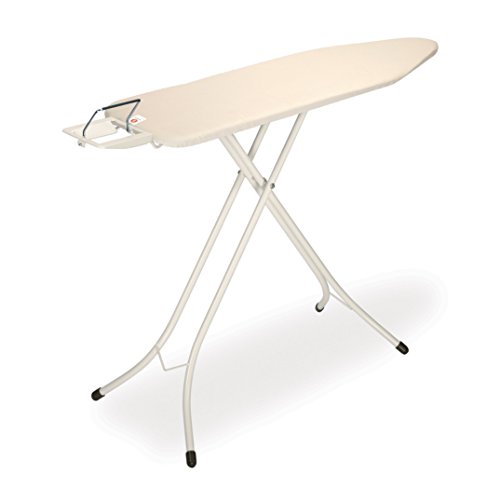
Brabantia Ironing Board
The Brabantia Ironing Board is a premium-tier board known for a sturdy frame, a smooth height action and covers that fit properly, aimed at households that iron often and want the set-up to feel effortless. In daily use, judge it the way you would judge any board in this guide: open it on a flat floor, lock the legs fully, press down near the nose to feel for flex, and run a shirt over the tapered end to see whether the shape suits your routine. Check the cover honestly too, because on this board, as on every board, a thin or tired cover will undo the good work of a decent frame.
Reviewed as the benchmark, it is the board the others are measured against for set-up calm and surface quality. Households that iron several times a week will feel the difference in their shoulders before they see it in their shirts.
Bartnelli Ironing Board
The Bartnelli Ironing Board is a mid-tier board that leans into a wide, shaped top and a built-in iron rest, popular with people who press a lot of shirts and bedding. In daily use, judge it the way you would judge any board in this guide: open it on a flat floor, lock the legs fully, press down near the nose to feel for flex, and run a shirt over the tapered end to see whether the shape suits your routine. Check the cover honestly too, because on this board, as on every board, a thin or tired cover will undo the good work of a decent frame.
Reviewed for breadth and stamina, it suits the big-load household. The caution is space: measure the room it will open in, because a wide board in a narrow room is a daily negotiation.
Homemaid Living Ironing Board
The Homemaid Living Ironing Board is an entry-to-mid-tier board that keeps the design simple, light to carry and easy to store, suited to smaller homes and lighter weekly loads. In daily use, judge it the way you would judge any board in this guide: open it on a flat floor, lock the legs fully, press down near the nose to feel for flex, and run a shirt over the tapered end to see whether the shape suits your routine. Check the cover honestly too, because on this board, as on every board, a thin or tired cover will undo the good work of a decent frame.
Reviewed for simplicity, it does the essential job without ceremony. Its limits appear with bedding and long sessions, and within those limits it is an honest, likeable board.
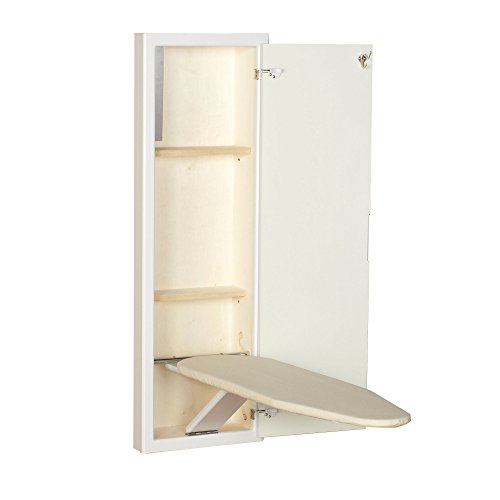
Household Essentials Ironing Board
The Household Essentials Ironing Board is a practical mid-tier option in the classic mould, with straightforward folding and replacement covers that are easy to find. In daily use, judge it the way you would judge any board in this guide: open it on a flat floor, lock the legs fully, press down near the nose to feel for flex, and run a shirt over the tapered end to see whether the shape suits your routine. Check the cover honestly too, because on this board, as on every board, a thin or tired cover will undo the good work of a decent frame.
Reviewed as the classic all-rounder, it rarely tops any single category and rarely disappoints in any either, which is precisely why this style of board has survived every fashion in laundry care.

Amazon Basics Ironing Board
The Amazon Basics Ironing Board is an entry-tier board for occasional pressing, spare rooms and first homes, where simple and serviceable beats elaborate. In daily use, judge it the way you would judge any board in this guide: open it on a flat floor, lock the legs fully, press down near the nose to feel for flex, and run a shirt over the tapered end to see whether the shape suits your routine. Check the cover honestly too, because on this board, as on every board, a thin or tired cover will undo the good work of a decent frame.
Reviewed as the starter board, it presses a shirt adequately, stores easily and asks little. It is the right review conclusion for a first home, a spare room, or a household deciding whether ironing will become a habit at all.

Whitmor Ironing Board
The Whitmor Ironing Board is an entry-to-mid-tier board often chosen for compact storage and tabletop-adjacent convenience in apartments. In daily use, judge it the way you would judge any board in this guide: open it on a flat floor, lock the legs fully, press down near the nose to feel for flex, and run a shirt over the tapered end to see whether the shape suits your routine. Check the cover honestly too, because on this board, as on every board, a thin or tired cover will undo the good work of a decent frame.
Reviewed for compact living, it bridges the full-size and tabletop worlds. Treat its stability with the respect the category deserves, keep loads modest, and it serves apartment life well.
Performance in Real Use
Shirts and Everyday Workwear
Shirts are the benchmark garment, and a good board makes their order of work feel natural: collar, yoke, sleeves and cuffs worked over the nose, then the body panels on the broad surface, with the garment rotated rather than the iron forced around corners. When a board is the right height and does not rock, a shirt becomes a rhythm instead of a wrestling match, and that rhythm is what turns a weekly pile into twenty calm minutes. If shirts are your main load, judge every board by how its nose, height range and iron rest serve that rhythm.
A good session starts before the iron is hot. Sort the basket by fabric so you can work from the most delicate items, which need the least heat, up to cotton and linen, which need the most, without constantly adjusting and waiting. Fill the iron, set up the board fully, check the cover is smooth, and put a hanger rail, a chair back or the end of the board to work as a landing zone for finished pieces so they do not crease again in a pile. Pressing a garment beautifully and then dropping it in a heap is the most common way households waste the effort a board makes possible.
Bedding and Large Pieces
Bedding is the load that exposes every weakness. A duvet cover is heavy, wide and determined to slide off, so you work in sections, keep the bulk of the fabric supported rather than dragging on the floor, and rely on the wide end of the board. Sheets pick up floor dust and pet hair if they trail, so the board becomes a clean island and your technique is about keeping the fabric on it. Table linen adds stains and heirloom fragility to the problem; a clean cover is non-negotiable, because pressing a white tablecloth on a marked cover can set a mark rather than remove a crease.
Padding works as a team with the cover. A felted, heat-reflective padding layer bounces steam and heat back up through the garment, so you effectively press both sides at once and can often skip flipping a shirt to do the reverse. Thin foam padding compresses quickly in the middle, creating a shallow valley where water pools and collars refuse to lie flat. When you handle a board in a shop or read a description closely, look for language about layered padding rather than a single thin sheet, and plan on the cover being a consumable: it wears, it scorches, and it is meant to be replaced long before the frame gives up.
Delicates and Finishing Work
Different fabrics ask different things of the board. Cotton and linen reward a firm, well-padded surface and plenty of steam, and they are forgiving of a board with a broad top. Silk, viscose and delicate synthetics ask for a smooth, clean cover above all, because any roughness, residue or scorched patch will show on them or, worse, stick. Dark wool trousers show shine if you press hard on a bouncy board, so steadiness protects the finish. Pleats, whether on a skirt or a curtain heading, need the tapered nose and the patience to let each pleat cool and set before you move on, which a board that stays put makes far easier.
Technique on the board is mostly about letting the tools work. Glide with the grain of the fabric, use long strokes rather than scrubbing back and forth, lift and place rather than pushing the iron around corners, and give steam a moment to relax fibres before the soleplate flattens them. Work one section fully, then move the garment, rather than skimming the whole piece repeatedly. Stubborn creases usually need moisture and a pause, not more force; force on a board that flexes simply moves the problem. Finish each piece with a few seconds of cooling on the board or straight onto a hanger, because a crease set while the fabric is warm and then disturbed is a crease half wasted.
Strengths and Trade-Offs
Strengths
- Every board here beats ironing on a table or towel by a wide margin in safety and finish.
- The range covers real differences: width, weight, storage and stamina, not just colours.
- Covers are replaceable across the category, so the working surface can be renewed cheaply.
Trade-Offs
- Cheaper boards trade frame stiffness and cover thickness, and both trades are visible in use.
- Wider and steadier boards ask more of your storage and your arms.
- No board removes the need for set-up discipline: flat floor, locked legs, iron parked on its heel.
How They Compare
Head to head, the premium and classic boards separate themselves on frame calm and cover quality, the wide board separates itself on surface, and the light and entry boards separate themselves on carrying and storage. That is the whole story of this category in one sentence, and it is why these reviews refuse to crown a single winner for everyone. A sewist and a student in a studio flat are not shopping for the same object, even though the object has the same name. Read the mini-reviews above against your own basket, your own floor space and your own storage gap, and the right board usually identifies itself.
Set-up discipline matters as much as build quality. Always open a board on a flat, hard floor rather than on thick carpet where the feet can sink unevenly, and always open the legs fully until the lock engages before you place anything on the top. Never lean your body weight on the nose of the board to reach a far corner; walk around to the other side instead, or slide the garment toward you. Keep the iron in its heel rest position, standing upright on the iron rest or on its heel, whenever your hand leaves it, and route the cord so that a passing foot cannot catch it and pull the iron toward the edge.
Children and boards do not mix, and this needs to be said plainly. Children must not climb on an ironing board, hang from its nose, or play underneath it while it is open. A board is a tall, narrow, top-heavy structure by design, and a child pulling on the edge can collapse it in a second, bringing a hot iron down with it. Fold the board away between sessions if children are in the house, store it where it cannot be pulled over, and never leave a hot iron unattended on an open board while you answer the door or check on dinner.
Who Should Buy Which, and Who Should Skip
Weekly family ironing points to the premium or classic board. Bedding, curtains and sewing point to the wide board. Small homes and light loads point to the simple board, and occasional pressing points to the entry board without shame. Skip the whole category, honestly, if your wardrobe is almost entirely knitwear and casual pieces that never see an iron; a steamer will serve that wardrobe better. And skip any individual board, whatever its badge, if you cannot store it safely or set it up on a flat floor, because a board used badly is worse than a board not owned.
Storage is where many boards lose their owners. A board that is awkward to carry, that pinches fingers when it folds, or that will not stand safely in the cupboard is a board that gets left open in the corner, gathering dust and becoming a shelf for un-ironed laundry, which is the first step toward never ironing at all. Consider where the folded board will live before you buy: a narrow gap beside a wardrobe, a hook inside a utility cupboard, flat under a bed, or standing in a laundry corner. Measure that space in the plain sense of checking it honestly, and picture carrying the board through your own doorways, because the best board for your home is the one you can set up in under a minute without a struggle.
Weight cuts both ways. A heavier frame usually feels steadier in use and less likely to skate across a smooth floor when you pull a heavy sheet toward you. A lighter frame is kinder on stairs, easier for smaller or older users to handle, and more likely to be fetched for a single shirt rather than avoided. There is no virtue in the heaviest board if the person doing the ironing dreads lifting it. The honest question is who will move this board, how far, and how often, and the answer should steer the choice as firmly as any feature list.
Setup, Care and Maintenance Essentials
Care of the board itself is brief but real. Let the cover cool and dry before folding the board away, especially after heavy steaming, so the padding does not stay damp in a closed cupboard. Wipe the top if starch or residue builds up, check the feet for grit that could scratch flooring, and glance at the frame and lock now and then for anything loose or bent. A board stored dry, folded correctly and kept where it will not be knocked over will serve for years; a board stored damp, forced shut or used as a general-purpose table will not, and its decline will show up as wobble, marks and frustration long before it actually breaks.
The cover and the padding beneath it are the working surface of the board, and their condition decides more of your result than the frame underneath. A thin cover lets the metal mesh pattern of the top print through onto smooth fabrics, leaving a faint grid on a shirt back that only shows up in daylight. A scorched cover is worse: scorch marks transfer heat unevenly, rough patches drag against silk and synthetics, and a brittle, heat-damaged surface can mark light-coloured garments. Be honest about the cover you own. If it is thin, shiny with wear, or yellowed and rough in the centre where the iron always parks, replacing the cover is the cheapest genuine upgrade in all of laundry care.
Fitting a replacement cover properly is a small skill worth learning. A cover should be pulled snug and smooth, secured so it cannot creep as you drag a heavy duvet cover across it, and free of wrinkles of its own, because every wrinkle in the cover becomes a wrinkle pressed into the garment. Elastic edges, drawstrings and fastening straps all work when they are tensioned evenly from the nose backward. Take an extra minute here; ironing on a loose cover is like writing on paper that slides around the desk, and the frustration people blame on their iron is often a loose cover underneath the work.
Final Verdict
Good boards differ in emphasis, not in honesty. Pick the emphasis that matches your laundry, hold every candidate to the stability and cover standards in these reviews, and set the winner up properly every single time. Do that, and whichever board you choose will pay you back in sharper shirts, calmer sessions and clothes that look looked after.
A steady board also produces better results, which is the part people underestimate. When the surface does not bounce, the iron stays in full contact with the fabric, steam penetrates evenly instead of escaping sideways, and you need fewer passes over the same seam. Fewer passes means less heat stress on delicate fibres, less shine on dark trousers, and a session that finishes sooner. When a board flexes, you compensate by pressing harder, and pressing harder is exactly what crushes pile fabrics, flattens embroidery, and pushes creases sideways into new wrinkles a few inches away.
The cover and the padding beneath it are the working surface of the board, and their condition decides more of your result than the frame underneath. A thin cover lets the metal mesh pattern of the top print through onto smooth fabrics, leaving a faint grid on a shirt back that only shows up in daylight. A scorched cover is worse: scorch marks transfer heat unevenly, rough patches drag against silk and synthetics, and a brittle, heat-damaged surface can mark light-coloured garments. Be honest about the cover you own. If it is thin, shiny with wear, or yellowed and rough in the centre where the iron always parks, replacing the cover is the cheapest genuine upgrade in all of laundry care.
Padding works as a team with the cover. A felted, heat-reflective padding layer bounces steam and heat back up through the garment, so you effectively press both sides at once and can often skip flipping a shirt to do the reverse. Thin foam padding compresses quickly in the middle, creating a shallow valley where water pools and collars refuse to lie flat. When you handle a board in a shop or read a description closely, look for language about layered padding rather than a single thin sheet, and plan on the cover being a consumable: it wears, it scorches, and it is meant to be replaced long before the frame gives up.
Fitting a replacement cover properly is a small skill worth learning. A cover should be pulled snug and smooth, secured so it cannot creep as you drag a heavy duvet cover across it, and free of wrinkles of its own, because every wrinkle in the cover becomes a wrinkle pressed into the garment. Elastic edges, drawstrings and fastening straps all work when they are tensioned evenly from the nose backward. Take an extra minute here; ironing on a loose cover is like writing on paper that slides around the desk, and the frustration people blame on their iron is often a loose cover underneath the work.
Board shape is a quiet decision with daily consequences. The tapered nose exists so that shirts can be pulled over the end, letting you press shoulders, yoke and sleeves without fighting a square corner, and so trousers can be slipped on to press legs one layer at a time. A wider rear section gives you room for bedding, table linen and the broad panels of dresses and coats. Very wide boards feel luxurious with sheets but can be awkward in a narrow room, where you keep catching the edge as you turn. Very narrow boards store beautifully and handle shirts well, then make a duvet cover feel like wrestling a sail in a corridor.
Think about the garments you actually press, not the garments you imagine pressing. A household that irons work shirts and school uniforms every week lives at the nose of the board. A household whose real load is bedding, curtains and table linen lives at the wide end. Sewists and quilters are a third case again: they press fabric lengths, seams and blocks constantly, often for longer sessions, and they value a broad, rock-steady surface and a cover that grips cotton without letting it skate. Matching board shape to your dominant load is the difference between a tool that disappears into the routine and one you argue with every Sunday evening.
Tabletop boards deserve an honest paragraph of their own. They trade stability for storage, and that trade is sometimes right and sometimes wrong. On a solid table, with a small load of tops and tea towels, a tabletop board is quick, kind to your back in a different way, and tucks into a drawer or hangs inside a cupboard door. But it sits on whatever wobble the table already has, its short surface forces constant repositioning of anything larger than a shirt, and there is no iron rest worth the name, so the hot iron ends up sharing the table edge. Choose a tabletop board for small loads and tight storage, not as a cheaper substitute for full-size pressing.
Working height decides whether ironing is a chore you finish fresh or one you finish with an aching back and shoulders. The right height lets your forearm stay roughly level as the iron glides, so the weight of the iron does the pressing and your shoulder is not shrugging or pushing down on every stroke. Too low and you stoop, and the stoop creeps into your lower back within minutes. Too high and you lift the iron with your shoulder and wrist, which tires the arm and makes the iron tippy at the end of each pass. A board with a wide, easy height range serves a whole household, because the right height for one person is rarely the right height for another.
Adjust the height before you plug anything in, and test it with the motion you will actually use: stand as you would to press a shirt, rest your hand flat on the board, and check that your elbow keeps a comfortable bend. Sitting to iron is a legitimate choice for long sessions, especially when pressing sewing pieces or working through a basket slowly, and a board that lowers far enough for a chair gives you that option. What matters is that the locking mechanism holds the chosen height firmly from the first garment to the last, without the slow sinking that makes you finish the session pressing on a surface that has quietly dropped.
Storage is where many boards lose their owners. A board that is awkward to carry, that pinches fingers when it folds, or that will not stand safely in the cupboard is a board that gets left open in the corner, gathering dust and becoming a shelf for un-ironed laundry, which is the first step toward never ironing at all. Consider where the folded board will live before you buy: a narrow gap beside a wardrobe, a hook inside a utility cupboard, flat under a bed, or standing in a laundry corner. Measure that space in the plain sense of checking it honestly, and picture carrying the board through your own doorways, because the best board for your home is the one you can set up in under a minute without a struggle.
Weight cuts both ways. A heavier frame usually feels steadier in use and less likely to skate across a smooth floor when you pull a heavy sheet toward you. A lighter frame is kinder on stairs, easier for smaller or older users to handle, and more likely to be fetched for a single shirt rather than avoided. There is no virtue in the heaviest board if the person doing the ironing dreads lifting it. The honest question is who will move this board, how far, and how often, and the answer should steer the choice as firmly as any feature list.
Folding mechanisms deserve a close look because they are the moving part you will operate thousands of times. The lever should be reachable without crouching blindly under a hot board, the action should be smooth rather than a sudden collapse, and the legs should fold flat enough that the board stores without springing open in the cupboard. Keep fingers clear of the scissor points of the frame as it closes; most board injuries at home are pinches and collapses during set-up and put-away, not during the pressing itself. A calm, practised fold, done the same way every time, is part of using the tool safely.
Different fabrics ask different things of the board. Cotton and linen reward a firm, well-padded surface and plenty of steam, and they are forgiving of a board with a broad top. Silk, viscose and delicate synthetics ask for a smooth, clean cover above all, because any roughness, residue or scorched patch will show on them or, worse, stick. Dark wool trousers show shine if you press hard on a bouncy board, so steadiness protects the finish. Pleats, whether on a skirt or a curtain heading, need the tapered nose and the patience to let each pleat cool and set before you move on, which a board that stays put makes far easier.
Bedding is the load that exposes every weakness. A duvet cover is heavy, wide and determined to slide off, so you work in sections, keep the bulk of the fabric supported rather than dragging on the floor, and rely on the wide end of the board. Sheets pick up floor dust and pet hair if they trail, so the board becomes a clean island and your technique is about keeping the fabric on it. Table linen adds stains and heirloom fragility to the problem; a clean cover is non-negotiable, because pressing a white tablecloth on a marked cover can set a mark rather than remove a crease.
Shirts are the benchmark garment, and a good board makes their order of work feel natural: collar, yoke, sleeves and cuffs worked over the nose, then the body panels on the broad surface, with the garment rotated rather than the iron forced around corners. When a board is the right height and does not rock, a shirt becomes a rhythm instead of a wrestling match, and that rhythm is what turns a weekly pile into twenty calm minutes. If shirts are your main load, judge every board by how its nose, height range and iron rest serve that rhythm.
A good session starts before the iron is hot. Sort the basket by fabric so you can work from the most delicate items, which need the least heat, up to cotton and linen, which need the most, without constantly adjusting and waiting. Fill the iron, set up the board fully, check the cover is smooth, and put a hanger rail, a chair back or the end of the board to work as a landing zone for finished pieces so they do not crease again in a pile. Pressing a garment beautifully and then dropping it in a heap is the most common way households waste the effort a board makes possible.
Technique on the board is mostly about letting the tools work. Glide with the grain of the fabric, use long strokes rather than scrubbing back and forth, lift and place rather than pushing the iron around corners, and give steam a moment to relax fibres before the soleplate flattens them. Work one section fully, then move the garment, rather than skimming the whole piece repeatedly. Stubborn creases usually need moisture and a pause, not more force; force on a board that flexes simply moves the problem. Finish each piece with a few seconds of cooling on the board or straight onto a hanger, because a crease set while the fabric is warm and then disturbed is a crease half wasted.
Care of the board itself is brief but real. Let the cover cool and dry before folding the board away, especially after heavy steaming, so the padding does not stay damp in a closed cupboard. Wipe the top if starch or residue builds up, check the feet for grit that could scratch flooring, and glance at the frame and lock now and then for anything loose or bent. A board stored dry, folded correctly and kept where it will not be knocked over will serve for years; a board stored damp, forced shut or used as a general-purpose table will not, and its decline will show up as wobble, marks and frustration long before it actually breaks.
Patterns Across Ironing Board Listings Worth Verifying Yourself
Reading across many ironing board listings and owner reports, the same patterns surface again and again, and they are more useful than any single verdict. This section gathers those recurring signals, explains what each one usually means in practice, and shows how to verify the important ones against the specific listing you are considering.
Across owner reports on the ironing board, praise clusters in a predictable place: households whose routine centres on pressing clothes, linens and sewing projects are consistently the happiest, and their reviews read almost boringly satisfied. Complaints cluster just as predictably around fit, which is why the first pattern to check in any listing is whether it states clearly the facts behind the board length and height range against your own height and longest garments. Vague dimensions in a listing correlate with disappointed reviews more than any design flaw does.
The second pattern is the slow complaint. Early reviews glow; the criticisms that arrive months later describe a board that rocks because the feet are uneven or the floor is not level. When you read reviews, sort mentally by ownership length rather than enthusiasm, and give extra weight to anyone describing the upkeep honestly, because washing or replacing the cover before scorch marks transfer, and checking padding wear. Reports that mention a model like Bartnelli Ironing Board holding up after a year of regular use tell you more than a dozen five-line first impressions.
The third pattern is mismatch, not malfunction. Owners who checked compatibility in advance, meaning leg style stability on your floor type and the storage space when folded, rarely report the product failing them, while owners who assumed it would fit their setup supply most of the one-paragraph horror stories. Use reviews, then, as a checklist of things to verify on your chosen listing, and run the edge case early yourself: large items like duvet covers, which test board width far more than shirts do. Verified against your own home, the crowd consensus becomes a reliable guide instead of background noise.
A Final Decision Checklist
- In listings, look first for clear statements behind the board length and height range against your own height and longest garments; vagueness here predicts complaints.
- In owner reports, weight long-term posts describing how a board that rocks because the feet are uneven or the floor is not level developed.
- Treat upkeep reports as data, because washing or replacing the cover before scorch marks transfer, and checking padding wear is where ownership verdicts are decided.
- Cross-check compatibility claims, since leg style stability on your floor type and the storage space when folded is the mismatch owners report most.
- Verify the edge case yourself rather than trusting reviews, because large items like duvet covers, which test board width far more than shirts do.
- Write down your two most frequent uses and search reviews from owners with the same ones.
- Keep packaging and paperwork until your own first week confirms the consensus.
- Photograph the setup once it works well, so you can compare it with review photographs later.
- Verify against listings that every included part against the listing description on arrival day, while an exchange is still painless.
- Cross-check notes on what worked, in the room where the ironing board is used, where future-you will actually find them.
- Cross-check instructions photographed on your phone, so troubleshooting never starts with a search through drawers.
- Note how often owners the edge case on a quiet day first, since large items like duvet covers is a poor thing to meet unprepared.
Frequently Asked Questions
Which ironing board is best for most households?
For most households that iron weekly, a steady full-size board in the classic or premium mould is the safest recommendation, because it handles shirts, trousers and the occasional set of bedding without special pleading. Households dominated by bedding or sewing should look at the wide board, and small homes should weight storage and carrying more heavily.
Do expensive boards iron better?
They tend to feel better while ironing, which leads to better results: a calmer frame, a thicker cover and a smoother height action mean fewer passes and fewer mistakes. The iron itself still does the heating, so a premium board will not rescue a poor iron, but it will let a good iron do its best work, session after session.
What is the most common mistake buyers make?
Buying by photograph and price alone, without thinking about stability, storage or who will carry the board. The second most common mistake is keeping a scorched or threadbare cover for years and blaming the iron or the board for poor results. A board is a system of frame, cover and routine, and the reviews above judge it as one.
Are tabletop boards worth considering?
They are worth considering for genuinely small loads and genuinely small homes, on a solid table, with clear expectations. They trade away stability, working surface and a proper iron rest. If your pressing is a few tops and tea towels, that trade can be right. If shirts and bedding are your reality, a tabletop board will frustrate you within a month.
How do I test a board’s stability?
Open it fully on a flat floor until the legs lock, set it to your working height, and press down firmly near the nose and at the centre. A good board answers with a solid, quiet resistance. Rocking, creaking, foot skating or a height setting that creeps are all reasons to walk away, because none of them improve with use and all of them matter beside a hot iron.
When should I replace a board rather than its cover?
Replace the board when the frame is bent, the lock no longer holds height, the feet are damaged, or the top itself is warped. Replace only the cover when the frame is sound but the surface is scorched, thin or rough. Many boards condemned as worn out are one honest cover away from feeling new, which is why the reviews separate frame life from cover life.
Related Guides and Next Reads
Keep building your laundry routine with these companion guides from the same programme: our single-board ironing board review, our ironing board buying guide, ironing board pros and cons in full, is an ironing board worth it, our clothes iron review, the clothes iron buying guide, best bed sheet sets for a crisp, pressed finish, closet organisers that keep pressed clothes tidy, blackout curtains worth pressing before you hang them. Each one covers the partner decision to this one, so you can match the iron, the surface and the storage to each other instead of buying each piece in isolation.
A Closer Look in Practice
A Closer Look in Practice
A Closer Look in Practice
A Closer Look in Practice
A Closer Look in Practice
A Closer Look in Practice
The board to keep is the one you will open without sighing on a busy weekday morning. If you press shirts several times a week, favour the steadier, wider frames represented by Brabantia and Bartnelli, and check that the iron rest suits the iron you actually own. For occasional pressing in a small flat, a lighter Household Essentials, Amazon Basics, or Whitmor board is easier to store and perfectly adequate. Whichever you choose, replace a thin cover early, set the height at elbow level, and store the board where retrieving it never becomes another chore.

