Disclosure: As an Amazon Associate, airfryerkitchensupply.com earns from qualifying purchases. Links on this page are affiliate links; they cost you nothing extra. Prices and availability change often, so check the current Amazon listing before you buy.
A cooling rack buying guide exists for one reason: the product looks too simple to need one, right up until the wrong rack arrives — too big for the pan, too flimsy for a cake, finished in a coating your cleaning habits will destroy. This guide walks through what a cooling rack does, the main types, the questions that actually decide the purchase, and the picks that fit the most common kitchens, so the simple tool you buy is the right simple tool.
Key Takeaways
- Buy for fit first: the rack should match your most-used sheet pan, fit your sink for soaking and store where you can reach it.
- A close crosswire grid is the most versatile pattern; parallel wires suit large items only.
- Choose material by lifestyle: stainless for scrubbing and oven work, nonstick for gentle release, chrome for light counter duty.
- Bakeable racks double in value because they roast and crisp in the oven as well as cool on the counter.
What a Cooling Rack Does and the Main Types
A cooling rack does one job that a plate or a cutting board cannot: it lets air move underneath the food as well as over the top. When a cookie, a cake layer or a roasted piece sits directly on a solid surface, steam escaping from the hot underside has nowhere to go, so it condenses against the food and softens exactly the crust you worked to create. Lift that same food on a wire grid and the steam drifts away, the base stays crisp, and cooling happens faster and more evenly on every side. That single difference explains why bakers treat a rack as essential rather than optional, and why the same tool shows up under fried food, glazed pastries and resting roasts.
Steam is the invisible ingredient in every cooling decision. Freshly baked and freshly roasted foods are full of moisture that is actively escaping, and where that moisture goes in the first minutes after cooking shapes the final texture more than most recipe steps do. Trapped against a solid surface it condenses and soaks back in; allowed to drift away it leaves crusts crisp, bases dry and coatings intact. A rack is essentially a steam-management device, a small piece of kitchen engineering that gives moisture an exit route on every side of the food at once. Once you start thinking of cooling as an active stage of cooking rather than a pause between cooking and eating, the rack stops looking like an accessory and starts looking like part of the recipe.
Crosswire Grid Racks
Grid pattern is the quiet specification that decides how a rack behaves. A crosswire grid, with wires running in both directions, supports small and delicate items such as bite-size cookies, scones and glazed doughnuts without letting edges droop between rails. Parallel-wire racks, with bars running one way, are simpler and often cheaper, but small items can tip into the gaps and larger soft items can sag. Whichever pattern you choose, look for wires that are evenly spaced, firmly joined at every crossing, and free of rough ends. Run a fingertip lightly along the rim of a cheap rack and you will sometimes find wire ends that feel sharp; better racks finish those edges smooth, which matters when you are sliding a spatula under hot food.
Parallel-Wire and Cooling-Only Racks
Parallel-wire racks run their bars in one direction and are often the cheapest way to cool large, sturdy items. They handle sheet cakes and big roasts adequately, but small cookies can tip between the bars and soft items sag. Many cooling-only racks, in chrome or nonstick finishes, live in this family: perfectly good on the counter, not made for oven heat. Buy one knowingly, for light duty, and it will serve well; buy one expecting roasting performance and it will not.
Bakeable and Stackable Racks
Not every cooling rack is oven safe, and the distinction matters. Bakeable racks, plain stainless or purpose-built designs, can go into a hot oven as a roasting and crisping platform, while many nonstick and chrome racks are meant for counter cooling only and can discolour, warp or shed their finish under sustained heat. Always confirm oven suitability from the maker before using any rack in the oven, and treat a rack that has warped or lost its coating as a counter-only tool from then on. When a hot rack comes out of the oven, handle it exactly like a hot pan: oven mitts on both hands, a clear and stable heatproof landing surface ready, and the rack kept level so nothing slides.
Holiday and celebration baking is where cooling capacity stops being theoretical. Batches rotate through the oven in sequence, and each batch needs somewhere to land the moment it comes out, or the whole rhythm stalls with trays balanced on stovetops and trivets. Tiered stackable racks and second racks earn their keep precisely here, multiplying landing space without multiplying counter space. The same is true for cookie exchanges, bake sales and any project involving glazing, where pieces need to sit undisturbed while a finish sets. If your baking year has even one high-volume season, plan rack capacity for that season rather than for an average Tuesday, because the average Tuesday never caused a crisis.
In this guide
Cooling Rack Buying Guide: Top Picks at a Glance
USA Pan Bakeable Cooling Rack
Tier: mid-to-premium tier. The USA Pan Bakeable Cooling Rack is built around a simple idea done properly: a tight crosswire grid that lives two lives, cooling baked goods on the counter and going back into the oven inside a matching sheet pan for crisping and roasting. The grid spacing is close enough that cookies and small pastries rest flat instead of sagging between wires, and the frame feels planted rather than springy when a loaded batch lands on it. It suits bakers who want one rack that earns its storage space by working in the oven as often as it works on the counter.
Best for: bakers whose habits match the strengths above. Not suited for: anyone whose main need is the opposite end of the size or duty range — check the other picks in this guide before deciding. As a pick, treat the current Amazon listing as the place to confirm details and check price on Amazon when listings are linked at publish.
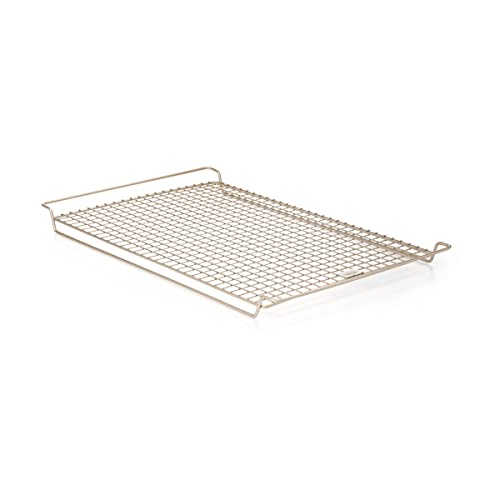
OXO Good Grips Cooling Rack
Tier: mid tier. The OXO Good Grips Cooling Rack leans into everyday usability: raised feet that keep the grid clear of the counter, a frame that feels secure to carry, and a surface that releases cookies and roasted items without a fight. It is the kind of rack that disappears into a routine, which is exactly what a daily tool should do. It suits bakers who bake weekly, want predictable release without fuss, and prefer gear that cleans up quickly after ordinary use.
Best for: bakers whose habits match the strengths above. Not suited for: anyone whose main need is the opposite end of the size or duty range — check the other picks in this guide before deciding. As a pick, treat the current Amazon listing as the place to confirm details and check price on Amazon when listings are linked at publish.

Nordic Ware Cooling Rack
Tier: mid tier. The Nordic Ware Cooling Rack is the large-format option in this group, sized with sheet-pan baking in mind so a full batch of cookies or a tray of roasted vegetables has room to breathe. The wire layout favours airflow and easy release, and the rim gives you something confident to grip with a mitt when the rack is warm. It suits high-volume home bakers who regularly cool big batches and would rather wash one generous rack than shuffle two small ones across a crowded counter.
Best for: bakers whose habits match the strengths above. Not suited for: anyone whose main need is the opposite end of the size or duty range — check the other picks in this guide before deciding. As a pick, treat the current Amazon listing as the place to confirm details and check price on Amazon when listings are linked at publish.
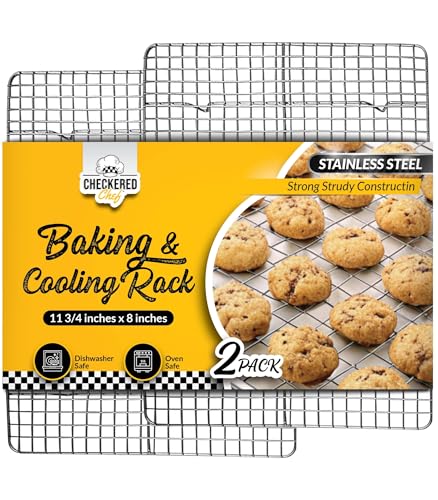
Checkered Chef Cooling Rack
Tier: entry-to-mid tier. The Checkered Chef Cooling Rack is designed as a true sheet-pan partner, proportioned to sit inside a standard baking tray for oven work and to stand alone for cooling. The grid is close-set, which helps with smaller items and with keeping roasted foods up out of their own juices. It suits cooks who roast as often as they bake and want the same rack to handle weeknight vegetables, crisping jobs and weekend cookie batches.
Best for: bakers whose habits match the strengths above. Not suited for: anyone whose main need is the opposite end of the size or duty range — check the other picks in this guide before deciding. As a pick, treat the current Amazon listing as the place to confirm details and check price on Amazon when listings are linked at publish.

Wilton Cooling Rack
Tier: entry tier. The Wilton Cooling Rack is best known in its stackable form, where tiered legs let you cool several batches in the footprint of one, a genuine advantage in small kitchens and during holiday baking marathons. The lighter build asks for a gentler hand than the heavy-duty frames here, but for cookies, cupcakes and cooling cake layers it is entirely fit for purpose. It suits occasional bakers, small households and anyone whose counter space disappears the moment baking starts.
Best for: bakers whose habits match the strengths above. Not suited for: anyone whose main need is the opposite end of the size or duty range — check the other picks in this guide before deciding. As a pick, treat the current Amazon listing as the place to confirm details and check price on Amazon when listings are linked at publish.
Which Size Do You Actually Need?
Racks come in a handful of working sizes, and the right one follows your baking habits more than your ambitions. Small racks suit toaster-oven trays, single batches and cooling a lone loaf, and they are easy to wash in a small sink. Half-sheet size is the all-purpose standard most home bakers should start from, because it pairs with the most common pan in the kitchen and handles a full batch of cookies without crowding. Larger racks earn their keep for holiday-scale baking and big roasting jobs but demand counter and storage space every day of the year. Round racks exist for cakes and pies, and tiered stackable sets multiply cooling space vertically when the counter simply cannot.
Fit is where cooling racks succeed or fail in real kitchens. The most useful size in most homes is the one that matches a standard half sheet pan, because that pairing unlocks the rack’s second career inside the oven: vegetables roast up out of their juices, fatty strips crisp without sitting in rendered fat, and breaded items brown on the underside instead of steaming. A rack that is slightly too large for your pan is worse than useless for oven work, and one that is far too small rattles around and wastes the pairing. Measure your favourite pan’s inside space, check the rack against it, and think about your oven and your storage before falling for the biggest rack on the shelf.
Counter space shapes rack choices more than most buyers admit. A generous rack is a pleasure during a baking session and a storage puzzle the rest of the week, while a small rack that fits the sink, the drawer and the toaster oven may get used three times as often. Think about where the rack will land during actual cooking: beside the oven, clear of the splash zone, on a surface that tolerates heat. Think about the sink, too, because a rack that cannot lie flat in your sink is a rack that never gets a proper soak. The best rack is the one whose size fits your pans, your oven, your sink and your cupboard simultaneously, and that is a measurement exercise, not a shopping impulse.
How Much Does Grid Spacing Matter?
Wire thickness is the specification nobody advertises and everybody feels. Thin wires flex under a heavy cake or a loaded roasting pan, and that flex is not just annoying: a grid that bows lets soft items sag between the wires and makes the whole rack feel unstable when carried. Heavier wire holds its plane, supports weight at the centre as confidently as at the edges, and survives years of being slid in and out of pan slots and cupboards. You can judge gauge without any instruments by pressing the centre of the grid with your palm and by lifting a corner of the rack while the opposite corner rests on the counter. A rack that twists easily when empty will not inspire confidence when it is holding a hot, heavy pan’s worth of food.
Look closely at how the wires meet the frame, because that junction decides how a rack ages. On well-made racks the grid is joined cleanly to a sturdy outer frame, the crossings sit flat, and there are no gaps where crumbs and glaze can wedge themselves permanently. On poor racks the joins are rough, the frame is thin, and the grid can eventually loosen so it rattles or shifts inside the rim. Rough joins are also a cleaning problem, since residue bakes into crevices that a brush cannot reach, and a hygiene problem over time. None of this requires expert knowledge to assess: run your eyes and a fingertip over the rim and crossings, and trust what they tell you.
More than marketing suggests. Spacing decides what the rack can hold: close grids carry small cookies, delicate pastry and glazed items without sagging, while wide spacing is only safe for large, firm pieces. Spacing also decides cleaning, because tighter grids catch more residue at the crossings and ask for a brush rather than a wipe. For a single all-purpose rack, close spacing is the safer default, since it handles everything a wide grid does and several things it cannot.
Stainless, Chrome or Nonstick: Which Finish Fits Your Kitchen?
Most cooling racks are made from one of three material families, and each has a personality. Bare stainless steel is the purist choice: oven friendly, resistant to rust, and happy to be scrubbed, though sticky glazes can cling and need a soak. Chrome-plated steel looks bright and costs less, but the plating can chip over time, and once it does the steel beneath can rust, so these racks prefer hand washing and thorough drying. Nonstick-coated racks release food beautifully and wipe clean with little effort, yet the coating is the weak point, because metal utensils, aggressive scrubbing and very high oven heat all shorten its life. Choosing a material is really choosing how you like to clean and how hot you plan to cook.
Chrome-plated racks occupy the budget end of the market and, treated within their limits, they are honest tools. The plating gives a bright, smooth surface that releases most foods well and wipes clean easily after ordinary cooling work. The limits are real, though: the plating is thin, it dislikes prolonged soaking, dishwasher detergents can dull it, and once it chips the steel beneath is exposed to moisture. Hand washing, immediate drying and counter-only duties extend a chrome rack’s life considerably. The mistake is expecting a chrome rack to behave like stainless in the oven or the dishwasher; match the tool to the treatment it can take and it will not disappoint you.
A nonstick-coated rack asks for a specific kind of kindness. The coating releases food beautifully and makes washing almost trivial, but it is a surface, not a structure, and it wears where it is rubbed. Metal spatulas scraping across it, abrasive pads, stacking other pans directly on the grid and very high oven heat all thin the coating a little at a time. Used with silicone or wooden tools, washed with a soft sponge and kept out of extreme heat, a coated rack can stay slick for years. The moment the coating starts to flake, retire the rack from food contact, because flakes have no place in a glaze or a crumb. Choosing nonstick is choosing a maintenance style as much as a material.
Stainless steel racks reward cooks who like to scrub without worry. There is no coating to protect, so a soak, a brush and, for stubborn caramelised patches, a paste of baking soda and water will restore the grid without drama. Stainless can discolour slightly after oven work, developing a faint golden tint in hot spots; that is cosmetic, not damage, and it does not affect performance. What stainless does ask is thorough drying, because while the steel itself resists rust, hard water spots left to sit can mark the surface and moisture trapped at the frame joins is never a friend. In return you get the rack most likely to still be in your kitchen, unglamorous and fully functional, a decade from now.
Will You Use It in the Oven?
Roasting is where a bakeable rack quietly outperforms a bare pan. Lifted on a grid, vegetables, potatoes and poultry pieces sit above the juices and fat that collect in the pan, so hot air can reach the undersides and browning happens on every surface instead of the food braising in its own liquid. The same lift makes draining effortless: fried items rest above the pan and shed excess oil rather than soaking in it, and glazed items can drip cleanly instead of gluing themselves to a tray. The trade-off is washing, because a grid that has caught caramelised juices needs a soak, but the texture difference is the kind you notice in the first bite.
Fried food is where a rack most obviously beats the paper-towel habit. Resting fried items on paper means the underside sits in the oil the paper has just absorbed, so the crisp coating softens from below while it drains. On a rack over a pan, oil drips away and stays away, air circulates, and the coating keeps its crunch noticeably longer. Set the arrangement near the stove before frying starts, because a hot rack-and-pan station improvised mid-batch is how splashes happen, and season fried pieces while they rest on the grid so excess seasoning falls through instead of caking on the surface.
Answer this honestly before buying, because it splits the market in two. Oven use demands a bakeable rack and rewards you with crisped vegetables, drained fried food and roasts browned on every side. Counter-only use widens your choices and lowers the price, and there is no shame in it: many excellent bakers never roast on a rack. The mistake is drifting — buying a cooling-only rack and improvising oven work later. Decide now, buy accordingly, and the rack will never be asked to do a job its finish cannot survive.
Related reading: best cooling racks roundup · baking sheet and cooling rack sets · baking cooling racks compared
How to Prioritise by Use Case
The Weekly Baker
Cookies are the classic cooling-rack test, and they expose weak racks quickly. A cookie leaves the oven soft in the middle even when it is perfectly baked, so the transfer matters: give the tray a few minutes so the cookies firm up enough to move, then slide them onto the rack with a thin spatula. On the rack, air reaches the base, residual heat finishes setting the centre without the bottom continuing to cook against a hot tray, and the texture lands where the recipe intended, with crisp edges and a tender middle. Leave cookies on the baking tray instead and trapped heat keeps cooking them while steam softens the bases, which is how a good batch drifts toward hard bottoms and soggy centres at the same time.
Cakes ask something different of a rack: support without marking. A warm cake layer is fragile, and a rack with widely spaced wires can press lines into the crumb or, worse, let a soft layer sag and crack. A close grid supports the layer evenly, and the classic technique of inverting the layer onto the rack works best when the surface is smooth and clean. Airflow matters here too, because a cake that cools in its tin traps steam against the sides and base, turning the outer crumb gummy. Turned out onto a rack, the layer cools at an even pace, stays level for stacking and frosting, and is far less likely to tear when you move it.
The Roast-First Cook
Resting roasted meats is a rack job that rarely gets credited. A joint or a bird rested directly in its roasting juices reabsorbs liquid on the underside and softens any crisped skin, while the same roast rested on a rack over the pan stays above the juices, which remain in the pan where they belong for gravy. The rack also makes carving transfers calmer, because the roast sits stable and elevated rather than skating in fat. Keep the arrangement level, keep mitts on for the transfer, and let the meat rest for the time the recipe asks; the rack simply ensures the rest improves the roast instead of undoing the roasting.
Bread bakers lean on racks for a reason that is easy to hear: the crackle. A loaf cooling on a solid surface steams its own base, and the crust that sang as it left the oven softens into something leathery. On a rack, the loaf cools with air on every side, the crust stays crisp, and the interior finishes setting without turning gummy. The same logic applies to pizza moved off its pan, to pastries that need to stay flaky, and to scones and biscuits whose bottoms should stay dry and tender. If you bake anything with a crust you are proud of, a rack is how you protect it during the most vulnerable minutes of its life.
The Small-Kitchen Baker
Storage decides whether a rack gets used or gets buried. Flat racks slide into the same slot as cutting boards and sheet pans, stack neatly in a deep drawer, or hang from a hook if the design allows. Stackable tiered designs fold or nest, which is their whole appeal, but check how small they really go before assuming they will vanish into a cupboard. If you bake in volume, two mid-size racks are often easier to store and more flexible than one very large rack, because they can work side by side on the counter, split between jobs, or one can go in the oven while the other cools. Buy for the kitchen you actually have, not the one in the catalogue photograph.
There is a genuine case for owning two racks rather than one, and it has nothing to do with excess. Two racks let a double batch cool without stacking, let one rack work in the oven while the other handles cooling, and let you set up a glazing station and a cooling station at the same time during bigger projects. They also provide insurance: the day a rack is soaking after a sticky roasting job is always the day you bake cookies. Bakers who entertain, bake for holidays or cook in batches usually discover the second rack pays for itself in calm. Single-batch, occasional bakers can ignore all of this, because one good rack, well chosen, is plenty.
First Setup and Care Essentials
Cleaning a cooling rack is mostly about timing and soaking rather than effort. Sugary glazes, cheese and caramelised roasting juices harden as they cool, and attacking them dry with a scouring pad is slow work that can damage finishes. A rack left to soak flat in a sink or a sheet pan of warm soapy water surrenders almost everything on its own; a soft brush worked along the wires lifts what remains from the crossings where residue hides. Let the rack cool to a comfortable handling temperature before it meets water, because plunging a very hot rack into cold water is hard on any metal and can encourage warping over time, and dry it thoroughly before storing so moisture never sits in the joints.
The safety habits around a cooling rack are simple but worth stating plainly, because racks usually appear at the hottest moment of a bake. Pans and racks come out of the oven hot enough to burn instantly, so oven mitts are not optional, and the rack needs a stable, heatproof landing surface cleared before the oven door opens, not a damp towel, not a crowded stovetop, and not the edge of the counter. When you carry a loaded rack, or a pan with a rack inside it, keep it level and move slowly, because food slides on wire grids more readily than on solid trays. Finally, inspect cheap racks for sharp wire ends at the rim, and retire any rack that has developed rough, snagging edges near where hands and food meet it.
Dishwasher claims on racks deserve a careful read. Many racks are described as dishwasher safe, and stainless racks generally tolerate machine washing well, but the dishwasher is harder on finishes than packaging suggests: detergents are abrasive over time, and racks rattle against other items. Nonstick and chrome finishes in particular live longer with hand washing. There is also a practical point: a rack takes a large share of a dishwasher rack, and a quick soak and brush in the sink is often faster than waiting for a cycle. Treat dishwasher safety as permission for occasional convenience, not as the default care plan, whatever the material.
Related reading: our cooling rack review · our cooling rack reviews · cooling rack pros and cons
Mistakes to Avoid
Most cooling-rack disappointment traces back to a handful of avoidable mistakes. Buying by price alone often means thin wires that flex under a cake, feet that barely lift the grid, and finishes that chip within the year. Ignoring pan fit is just as common: the rack that cannot sit inside your sheet pan loses half its usefulness on day one. Other frequent errors include using a counter-only rack in the oven, stacking hot items so steam is trapped between layers, washing a hot rack under cold water, and storing a damp rack so the joints quietly rust. None of these require talent to avoid, only a few minutes of thought before buying and a few small habits after.
Buying a rack in person, when you can, teaches you more in thirty seconds than a page of specifications. Flex the grid, check the feet for wobble, look along the rim for sharp or unfinished wire ends, and hold the rack at eye level to see whether it sits flat or has a twist. Online, the equivalent checks are reading the construction details carefully, confirming whether the rack is described as oven safe or cooling only, and checking the stated size against your pan rather than against a photograph. Either way, the questions are the same: is it flat, is it sturdy, is it finished smoothly, and does it fit the pans and oven you already own.
Flatness sounds trivial until a cake layer rocks on the rack or a tray of roasted vegetables slides toward one corner. A rack should sit flat on the counter with all feet in contact, and the grid itself should be level rather than crowned or dipped. A slight twist in the frame, common on the cheapest racks, shows up as a wobble that no amount of adjusting fixes. Test flatness on a hard, level surface, not on a towel or a wooden board that can hide the fault. A rack that is not flat is not merely annoying; a loaded, rocking rack is a spill waiting for its moment, and hot spills are the kind worth engineering out of your kitchen.
The Bottom Line of This Cooling Rack Buying Guide
The right cooling rack is the one that fits your pan, matches your material habits and does the jobs you actually cook. For most homes that means a close-grid, half-sheet, bakeable rack in stainless or a well-kept nonstick finish, with a stackable or second rack added when batches grow. Buy once, buy flat and sturdy, and the purchase disappears into years of better texture.
The Rack and the Sheet Pan: A Working Pair
A rack reaches its full usefulness in partnership with a sheet pan. The pan catches drips during glazing, carries the rack in and out of the oven, holds the soak water during cleaning and gives the whole arrangement a stable base for transport. Bakers who buy the pair together, sized to match, skip the common frustration of a rack that nearly fits. If you already own pans, the rack should be chosen to fit them; if you own neither, buy the pan first and let its inside measurements dictate the rack. Partnerships in the kitchen are usually about flavours; this one is about millimetres, and it matters just as much.
A Closer Look at Airflow in Practice
Set two cookies from the same batch side by side, one on a rack and one on a plate, and check them after ten minutes. The plated cookie’s base will feel softer and slightly damp, while the racked cookie’s base stays dry and firm. That small experiment explains more than any specification sheet, because it isolates the single variable a rack changes: what happens underneath the food. Multiply that difference across a full batch, a cake layer or a tray of roast potatoes and the cumulative effect on texture is the entire case for the tool. Cooks who run the test once tend to stop debating the purchase.
When a Rack Should Be Retired
Racks do not announce their retirement, so owners should watch for the signs. A grid that has sagged into a permanent dip no longer supports food evenly. Chrome that is chipping, or a nonstick finish that is flaking, has no place in contact with food. A frame that has twisted so the rack rocks under load has become a spill risk rather than a tool. Stainless racks can serve for many years before any of this applies, which is part of their value, but no rack is immortal, and replacing a worn one is maintenance, not extravagance.
What Changes When You Bake in Batches
Batch baking exposes every weakness in a cooling setup. The second tray leaves the oven while the first batch still occupies the counter, and without enough rack space the baker starts stacking warm cookies, parking trays on the stove and losing the rhythm that makes batch work efficient. Adequate rack capacity, whether from a second rack or from tiers, keeps each batch separate, cooling properly and out of the way. The difference is not just texture but temperament: batch days feel calm when every tray has a planned landing place, and frantic when they do not.
The Economics of Buying Once
Kitchen economics rewards tools with no consumables and long lives, and a rack is the archetype. Its cost is paid once, its upkeep is soap and water, and its working life, in stainless, is measured in years of weekly use. Set against that, the false economy of the cheapest rack is plain: a tool replaced three times costs more than the sturdy one, and performs worse in between. The calculation changes only for the genuinely occasional baker, for whom a modest rack, carefully inspected, is a rational purchase. For everyone else, buying once and buying well is the cheaper strategy as well as the more pleasant one.
Cooling as a Stage of the Recipe
Experienced bakers plan cooling the way they plan mixing and baking, with a place prepared and a time allowed. The recipe’s work is not finished when the oven timer sounds; crumb is still setting, crusts are still deciding whether to stay crisp, and glazes are still fluid enough to level or to run. Treating cooling as a stage means staging the rack before the oven opens, knowing roughly how long each bake needs before it can move, and resisting the urge to box, stack or frost anything warm. The rack is the equipment of that stage, and kitchens that respect the stage get visibly better results from identical recipes.
The Rack in Meal Prep and Weekly Cooking
Meal-prep cooking uses a rack differently from baking day: as infrastructure. Roasted vegetables cool on it before boxing so they do not steam in the container, cooked grains’ companion proteins rest on it, and batches of baked items cool completely before freezing, which keeps ice crystals and sogginess down. Cooling food fully and evenly before storing is also sound food practice, since warm food sealed into containers condenses and spoils texture. The rack earns its place in the weekly routine not with one dramatic save but with a dozen small texture rescues.
Pairing Racks With Timers and Workflow
Cooling times are easy to forget in a busy kitchen, and forgotten cooling causes real faults: cookies boxed warm and softened, cakes frosted warm and sliding, bread sliced warm and gummy. Setting a timer when food lands on the rack turns cooling from a hope into a step. Bakers who cook in batches often run two timers, one for the oven and one for the rack, and find the second timer quietly improves consistency more than any ingredient change. The rack provides the place; the timer provides the discipline; together they finish recipes properly.
What Professional Test Kitchens Standardise
Test kitchens standardise cooling because they cannot afford variables: every bake in a recipe test cools on the same kind of rack, for a timed period, in the same spot. That standardisation is why their results repeat, and home bakers can borrow it cheaply. Cool your bakes the same way each time — same rack, similar spacing, similar timing — and your own results become more predictable, which makes troubleshooting a recipe a matter of ingredients and oven rather than mystery. Consistency is a professional habit that costs nothing but attention.
Racks, Trivets and Improvised Substitutes
Every kitchen has improvised a cooling surface: a trivet, an upturned muffin tin, the cold rings of the stove, a spare oven rack balanced on tins. Some improvisations work passably, especially a clean spare oven rack, which is after all the same idea at larger scale. The dedicated rack wins on fit, feet, food-safe finish and storage, and it removes the balancing acts that end with a tray on the floor. Improvisation is a fine bridge and a poor destination; the purpose-built tool exists because the job is weekly, not rare.
Storing Baked Goods After the Rack
The rack’s job ends when food is fully cool, and what happens next decides whether the texture it protected survives. Cookies go into airtight containers once cool, ideally separated by type so crisp and soft varieties do not trade moisture. Cakes are wrapped or boxed once cold, breads are bagged only after the crumb has set, and glazed items are stored only once the finish is dry to the touch. Storing warm is the classic unforced error after perfect cooling, because the container becomes the steam trap the rack just saved the food from.
Before You Buy: A Cooling Rack Fit, Space and Routine Checklist
Most advice about a cooling rack focuses on the day you buy it, yet satisfaction is decided later, at the counter, tray or oven shelf it rests on, during cooling bakes evenly and holding hot pans safely off the work surface. So work backwards from daily life: fix the routine, the space and the people in your mind first, and only then weigh the features that looked persuasive on a product page. Before anything else, settle that the grid spacing supports small items without letting them sag through; it is the unglamorous detail that quietly decides whether the rest of the specification ever gets a chance to matter. Attention is a budget too. A cooling rack that needs remembering, scheduling, monitoring or special handling spends it, so count that cost alongside the physical ones.
Anything heavy, hot, sharp, load-bearing or electrically powered deserves a respectful pause in the decision, and the maker’s own guidance, read before purchase, is part of the specification. Sometimes the right purchase is smaller than planned because an existing possession covers the heavy or rare jobs, leaving the new cooling rack to specialise in the frequent ones. Notice when the cooling rack will be used in a hurry and when it will be used with time to spare, because speed and ceremony reward different designs. If a candidate fails either of the first two checks, stop scoring it altogether, because strengths elsewhere in a cooling rack almost never repay a fundamental mismatch with your space or routine.
- Confirm the first two fit checks against your own home, not a showroom.
- Write down the dimensions of the space and the clearances around it before shortlisting.
- Check what is included in the current listing and what you must supply.
- Name the three jobs it must do well and the one compromise you accept.
- Settle the weekly care routine and the storage or drying spot in advance.
A slightly less capable cooling rack that stays clean will outperform a superior one that is neglected, which is why care burden belongs near the top of any comparison. Dead heats between two candidates are broken by weaknesses, not strengths: pick the cooling rack whose compromises fall on the jobs you do least often. Try this decision exercise: write down three non-negotiable jobs, one acceptable compromise and one walk-away flaw. If a candidate survives that list, it deserves its place on the shortlist. When owners give up on a cooling rack, the cause is often steam trapped underneath because food was left crowded on a flat surface instead, not a dramatic breakdown, so treat that pattern as the main risk your decision has to answer.
Keep a brief note of when any problem started and what changed around then, because that record turns a vague complaint into a solvable question if you ever need parts, repair or a replacement decision. Picture the busiest realistic version of your week, with guests arriving, children underfoot, a meal running late or the weather turning, whichever applies, and ask whether the cooling rack still works then. Every item leaves a footprint on the home beyond its dimensions: noise, mess, heat, moisture, effort or visual clutter. Weigh that footprint for a cooling rack as seriously as its size. Shortlisted models, perhaps the USA Pan Bakeable Cooling Rack and the OXO Good Grips Cooling Rack, should each be put through the same checks in the same order, using the current listing details rather than an older screenshot or a remembered specification.
Frequently Asked Questions
What is the best cooling rack for a beginner?
A close crosswire grid in a half-sheet size, in stainless steel if you want the most forgiving care routine. It supports everything from small cookies to cake layers, pairs with the most common pan, tolerates soaking and scrubbing, and in bakeable form grows with you into roasting. Beginners outgrow cheap racks quickly; a mid-tier sturdy rack is the economical start.
Should my cooling rack fit inside my sheet pan?
If you ever plan to roast, crisp or drain food in the oven, yes — that pairing is half the rack’s value. Measure the inside of your pan and compare it with the rack’s stated size before ordering. For pure counter cooling, pan fit matters less, but the rack still needs to fit your sink for soaking and your storage space for daily life.
Is a nonstick cooling rack a good idea?
It is a good idea for bakers who prize easy release and gentle washing, and a poor one for cooks who scrub hard, use metal tools or want high-heat oven work. The coating performs beautifully while it is intact and limits the rack once it wears. Decide by your habits: careful hands get years from nonstick, rough routines are happier with bare stainless.
How many cooling racks should I own?
One well-chosen rack covers most households. Add a second when you regularly bake double batches, bake through the holidays, or want one rack in the oven while another cools. Stackable sets answer the same need vertically. Buy the second rack after your baking proves the need, not before, unless holiday baking is already on your calendar.
Can I use a cooling rack for air fryer food?
Yes, as a landing station. Resting air-fried pieces briefly on a rack over a tray keeps air moving around them so the coating stays crisp instead of steaming against a plate. It also holds finished batches airy and warm while the next batch cooks. The rack never goes in the air fryer itself unless it is made and sized for that appliance.
What should I check when a new rack arrives?
Set it on a hard counter and check it sits flat without rocking, run a fingertip along the rim for sharp wire ends, press the grid centre to feel for flex, and test the fit in your pan, sink and storage spot. Returning a wobbly or rough-finished rack immediately is far easier than living with it, and those checks predict how it will behave under a hot, loaded pan.
Related reading: is a cooling rack worth it · how to choose a cooling rack · how to clean a cooling rack · air fryer baking pans and molds guide · how to check whether a baking dish fits an air fryer


