Disclosure: As an Amazon Associate, airfryerkitchensupply.com earns from qualifying purchases. Links on this page are affiliate links; they cost you nothing extra. Prices and availability change often, so check the current Amazon listing before you buy.
Learning how to choose a cooling rack takes about ten minutes and saves you from the three purchases people regret: the rack that does not fit the pan, the rack that flexes under a cake, and the rack whose finish your cleaning habits destroy. The deciding criteria are few — fit, grid, material, build and intended oven use — but they interact, so this guide works through them in order, with the reasoning behind each step and the mistakes that undo it.
Key Takeaways
- Start with fit: pan, oven, sink and storage measurements decide the size before anything else matters.
- Choose a close crosswire grid unless you only ever cool large, firm items.
- Match material to your habits: stainless for durability and oven work, nonstick for gentle release, chrome for light duty.
- Judge build with your hands: flat, rigid, smooth-edged racks are the ones that last.
What You Need to Know Before Comparing
A cooling rack does one job that a plate or a cutting board cannot: it lets air move underneath the food as well as over the top. When a cookie, a cake layer or a roasted piece sits directly on a solid surface, steam escaping from the hot underside has nowhere to go, so it condenses against the food and softens exactly the crust you worked to create. Lift that same food on a wire grid and the steam drifts away, the base stays crisp, and cooling happens faster and more evenly on every side. That single difference explains why bakers treat a rack as essential rather than optional, and why the same tool shows up under fried food, glazed pastries and resting roasts.
Steam is the invisible ingredient in every cooling decision. Freshly baked and freshly roasted foods are full of moisture that is actively escaping, and where that moisture goes in the first minutes after cooking shapes the final texture more than most recipe steps do. Trapped against a solid surface it condenses and soaks back in; allowed to drift away it leaves crusts crisp, bases dry and coatings intact. A rack is essentially a steam-management device, a small piece of kitchen engineering that gives moisture an exit route on every side of the food at once. Once you start thinking of cooling as an active stage of cooking rather than a pause between cooking and eating, the rack stops looking like an accessory and starts looking like part of the recipe.
Texture is the language in which a rack’s value is easiest to explain. Crisp bottoms on cookies and pizza, dry tender bases on scones, crackling crusts on bread, coatings that stay crunchy on fried food, glazes that set clean instead of pooling: every one of these is a texture outcome, and every one depends on what happens in the minutes after cooking. Recipes can only take texture so far if the cooling stage works against them. When cooks say a rack changed their baking, this is what they mean: not a new flavour, but the reliable delivery of the texture the recipe promised and the oven achieved.
Before comparing products, fix your use profile in one sentence: what you bake, roast or fry most, in what batch sizes, and whether the rack will work in the oven. That sentence eliminates most of the market immediately and turns the remaining choice into a shortlist. Keep it honest: buying for imaginary dinner parties while baking one tray of cookies a month is how oversized racks end up resented, and buying for cookies alone when you roast every Sunday is how cooling-only racks end up misused in hot ovens.
Related reading: baking sheet and cooling rack sets · best cooling racks roundup
In this guide
How to Choose a Cooling Rack in 7 Steps
Step 1: Measure Your Pans, Oven, Sink and Storage
Fit is where cooling racks succeed or fail in real kitchens. The most useful size in most homes is the one that matches a standard half sheet pan, because that pairing unlocks the rack’s second career inside the oven: vegetables roast up out of their juices, fatty strips crisp without sitting in rendered fat, and breaded items brown on the underside instead of steaming. A rack that is slightly too large for your pan is worse than useless for oven work, and one that is far too small rattles around and wastes the pairing. Measure your favourite pan’s inside space, check the rack against it, and think about your oven and your storage before falling for the biggest rack on the shelf.
Write the numbers down rather than estimating them in the shop. The pan measurement decides oven pairing, the sink measurement decides whether soaking — your main cleaning method — is even possible, and the storage measurement decides whether the rack lives within reach or in exile. A rack that fails any one of the four fits will annoy you weekly.
Step 2: Decide Whether the Rack Must Be Bakeable
Not every cooling rack is oven safe, and the distinction matters. Bakeable racks, plain stainless or purpose-built designs, can go into a hot oven as a roasting and crisping platform, while many nonstick and chrome racks are meant for counter cooling only and can discolour, warp or shed their finish under sustained heat. Always confirm oven suitability from the maker before using any rack in the oven, and treat a rack that has warped or lost its coating as a counter-only tool from then on. When a hot rack comes out of the oven, handle it exactly like a hot pan: oven mitts on both hands, a clear and stable heatproof landing surface ready, and the rack kept level so nothing slides.
Oven use is the market’s great divider. If roasting, crisping or draining in the oven is on your list, only bakeable designs qualify, and cooling becomes the bonus feature. If the rack will never leave the counter, your choices widen and prices fall. Decide from your actual cooking, and never plan to improvise oven work later with a cooling-only rack.
Step 3: Choose the Grid Pattern and Spacing
Grid pattern is the quiet specification that decides how a rack behaves. A crosswire grid, with wires running in both directions, supports small and delicate items such as bite-size cookies, scones and glazed doughnuts without letting edges droop between rails. Parallel-wire racks, with bars running one way, are simpler and often cheaper, but small items can tip into the gaps and larger soft items can sag. Whichever pattern you choose, look for wires that are evenly spaced, firmly joined at every crossing, and free of rough ends. Run a fingertip lightly along the rim of a cheap rack and you will sometimes find wire ends that feel sharp; better racks finish those edges smooth, which matters when you are sliding a spatula under hot food.
Close crosswire grids support everything from small cookies to cake layers and glazed items, which is why they are the default recommendation. Parallel wires are acceptable only for large, firm items. Whatever the pattern, spacing should be even and the crossings firm, because the grid is both the working surface and the structure.
Step 4: Pick a Material That Matches Your Habits
Most cooling racks are made from one of three material families, and each has a personality. Bare stainless steel is the purist choice: oven friendly, resistant to rust, and happy to be scrubbed, though sticky glazes can cling and need a soak. Chrome-plated steel looks bright and costs less, but the plating can chip over time, and once it does the steel beneath can rust, so these racks prefer hand washing and thorough drying. Nonstick-coated racks release food beautifully and wipe clean with little effort, yet the coating is the weak point, because metal utensils, aggressive scrubbing and very high oven heat all shorten its life. Choosing a material is really choosing how you like to clean and how hot you plan to cook.
Stainless forgives scrubbing and heat; nonstick rewards gentle handling with easy release; chrome asks for hand washing and counter duty in exchange for a low price. None is best in the abstract. The right material is the one whose care rules you will actually follow on a tired weeknight, not the one you admire in principle.
Step 5: Judge the Build With Your Hands
Wire thickness is the specification nobody advertises and everybody feels. Thin wires flex under a heavy cake or a loaded roasting pan, and that flex is not just annoying: a grid that bows lets soft items sag between the wires and makes the whole rack feel unstable when carried. Heavier wire holds its plane, supports weight at the centre as confidently as at the edges, and survives years of being slid in and out of pan slots and cupboards. You can judge gauge without any instruments by pressing the centre of the grid with your palm and by lifting a corner of the rack while the opposite corner rests on the counter. A rack that twists easily when empty will not inspire confidence when it is holding a hot, heavy pan’s worth of food.
Flex the grid centre, check the feet for wobble, look along the rim for sharp wire ends, and sight along the frame for twist. These four checks take under a minute and predict years of behaviour. Online, translate them into questions about construction and finish, and be ready to return a rack that fails them on arrival.
Step 6: Check the Feet and Elevation
Feet and elevation look like a minor detail until you use a rack that barely clears the counter. A rack that sits too low traps a cushion of warm, moist air beneath the food, which quietly undoes the airflow you bought the rack for. Well-designed feet lift the grid high enough for air to circulate freely and for a thin spatula to slide under the food. Feet should also be stable: a rack that rocks on a flat counter will rock under a cake, and a loaded rack that tips is a mess and a hazard. Press down on each corner the first time you use a new rack, and return anything that wobbles noticeably.
Elevation is airflow. Feet should lift the grid clearly off the counter, stand stable under load and, on stackable designs, lock or sit securely when tiers are combined. A rack that barely clears the surface traps the warm moist air it exists to release, so treat low-slung designs as a compromise, not a feature.
Step 7: Decide One Rack, Two Racks or Tiers
There is a genuine case for owning two racks rather than one, and it has nothing to do with excess. Two racks let a double batch cool without stacking, let one rack work in the oven while the other handles cooling, and let you set up a glazing station and a cooling station at the same time during bigger projects. They also provide insurance: the day a rack is soaking after a sticky roasting job is always the day you bake cookies. Bakers who entertain, bake for holidays or cook in batches usually discover the second rack pays for itself in calm. Single-batch, occasional bakers can ignore all of this, because one good rack, well chosen, is plenty.
Single-batch bakers need one good rack. Batch bakers, holiday bakers and roast-while-you-bake cooks should price the second rack or a stackable set now, because buying the system once is calmer than improvising mid-December. Storage decides the form: flat pairs slide into a slot, tiers fold into a cupboard.
Gear for This Guide: Four Racks That Cover the Main Choices
USA Pan Bakeable Cooling Rack
Tier: mid-to-premium tier. In this line-up the USA Pan Bakeable Cooling Rack is the dual-purpose choice: a close crosswire grid made to cool on the counter and to bake inside a sheet pan, so crisping and roasting jobs use the same tool as cookie duty. The build feels reassuringly rigid, which matters when the rack is carrying something heavy and hot. Choose it if oven work is half your reason for buying; look elsewhere only if you know the rack will never leave the counter.
Best for: bakers whose habits match the strengths above. Not suited for: anyone whose main need is the opposite end of the size or duty range — check the other picks in this guide before deciding. As a pick, treat the current Amazon listing as the place to confirm details and check price on Amazon when listings are linked at publish.

Nordic Ware Cooling Rack
Tier: mid tier. The Nordic Ware Cooling Rack brings the big-batch temperament: a broad grid that swallows a full tray of cookies without crowding and feels steady under a loaded roasting pan. Its appeal is capacity with composure, the rack you reach for during holiday baking and Sunday roasts alike. Choose it if your batches are large and your counter can host it; smaller households may find a half-sheet size easier to live with day to day.
Best for: bakers whose habits match the strengths above. Not suited for: anyone whose main need is the opposite end of the size or duty range — check the other picks in this guide before deciding. As a pick, treat the current Amazon listing as the place to confirm details and check price on Amazon when listings are linked at publish.
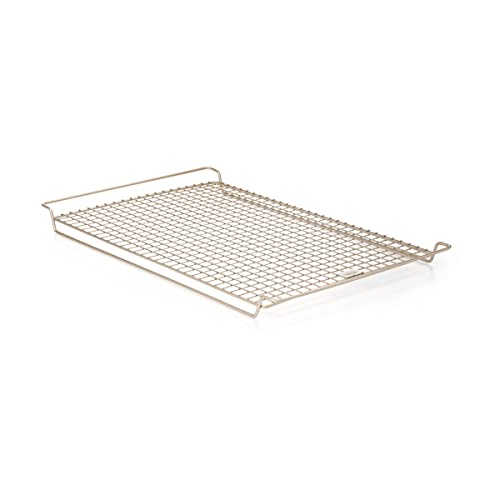
OXO Good Grips Cooling Rack
Tier: mid tier. Everyday ease is the OXO Good Grips Cooling Rack’s whole argument: sensible elevation, a secure feel in the hand and release that behaves itself with cookies and roasted vegetables alike. Nothing about it is theatrical, and that is the point; it is engineered to be forgotten between uses. Choose it if you bake often and value quick clean-up and calm handling over specialised features.
Best for: bakers whose habits match the strengths above. Not suited for: anyone whose main need is the opposite end of the size or duty range — check the other picks in this guide before deciding. As a pick, treat the current Amazon listing as the place to confirm details and check price on Amazon when listings are linked at publish.
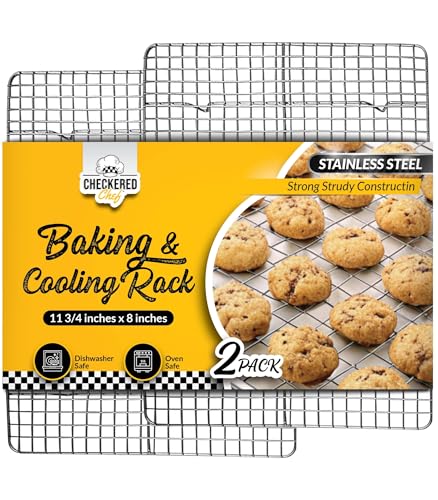
Checkered Chef Cooling Rack
Tier: entry-to-mid tier. As a sheet-pan partner, the Checkered Chef Cooling Rack is the practical roaster of the group: close-set wires that hold smaller items, a fit made for tray work, and a temperament equally happy cooling biscuits. It asks little and does a lot. Choose it if your cooking leans savoury and your rack will split its time between the oven and the counter.
Best for: bakers whose habits match the strengths above. Not suited for: anyone whose main need is the opposite end of the size or duty range — check the other picks in this guide before deciding. As a pick, treat the current Amazon listing as the place to confirm details and check price on Amazon when listings are linked at publish.
Common Mistakes
Most cooling-rack disappointment traces back to a handful of avoidable mistakes. Buying by price alone often means thin wires that flex under a cake, feet that barely lift the grid, and finishes that chip within the year. Ignoring pan fit is just as common: the rack that cannot sit inside your sheet pan loses half its usefulness on day one. Other frequent errors include using a counter-only rack in the oven, stacking hot items so steam is trapped between layers, washing a hot rack under cold water, and storing a damp rack so the joints quietly rust. None of these require talent to avoid, only a few minutes of thought before buying and a few small habits after.
Flatness sounds trivial until a cake layer rocks on the rack or a tray of roasted vegetables slides toward one corner. A rack should sit flat on the counter with all feet in contact, and the grid itself should be level rather than crowned or dipped. A slight twist in the frame, common on the cheapest racks, shows up as a wobble that no amount of adjusting fixes. Test flatness on a hard, level surface, not on a towel or a wooden board that can hide the fault. A rack that is not flat is not merely annoying; a loaded, rocking rack is a spill waiting for its moment, and hot spills are the kind worth engineering out of your kitchen.
Buying a rack in person, when you can, teaches you more in thirty seconds than a page of specifications. Flex the grid, check the feet for wobble, look along the rim for sharp or unfinished wire ends, and hold the rack at eye level to see whether it sits flat or has a twist. Online, the equivalent checks are reading the construction details carefully, confirming whether the rack is described as oven safe or cooling only, and checking the stated size against your pan rather than against a photograph. Either way, the questions are the same: is it flat, is it sturdy, is it finished smoothly, and does it fit the pans and oven you already own.
Related reading: our cooling rack review · our cooling rack reviews · the cooling rack buying guide
Pro Tips
Professional kitchens treat racks as infrastructure, and home cooks can borrow the mindset without buying anything extra. Racks are staged before the oven opens, pans land in the same place every time, and cooling is part of the workflow rather than an afterthought. That staging habit is worth copying at home: rack out, landing surface clear, mitts in hand, then the oven door opens. It removes the frantic moment of holding a hot tray while hunting for space, which is when burns and spills actually happen. A rack used inside a system like that stops being a gadget and becomes part of how the kitchen runs.
Counter space shapes rack choices more than most buyers admit. A generous rack is a pleasure during a baking session and a storage puzzle the rest of the week, while a small rack that fits the sink, the drawer and the toaster oven may get used three times as often. Think about where the rack will land during actual cooking: beside the oven, clear of the splash zone, on a surface that tolerates heat. Think about the sink, too, because a rack that cannot lie flat in your sink is a rack that never gets a proper soak. The best rack is the one whose size fits your pans, your oven, your sink and your cupboard simultaneously, and that is a measurement exercise, not a shopping impulse.
Holiday and celebration baking is where cooling capacity stops being theoretical. Batches rotate through the oven in sequence, and each batch needs somewhere to land the moment it comes out, or the whole rhythm stalls with trays balanced on stovetops and trivets. Tiered stackable racks and second racks earn their keep precisely here, multiplying landing space without multiplying counter space. The same is true for cookie exchanges, bake sales and any project involving glazing, where pieces need to sit undisturbed while a finish sets. If your baking year has even one high-volume season, plan rack capacity for that season rather than for an average Tuesday, because the average Tuesday never caused a crisis.
Worked Examples
The Sunday Roaster Who Bakes at Christmas
Profile: roasts weekly, bakes in one annual burst. The right choice is a bakeable stainless half-sheet rack, bought for the roasting, which then handles the Christmas cookies without help. A second rack is unnecessary; capacity matters one week a year and a borrowed tray rotation covers it. Choosing nonstick here would be the classic error, because weekly roasting heat and scrubbing would end the coating’s life early.
The Small-Flat Baker
Profile: tiny kitchen, enthusiastic monthly baking, no storage slot to spare. The right choice is a stackable tiered rack or a single mid-size close-grid rack that fits the sink. Oven pairing matters less than storage and washing fit, so a quality cooling-focused rack beats a giant bakeable one that lives on top of the fridge and gets used resentfully.
The Batch Cookie Baker
Cookies are the classic cooling-rack test, and they expose weak racks quickly. A cookie leaves the oven soft in the middle even when it is perfectly baked, so the transfer matters: give the tray a few minutes so the cookies firm up enough to move, then slide them onto the rack with a thin spatula. On the rack, air reaches the base, residual heat finishes setting the centre without the bottom continuing to cook against a hot tray, and the texture lands where the recipe intended, with crisp edges and a tender middle. Leave cookies on the baking tray instead and trapped heat keeps cooking them while steam softens the bases, which is how a good batch drifts toward hard bottoms and soggy centres at the same time.
Profile: double batches most weekends, glazing in season. The right choice is two matching half-sheet racks, or one rack plus tiers, so cooling, glazing and the next tray’s landing never compete for the same grid. Grid spacing matters most here: close wires for small cookies and clean glaze drips, with the sheet-pan pairing doing the tidiness work underneath.
Teaching the Habit to New Bakers
New bakers often skip the rack because recipes mention it in passing, as if it were garnish. The fastest way to teach its value is comparative: cool half a batch on the rack and half in the pan, then taste the bases blind. The lesson lands in one bite and the habit forms permanently. It also helps to stage the rack visibly before baking starts, so using it requires no mid-recipe decision. Tools become habits when they are present at the moment of need, and few tools repay the habit as consistently as this one.
Cooling Different Foods at the Right Pace
Not everything should cool at the same speed, and a rack supports that judgement rather than overriding it. Delicate pastries benefit from full airflow immediately, while some enriched breads prefer a brief rest in the tin before turning out so the structure firms enough to move safely. Dense fruit cakes are famously patient and can cool slowly, whereas crisp biscuits should be moved promptly so their bases stay dry. The rack does not impose a pace; it gives the baker control of the pace, which is why the same tool serves recipes with opposite instructions equally well.
Cooling as a Stage of the Recipe
Experienced bakers plan cooling the way they plan mixing and baking, with a place prepared and a time allowed. The recipe’s work is not finished when the oven timer sounds; crumb is still setting, crusts are still deciding whether to stay crisp, and glazes are still fluid enough to level or to run. Treating cooling as a stage means staging the rack before the oven opens, knowing roughly how long each bake needs before it can move, and resisting the urge to box, stack or frost anything warm. The rack is the equipment of that stage, and kitchens that respect the stage get visibly better results from identical recipes.
Reading a Rack Like a Buyer, Not a Browser
Photographs flatter racks: every grid looks straight, every finish looks deep and every foot looks sturdy at thumbnail size. Buyers should translate the photograph into physical questions. How thick do the wires look relative to the frame? Do the feet raise the grid clearly, or does the rack sit nearly flat? Are the rim joins clean or visibly rough? Does the stated size match a pan you own, in the maker’s own measurements rather than in the listing’s headline? Asking those questions, and walking away from racks that cannot answer them, is most of what choosing well consists of.
Seasonal Baking and the Case for Capacity
Every baking year has a peak: a holiday week, a celebration, a preserve-and-bake season when the oven runs all day. Cooling capacity that feels generous in March feels inadequate in that peak week, and the shortage always appears at the worst moment, with a hot tray in both hands. Planning rack capacity for the peak, through tiers or a second rack bought calmly in advance, is one of the cheapest forms of holiday insurance in the kitchen. The rest of the year the extra capacity costs a drawer slot and nothing else.
Rack Etiquette at the Table and Beyond
A rack’s work sometimes extends past cooling. Bakers serve warm rolls and pastries from the rack itself, use it as a trivet-style stand for a hot dish at a crowded table, and rest a just-roasted joint on it while the pan juices become gravy. Each extra role argues the same point: a rigid, heat-tolerant grid on feet is a general-purpose platform, and kitchens find uses for platforms. The only cautions are the standing ones: the rack that has been in the oven is hot, needs mitts and a stable surface, and should be announced as hot to anyone reaching across the table.
A Closer Look at Airflow in Practice
Set two cookies from the same batch side by side, one on a rack and one on a plate, and check them after ten minutes. The plated cookie’s base will feel softer and slightly damp, while the racked cookie’s base stays dry and firm. That small experiment explains more than any specification sheet, because it isolates the single variable a rack changes: what happens underneath the food. Multiply that difference across a full batch, a cake layer or a tray of roast potatoes and the cumulative effect on texture is the entire case for the tool. Cooks who run the test once tend to stop debating the purchase.
What Changes When You Bake in Batches
Batch baking exposes every weakness in a cooling setup. The second tray leaves the oven while the first batch still occupies the counter, and without enough rack space the baker starts stacking warm cookies, parking trays on the stove and losing the rhythm that makes batch work efficient. Adequate rack capacity, whether from a second rack or from tiers, keeps each batch separate, cooling properly and out of the way. The difference is not just texture but temperament: batch days feel calm when every tray has a planned landing place, and frantic when they do not.
The Rack and the Sheet Pan: A Working Pair
A rack reaches its full usefulness in partnership with a sheet pan. The pan catches drips during glazing, carries the rack in and out of the oven, holds the soak water during cleaning and gives the whole arrangement a stable base for transport. Bakers who buy the pair together, sized to match, skip the common frustration of a rack that nearly fits. If you already own pans, the rack should be chosen to fit them; if you own neither, buy the pan first and let its inside measurements dictate the rack. Partnerships in the kitchen are usually about flavours; this one is about millimetres, and it matters just as much.
When a Rack Should Be Retired
Racks do not announce their retirement, so owners should watch for the signs. A grid that has sagged into a permanent dip no longer supports food evenly. Chrome that is chipping, or a nonstick finish that is flaking, has no place in contact with food. A frame that has twisted so the rack rocks under load has become a spill risk rather than a tool. Stainless racks can serve for many years before any of this applies, which is part of their value, but no rack is immortal, and replacing a worn one is maintenance, not extravagance.
The Economics of Buying Once
Kitchen economics rewards tools with no consumables and long lives, and a rack is the archetype. Its cost is paid once, its upkeep is soap and water, and its working life, in stainless, is measured in years of weekly use. Set against that, the false economy of the cheapest rack is plain: a tool replaced three times costs more than the sturdy one, and performs worse in between. The calculation changes only for the genuinely occasional baker, for whom a modest rack, carefully inspected, is a rational purchase. For everyone else, buying once and buying well is the cheaper strategy as well as the more pleasant one.
Racks in Small and Shared Kitchens
In a small kitchen every tool must justify its footprint weekly, and a rack does it by replacing improvisation. It is the landing pad that keeps hot trays off the one clear counter, the draining station that keeps fried food crisp without spreading paper across the worktop, and the glazing stand that contains drips inside a pan. Shared kitchens add another argument: a rack is communal, unbreakable in normal use and needs no instructions, so it serves every cook in the house equally. Flat storage against the side of a cupboard or in the tray slot means the footprint, honestly assessed, is close to zero.
Cooling Safety Around Pets and Busy Counters
A rack of cooling food is an unattended tray of temptation at exactly pet height in many kitchens, and hot food adds a burn risk to the theft risk. Cool in a spot that is out of reach and out of the walkway, ideally behind a closed door for large animals or on a high, stable surface for small ones. The same placement discipline protects children and distracted adults. It takes two seconds to choose the landing spot deliberately, and it prevents the one cooling accident every pet owner eventually tells as a story.
How Altitude and Oven Character Change Cooling
High-altitude bakers and owners of fierce ovens both learn that cooling behaves differently in their kitchens. Bakes that leave the oven drier need prompt rack cooling to stop carryover drying on a hot tray, while very moist bakes need the full airflow treatment to avoid soggy bases. Knowing your own oven’s character — its hot spots, its carryover, its effect on your regular recipes — lets you use the rack deliberately: earlier transfers for delicate work, longer rests for dense loaves. The tool is constant; the judgement around it is local knowledge.
The Quiet Satisfaction of a Well-Run Cooling Station
There is a particular calm in a kitchen where the cooling station is set before the oven opens: rack in place, pan beneath it, mitts ready, timer in hand. Nothing about it is expensive or clever, yet it removes the most frantic moment of baking entirely. Cooks who build that small system find their baking improves in ways that look like talent and are actually logistics. A cooling rack is the centre of the system, which is why such a simple object carries so much of this guide’s attention.
Questions to Ask Before Any Kitchen Purchase
The cooling rack rewards a general discipline worth applying to any kitchen purchase. What job does it do weekly? Does it replace improvisation or duplicate a tool? Does it fit the space, the sink and the other equipment? What does it cost to own, beyond buying? Is the sturdy version meaningfully better than the cheap one? A rack answers all five questions well, which is why it is recommended so confidently here, and tools that answer them badly are the ones gathering dust in every kitchen’s regret drawer.
Humidity, Kitchens and Cooling
Kitchen humidity quietly changes cooling. On a humid day the air around a rack is already carrying moisture, so steam leaves hot food more slowly and crusts soften faster than the same recipe on a dry day. Bakers in humid climates learn to give bakes a little more space on the rack, avoid crowding pieces together, and move cooled goods into containers promptly once they are fully cool rather than leaving them out. None of this requires new equipment; it requires respecting that the rack works with the room’s air, and the room’s air is part of the recipe whether it is listed or not.
Cooling Racks for Gluten-Free and Delicate Baking
Gluten-free bakes and delicate pastry are structurally fragile when warm, because the binders that hold them set as they cool rather than in the oven. A close grid supports these bakes across their whole base, so they can finish setting without sagging, cracking or breaking at a weak point. The transfer technique matters as much as the tool: let the bake firm briefly, use a wide thin spatula, and move decisively rather than nudging. Cooks who bake gluten-free regularly often rate the rack among their most important tools for exactly this reason.
Using a Rack With a Fan and Other Airflow Tricks
Some bakers point a small fan toward the rack when cooling large batches or when a glaze needs to set before boxing. Gentle moving air speeds the process the rack starts, carrying steam away faster than still air can. It is an optional refinement, not a requirement, and it should stay gentle: a blast of air can dry delicate surfaces unevenly and blow light items around. The principle underneath is the same one the rack embodies — cooling quality is airflow quality — and the fan is simply the rack’s logic extended to the room.
Racks for Chocolate Work and Setting Finishes
Chocolate-dipped and ganache-coated pieces need to set without sitting in their own excess coating, which makes a rack over a tray the standard arrangement. Pieces rest on the grid, surplus coating drips through to the pan, and the finish sets with a clean base instead of a puddle foot. The same setup serves iced biscuits and glazed petit fours. Work at a comfortable room temperature, let pieces set fully before moving them, and the rack delivers the neat undersides that separate home baking from bakery baking in photographs and in the hand.
The Rack in Meal Prep and Weekly Cooking
Meal-prep cooking uses a rack differently from baking day: as infrastructure. Roasted vegetables cool on it before boxing so they do not steam in the container, cooked grains’ companion proteins rest on it, and batches of baked items cool completely before freezing, which keeps ice crystals and sogginess down. Cooling food fully and evenly before storing is also sound food practice, since warm food sealed into containers condenses and spoils texture. The rack earns its place in the weekly routine not with one dramatic save but with a dozen small texture rescues.
Pairing Racks With Timers and Workflow
Cooling times are easy to forget in a busy kitchen, and forgotten cooling causes real faults: cookies boxed warm and softened, cakes frosted warm and sliding, bread sliced warm and gummy. Setting a timer when food lands on the rack turns cooling from a hope into a step. Bakers who cook in batches often run two timers, one for the oven and one for the rack, and find the second timer quietly improves consistency more than any ingredient change. The rack provides the place; the timer provides the discipline; together they finish recipes properly.
Choosing a Cooling Rack by Failure Mode: Work Backwards From What Could Go Wrong
The purchase is the easy part. A cooling rack proves itself at the counter, tray or oven shelf it rests on, in the middle of cooling bakes evenly and holding hot pans safely off the work surface, long after the packaging has gone. Judge in this order: routine first, space second, features last. Reversing that order is how most disappointing purchases of a cooling rack begin. Start with that the grid spacing supports small items without letting them sag through. If that check fails, stop there, since the remaining virtues of any cooling rack are built on a foundation your home has already rejected. The most future-proof question is also the simplest: if your routine changed moderately, would this cooling rack adapt, or would it become the wrong tool kept out of guilt?
First impressions flatter almost everything. The one-month verdict, after the routine has tested the cooling rack properly, is the opinion worth trusting and acting on. Repairability and support are choosing criteria too. The cooling rack you can maintain, get parts for and understand will outserve a marginally better one you cannot. Next, consider whether it fits your trays, oven and storage space before you buy. Listings rarely volunteer this information, so you have to go looking for it, and the looking is worth the minutes it takes. Ownership is easier with a small paper trail. Keep the instructions, note the model details from the listing, and record any quirk as it appears rather than reconstructing it months later.
- End with the reset, clean and dry the task demands.
- Record problems and change one thing next time.
- Set out the space and materials before beginning.
- Work in sequence and change one habit at a time.
- Stop at resistance and diagnose before applying force.
Think about handing the task over: if someone else had to use, clean or reset the cooling rack from your brief description alone, the design and your setup would pass or fail together. Check what the purchase does not include, because the missing mat, fitting, filter, cover, tool or connector discovered after delivery is a small cost and a large irritation. Picture the busiest realistic version of your week, with guests arriving, children underfoot, a meal running late or the weather turning, whichever applies, and ask whether the cooling rack still works then. Keep the paperwork, digital or printed, in one known place: instructions, guarantee details and the measurements you took. Future you, troubleshooting at an inconvenient hour, will be grateful.
Choosing well means ranking constraints before preferences, so list the fixed facts, such as space, users, utilities and routine, and refuse any cooling rack that argues with them. Plan the end at the beginning: a cooling rack should be repairable, passable on, recyclable or at least easy to dispose of responsibly when its service ends, and designs differ widely on this. Check for duplicated function in your own home first, because the item you already own that does part of this job changes what the new cooling rack actually needs to be. Apply this thinking to real candidates, such as the USA Pan Bakeable Cooling Rack or the Nordic Ware Cooling Rack: open the current listing, confirm the dimensions, parts and care details, and only then judge the photographs.
Cleaning time is an ownership cost like any other, so favour the design whose care routine fits the time you genuinely have, not the time you would have in an ideal week. Attention is a budget too. A cooling rack that needs remembering, scheduling, monitoring or special handling spends it, so count that cost alongside the physical ones. The first fortnight involves unlearning old habits as much as learning new ones, so allow the cooling rack that adjustment period before delivering a final verdict, unless a basic fit check has failed. Flexibility is worth paying for only if you will use it. A cooling rack that folds, moves or converts impresses in the listing and matters only if your routine actually asks it to.
Prevention is unglamorous and effective: washing baked-on residue promptly and drying the wires fully before stacking, done consistently, protects performance better than any occasional rescue effort after problems have set in. When a shortlist refuses to separate, stop comparing headline features and compare failure modes instead, since you will meet the weaknesses weekly and the strengths only occasionally. Ask which part of the cooling rack will look tired first and whether that tiredness is cosmetic, cleanable, repairable or terminal, because the answer sets the realistic lifespan.
Frequently Asked Questions
What size cooling rack should I choose first?
The size that fits your most-used sheet pan, which in most homes means the half-sheet format. It covers full batches, pairs with the pan for oven work and still fits a standard sink for soaking. Confirm it against your pan’s inside measurements, your oven and your storage before ordering, because a rack that fails any fit becomes a weekly annoyance.
How do I choose between stainless and nonstick?
Choose by your habits. Stainless suits cooks who scrub, soak and want oven use, and it ages gracefully. Nonstick suits careful bakers who use gentle tools and want effortless release, and it should stay away from extreme heat and abrasion. If your household’s washing style is vigorous and unsupervised, stainless is the honest choice.
What grid spacing is best for cookies and cakes?
Close crosswire spacing. It supports small cookies without tipping, holds cake layers evenly without marking the crumb, and carries glazed items safely. Wide or parallel spacing only suits large, firm items. When in doubt, the closer grid is the more versatile purchase, because it handles everything the wide grid does and several things it cannot.
Should I choose a stackable cooling rack?
Choose stackable if counter space is your scarcest resource or your baking arrives in high-volume waves, such as holidays and bake sales. Tiers multiply cooling space vertically and store compactly. If your loads are heavy roasting pans rather than cookies and layers, a single sturdy flat rack is the better tool, because stackable builds are usually lighter.
How can I tell a well-made rack in a shop?
Press the grid centre for flex, set it on a hard surface and check every corner for wobble, run a fingertip along the rim for sharp wire ends, and sight along the frame for twist. A well-made rack feels rigid, sits dead flat and has smooth, clean joins. Those four checks predict its behaviour under hot, heavy loads better than any packaging claim.
Is it better to choose one large rack or two smaller ones?
Two mid-size racks are usually more flexible: they split between oven and counter, cool double batches without stacking, and store in separate slots. One large rack suits bakers whose batches are genuinely large and whose counter, sink and storage can host it every day. Choose by your routine batch, not your biggest annual bake, unless that bake is the whole point.
Related reading: cooling rack pros and cons · is a cooling rack worth it · how to clean a cooling rack · how to check whether a baking dish fits an air fryer


