Disclosure: As an Amazon Associate, airfryerkitchensupply.com earns from qualifying purchases. Links on this page are affiliate links; they cost you nothing extra. Prices and availability change often, so check the current Amazon listing before you buy.
Cooling rack reviews tend to read like a chorus: nearly every baker who buys one wonders why they waited, and nearly every disappointment traces to the same few sizing and build mistakes. This roundup-style review gathers the cooling rack reviews that matter — the recurring verdicts from real kitchen use across cookies, cakes, roasts and fried food — and organises them by the questions buyers actually ask. If you want the pattern behind the praise and the complaints before you spend anything, start here.
Key Takeaways
- Across reviews, the happiest owners bought for fit first: the rack matched their sheet pan, their oven and their sink.
- The most common complaints are wobble, thin wires that flex under cakes, and finishes that chip — all budget-build traits.
- Bakeable racks collect the strongest long-term reviews because oven work doubles their usefulness.
- Stackable racks review best in small kitchens and holiday baking; heavy frames review best for roasting.
Read the individual model notes below with those patterns in mind. A rack is a simple product, so reviews separate cleanly: build quality and fit decide satisfaction, and everything else is preference.
Cooling Rack Reviews: What Owners Praise and Regret
Texture is the language in which a rack’s value is easiest to explain. Crisp bottoms on cookies and pizza, dry tender bases on scones, crackling crusts on bread, coatings that stay crunchy on fried food, glazes that set clean instead of pooling: every one of these is a texture outcome, and every one depends on what happens in the minutes after cooking. Recipes can only take texture so far if the cooling stage works against them. When cooks say a rack changed their baking, this is what they mean: not a new flavour, but the reliable delivery of the texture the recipe promised and the oven achieved.
Few kitchen tools repay their cost as reliably as a cooling rack, because few tools are used in so many different jobs. The same grid that cools cookies on Saturday roasts potatoes on Tuesday, drains fried food on Friday and catches glaze drips whenever you bake something worth glazing. That versatility is the heart of the value case: you are not buying a single-purpose gadget that will idle in a drawer, you are buying a platform that improves texture, the quality home cooks notice most, across baking, roasting and frying. The real questions are not whether a rack is useful, but which size, material and build match the way you already cook.
Professional kitchens treat racks as infrastructure, and home cooks can borrow the mindset without buying anything extra. Racks are staged before the oven opens, pans land in the same place every time, and cooling is part of the workflow rather than an afterthought. That staging habit is worth copying at home: rack out, landing surface clear, mitts in hand, then the oven door opens. It removes the frantic moment of holding a hot tray while hunting for space, which is when burns and spills actually happen. A rack used inside a system like that stops being a gadget and becomes part of how the kitchen runs.
The praise is remarkably consistent. Owners talk about cookie bases that stay crisp, cakes that stop turning gummy, fried food that keeps its crunch and roasts that brown underneath for the first time. The regrets are consistent too, and they are rarely about the concept: they are about racks bought too small for the pan, racks used in ovens they were never rated for, and racks whose chrome or coating gave up within a year. In other words, the reviews do not argue about whether to own a rack; they argue about which one, and how carefully it was chosen.
In this guide
Design and Build: What the Reviews Keep Mentioning
Grid pattern is the quiet specification that decides how a rack behaves. A crosswire grid, with wires running in both directions, supports small and delicate items such as bite-size cookies, scones and glazed doughnuts without letting edges droop between rails. Parallel-wire racks, with bars running one way, are simpler and often cheaper, but small items can tip into the gaps and larger soft items can sag. Whichever pattern you choose, look for wires that are evenly spaced, firmly joined at every crossing, and free of rough ends. Run a fingertip lightly along the rim of a cheap rack and you will sometimes find wire ends that feel sharp; better racks finish those edges smooth, which matters when you are sliding a spatula under hot food.
Most cooling racks are made from one of three material families, and each has a personality. Bare stainless steel is the purist choice: oven friendly, resistant to rust, and happy to be scrubbed, though sticky glazes can cling and need a soak. Chrome-plated steel looks bright and costs less, but the plating can chip over time, and once it does the steel beneath can rust, so these racks prefer hand washing and thorough drying. Nonstick-coated racks release food beautifully and wipe clean with little effort, yet the coating is the weak point, because metal utensils, aggressive scrubbing and very high oven heat all shorten its life. Choosing a material is really choosing how you like to clean and how hot you plan to cook.
Wire thickness is the specification nobody advertises and everybody feels. Thin wires flex under a heavy cake or a loaded roasting pan, and that flex is not just annoying: a grid that bows lets soft items sag between the wires and makes the whole rack feel unstable when carried. Heavier wire holds its plane, supports weight at the centre as confidently as at the edges, and survives years of being slid in and out of pan slots and cupboards. You can judge gauge without any instruments by pressing the centre of the grid with your palm and by lifting a corner of the rack while the opposite corner rests on the counter. A rack that twists easily when empty will not inspire confidence when it is holding a hot, heavy pan’s worth of food.
Feet and elevation look like a minor detail until you use a rack that barely clears the counter. A rack that sits too low traps a cushion of warm, moist air beneath the food, which quietly undoes the airflow you bought the rack for. Well-designed feet lift the grid high enough for air to circulate freely and for a thin spatula to slide under the food. Feet should also be stable: a rack that rocks on a flat counter will rock under a cake, and a loaded rack that tips is a mess and a hazard. Press down on each corner the first time you use a new rack, and return anything that wobbles noticeably.
Flatness sounds trivial until a cake layer rocks on the rack or a tray of roasted vegetables slides toward one corner. A rack should sit flat on the counter with all feet in contact, and the grid itself should be level rather than crowned or dipped. A slight twist in the frame, common on the cheapest racks, shows up as a wobble that no amount of adjusting fixes. Test flatness on a hard, level surface, not on a towel or a wooden board that can hide the fault. A rack that is not flat is not merely annoying; a loaded, rocking rack is a spill waiting for its moment, and hot spills are the kind worth engineering out of your kitchen.
Related reading: best cooling racks roundup · baking cooling racks compared
Performance in Real Use
Baking Days: Cookies, Cakes and Bread
Cookies are the classic cooling-rack test, and they expose weak racks quickly. A cookie leaves the oven soft in the middle even when it is perfectly baked, so the transfer matters: give the tray a few minutes so the cookies firm up enough to move, then slide them onto the rack with a thin spatula. On the rack, air reaches the base, residual heat finishes setting the centre without the bottom continuing to cook against a hot tray, and the texture lands where the recipe intended, with crisp edges and a tender middle. Leave cookies on the baking tray instead and trapped heat keeps cooking them while steam softens the bases, which is how a good batch drifts toward hard bottoms and soggy centres at the same time.
Cakes ask something different of a rack: support without marking. A warm cake layer is fragile, and a rack with widely spaced wires can press lines into the crumb or, worse, let a soft layer sag and crack. A close grid supports the layer evenly, and the classic technique of inverting the layer onto the rack works best when the surface is smooth and clean. Airflow matters here too, because a cake that cools in its tin traps steam against the sides and base, turning the outer crumb gummy. Turned out onto a rack, the layer cools at an even pace, stays level for stacking and frosting, and is far less likely to tear when you move it.
Bread bakers lean on racks for a reason that is easy to hear: the crackle. A loaf cooling on a solid surface steams its own base, and the crust that sang as it left the oven softens into something leathery. On a rack, the loaf cools with air on every side, the crust stays crisp, and the interior finishes setting without turning gummy. The same logic applies to pizza moved off its pan, to pastries that need to stay flaky, and to scones and biscuits whose bottoms should stay dry and tender. If you bake anything with a crust you are proud of, a rack is how you protect it during the most vulnerable minutes of its life.
Cooling times printed in recipes are really instructions about structure. Cookies need only a short rest before moving and a modest spell on the rack before storing, because sealing warm cookies in a container traps steam and softens the whole batch. Cake layers need to cool fully before frosting, or the frosting slides and the crumb tears. Breads need longer still, because slicing a loaf while the interior is still setting turns the crumb gummy no matter how well it was baked. A rack makes all of these timings easier to honour, since food on a grid cools predictably and evenly, without a hot pan bottom quietly extending the cooking on one side.
Savoury Work: Roasting and Frying
Roasting is where a bakeable rack quietly outperforms a bare pan. Lifted on a grid, vegetables, potatoes and poultry pieces sit above the juices and fat that collect in the pan, so hot air can reach the undersides and browning happens on every surface instead of the food braising in its own liquid. The same lift makes draining effortless: fried items rest above the pan and shed excess oil rather than soaking in it, and glazed items can drip cleanly instead of gluing themselves to a tray. The trade-off is washing, because a grid that has caught caramelised juices needs a soak, but the texture difference is the kind you notice in the first bite.
Fried food is where a rack most obviously beats the paper-towel habit. Resting fried items on paper means the underside sits in the oil the paper has just absorbed, so the crisp coating softens from below while it drains. On a rack over a pan, oil drips away and stays away, air circulates, and the coating keeps its crunch noticeably longer. Set the arrangement near the stove before frying starts, because a hot rack-and-pan station improvised mid-batch is how splashes happen, and season fried pieces while they rest on the grid so excess seasoning falls through instead of caking on the surface.
Resting roasted meats is a rack job that rarely gets credited. A joint or a bird rested directly in its roasting juices reabsorbs liquid on the underside and softens any crisped skin, while the same roast rested on a rack over the pan stays above the juices, which remain in the pan where they belong for gravy. The rack also makes carving transfers calmer, because the roast sits stable and elevated rather than skating in fat. Keep the arrangement level, keep mitts on for the transfer, and let the meat rest for the time the recipe asks; the rack simply ensures the rest improves the roast instead of undoing the roasting.
Air fryer owners discover a familiar truth in a smaller format: crisp food needs somewhere crisp-friendly to land. Pieces tipped straight from the basket onto a plate steam against the ceramic and lose the crunch the appliance just created, while pieces rested briefly on a small rack over a tray keep air moving around them. The rack also helps when you are cooking in batches, holding finished pieces in a warm, airy spot while the next batch cooks, instead of piling them into a bowl where they soften against each other. It is the same airflow principle as full-size baking, scaled down, and it is why a modest rack pairs so naturally with countertop cooking.
Finishing Work: Glazing and Cooling at Scale
Glazing and icing are small jobs that a rack makes dramatically tidier. Set the rack over a sheet pan, arrange doughnuts, scones or a bundt cake on the grid, and pour or drizzle the glaze over the top: the excess falls through to the pan instead of pooling around the base, so the finish stays clean and the bottoms never sit in a puddle of icing. The pan underneath catches everything for easy washing, and leftover glaze in the pan can often be gathered for a second pass. It is a simple arrangement, but it is the difference between bakery-neat results and sticky fingerprints on every piece.
Holiday and celebration baking is where cooling capacity stops being theoretical. Batches rotate through the oven in sequence, and each batch needs somewhere to land the moment it comes out, or the whole rhythm stalls with trays balanced on stovetops and trivets. Tiered stackable racks and second racks earn their keep precisely here, multiplying landing space without multiplying counter space. The same is true for cookie exchanges, bake sales and any project involving glazing, where pieces need to sit undisturbed while a finish sets. If your baking year has even one high-volume season, plan rack capacity for that season rather than for an average Tuesday, because the average Tuesday never caused a crisis.
There is a genuine case for owning two racks rather than one, and it has nothing to do with excess. Two racks let a double batch cool without stacking, let one rack work in the oven while the other handles cooling, and let you set up a glazing station and a cooling station at the same time during bigger projects. They also provide insurance: the day a rack is soaking after a sticky roasting job is always the day you bake cookies. Bakers who entertain, bake for holidays or cook in batches usually discover the second rack pays for itself in calm. Single-batch, occasional bakers can ignore all of this, because one good rack, well chosen, is plenty.
Strengths and Trade-Offs
Strengths
- Reviewers consistently credit racks with texture upgrades: crisp bases, dry bottoms and coatings that stay crunchy.
- Versatility earns repeat praise, because one grid handles cooling, roasting, draining and glazing.
- Good racks are buy-once tools with no parts, power or maintenance beyond washing.
Trade-Offs
- Grid washing after sticky jobs is the most-mentioned chore in negative reviews.
- Budget racks draw complaints about flex, wobble, chipped finishes and sharp wire ends.
- Oversized racks annoy small kitchens daily, however well they perform during holiday baking.
How the Main Types Compare
Racks come in a handful of working sizes, and the right one follows your baking habits more than your ambitions. Small racks suit toaster-oven trays, single batches and cooling a lone loaf, and they are easy to wash in a small sink. Half-sheet size is the all-purpose standard most home bakers should start from, because it pairs with the most common pan in the kitchen and handles a full batch of cookies without crowding. Larger racks earn their keep for holiday-scale baking and big roasting jobs but demand counter and storage space every day of the year. Round racks exist for cakes and pies, and tiered stackable sets multiply cooling space vertically when the counter simply cannot.
Durability in a wire rack comes from wire thickness, joint quality and finish honesty. Thicker wires resist the slow sag that turns a flat grid into a hammock, and crossings that are properly joined hold their spacing under years of loaded pans and scrubbing. Finishes tell the truth over time: stainless simply dulls gracefully, chrome eventually shows its age at the chips, and nonstick coatings wear where spatulas and stacking rub. None of this makes one material automatically right, because a nonstick rack treated gently can serve for years, but it does mean the rack should be judged on how its material matches your habits, not on how shiny it looks in the packaging.
Chrome-plated racks occupy the budget end of the market and, treated within their limits, they are honest tools. The plating gives a bright, smooth surface that releases most foods well and wipes clean easily after ordinary cooling work. The limits are real, though: the plating is thin, it dislikes prolonged soaking, dishwasher detergents can dull it, and once it chips the steel beneath is exposed to moisture. Hand washing, immediate drying and counter-only duties extend a chrome rack’s life considerably. The mistake is expecting a chrome rack to behave like stainless in the oven or the dishwasher; match the tool to the treatment it can take and it will not disappoint you.
Stainless steel racks reward cooks who like to scrub without worry. There is no coating to protect, so a soak, a brush and, for stubborn caramelised patches, a paste of baking soda and water will restore the grid without drama. Stainless can discolour slightly after oven work, developing a faint golden tint in hot spots; that is cosmetic, not damage, and it does not affect performance. What stainless does ask is thorough drying, because while the steel itself resists rust, hard water spots left to sit can mark the surface and moisture trapped at the frame joins is never a friend. In return you get the rack most likely to still be in your kitchen, unglamorous and fully functional, a decade from now.
Cooling Rack Reviews: The Models Reviewers Reach For

Nordic Ware Cooling Rack
Tier: mid tier. The Nordic Ware Cooling Rack brings the big-batch temperament: a broad grid that swallows a full tray of cookies without crowding and feels steady under a loaded roasting pan. Its appeal is capacity with composure, the rack you reach for during holiday baking and Sunday roasts alike. Choose it if your batches are large and your counter can host it; smaller households may find a half-sheet size easier to live with day to day.
Best for: bakers whose habits match the strengths above. Not suited for: anyone whose main need is the opposite end of the size or duty range — check the other picks in this guide before deciding. As a pick, treat the current Amazon listing as the place to confirm details and check price on Amazon when listings are linked at publish.
USA Pan Bakeable Cooling Rack
Tier: mid-to-premium tier. In this line-up the USA Pan Bakeable Cooling Rack is the dual-purpose choice: a close crosswire grid made to cool on the counter and to bake inside a sheet pan, so crisping and roasting jobs use the same tool as cookie duty. The build feels reassuringly rigid, which matters when the rack is carrying something heavy and hot. Choose it if oven work is half your reason for buying; look elsewhere only if you know the rack will never leave the counter.
Best for: bakers whose habits match the strengths above. Not suited for: anyone whose main need is the opposite end of the size or duty range — check the other picks in this guide before deciding. As a pick, treat the current Amazon listing as the place to confirm details and check price on Amazon when listings are linked at publish.
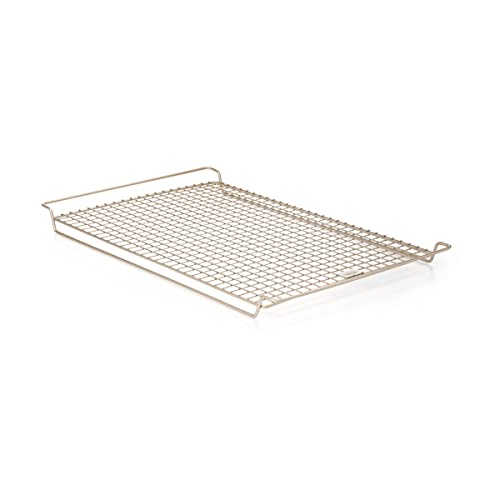
OXO Good Grips Cooling Rack
Tier: mid tier. Everyday ease is the OXO Good Grips Cooling Rack’s whole argument: sensible elevation, a secure feel in the hand and release that behaves itself with cookies and roasted vegetables alike. Nothing about it is theatrical, and that is the point; it is engineered to be forgotten between uses. Choose it if you bake often and value quick clean-up and calm handling over specialised features.
Best for: bakers whose habits match the strengths above. Not suited for: anyone whose main need is the opposite end of the size or duty range — check the other picks in this guide before deciding. As a pick, treat the current Amazon listing as the place to confirm details and check price on Amazon when listings are linked at publish.
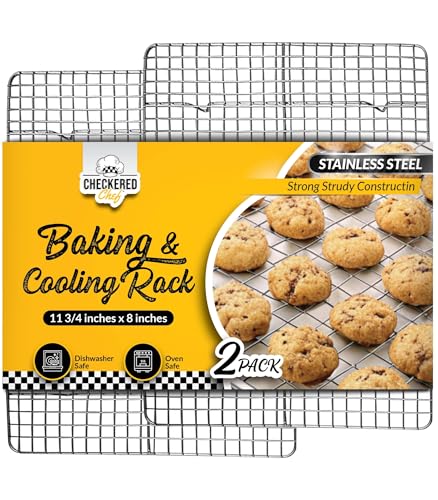
Checkered Chef Cooling Rack
Tier: entry-to-mid tier. As a sheet-pan partner, the Checkered Chef Cooling Rack is the practical roaster of the group: close-set wires that hold smaller items, a fit made for tray work, and a temperament equally happy cooling biscuits. It asks little and does a lot. Choose it if your cooking leans savoury and your rack will split its time between the oven and the counter.
Best for: bakers whose habits match the strengths above. Not suited for: anyone whose main need is the opposite end of the size or duty range — check the other picks in this guide before deciding. As a pick, treat the current Amazon listing as the place to confirm details and check price on Amazon when listings are linked at publish.

Wilton Cooling Rack
Tier: entry tier. The Wilton Cooling Rack answers the small-kitchen question with tiers: stackable cooling that multiplies landing space vertically instead of spreading it across the counter. The trade is a lighter build that prefers cookies, cupcakes and layers to heavy roasting work. Choose it if counter space is your scarcest resource or your baking arrives in holiday waves; choose a heavier frame if roasting duty is on the list.
Best for: bakers whose habits match the strengths above. Not suited for: anyone whose main need is the opposite end of the size or duty range — check the other picks in this guide before deciding. As a pick, treat the current Amazon listing as the place to confirm details and check price on Amazon when listings are linked at publish.
Who Should Buy Which, and Who Should Skip
Weekly bakers should buy the sturdy half-sheet workhorse and be done. Roast-heavy cooks should buy bakeable and treat cooling as the bonus. Small kitchens should buy stackable or a single mid-size rack and protect their counter. Holiday bakers should buy capacity, ideally tiers or a second rack, before the season arrives. The only readers who should skip entirely are those who never bake, roast or fry — a small group, and one that usually shrinks after a single borrowed rack. Before ordering, confirm pan fit, oven suitability and material, the three checks that separate the best experiences from the returns.
Counter space shapes rack choices more than most buyers admit. A generous rack is a pleasure during a baking session and a storage puzzle the rest of the week, while a small rack that fits the sink, the drawer and the toaster oven may get used three times as often. Think about where the rack will land during actual cooking: beside the oven, clear of the splash zone, on a surface that tolerates heat. Think about the sink, too, because a rack that cannot lie flat in your sink is a rack that never gets a proper soak. The best rack is the one whose size fits your pans, your oven, your sink and your cupboard simultaneously, and that is a measurement exercise, not a shopping impulse.
Most cooling-rack disappointment traces back to a handful of avoidable mistakes. Buying by price alone often means thin wires that flex under a cake, feet that barely lift the grid, and finishes that chip within the year. Ignoring pan fit is just as common: the rack that cannot sit inside your sheet pan loses half its usefulness on day one. Other frequent errors include using a counter-only rack in the oven, stacking hot items so steam is trapped between layers, washing a hot rack under cold water, and storing a damp rack so the joints quietly rust. None of these require talent to avoid, only a few minutes of thought before buying and a few small habits after.
Related reading: our cooling rack review · the cooling rack buying guide · cooling rack pros and cons · baking sheet and cooling rack sets
Care Essentials From Long-Term Owners
Cleaning a cooling rack is mostly about timing and soaking rather than effort. Sugary glazes, cheese and caramelised roasting juices harden as they cool, and attacking them dry with a scouring pad is slow work that can damage finishes. A rack left to soak flat in a sink or a sheet pan of warm soapy water surrenders almost everything on its own; a soft brush worked along the wires lifts what remains from the crossings where residue hides. Let the rack cool to a comfortable handling temperature before it meets water, because plunging a very hot rack into cold water is hard on any metal and can encourage warping over time, and dry it thoroughly before storing so moisture never sits in the joints.
A nonstick-coated rack asks for a specific kind of kindness. The coating releases food beautifully and makes washing almost trivial, but it is a surface, not a structure, and it wears where it is rubbed. Metal spatulas scraping across it, abrasive pads, stacking other pans directly on the grid and very high oven heat all thin the coating a little at a time. Used with silicone or wooden tools, washed with a soft sponge and kept out of extreme heat, a coated rack can stay slick for years. The moment the coating starts to flake, retire the rack from food contact, because flakes have no place in a glaze or a crumb. Choosing nonstick is choosing a maintenance style as much as a material.
Dishwasher claims on racks deserve a careful read. Many racks are described as dishwasher safe, and stainless racks generally tolerate machine washing well, but the dishwasher is harder on finishes than packaging suggests: detergents are abrasive over time, and racks rattle against other items. Nonstick and chrome finishes in particular live longer with hand washing. There is also a practical point: a rack takes a large share of a dishwasher rack, and a quick soak and brush in the sink is often faster than waiting for a cycle. Treat dishwasher safety as permission for occasional convenience, not as the default care plan, whatever the material.
The safety habits around a cooling rack are simple but worth stating plainly, because racks usually appear at the hottest moment of a bake. Pans and racks come out of the oven hot enough to burn instantly, so oven mitts are not optional, and the rack needs a stable, heatproof landing surface cleared before the oven door opens, not a damp towel, not a crowded stovetop, and not the edge of the counter. When you carry a loaded rack, or a pan with a rack inside it, keep it level and move slowly, because food slides on wire grids more readily than on solid trays. Finally, inspect cheap racks for sharp wire ends at the rim, and retire any rack that has developed rough, snagging edges near where hands and food meet it.
Final Verdict
Taken together, the reviews describe a tool with an unusually simple buying rule: fit first, build second, brand last. Get those two decisions right and the rack becomes invisible infrastructure in your kitchen, noticed only in the texture of everything it touches. Get them wrong and you will join the reviewers complaining about wobble and chips — not because racks disappoint, but because the wrong rack does.
Racks in Small and Shared Kitchens
In a small kitchen every tool must justify its footprint weekly, and a rack does it by replacing improvisation. It is the landing pad that keeps hot trays off the one clear counter, the draining station that keeps fried food crisp without spreading paper across the worktop, and the glazing stand that contains drips inside a pan. Shared kitchens add another argument: a rack is communal, unbreakable in normal use and needs no instructions, so it serves every cook in the house equally. Flat storage against the side of a cupboard or in the tray slot means the footprint, honestly assessed, is close to zero.
Reading a Rack Like a Buyer, Not a Browser
Photographs flatter racks: every grid looks straight, every finish looks deep and every foot looks sturdy at thumbnail size. Buyers should translate the photograph into physical questions. How thick do the wires look relative to the frame? Do the feet raise the grid clearly, or does the rack sit nearly flat? Are the rim joins clean or visibly rough? Does the stated size match a pan you own, in the maker’s own measurements rather than in the listing’s headline? Asking those questions, and walking away from racks that cannot answer them, is most of what choosing well consists of.
Seasonal Baking and the Case for Capacity
Every baking year has a peak: a holiday week, a celebration, a preserve-and-bake season when the oven runs all day. Cooling capacity that feels generous in March feels inadequate in that peak week, and the shortage always appears at the worst moment, with a hot tray in both hands. Planning rack capacity for the peak, through tiers or a second rack bought calmly in advance, is one of the cheapest forms of holiday insurance in the kitchen. The rest of the year the extra capacity costs a drawer slot and nothing else.
Teaching the Habit to New Bakers
New bakers often skip the rack because recipes mention it in passing, as if it were garnish. The fastest way to teach its value is comparative: cool half a batch on the rack and half in the pan, then taste the bases blind. The lesson lands in one bite and the habit forms permanently. It also helps to stage the rack visibly before baking starts, so using it requires no mid-recipe decision. Tools become habits when they are present at the moment of need, and few tools repay the habit as consistently as this one.
Cooling Different Foods at the Right Pace
Not everything should cool at the same speed, and a rack supports that judgement rather than overriding it. Delicate pastries benefit from full airflow immediately, while some enriched breads prefer a brief rest in the tin before turning out so the structure firms enough to move safely. Dense fruit cakes are famously patient and can cool slowly, whereas crisp biscuits should be moved promptly so their bases stay dry. The rack does not impose a pace; it gives the baker control of the pace, which is why the same tool serves recipes with opposite instructions equally well.
Rack Etiquette at the Table and Beyond
A rack’s work sometimes extends past cooling. Bakers serve warm rolls and pastries from the rack itself, use it as a trivet-style stand for a hot dish at a crowded table, and rest a just-roasted joint on it while the pan juices become gravy. Each extra role argues the same point: a rigid, heat-tolerant grid on feet is a general-purpose platform, and kitchens find uses for platforms. The only cautions are the standing ones: the rack that has been in the oven is hot, needs mitts and a stable surface, and should be announced as hot to anyone reaching across the table.
Using a Rack With a Fan and Other Airflow Tricks
Some bakers point a small fan toward the rack when cooling large batches or when a glaze needs to set before boxing. Gentle moving air speeds the process the rack starts, carrying steam away faster than still air can. It is an optional refinement, not a requirement, and it should stay gentle: a blast of air can dry delicate surfaces unevenly and blow light items around. The principle underneath is the same one the rack embodies — cooling quality is airflow quality — and the fan is simply the rack’s logic extended to the room.
Racks for Chocolate Work and Setting Finishes
Chocolate-dipped and ganache-coated pieces need to set without sitting in their own excess coating, which makes a rack over a tray the standard arrangement. Pieces rest on the grid, surplus coating drips through to the pan, and the finish sets with a clean base instead of a puddle foot. The same setup serves iced biscuits and glazed petit fours. Work at a comfortable room temperature, let pieces set fully before moving them, and the rack delivers the neat undersides that separate home baking from bakery baking in photographs and in the hand.
The Rack in Meal Prep and Weekly Cooking
Meal-prep cooking uses a rack differently from baking day: as infrastructure. Roasted vegetables cool on it before boxing so they do not steam in the container, cooked grains’ companion proteins rest on it, and batches of baked items cool completely before freezing, which keeps ice crystals and sogginess down. Cooling food fully and evenly before storing is also sound food practice, since warm food sealed into containers condenses and spoils texture. The rack earns its place in the weekly routine not with one dramatic save but with a dozen small texture rescues.
Pairing Racks With Timers and Workflow
Cooling times are easy to forget in a busy kitchen, and forgotten cooling causes real faults: cookies boxed warm and softened, cakes frosted warm and sliding, bread sliced warm and gummy. Setting a timer when food lands on the rack turns cooling from a hope into a step. Bakers who cook in batches often run two timers, one for the oven and one for the rack, and find the second timer quietly improves consistency more than any ingredient change. The rack provides the place; the timer provides the discipline; together they finish recipes properly.
What Professional Test Kitchens Standardise
Test kitchens standardise cooling because they cannot afford variables: every bake in a recipe test cools on the same kind of rack, for a timed period, in the same spot. That standardisation is why their results repeat, and home bakers can borrow it cheaply. Cool your bakes the same way each time — same rack, similar spacing, similar timing — and your own results become more predictable, which makes troubleshooting a recipe a matter of ingredients and oven rather than mystery. Consistency is a professional habit that costs nothing but attention.
Reading Cooling Rack Reviews Critically: Patterns That Matter More Than One Opinion
Buying a cooling rack takes an afternoon; living with it happens at the counter, tray or oven shelf it rests on, while cooling bakes evenly and holding hot pans safely off the work surface, and that daily reality is what this section judges. So work backwards from daily life: fix the routine, the space and the people in your mind first, and only then weigh the features that looked persuasive on a product page. The first check is that the grid spacing supports small items without letting them sag through, and it outranks everything else, because no styling or extra capacity compensates when that basic fit is wrong. Ask which part of the cooling rack will look tired first and whether that tiredness is cosmetic, cleanable, repairable or terminal, because the answer sets the realistic lifespan.
Complaints that mention the same remedy, adjustment or workaround are especially valuable, since they reveal both the weakness of the cooling rack and whether living with it is realistic. If a guest can use the cooling rack correctly without instruction, the design is intuitive; if they cannot, expect the same friction, softened only by habit, in your own routine. The most useful review is rarely the most extreme; it is the one from the household most like yours, describing the use most like yours. Most disappointment with a cooling rack traces back to steam trapped underneath because food was left crowded on a flat surface instead. It is a slow, predictable process, which is good news, because predictable problems can be designed out before you buy.
- Count repeated, specific observations across unrelated owners.
- Read the newest comments to catch version changes.
- Favour reviewers whose homes and routines resemble yours.
- Treat single dramatic stories as anecdotes, not evidence.
- Note any workaround owners mention and judge if you would accept it.
The most future-proof question is also the simplest: if your routine changed moderately, would this cooling rack adapt, or would it become the wrong tool kept out of guilt? Before ordering, list everything the first week of use requires and confirm, item by item, whether it arrives with the cooling rack or has to be found separately. Spaces lie in photographs and tape measures do not, so record the available dimensions, the swing and access clearances, and the route the cooling rack takes through the door before it ever arrives. Shortlisted models, perhaps the Nordic Ware Cooling Rack and the USA Pan Bakeable Cooling Rack, should each be put through the same checks in the same order, using the current listing details rather than an older screenshot or a remembered specification.
Attention is a budget too. A cooling rack that needs remembering, scheduling, monitoring or special handling spends it, so count that cost alongside the physical ones. Prevention is unglamorous and effective: washing baked-on residue promptly and drying the wires fully before stacking, done consistently, protects performance better than any occasional rescue effort after problems have set in. Weekday and weekend versions of the same routine can want different things from a cooling rack, so check your choice against both rhythms rather than averaging them into a routine nobody actually lives. Nothing is kept forever. Favour the cooling rack you could repair, rehome or responsibly retire over the one that becomes an awkward problem the day it stops working.
The first fortnight involves unlearning old habits as much as learning new ones, so allow the cooling rack that adjustment period before delivering a final verdict, unless a basic fit check has failed. Think about handing the task over: if someone else had to use, clean or reset the cooling rack from your brief description alone, the design and your setup would pass or fail together. For items that suffer from constant use without rest, a planned spare is not extravagance; it is how the routine survives the day the main one is wet, dirty, broken or missing. Other people in the household get a vote too, since the person who cleans, moves, stores or shares the cooling rack will find friction that the buyer, focused on the main job, can easily miss.
Frequently Asked Questions
What do cooling rack reviews say is the best type?
Reviews converge on the close crosswire grid in a half-sheet size as the best all-round type, because it supports small and large items, pairs with the most common pan and handles cooling and, in bakeable versions, oven work. Stainless versions collect the strongest long-term reviews for durability, while nonstick versions are praised for release and easy washing by bakers who treat the coating gently.
Why do some cooling racks get bad reviews?
Almost always for build and fit rather than concept: thin wires that flex under a cake, feet that let the rack rock, chrome or coatings that chip, and sizes that do not match the buyer’s pan or sink. A smaller share comes from misuse, such as putting a cooling-only rack in a hot oven. Reading reviews for those specific complaints tells you more than any average score.
Do reviewers think two racks are better than one?
Bakers who cook in batches do. Two racks cool double batches without stacking, split oven and counter duty, and cover glazing and cooling stations at the same time. Occasional single-batch bakers reviewing the same products usually say one good rack is plenty. The deciding factor is batch size and baking frequency, not kitchen ambition.
Are stackable cooling racks well reviewed?
Yes, by the audience they are built for: small kitchens and high-volume bakers who need tiers of cooling in one footprint. Reviewers praise the space saving during holiday baking and note the trade honestly — lighter builds that suit cookies, cupcakes and layers better than heavy roasting pans. Match the rack to the load and the reviews make sense.
How long do reviewers keep a cooling rack?
A sturdy stainless rack is typically a keep-for-years purchase, because there is nothing to wear out except the finish on coated models. Chrome racks have the shortest reported working lives once plating chips, and nonstick racks last as long as their coating is protected from metal tools and harsh scrubbing. Longevity follows material and care more than brand.
What should I check first when my rack arrives?
Flatness and finish. Set it on a hard, level counter and press each corner: it should not rock. Run a fingertip along the rim to check for sharp wire ends, confirm the grid feels rigid under palm pressure, and test the fit inside your sheet pan and your sink. Those four checks, done on day one, predict most of the review you would write in a year.
Related reading: is a cooling rack worth it · how to choose a cooling rack · how to clean a cooling rack · how to check whether a baking dish fits an air fryer · best air fryer baking pans


