Disclosure: airfryerkitchensupply.com is reader-supported. When you buy through links on our site, we may earn an affiliate commission at no extra cost to you.
Where to buy
Every cover below was matched to a live Amazon listing before it earned a link, and the barrier claims quoted — dust mite, allergen, bed bug, waterproof — are the listings’ own words, attributed as such. This guide prints no product prices anywhere; each pick links out so you can check the current price on Amazon yourself.
- AllerEase 100% Cotton Allergy Pillow Protectors, Standard, 2 Pack — Check the current price on Amazon
- SureGuard Pillow Protectors, Standard, Smooth, Set of 2 — Check the current price on Amazon
- HOSPITOLOGY PRODUCTS Pillow Encasement, Standard, Set of 2 — Check the current price on Amazon
- Mission: Allergy Dust Mite and Allergen Proof Pillow Encasing, Barrier II, Standard — Check the current price on Amazon
- Utopia Bedding Ultimate Comfort Pillow Protectors, Standard, Set of 4 — Check the current price on Amazon
- AllerEase Premier Zipper Pillow Protector, Standard/Queen, 4 Pack — Check the current price on Amazon
The best allergy covers for pillows work by a mechanism simple enough to state in one sentence: a tightly constructed, fully zippered encasement puts a physical barrier between you and what lives in, and passes through, an ordinary pillow. Dust mites feed and breed inside pillows; their waste particles, along with pollen and pet dander that settle into bedding, are the household allergens a barrier cover is built to block — the cover’s fabric and sealed zipper stop particles from moving between the pillow’s interior and the sleeper, and stop new ones from taking up residence. That is the whole claim, and this guide keeps it at exactly that size: a pillow cover is a barrier product, not a medical treatment. It does not cure or treat allergies, and anyone with significant symptoms should be working with a clinician; what a good encasement does is reduce one well-understood exposure pathway in the place you spend a third of your life.
The six verified picks below divide by barrier style. Two are cotton-first covers whose listings name the allergens they help block. Two are full waterproof encasements whose listings add bed-bug-proof and waterproof claims for maximum sealing. One is a specialist allergen-barrier encasing from a brand built entirely around that niche. One is a value four-pack with waterproof, moisture-wicking construction. And one adds a temperature-balancing claim for sleepers who run hot. Every barrier phrase in the reviews is the listing’s own language, attributed — because with health-adjacent products, whose words a claim wears matters as much as the claim itself. Read the badges as points on one spectrum: breathable cotton at one end, sealed waterproof encasement at the other, and engineered compromises between them — because the right cover is not the one with the longest claim list, but the one whose trade-offs your household will still be living with, happily, a year from now.
Key Takeaways
- A pillow allergy cover is a physical barrier: a tight fabric plus a full zipper that blocks particles from passing between pillow and sleeper. It manages exposure; it does not treat allergies.
- All barrier language in this guide (“helps block dust mites, pollen & pet dander,” “bed bug proof,” “waterproof”) is quoted from the verified listings and attributed to them.
- Full encasement means the zipper closes the pillow in completely — a sham-style flap cover is not a barrier product.
- Cotton covers (AllerEase Cotton, SureGuard) breathe and feel familiar; waterproof encasements (SureGuard, HOSPITOLOGY, Utopia) seal hardest and protect the pillow itself.
- Size precisely: standard (20×26 class), queen and king covers are different products in these listings — match the cover to the pillow, not the bed.
- The pillow is the priority surface in the bed because it holds your breathing zone all night — if you encase only one thing, encase it first.
- Sealing and breathability trade against each other: cotton breathes, waterproof encasements seal hardest, and temperature-balancing designs exist for the sleepers caught between the two.
- Start the system clean — a barrier seals a pillow’s current state in — and keep the regular pillowcase over the cover for nightly wear and weekly washing.
In this guide
Quick Picks
Best Overall — AllerEase 100% Cotton Allergy Pillow Protectors, Standard, 2 Pack
The listing says it plainly: 100% cotton, zippered, and “helps block dust mites, pollen & pet dander.” The barrier in the most familiar fabric, from the category’s defining brand.
Check the current price on Amazon
Best Waterproof — SureGuard Pillow Protectors, Standard, Smooth, Set of 2
Listed as 100% waterproof, bed bug proof and hypoallergenic, in zippered cotton. The maximum-seal cotton option for pillows that must also survive spills.
Check the current price on Amazon
Best Full Encasement — HOSPITOLOGY PRODUCTS Pillow Encasement, Standard, Set of 2
A zippered encasement listed as bed bug and dust mite proof and waterproof, sized 20×26, from a brand whose whole catalog is encasements. The sealed-system pick.
Check the current price on Amazon
Best Specialist Barrier — Mission: Allergy Pillow Encasing, Barrier II, Standard
An allergen-proof pillow encasing from a specialist allergy brand — the focused pick for buyers whose single criterion is the barrier itself.
Check the current price on Amazon
Best Value 4-Pack — Utopia Bedding Ultimate Comfort Pillow Protectors, Standard, Set of 4
Four zippered protectors listed as bed bug and dust mite proof and waterproof, with moisture-wicking softness. Whole-household coverage in one purchase.
Check the current price on Amazon
Best for Hot Sleepers — AllerEase Premier Zipper Pillow Protector, Standard/Queen, 4 Pack
Allergy protection plus a temperature-balancing claim in the listing, machine washable, in a four-pack. The barrier for sleepers who overheat.
Check the current price on Amazon
How These Picks Were Chosen
Every candidate was verified on this site’s own Amazon connection: searched by brand and product type — AllerEase, SureGuard, dust-mite encasements — matched against the returned listing title, and linked only with the ASIN the listed. Eligibility required three things, all visible in the verified title: a zippered, fully enclosing format (the barrier mechanism depends on it); barrier language naming what the cover addresses — dust mites, allergens, bed bugs, water; and a stated size, because a barrier that gaps is not a barrier. Ordinary pillow shams, open-ended pillowcases and protector listings without barrier claims were excluded, however soft.
The editorial standard for health-adjacent claims deserves explicit statement. This guide attributes every barrier claim to its listing (“the listing describes it as bed bug proof”), evaluates covers as exposure-management products, and makes no claim that any cover treats, cures or prevents allergic disease. Where a listing uses the word “proof,” the article reports the word as the maker’s claim for its sealed construction — the honest reading — rather than as a laboratory guarantee. Sizes are reported in the listings’ own terms (Standard, Standard/Queen, with the HOSPITOLOGY’s 20×26 inches stated outright).
A final methodological point: the six picks were kept deliberately diverse in construction because this category’s central trade-off — sealing against breathability — has no universal winner. A guide that recommended six identical waterproof encasements would be simpler and worse. Instead, the list spans cotton barriers, waterproof cotton, full encasements, a specialist barrier fabric, a moisture-wicking value pack and a temperature-balancing design, so that the reader’s real variable — what their household will keep on the bed — can drive the choice. Every one of the six clears the same verification bar; they differ in philosophy, not in legitimacy.
The 6 Best Allergy Covers for Pillows

AllerEase 100% Cotton Allergy Pillow Protectors, Standard, 2 Pack — Best Overall
AllerEase is the brand that defined this category for most shoppers, and this cotton protector is its most direct expression: the verified title promises 100% cotton, a zippered closure, machine washability — and states the barrier’s targets in plain words: it “helps block dust mites, pollen & pet dander.” That “helps block” phrasing is worth pausing on, because it is the honest form of the claim: a barrier reduces what passes; it does not sterilize a bedroom. In cotton, the cover also feels like bedding rather than equipment, which matters for a product your face touches nightly — compliance is a feature, and the cover that feels normal is the cover that stays on the pillow.
Strengths
- The clearest barrier statement in the guide, naming dust mites, pollen and pet dander in the title itself.
- 100% cotton with a zippered closure and machine washability — barrier performance in a familiar, washable fabric.
- Standard size 2-pack covers the typical bed in one purchase.
Trade-offs
- Not listed as waterproof — spills and pillow protection from liquids belong to the SureGuard or HOSPITOLOGY picks.
- Cotton barriers trade a degree of sealing for breathability; maximum-seal seekers should compare the encasements below.
- Standard size only in this listing — queen and king pillows need their own listings, checked the same way.
Spec box (from the verified listing)
- Fabric: 100% cotton
- Closure: zippered
- Barrier claim (per title): helps block dust mites, pollen & pet dander
- Care: machine washable
- Size/count: Standard, 2 pack
- Brand: Aller-Ease (API brand field)
The overall pick in a barrier category should be the product whose claim is clearest, whose fabric is easiest to live with, and whose brand has the longest relationship with the problem. This protector is all three. It will not waterproof a pillow or seal it like a vault, and the guide does not ask it to; it puts a washable cotton barrier with a named allergen brief between the sleeper and the pillow, which is the core job of the entire category, done plainly.
Best for: most allergy-conscious sleepers wanting a cotton barrier with a clearly stated brief. / Not suited for: buyers needing waterproofing or maximum-seal encasement.
Check the current price on Amazon

SureGuard Pillow Protectors, Standard, Smooth, Set of 2 — Best Waterproof
SureGuard stacks the claims highest among the cotton options: its verified title describes the protectors as 100% waterproof, bed bug proof and hypoallergenic, in a premium zippered cotton cover with a smooth finish, sold as a set of two in standard size. Waterproofing changes the product’s job description — the cover stops being only an allergen barrier and becomes the pillow’s own protection against spills, sweat and accidents, which is what makes pillows last. For households with kids, pets, or a pillow expensive enough to defend, that dual role is the argument. As throughout this guide, the “proof” and percentage language is the maker’s, reported as listed.
Strengths
- Waterproof plus bed-bug-proof plus hypoallergenic claims in one zippered cotton cover — the fullest claim set among the cotton picks.
- Protects the pillow itself from liquids, extending pillow life while the barrier does its work.
- Smooth cotton finish keeps the barrier feeling like bedding.
Trade-offs
- Waterproof constructions typically breathe less than plain cotton — hot sleepers should weigh the AllerEase Premier’s temperature-balancing brief.
- Premium positioning within this category’s tiers; check the current price on Amazon.
- This listing is the smooth finish in standard size; the brand’s terry finish and other sizes are separate listings to verify individually.
Spec box (from the verified listing)
- Fabric: cotton, smooth finish
- Closure: zippered
- Claims (per title): 100% waterproof, bed bug proof, hypoallergenic
- Size/count: Standard, set of 2
- Brand: SureGuard Mattress Protectors (API brand field)
SureGuard’s proposition is consolidation: one product that is simultaneously the allergen barrier, the bed-bug seal and the waterproof shield. Each layer of that stack is a claim the listing makes in writing, which is the form of accountability this guide asks of the category. If your pillow strategy is “protect the investment completely,” this set is the most complete single answer among the cotton covers — with the warmth caveat honestly attached for hot sleepers.
Best for: maximum protection per pillow — kids’ beds, guest rooms, expensive pillows. / Not suited for: hot sleepers prioritizing breathability above sealing.
Check the current price on Amazon

HOSPITOLOGY PRODUCTS Pillow Encasement, Standard, Set of 2 — Best Full Encasement
HOSPITOLOGY builds nothing but encasements, and this one is specified like it: the verified title describes a zippered pillow encasement that is bed bug and dust mite proof, hypoallergenic and waterproof, in the brand’s “Sleep Defense System,” sized explicitly at 20 x 26 inches in a set of two. The stated dimensions are a small thing that signals a big one — a specialist maker telling you exactly which pillow this fits, because encasement performance lives and dies on fit. A barrier with slack gaps at the zipper is a barrier with a door in it; a correctly sized, fully zippered encasement is the sealed system the category promises.
Strengths
- Full encasement brief — zippered, waterproof, with bed bug and dust mite proof claims — from a specialist encasement brand.
- Exact dimensions stated in the title (20 x 26 in): fit can be confirmed before ordering.
- Set of 2 covers a standard bed’s pair in one purchase.
Trade-offs
- The fullest seal is also the least breathable format — the warmth trade-off again, strongest here.
- Standard size only in this listing; other sizes are separate listings.
- The brand’s clinical style offers no decorative pretense — it goes under a pillowcase, as all these covers should.
Spec box (from the verified listing)
- Type: zippered pillow encasement
- Claims (per title): bed bug proof, dust mite proof, hypoallergenic, waterproof
- Dimensions: 20 x 26 in (standard)
- Count: set of 2
- Brand: HOSPITOLOGY PRODUCTS
Choose the HOSPITOLOGY when the barrier itself is the entire purchase — when a clinician has advised encasements, when a bed-bug scare has reorganized your priorities, or when you simply want the specialist’s version of the product. Its title reads like a specification sheet because the maker expects to be bought on specifications, and in a category full of soft adjectives, that bluntness is its own credential.
Best for: barrier-first buyers wanting a specialist, fully sealed encasement. / Not suited for: hot sleepers, or buyers wanting a decorative cover (none of these are decorative — use a pillowcase over them).
Check the current price on Amazon
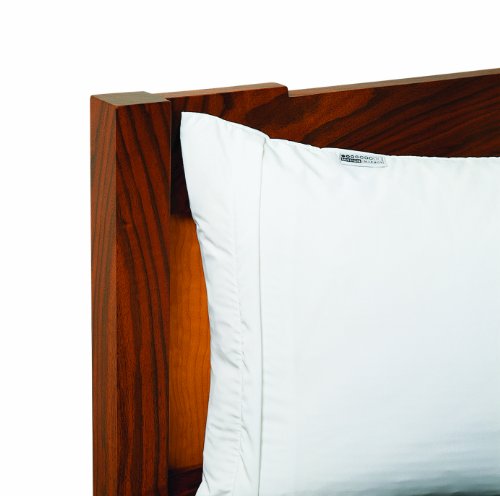
Mission: Allergy Dust Mite and Allergen Proof Pillow Encasing, Barrier II, Standard — Best Specialist Barrier
Mission: Allergy is the niche specialist of this list — a brand whose entire identity is allergen-barrier bedding — and its Barrier II encasing is described in the verified title with the category’s most direct language: “Dust Mite and Allergen Proof Pillow Encasing (Cover).” No lifestyle adjectives, no extra claims stacked for marketing: the product is an encasing, its brief is dust mites and allergens, its size is standard. For the buyer whose allergist used the word “encasement” — a common moment in allergy management, where barrier bedding is a standard environmental-control recommendation — this is the listing that speaks that language back.
Strengths
- Specialist allergy brand with a single-brief product: the barrier is the whole catalog’s reason to exist.
- The most direct claim language in the guide — dust mite and allergen proof encasing, stated plainly.
- Standard size clarity in the title.
Trade-offs
- The verified title is minimal — fabric and care details must be read on the product page, and this guide invents none.
- Sold as a single encasing format in this listing; outfitting a whole bed means multiples.
- No waterproof claim is made in this title — liquid protection is the SureGuard/HOSPITOLOGY brief.
Spec box (from the verified listing)
- Type: pillow encasing (cover)
- Claim (per title): dust mite and allergen proof
- Line: Barrier II
- Size: Standard
- Brand: Mission: Allergy
Specialists earn their place by focus. Where the generalist brands in this guide balance barrier against softness, waterproofing and temperature features, Mission: Allergy’s listing optimizes for one variable and says so. Buyers managing a diagnosed dust-mite sensitivity with a full environmental-control plan — encasements on pillows and mattress, washable bedding, the works — will recognize this as the pillow component of that plan, and its plain title as the sound of a maker talking to clinicians’ patients rather than to browsers.
Best for: dust-mite-focused buyers building a full barrier-bedding system. / Not suited for: buyers wanting waterproofing, or fabric/care details without visiting the product page.
Check the current price on Amazon

Utopia Bedding Ultimate Comfort Pillow Protectors, Standard, Set of 4 — Best Value 4-Pack
Utopia Bedding brings the barrier to household scale: the verified title describes zippered pillow protectors in a set of four, standard size, that are bed bug and dust mite proof and 100% waterproof, with a soft, moisture-wicking brief under the Ultimate Comfort name. Four is the count that changes the purchase’s meaning — two beds, or a bed plus spares for wash day, or a whole family’s pillows in one order — and the claim stack (proof claims plus waterproofing) matches the premium picks while the pack size does the value work. Moisture-wicking is the comfort counterweight: a waterproof cover that moves sweat vapor away from the surface sleeps less clammy than one that merely seals.
Strengths
- Set of 4: whole-household barrier coverage in a single purchase.
- Bed bug and dust mite proof claims plus 100% waterproof per the title — the premium claim stack.
- Moisture-wicking softness brief addresses the clamminess waterproof covers can cause.
Trade-offs
- Not a cotton cover — buyers who want natural-fiber feel should take the AllerEase or SureGuard picks.
- Standard size in this listing; queen is a separate listing to verify on its own title.
- Four-packs reward households that will use four; solo sleepers may prefer a two-pack.
Spec box (from the verified listing)
- Closure: zippered
- Claims (per title): bed bug & dust mite proof, 100% waterproof
- Property: soft, moisture wicking
- Size/count: Standard, set of 4
- Brand: Utopia Bedding
The value logic here is coverage mathematics. Barriers work as a system — a protected pillow beside an unprotected one is half a system — and the four-pack prices the system, not the unit. For families converting a household to barrier bedding, or for anyone outfitting a guest room and a primary bed together, this is the purchase that finishes the job in one box, with claims that match the premium tier’s stack.
Best for: families and multi-bed households converting to barrier bedding at once. / Not suited for: cotton-only buyers, or single-pillow needs.
Check the current price on Amazon

AllerEase Premier Zipper Pillow Protector, Standard/Queen, 4 Pack — Best for Hot Sleepers
The AllerEase Premier answers the barrier category’s comfort problem. Its verified title lists allergy protection together with temperature balancing, a soft fabric, machine washability and a freshness brief, in a Standard/Queen four-pack. Temperature balancing is the differentiator: barrier fabrics have a reputation for sleeping warm and plasticky, and a protector that advertises thermal moderation is aiming directly at the sleepers who abandoned encasements for comfort reasons. In a four-pack at a flexible Standard/Queen size, it is also the practical family pick from the category’s biggest brand — the barrier you can put on every pillow in the house without a sizing spreadsheet.
Strengths
- Temperature-balancing claim targets the hot-sleeper objection to barrier covers.
- Standard/Queen sizing flexibility in a 4-pack simplifies whole-house outfitting.
- Machine washable, from the category’s defining brand.
Trade-offs
- No waterproof claim in this title — spill protection belongs to other picks.
- The barrier language here is “allergy protection” generally; buyers wanting the explicit dust-mite/pollen/dander wording should compare the AllerEase Cotton pick.
- Not a cotton cover — the fabric is a soft synthetic brief per the category’s norms, with the title’s own wording being “soft fabric.”
Spec box (from the verified listing)
- Closure: zippered
- Claims (per title): allergy protection, temperature balancing
- Care: machine washable
- Size/count: Standard/Queen, 4 pack
- Brand: Aller-Ease (API brand field)
Every category has a dropout problem, and for barrier bedding the dropouts are hot sleepers: people who tried an encasement, slept warm for a week, and quietly removed it — losing the barrier entirely. The Premier exists for them, and its presence in this guide is a compliance argument: the best barrier is the one still on the pillow in month six. If warmth has defeated your previous covers, start here and let the temperature brief do its work.
Best for: hot sleepers and whole-house outfitting in one size-flexible pack. / Not suited for: buyers needing waterproofing or explicit cotton construction.
Check the current price on Amazon
Comparison Table
| Pick | Badge | Key spec (verified) | Best for |
|---|---|---|---|
| AllerEase Cotton Protectors ×2 | Best Overall | 100% cotton; zippered; helps block dust mites, pollen & dander (per title) | Everyday cotton barrier |
| SureGuard Protectors ×2 | Best Waterproof | Waterproof, bed bug proof claims; zippered cotton | Maximum protection per pillow |
| HOSPITOLOGY Encasement ×2 | Best Full Encasement | Zippered; waterproof; 20×26 in stated | Specialist sealed system |
| Mission: Allergy Barrier II | Best Specialist Barrier | Dust mite and allergen proof encasing (per title) | Dust-mite-focused systems |
| Utopia Bedding Protectors ×4 | Best Value 4-Pack | Proof claims + waterproof; moisture wicking | Whole-household coverage |
| AllerEase Premier ×4 | Best for Hot Sleepers | Allergy protection + temperature balancing | Warm sleepers, easy sizing |
Read the table along the seal-versus-breath spectrum. At the breathable end sit the cotton AllerEase protectors, whose title names the widest set of airborne targets; at the sealed end sit the waterproof encasements with their bed-bug-proof claims; and between them sit the engineered compromises — SureGuard’s waterproof cotton, Utopia’s moisture-wicking four-pack, AllerEase Premier’s temperature balancing, Mission: Allergy’s single-brief focus. There is no row to avoid in this table. There is only the row whose trade-off your household will still be happy with in month six, which is the true measure of a barrier product.
How to Choose an Allergy Cover for Your Pillows
Start with the shortlist above — the AllerEase Cotton protectors as the default, the SureGuard set for waterproof sealing, the Utopia four-pack for household scale — then apply the four checks below to any cover you consider.
Confirm it is a true encasement
The barrier mechanism requires total enclosure: fabric on all sides and a zipper that closes the pillow inside. An open-ended pillowcase, however tight its weave, leaves the pillow’s interior in open exchange with the room. Every pick in this guide is a zippered protector or encasement per its verified title — reproduce that check anywhere: no zipper, no barrier claim worth the name.
Match the barrier to your actual concern
Different listings defend against different things, and the titles say which. Dust mites and their allergens are the core brief (all six picks address them in their titles’ language). Pollen and pet dander are named explicitly by the AllerEase Cotton. Bed bugs enter through the “proof” claims of the SureGuard, HOSPITOLOGY and Utopia listings — a sealing claim about the zippered enclosure. Water is the SureGuard, HOSPITOLOGY and Utopia brief again. Read your concern off the title before buying; a cover cannot be faulted for not doing what it never claimed.
Size by the pillow, and measure it
Covers are sold in pillow sizes — standard (the 20×26-inch class, stated outright by HOSPITOLOGY), queen, king, and flexible Standard/Queen cuts like the AllerEase Premier’s. A cover that is too large bunches and gaps at the zipper; too small strains seams and may not close. Measure the pillow itself rather than trusting the bed’s size name, and remember the cover goes under your regular pillowcase, so its job is fit and seal, not looks.
Weigh breathability against sealing, honestly
There is a real trade-off at the heart of this category: the tighter the seal, the warmer and less breathable the sleep surface tends to be. Cotton barriers (AllerEase Cotton) breathe best; temperature-balancing designs (AllerEase Premier) engineer around the problem; full waterproof encasements (HOSPITOLOGY, SureGuard, Utopia) seal hardest. Choose the point on that spectrum your household will actually keep on the bed — an unused perfect barrier protects nothing.
Guest rooms, rentals and the pillows you do not control
Barrier covers earn a special mention for the pillows outside your own bed. A guest room’s pillows sit unused for weeks — undisturbed time in which mite colonies grow unmolested — and then host a visitor for a weekend; encasing guest pillows (the Utopia four-pack’s natural job) means the room is always in its defended state rather than its accumulated one. The logic extends to landlords furnishing rentals and to hosts preparing for an allergy-conscious guest: a sealed pillow under a fresh pillowcase is the single cheapest upgrade to a spare bed’s hospitality. Even travel has a version of the argument — a lightweight encasement in the suitcase turns a hotel pillow of unknown history into a known surface — though for most travelers the pillowcase layer is where practicality stops. Judge by frequency: the more strangers and the longer the idle time, the stronger the case for sealing the pillow and forgetting it.
How to Fit and Care for Pillow Encasements
- Start with a clean pillow: encasing a pillow locks its current state in, so wash or replace the pillow first if it is old — a barrier over a heavily colonized old pillow manages future exposure, and a fresh pillow under a barrier is the cleanest system.
- Fit the cover with the pillowcase off: slide the pillow fully in, distribute it evenly to the corners, and zip slowly and completely — the seal is the product, and a half-closed zipper is a half-open barrier.
- Put your regular pillowcase over the encasement. The cover is equipment, not bedding décor; the case takes the nightly wear and the frequent washing.
- Wash the encasement on the rhythm its care label sets — the AllerEase picks here are machine washable per their titles — and wash the pillowcase weekly as usual. Barrier hygiene is a system: case, cover and pillow each on their own clock.
- Inspect the zipper and seams at each wash. A torn seam or a broken zipper ends the barrier’s integrity; replace a failed cover rather than trusting its shape.
- Extend the system if your clinician advises it: mattress encasements and washable bedding are the usual companions of pillow covers in environmental-control plans, and the same title-reading discipline applies to them.
Why the Pillow Is the Priority Surface in the Bed
Environmental-control advice for dust-mite sensitivity usually covers the whole bed, but the pillow earns first attention for a geometric reason: it is the surface your airways spend the night closest to. A mattress is larger, but your face is not on it; the pillow holds your breathing zone for eight hours, inches from its interior. That proximity is why a relatively inexpensive pillow encasement delivers a disproportionate share of the barrier system’s value, and why clinicians’ checklists tend to start there. It is also why the pillow inside the barrier matters: a pillow accumulates moisture, skin cells and mite colonies over its life, and the encasement’s job is to separate the sleeper from that accumulation while preventing its growth into a fresh pillow.
The same logic orders the rest of the system for households building one. Pillow encasements first — this guide. A mattress encasement second, read with the same discipline: zippered, fully enclosing, with named barrier claims. Washable bedding third, on a hot-enough, regular-enough rhythm to matter. Each layer is unglamorous, and the system works precisely because it is mechanical rather than medicinal: barriers, washing and time, reducing what the sleeper breathes in the place they breathe longest. None of it replaces medical care for significant symptoms — it is the environmental half of a plan whose other half belongs to a clinician.
Barrier Fabrics: Cotton, Tight Weaves and Waterproof Constructions
Three construction families deliver the barrier in this guide, and understanding them prevents the commonest disappointment — expecting one family’s virtues from another. Woven cotton barriers (AllerEase Cotton, and SureGuard’s cotton builds) rely on a tight weave whose pores are small enough to block the particles named in their titles while remaining a natural, breathable, familiar fabric. They feel like bedding because they are bedding, engineered tighter. Their limit is liquid: cotton alone is not a waterproofing strategy, which is why SureGuard’s waterproof claim represents additional construction beyond the cotton face.
Waterproof encasements (HOSPITOLOGY, Utopia, and the waterproof SureGuard) add a liquid-proof layer or membrane to the barrier brief. The gain is total: allergens blocked, bed bugs sealed per their listings’ claims, and the pillow defended against spills, sweat and accidents — the difference between a cover and a preservation system. The cost is thermal and tactile: membranes breathe less and can feel faintly different under a pillowcase, which is why the Utopia’s moisture-wicking brief and the AllerEase Premier’s temperature-balancing brief exist as engineering answers. Specialist barrier fabrics (Mission: Allergy’s Barrier II) optimize purely for particle blocking, the single variable, without the waterproof stack. None of the three families is “best” — they are three points on a seal-versus-breath spectrum, and this guide’s six picks are arranged along it so the choice can be made deliberately.
Notice what this routine does not include: any special product, spray or treatment applied to the cover itself. The barrier’s virtue is that it is passive — fabric, zipper and fit — and passive systems fail only through damage or neglect, both of which the inspection habit catches. Keep the routine boring and the barrier keeps its promise; the moment a cover needs a ritual to work, it has stopped being the simple mechanical solution this category exists to provide.
Common Buying Mistakes
- Buying a pillowcase and calling it a barrier. Without a zippered full enclosure, there is no seal and no barrier function — whatever the fabric claims.
- Expecting a cover to treat allergies. Covers manage exposure at the pillow. They are one environmental measure among several, not a therapy; persistent symptoms belong in a clinician’s office, not a shopping cart.
- Ignoring size until the zipper will not close. Measure the pillow. Standard, queen and king are different products in these listings.
- Encasing a filthy old pillow and declaring victory. The barrier seals the pillow’s world in as well as out. Start clean, or start with a new pillow.
- Removing the cover because it sleeps warm — and buying nothing. If a full encasement is too warm, move along the spectrum to the cotton or temperature-balancing picks instead of abandoning the barrier.
- Trusting barrier adjectives without a named target. “Hypoallergenic” alone is a mood; the listings worth buying name what they block — dust mites, pollen, dander, bed bugs, water — in the title, as all six here do.
- Protecting one pillow of a pair. Barriers work as a system; a sealed pillow beside an open one halves the benefit for the couple sharing the bed. The two-packs and four-packs in this guide are sized the way they are for exactly this reason — outfit the whole bed, and the whole household, in one decision rather than discovering the gap at 2 a.m.
- Skipping the zipper check at delivery. The seal is the product, and a faulty zipper discovered at the first wash is a warranty conversation you did not need. Close every cover fully the day it arrives; a barrier that will not close is not a barrier, whatever its fabric.
- Washing the barrier as hard as the pillowcase. The case takes the weekly hot wash; the cover beneath it lives a gentler life and should be washed by its own label’s instructions, not by the household’s most aggressive cycle. Treating the two layers as one laundry item wears the seal out early — and a worn seal is the whole product gone.
- Assuming one cover fits every pillow in the house. Guest pillows, body pillows and the king pair in the primary room are different sizes from the standard set on your own bed. Measure each pillow before assigning covers, or the four-pack will run out exactly where the odd size lives.
Final Recommendation
For most sleepers, start with the AllerEase Cotton protectors: a cotton barrier whose title names its targets plainly. If the pillow itself needs defending from liquids and life, take the SureGuard set; for the specialist sealed system, the HOSPITOLOGY encasement or the focused Mission: Allergy Barrier II. Households converting all at once should take the Utopia four-pack, and hot sleepers the AllerEase Premier. Fit them carefully, keep them closed, wash them on schedule — and let the barrier do its one job, quietly, every night.
One last perspective for the undecided: of everything in the bedroom, the pillow barrier is the cheapest intervention with the longest nightly contact time, which is why it anchors this site’s allergy-bedding coverage. It asks little — a correct size, a closed zipper, an occasional wash — and in return it quietly standardizes the surface your face meets every night, whatever pillow, season or guest room lies beneath it. Few household purchases offer that ratio of effort to exposure. Choose the construction your household will keep, and the barrier will do the rest.
Related guides in this series: Best Air Purifiers For Allergy Sufferers · Best Quilts For Allergy Sufferers · Best Vacuums Allergy · Best Affordable Pillows · Best 100 Down Pillows
Frequently Asked Questions
How does an allergy pillow cover actually work?
By physical barrier. The cover’s tightly constructed fabric and full zipper enclose the pillow, blocking the passage of particles — dust mite waste, pollen, pet dander — between the pillow’s interior and the sleeper, and preventing new colonization of the pillow. The AllerEase Cotton title states the mechanism’s targets directly: it “helps block dust mites, pollen & pet dander.” It is exposure management, not a medical treatment.
What is the difference between a pillow protector and an encasement?
In this category the words overlap, and the zipper is what matters: a true barrier product encloses the pillow completely and zips shut, whether the listing calls it a protector (AllerEase, SureGuard, Utopia) or an encasement (HOSPITOLOGY, Mission: Allergy). An open-ended cover of any name is not a barrier. Read for the zipper and the named targets, not the noun.
Do I still need a pillowcase over the cover?
Yes. The barrier cover is the functional layer; your pillowcase goes over it for comfort, appearance and frequent washing. The case takes the nightly wear, the cover does the sealing — and because the case washes weekly while the cover washes less often, the system stays hygienic without wearing the barrier out.
How often should allergy pillow covers be washed?
Follow the specific product’s care label — the AllerEase picks in this guide are machine washable per their titles. As a rhythm, covers are typically washed far less often than the pillowcase over them, which takes the weekly load. At each wash, inspect the zipper and seams: the barrier is only as good as its closure.
Can a pillow cover help with bed bugs?
Three listings here — SureGuard, HOSPITOLOGY and Utopia Bedding — describe their zippered protectors as bed bug proof in their titles: the claim is that the sealed enclosure prevents bed bugs from entering or escaping the pillow. That is the makers’ claim for their sealed construction, reported as listed. A pillow cover is one component of bed-bug management, not a whole-home solution.
Should I add a mattress encasement as well?
For a full barrier system, yes — pillow covers are the priority because of proximity to the airways, and the mattress is the usual second step, especially where a clinician has advised environmental controls. Apply this guide’s reading discipline to that purchase too: zippered full enclosure, named barrier claims in the title, and the correct size measured rather than assumed. This article’s scope is pillows, so it recommends no specific mattress product — only the standard by which to choose one.
Should I encase a brand-new pillow or an old one?
A new or freshly washed pillow is the ideal start, because the encasement seals the pillow’s state in. Enclosing an old, heavily used pillow still limits what passes to the sleeper, but the cleanest system — and the one clinicians’ environmental-control advice usually assumes — is a sound pillow inside an intact barrier, maintained on schedule.

