Disclosure: airfryerkitchensupply.com is reader-supported. When you buy through links on our site, we may earn an affiliate commission at no extra cost to you.
Where to buy
Allergy purifiers are sold through Amazon, the makers’ own stores and home retailers. Every linked pick below was verified against Amazon’s catalogue data for this site, so use the links to check price on Amazon and confirm the current filter bundle, because makers periodically revise cartridges and model suffixes.
- WINIX 5510 Air Purifier — check price on Amazon
- Levoit Core 300-P Air Purifier — check price on Amazon
- BLUEAIR Blue 211i Max Air Purifier — check price on Amazon
- COWAY Mighty AP-1512HH Air Purifier — check price on Amazon
- LEVOIT Vital 100S-P Air Purifier — check price on Amazon
- BLUEAIR Blue Pure 511i Max Air Purifier — check price on Amazon
Finding the best air purifiers for allergy sufferers starts with an honest point: a purifier does not cure allergies, and no machine on this page will let you ignore pollen counts, bedding hygiene or a doctor’s advice. What a good purifier does — measurably, night after night — is lower the concentration of airborne particles in the room where you sleep and spend your evenings, so your exposure drops and symptoms ease. The six machines below were chosen for exactly that job: proven particle filtration, room sizes that are independently rated where possible, noise levels that let them run continuously, and filter supplies you will still be able to buy in three years.
The market splits into three camps. Compact bedroom units like the Levoit picks are affordable and quiet but cover one closed room. Mid-size proven designs like the Coway Mighty and WINIX 5510 add stronger carbon stages and sensor-driven auto modes. Large-format machines like the Blue 211i Max move enough air for open-plan spaces, at a price. Which camp you need depends on the room, not on marketing: measure the room, close the door in your mind, and buy for that space. Every pick here earns its place for a defined situation rather than pretending to be best at everything.
One more expectation is worth setting before the reviews. Allergy relief from a purifier builds over days, not minutes, because the machine is lowering a background level rather than rescuing you from a single exposure. The first night may feel no different; by the end of the second week of continuous bedroom running, most sufferers can tell whether the dose is working. Judge every pick below on that timescale, keep the routine boringly consistent, and resist the urge to declare victory or failure after one good or bad morning — pollen counts, weather and open windows move the baseline more than any single night’s settings do.
In this guide
Quick Picks
WINIX 5510 Air Purifier — Best Overall. A true-HEPA tower with a serious carbon stage, auto mode and app support that handles pollen, dust and dander in a large bedroom or living room without constant attention. — Check on Amazon
Levoit Core 300-P Air Purifier — Best Budget. The long-running budget benchmark: compact, quiet in sleep mode, AHAM Verifide, and cheap to keep in filters for a single bedroom. — Check on Amazon
BLUEAIR Blue 211i Max Air Purifier — Best for Large Rooms. A high-output machine for open-plan spaces, with quiet low-speed running, auto mode, WiFi control and a washable pre-filter. — Check on Amazon
COWAY Mighty AP-1512HH Air Purifier — Best Proven Bedroom Performer. The decade-long favourite: HEPA plus odour filter, air-quality monitor, auto and eco modes, and a long warranty in a compact box shape. — Check on Amazon
LEVOIT Vital 100S-P Air Purifier — Best for Pet Owners in Smaller Rooms. A pet-focused compact with a washable pre-filter, smart air-quality monitoring and app control for bedrooms where animals sleep. — Check on Amazon
BLUEAIR Blue Pure 511i Max Air Purifier — Best for Small Bedrooms and Nurseries. A very quiet small-room machine with 360-degree intake, auto mode and app control — made for bedsides and nurseries. — Check on Amazon
How These Picks Were Chosen
We chose these purifiers the way an allergy sufferer actually lives with them. First, filtration had to be real: true HEPA media or an equivalent tested system, because the particles that drive hay fever, dust-mite and dander symptoms are small and stay airborne for hours. Machines relying on ionizers alone, or on vague ‘HEPA-type’ language with no rated performance, were cut. Second, room ratings had to be credible — AHAM Verifide figures or maker coverage claims that match the machine’s physical size and fan class — because an undersized purifier running heroically in a big room still leaves the air half-cleaned.
Third, we weighted night noise and automation heavily. Allergy relief is a dose effect: hours of clean air while you sleep matter more than a dramatic hour on turbo. Machines with quiet sleep modes, auto modes that react to dust events, and displays that can be dimmed or switched off scored ahead of louder, manual rivals. Fourth, running costs were treated as part of the product: filter price and availability, pre-filter washability in pet homes, and the maker’s track record of supporting a model over years. A cheap machine with orphaned filters is not cheap for long.
Finally, every product named with a purchase link was cross-checked against Amazon’s catalogue through this site’s product data feed, and the exact model and suffix were matched before a link was included. Where a well-known variant could not be confirmed cleanly, we describe the class of machine in prose rather than risk sending you to the wrong listing. Prices are never printed here because they move constantly; check price on Amazon at the moment you buy.
The 6 Best Air Purifiers for Allergy Sufferers

WINIX 5510 Air Purifier — Best Overall
The WINIX 5510 earns the top spot for allergy sufferers because it attacks the problem on two fronts at once. The true HEPA element handles the particles that actually trigger symptoms — pollen grains, dust-mite debris, pet dander and mould spores — while the deeper carbon bed deals with the gases and odours that a particle filter alone cannot touch. Many cheaper purifiers are strong on one and token on the other; this one is credible on both, which is exactly what a bedroom that has to stay comfortable through a whole pollen season needs.
In daily use the auto mode is the feature that matters most. An onboard sensor watches air quality and ramps the fan when something disturbs the room, then settles back down once the air clears. That behaviour solves the most common real-world failure of air purifiers: people turn them off because they are noisy, then forget to turn them back on. Left in auto, the 5510 quietly does the unglamorous work of keeping the baseline particle count low, which is where allergy relief actually comes from — not from occasional blasts on turbo.
It suits a primary bedroom, a living room where an allergic family member spends evenings, or a home office used all day. It is less happy in a cramped studio where floor space is precious, and the running cost of genuine replacement filters should be part of your decision. Buy it as the anchor machine for the room that matters most, run it around the clock on auto, and judge it after two weeks of sleep rather than after one afternoon.
Strengths
- True HEPA media captures the fine pollen and dander particles that drive most indoor allergy symptoms
- A substantial carbon stage also reduces odours and household VOCs instead of only trapping particles
- Auto mode reacts to dust events — cooking, vacuuming, an open window — without you touching the controls
Trade-offs
- Replacement filter packs are an ongoing cost you should budget for from day one
- The tower footprint needs real floor space, not a shelf or windowsill
- App support is useful but the machine still works best left running continuously, which some people resist
| Detail | What to know |
|---|---|
| Filter type | True HEPA with high-deodorization activated carbon stage |
| Modes | Auto mode with air-quality sensing, plus app support |
| Coverage class | Large-room tower format |
Best for: allergy sufferers who want one machine to anchor a bedroom or living room through pollen season / Not suited for: anyone who needs a tiny nightstand-sized unit or who never wants to replace filters
Check on Amazon to check the current price on Amazon and confirm the exact configuration before you order.

Levoit Core 300-P Air Purifier — Best Budget
The Core 300-P is the purifier we point budget-conscious allergy sufferers to first, not because it is the most powerful machine here but because it covers the fundamentals honestly. Its HEPA media traps the pollen and dander that matter, its room rating is independently verified rather than invented, and it is small and quiet enough that people actually keep it running — the single biggest predictor of whether a purifier helps at all. For a bedroom door that closes at night, that combination is worth more than a bigger specification sheet.
Understand its limits before you buy. The activated carbon in a compact 3-in-1 cartridge is a light layer, so this is a particle machine first: excellent for pollen, dust and pet hair fallout, modest for odours. There is also no sensor-driven auto mode, which means the sensible routine is to run it on a medium setting through the day and drop it to sleep mode at night. Allergy sufferers who follow that routine through a season generally report the difference in morning symptoms, which is the test that counts.
It is the right buy for a first bedroom unit, a teenager’s room, a dorm or a rental where you cannot modify anything. If your allergies are severe or the room is large, treat it as a second machine beside a bed rather than your only line of defence, or step up to the larger picks above. As an affordable entry point that does the basics properly, it has earned its place on this list for years.
Strengths
- Small footprint fits a bedroom corner or beside a desk without dominating the room
- Sleep mode keeps it running all night at a level most sleepers can ignore
- Replacement filters are widely stocked and simple to swap in minutes
Trade-offs
- The carbon layer is thin, so cooking smells and strong odours fade rather than disappear
- No air-quality sensor or auto mode — you choose the speed yourself
- Coverage suits one closed room; it will not rescue a whole open-plan floor
| Detail | What to know |
|---|---|
| Filter type | 3-in-1 filter with HEPA media and activated carbon layer |
| Modes | Sleep mode for low-noise night running |
| Verification | AHAM Verifide room-size rating |
Best for: a first purifier for one bedroom, a dorm room or a child’s room on a sensible budget / Not suited for: open-plan living spaces or anyone expecting strong odour removal from a thin carbon layer
Check on Amazon to check the current price on Amazon and confirm the exact configuration before you order.

BLUEAIR Blue 211i Max Air Purifier — Best for Large Rooms
Large rooms are where allergy plans usually fail: a compact purifier sized for a bedroom simply cannot turn over enough air in an open-plan living space, so pollen that drifts in through doors and hallways never gets captured. The Blue 211i Max is built for that problem. Its clean-air delivery is in a different league from the compact picks, which means it can hold a big room at a low particle count while running at the slower, quieter speeds people tolerate all evening.
BLUEAIR’s HEPASilent approach pairs electrostatic charging with mechanical filtration, and the practical consequence is strong particle capture at lower fan noise than a conventional HEPA tower of similar output. The washable fabric pre-filter is more than a styling choice — in homes with pets it intercepts the hair and fluff that would otherwise blind a main filter in months. Allergy sufferers with shedding animals in a large living area will feel that difference in how often they are buying filters.
Choose it when the room is genuinely big, when an allergic person spends most waking hours in an open-plan space, or when you want one machine instead of two medium ones. Skip it for a small bedroom, where the smaller Blue Pure or the Levoit picks do the same job for less money and less floor space. It is a premium purchase, but for large-room allergy control it is the most convincing machine in this roundup.
Strengths
- Huge clean-air output means it can run slower — and quieter — while still turning over a big room’s air
- Washable pre-filter catches hair and lint before they load the main filter, stretching filter life
- Auto mode and a clear air-quality display make it genuinely set-and-forget
Trade-offs
- It is a large, heavy unit that commits a corner of the room permanently
- Main filters are premium-priced when replacement time comes
- The fabric pre-filter look suits modern rooms but will not disappear into traditional décor
| Detail | What to know |
|---|---|
| Filter type | HEPASilent particle and carbon filtration with washable fabric pre-filter |
| Modes | Auto mode plus WiFi app control |
| Coverage class | Very large room / open-plan format |
Best for: open-plan living areas and large primary bedrooms where one machine must cover serious square footage / Not suited for: small rooms where its output is wasted, or buyers who dislike app-connected appliances
Check on Amazon to check the current price on Amazon and confirm the exact configuration before you order.

COWAY Mighty AP-1512HH Air Purifier — Best Proven Bedroom Performer
Some purifiers are exciting for a season and forgotten by the next. The Coway Mighty has instead spent years as the default recommendation for bedroom allergy control, and that longevity is itself evidence: the design works, filters stay available, and the machine keeps doing its job long after novelty models are discontinued. For an allergy sufferer, that matters — a purifier is a multi-year commitment to a filter supply chain, not a gadget purchase.
The Mighty pairs a true HEPA element with a dedicated deodorization filter, an air-quality monitor that shows you what the machine is reacting to, and auto and eco modes that manage fan speed sensibly. In a bedroom it settles into the background: responding when you shake out bedding or the dog jumps on the bed, then easing off so the room stays quiet. The footprint is compact for its coverage class, which makes it easier to place correctly — near the bed but not jammed against a wall — than bulkier towers.
It suits buyers who value proven engineering over the newest app features, and bedrooms or home offices up to a generous size. If you want smart-home integration above all, look at the app-connected picks; if you want the machine most likely to still be filtering happily, with filters on sale, several years from now, this is the safest pair of hands in the list.
Strengths
- A design refined over many years, with a track record few rivals can match
- Eco mode drops the fan when air stays clean, saving energy and wear
- Filter indicator and a clear pollution display remove the guesswork from maintenance
Trade-offs
- The boxy styling looks like an appliance, not furniture
- No WiFi control on this long-running model
- Pre-filter needs regular vacuuming to keep airflow honest
| Detail | What to know |
|---|---|
| Filter type | HEPA filter with separate deodorization filter |
| Modes | Auto, eco and timer functions with air-quality monitor |
| Coverage class | Mid-to-large single room |
Best for: bedrooms and mid-size rooms where a proven, compact, sensor-driven machine is the priority / Not suited for: buyers who want the newest app ecosystems, or very large open rooms
Check on Amazon to check the current price on Amazon and confirm the exact configuration before you order.
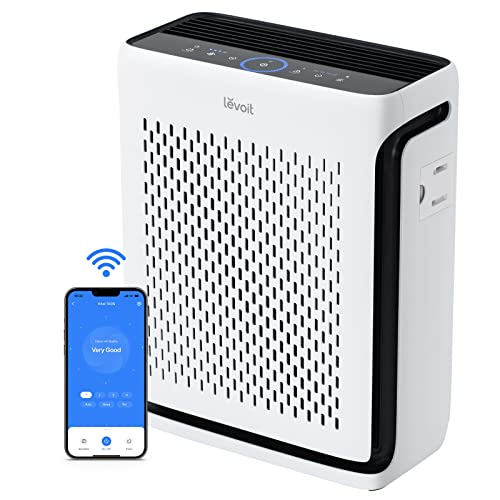
LEVOIT Vital 100S-P Air Purifier — Best for Pet Owners in Smaller Rooms
Pet dander is one of the hardest indoor allergens because the source lives in the room with you and sheds continuously. The Vital 100S-P is designed around that reality. Its washable pre-filter is the first line of defence, catching the visible hair and larger debris that would otherwise clog a HEPA element within weeks in a pet bedroom. Rinsing a pre-filter monthly is a small chore that noticeably extends the life — and the performance — of the filter behind it.
The smart monitoring is more useful here than on most purifiers. Because a pet’s impact on air quality is episodic — a shake, a grooming session, a dash around the room — seeing the particle reading spike and then fall as the machine responds tells you the system is actually working. Allergy sufferers who are deciding whether a pet can keep sleeping in the bedroom get real information from that, instead of guessing from how they feel on a given morning.
Pick it for a bedroom shared with a cat or a small dog, or a nursery-adjacent room where you want monitoring as reassurance. For a large living room full of animals, step up to the Blue 211i Max, whose pre-filter and output are built for that scale. Within its room size, though, this is the most pet-aware compact purifier in the roundup.
Strengths
- Washable pre-filter traps pet hair before it reaches the main filter — rinse, dry, refit
- App monitoring shows particle trends, so you can see whether the machine is keeping up with a shedding pet
- Compact, modern styling sits comfortably in a bedroom
Trade-offs
- Main filter still needs periodic replacement like every HEPA machine
- App features need a home WiFi setup some buyers would rather skip
- Sized for one room; it will not cover an open-plan pet zone alone
| Detail | What to know |
|---|---|
| Filter type | Washable pre-filter with HEPA main filtration |
| Modes | Smart monitor, app control and quiet sleep mode |
| Coverage class | Single bedroom format |
Best for: pet owners whose animals share the bedroom and who want to see air-quality readings in an app / Not suited for: large rooms, or anyone who wants a purifier with no app account involved
Check on Amazon to check the current price on Amazon and confirm the exact configuration before you order.
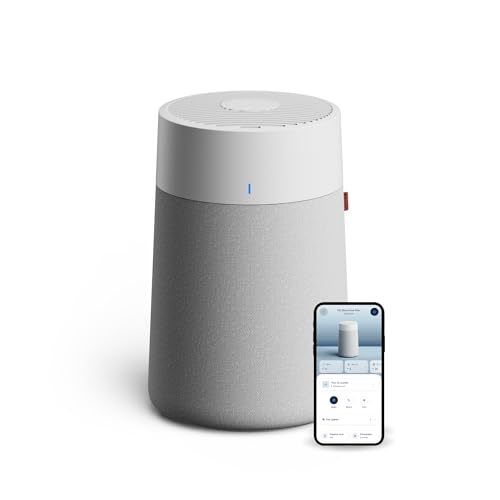
BLUEAIR Blue Pure 511i Max Air Purifier — Best for Small Bedrooms and Nurseries
For allergy sufferers who are also light sleepers, the purifier problem is a trade-off: the machine must run all night to protect sleep, but if it hums, it ruins the sleep it was meant to improve. The Blue Pure 511i Max is the pick that takes that trade-off most seriously. Its night running is genuinely quiet, its intake draws from every direction so it works in the corner you actually have free, and its auto mode means it is not blasting at full speed at 3 a.m. unless the air really needs it.
Filtration is BLUEAIR’s HEPASilent approach, effective against the pollen, dust and dander that dominate bedroom air. A bedroom is a special case for allergies: you spend a third of your life there, bedding and soft furnishings hold reservoirs of dust-mite debris, and symptoms peak overnight and on waking. A small, quiet machine run continuously in that closed room does more for morning symptoms than a powerful machine used intermittently in a hallway ever will.
Choose it for a nursery, a child’s bedroom, or your own room if fan noise has defeated purifiers for you before. It is not the value pick and it is not the large-room pick; it is the one most likely to still be running, quietly, beside the bed a year from now — which, for allergy relief, is the whole game.
Strengths
- Among the quietest machines here at night settings — it can run beside a bed without disturbing sleep
- 360-degree intake makes placement forgiving in tight rooms
- Auto mode plus app control means it manages itself between your checks
Trade-offs
- Output is sized for bedrooms; it will underperform in a big living room
- Fabric pre-filter sleeves are a style commitment as much as a filter
- Premium pricing for its size class
| Detail | What to know |
|---|---|
| Filter type | HEPASilent particle filtration with fabric pre-filter options |
| Modes | Auto mode and a dedicated quiet night setting |
| Coverage class | Small-to-mid bedroom format |
Best for: light sleepers, nurseries and small bedrooms where noise matters as much as filtration / Not suited for: anyone needing large-room coverage or who prefers physical controls only
Check on Amazon to check the current price on Amazon and confirm the exact configuration before you order.
Comparison Table
| Pick | Badge | Key spec | Best for |
|---|---|---|---|
| WINIX 5510 Air Purifier | Best Overall | True HEPA plus high-deodorization carbon filter; rooms up to about 1,881 sq ft in one hour per the maker | allergy sufferers who want one machine to anchor a bedroom or living room through pollen season |
| Levoit Core 300-P Air Purifier | Best Budget | 3-in-1 HEPA filtration, quiet sleep mode, AHAM Verifide for rooms up to about 1,073 sq ft | a first purifier for one bedroom, a dorm room or a child’s room on a sensible budget |
| BLUEAIR Blue 211i Max Air Purifier | Best for Large Rooms | HEPASilent filtration for very large rooms; quiet operation from about 23 dB; washable pre-filter | open-plan living areas and large primary bedrooms where one machine must cover serious square footage |
| COWAY Mighty AP-1512HH Air Purifier | Best Proven Bedroom Performer | HEPA and deodorization filters, air-quality monitor, auto and eco modes, long maker warranty | bedrooms and mid-size rooms where a proven, compact, sensor-driven machine is the priority |
| LEVOIT Vital 100S-P Air Purifier | Best for Pet Owners in Smaller Rooms | Washable pre-filter plus HEPA filtration; smart monitor and app control; AHAM Verifide | pet owners whose animals share the bedroom and who want to see air-quality readings in an app |
| BLUEAIR Blue Pure 511i Max Air Purifier | Best for Small Bedrooms and Nurseries | HEPASilent filtration, very quiet night mode, 360-degree air intake, WiFi app | light sleepers, nurseries and small bedrooms where noise matters as much as filtration |
Read the table as a room-matching exercise, not a league ranking. The best purifier for a large open-plan room is a poor choice for a nursery, and the quietest bedroom machine will disappoint in a living room with two shedding dogs. Match the coverage class to the room with the door closed, then use the badge to pick within that class. If two rooms matter — typically the bedroom and the living room — two correctly sized machines beat one oversized machine moved between rooms, because a purifier only cleans the air of the room it is actually in.
How to Choose an Air Purifier for Allergies
Start with the particle, not the product. Pollen, dust-mite debris, pet dander and mould spores are all captured by mechanical filtration, which is why HEPA-grade media is the non-negotiable core of an allergy purifier. Carbon stages add odour and gas reduction and are worth having — traffic fumes and cleaning-product smells irritate already-sensitive airways — but carbon never substitutes for particle filtration. If a listing leads with fragrance, ionization or vague purification claims and buries the filter type, walk away.
Size the machine to the room with headroom. Purifier coverage figures assume a certain number of air changes per hour; for allergy use you want the machine to achieve that in your room without running at its loudest speed. The practical rule is to choose a model rated for a room somewhat larger than yours, then run it a speed step down. You get the same clean-air delivery with far less noise, and the machine has reserve capacity for bad days — high pollen counts, a visiting dog, wildfire smoke drifting into your region.
Placement and routine decide the rest. A purifier needs clearance around its intake, a door that mostly stays closed, and a filter schedule you will actually keep. Put the main unit in the bedroom first: eight hours of cleaned air during sleep is the highest-value dose. Wash or vacuum pre-filters monthly in pet homes, replace main filters on the indicator rather than by optimism, and vacuum mattresses and soft furnishings regularly — the purifier handles airborne particles, not the reservoir in the bedding itself.
HEPA, Carbon and the Claims Worth Ignoring
True HEPA is a defined performance level: capturing the overwhelming majority of particles at the hardest-to-catch size, around 0.3 microns. Smaller and larger particles are actually captured more easily, which is why HEPA works so well on pollen and dander. ‘HEPA-type’ and ‘HEPA-style’ are not the same claim and usually signal a looser filter. HEPASilent-style hybrid systems, used by BLUEAIR, combine electrostatic charging with mechanical media and can reach comparable real-world capture with less noise — judge them by their rated room performance rather than by the label debate.
Activated carbon is measured in weight, not adjectives. A deep carbon bed, like the one in the WINIX pick, noticeably reduces odours and some gases; the thin carbon sheet in a compact cartridge does a little, briefly. If odours or traffic fumes are a major part of your symptoms, weight of carbon should drive your choice. Ignore, meanwhile, any claim that a purifier kills viruses throughout a home, replaces ventilation, or lets you stop medication. A good machine lowers particle exposure in one room. That is a genuinely valuable thing — it does not need exaggeration.
What Allergy Purifiers Cost to Run Over Three Years
The purchase is only the first payment. A purifier that runs around the clock — as allergy purifiers should — consumes electricity continuously and consumes filters on a schedule, and over three years those running costs can approach or exceed the price of a budget machine. That is not an argument against buying; it is an argument for choosing with the full picture in view. Before you commit, price the replacement filter for any model on your shortlist and note its rated life. A machine with a twelve-month filter and a washable pre-filter, like the pet-focused Levoit pick, asks far less of your wallet each year than a compact unit eating a cartridge every few months.
Electricity is the smaller cost but the easier one to waste. Fan energy rises steeply with speed, which is another reason to size up: a larger machine loafing at a low setting usually draws less power, and makes far less noise, than a small machine straining at maximum to clean the same room. Eco and auto modes, fitted to the Coway and WINIX picks, trim consumption further by slowing the fan when sensors say the air is already clean. Over a year of nights, that behaviour is worth real money and real quiet.
The third cost is attention. Filters that are fiddly to reach, indicators that are easy to miss, and cartridges that go out of stock all tax the routine that makes a purifier work. This is why this roundup favours established models from makers with deep filter catalogues: the WINIX, Levoit, Coway and BLUEAIR ecosystems have supplied cartridges for years, through shortages that orphaned lesser-known brands. When you check price on Amazon for the machine, check the filter listing in the same visit — availability today is the best predictor of availability at your first replacement.
None of this changes the value calculation for a genuine allergy sufferer. A season of broken sleep, morning congestion and foggy workdays has its own cost, and a correctly chosen purifier running in the bedroom is one of the few home purchases that pays that cost down every single night. Just buy the machine whose filters you can afford to replace on time, because a premium purifier on an exhausted filter is a budget purifier with a nicer badge.
Matching the Machine to Your Specific Trigger
Pollen sufferers should think seasonally and spatially. Your exposure peaks when windows open and when you come indoors carrying pollen on clothing and hair, so the purifier’s job is to strip the bedroom air before sleep and keep it stripped overnight. Any true-HEPA pick here does that; the deciding factors become quiet night running and an auto mode that reacts when you walk in from outside. Change out of outdoor clothes outside the bedroom during high-count weeks and the machine’s job gets dramatically easier.
Dust-mite allergy is a bedding problem with an airborne component. The mites live in mattresses and pillows; their debris becomes airborne when beds are made and disturbed. A purifier beside the bed captures that debris during the hours you breathe closest to it, but encasement covers for mattress and pillows, plus hot weekly washing, do as much again. Buy the purifier — and buy the encasements in the same week, or you are funding half a solution.
Pet dander calls for pre-filter discipline above all. Dander is sticky, persistent and produced continuously, so the machine that wins is the one whose pre-filter you can wash in minutes and whose main filter is protected from hair loading. That is why the Vital 100S-P and the Blue 211i Max, at opposite ends of the size range, both earn pet-specific badges here. Mould-spore sensitivity, finally, is a warning to fix moisture first: run the purifier for support, but hunt the leak, the condensation and the bathroom humidity, because no filter dries a wall.
How to Set Up and Run an Air Purifier for Maximum Allergy Relief
Setup is simple, but the details decide whether you get the benefit you paid for. Follow this routine when any of these machines arrives, and repeat the maintenance steps on the maker’s schedule.
- Unpack the machine and remove every plastic bag from the filters inside before first use — filters ship wrapped, and a purifier run with wrapped filters cleans nothing.
- Place the unit in the bedroom first, with clear space around the intake and outlet, away from walls and curtains, and not hidden behind furniture.
- Run it on its highest tolerable setting for the first day to pull the room’s particle load down, then switch to auto mode or a quiet continuous setting.
- Keep the bedroom door closed as much as daily life allows, so the machine is cleaning a defined volume of air rather than the whole house.
- Vacuum or wash the pre-filter monthly — more often with pets — and note the main filter’s replacement date in your calendar the day you install it.
- Pair the purifier with source control: wash bedding weekly in hot water, vacuum soft furnishings with a HEPA-filtered vacuum, and keep pets off the pillow even if they stay in the room.
After two weeks of continuous running, judge the machine by your mornings: congestion, itchy eyes and sleep quality are the metrics that matter. If symptoms persist in a correctly sized, correctly run setup, the remaining exposure is usually outside the bedroom — at which point a second unit for the living room, or a conversation with an allergist about your specific triggers, is the right next step rather than a bigger machine in the wrong room.
Common Buying Mistakes
Buying by room-size claims alone. Coverage figures are calculated under stated assumptions. A machine ‘for 1,000 square feet’ at one air change per hour is a weak allergy tool; you want multiple air changes in the room where you sleep. Compare ratings at similar assumptions and size up, not down.
Turning the purifier off at night. Night is when the dose matters most. If noise is the reason, the answer is a quieter machine or a larger machine running slower — not eight unfiltered hours in a closed bedroom full of bedding dust.
Forgetting the filters. A loaded HEPA filter quietly strangles airflow, and a saturated carbon stage can re-release odours. Set calendar reminders when you install each filter; the machine’s indicator helps, but only if you act on it.
Expecting a purifier to fix a damp or mould problem. Filtration captures spores in the air; it does not remove the mould growing in a bathroom or a leaking wall. Fix the moisture source first, then use the purifier as support.
Putting the only machine in the wrong room. A hallway or living-room unit does little for bedroom symptoms behind a closed door. Protect the sleeping space first, expand later.
Final Recommendation
For most allergy sufferers, the WINIX 5510 is the right first serious purifier: real HEPA, a meaningful carbon stage, and auto mode in a machine sized for the rooms that matter. Budget buyers should start with the Levoit Core 300-P and run it religiously in the bedroom. Large open rooms point to the Blue 211i Max; pet-shared bedrooms to the Vital 100S-P; light sleepers and nurseries to the Blue Pure 511i Max; and anyone who values a decade-proven design over app novelty will be happy with the Coway Mighty for years.
Whichever you choose, commit to the routine: continuous running, closed doors, filters on schedule. That discipline, more than any single specification, is what turns a purifier from an appliance into relief. If you are comparing neighbouring options before you decide, the guides below cover the closest alternatives in this range.
A last word on timing: buy before your worst season starts, not in the middle of it. Pollen sufferers who set a machine up in the calm weeks ahead of spring begin the season with a clean bedroom baseline and a routine already in place, while mid-season buyers spend their worst fortnight waiting for delivery and filter schedules. The same logic applies to smoke-prone regions ahead of fire season. The best purifier, in the end, is always the one already running quietly in the corner when you actually need it most.
Best Air Purifiers For Pets Best Air Purifiers For Smoke Best Air Purifiers For Large Rooms Best Air Purifiers For Bedrooms Best Hepa Air Purifiers
Related guides
- Best Air Purifiers For Parrots
- Best Fans And Air Purifiers
- Best Holmes Air Purifiers
- Best Humidifiers Air Purifiers
Frequently Asked Questions
Do air purifiers really help with allergies?
They help with airborne triggers — pollen, dust, dander and spores floating in a room’s air — by continuously filtering them out. Controlled studies and long user experience agree that a correctly sized HEPA purifier in the bedroom reduces night-time exposure and eases symptoms for many people. They do not treat the allergy itself, and they cannot help with triggers you meet outdoors or embedded in bedding, which is why they work best alongside washing, vacuuming and medical advice.
What size purifier do I need for my bedroom?
Measure the room, then choose a machine rated for a somewhat larger space so it can do the job at a quiet speed. A typical bedroom suits the compact and mid-size picks here; large primary suites and open-plan rooms need the bigger machines. The door matters as much as the square footage: a closed room of any size is far easier to keep clean than an open one.
How often do HEPA filters need replacing?
Most main filters in these machines are rated in months of continuous use — commonly six to twelve — and several picks have indicators that track actual use rather than calendar time. Pre-filters should be vacuumed or washed monthly. Follow the maker’s schedule for your model, and treat a noticeable drop in airflow or a return of odours as a sign to check the filters early.
Should an allergy purifier run all the time?
Yes — continuous running at a tolerable speed is the pattern that delivers results. Particles are constantly reintroduced by movement, clothing, pets and open doors, so a purifier switched on for an hour a day barely dents exposure. Auto modes exist precisely to make 24-hour running quiet and economical.
Is an air-quality sensor worth paying for?
For allergy use, yes. A sensor lets the machine respond to real events — pollen blown in, bedding shaken out, a pet’s grooming session — and settle down afterwards. It also gives you feedback that the air is actually cleaner, which helps you trust the routine and keep it going.
Can a purifier replace my allergy medication?
No. A purifier reduces exposure; it does not change your immune response. Many sufferers find they cope better during high-pollen weeks with a purifier running, but any change to medication belongs in a conversation with your doctor, not in a product decision.

