Disclosure: airfryerkitchensupply.com is reader-supported. When you buy through links on our site, we may earn an affiliate commission at no extra cost to you.
Where to buy
Small vacuums are one of the easiest online purchases to get right, because the format tells you the job: sticks for floors, handhelds for spots, canisters for furniture-dense rooms. Every pick below was cross-checked against a verified listing, and links go to those exact listings so you can check the current price on Amazon — prices in this class move with promotions too often for any article to print them honestly.
- Eureka Blaze Stick Vacuum Cleaner, 3-in-1 (Best Overall) — check price on Amazon
- Bissell Featherweight Stick Vacuum 2033 (Best Budget Stick) — check price on Amazon
- Dirt Devil Scorpion Plus Handheld Vacuum (Best Handheld) — check price on Amazon
- BLACK+DECKER dustbuster Cordless Handheld Vacuum HHVI315JO42 (Best Cordless Handheld) — check price on Amazon
- Eureka Whirlwind Bagless Canister Cleaner NEN110A (Best Small Canister) — check price on Amazon
- Bissell Zing Canister Bagless Vacuum 2156A (Best Compact Canister Alternative) — check price on Amazon
Finding the best affordable small vacuums is mostly an exercise in matching format to mess. A small vacuum is not a shrunken disappointment of a ‘real’ vacuum; it is a different tool, optimised for the quick, frequent cleaning that small homes and busy households actually do. The six verified picks below cover the three formats that matter — convertible sticks, handhelds and compact canisters — from the major floor-care brands, each described only with what its verified listing states. Two are cordless-or-corded handheld specialists, and we are explicit about which machines are second vacuums rather than primary ones, because that honesty is what makes a small vacuum purchase succeed.
In this guide
Quick Picks
Best Overall: Eureka Blaze Stick Vacuum Cleaner, 3-in-1 — check price on Amazon. A corded 3-in-1 that converts from stick to handheld, built for dorms and small homes — the most flexible small vacuum in this guide.
Best Budget Stick: Bissell Featherweight Stick Vacuum 2033 — check price on Amazon. Bissell’s long-running Featherweight formula: a bagless stick that works as an electric broom for quick floor passes and converts for spot jobs.
Best Handheld: Dirt Devil Scorpion Plus Handheld Vacuum — check price on Amazon. A corded handheld with a pivoting stair and upholstery tool plus a hose and dusting brush — the detail-cleaning specialist of the group.
Best Cordless Handheld: BLACK+DECKER dustbuster Cordless Handheld Vacuum HHVI315JO42 — check price on Amazon. The classic dustbuster formula in cordless form, with a wide mouth for scooping larger debris — the grab-and-go pick for cars and quick spills.
Best Small Canister: Eureka Whirlwind Bagless Canister Cleaner NEN110A — check price on Amazon. A lightweight bagless canister for buyers who prefer the canister format — the wand reaches under furniture while the body trails behind.
Best Compact Canister Alternative: Bissell Zing Canister Bagless Vacuum 2156A — check price on Amazon. Bissell’s compact Zing canister — the small-body option for hard floors, rugs and above-floor reach on a budget.
How These Picks Were Chosen
The screen for this guide had four rules. First, the machine had to be a complete vacuum — no replacement filters, dust bags, batteries or accessory kits, several of which surfaced in the cache and were excluded. Second, it had to be genuinely small: sticks, handhelds and compact canisters only, not full-size uprights wearing a ‘lightweight’ label. Third, it had to sit in the affordable class by design — simple motors, bagless dirt systems and minimal electronics — rather than being a premium machine temporarily discounted, because this article prints no prices and a pick must stay in class.
Fourth, listing claims were kept on a short leash. Where a verified listing states a tool, a conversion or a format, we print it. Variants of the same machine in another colour were deduplicated so the six slots are six different machines.
The result deliberately mixes roles. Two picks can serve as a small home’s only vacuum, two are handheld specialists that pair with any floor machine, and two are compact canisters for buyers who prefer that format. Affordable does not mean disposable: every pick is from a manufacturer with a real parts and filter ecosystem, which is what separates a cheap vacuum from an affordable one over two years of ownership.
The 6 Best Affordable Small Vacuums

Eureka Blaze Stick Vacuum Cleaner, 3-in-1 — Best Overall
Check the current price on Amazon
The Eureka Blaze is the small vacuum most people actually mean when they type this query: light, corded so it never dies mid-room, and convertible. The verified listing describes a 3-in-1 design — full stick for floors, handheld for stairs and furniture, with a pet hair eraser tool in the description. For a dorm, studio or small flat, that one-machine coverage is the whole point.
Strengths
- 3-in-1 conversion covers floors, stairs and upholstery with one machine
- Corded power means suction never fades as a battery drains
- Featherweight-class body is easy to carry between rooms and store in a closet corner
Trade-offs
- Corded design ties you to outlets and cord management in larger spaces
- Small dust cup needs frequent emptying during whole-home cleans
- A stick format will not match a full-size upright for deep carpet pile
| Specification | Detail from the verified listing |
|---|---|
| Format | 3-in-1 stick / handheld (per listing) |
| Power | Corded |
| Intended spaces | Dorm and small home use (per listing) |
Judge the Blaze by the jobs it is built for: daily crumb patrol, entryway grit, pet hair on hard floors and low-pile rugs, and the stairs that bulkier machines make miserable. The handheld conversion is what separates it from a basic stick — sofas, car interiors and shelf tops all become one-minute jobs. It is not a replacement for a full-size deep-cleaning upright in a large carpeted house, and this guide does not pretend otherwise. Buy it as the only vacuum in a small home, or as the lightweight second vacuum in a big one. Either role suits it; asking it to be a whole-house deep cleaner does not.
Best for: dorms, studios and small homes needing one light machine / Not suited for: large carpeted houses needing deep-pile cleaning
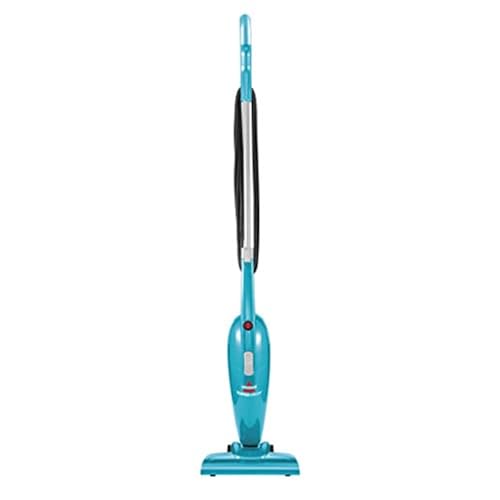
Bissell Featherweight Stick Vacuum 2033 — Best Budget Stick
Check the current price on Amazon
The Featherweight is one of the most proven designs in the affordable small vacuum class. The verified listing describes a lightweight bagless stick vacuum that also works as an electric broom, with a crevice tool included, for hard floors and carpets. It is the classic ‘keep it in the kitchen closet’ machine: out in ten seconds, done in two minutes, back in the closet before the pasta water boils.
Strengths
- Electric-broom simplicity makes quick passes genuinely quick
- Bagless design keeps running costs at zero beyond filter care
- Crevice tool included for edges and between cushions
Trade-offs
- Built for quick cleans, not deep extraction on thick carpet
- Small capacity means emptying during bigger jobs
- Basic feature set — no powered brush extras at this tier
| Specification | Detail from the verified listing |
|---|---|
| Format | Stick / electric broom (per listing) |
| Dirt system | Bagless |
| Tools | Crevice tool (per listing) |
The Featherweight’s virtue is honesty of purpose. It does not try to be a robot, a wet mop or a deep cleaner; it is a light stick for the 90 percent of home vacuuming that is really just crumbs, litter, hair and dust on hard surfaces. Owners who understand that love it for years. Owners who expect it to resurrect a matted hallway carpet will be disappointed, but that is a mismatch of job and tool, not a flaw in the tool. As a budget stick for hard-floor homes, apartments and quick daily passes, it remains the reference point everything else in this price class is compared against.
Best for: hard-floor homes and apartments wanting fast daily passes / Not suited for: deep cleaning thick carpet

Dirt Devil Scorpion Plus Handheld Vacuum — Best Handheld
Check the current price on Amazon
Some messes are not floor messes. The Scorpion Plus is built for the other kind: stairs, upholstery, car footwells, the debris field around a litter box or a craft table. The verified listing confirms a corded, lightweight handheld with a pivoting stair and upholstery tool, a hose and a dusting brush included — a tool kit that tells you exactly what this machine is for.
Strengths
- Pivoting stair and upholstery tool is purpose-shaped for the jobs handhelds actually do
- Corded motor delivers full suction for as long as the job takes
- Hose and dusting brush extend it to shelves, vents and car interiors
Trade-offs
- Handheld only — it will not do your floors as a primary vacuum
- Cord limits range compared with a cordless handheld
- Small dirt capacity suits spot jobs, not whole-room sessions
| Specification | Detail from the verified listing |
|---|---|
| Format | Handheld (per listing) |
| Power | Corded |
| Tools | Pivoting stair/upholstery tool, hose, dusting brush (per listing) |
Pair this with any stick or upright and the two-machine system covers a home better than one expensive machine usually does. The Scorpion’s pivoting tool is the detail to note: stair treads and sofa arms are angled surfaces, and a tool that adjusts to them keeps suction sealed instead of leaking at the edges. Corded power is unfashionable but right for this role — detail jobs are short, outlets are near, and suction that never fades matters more than freedom of movement. Buy it as the specialist second vacuum. If you can only own one machine, choose the Blaze above and accept slower stair work.
Best for: stairs, upholstery, cars and spot messes as a specialist second vacuum / Not suited for: anyone needing a single primary floor vacuum

BLACK+DECKER dustbuster Cordless Handheld Vacuum HHVI315JO42 — Best Cordless Handheld
Check the current price on Amazon
The dustbuster name is practically the category name for cordless handhelds, and this verified listing is the current formula: rechargeable, portable between car and home, with a wide mouth that swallows the dry cereal, pet kibble and gravel that narrow nozzles push around. It lives on its charger so it is always ready for the thirty-second jobs that happen daily.
Strengths
- Cordless grab-and-go convenience for car and home spot jobs
- Wide mouth handles larger dry debris that narrow nozzles reject
- Always-ready charging habit suits daily micro-messes
Trade-offs
- Battery runtime limits it to spot work, not room-by-room cleaning
- Handheld format only — no floor coverage
- Suction is tuned for convenience, not deep upholstery extraction
| Specification | Detail from the verified listing |
|---|---|
| Format | Cordless handheld (per listing) |
| Model | HHVI315JO42 (per listing) |
| Intended use | Car and home (per listing) |
Every home has two kinds of dirt: the weekly kind a real vacuum handles, and the daily kind — spilled rice, tracked litter, the biscuit a toddler redecorated the car seat with. The dustbuster owns the second kind. Its value is measured in seconds saved and messes handled before they spread, not in deep-cleaning power. Keep expectations there and it is one of the highest-utility small appliances you can own. Ask it to vacuum a whole apartment and you will hate it by the second room, because that is a stick vacuum’s job and this guide gives you three of those above and below.
Best for: cars, highchairs, litter zones and daily micro-messes / Not suited for: whole-room or whole-home cleaning

Eureka Whirlwind Bagless Canister Cleaner NEN110A — Best Small Canister
Check the current price on Amazon
Canister vacuums divide opinion, but for homes with lots of furniture to clean under and around, the format has real advantages: a light wand in the hand, a body that follows, and reach that a stick cannot match. The verified Eureka listing describes the WhirlWind NEN110A as a lightweight, corded, bagless canister for carpets and hard floors — the small-canister representative in this guide.
Strengths
- Wand-and-canister format reaches under sofas and beds easily
- Bagless dirt system keeps consumable costs down
- Corded power sustains suction through longer sessions
Trade-offs
- Two-part body is less grab-and-go than a stick for tiny jobs
- Storage footprint is larger than a closet-corner stick
- Canister format suits deliberate cleans more than quick passes
| Specification | Detail from the verified listing |
|---|---|
| Format | Canister (per listing) |
| Model | NEN110A (per listing) |
| Dirt system | Bagless |
| Power | Corded |
Choose the canister if your cleaning style is a weekly deliberate session rather than daily spot passes: the wand gets under the sofa, along skirting and up the stairs with the motor’s weight resting on the floor instead of in your wrist. That weight distribution is the canister’s quiet ergonomic win, and it is why the format survives despite the stick era. For small homes with mixed floors and furniture-dense rooms, this is a genuinely different — and for some people better — answer than any stick.
Best for: furniture-dense small homes and weekly deliberate cleans / Not suited for: closet-corner storage or 60-second spot jobs
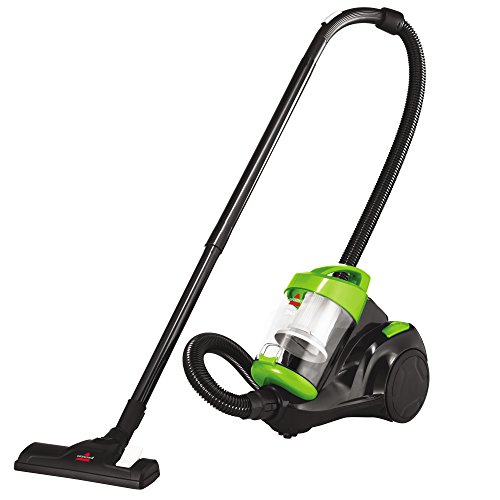
Bissell Zing Canister Bagless Vacuum 2156A — Best Compact Canister Alternative
Check the current price on Amazon
The Zing is the canister for people who like the format but not the bulk. The verified listing identifies the Bissell 2156A Zing as a bagless canister vacuum; the line is known for compact bodies that store in a small closet and carry easily between floors of a house. We keep the description to what the verified listing states, and flag in the sources that this cache record carries no recorded verification date.
Strengths
- Compact canister body stores and carries easily
- Bagless system avoids ongoing bag costs
- Canister wand format suits hard floors and above-floor jobs
Trade-offs
- Compact size means compact dirt capacity
- Short verified listing title — fewer stated extras than rivals, so judge it as a simple machine
- Format is a weekly-clean tool, not a quick-pass stick
| Specification | Detail from the verified listing |
|---|---|
| Format | Canister (per listing) |
| Model | 2156A (per listing) |
| Dirt system | Bagless |
The Zing earns the sixth slot as the second canister because the format genuinely suits a slice of small-home buyers better than sticks do — particularly in homes that are mostly hard flooring with rugs, where a light wand and a trailing body make a calm, thorough weekly clean. It is a simple machine and this guide presents it as one: no inflated feature claims, just a compact bagless canister from a major floor-care brand. Compare it directly with the Eureka Whirlwind above; the choice between them comes down to the deal on the day and which body shape fits your storage. Either gives a small home a real vacuum rather than a toy one.
Best for: hard-floor homes wanting a compact, simple canister / Not suited for: buyers wanting a feature-loaded or cordless machine
Comparison Table
| Pick | Badge | Key spec | Best for |
|---|---|---|---|
| Eureka Blaze Stick Vacuum Cleaner, 3-in-1 | Best Overall | 3-in-1 stick/handheld, corded, featherweight class | dorms, studios and small homes needing one light machine |
| Bissell Featherweight Stick Vacuum 2033 | Best Budget Stick | Featherweight stick, bagless, crevice tool included | hard-floor homes and apartments wanting fast daily passes |
| Dirt Devil Scorpion Plus Handheld Vacuum | Best Handheld | Corded handheld, pivoting stair/upholstery tool, hose + dusting brush | stairs, upholstery, cars and spot messes as a specialist second vacuum |
| BLACK+DECKER dustbuster Cordless Handheld Vacuum HHVI315JO42 | Best Cordless Handheld | Cordless rechargeable handheld, wide mouth, car + home | cars, highchairs, litter zones and daily micro-messes |
| Eureka Whirlwind Bagless Canister Cleaner NEN110A | Best Small Canister | Lightweight bagless canister, corded, carpet + hard floor | furniture-dense small homes and weekly deliberate cleans |
| Bissell Zing Canister Bagless Vacuum 2156A | Best Compact Canister Alternative | Compact bagless canister, 2156A | hard-floor homes wanting a compact, simple canister |
Stick, Handheld or Canister: Choosing the Small Vacuum Format
The stick is the default small vacuum for a reason. It stands in a closet corner, covers floors standing up, and the better ones convert to handhelds for stairs and sofas. If you clean mostly floors in a space under a few rooms, a stick is your format, and the Eureka Blaze and Bissell Featherweight in this guide bracket the choice: convertible and corded, or simple and broom-like.
The handheld is not a smaller stick; it is a different appliance. It exists for the messes that happen between floor cleans — crumbs, litter, car interiors, upholstery, the top of the skirting board. Handhelds are judged on grab speed, mouth width and whether the suction holds for the whole job, which is why this guide includes both a corded detail specialist and a cordless convenience pick. Most homes benefit from a handheld as the second machine, not the first.
The canister is the connoisseur’s small format. Separating the motor body from the wand puts the weight on the floor, gives you reach under furniture that no stick matches, and makes stairs and above-floor cleaning calm instead of athletic. The cost is storage shape and setup time: a canister is a weekly-clean instrument, not a sixty-second one. Furniture-dense small homes with mixed floors are where canisters quietly outperform everything else in this guide.
Corded vs Cordless in the Affordable Class
Cordless convenience costs money, and in the affordable class that trade is stark: at the budget end, going cordless usually means a smaller motor, a smaller dust cup and a battery that will age. That is why four of the six picks here are corded. A cord is an inconvenience you notice for the first week; weak suction and a dying battery are inconveniences you notice for the life of the machine.
The exception is the true spot-job handheld. A dustbuster-style machine used for thirty-second rescues gains more from being cordless and always charged than it loses in raw power, because the alternative is not a stronger clean — it is not bothering to clean at all. Match the power source to the session length: corded for anything measured in rooms, cordless for anything measured in seconds.
Whichever you choose, keep the filter clean. Small vacuums rely on small filters, and a clogged filter is the number one cause of ‘my cheap vacuum lost suction’ — a maintenance issue misread as a quality issue. Rinse or replace filters on the maker’s schedule and an affordable vacuum holds its performance for years.
How to Choose an Affordable Small Vacuum
Start with your floor map, not with features. Mostly hard floors with a rug or two: any pick here works, and the stick and canister formats will feel effortless. Wall-to-wall carpet in several rooms: a small vacuum becomes your between-cleans machine, and you should be honest that a full-size upright remains the deep-clean tool. Stairs in the home: weight and handheld conversion matter more than any other spec, because a vacuum that is annoying on stairs simply stops being used on them.
Then decide the role. Only vacuum in a small home: choose a convertible stick or a canister with real floor coverage. Second vacuum: choose the handheld that covers your main machine’s blind spots — stairs, cars, upholstery. This role-first thinking is what separates satisfying purchases in this class from the drawer of abandoned gadgets most homes accumulate.
Dust cup size and emptying style are the daily-life specs. Small cups are fine for small homes but need emptying mid-job in pet-heavy houses; a cup that empties without you touching the dirt matters more than a tenth of a litre of capacity. Likewise, washable filters cut ownership cost to near zero, which is a real part of ‘affordable’ over two years — the purchase price is only the first instalment of what a vacuum costs.
Finally, weight is a feature, not a footnote. Every pick in this guide is in the featherweight or compact class because a small vacuum’s entire value proposition is that you will actually use it, daily, without planning to. The best affordable small vacuum is the one that is out of the closet and back in under three minutes — judge every candidate against your real habits, not your aspirational ones.
What ‘Affordable’ Should and Should Not Mean
This guide prints no prices, because prices in this class change weekly. But the tier logic is stable: affordable means a simple, proven design from a real floor-care brand, sold in volume, with washable filters and no proprietary consumables. The picks here are exactly that — long-running model lines from Eureka, Bissell, Dirt Devil and BLACK+DECKER whose designs have survived years of production, which is the strongest reliability signal available at this tier.
What affordable should not mean is the anonymous end of the marketplace: unbranded mini vacuums with USB charging and toy motors, which surface constantly in searches for this search. They were excluded from this guide on a simple principle — a vacuum whose maker has no parts, filters or support presence is not cheap, it is disposable, and its real cost is buying the replacement within the year. Brand accountability is the cheapest durability feature there is.
Spend the savings correctly instead: the money not spent on a premium machine buys the second format your home actually needs. A stick plus a handheld, bought at affordable prices, covers a small home more completely than one mid-priced machine of either type. That pairing strategy is the smart shopper’s move in this category, and this guide’s six picks are chosen so any two of them pair sensibly.
How to Use a Small Vacuum So It Actually Keeps Up
Work in passes, not marathons. The small vacuum’s advantage is frequency: a three-minute pass over the kitchen, entryway and main living area every day or two keeps dirt from ever becoming a deep-clean problem. Dirt that is removed while it is loose on the surface never gets ground into rug fibres or tracked room to room, which is why homes with a small-vacuum habit genuinely need deep cleans less often.
Empty the cup before it looks full. Small cups lose suction well before they are packed, because airflow through the filter is what generates the pull. Emptying at half to two-thirds full keeps performance at its peak and takes ten seconds; it is the single highest-value habit in small vacuum ownership. Tap or rinse the filter on the same rhythm — weekly for the cup, monthly for the filter is a workable default for most homes.
Sequence a room properly: above-floor first, floor last. Use the handheld or converted mode for sofa, shelves and windowsills, letting dislodged dust fall, then do the floor in one pass to collect everything. On stairs, work top to bottom for the same reason. This ordering sounds fussy and saves a genuine second pass, which over a year is hours of your life returned.
Store it where the mess happens, charged or coiled and ready. A vacuum in a far closet is a vacuum used weekly; a vacuum in the kitchen corner is used daily, and daily is where the format pays off. If you take one idea from this section, take that one — placement is the feature no manufacturer can sell you.
Small Vacuums for Pet Owners: What Actually Matters
Pet hair changes the small-vacuum brief in three ways. First, hair fills small dust cups fast, so the emptying habit in the how-to section becomes twice as important — a pet household should empty after every session, not every few. Second, hair wraps brushrolls and clogs filters with a felted layer that strangles suction quietly; the monthly filter check becomes a fortnightly one. Third, the mess is distributed — hair lands on sofas, stairs and bedding, not just floors — which is why the handheld picks in this guide matter more to pet owners than to anyone else.
Of the six picks, the Eureka Blaze is the pet household’s centre: its listing names a pet hair eraser tool and its handheld conversion reaches the furniture where hair actually lives. The Dirt Devil Scorpion Plus is its natural partner for upholstery and stairs. The dustbuster owns the litter zone and the kibble perimeter. A pet household running those roles on affordable machines will outperform a neighbour with one premium vacuum used weekly — frequency and format fit beat raw power against hair, every time.
One honest limit: none of these machines is a deep-extraction answer for a heavily carpeted, multi-pet home, and this guide does not dress them as one. They are the daily control system that keeps hair from ever becoming a deep problem. Households already past that point should deep-clean first — borrowed, rented or professional — and then let the small machines hold the line, which is the job they were designed for.
Rentals, Dorms and First Apartments: The Small Vacuum Starter Kit
Small spaces punish ownership of big appliances, and the small vacuum is often the first cleaning machine a person buys outright. The starter logic is simple: one floor machine first — the Blaze if rooms are mixed, the Featherweight if floors are mostly hard, a canister if furniture is dense — stored where it will actually be used. That single purchase covers a dorm, studio or first apartment completely, and it costs less than a month of the cleaning services small-space renters sometimes drift into.
Add the second machine only when a specific pain appears: stairs that the stick handles badly, a car that lives full of crumbs, upholstery that collects a pet. That staged buying is the affordable philosophy of this whole guide — buy the format when the mess proves the need, not in anticipation of messes you may never have. Landlords and lease agreements add one more consideration: quiet, quick machines keep shared-wall neighbours and inspection-day panics equally calm.
When you move to a larger home, these machines do not retire — they become the upstairs machine, the kitchen machine, the quick-pass machine beside the new full-size vacuum. Affordable small vacuums have the longest second acts in cleaning equipment, which is the final reason the guide insists on real brands with real filters: a machine that can be maintained is a machine that survives three homes, not one lease.
Noise, Storage and Other Small-Vacuum Realities
Small vacuums are not quiet vacuums. Shrinking a motor rarely civilises it, and several picks in this guide will announce themselves to the whole apartment. What small machines offer instead is brevity: a three-minute clean at full volume disturbs a household less than a twenty-minute clean at moderate volume, and the daily-pass habit this guide teaches is built on exactly that trade. If noise genuinely governs your life — sleeping babies, shift-working partners — schedule passes for awake hours and let the format’s speed be the noise strategy.
Storage deserves the same realism. A stick wants a corner and, if cordless, an outlet; a canister wants a closet footprint roughly the size of a carry-on bag; a handheld wants a shelf or its charging base. Measure the intended home before ordering, because a vacuum without a home migrates — to the hallway, the spare chair, the visual clutter that makes a small home feel smaller. The right small vacuum disappears between jobs; that disappearance is a specification, and it is one you assign, not one the manufacturer ships.
Finally, expect to like these machines more over time, not less, if you maintain them. The filter rinse, the cup habit, the occasional haircut for a brushroll — small rituals, monthly at most — keep an affordable vacuum at its day-one performance for years. Owners who skip them conclude the machine was cheap. Owners who keep them conclude it was a bargain. The machine is the same; the conclusion is the maintenance, and that is the most useful sentence in this entire guide.
Small Vacuums and Allergies: An Honest Word
Dust-sensitive readers often ask whether an affordable small vacuum is a sensible choice for an allergy-conscious home, and the honest answer is nuanced. Frequent removal of surface dust and hair genuinely reduces what becomes airborne during daily life, and a small vacuum used daily serves that goal better than a powerful machine used monthly. The daily-pass habit is, in effect, an exposure-reduction habit, and it is the strongest argument for this entire product class in sensitive households.
The limits deserve equal clarity. Emptying a bagless cup releases a small cloud of the very dust you collected, so sensitive users should empty outdoors or into a bag held closed around the cup, and should treat filter maintenance as part of the health routine, not a chore. None of the picks in this guide is presented with filtration certifications its listing does not state — where a listing does not claim a filtration standard, this guide claims none for it, and readers who need certified filtration should shop that specification deliberately in the wider vacuum market.
Used with those two habits — daily passes, careful emptying — an affordable small vacuum is a rational component of a dust-managed home. It is not a medical device and this guide does not sell it as one; it is a cleaning tool whose frequency advantage happens to align with what sensitive households need most, which is dust removed often, gently and without ceremony.
Common Buying Mistakes
Buying a handheld as your only vacuum. Handhelds are specialists; using one for whole floors is slow, back-straining and disappointing, and the machine gets blamed for a job it never claimed to do. If you can own one machine, make it a stick or canister.
Expecting any small vacuum to deep-clean thick carpet like a full-size upright. Small motors and small brushrolls maintain carpet; they do not renovate it. Match the tool to the pile, and rent or borrow the heavy machine for the annual deep clean if your home needs one.
Ignoring the filter until suction dies. Nearly every ‘cheap vacuum stopped working’ story is a clogged filter or an overfilled cup. Two minutes of monthly maintenance is the difference between an affordable vacuum and a disposable one.
Paying for cordless at the very bottom of the market. A weak battery and a small motor age badly together; at this tier, corded picks deliver years more useful service for the same money. Go cordless for spot handhelds, corded for anything that cleans rooms.
Judging by headline suction numbers. Small-vacuum listings advertise figures measured in incompatible ways, which is why this guide prints none of them. Format fit, tools included and brand support predict your satisfaction; a wattage arms race does not.
Final Recommendation
If you buy one machine, buy the Eureka Blaze: the 3-in-1 conversion covers floors, stairs and furniture in a small home with corded reliability. If your home is mostly hard floors and your cleans are quick passes, the Bissell Featherweight is the simpler, proven answer. Add the Dirt Devil Scorpion Plus when stairs and upholstery are your pain points, or the dustbuster when the car and daily micro-messes are.
Prefer the canister format and its under-furniture reach? The Eureka Whirlwind and Bissell Zing are the two compact, bagless ways in — choose between them on storage shape and the day’s deal. Every pick here is a complete machine from a real floor-care brand, verified against its listing; none asks you to gamble on an anonymous gadget. Keep the filter clean and the cup emptied, and an affordable small vacuum stops being a compromise and becomes the machine you reach for most.
If your floors are mostly carpet and you are weighing a full cleaning system instead, our wider vacuum guides below compare the larger formats this search’s small machines complement.
- Best Overall: Eureka Blaze Stick Vacuum Cleaner, 3-in-1 — check price on Amazon
- Best Budget Stick: Bissell Featherweight Stick Vacuum 2033 — check price on Amazon
- Best Handheld: Dirt Devil Scorpion Plus Handheld Vacuum — check price on Amazon
- Best Cordless Handheld: BLACK+DECKER dustbuster Cordless Handheld Vacuum HHVI315JO42 — check price on Amazon
- Best Small Canister: Eureka Whirlwind Bagless Canister Cleaner NEN110A — check price on Amazon
- Best Compact Canister Alternative: Bissell Zing Canister Bagless Vacuum 2156A — check price on Amazon
Best Corded Handheld Vacuums For Pet Hair
Best Handheld Vacuums For House
Best Canister Vacuums For Pet Hair
Best Affordable Upright Bagless Vacuums
Best Cordless Hand Held Vacuums For Stairs
Frequently Asked Questions
Can a small vacuum be my only vacuum?
In a dorm, studio or small flat with mostly hard floors and low-pile rugs, yes — a convertible stick or compact canister handles the whole space. In a larger or heavily carpeted home, treat a small vacuum as the daily machine and keep access to a full-size upright for deep cleans.
Are corded small vacuums better than cordless?
For room cleaning at affordable prices, corded models deliver stronger, fade-free suction and no battery ageing, which is why most picks here are corded. Cordless earns its place in spot handhelds, where grab-and-go convenience matters more than sustained power.
Why did my small vacuum lose suction?
Almost always a full dust cup or a clogged filter. Small vacuums move air through small filters, so performance falls quickly as they load up. Empty the cup at two-thirds full and clean or replace the filter monthly before blaming the motor.
Stick or canister for a small apartment?
Sticks win on storage and quick passes; canisters win on under-furniture reach, stairs and wrist comfort during longer cleans. Furniture-dense apartments with mixed floors suit canisters; open-plan hard-floor spaces suit sticks.
Do I need a bagless or bagged small vacuum?
All six picks here are bagless, which keeps running costs near zero — a core part of affordable. Bagged models trap fine dust more neatly on emptying, but bags are an ongoing cost and the affordable small class has largely standardised on bagless.
How often should I use a small vacuum?
Little and often beats rare and heroic: a few minutes over high-traffic zones every day or two prevents the dirt build-up that makes deep cleaning necessary. The format’s whole design — light, stored nearby, quick to empty — exists to make that frequency painless.
How long should an affordable small vacuum last?
With the maintenance rhythm this guide describes — cup emptied before it packs, filter cleaned or replaced monthly, brushroll cleared of hair — a branded affordable small vacuum should serve for years of daily use, and the long production runs of the model lines in this guide mean filters and parts stay available across that life. The machines that die young almost always die of neglect misread as quality: a filter never cleaned, a cup never emptied until the motor strained against a blocked airway for months. Treat the two-minute monthly routine as part of the purchase price — the cheapest instalment of all — and the affordable tier stops being a compromise and becomes what it should be: the rational price of clean floors in a small home, paid once and then mostly forgotten.
Where should I store a small vacuum in a tiny home?
Where the mess happens, in the smallest footprint the format allows: a stick in the kitchen or hallway corner it serves, a handheld on its charger in the room with the most spot messes, a canister in the closet nearest the furniture it cleans around. The storage decision is a usage decision — every metre between the vacuum and its job is friction that converts daily passes into weekly intentions. If a corner truly does not exist, an over-door hook or the space beside the refrigerator usually does; small homes reward the owner who treats the vacuum’s home as part of the purchase, chosen on the same day, with the same care.


