Disclosure: airfryerkitchensupply.com is reader-supported. When you buy through links on our site, we may earn an affiliate commission at no extra cost to you.
Where to buy
Every vacuum in this guide is sold on Amazon and was confirmed against Amazon catalog data checked for this article before a link was added. The Shark Navigator Lift-Away NV352 is the balanced first choice for mixed homes, the Bissell Zing canister is the hard-floor specialist for sandy entryways, and the Tineco A20 stick is the grab-and-go answer for daily grit. Vacuum pricing varies with configuration and season, so check the current price on Amazon for the exact model listed here.
The best vacuums to pick up dust and sand are fighting a specific enemy, and it is worth naming precisely: grit. Sand and coarse dust are heavy, abrasive particles that behave nothing like the fluffy household dust most vacuums are marketed against. Grit does not float into a suction stream from an inch away; it sits in floor texture, hides at the base of carpet fibers, scatters when a spinning brush hits it, and grinds into hard-floor finishes when it is dragged rather than lifted. A vacuum that excels at this job needs three things in combination: strong, sustained suction at the floor head; a floor head that seals to hard floors instead of scattering particles sideways; and filtration that keeps the fine dust fraction — the part that becomes airborne — from blowing straight back into the room. That last point is why filtration language in this guide is reported exactly as each listing states it: some picks carry sealed HEPA filtration, others use HEPA Media, and those are different claims, printed here in the listings’ own words so you can compare honestly. The six picks below were all verified against Amazon catalog data before linking, and they span the formats that handle grit best: two full-size uprights for deep carpet-and-hard-floor homes, two canisters whose bare-floor tools excel at sand, one more lightweight upright, and one cordless stick for the daily sweep that keeps beach-house grit from ever building up.
In this guide
Quick Picks
- Best Overall: Shark Navigator Lift-Away Upright, NV352 — HEPA filtration, swivel steering, an XL dust cup and a lift-away canister for stairs and edges. Check the current price on Amazon
- Best for Fine Dust: Hoover High Performance Swivel XL — a bagless upright with HEPA Media filtration and WindTunnel technology for carpet and hard floors. Check the current price on Amazon
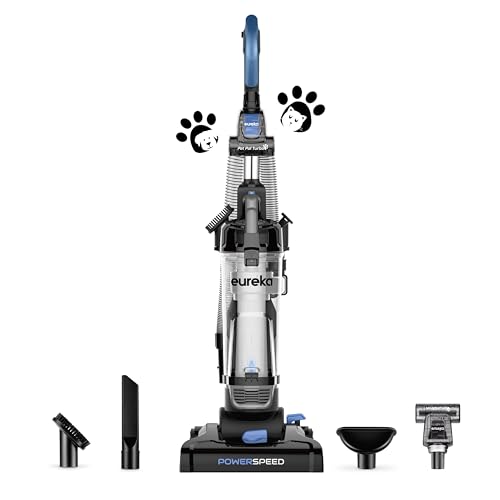
- Best Lightweight Upright: Eureka PowerSpeed, NEU181A — a bagless upright with a 2.6L dust cup and tools for pet hair, carpet and hard floors. Check the current price on Amazon
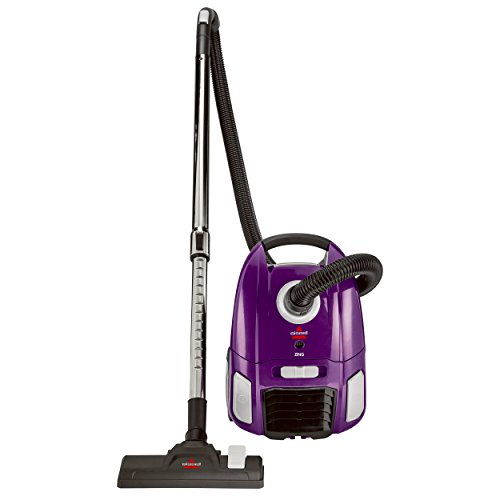
- Best Canister for Hard Floors: Bissell Zing, 2154A — a lightweight bagged canister that glides over bare floors and traps grit in a bag. Check the current price on Amazon
- Best Cordless for Daily Sand: Tineco A20 Cordless Stick — three cleaning modes, a 1L dustbin and an LED headlight that reveals grit you would otherwise miss. Check the current price on Amazon
- Best Budget Canister: Eureka WhirlWind, NEN180 — a lightweight bagless canister listed at 1000W with HEPA filtration and automatic cord rewind. Check the current price on Amazon
Key Takeaways
- Sand is heavy and abrasive: it needs strong suction at a well-sealed floor head, not just a powerful-sounding motor.
- On hard floors, a bare-floor tool or a brush you can switch off beats a spinning brush, which scatters grit sideways.
- Filtration wording matters and is reported exactly as listed — HEPA and HEPA Media are different claims.
- Bagged canisters trap grit cleanly with no dusty cup-emptying; bagless models trade bags for cup maintenance.
- The daily-grit homes win with frequency: a light stick used for two minutes daily beats a deep clean done monthly.
How These Picks Were Chosen
We filtered for complete household vacuums — uprights, canisters and sticks — whose listings confirm the features grit actually demands: suction suitable for hard floors and carpet, a dust cup or bag system you can empty without re-scattering, and tools for edges and upholstery where sand migrates. Excluded: vacuum sealers and other “vacuum” namesakes that are not floor vacuums at all, replacement batteries and parts, car-only handhelds as primary picks (they are spot tools, not whole-home answers), and anything whose listing data could not be verified. Filtration claims were transcribed, never upgraded: where a listing says HEPA we write HEPA, where it says HEPA Media we write HEPA Media, and where it gives a noise figure or wattage we print it exactly as listed.
Every pick was confirmed against Amazon catalog data before a link was added. The final six deliberately cover the strategy space for dusty, sandy homes: a do-everything upright (Shark), a fine-dust-focused upright (Hoover), a light upright for quick full-floor passes (Eureka PowerSpeed), a bagged canister for bare floors (Bissell Zing), a cordless stick for daily maintenance (Tineco), and a budget bagless canister (Eureka WhirlWind). Beach houses, desert homes, entryway-heavy floor plans and homes with gritty work boots will each find their answer in that spread.
The 6 Best Vacuums to Pick Up Dust and Sand

Shark Navigator Lift-Away Upright Vacuum, NV352 — Best Overall
The Shark Navigator NV352 has been a default recommendation in American homes for years, and for dust and sand it earns the top spot on versatility. The listing confirms the relevant kit: HEPA filtration, an XL dust cup, lightweight construction with swivel steering, a crevice tool and a wide upholstery tool, and suitability across carpet, area rugs and hard floors. The Lift-Away design is the feature grit homes use most: the canister detaches from the floor head, turning the machine into a portable unit for stairs, entryway corners, car mats shaken out on the porch, and the sandy perimeter where the floor meets the door — exactly the zones where grit accumulates and a full upright cannot reach. Swivel steering matters more than it sounds in sandy homes, because grit concentrates along baseboards and furniture edges, and a head that turns tightly cleans those lines in one pass instead of three.
Strengths
- Lift-Away canister handles stairs, edges and entryway detail work where sand collects
- HEPA filtration, as listed, for the fine dust fraction that becomes airborne
- XL dust cup and swivel steering suit large, gritty floor plans
Trade-offs
- Bagless cup emptying needs care outdoors or over a bin to avoid re-scattering grit
- Corded — no cordless freedom for quick passes
- The floor head is a generalist; dedicated bare-floor tools can out-seal it on pure hard floors
Spec box
- Type: upright with Lift-Away detachable canister
- Filtration: HEPA (as listed)
- Dust cup: XL
- Tools: crevice tool, wide upholstery tool (as listed)
- Colorway verified: Lavender
For a mixed home — carpet in the bedrooms, hard floors where the sand walks in — the Navigator’s balance is hard to beat at its position in the market. It deep-cleans carpet on Saturday and details the entryway on Wednesday without changing machines. Keep the filters washed or replaced on the maker’s schedule, because a clogged filter is where suction quietly goes to die, and grit homes load filters faster than average. If you buy one vacuum from this guide for a whole house, buy this one.
Best for: mixed-floor homes wanting one vacuum for deep cleans and detail work / Not suited for: buyers who want cordless convenience or bagged emptying
Check the current price on Amazon

Hoover High Performance Swivel XL — Best for Fine Dust
Hoover’s High Performance Swivel XL is the fine-particle specialist of the uprights: a bagless upright whose listing confirms HEPA Media filtration, a MAXLife system, and WindTunnel technology, built for home use across surfaces. The distinction in that filtration wording matters and we preserve it deliberately: HEPA Media describes filter media rated to HEPA-type performance within the maker’s system, which is a different claim from a sealed HEPA system — for dust-sensitive shoppers comparing vacuums, that wording is information, not fine print. WindTunnel is Hoover’s long-standing suction-channel design, aimed at lifting embedded dirt rather than skimming surfaces, and embedded is exactly where sand in carpet lives. The Swivel format keeps the head maneuverable around furniture, where dust drifts and settles in undisturbed lines.
Strengths
- HEPA Media filtration, as listed, targets the fine dust that re-settles on surfaces
- WindTunnel technology aimed at embedded grit in carpet pile
- Swivel steering and an XL format for whole-home sessions
Trade-offs
- HEPA Media is not the same claim as sealed HEPA — read it as listed
- Full-size upright weight on stairs; no lift-away feature
- Bagless maintenance: filters need regular attention in gritty homes
Spec box
- Type: bagless upright
- Filtration: HEPA Media (as listed)
- Technology: WindTunnel, MAXLife system (as listed)
- Steering: swivel
Choose the Hoover when your complaint is the film — the fine grey dust that reappears on shelves a day after cleaning, the hallmark of a home where fine particles go airborne and resettle. Its filtration and embedded-dirt focus address that cycle directly. In a beach or desert home it also makes a strong carpet partner to a canister: Hoover for the carpeted rooms’ deep extraction, canister for the bare-floor sand fields. As with all bagless machines here, its performance is a maintenance contract — keep the filtration clean and it keeps its promises.
Best for: dust-sensitive homes and carpeted rooms with embedded grit / Not suited for: buyers wanting a sealed-HEPA claim or a lightweight stair machine
Check the current price on Amazon
Eureka PowerSpeed Upright, NEU181A — Best Lightweight Upright
The PowerSpeed is the upright for people who vacuum often and briefly: a lightweight bagless upright whose listing confirms a 2.6L dust cup, a pet turbo brush, crevice and upholstery tools, and suitability for pet hair, carpet and hard floors. Lightweight is a performance feature in sandy homes, because the vacuum that gets used is the vacuum that works — a featherweight upright living in a closet near the entryway will remove more sand in a month of two-minute passes than a heavyweight champion used reluctantly on Saturdays. The 2.6L cup is genuinely large for the class, which matters with grit: sand is dense, cups fill by weight fast, and a big cup means fewer dusty emptying trips per session.
Strengths
- Lightweight build encourages the frequent passes sandy homes need
- Large 2.6L dust cup for dense grit loads
- Pet turbo brush plus crevice and upholstery tools included, as listed
Trade-offs
- Lighter construction feels less planted on thick carpet
- Filtration is not the headline feature here — dust-sensitive buyers should look at the Hoover or Shark
- Bagless cup emptying, with the usual grit-scatter care needed
Spec box
- Type: lightweight bagless upright
- Dust cup: 2.6L
- Tools: pet turbo brush, crevice tool, upholstery tool (as listed)
- Surfaces: carpet and hard floor (as listed)
The PowerSpeed suits apartments, smaller homes, and any household whose sand problem is really a frequency problem. It is also the kindest pick for older users or anyone who dreads hauling a heavy machine: the best vacuum for your back is the one that weighs least while still doing the job. Pair it with a doormat system at the entry — scrape, then mat, then vacuum what remains — and the grit economy of the whole house improves.
Best for: smaller homes, frequent quick cleans, and users who need a light machine / Not suited for: large homes wanting maximum filtration or deep-pile luxury carpet
Check the current price on Amazon
Bissell Zing Bagged Canister, 2154A — Best Canister for Hard Floors
Canisters are the traditional answer to bare floors, and the Bissell Zing shows why: a lightweight, bagged canister — the verified listing is the purple 2154A — whose low, gliding floor tool follows hard surfaces closely instead of riding over them on a brush roll. For sand specifically, the canister format has two structural advantages. The floor head can be a simple, well-sealed bare-floor tool that suction-grips grit rather than flicking it, and the bag traps what is collected in a sealed package you remove without a dust cloud — anyone who has emptied a bagless cup of fine sand into a kitchen bin understands that second advantage in their sinuses. Bags are a running cost, and we count that honestly as the trade; what they buy is clean emptying and consistently strong suction, since a bag’s filtration does not depend on your filter-washing discipline.
Strengths
- Bagged system: grit leaves the house sealed, with no dusty cup to shake out
- Canister format glides over hard floors and under furniture where sand drifts
- Lightweight and simple — a focused bare-floor tool
Trade-offs
- Replacement bags are an ongoing cost and errand
- Less suited to deep carpet cleaning than the uprights here
- Two-piece format stores differently than an upright closet machine
Spec box
- Type: bagged canister
- Model: 2154A
- Colorway verified: Purple
- Build: lightweight (as listed)
The Zing is the beach-house and desert-entryway specialist: tile, wood and laminate with a daily sand income, cleaned by a machine that treats bare floors as its home turf. It also serves allergy-conscious households well in one specific way — the sealed-bag emptying keeps collected dust out of the room air at the exact moment other systems release it. If your floors are mostly hard and your grit is mostly sand, this modest canister may outperform uprights costing far more, because format fit beats raw specifications.
Best for: hard-floor homes, beach houses and anyone who hates emptying dust cups / Not suited for: wall-to-wall carpet homes, or buyers who refuse bag costs
Check the current price on Amazon

Tineco A20 Cordless Stick Vacuum — Best Cordless for Daily Sand
The Tineco A20 represents the frequency strategy in its purest form: a cordless stick whose listing confirms powerful suction across three modes for multi-level messes, a larger 1L dustbin, an ergonomic dual-handle design, a wall-mount dock and an LED headlight. Every element of that list serves the sandy-home use case. Cordless plus a wall dock means the vacuum is always charged and always at hand; three modes let you run quiet-low for the daily entryway sweep and high for the weekend rug; the 1L bin is large for a stick, which matters because sand fills bins by weight; and the LED headlight is a genuine revelation on hard floors — grit that is invisible in room light casts tiny shadows in a headlight beam, and you vacuum what you can see. The dual-handle design reduces wrist strain during the longer sessions.
Strengths
- Cordless with wall-mount dock — always ready for the two-minute sand sweep
- LED headlight reveals grit on hard floors that room lighting hides
- Three modes and a 1L bin, large for the stick format
Trade-offs
- Battery runtime limits whole-house deep cleans; it is a maintenance machine first
- Stick filtration and sealing are a step below the full-size HEPA uprights
- Bin emptying is bagless, with the usual care needed over the trash
Spec box
- Type: cordless stick
- Modes: 3 (as listed)
- Dustbin: 1L
- Extras: LED headlight, wall-mount dock, dual-handle design (as listed)
Beach-house owners will recognize the A20’s real job description: it is the broom replacement that actually removes sand instead of relocating it. Kept by the door, run daily for the time it takes a kettle to boil, it prevents the grit build-up that grinds into floors and migrates to beds. It does not replace a weekly deep clean from one of the corded picks in a large home; it makes that deep clean shorter, rarer and less necessary. For small homes and apartments, it may honestly be the only vacuum you need.
Best for: daily sand maintenance, apartments, and hard-floor homes / Not suited for: large carpeted homes needing one machine for everything
Check the current price on Amazon

Eureka WhirlWind Bagless Canister, NEN180 — Best Budget Canister
The WhirlWind NEN180 brings the canister format to a budget position without giving up the bare-floor virtues: a lightweight bagless canister whose listing states 1000W power, a noise level of no more than 82 dBA, HEPA filtration, automatic cord rewind, and a 2-in-1 design for hard floors, carpets and pet hair. We print those figures exactly as listed — the wattage and decibel figures are the maker’s, offered for comparison within this class. The bagless format removes the Zing’s bag costs, at the price of cup-emptying care; the auto cord rewind removes the most annoying thirty seconds of canister ownership. For a small hard-floor home, a workshop-adjacent entry, or a second vacuum kept where the grit enters, the WhirlWind’s specification-per-dollar is the story.
Strengths
- Canister bare-floor strengths at a budget position, with no bag costs
- HEPA filtration as listed, plus automatic cord rewind
- Stated 1000W and ≤82 dBA figures, as listed, for easy class comparison
Trade-offs
- Bagless cup emptying needs the usual care with fine grit
- Budget construction — expect competent, not premium, fit and finish
- Canister-plus-wand format is less instant than a stick for tiny spills
Spec box
- Type: bagless canister
- Model: NEN180 WhirlWind
- Power/noise: 1000W, ≤82 dBA (as listed)
- Filtration: HEPA (as listed)
- Cord: automatic rewind
Choose the WhirlWind when the budget is real but the floors are hard and the sand is relentless — a rental near the beach, a desert duplex, a mudroom that serves a working household. It also makes strategic sense as the second machine in a two-vacuum home: the upright lives upstairs for carpet, the WhirlWind lives at the gritty ground floor where it is needed daily. Verified listing data for this model did not include a recorded check date in our cache, which we note in this article’s sources; the model, ASIN and specifications above are as its catalog listing states them.
Best for: budget hard-floor homes and second-vacuum duty at gritty entries / Not suited for: buyers wanting bagged emptying or premium build
Check the current price on Amazon
Comparison Table
| Pick | Badge | Key spec | Best for |
|---|---|---|---|
| Shark Navigator NV352 | Best Overall | Lift-Away canister, HEPA, XL cup | Mixed floors, whole house |
| Hoover Swivel XL | Best for Fine Dust | HEPA Media filtration, WindTunnel | Fine dust, carpet grit |
| Eureka PowerSpeed | Best Lightweight Upright | 2.6L cup, pet turbo brush | Frequent quick cleans |
| Bissell Zing 2154A | Best Canister for Hard Floors | Bagged, lightweight canister | Bare floors, sealed emptying |
| Tineco A20 | Best Cordless for Daily Sand | 3 modes, 1L bin, LED headlight | Daily grit maintenance |
| Eureka WhirlWind NEN180 | Best Budget Canister | 1000W, ≤82 dBA, HEPA, cord rewind | Budget hard-floor homes |
How to Choose a Vacuum for Dust and Sand
Suction at the head beats motor numbers
Sand is picked up at the floor, not at the motor. What matters is how much suction arrives at the head with the head sealed to the floor — which is why canister bare-floor tools and well-designed upright heads outperform impressive wattage figures attached to leaky heads. Treat wattage and air-watt numbers as class indicators only; the picks here were chosen for format and head design first. A practical test in your own home: sprinkle a line of dry sand or coarse crumbs along a baseboard and see whether your current vacuum takes it in one slow pass or scatters it — scattering is a head-seal failure, and it is the failure this guide’s formats are chosen to avoid.
Brush roll: friend on carpet, scattergun on hard floors
On carpet, an agitating brush works grit up from the pile base where suction can take it — the uprights here earn their keep exactly there. On hard floors, that same brush can flick sand sideways faster than suction captures it, which is why canisters with plain bare-floor tools glide so effectively over tile and wood, and why any upright used on hard floors should be run slowly with deliberate overlap. If your home is mostly hard floor with rugs, weight the canister and stick picks heavily; if it is mostly carpet with a sandy entry, weight the uprights and detail with their tools.
Filtration, in the listings’ own words
Fine dust is the fraction that matters for air quality, and filtration language is where vacuum marketing is least standardized — so this guide prints claims verbatim. A sealed HEPA system (the Shark’s listing says HEPA) is designed so all exhaust air passes the filter. HEPA Media (the Hoover’s wording) describes the filter material’s rating within its system. Both are meaningful; they are not interchangeable, and dust-sensitive shoppers should compare them as the different claims they are. Whatever the system, its real-world performance depends on maintenance: a clogged filter strangles suction and stresses motors, and gritty homes should clean or replace filters more often than the manual’s average-home schedule.
Bagged versus bagless, for grit specifically
Sand sharpens this old debate. Bagless cups are free to run and satisfying to fill, but emptying a cup of fine sand and dust without a plume takes technique — outside, bin low, cup opened slowly. Bags cost money forever and empty like a dream, sealing the grit away, and they keep suction consistent as they fill. The Zing represents the bagged case; the other five picks are bagless. Households with dust sensitivity often find the bag’s cleanliness worth its cost at the exact moment of emptying, which is when exposure actually happens.
Noise, weight and storage: the livability specs
A vacuum’s daily virtues include how it treats the household around it. Weight decides who can carry the machine upstairs and whether it gets used at all — the PowerSpeed and the canisters win that argument in multi-story homes. Noise decides when it can run: the WhirlWind’s listing states a ceiling of 82 dBA, which we print as listed for class comparison, and in practice any of these machines is a daytime tool in a home with sleeping children or calls in progress — another point for the quick daily pass, which is over before it becomes a disturbance. Storage decides the frequency question one final time: a machine that lives assembled, docked or closet-ready at the point of need gets used; a machine that must be fetched, unwound and assembled gets postponed. When you compare the picks, weigh these livability facts alongside suction and filtration, because in real homes they predict performance better than any laboratory number.
Match the machine to your grit geography
Map where the sand actually is. Entryways, mudrooms and the first room inside the door hold most of it; kitchens collect the fine flour-and-grit mix; bedrooms collect dust more than sand. A two-machine strategy — a stick or small canister stationed at the gritty zone, a full upright for weekly whole-home work — beats one heroic machine stored far from the problem. Single-machine homes should choose by their dominant floor: canister logic for hard floors, upright logic for carpet, the Shark’s lift-away hybrid for genuinely mixed homes.
How to Vacuum Sand and Dust So It Actually Leaves
Technique decides whether grit exits or relocates. Start with prevention at the door: a stiff scraper mat outside and an absorbent mat inside remove the majority of sand before any vacuum is involved, and shaken-out shoes stay outside the clean zone. Then vacuum in the right order — high to low, room by room: dust shelves and upholstery first with the tools (the Shark’s wide upholstery tool and the PowerSpeed’s attachments exist for this), because that dust lands on the floor you are about to clean. On hard floors, move slowly with overlapping passes and let suction do the work; speed is what scatters grit. Along baseboards and cabinet toe-kicks, switch to the crevice tool — grit lines live there, and a floor head’s edge suction is its weakest point. On carpet, go slower still, in two directions, because sand sits at the pile base and needs the brush to walk it upward. Empty the cup or check the bag before it passes two-thirds full — suction falls as containers fill, and sand is heavy enough to fill by weight before it looks full. Finally, wipe the floor head’s underside and check the brush for wound hair and grit paste after sandy sessions; a fouled head redeposits what you just collected. In homes with both carpet and hard floors, finish on the hard floors rather than the carpet: the last pass sets the tone of the house, grit tracked from a finished carpet onto a finished wood floor is the most demoralizing sentence in this entire subject, and ending where the sand lives means the visible rooms stay visibly clean until the next round of arrivals.
Why Sand Is Worth This Much Effort: What Grit Does to Floors
Sand is not ordinary dirt, and treating it as such is how floors age early. A grain of sand is a tiny piece of rock, harder than most floor finishes, and every footstep on a sandy floor presses and drags those grains like sandpaper under load. On hardwood and laminate, that is the mechanism behind the dull traffic lanes that appear first at entryways and in front of sinks — not wear from feet, but abrasion from the grit feet carry. On tile, grout takes the damage, darkening as ground-in grit compacts into it. In carpet, sand works down to the pile base and cuts fibers from below as it is walked on, which is why carpet in beach houses thins at the door line years before it thins anywhere else. This is the economic case for the whole guide: the vacuum that removes grit promptly is not a cleaning luxury but floor preservation, and the two-minute daily pass with a stick like the Tineco is cheaper than refinishing by an order of magnitude.
The same logic explains the guide’s emphasis on edges and entryways. Grit does not distribute evenly through a home; it deposits where shoes slow down — the door swing, the mat’s edge, the turn into the kitchen — and migrates outward slowly from there. Cleaning effort allocated by that map, heavy at the entries and lighter deep in the house, removes most of the abrasive load for a fraction of whole-house effort. The Lift-Away Shark and the canisters earn their recommendations precisely because they work those deposit zones in detail, where a floor head alone cannot reach.
The Two-Vacuum Strategy, and When One Machine Is Enough
Serious grit homes usually end up with two machines, and it is worth designing that pairing deliberately instead of drifting into it. The classic pairing in this guide is a corded deep-cleaner — the Shark Navigator for mixed floors, the Hoover for carpet-and-dust homes, a canister for hard-floor homes — plus a light daily machine stationed at the grit source: the Tineco stick on its wall dock, or the Eureka WhirlWind canister living in the mudroom closet. The deep-cleaner runs weekly and owns the carpets, upholstery and stairs; the daily machine runs for minutes and owns the entries. Each machine is chosen for its half of the job, which is why the pairing outperforms a single premium vacuum asked to be both always-ready and maximally powerful.
One machine is enough when the home is small, the floors are uniform, or the grit load is modest. Apartment dwellers with hard floors can run the whole strategy on the Tineco or the WhirlWind alone; a carpeted small home can run it on the PowerSpeed. The signal that you have outgrown one machine is behavioral, not technical: the vacuum lives far from the dirt, sessions get postponed, and grit visibly accumulates between cleans. When that is the pattern, the second machine is not an indulgence — it is the fix for the actual failure, which was never suction. It was distance.
A Maintenance Rhythm for Vacuums That Work in Grit
Grit homes wear vacuums differently, and a short rhythm keeps any pick in this guide at full strength. After every sandy session, empty the cup or check the bag — dense grit fills containers by weight long before they look full, and suction falls as they fill. Weekly, tap or rinse the pre-motor filter as the maker directs; in beach season, treat the manual’s monthly schedule as a ceiling, not a target. Monthly, clear the brush roll of wound hair and check its ends for grit paste, which acts like grinding compound on the bearings. Every few months, inspect the floor head’s wheels and seals — the seal is a wear part in sandy service, and a worn seal is the difference between pickup and scatter. Keep a spare filter set in the house so a washed filter can dry fully while the machine keeps working; a damp filter returned to service is worse than a dirty dry one. None of this is elaborate, and all of it is the difference between a vacuum that performs in year three as it did in week one and one that mysteriously “lost power” — it did not lose it; it was spent, grain by grain, on maintenance nobody did.
Wet Sand, Mud Season and Other Edge Cases
Dry grit is this guide’s main enemy, but sandy homes also meet its relatives. Wet sand — the beach-house reality after every swim — should not meet a standard vacuum at all until it dries: damp grit pastes itself into floor heads, clogs filters and can damage motors not built for moisture. The correct sequence is unglamorous: let it dry, sweep the worst of it with a stiff broom into a dustpan, then vacuum what remains. Mud season follows the same logic with higher stakes, since wet soil carries the grit deeper into carpet; a mat system and patience outperform any machine. None of the picks in this guide is a wet-and-dry shop vacuum, and we did not pretend otherwise by including one — if your grit arrives primarily wet, in a working garage or a farmhouse mudroom, a dedicated wet/dry utility vacuum is the honest first machine, with the picks here handling the dried, indoor remainder.
Two more edge cases deserve a sentence each. Construction and renovation dust is finer and more filter-hostile than household dust; if you are living through a remodel, protect any good vacuum by sweeping and using a sacrificial machine for the heavy phase, because drywall dust coats filters in a single session. And pet litter — the other great household grit — behaves exactly like coarse sand, which makes every pick in this guide a litter-tracking solution as well; the canisters and the Tineco, stationed near the litter zone, are the usual winners there.
Common Buying Mistakes
Buying by motor wattage alone. Head seal and format decide grit pickup; a leaky high-watt head scatters sand beautifully. Using a spinning brush fast on hard floors. That is a sand-distribution system, not a cleaning one — slow down, or use a bare-floor tool. Ignoring filtration wording. HEPA and HEPA Media are different claims; in a dusty home the difference is the product. Letting filters clog. In grit country, filter maintenance is not optional upkeep — it is the suction you paid for. Storing the only vacuum far from the grit. Distance kills frequency, and frequency is what beats sand. Skipping the doormat system. The cheapest sand removal happens before the vacuum ever starts; mats are part of the machine.
Final Recommendation
One vacuum for a mixed home: the Shark Navigator NV352, whose lift-away design handles both the carpet deep-clean and the sandy entryway detail. Fine-dust households should weigh the Hoover Swivel XL; hard-floor and beach homes, the Bissell Zing or the budget Eureka WhirlWind; and anyone whose sand arrives daily should add the Tineco A20 by the door. The Eureka PowerSpeed keeps smaller homes honest with frequent light passes. Choose by your floors and your grit geography, maintain the filters, and the dust-and-sand problem shrinks to a chore instead of a condition.
A closing note on expectations: no vacuum makes a sandy home sand-free, and the goal was never a laboratory floor. The goal is a house where grit is removed before it grinds, where the entryway takes two minutes instead of twenty, and where the fine dust stops resettling on every shelf by Friday. The six machines in this guide, matched to your floors and stationed near your grit, deliver exactly that — provided the filters stay clean and the mats stay at the door. Equipment plus rhythm is the whole secret, and both halves are cheap compared with the floors they protect over the years ahead together.
Related guides in this series: Best Affordable Upright Bagless Vacuums, Best Bissell Canister Vacuums, Best Bagged Vacuums For Allergies, Best Bagged Vacuums For Carpet And Hardwood, Best Battery Powered Vacuums, Best All Around Vacuums.
Frequently Asked Questions
Why does my vacuum leave sand behind on hard floors?
Usually head seal and speed. A brush spinning fast flicks grit sideways before suction can take it, and a head that does not seal to the floor loses suction at the edges. Slow down, overlap passes, and for heavy sand use a bare-floor tool or canister — the formats chosen in this guide.
Is a bagged or bagless vacuum better for sand?
Both pick it up; they differ at emptying time. Bagless cups can release a plume of fine dust when emptied unless you do it carefully outdoors. Bags seal the grit away and keep suction consistent, at the cost of buying bags. Dust-sensitive homes often prefer bags for exactly that moment.
What does HEPA Media mean compared with HEPA?
As the listings use the terms here, HEPA on the Shark describes its filtration system, while HEPA Media on the Hoover describes filter media rated to that class within its system. They are different claims, which is why this guide prints each exactly as listed rather than treating them as synonyms.
Can a cordless stick replace a full-size vacuum in a sandy home?
In small homes and apartments, often yes — especially for daily maintenance, which is where sand is beaten. In larger or carpeted homes, a stick like the Tineco A20 works best as the daily machine alongside a corded upright or canister for weekly deep cleans. Judge by your own pattern after a month: if the stick is handling everything and the floors stay grit-free between weekends, it has replaced the big machine in practice, whatever the specifications say.
How often should I vacuum in a beach or desert home?
Little and often wins: a two-minute pass over entryways and hard floors daily during sandy seasons, and a full clean weekly. Anchor the daily pass to an existing habit — the morning kettle, the evening lock-up round — and it stops feeling like a chore with its own time slot and becomes part of how the house simply runs. Sand left in place grinds into floor finishes and migrates deeper into carpet, so frequency matters more than session length.
How do I stop sand at the door before vacuuming?
Layer the defenses: a stiff scraper mat outside the door, an absorbent mat inside, and a house rule that outdoor shoes stop there. Most household sand enters on soles, and the two-mat system removes the bulk of it before it reaches your floors. What remains is the vacuum’s job — and it is a much smaller job than the one an unmatted entry assigns to you daily.
Is a canister or an upright better for a beach house?
For the typical beach house — mostly hard floors, sand at every door — a canister like the Bissell Zing or Eureka WhirlWind usually serves better, because bare-floor tools seal and glide over grit instead of scattering it. Add a stick for daily passes and an upright only if bedrooms are carpeted and need deep extraction.
Do robot vacuums handle sand well?
Robots are maintenance tools: their brushes and modest bins struggle with heavy grit loads, though daily robot runs can keep light sand from accumulating. For homes with serious sand income, the uprights, canisters and stick in this guide remain the primary answer, with a robot as an optional helper rather than the system.


