Disclosure: airfryerkitchensupply.com is reader-supported. When you buy through links on our site, we may earn an affiliate commission at no extra cost to you.
Where to buy
Every linked pick in this guide was verified against Amazon’s catalog on the airfryerkitchensupply.com storefront connection, so the model names, formats, and headline specs quoted below match the listings you will land on. If litter duty is your whole reason for buying, start with the Bissell Hard Floor Expert Multi-Cyclonic Canister (1547), a canister built specifically around hard floors. If you want one machine for the whole house, the Shark Navigator Lift-Away NV352 is the mainstream all-rounder, and if you want grab-and-go cordless convenience, look at the Tineco A30S. Check the current price on Amazon from any pick’s link, and confirm the exact variant on the listing page before ordering.
The best vacuums for kitty litter on wood floor have a harder job than most vacuum buyers realize, and it is worth saying plainly in the first breath: kitty litter is not ordinary dirt. Litter granules are dense, angular mineral particles — closer to fine gravel than to dust — and wood floors are the least forgiving surface they land on. A spinning brushroll that would be an asset on carpet can act like a paddle wheel on hardwood, flicking granules across the room instead of lifting them, and hard plastic wheels or a stiff brush can drag grit across a finish you paid good money for. So this guide judges every machine on the two things that actually matter here: can it swallow scattered granules in one or two passes without scattering them further, and can it do that week after week without marking the floor?
That double test eliminates a surprising share of the market. Many carpet-first uprights fail the scatter test. Many featherweight sticks fail the capacity test, because a litter zone produces a steady volume of heavy debris that fills a tiny dust cup fast and weighs down machines balanced for dust, not gravel. And nearly every vacuum fails a third, quieter test: tracked litter does not stay by the box. It migrates down hallways, into kitchens, and around feeding areas, so the machine you buy for this job will realistically become your most-used floor tool, not a specialty appliance you wheel out once a month.
The six picks below cover the formats that genuinely work: a hard-floor-first canister, a proven lift-away upright, two cordless sticks at very different budgets, a premium detection-led cordless, and an ultra-light budget stick for daily sweeps. Each was confirmed, and where the Amazon listing title does not state a spec, this guide says so rather than guessing — you will see that honesty most clearly on the premium pick, where the verified title confirms the model and format but little else.
In this guide
Quick Picks
Six machines, six different answers to the same scattered-granule problem. Badges are consistent from this table through the reviews and the comparison table.
| Pick | Badge | Why it earns its slot |
|---|---|---|
| Bissell Hard Floor Expert Multi-Cyclonic Bagless Canister Vacuum, 1547 | Best for Wood Floors | A canister designed around hard floors first — the format that treats litter as a suction problem, not a brushroll problem. |
| Shark Navigator Lift-Away Upright Vacuum Cleaner NV352 | Best Overall | The proven whole-house upright: HEPA filtration, lift-away portability, and an XL dust cup that swallows litter volume. |
| Tineco A30S Cordless Vacuum Cleaner | Best Cordless | 200AW suction, up to 60 minutes of runtime, a 1L dustbin, and a ZeroTangle brush — serious cordless specs for heavy debris. |
| Dyson V15 Detect Cordless Vacuum Cleaner | Best Premium | The premium cordless name in the category — bought for its detection-led cleaning concept and ecosystem, with a spec caveat stated plainly. |
| Bissell Featherweight Stick Vacuum 2033M | Best Budget | A featherweight stick and electric broom with a crevice tool — the cheap daily-sweep answer that keeps litter from ever building up. |
| Shark HV302 Rocket Pet Corded Stick Vacuum | Best Corded Stick | Corded stick power with no battery anxiety, swivel steering, converts to a hand vacuum, and a pet tool kit in the box. |
How These Picks Were Chosen
Every pick in this guide was verified the same way: we searched Amazon listing data connected to this site for the exact brand and model, matched the returned listing title to the machine we intended to recommend, and only then attached a purchase link with the ASIN the listed. No ASIN in this article was typed from memory, and no product appears with a link unless that match was confirmed. Where a listing title was thin — the Dyson V15 Detect entry is the clearest case — we limited our spec claims to what the title actually states and flagged the gap instead of filling it with brochure copy.
The performance criteria were litter-specific. First, debris behavior: litter granules need strong, direct suction at the floor head and a head design that does not snowplow or scatter them. Second, floor safety: soft wheels, a brushroll that can be slowed or switched off, or a suction-only floor head all reduce the chance of grit being dragged across a finish. Third, capacity and emptying: litter is heavy, so dust-cup volume and how cleanly the cup empties matter more than they do for dust. Fourth, edge and corner behavior, because litter accumulates along baseboards and around the box itself. Fifth, whole-home usefulness, since tracked litter means the machine will clean far more than one room.
We deliberately mixed formats instead of crowning six near-identical sticks. A canister with a dedicated hard-floor head behaves differently from a brushroll upright, and both behave differently from a cordless stick you can grab for a thirty-second sweep. Litter households differ just as much: a single cat in a studio and a three-cat house with wood floors throughout need different machines, different capacities, and different budgets. The badges below are assigned by the job each machine does best, not by price order.
The 6 Best Vacuums for Kitty Litter on Wood Floors
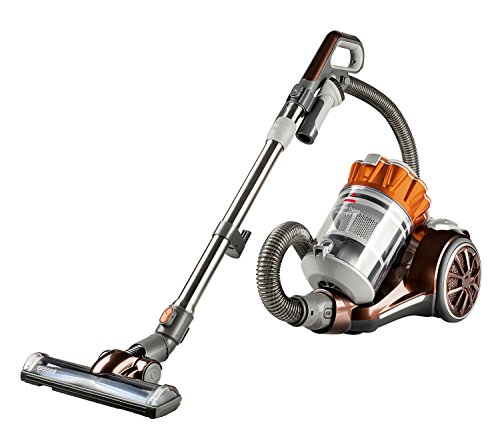
Bissell Hard Floor Expert Multi-Cyclonic Bagless Canister Vacuum, 1547 — Best for Wood Floors
If your floors are wood throughout and litter is the main enemy, this is the most honest machine in the roundup. The Bissell Hard Floor Expert is a corded, bagless canister whose entire design premise — stated right in its verified listing title — is hard-floor cleaning. Canisters separate the motor and dirt container from the floor head, which means the head itself can be light, low, and shaped for bare floors rather than built around an aggressive carpet brushroll. For litter on wood, that architecture is exactly right: suction does the work, and granules get drawn in instead of being batted around by a spinning brush.
Strengths
- Hard-floor-first design stated in the verified listing title — this is a bare-floor specialist, not a carpet machine adapted after the fact
- Canister format keeps the floor head light and maneuverable around the litter box, furniture legs, and baseboards
- Multi-cyclonic bagless system means no bags to buy, and the dirt container handles dense, heavy debris without a bag collapsing around it
Trade-offs
- Corded, so you are managing a cord and outlet changes on large floor plans
- A canister body trails behind you, which some buyers find less convenient than a self-contained upright or stick
- Built for hard floors first — deep-pile carpet cleaning is not its home turf
| Format | Corded bagless canister vacuum |
|---|---|
| Model | 1547 |
| Filtration type (as listed) | Multi-cyclonic |
| Best surface | Hard floors, including wood |
The practical litter advantage of a canister is control at low speed. You can slow the head down over a spill zone, let suction pull granules in from the edges of the head’s path, and make a second pass from a different angle to catch what settled against the baseboard — all without a brushroll flinging strays across the room between passes. The trailing body also parks happily beside the litter area while the wand and head do the detailed work around the box, the mat, and the nearby wall corners where litter concentrates. For a wood-floor home where the litter zone is fixed and the floors are the priority, that working style is hard to beat.
Ownership is straightforward in the ways that matter for litter duty. Bagless multi-cyclonic designs ask you to empty the dirt container often — and with litter you should, because a container half-full of dense granules is heavy and reduces the air path the cyclones need. Treat emptying as part of the litter routine rather than a separate chore and the machine stays in its efficient zone. The corded format also means suction never fades mid-clean the way a battery machine on its last quarter-charge can, which matters when you are doing a full-floor pass after a litter change.
Best for: Wood-floor homes where litter pickup is the primary job and a cord is an acceptable trade / Not suited for: Buyers who want one machine to deep-clean thick carpet, or anyone who hates trailing canister bodies
Check the current price on Amazon

Shark Navigator Lift-Away Upright Vacuum Cleaner NV352 — Best Overall
The Shark Navigator Lift-Away NV352 has been a default recommendation in its class for years, and the verified listing title shows why it still earns a slot: HEPA filtration, an XL dust cup, swivel steering, and a lift-away canister that detaches for stairs and above-floor work. For litter households, the XL cup is not a luxury — litter is dense, and a small cup that is fine for dust becomes a twice-per-room chore when it is filling with granules. The Navigator’s capacity, sealed HEPA system, and included crevice and upholstery tools make it the best single answer for a mixed-floor home.
Strengths
- XL dust cup handles the volume and weight of litter debris far better than compact sticks
- HEPA filtration, confirmed in the listing title, helps contain the fine dust that litter kicks up alongside the granules
- Lift-Away mode detaches the canister for stairs, furniture, and the tight zone around the litter box
Trade-offs
- An upright brushroll machine, so on bare wood you should use the bare-floor setting rather than full brushroll aggression — technique matters
- Corded format with an upright’s storage footprint
- Heavier in hand than a stick for quick daily sweeps
| Format | Corded upright, Lift-Away detachable canister |
|---|---|
| Model | NV352 |
| Filtration | HEPA (as listed) |
| Dust cup | XL (as listed) |
| Included tools (as listed) | Crevice tool and wide upholstery tool |
What makes the Navigator the overall pick is how few compromises it forces on a litter household that also has rugs, stairs, and upholstered furniture. The swivel steering genuinely helps around a litter box and feeding station, where you are constantly changing direction in a small radius. The lift-away pod turns the detailed work — the mat edges, the gap between box and wall, the upholstered chair the cat actually sleeps on — into a one-handed job with the crevice tool. And when tracked litter has spread across an entry rug or a carpeted bedroom, the same machine handles it without a format change.
On wood, use it intelligently. The honest limitation of any brushroll upright on bare floors is scatter on the first contact with a granule pile, so approach spill zones slowly, let the suction edge lead, and vacuum the litter zone before you do the open floor. Kept to that technique, the Navigator’s strong suction does the lifting and the brushroll becomes a non-issue. The sealed HEPA system is the other quiet win: litter dust is fine and persistent, and a vacuum that exhausts part of what it collects is solving the visible problem while restocking the invisible one.
Best for: Mixed-floor homes that want one capable machine for litter, rugs, stairs, and furniture / Not suited for: Wood-floor purists who want a suction-only head, or buyers who want cordless grab-and-go convenience
Check the current price on Amazon

Tineco A30S Cordless Vacuum Cleaner — Best Cordless
Cordless sticks live or die on whether their specs suit the debris, and litter is the debris that exposes weak sticks. The Tineco A30S’s verified listing title reads like it was written for this job: 200AW of suction, up to 60 minutes of runtime, a 1-litre larger dustbin, a ZeroTangle brush, and PureCyclone filtration, for pet hair, carpet, and hard floors. The 1L bin matters as much as the suction figure — it is roughly double the cup on many slim sticks, which translates directly into fewer interruptions when the debris is heavy granules rather than floating dust.
Strengths
- 200AW suction (as listed) is the kind of figure that lifts dense granules instead of skating over them
- 1L larger dustbin, stated in the title, suits heavy litter debris better than compact cups
- Up to 60 minutes of runtime (as listed) covers whole-floor litter tracking routes on one charge
Trade-offs
- Runtime and suction figures are the manufacturer’s listed maximums — expect less at maximum power, as with every cordless
- A brushroll stick still needs a measured approach over a fresh spill to avoid scatter
- Battery machines eventually need battery replacement, a cost corded picks never impose
| Format | Cordless stick vacuum |
|---|---|
| Suction (as listed) | 200AW |
| Runtime (as listed) | Up to 60 minutes |
| Dustbin (as listed) | 1L |
| Brush (as listed) | ZeroTangle |
| Filtration (as listed) | PureCyclone |
The daily reality of litter is frequency, not intensity: small amounts, tracked everywhere, every day. That is the use pattern cordless sticks were invented for, and the A30S’s combination of a big bin and long listed runtime means the daily sweep does not turn into a charge-management exercise. The ZeroTangle brush addresses the other half of cat ownership — hair — which wraps ordinary brushrolls and quietly strangles their performance between cleanings. A brush that resists wrapping keeps the machine’s litter performance consistent week to week, which is when vacuums usually disappoint: not on day one, but on day forty.
Use the power modes honestly. Granules on wood do not need maximum suction across the whole floor; they need strong suction at the litter zone and along tracking paths, and gentler treatment elsewhere to stretch runtime. Work the spill zone first while the battery is fresh, then finish the open floor. And empty the bin before it is packed: cyclonic systems lose separation efficiency as the bin fills, and litter’s weight packs a bin faster than its volume suggests.
Best for: Daily litter sweepers who want cordless freedom without a toy-sized dustbin / Not suited for: Buyers who want a corded machine’s unlimited runtime, or very large homes cleaned in single marathon sessions
Check the current price on Amazon

Dyson V15 Detect Cordless Vacuum Cleaner — Best Premium
We include the Dyson V15 Detect as the premium cordless option, and we are going to be unusually direct about the evidence: Amazon listing we verified confirms the product name, the model, and the cordless vacuum format — and states almost nothing else. No suction figure, no runtime, no bin size appears in the verified title. Many guides would fill that silence with brochure numbers. This one will not. What we can say honestly is what the name itself claims — this is Dyson’s Detect-generation flagship stick, a product line built around revealing and responding to dust on hard floors — and that buyers choosing it are paying for that flagship concept, Dyson’s hard-floor head design, and the brand’s parts and accessory ecosystem.
Strengths
- Flagship model in Dyson’s cordless line, confirmed by the verified listing title
- The Detect concept — making invisible floor dust visible — is aimed squarely at hard-floor households
- Dyson’s accessory and parts ecosystem is the deepest in the cordless category
Trade-offs
- The verified Amazon title states no suction, runtime, or capacity figures, so this guide cannot confirm the specs many buyers assume — check the listing page itself before buying
- Premium-tier pricing is inherent to the flagship slot
- Like every cordless stick, runtime at maximum power will be a fraction of the headline figure for the range
Why keep a pick whose spec sheet we cannot verify in this guide? Because for litter on wood floors, the buying question at the premium tier is less about raw numbers than about the cleaning loop: see the debris, remove it in few passes, and trust the machine on a finish you care about. Dyson built the Detect generation around the first step of that loop for hard floors, and owners of wood floors consistently rank seeing tracked dust and fine litter grit — the fraction you cannot feel underfoot until it grinds — as the thing that changes their routine. That is a concept-level claim, and we present it as exactly that.
Our advice is procedural: if you buy at this tier, verify the current listing’s stated runtime, bin capacity, and included cleaner heads on the product page at purchase time, because configurations and bundles shift. Confirm a hard-floor head is in the box for your variant. Treat this as the pick for buyers who already value the Dyson ecosystem and want its flagship stick; buyers who want every spec nailed down in this guide should take the Tineco A30S, whose verified title states its numbers outright.
Best for: Premium buyers who value the Detect hard-floor concept and the Dyson ecosystem, and will confirm bundle details on the listing / Not suited for: Spec-driven buyers who want confirmed figures before purchase, or anyone shopping on a budget
Check the current price on Amazon

Bissell Featherweight Stick Vacuum 2033M — Best Budget
The cheapest way to win the litter war is to never let litter accumulate, and that is the entire case for the Bissell Featherweight 2033M. Its verified title describes a lightweight bagless stick vacuum and electric broom with a crevice tool, for hard floors and carpets. This is not a deep-cleaning machine and this guide will not pretend otherwise. It is the vacuum that lives near the litter box, comes off the wall in two seconds, sweeps the tracking zone daily, and goes back — and a daily thirty-second sweep with a light machine beats a weekly deep clean with a heavy one for this particular problem.
Strengths
- Featherweight format removes every excuse not to sweep the litter zone daily
- Stick and electric-broom versatility covers floors and quick surface passes
- Crevice tool included (as listed) for the baseboard line where litter collects
Trade-offs
- Small dust cup fills quickly with heavy granules — empty it as part of the routine
- Not a whole-house deep cleaner; thick carpet is beyond its brief
- Corded lightweight sticks trade the cordless convenience of the Tineco for a much lower tier of cost
| Format | Lightweight bagless stick vacuum / electric broom |
|---|---|
| Model | 2033M |
| Included tool (as listed) | Crevice tool |
| Surfaces (as listed) | Hard floors and carpets |
Think of the Featherweight as a powered broom with a dirt cup, and judge it by broom standards: reach, weight, and whether it is where you need it. Stored beside the litter area, it converts litter cleanup from a project into a habit, and habits are what actually keep wood floors grit-free — grit that sits for days gets walked across the house and ground into finishes, while grit removed daily never gets the chance. The crevice tool handles the two places litter hides: the seam where the box meets the wall, and the baseboard run along the tracking path.
Set expectations correctly and this little machine overdelivers; expect it to replace a full-size vacuum and it will disappoint. Most litter households that love this setup pair it with one stronger machine — the Navigator or the Bissell canister in this guide — for weekly whole-floor work. That two-machine pattern, a featherweight for frequency and a heavyweight for depth, is honestly how many professional housekeepers structure the same problem.
Best for: Daily litter-zone sweeps, small homes, and as the lightweight half of a two-vacuum setup / Not suited for: Anyone expecting one budget stick to deep-clean a whole house or thick carpet
Check the current price on Amazon

Shark HV302 Rocket Pet Corded Stick Vacuum — Best Corded Stick
The Shark Rocket Pet HV302 answers the cordless stick’s two weaknesses — runtime limits and suction fade — by simply keeping the cord. Its verified title confirms a lightweight corded stick with swivel steering for carpets and hard floors that converts to a hand vacuum, and lists a genuinely useful litter-zone tool kit: a crevice tool, a pet multi-tool, and a precision duster. For a litter station tucked in a laundry room or bathroom corner, that conversion matters: the same machine sweeps the floor, then pops into hand mode for the mat, the box rim, and the shelf above.
Strengths
- Corded power never fades mid-clean and never needs charging between daily sweeps
- Converts to a hand vacuum (as listed) for the litter box surround, mats, and shelves
- Pet multi-tool and precision duster included (as listed) — tools aimed at exactly the debris cats produce
Trade-offs
- The cord limits range and needs outlet access along the cleaning route
- Stick-format dust cups are modest next to the Navigator’s XL cup
- A brushroll stick on wood still rewards a slow first pass over heavy spill zones
| Format | Corded stick vacuum, converts to hand vacuum |
|---|---|
| Model | HV302 |
| Steering (as listed) | Swivel steering |
| Included tools (as listed) | Crevice tool, pet multi-tool, precision duster |
The Rocket’s working style suits the geography of litter. Litter problems are concentrated: a spill zone by the box, a tracking trail, and detailed edges. A lightweight stick with swivel steering works that geography quickly, and the hand-vacuum conversion handles the vertical half of the zone — the top of the box hood, the mat’s textured surface where granules lodge, the windowsill the cat uses as a launch pad. Owners consistently underestimate how much litter lives above floor level until they clean with a convertible machine.
Cord management is the honest cost. In a single litter room it is nothing; across a whole floor it means planning a route around outlets. Many buyers solve this by dedicating the Rocket to the litter floor of the house and letting another machine handle the rest — the same frequency-versus-depth logic as the budget pick, at a higher capability level. Kept in that role, the Rocket Pet is arguably the most complete litter-station tool in this guide.
Best for: A dedicated litter-floor machine with hand-vacuum conversion and a real pet tool kit / Not suited for: Buyers who want cordless freedom or a large-capacity whole-house upright
Check the current price on Amazon
Comparison Table
| Pick | Badge | Key spec | Best for |
|---|---|---|---|
| Bissell Hard Floor Expert Multi-Cyclonic Bagless Canister Vacuum, 1547 | Best for Wood Floors | Corded bagless canister, model 1547, multi-cyclonic | Wood-floor homes where litter pickup is the primary job and a cord is an acceptable trade |
| Shark Navigator Lift-Away Upright Vacuum Cleaner NV352 | Best Overall | Lift-Away upright, HEPA, XL dust cup | Mixed-floor homes that want one capable machine for litter, rugs, stairs, and furniture |
| Tineco A30S Cordless Vacuum Cleaner | Best Cordless | 200AW suction, 60-min listed runtime, 1L bin | Daily litter sweepers who want cordless freedom without a toy-sized dustbin |
| Dyson V15 Detect Cordless Vacuum Cleaner | Best Premium | Flagship cordless stick; Amazon title confirms model/format only | Premium buyers who value the Detect hard-floor concept and the Dyson ecosystem, and will confirm bundle details on the listing |
| Bissell Featherweight Stick Vacuum 2033M | Best Budget | Lightweight stick/electric broom, crevice tool included | Daily litter-zone sweeps, small homes, and as the lightweight half of a two-vacuum setup |
| Shark HV302 Rocket Pet Corded Stick Vacuum | Best Corded Stick | Corded stick, converts to hand vac, pet tool kit | A dedicated litter-floor machine with hand-vacuum conversion and a real pet tool kit |
Read the table by format first: canister and suction-led designs are the gentlest on wood, uprights bring capacity and whole-house range, and sticks trade capacity for frequency and convenience. For litter specifically, frequency beats depth — the machine you will actually use daily is the right machine.
How to Choose a Vacuum for Litter on Wood Floors
Start with debris physics. Litter granules are heavy for their size, angular, and prone to rolling. A vacuum removes them by airflow at the floor head, so what matters is suction delivered at the head and a head design that seals reasonably to a hard surface. Brushrolls help on carpet because they agitate fibers; on wood, a fast brushroll can scatter granules before airflow captures them. Machines that let you slow or stop the brushroll, or that use a suction-led hard-floor head like the Bissell canister in this guide, start with an inherent advantage on bare wood.
Next, capacity. A dust cup’s litres mean something different when the debris is mineral granules: the cup gets heavy fast, and cyclonic separation suffers as it fills. If your household has multiple cats or a large wood-floor area, weight the Navigator’s XL cup or the Tineco’s 1L bin heavily in your decision. If your litter zone is one box in one room and you sweep daily, a small cup emptied daily — the Featherweight pattern — is perfectly rational.
Then floor safety. Wood finishes scratch when grit is dragged under pressure. Soft or well-designed wheels, a head that does not bear down with grit trapped under it, and the discipline of vacuuming the spill zone before walking through it all protect the finish. No vacuum in this guide is a floor-sanding risk by design, but technique multiplies or cancels the hardware’s care: always clear the granule field first, and never drag a loaded floor head backward through a spill.
Finally, filtration. Litter produces fine dust as well as granules, and that dust is what you breathe during cleaning and what resettles on surfaces afterward. A sealed HEPA system, like the Navigator’s verified HEPA filtration, is the strongest answer. Cyclonic systems with good post-motor filtration are the next tier. If anyone in the home is sensitive to dust, filtration should move from a footnote to a deciding factor.
How Litter Type Changes What Your Vacuum Has to Do
Not all litter behaves the same way under a vacuum head, and knowing your litter sharpens every choice in this guide. Standard clumping clay litter produces the classic problem granule: dense, angular, and happy to roll. It is the easiest litter to vacuum in one sense — the granules are heavy enough to stay where airflow can grab them — and the hardest on dust cups, because a weekend’s worth of tracked clay has real weight. Crystal litter is lighter and larger; it scatters more readily when a brushroll strikes it, which pushes you further toward suction-led machines and slow first passes. Pine, paper, and other plant-based litters are the lightest of all: they vacuum up effortlessly, but they also migrate the furthest, turning the tracking path into a whole-house route and rewarding the cordless frequency picks.
Clumps and waste are a separate question, and the answer is discipline: a vacuum in this guide is for dry, tracked litter, not for servicing the box itself. Scoop waste and soiled clumps with litter tools, and never run a household vacuum over damp clumps — moisture plus fine litter dust coats the air path, cakes filters, and creates odor that no amount of emptying fully removes. If a spill includes anything damp, lift it manually first and vacuum only the dry residue. That single rule doubles the working life of filters and keeps the machine smelling like a machine instead of a litter box.
The litter mat deserves a mention as the vacuum’s supporting cast. A textured mat outside the box strips granules from paws at the source, concentrating the mess into one small, predictable zone — exactly the zone every pick in this guide is best at cleaning. Vacuum the mat itself on every pass; granules lodge in its texture, and a mat that is never vacuumed becomes a litter dispenser rather than a litter trap. Several picks here — the Rocket Pet with its pet multi-tool, the Navigator in lift-away mode — are particularly good at mat duty because their tools agitate the texture without dragging the mat across the floor.
Corded, Cordless, Canister, or Stick: Matching Format to a Litter Household
Cordless sticks win on frequency. Litter is a daily, small-volume problem, and the machine that hangs by the door gets used. The Tineco A30S is the format’s strongest representative here because its listed bin size and runtime respect the debris’s weight. Cordless loses on marathon sessions and long-term battery costs — price that in honestly rather than discovering it in year three.
Corded machines win on certainty. The Bissell canister, the Navigator, and the Rocket Pet all deliver the same suction in minute forty as in minute one, and they will do so for years without a battery budget. If your litter zone is fixed — a laundry room, a bathroom, a basement corner — a corded machine dedicated to that zone is the set-and-forget answer, and the cord stops mattering because the route never changes.
Canisters win on floor gentleness and detail work; uprights win on capacity and carpet versatility; sticks win on storage and speed. Most multi-cat, wood-floor homes end up with a pair: one frequent-use machine and one deep-clean machine. This guide’s badges are designed to make that pairing obvious — pick one frequency pick (Featherweight, Rocket, or A30S) and, if budget allows, one depth pick (Navigator or Bissell canister).
How to Vacuum Litter Off Wood Floors Without Scattering or Scratching
Technique matters as much as hardware with this debris. This sequence works with every pick in the guide and protects both the clean and the floor.
- Start at the box. Vacuum the litter mat and the immediate surround first, while the spill is undisturbed and before anyone walks through it and starts the tracking trail for you.
- Use slow, overlapping passes over granule fields. Let the head’s suction edge lead; speed is what scatters. Push forward slowly, pull back slowly, and overlap by half a head width.
- Reduce brushroll aggression on bare wood where your machine allows it — bare-floor mode, brushroll off, or a suction head — and reserve full brushroll for rugs and carpet.
- Work from the spill outward along the tracking path: box, doorway, hallway, feeding area. Litter migrates in a predictable route; clean the route, not just the room.
- Detail the edges last with the crevice tool: baseboards, the wall-box gap, and the seams where wood meets tile or rug, where granules settle and hide.
- Empty the cup or bin after litter sessions, not when it is packed. Dense granules compact, and an overfilled container costs suction on the next pass and spills on the way to the bin.
- Wipe the floor head’s underside and wheels weekly. Grit embedded in a wheel or pad is what turns a safe vacuum into a scratch risk.
Follow that order — zone, field, route, edges, empty, inspect — and even the budget pick in this guide will keep wood floors genuinely grit-free.
Common Buying Mistakes
Buying a carpet-first vacuum for a wood-floor problem
Maximum brushroll aggression is a carpet virtue and a wood-floor vice. If the machine cannot calm its brushroll or offer a hard-floor mode, it will scatter as much litter as it collects. Match the machine to the surface you actually have.
Judging by dust-cup litres without thinking about weight
A litre of litter weighs far more than a litre of dust. Small cups on slim sticks fill in a single litter session. Either choose capacity — the Navigator’s XL cup, the Tineco’s 1L bin — or commit to the empty-every-time habit a small cup demands.
Vacuuming the open floor before the spill zone
Walk through a granule field to reach the far corner and you have just tracked litter across the whole room on your soles. Always clear the box surround first, then work outward.
Ignoring filtration because the granules are visible
The granules are the obvious problem; the fine litter dust is the persistent one. A vacuum without decent filtration redistributes it. HEPA-sealed systems exist in this guide at a mainstream price — the Navigator — so there is little excuse to skip filtration in a litter home.
Expecting one machine to be both daily sweeper and deep cleaner
The formats genuinely differ. Buyers who force one stick to do marathon whole-house duty end up disappointed with sticks; buyers who only own a heavyweight upright sweep too rarely. The two-machine pattern is not upselling — it is how the debris behaves.
Final Recommendation
If you buy one machine from this guide, buy the Shark Navigator Lift-Away NV352: capacity, HEPA filtration, and lift-away versatility cover the most litter households with the fewest compromises. If your floors are wood throughout and litter is the whole brief, the Bissell Hard Floor Expert canister is the specialist’s choice and the gentlest on finishes. For cordless daily duty, the Tineco A30S’s listed suction, runtime, and bin size make it the stick that respects the debris; the Dyson V15 Detect is the premium alternative for buyers committed to that ecosystem who will confirm bundle specs on the listing. The Bissell Featherweight is the budget frequency tool, and the Shark Rocket Pet is the corded stick to dedicate to a litter floor.
Whichever you choose, pair it with the routine in the how-to section: zone first, slow passes, edges last, empty every time. Litter on wood is a solved problem — it just rewards the right machine and a two-minute habit more than it rewards raw power.
Quick recap with links: Bissell Hard Floor Expert Multi-Cyclonic Bagless Canister Vacuum, 1547, Shark Navigator Lift-Away Upright Vacuum Cleaner NV352, Tineco A30S Cordless Vacuum Cleaner, Dyson V15 Detect Cordless Vacuum Cleaner, Bissell Featherweight Stick Vacuum 2033M, Shark HV302 Rocket Pet Corded Stick Vacuum.
Best Lightweight Vacuums For Kitty Litter
Best Bagged Vacuums For Carpet And Hardwood
Frequently Asked Questions
Is a brushroll vacuum safe on wood floors?
It can be, with the right settings and technique. Use bare-floor mode or reduced brushroll where the machine offers it, keep passes slow over granule fields, and keep wheels and the head’s underside free of embedded grit. Suction-led designs like canisters with hard-floor heads remove the question almost entirely.
Why does my vacuum scatter litter instead of picking it up?
Scatter happens when the brushroll or the head’s leading edge strikes granules faster than airflow captures them. Slow down, approach spill zones so suction leads, lower brushroll aggression on bare floors, and make the first pass over a spill a gentle one. If scatter persists, the machine is carpet-first by design and a hard-floor-led format will suit you better.
How often should I vacuum around the litter box?
Daily quick sweeps of the box surround and tracking path, with a fuller floor clean weekly, is the rhythm that keeps wood floors grit-free. Litter left in place gets walked across the house and ground into finishes; litter removed daily never migrates.
Can a robot vacuum handle kitty litter on wood floors?
Robots can maintain a litter zone between deeper cleans, but this guide’s six picks are conventional machines because litter’s weight and volume punish small robot bins and because spill zones benefit from directed, slow passes. If you add a robot later, treat it as a maintainer, not the primary litter machine.
Does HEPA filtration matter for litter?
Yes, for the fine dust fraction. Granules are the visible problem, but litter also generates fine dust that a poorly sealed vacuum exhausts back into the room. A sealed HEPA system, like the Navigator’s in this guide, captures that fraction instead of recirculating it.
What is the best budget approach to litter on wood?
Frequency over power: an inexpensive lightweight stick like the Bissell Featherweight, stored by the box and used daily, plus disciplined technique. Add a stronger machine later if rugs and carpet demand it.


