Disclosure: airfryerkitchensupply.com is reader-supported. When you buy through links on our site, we may earn an affiliate commission at no extra cost to you.
Where to Buy
The fastest way to buy any pick in this guide to the best ergonomic office chairs home is Amazon, where each listing shows the current configuration, size and colour options, and delivery terms for your address. Check the current price on Amazon on the listing itself before you order, because options and availability change without notice. These are the six picks covered in this guide:
- SIHOO M18 Ergonomic Office Chair (Best Overall): Check the current price on Amazon
- Herman Miller Embody Ergonomic Office Chair (Charcoal Rhythm) (Best Premium): Check the current price on Amazon
- Steelcase Leap Office Chair (Onyx) (Best for Long Sessions): Check the current price on Amazon
- HON Ignition 2.0 Ergonomic Office Chair (Best Business-Grade Mid-Range): Check the current price on Amazon
- Furmax Office Chair, Ergonomic Mesh Desk Chair (Black) (Best Budget): Check the current price on Amazon
- BestOffice Ergonomic Office Chair (Black) (Best Budget Runner-Up): Check the current price on Amazon
A note on what “ergonomic” can honestly mean in this guide: an office chair is furniture, not a medical device, and no chair here is claimed to treat or prevent back pain or any other condition. What a well-designed chair does is fit your body properly — seat height matched to your legs, lumbar support meeting the curve of your lower back, armrests at elbow height — so that long sitting sessions are more comfortable and you are not fighting your furniture all day. Every pick below is judged on fit, adjustability, build and value, and the setup section shows you how to dial each one in.
The best ergonomic office chairs home workers buy share one trait that has nothing to do with price: they adjust. A chair that fits a 5’4″ writer will not fit a 6’1″ analyst, and a fixed chair can only be right for the one body it was moulded around. Adjustable lumbar support, seat height, armrests and tilt are the mechanisms that let one chair fit many bodies — and let your chair keep fitting you as your desk, monitor and habits change.
This shortlist spans the real market: a mainstream mesh chair that gets the fundamentals right, two premium design-led chairs from Herman Miller and Steelcase for buyers who sit ten hours a day and keep furniture for a decade, a business-grade HON, and two budget mesh chairs that cover the essentials for a fraction of the premium prices. Every pick was verified against Amazon listing data before earning a link; where a listing does not state a figure — a weight capacity, a seat dimension — this guide says so rather than filling the gap with a plausible number.
One more framing point before the picks. Home offices are not corporate offices: the chair shares space with your living room, gets used for hobbies and homework as well as work, and is bought with your own money. That is why this guide weighs footprint, appearance and assembly alongside ergonomics, and why the budget picks are reviewed as seriously as the flagships. A chair you enjoy looking at and can afford to replace is a legitimate ergonomic strategy, not a compromise to apologise for.
In this guide
Quick Picks
If you only have a minute, start here. These six picks are the shortlist this guide reviews in full below, each chosen for a different kind of buyer rather than ranked as interchangeable versions of the same product.
| Pick | Badge | Key spec | Best for | Where to check |
|---|---|---|---|---|
| SIHOO M18 Ergonomic Office Chair | Best Overall | Mesh back, adjustable lumbar, headrest, 330 lb stated capacity | Home workers who want the full adjustment checklist at a mid-range price | Check on Amazon |
| Herman Miller Embody Ergonomic Office Chair (Charcoal Rhythm) | Best Premium | Premium ergonomic chair, fully adjustable arms, carpet casters | Full-time home workers who keep a chair for a decade and sit most of the day | Check on Amazon |
| Steelcase Leap Office Chair (Onyx) | Best for Long Sessions | LiveBack flexible back, Natural Glide recline, carpet wheels | Long-session sitters who shift posture often through the day | Check on Amazon |
| HON Ignition 2.0 Ergonomic Office Chair | Best Business-Grade Mid-Range | Lumbar support, adjustable arms, business-grade build | Buyers who want a proven office-brand chair without flagship pricing | Check on Amazon |
| Furmax Office Chair, Ergonomic Mesh Desk Chair (Black) | Best Budget | Mid-back mesh, lumbar support, adjustable height, 360° swivel | Students, part-time home workers and second-desk setups on a tight budget | Check on Amazon |
| BestOffice Ergonomic Office Chair (Black) | Best Budget Runner-Up | Mid-back swivel, lumbar support, sponge seat, breathable backrest | Buyers who want a padded sponge seat instead of the Furmax’s firmer brief | Check on Amazon |
Choose by sitting hours and budget horizon. Under four hours a day, the budget mesh chairs are rational purchases. Six to ten hours a day, the SIHOO or HON earn their keep. All day, every day, for years — that is the use case the Herman Miller and Steelcase were engineered for, and their prices only make sense divided by that decade of days.
How These Picks Were Chosen
Candidates had to offer genuine ergonomic adjustment, not just an ergonomic label: at minimum, adjustable seat height and some form of lumbar support, with preference given to chairs whose lumbar support itself adjusts. Fixed decorative ‘lumbar pillows’ strapped to a chair did not count as support design. Seat construction, back material and stated weight capacity were checked from the listing where available, and chairs whose listings made medical promises were excluded on principle — this guide does not sell furniture as treatment.
The shortlist was then balanced deliberately across price tiers, because a home-chair guide that only recommends premium chairs fails most readers. Two budget picks, two mid-range picks and two premium picks let the comparison tables do their real job: showing what each step up actually buys in adjustment range, materials and expected service life, so you can stop at the tier your sitting hours justify.
Assembly and ownership were the third screen. Home buyers assemble their own chairs, return them at their own effort, and live with them in multi-use rooms. Picks were favoured when their listings made assembly, dimensions and capacities clear enough to buy with confidence, and this guide flags every significant ‘not stated’ it found rather than letting a clean spec box imply knowledge it does not have.
The 6 Best Ergonomic Office Chairs Home Workers Can Sit in All Day

1. SIHOO M18 Ergonomic Office Chair — Best Overall
The M18 is the chair this guide would hand to the median home worker: mesh back with a headrest, lumbar support that adjusts rather than merely exists, 2D armrests, a wide cushion, tilt lock, and a stated capacity of 330 lbs. Nothing on that list is exotic; the achievement is getting all of it, together, at the mainstream end of the market, in a chair sized and styled for a home rather than a call centre.
Strengths
- Adjustable lumbar support — the single most valuable ergonomic feature at any price
- Stated 330 lb capacity gives larger users a clear, checkable figure
- Mesh back breathes through long sessions in warm rooms
Trade-offs
- Mesh feel is firmer and less plush than padded upholstery
- 2D armrests adjust less than the 4D arms on premium chairs
- Assembly is a real session with many parts; budget an unhurried hour
| Back | Mesh back with headrest (as stated in listing) |
|---|---|
| Lumbar | Adjustable lumbar support (as stated in listing) |
| Armrests | 2D armrests (as stated in listing) |
| Capacity | Holds 330 lbs (as stated in listing) |
| Tilt | Tilt lock (as stated in listing) |
Adjustable lumbar support matters because lower backs are not standard equipment. A fixed lumbar bulge is positioned for an average spine at an average seat depth; move the seat, change the sitter, and the bulge presses the wrong vertebrae. Support you can raise, lower and firm up lets the chair meet your back where it actually curves, and it is the feature that most separates genuinely ergonomic chairs from chairs with the word printed on the box. The M18’s implementation is the reason it leads this guide.
The rest of the package supports long home days honestly. The headrest suits reclined reading and calls; the wide cushion suits cross-legged sitters and larger frames better than narrow racing-style seats; tilt lock lets you fix a working angle rather than floating. Set it up with the routine in the how-to section — most ‘uncomfortable chair’ stories are actually ‘unadjusted chair’ stories — and the M18 is the value benchmark every other pick here is measured against.
Best for: Home workers who want the full adjustment checklist at a mid-range price / Not suited for: Buyers who want a padded, upholstered executive look rather than mesh
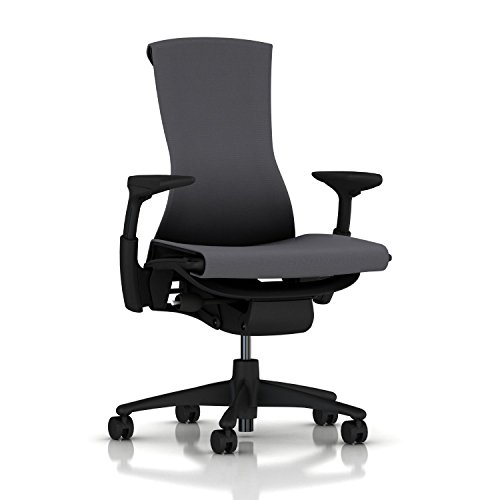
2. Herman Miller Embody Ergonomic Office Chair (Charcoal Rhythm) — Best Premium
The Embody is the design-led end of the ergonomic market: Herman Miller’s flagship task chair, sold here in the Charcoal Rhythm finish with fully adjustable arms and carpet casters. Its distinctive pixelated back is engineered to flex with the sitter’s spine and distribute pressure across the back rather than bracing it at a few points. This guide includes it for one clear buyer: the person whose chair is their primary work tool, used all day, every day, for years.
Strengths
- Back design flexes with movement instead of holding one rigid posture
- Fully adjustable arms match desk height and shoulder width precisely
- Built and priced as a decade-long tool, not a seasonal purchase
Trade-offs
- Premium price is the highest commitment in this guide by a wide margin
- The listing data verified here does not state a weight capacity — check the listing before ordering
- Its technical look divides opinion in a living-room office
| Brand | Herman Miller |
|---|---|
| Model | Embody, Charcoal Rhythm finish (as stated in listing) |
| Armrests | Fully adjustable arms (as stated in listing) |
| Casters | Carpet casters (as stated in listing) |
Premium chairs justify themselves on a per-day basis or not at all. Spread across ten years of full-time sitting, the daily cost of a flagship chair is modest; spread across occasional use, it is an extravagance, and this guide will not pretend otherwise. What the money buys beyond the badge is engineering depth: a back that responds differently at the shoulders and the lumbar, arms that adjust in every direction your desk demands, and components built to be serviced rather than landfilled.
Two practical notes. First, the casters fitted to this listing are carpet casters; on hard floors, confirm the correct caster type on the listing before ordering, because the wrong wheels change both feel and floor wear. Second, a chair this adjustable needs the full setup routine — its range means it can be adjusted badly in more directions than a simple chair. Give it the hour with the how-to section, and reassess after a week of real work before judging it.
Best for: Full-time home workers who keep a chair for a decade and sit most of the day / Not suited for: Occasional sitters — the price cannot be justified by two hours a day

3. Steelcase Leap Office Chair (Onyx) — Best for Long Sessions
Steelcase’s Leap is the other flagship in this guide, built around two named technologies: LiveBack, a backrest designed to change shape as your spine moves, and the Natural Glide System, which adjusts the recline so the seat and back relationship stays supportive as you lean back. Its listing describes it as supporting the sitter’s unique body shape — marketing language, but language that points at the Leap’s real strength: it accommodates movement instead of enforcing one textbook posture.
Strengths
- Back follows posture changes through the day rather than locking one position
- Recline geometry is designed to keep support consistent as you lean back
- Steelcase build quality aimed at years of daily commercial-grade use
Trade-offs
- Premium pricing, like the Embody
- No headrest in this brief — reclined napping is not its job
- The verified listing data does not state a weight capacity; check the listing first
| Brand | Steelcase |
|---|---|
| Model | Leap, Onyx (as stated in listing) |
| Back technology | LiveBack technology (as named in listing) |
| Recline | Natural Glide System (as named in listing) |
| Casters | Wheels for carpet (as stated in listing) |
Sitting still is the problem no chair can solve, and the Leap is designed with unusual honesty about that. Its back flexes at the top and bottom semi-independently, so reaching, twisting and slouching-then-recovering all stay supported rather than punished. For workers whose day is a rhythm of focus, calls, reaching for notebooks and leaning back to think, that tolerance for movement is worth more than any single static measurement of support.
Choose between the Leap and the Embody by temperament. The Embody is the more radical design, with its pixelated back and firmer design statement. The Leap is the more conventional-looking chair with equally serious engineering underneath, and it tends to disappear into a room — and under a sitter — more quietly. Both are decade purchases; both demand the full setup routine; and both are wasted on a two-hour-a-day desk. Be honest about your hours before spending at this tier.
Best for: Long-session sitters who shift posture often through the day / Not suited for: Buyers who want a headrest — the Leap brief is back support, not head support
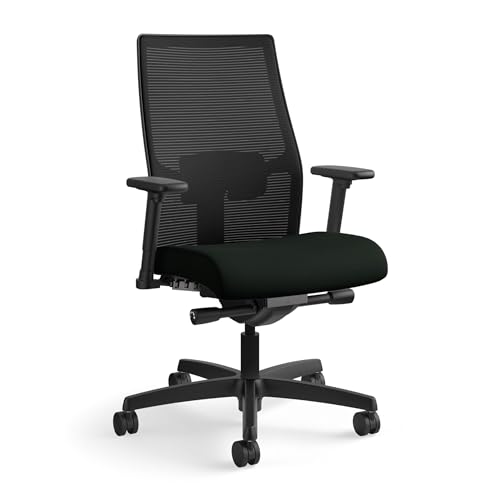
4. HON Ignition 2.0 Ergonomic Office Chair — Best Business-Grade Mid-Range
HON is the quiet giant of American office furniture, and the Ignition 2.0 is its mainstream ergonomic chair: lumbar support, adjustable arms, and a design brief the listing sums up as workstation comfort for focused productivity. Note that the verified listing title is cut off mid-word at the end — this guide quotes only its complete portion and does not invent the rest. What is stated is enough: this is the business-grade middle of the market, from a brand whose chairs fill actual offices.
Strengths
- Office-brand engineering and parts ecosystem rather than marketplace anonymity
- The core ergonomic pair — lumbar support and adjustable arms — both present
- Understated black design that fits a home office without shouting
Trade-offs
- Adjustment range is honest but not class-leading
- Listing data verified here is thinner than the SIHOO’s; confirm dimensions and capacity on the listing
- Styling is corporate, which some home buyers are specifically trying to escape
| Brand | HON |
|---|---|
| Model | Ignition 2.0, Black (as stated in listing) |
| Lumbar | Lumbar support (as stated in listing) |
| Armrests | Adjustable arms (as stated in listing) |
The case for the Ignition is the case for buying from the office industry rather than the gaming or marketplace industries: the chair was designed for procurement managers who buy hundreds at a time and measure failure rates. That heritage shows in sensible proportions, replaceable parts and a support posture tuned for eight-hour days rather than streaming aesthetics. For a home worker who wants to buy once, from a brand that will still sell them a gas lift in seven years, that heritage is the product.
Against the SIHOO M18, the HON trades some adjustment theatre for brand depth; against the flagships, it trades engineering exotica for a much smaller bill. It is the pick for the buyer who reads the premium reviews, respects them, and decides their six-hour days do not amortise them. That is not settling — it is matching the tool to the job, which is the entire discipline this guide is trying to teach.
Best for: Buyers who want a proven office-brand chair without flagship pricing / Not suited for: Buyers chasing maximum adjustability — the SIHOO and the flagships offer more
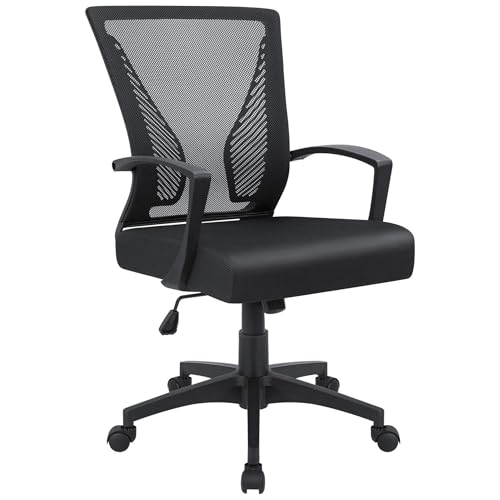
5. Furmax Office Chair, Ergonomic Mesh Desk Chair (Black) — Best Budget
The Furmax is the budget reality check of this guide: a mid-back mesh chair with lumbar support, adjustable height, a breathable backrest and a 360-degree swivel, at the price tier where most first home offices actually start. Its listing promises easy assembly, and its brief is honestly sized — home, office and conference use for people whose sitting day is measured in a few hours, not in shifts.
Strengths
- Covers the ergonomic essentials — height adjustment and lumbar support — at a budget price
- Mesh back keeps it comfortable in warm rooms and small spaces
- Mid-back footprint suits small home offices and student rooms
Trade-offs
- Armrests are fixed in this brief, so desk-height matching is limited
- Budget components will not match flagship longevity under all-day use
- The listing data verified here does not state a weight capacity; check before ordering
| Back | Mid-back mesh, breathable backrest (as stated in listing) |
|---|---|
| Lumbar | Lumbar support (as stated in listing) |
| Height | Adjustable height (as stated in listing) |
| Movement | 360-degree swivel, armrests (as stated in listing) |
| Assembly | Described by its listing as easy assembly |
Judge budget chairs by a different contract: not ‘will this serve a decade of full-time work?’ but ‘is this honestly built for the hours I will actually give it?’ For a student, a hybrid worker in the office three days a week, or a household’s second desk, the Furmax’s contract is fair. The mesh back is a genuine comfort feature in small, warm rooms, and height adjustment plus lumbar shaping put it ahead of the dining-chair improvisation it usually replaces — which is the comparison that matters at this price.
Protect the purchase with two habits. First, assemble it carefully and re-tighten the bolts after the first week; budget chairs loosen as parts settle, and a two-minute Allen-key pass restores the factory feel. Second, be honest if your hours grow: the day a part-time desk becomes a full-time job is the day to move this chair to the spare room and buy from the middle of this guide. Chairs wear in proportion to hours, and no budget chair is exempt from that arithmetic.
Best for: Students, part-time home workers and second-desk setups on a tight budget / Not suited for: Full-time, all-day sitters — step up to the SIHOO or HON
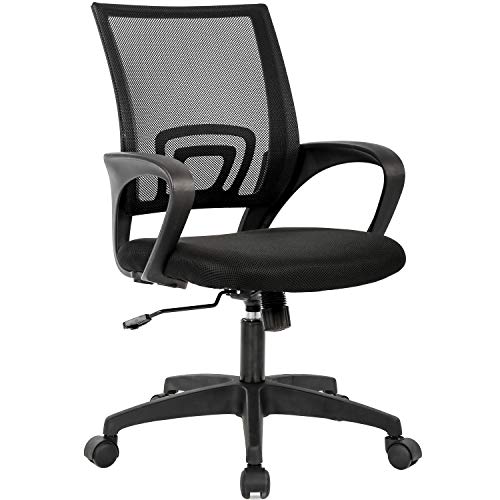
6. BestOffice Ergonomic Office Chair (Black) — Best Budget Runner-Up
BestOffice’s mid-back chair is the other honest budget answer, differing from the Furmax mainly in the seat: a sponge cushion where the Furmax brief is firmer, with the same essentials around it — lumbar support, adjustable height, breathable backrest, swivel and rolling wheels. Having both in the guide is deliberate. At the budget tier, the seat feel is the decision, and these two chairs let you make it on preference rather than on price noise.
Strengths
- Padded sponge seat suits buyers who find mesh-and-foam budget seats too firm
- Same ergonomic essentials as its budget rival: lumbar support and height adjustment
- Compact mid-back size works in bedrooms, dorms and spare corners
Trade-offs
- Fixed armrests, like most chairs at this tier
- Sponge seats compress over years of use faster than premium foam or mesh suspension
- Capacity and detailed dimensions are not stated in the verified listing data — check the listing
| Back | Mid-back, breathable backrest (as stated in listing) |
|---|---|
| Seat | Sponge seat (as stated in listing) |
| Lumbar | Lumbar support (as stated in listing) |
| Height | Adjustable height (as stated in listing) |
| Format | Swivel desk chair with rolling wheels; pack of 1 |
The sponge seat deserves a balanced word. New, it is the more welcoming sit of the two budget picks, and for lighter users and shorter sessions it stays that way. Over years, foam compresses where mesh suspension does not, so the chair’s comfort curve slopes gently downward. That is an acceptable trade at this price — provided you buy it knowingly. The unforgivable budget purchase is the one that promises flagship longevity; neither budget pick in this guide makes that promise, and both are better products for the honesty.
Choose between the two budget chairs in this order: first your hours (both suit part-time sitting; neither suits a full-time decade), then your seat preference (firmer brief versus sponge cushion), then your room (both are compact mid-backs). And whichever you choose, do the setup routine. A budget chair adjusted properly — feet flat, lumbar meeting the back, screen raised to meet your eyes — will out-comfort a premium chair left at factory settings, which is the most useful sentence in this entire guide.
Best for: Buyers who want a padded sponge seat instead of the Furmax’s firmer brief / Not suited for: Buyers who need adjustable armrests or a stated high weight capacity
Comparison Table
| Pick | Badge | Key spec | Best for | Amazon |
|---|---|---|---|---|
| SIHOO M18 Ergonomic Office Chair | Best Overall | Mesh back, adjustable lumbar, headrest, 330 lb stated capacity | Home workers who want the full adjustment checklist at a mid-range price | Check price |
| Herman Miller Embody Ergonomic Office Chair (Charcoal Rhythm) | Best Premium | Premium ergonomic chair, fully adjustable arms, carpet casters | Full-time home workers who keep a chair for a decade and sit most of the day | Check price |
| Steelcase Leap Office Chair (Onyx) | Best for Long Sessions | LiveBack flexible back, Natural Glide recline, carpet wheels | Long-session sitters who shift posture often through the day | Check price |
| HON Ignition 2.0 Ergonomic Office Chair | Best Business-Grade Mid-Range | Lumbar support, adjustable arms, business-grade build | Buyers who want a proven office-brand chair without flagship pricing | Check price |
| Furmax Office Chair, Ergonomic Mesh Desk Chair (Black) | Best Budget | Mid-back mesh, lumbar support, adjustable height, 360° swivel | Students, part-time home workers and second-desk setups on a tight budget | Check price |
| BestOffice Ergonomic Office Chair (Black) | Best Budget Runner-Up | Mid-back swivel, lumbar support, sponge seat, breathable backrest | Buyers who want a padded sponge seat instead of the Furmax’s firmer brief | Check price |
Read the table as a ladder of adjustability and service life. The budget pair cover height and lumbar shaping. The SIHOO adds adjustable lumbar, a headrest and a stated capacity. The HON adds office-industry build and parts depth. The flagships add backs that move with you and arms that adjust in every direction. None of the steps are fake — each buys something real — but the right stopping point is set by your sitting hours, and overshooting it is its own kind of waste.
How to Choose Ergonomic Office Chairs for a Home Office
Start with your hours, because hours set the tier. Under four hours a day, a budget chair adjusted well is a rational tool. Four to eight, buy the middle of this guide. Eight-plus, every day, for years: the flagships stop being luxuries and become cost-per-day bargains. Be honest in this first step and the rest of the decision gets easy; exaggerate your hours and you will overspend, minimise them and your back will file the correction.
Next, check the adjustments against your body. Seat height must let your feet rest flat with knees at roughly a right angle. Lumbar support must reach the curve of your lower back — adjustable height of the support matters because that curve sits at different heights on different bodies. Armrests should meet your elbows without lifting your shoulders. If a listing does not state a capacity or a dimension you need, treat that as information: check the listing’s full details, and be wary of any seller who cannot tell you what their chair holds.
Match the chair to the room as well as the body. Mesh backs breathe in warm, small rooms and look light in shared spaces. Padded executive chairs suit cooler rooms and traditional desks. Carpet casters belong on carpet and hard-floor casters on hard floors; the wrong set scuffs floors and makes the chair feel broken. Measure your desk height and the space under it before ordering — a chair that cannot roll under the desk will colonise the room.
Finally, plan the decade, not the day. Ask how the chair wears: foam compresses, mesh endures, mechanisms loosen and can be re-tightened, and brands with parts catalogues let you replace a gas lift or a caster instead of a chair. The cheapest chair is the one you buy once, at the tier your hours justify.
Ergonomics Without the Myths
Ergonomic is an unregulated word on a product box. It can describe a chair engineered around spinal movement or a chair with a curved back and a hopeful label, and the only defence is to read for mechanisms: what adjusts, by how much, and to fit whom. This guide applied that test to every pick and excluded chairs whose ergonomic claim rested on a loose cushion accessory rather than the chair’s own design.
Posture advice deserves the same scepticism as product claims. There is no single perfect posture a chair can hold you in for eight hours; bodies are built to move. The best chairs in this guide share a philosophy — support a good working position, then tolerate and support the dozen other positions your day actually contains. A chair that fights your movement will lose to your movement, every day, at the cost of your comfort.
And keep the boundary clear: chairs are comfort and fit tools. Persistent pain is a health question, not a furniture question, and it belongs with a clinician. A better chair may well make your working day more comfortable — that is a legitimate and worthwhile goal — but buy it as furniture and judge it as furniture.
Chair Anatomy: What Each Adjustment Actually Does
Seat height sets the foundation: it fixes the angle of your knees and hips and the height of your eyes relative to the screen. Everything else is adjusted relative to it, which is why the setup routine starts there. A gas lift that sinks slowly over months is the most common chair failure in every tier — and, on brands with parts catalogues, one of the cheapest to repair.
Lumbar support works by filling the natural inward curve of your lower back so the muscles there can relax instead of holding you upright unaided. Its height adjustment matters more than its firmness: support pressing at the wrong height is worse than gentle support at the right one. This is the adjustment to revisit most often, because your sense of it changes as you tire through the day.
Armrests exist to unload your shoulders, not to hold you up. Set correctly, they carry the weight of your forearms so your neck and shoulders can stay dropped. Set too high, they shrug your shoulders toward your ears all day; too low, they are decoration. Tilt, finally, is your posture-change mechanism — small reclines through the day vary the load on your back far more meaningfully than any single ‘correct’ angle held rigidly for hours.
Seat depth and width are the fixed dimensions you cannot adjust on most chairs, which makes them buying criteria rather than setup steps. Taller sitters need deeper seats; smaller sitters are defeated by them, perching on the edge with the lumbar support stranded behind them. This is why petite and big-and-tall chair categories exist — linked at the end of this guide — and why a household of mixed sizes should think in terms of fit per person, not one chair for all.
How to Set Up Your Office Chair and Desk, Step by Step
This twenty-minute routine extracts more comfort from any chair in this guide than the price difference between the budget and mid-range tiers. Do it in order; each step sets up the next.
- Seat height first: sit with feet flat on the floor, knees at roughly a right angle, thighs parallel to the floor. If your feet dangle, lower the chair or add a footrest; if your knees ride high, raise it.
- Lumbar next: adjust the support until it meets the inward curve of your lower back with gentle, even pressure — noticeable, never prodding. On adjustable models, set its height before its firmness.
- Seat depth check: you should fit two or three fingers between the seat edge and the back of your knees. If the edge presses your calves, the seat is too deep for you at any setting.
- Armrests: raise them until they meet your elbows with your shoulders relaxed and dropped, forearms roughly parallel to the desk. If fixed armrests hold your shoulders up, they are worse than none — note it and use the desk surface instead.
- Screen: position the monitor so the top of the screen is at or slightly below eye level, about an arm’s length away. Raise it on books or a stand rather than lowering your head to it.
- Tilt: unlock the tilt, set tension so you can recline with gentle pressure and return upright without effort, then lock it only if you prefer a fixed working angle.
- Work an hour, then micro-adjust. The setup is a draft, not a verdict — small changes after real use are where the fit actually happens.
Revisit the setup whenever anything changes: a new desk, a new monitor, different shoes, a growth spurt in a teenager’s chair. Ergonomic fit is a relationship between body, chair and desk, and changing any one of the three reopens the question. The routine takes minutes the second time and is the cheapest comfort upgrade in the home office.
Build movement into the day the chair cannot give you. Stand for calls, walk for water, stretch while the kettle boils. No chair in this guide — at any price — is designed to make eight motionless hours healthy, and the honest manufacturers say so. The chair’s job is to support you well between movements; the movements remain yours.
Keep the chair itself maintained and the setup will hold. Re-tighten assembly bolts after the first week and again after the first month, because new chairs settle. Check that the gas lift still holds height overnight; a slow sink is a failing lift, not a failing setup, and on the office-brand picks it is a replaceable part. Vacuum mesh backs and wipe casters free of hair and grit, especially in homes with pets — a caster that cannot roll freely makes every small posture shift a drag, and those small shifts are half of what an ergonomic chair is for. Five minutes of maintenance a month protects the fit you spent twenty minutes creating.
If two people share the chair, write the settings down. Note the seat height in finger-widths from a fixed point, the lumbar position, the armrest height. A shared chair that takes ninety seconds to refit will actually get refitted; one that takes ten minutes of fiddling will be sat in wrong by whoever loses patience first — which, in most households, is everyone, every time.
Common Buying Mistakes
Buying the label instead of the adjustments
“Ergonomic” on a box proves nothing. Check what actually adjusts — height, lumbar position, armrests, tilt — and whether the ranges fit your body, before the word earns your money.
Skipping the setup
Most uncomfortable chairs are unadjusted chairs. Twenty minutes with the routine in this guide transforms budget and premium chairs alike, and it is free.
Matching the chair to the room’s looks only
A chair that photographs beautifully but cannot roll under your desk, breathe in your warm room or fit your legs will be resented daily. Fit first, finish second.
Ignoring casters and floor type
Carpet casters on hardwood scuff floors and wander; hard-floor casters on carpet strain. Two of the premium listings here specify carpet casters — check what your floor needs before ordering.
Assuming one chair fits the whole household
A chair adjusted for a 6-foot adult is wrong for a 5-foot teenager, and shared chairs need re-adjusting at every handover. Households with very different sitters do better with two honest budget chairs than one premium compromise.
Expecting a chair to fix pain
Chairs improve fit and comfort; they do not treat conditions. Persistent pain deserves a clinician, and any seller who promises otherwise is telling you something about their honesty, not their chair.
Final Recommendation
For most home workers, the SIHOO M18 is the recommendation: the full adjustment checklist, a stated 330 lb capacity and mesh comfort at a mid-range price. Full-time, long-horizon sitters should choose between the Steelcase Leap’s movement-tolerant back and the Herman Miller Embody’s radical flex design — both are decade tools. The HON Ignition 2.0 is the business-grade middle for buyers who value brand depth over adjustment theatre. And the Furmax and BestOffice pair prove that a small budget, honestly spent and properly adjusted, still buys a real ergonomic chair.
Whichever tier you land on, do the setup routine the day the chair arrives and revisit it after a week. The best ergonomic office chairs home workers own are rarely the most expensive ones in this guide — they are the ones that were fitted, adjusted and actually matched to the hours they serve.
One last piece of buying discipline: order from a listing whose dimensions you have checked against your desk and your legs, keep the packaging until the chair has survived a full working week, and judge it at the end of real days rather than in the first five minutes. First impressions flatter almost every chair; the honest verdict arrives late in the afternoon of the fifth day, and the picks in this guide were chosen to still be earning it then.
Related guides on this site: Best German Ergonomic Office Chairs Best Inexpensive Ergonomic Office Chairs Best Petite Ergonomic Office Chairs Best Ergonomic Office Chairs With Adjustable Arms
- SIHOO M18 Ergonomic Office Chair: Check on Amazon
- Herman Miller Embody Ergonomic Office Chair (Charcoal Rhythm): Check on Amazon
- Steelcase Leap Office Chair (Onyx): Check on Amazon
- HON Ignition 2.0 Ergonomic Office Chair: Check on Amazon
- Furmax Office Chair, Ergonomic Mesh Desk Chair (Black): Check on Amazon
- BestOffice Ergonomic Office Chair (Black): Check on Amazon
Frequently Asked Questions
What makes a chair genuinely ergonomic?
Adjustability that fits the chair to your body: seat height that lets your feet rest flat, lumbar support positioned at the curve of your lower back, armrests that meet relaxed elbows, and a tilt you can control. A curved backrest and the word ‘ergonomic’ on the box, without those mechanisms, is styling rather than ergonomics.
Is a mesh or a padded chair better for a home office?
Mesh breathes and stays cooler in warm rooms, holds its shape for years, and feels firmer. Padded seats feel plusher at first and suit cooler rooms and shorter sessions, but foam compresses over time. This guide includes both; choose by your room temperature, your hours and which feel you prefer in the first five minutes — that preference usually holds.
How much should I spend on a home office chair?
Match the spend to your sitting hours. Part-time sitting is honestly served by the budget picks here. Full-time work justifies the mid-range. All-day sitting for years ahead is the only case where flagship prices divide down to good value. Overspending for your hours is as much a mistake as underspending.
Do I need a headrest?
Only if you recline — for calls, reading or thinking breaks. For upright typing work, a headrest does nothing, and a badly positioned one pushes the head forward. The SIHOO in this guide includes one; the Steelcase Leap’s brief omits it deliberately. Buy for the positions you actually work in.
Will an ergonomic chair fix my back pain?
A chair is furniture, not treatment, and this guide makes no medical claims for any pick. A well-fitted chair can make sitting more comfortable, which is a worthwhile goal in itself. Pain that persists is a question for a clinician, not for a product page.
How long should a good office chair last?
It scales with tier and hours. Budget chairs serve part-time use for a few years. Mid-range chairs from office brands are built for many years of daily use, with replaceable wear parts. The flagship chairs in this guide are engineered as decade-scale tools for full-time sitters — which is precisely the use case their prices assume.


