Disclosure: airfryerkitchensupply.com is reader-supported. When you buy through links on our site, we may earn an affiliate commission at no extra cost to you.
Where to buy
The under $500 line is where robot vacuums stop being toys and start being appliances, and it is also where spec sheets inflate fastest. Every pick below was verified in Amazon catalog data through the airfry site’s own Amazon listing data connection during this guide’s research, and each model’s listing price sat under the $500 line at the moment it was checked — prices move with promotions, so use this box to check the current price on Amazon before you rely on the tier. What this guide will not do is print a fixed price that will be wrong next week.
- roborock Qrevo S Pro Robot Vacuum and Mop — Check on Amazon
- roborock Q10 S5+ Robot Vacuum and Mop — Check on Amazon
- roborock Q7 M5+ Robot Vacuum and Mop — Check on Amazon
- Roborock Q7 L5 Robot Vacuum and Mop Combo — Check on Amazon
- Shark AV2501S AI Ultra Robot Vacuum — Check on Amazon
- Shark PowerDetect Self-Empty Robot Vacuum AV2820S — Check on Amazon
Shopping for the best robotic vacuums for under 500 used to mean accepting a machine that bumped around randomly and vacuumed by luck. That era is over, and the proof is in this guide’s verified picks: every one of the six uses LiDAR-class navigation or structured mapping, five of the six mop as well as vacuum, and four empty themselves into a dock so the daily chore becomes a monthly one. The under $500 tier is now where the flagship features of two years ago come to be normal, and the real shopping skill is no longer finding a good robot — it is choosing which dock, which mopping system, and which brand’s app you want to live with.
The lineup splits by ecosystem and by dock. Roborock takes four slots, and this guide is transparent about why: its current midrange is unusually deep, spanning a full multifunctional dock flagship-in-miniature (the Qrevo S Pro), two self-emptying Q-series models at different strengths, and a dock-free LiDAR budget pick — two of which are siblings in the same Q7 family, presented openly as different configurations rather than disguised as unrelated products. Shark takes the other two slots with a pet-hair self-empty specialist and its PowerDetect flagship-under-the-line. Suction figures are quoted from the verified titles and compared with the caution they deserve, in the selection notes below.
In this guide
Quick Picks
Read the dock column in your head as you scan: multifunctional mop-washing dock, self-empty dock, or no dock at all is the decision that shapes daily life with the machine. Suction numbers, by contrast, are the least comparable figures in the category — the guide explains why under How These Picks Were Chosen.
| Pick | Badge | Why it stands out | Check |
|---|---|---|---|
| roborock Qrevo S Pro Robot Vacuum and Mop | Best Overall Under $500 | The flagship experience at this tier: 18,500Pa suction with a multifunctional dock that washes the mops with heated water and empties the bin. | Check on Amazon |
| roborock Q10 S5+ Robot Vacuum and Mop | Best Self-Empty All-Rounder | The balanced dock package: 10,000Pa suction, a stated 70-day self-emptying dock, sonic mopping, and auto mop lift. | Check on Amazon |
| roborock Q7 M5+ Robot Vacuum and Mop | Best Midrange Self-Empty | Self-emptying at the friendlier end of the tier: 10,000Pa suction with a dock stated for up to 7-9 weeks between bag changes. | Check on Amazon |
| Roborock Q7 L5 Robot Vacuum and Mop Combo | Best Budget LiDAR — No Dock | The honest budget configuration of the Q7 family: 8,000Pa suction and LiDAR mapping, self-charging, with no self-empty dock to pay for. | Check on Amazon |
| Shark AV2501S AI Ultra Robot Vacuum | Best Shark for Pet Hair | Shark’s pet-hair specialist: Matrix Clean navigation, home mapping, and a 30-day bagless HEPA self-empty base. | Check on Amazon |
| Shark PowerDetect Self-Empty Robot Vacuum AV2820S | Best Shark All-Rounder | Shark’s sensing flagship under the line: LiDAR, DirtDetect debris detection, and NeverStuck technology for homes that defeat lesser robots. | Check on Amazon |
How These Picks Were Chosen
Picks were chosen from fresh Amazon catalog searches run for this article through the airfry site’s own Amazon listing data connection, covering the major robot vacuum lines, with results checked model by model. Three acceptance tests applied. First, identity: the listing title had to confirm a complete robot vacuum — navigation type, suction class, and dock configuration where applicable — not a handheld, a replacement dock, or a parts listing. Second, tier: each model’s listing price at check time sat under the $500 frame of the keyword; those internal price checks are recorded in this article’s sources and deliberately not printed, because a fixed price in an article is a falsehood on a delay. Third, honesty of configuration: variants and dock bundles of the same robot are one product family, and where two configurations appear — the Q7 pair — the reviews say so in plain words.
A word on suction numbers, because this category shouts them. Pascal figures are measured differently by different makers, at different points in the airflow path, and a higher number does not linearly mean a cleaner floor. This guide quotes the figures the titles state, uses them to place models in classes, and then judges the picks on the things that decide real outcomes: navigation quality, brush design and anti-tangle behavior, dock convenience, and mop handling. That ordering — navigation, dock, brushes, then numbers — is the order experienced owners would give you.
Renewed and refurbished listings were excluded even where their prices were tempting, because a tier guide should compare new machines with full warranties; one renewed Shark model surfaced in the searches and was set aside on exactly that rule, as the sources record.
The 6 Best Robotic Vacuums for Under $500
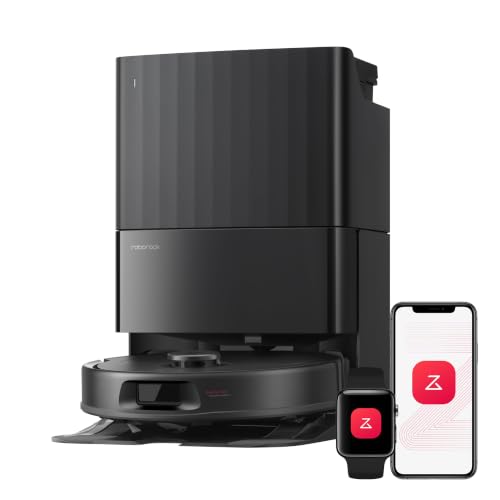
roborock Qrevo S Pro Robot Vacuum and Mop — Best Overall Under $500
The Qrevo S Pro is what happens when last cycle’s flagship dock technology lands under this guide’s price line, and its verified title reads like it: 18,500Pa suction, a multifunctional dock with mop self-cleaning at a stated 167 degrees, smart obstacle avoidance, an anti-tangle brush, and a liftable spinning mop system. It suits homes that are mostly hard floor with real mopping to do — kitchens, entries, pet zones — and owners who want the robot’s weekly human homework reduced to the dock’s water tanks and an occasional wipe-down.
Strengths
- A multifunctional dock that washes its own mops is the single biggest quality-of-life feature in this guide, and it is stated in the title
- The strongest stated suction in the lineup, paired with obstacle avoidance that suits cluttered, lived-in floors
- Liftable spinning mops handle the carpet-versus-hard-floor border properly instead of dragging wet pads across rugs
Trade-offs
- A multifunctional dock is furniture: it needs floor space, a power outlet, and a spot where its water tanks are easy to service
- Spinning mop systems have consumables — pads, dock filters, cleaning solution habits — that belong in the running-cost math
- It is the most complex machine here; buyers who want a robot they never think about at all may prefer a vacuum-only simplicity lower down
| Suction | 18,500Pa (per Amazon title) |
|---|---|
| Dock | Multifunctional dock, mop self-cleaning at 167°F stated (per Amazon title) |
| Navigation | Smart obstacle avoidance (per Amazon title) |
| Brush | Anti-tangle brush; liftable spinning mop (per Amazon title) |
The dock is the review, so let it be: a robot that vacuums, mops, returns, empties itself, and then washes its own mop pads in heated water has crossed the line from gadget to staff. The remaining human tasks are honest ones — refill clean water, empty dirty water, empty the dust bag on its long cycle, rinse the dock tray occasionally. Compare that with the dock-free pick below, where every one of those tasks is yours after every run, and the price difference between the two stops looking like a luxury tax and starts looking like a labor contract, priced fairly.
On the floors themselves, expect the modern Roborock pattern: methodical LiDAR-guided coverage, respectful obstacle handling, and mops that lift at carpet borders rather than soaking them. The stated suction figure is the lineup’s highest, and while this guide cautions against Pascal worship, the Qrevo’s combination of suction, brush design, and dock completeness makes it the most whole product under the line. If your budget reaches one machine in this guide without stretching, and your floors genuinely need mopping, this is the one.
Best for: hard-floor homes that mop weekly and want the fullest dock automation under $500 / Not suited for: tiny apartments with nowhere for a multifunctional dock to live
Check on Amazon — check the current price on Amazon before you decide, and confirm the exact size, color, or configuration on the listing, because several of these products are sold in more than one variant.

roborock Q10 S5+ Robot Vacuum and Mop — Best Self-Empty All-Rounder
The Q10 S5+ is the pick for the buyer who read the Qrevo review, nodded at the dock, and then looked at their floor plan and their budget and chose sanity. Its title states 10,000Pa suction, a self-emptying dock rated at a stated 70 days, sonic mopping, a dual anti-tangle design, obstacle avoidance, and auto mop lift. The dock empties the bin but does not wash mops — that is the honest difference from the pick above — which makes it the right size of automation for homes that vacuum daily and mop occasionally.
Strengths
- A stated 70-day self-empty capacity turns bin-emptying into a seasonal chore
- Sonic mopping with auto lift is the scrubbing style of mop, handled correctly at carpet borders
- Dual anti-tangle design addresses the pet and long-hair reality that kills lesser robots’ brushes
Trade-offs
- The dock does not wash mop pads — after mopping, the pads are your laundry, unlike the Qrevo above
- It is positioned as an upgrade successor in its own title, so check the live listing to confirm the exact bundle in the box
- Bagged self-empty docks have a consumable cost per bag; price a multipack when you price the robot
| Suction | 10,000Pa (per Amazon title) |
|---|---|
| Dock | Self-emptying, up to 70 days stated (per Amazon title) |
| Mopping | Sonic mopping with auto mop lift (per Amazon title) |
| Brush | Dual anti-tangle design (per Amazon title) |
This is the configuration most households would design if they specced a robot from experience: daily vacuuming fully automated including the bin, mopping available and competent, and no water-tank dockery to maintain. The 70-day figure in the title is a capacity claim that depends on how dirty your floors are — pet homes will cycle faster — but even at half its stated life, the dock changes the ownership rhythm from daily fiddling to occasional attention, which is the entire point of owning a robot.
Against its own siblings, the Q10’s case is balance. The Qrevo above out-docks it; the Q7 models below under-price its completeness; and its sonic mopping — a scrubbing pad style rather than spinning discs — suits homes whose mopping is about kitchen film and entry grit rather than whole-house wet work. Check the current price on Amazon, because this model sits in the most promotion-contested part of the tier, and its value case strengthens every time the line moves in your favor.
Best for: most households: daily vacuuming fully automated, competent mopping on demand / Not suited for: homes that mop constantly and want the dock to wash the pads too
Check on Amazon — check the current price on Amazon before you decide, and confirm the exact size, color, or configuration on the listing, because several of these products are sold in more than one variant.

roborock Q7 M5+ Robot Vacuum and Mop — Best Midrange Self-Empty
The Q7 M5+ is the self-empty idea at its most accessible in this guide: 10,000Pa suction, a dock the title rates at up to seven to nine weeks of self-emptying, a dual anti-tangle system aimed at pet hair and carpet, and PreciSense LiDAR navigation with app control. It suits pet homes and carpet-mixed homes that want the dock life — set the schedule, forget the bin — without stepping up to the Q10’s or Qrevo’s fuller feature sets. Read the next pick’s review too: the Q7 L5 is this robot’s close sibling in a different configuration, and the pair is presented transparently as such.
Strengths
- A stated 7-9 week self-empty dock at this position in the tier is the convenience headline
- LiDAR navigation named in the title — methodical coverage, not bump-and-hope
- Anti-tangle system aimed squarely at pet hair and carpet, the workload most robots are actually bought for
Trade-offs
- Its mopping is the simpler pad style of its line — fine for maintenance mopping, not a scrubbing system
- As a Q7-family configuration with a dock, it overlaps its sibling below; buy the dock deliberately, not by accident
- Bagged dock consumables apply here as with every self-empty pick
| Suction | 10,000Pa (per Amazon title) |
|---|---|
| Dock | Self-empty, up to 7-9 weeks stated (per Amazon title) |
| Navigation | PreciSense LiDAR, app control (per Amazon title) |
| Family note | Q7 family — dock configuration; sibling pick follows |
The buying question this pick poses is precise: what is never emptying a robot bin worth, per month, to your household? The M5+ prices that convenience at the lowest point in this guide’s dock-equipped tier, and it does not stint the robot to do it — the suction class, the LiDAR, and the anti-tangle brief are all present. For a pet home, where a dock-free robot’s small bin fills with hair every second run, the dock is not a luxury at all; it is the difference between a robot that works unattended and a robot that works when remembered.
Set it up with the dock against a wall with clearance on both sides, teach the app your no-go zones — pet bowls, cable nests, the shag rug’s fringe — and let the schedule run at a time the household is awake to rescue the rare stuck event. That is the whole ownership liturgy. If your floors are mostly hard and your mopping ambitions modest, the M5+ is arguably the value center of this entire guide, and its sibling below exists for the buyers who reach the opposite dock conclusion.
Best for: pet and carpet-mixed homes that want self-emptying at the tier’s friendlier end / Not suited for: buyers who want scrubbing mops or a mop-washing dock
Check on Amazon — check the current price on Amazon before you decide, and confirm the exact size, color, or configuration on the listing, because several of these products are sold in more than one variant.

Roborock Q7 L5 Robot Vacuum and Mop Combo — Best Budget LiDAR — No Dock
Transparency first, as promised: the Q7 L5 is a sibling of the M5+ above — same Q7 family, a step down in stated suction to 8,000Pa, and crucially, no self-empty dock; it self-charges and that is all. It is in this guide because it is the correct buy for a real constituency: small homes, single-pet or pet-free homes, and buyers who would rather empty a bin twice a week than pay for a dock, its floor space, and its bags. Its title confirms LiDAR navigation, multi-level mapping, a dual anti-tangle system, and self-charging — a full modern robot, minus the dock.
Strengths
- LiDAR navigation and multi-level mapping at the budget end of the tier — the feature that most changes daily results
- No dock means no dock footprint, no bags, and the lowest running cost in the guide
- Dual anti-tangle system keeps the brush brief honest for hair, even without a dock to empty into
Trade-offs
- You are the dock: the bin is small, and in a shedding season it wants emptying every few runs
- It is a configuration sibling of the pick above, not a different species — if the dock tempts you at all, buy the M5+ once
- Mopping is maintenance-grade pad mopping, as with its sibling
| Suction | 8,000Pa (per Amazon title) |
|---|---|
| Dock | None — self-charging only (per Amazon title) |
| Navigation | LiDAR, multi-level mapping (per Amazon title) |
| Family note | Q7 family — dock-free configuration; sibling pick above |
The case for dock-free is stronger than dock marketing admits. In a small home, a robot’s bin holds several runs of ordinary dust; the dock’s floor space is genuinely missed; and the total cost — no bags, ever — is the lowest in the category. What the L5 refuses to compromise is the brain: LiDAR mapping is the feature that separates a robot that covers your home from one that samples it, and keeping that at this price point is exactly the right place to spend and save. Apartments, first robot purchases, and second-floor supplements to a docked main robot are its natural habitats.
Ownership is a light ritual: empty the bin when the app or the robot suggests, rinse the filter on schedule, and wipe the sensors monthly. Multi-level mapping means it can serve a two-story home if you carry it between floors — the dock-free format makes that trivially easy, which is another quiet argument for this configuration. Check the current price on Amazon against its sibling’s, because the gap between the two configurations moves with promotions and is the entire decision, stated in one number at checkout.
Best for: apartments, small homes, and budget buyers who want LiDAR without dock costs / Not suited for: heavy-shedding pet homes, where the small bin becomes a daily chore
Check on Amazon — check the current price on Amazon before you decide, and confirm the exact size, color, or configuration on the listing, because several of these products are sold in more than one variant.

Shark AV2501S AI Ultra Robot Vacuum — Best Shark for Pet Hair
The AV2501S is the guide’s first non-Roborock, and it earns the slot on a specific combination: Shark’s Matrix Clean navigation and home mapping, a self-empty base with a stated 30-day capacity that is bagless — no bags to buy, ever — with HEPA filtration in the base, positioned explicitly for pet hair. It suits Shark-loyal households, bag-refusers, and pet homes that vacuum constantly and mop rarely, because note what this pick is not: it is a vacuum specialist with no mopping in its title, and that focus is its honesty.
Strengths
- A bagless self-empty base removes the consumable cost every other docked pick carries
- Matrix Clean’s grid-pattern passes suit pet hair pickup, the job this model is explicitly positioned for
- HEPA filtration in the base matters at emptying time, when a month of dander would otherwise meet your face
Trade-offs
- No mopping in the verified title — hard-floor homes wanting a combo should look at the Roborock picks
- A stated 30-day base capacity is shorter than the Roborock docks’ claims, so base-emptying is a monthly, not seasonal, chore
- Bagless bases need their own occasional rinse-and-dry maintenance to stay pleasant
| Navigation | Matrix Clean, home mapping (per Amazon title) |
|---|---|
| Base | 30-day capacity HEPA bagless self-empty base (per Amazon title) |
| Mopping | Not stated — vacuum only in verified title |
| Positioning | Pet hair (per Amazon title) |
The bagless base deserves its moment, because it reverses the dock economics this guide has been tallying. Every bagged dock trades money for tidiness, forever; Shark’s bagless base trades a few minutes of monthly maintenance for zero consumables, forever. For a pet home running the robot daily, that arithmetic compounds in Shark’s favor year after year, and the HEPA filtration in the base keeps the emptying event from undoing the air-cleaning the robot exists to do. It is a genuinely different ownership philosophy, not a lesser one.
On the floor, Matrix Clean’s deliberate grid passes and Shark’s hair-handling brush design suit the pet brief, and home mapping brings the modern essentials — rooms, no-go zones, scheduled targeting of the litter-adjacent hallway. If your home mops by hand happily and vacuums by robot joyfully, this split of labor is coherent and this is your pick. If mopping must be robotic too, the guide’s Roborock half is your territory, and no amount of pet positioning should pull you across.
Best for: pet homes that vacuum daily, hate buying dock bags, and mop by other means / Not suited for: anyone who needs the robot to mop as well as vacuum
Check on Amazon — check the current price on Amazon before you decide, and confirm the exact size, color, or configuration on the listing, because several of these products are sold in more than one variant.

Shark PowerDetect Self-Empty Robot Vacuum AV2820S — Best Shark All-Rounder
The PowerDetect closes the guide with the obstacle-course brief. Its title states a self-empty robot with HEPA filtration, Wi-Fi and LiDAR, NeverStuck technology, deep-cleaning technologies for carpet and hard floors, and DirtDetect debris detection, positioned for pet hair cleaning. Translate the brand language into household terms: this is the robot for homes with thresholds, rug edges, chair-leg forests, and the one transition strip that has stranded every robot guest — a machine whose stated talents are sensing dirt, sensing trouble, and not getting stuck on either.
Strengths
- DirtDetect positioning means the robot spends its effort where the dirt is, rather than polishing clean corners
- NeverStuck technology addresses the number-one robot complaint in real homes: the rescue mission
- LiDAR plus Wi-Fi brings full mapping and app control to the Shark side of the guide
Trade-offs
- The title does not state the self-empty base’s capacity in days, unlike its Shark sibling — confirm the base details on the listing
- Brand-named technologies are positioning until proven in your home; the return window is the honest test on your thresholds
- No mopping is stated in the verified title for this model — confirm the exact configuration on the listing if a combo is essential
| Navigation | LiDAR, Wi-Fi (per Amazon title) |
|---|---|
| Sensing | DirtDetect debris detection (per Amazon title) |
| Mobility | NeverStuck technology (per Amazon title) |
| Base | Self-empty, HEPA (per Amazon title; capacity not stated in title) |
Every robot household has a geography of shame: the bathroom threshold, the bar-stool bases, the rug that curls. A robot that handles those features unattended is worth more than a robot with a higher suction number that needs rescuing twice a week, because a rescued robot is a chore wearing a costume. The PowerDetect’s stated brief — sense the dirt, sense the obstacle, keep moving — is aimed precisely at that geography, and for homes whose floors defeat simpler machines, it is the most relevant specification in this guide.
Buy it as a vacuum-led machine and verify the base configuration on the listing before ordering, since the title leaves the base’s capacity unstated — this guide flags that rather than filling it in. Set the maps carefully in the first week, mark the genuine no-go zones, and then judge it by the only metric that matters a month later: how many times you have thought about it at all. The best robot is the one that becomes infrastructure, and that is the future this model is engineered, on its stated evidence, to deliver.
Best for: homes with thresholds, rug edges, and clutter that strand lesser robots / Not suited for: buyers who need the base capacity and mopping configuration spelled out before purchase
Check on Amazon — check the current price on Amazon before you decide, and confirm the exact size, color, or configuration on the listing, because several of these products are sold in more than one variant.
Comparison Table
Compare docks before robots. The dock decides your weekly chores, your consumable costs, and a square foot of your floor plan for years; the robot decides coverage and pickup, where every pick here is competent. The Q7 pair is listed as what it is — two configurations of one family — so the dock decision can be made with open eyes.
| Pick | Badge | Key spec | Best for | Check |
|---|---|---|---|---|
| roborock Qrevo S Pro Robot Vacuum and Mop | Best Overall Under $500 | 18,500Pa, multifunctional heated mop-washing dock, obstacle avoidance | hard-floor homes that mop weekly and want the fullest dock automation under $500 | Check on Amazon |
| roborock Q10 S5+ Robot Vacuum and Mop | Best Self-Empty All-Rounder | 10,000Pa, 70-day self-empty dock, sonic mopping with auto lift | most households: daily vacuuming fully automated, competent mopping on demand | Check on Amazon |
| roborock Q7 M5+ Robot Vacuum and Mop | Best Midrange Self-Empty | 10,000Pa, 7-9 week self-empty dock, LiDAR navigation | pet and carpet-mixed homes that want self-emptying at the tier’s friendlier end | Check on Amazon |
| Roborock Q7 L5 Robot Vacuum and Mop Combo | Best Budget LiDAR — No Dock | 8,000Pa, LiDAR multi-level mapping, no dock — self-charging | apartments, small homes, and budget buyers who want LiDAR without dock costs | Check on Amazon |
| Shark AV2501S AI Ultra Robot Vacuum | Best Shark for Pet Hair | Matrix Clean mapping, 30-day bagless HEPA self-empty base, pet-hair focus | pet homes that vacuum daily, hate buying dock bags, and mop by other means | Check on Amazon |
| Shark PowerDetect Self-Empty Robot Vacuum AV2820S | Best Shark All-Rounder | LiDAR, DirtDetect sensing, NeverStuck mobility, self-empty base | homes with thresholds, rug edges, and clutter that strand lesser robots | Check on Amazon |
How to Choose a Robot Vacuum Under $500
Decide the dock first, because it is the longest-lived part of the purchase. Three honest options exist in this guide: a multifunctional dock that empties the bin and washes the mops (the Qrevo), a self-empty dock that empties the bin only (the Q10, the Q7 M5+, and the Sharks), and no dock (the Q7 L5). Each step down saves money, floor space, and consumables, and costs you chores. Pet homes and large homes should weight the dock heavily — their bins fill fast. Small, tidy homes can honestly skip it and pocket the difference.
Navigation second. LiDAR-guided robots — most of this guide — map your home, clean in deliberate rows, remember rooms, and respect no-go zones. That is the modern baseline, and under $500 there is no longer a reason to accept random-bump navigation as your main machine. Whatever the brand language around it, ask one question: does it map, remember, and let me fence off the pet bowls and the cable nest? If yes, it belongs to this era; if no, it belongs to a smaller budget than this one.
Brush and bin third, because hair is the real workload. Anti-tangle and dual-brush designs — stated on several picks here — exist because a brush wound in hair cleans nothing and complains about it. If your home has long hair or shedding pets, treat the anti-tangle brief as a headline feature, not a footnote, and treat any robot without it as a maintenance hobby.
Suction last, and with skepticism. Pascal numbers are not measured on a common standard across brands, and within this guide they range from 8,000 to 18,500 without that spread predicting clean-floor outcomes in anything like proportion. Use the numbers to place a model in its class, then decide on dock, navigation, and brushes. The buyers who reverse that order own impressive spec sheets and ordinary floors.
Finally, respect the tier’s honesty rule: every pick here sat under the $500 line when its listing was checked during research, and every price in this category moves. Check the current price on Amazon at the moment you buy, and if a promotion pulls a higher model under the line — or pushes your pick over it — let the guide’s framework, not its exact ranking, make the final call.
Living With a Robot Vacuum: The First Month Playbook
Week one is cartography. Run the mapping pass with doors in their normal positions, then edit the map like you mean it: name the rooms, fence the no-go zones (pet water, cable nests, delicate rug fringe, the bathroom scale it will try to climb), and set the first schedule for a time when someone is home to observe. Most robot disappointment is born in an unedited map, and most robot delight is born in a good one.
Weeks two and three are calibration. Notice where the robot struggles — a threshold, a chair base, a dark rug it reads as a cliff — and fix the environment, not just the settings: a small ramp, a moved chair, a cable corral. Robots reward tidy floors with autonomy, and the households that thrive with them quietly become households that keep floors clearer, which is a benefit nobody lists on the box.
Week four onward is rhythm. Empty or check the dock on its real cycle, not its advertised one — your dirt, your calendar. Rinse mop pads or swap them before they sour, wipe sensors monthly, and free the brush of its hair wrap before the wrap wins. Ten minutes a month is the entire tax. Pay it, and the robot pays you back daily; skip it, and any robot in this guide will eventually stage the same slow protest.
How to Set Up a Robot Vacuum for a Whole-Home Routine
The setup below applies to every pick in this guide, with dock-specific steps marked. An hour invested here is the difference between a robot that runs your home and a robot that visits it.
- Place the dock against a wall on hard flooring if possible, with clear space in front and to the sides as the manual specifies, near a power outlet and away from direct sun on its sensors.
- Charge fully before the first run, connect the app, and update firmware if offered — navigation and obstacle behavior improve in early updates more than at any other time.
- Run the mapping pass in daylight with interior doors in their everyday positions, and stay nearby to rescue the first stuck event and learn where it happened.
- Edit the map immediately: name rooms, split merged spaces, and set no-go zones for pet bowls, cables, fringe, and any threshold the robot failed.
- Set a schedule matched to your household’s dirt rhythm — daily for pet homes, alternate days for tidy ones — at a time when someone is usually home.
- For mop-equipped models, fit pads and fill tanks only for mopping sessions at first, until you trust the carpet-lift behavior on your own rugs.
- Run the first full week supervised, fix the environment where the robot struggles, and only then let the routine go fully unattended.
After that first week, the robot should fade into infrastructure. Keep the monthly ten minutes — dock, brush, sensors, filters — sacred, and the machine will hold up its side of the arrangement for years, which is all anyone under any price line can fairly ask.
Common Buying Mistakes
Buying suction numbers instead of a dock decision. Pascals are not cross-brand comparable, and they do not empty your bin. The dock, the navigation, and the brush decide daily life; the number decides almost nothing you will feel.
Paying for a multifunctional dock in a home that barely mops. A mop-washing dock in a vacuum-only household is expensive furniture. Match the dock to your real mopping frequency — the guide spans all three dock levels for exactly this reason.
Skipping the map edit. An unedited map means pet bowls scattered, cables eaten, and fringe attacked. Fifteen minutes of no-go zones in week one prevents a year of rescue missions.
Treating a sibling configuration as a different robot. The Q7 M5+ and Q7 L5 in this guide are one family with and without a dock. Compare configurations honestly — in any guide, including ones less transparent than this — before comparing prices.
Letting a promotion quietly break the tier. Prices in this category move weekly. A pick researched under $500 can list above it during your checkout week, and a model above the line can drop under it. Verify the current price on Amazon at purchase time.
Ignoring consumables in the budget. Dock bags, mop pads, filters, and brushes are the subscription inside the purchase. Bagless bases avoid one line item; every configuration has the others. Price a year of them before you buy the robot.
Final Recommendation
If the budget stretches to one machine, the Qrevo S Pro is the most complete robot under the line — the dock that washes its own mops changes the ownership experience more than any suction figure. The Q10 S5+ is the balanced household choice, and the Q7 M5+ is the value center for pet homes that want self-emptying. Its sibling, the Q7 L5, is the honest budget buy — LiDAR brains, no dock bills. On the Shark side, the AV2501S serves pet homes that refuse dock bags, and the PowerDetect serves the homes whose thresholds and clutter defeat everyone else.
Whichever configuration you choose, do the week-one work: place the dock properly, edit the map, fence the no-go zones, and check the current price on Amazon at the moment of purchase to confirm your pick still sits under the $500 line. Under $500 no longer buys a compromise robot — it buys a real one, in the configuration your household actually needs, and that is a genuinely new state of affairs worth shopping carefully.
- roborock Qrevo S Pro Robot Vacuum and Mop (Best Overall Under $500) — Check on Amazon
- roborock Q10 S5+ Robot Vacuum and Mop (Best Self-Empty All-Rounder) — Check on Amazon
- roborock Q7 M5+ Robot Vacuum and Mop (Best Midrange Self-Empty) — Check on Amazon
- Roborock Q7 L5 Robot Vacuum and Mop Combo (Best Budget LiDAR — No Dock) — Check on Amazon
- Shark AV2501S AI Ultra Robot Vacuum (Best Shark for Pet Hair) — Check on Amazon
- Shark PowerDetect Self-Empty Robot Vacuum AV2820S (Best Shark All-Rounder) — Check on Amazon
Best Robot Vacuums Under $300 Best Robot Vacuums For Dog Hair Best Robot Vacuums For Wood Floors Best Robot Vacuums Mops Best Economy Robot Vacuums Best Ilife Robotic Vacuums
Related guides
Frequently Asked Questions
Is a robot vacuum under $500 actually good, or should I save for a flagship?
At the time of this guide’s research, the under $500 tier contained LiDAR navigation, self-emptying docks, a mop-washing dock, and anti-tangle brushes — the features that decide daily life. Flagships above the line add refinement, hotter water, and smarter docks, but the picks here are complete appliances, not compromises, which is exactly why the tier is worth shopping carefully.
Which dock type is right for me?
Match it to your dirt and your mopping. Heavy-shedding or large homes: a self-empty dock at minimum. Homes that mop weekly on hard floors: the multifunctional mop-washing dock earns its footprint. Small, tidy homes: no dock at all is an honest saving, paid for with a twice-weekly bin empty. The guide’s picks span all three so the choice can be deliberate.
Are the suction numbers comparable between Roborock and Shark?
Not strictly. Pascal figures are measured under different conditions by different makers, so this guide uses them only to place models within a class. Navigation quality, brush design, and dock convenience predict your actual floors far better than a cross-brand suction comparison, and the reviews are written in that order on purpose.
Do the Q7 M5+ and Q7 L5 count as two different robots?
They are two configurations of the same Q7 family — the M5+ with a self-empty dock and a higher stated suction, the L5 dock-free at a lower stated suction — and this guide presents them transparently as siblings rather than disguising them as unrelated products. Choose between them on the dock question alone.
How much do consumables cost to run one of these?
It varies by configuration: bagged docks consume bags, all robots consume filters and brushes on a schedule, and mopping models consume pads. Bagless bases, like the Shark AV2501S’s, remove the bag line entirely. This guide prints no fixed prices because they move; check the current price on Amazon for a year of your pick’s consumables before you commit.
Will these robots work in a two-story home?
The mapping picks here support multi-level maps — the Q7 L5’s title states multi-level mapping explicitly — but no robot climbs stairs. Dock-free models are the easiest to carry between floors; docked models usually live on the main floor and visit the other in your arms. Plan the robot’s home floor first, and treat the second floor as a bonus it serves on weekends.


