Disclosure: airfryerkitchensupply.com is reader-supported. When you buy through links on our site, we may earn an affiliate commission at no extra cost to you.
Where to buy
The fastest way to shop this shortlist is the retailer link under each pick. Availability, sizes and colour options change often, so use the links below to check the current price on Amazon and confirm the exact configuration before you order:
- IQAir GC MultiGas XE Air Purifier — Check on Amazon
- Austin Air HealthMate Plus Air Purifier B450 — Check on Amazon
- Oransi TrueCarbon 200C Carbon Air Purifier — Check on Amazon
- WINIX 5510 Air Purifier — Check on Amazon
- AIRDOCTOR AD3500 Air Purifier — Check on Amazon
- PuroAir 240 HEPA Air Purifier — Check on Amazon
The best carbon air purifiers are bought for the problems a normal purifier cannot touch: cooking smells that move in for the weekend, wood or tobacco smoke drifting from a neighbour, paint and renovation fumes, the chemical tang of a new carpet. Particles are easy — any decent HEPA filter catches them. Gases and odours are hard, because they pass through particle filters like weather through a fence. They are stopped by adsorption: activated carbon, whose vast internal surface traps gas molecules as air passes. That single fact organises this entire guide — the picks are ranked by how seriously each machine takes its carbon stage, judged from what their Amazon listing data-verified titles actually state.
The uncomfortable truth of this category is that most ‘carbon’ purifiers contain a token carbon sheet — a gram-scale pre-filter that perfumes the specification sheet and exhausts itself in weeks. Serious carbon machines carry carbon by the pound, in deep beds or heavy canisters, and they say so. Where a verified title states a carbon weight, like the Oransi pick’s 3.2 pounds of treated activated carbon, this guide treats it as the headline fact it is. Where a title says only ‘carbon filter’, the review says that too, and judges the machine on its stated coverage, its particle stage and its maker’s positioning rather than pretending a weight was given.
One boundary, stated once and applied throughout: these are comfort and household-air appliances. This guide discusses odours, smoke smell and household VOC sources in terms of nuisance and freshness; it makes no medical claims for any machine, and no purifier here is presented as treating any condition. Clean-smelling air is a legitimate goal on its own terms, and it is the only goal this article sells.
Prices and model years move quickly in this category, and makers revise filter ecosystems without renaming machines. For that reason this guide prints no prices — check the current price on Amazon from the links provided — and ranks on the specifications stated in the verified titles, which change far more slowly than the offers around them.
In this guide
Quick Picks
Best for Serious Gas and VOC Loads — IQAir GC MultiGas XE Air Purifier. The gas-phase specialist: a machine built around activated carbon for VOCs, chemicals, gases and odours, with WiFi control and coverage stated to 1125 square feet.
Best Deep-Bed Carbon — Austin Air HealthMate Plus Air Purifier B450. Carbon by the bed, not by the sheet: activated carbon blended with zeolite in a four-stage system, with a stated five-year filter life and 1,500 square feet of coverage.
Best Stated Carbon Weight — Oransi TrueCarbon 200C Carbon Air Purifier. The most honest specification in the category: 3.2 pounds of treated activated carbon, stated outright, sized for rooms up to 375 square feet.
Best Large-Room All-Rounder — WINIX 5510 Air Purifier. The mainstream flagship done properly: true HEPA plus a high-deodorization carbon filter, app control and the largest stated hourly coverage in this list.
Best Coverage Claim — AIRDOCTOR AD3500 Air Purifier. The big-room contender: a premium carbon filter paired with its particle stage, VOCs named in the title, and the largest stated coverage figure here.
Best Bedroom-Scale — PuroAir 240 HEPA Air Purifier. A named carbon technology — CarbonTech — in a quiet, sensor-driven machine sized for bedrooms and home offices up to 1000 square feet.
How These Picks Were Chosen
Every pick was verified through the airfry site’s Amazon listing data: searches for activated-carbon and VOC purifiers returned the candidates, titles were matched product by product, and ASINs came from the listing. Only complete purifier machines qualify — the searches also returned replacement carbon filters and filter sheets, which were excluded as picks, because a filter cartridge is not a purifier, however excellent its carbon. That distinction is flagged wherever a brand sells both.
Ranking weighted, in order: the seriousness of the stated carbon stage (weight where given, named carbon technology where stated, deep-bed designs where the maker is known for them and the title supports it); stated room coverage, which decides whether the machine can actually process a room’s air; the particle stage paired with it, since smoke is particles as well as gas; and the honesty of the title itself. Machines whose titles led with fragrance features or aromatherapy over filtration were passed over for this brief.
The 6 Best Carbon Air Purifiers for Odours, Smoke and VOCs
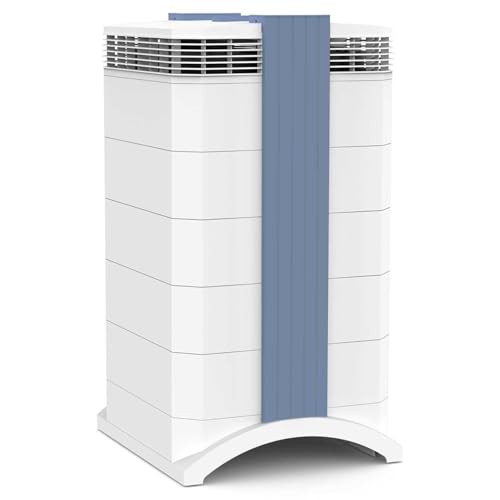
IQAir GC MultiGas XE Air Purifier — Best for Serious Gas and VOC Loads
The IQAir GC MultiGas XE is the pick whose entire design brief is the title of this article. Its Amazon title leads with activated carbon and names its targets — VOCs, chemicals, gases, odours, smoke — with coverage stated to 1125 square feet and WiFi control. This is a machine from a maker whose reputation rests on gas-phase filtration rather than on particle CADR alone.
Strengths
- Carbon is the headline technology, not an accessory stage
- Named targets match this brief exactly: VOCs, chemicals, gases, odours
- 1125 sq ft stated coverage suits large rooms and open plans
Trade-offs
- Premium-tier positioning — the seriousness is not cheap
- Gas-phase machines are larger and heavier than token-carbon rivals
- Carbon media is a consumable; heavy gas loads consume it faster
| Coverage | Up to 1125 sq ft (per Amazon title) |
| Carbon stage | Activated carbon (per Amazon title) |
| Control | WiFi enabled (per Amazon title) |
Understand what you are buying here: a purifier whose carbon stage is the product, with particle filtration in support, reversing the usual arrangement. For a home office over a garage, a house mid-renovation, a room that shares a wall with a smoker or a kitchen that hosts serious frying, that reversal is precisely correct — the nuisance is molecular, so the machine is molecular.
The WiFi control earns its place for a practical reason: gas events are episodic. A machine you can run up from another room when the paint comes out or the neighbour’s bonfire lights is a machine that gets used at the moments that matter, rather than humming at one dutiful speed through all of them.
No carbon bed is immortal, and this class of machine makes the economics plainest: the media does the work and the media is consumed. Budget for replacement media as part of ownership, and note the date you start each fill — odour breakthrough, not the calendar, is the honest signal that the carbon is spent.
Best for: homes with real VOC, chemical or smoke-gas loads / Not suited for: buyers whose problem is dust or pollen rather than gases
Check on Amazon — check the current price on Amazon before you order.

Austin Air HealthMate Plus Air Purifier B450 — Best Deep-Bed Carbon
Austin Air’s HealthMate Plus states its recipe in the title: four-stage filtration built on activated carbon and zeolite, coverage to 1,500 square feet, and a five-year filter life. Zeolite is the connoisseur’s detail — a mineral adsorbent that complements carbon, particularly against certain gases carbon alone handles less eagerly — and its presence signals a maker engineering the gas stage rather than decorating it.
Strengths
- Activated carbon plus zeolite is a deliberately engineered gas stage
- Five-year stated filter life transforms the running-cost calculation
- 1,500 sq ft stated coverage is the largest in this guide
Trade-offs
- Steel, boxy, unapologetically industrial design
- Five-year filter means a large single replacement cost when it arrives
- No smart features — this is a set-and-run machine
| Coverage | Up to 1,500 sq ft (per Amazon title) |
| Gas stage | Activated carbon and zeolite, 4-stage (per Amazon title) |
| Filter life | 5 years (per Amazon title) |
The five-year filter life deserves arithmetic attention. Token-carbon machines ask for fresh filters several times a year; a deep bed that serves for years costs more per change and far less per year, while also simply working better in month thirty than a thin sheet does in month three. For buyers tired of subscription-style filter churn, this machine’s economics are its luxury.
The trade is presence. This is a substantial steel box that looks like equipment, because it is. Put it where air matters more than decor — the bedroom corner, the living room’s working end — and let its quiet competence argue for it. Homes that need the purifier to disappear should look at the Winix or PuroAir picks instead.
A note on placement for deep-bed machines generally: their intake and exhaust patterns want clearance from walls and furniture. Give the machine the breathing room its manual asks for; a carbon bed starved of airflow by a sofa is an expensive ornament.
Best for: large rooms and buyers who hate filter churn / Not suited for: design-led rooms or smart-home enthusiasts
Check on Amazon — check the current price on Amazon before you order.

Oransi TrueCarbon 200C Carbon Air Purifier — Best Stated Carbon Weight
Oransi’s TrueCarbon 200C does the thing this guide wishes every maker did: it states its carbon weight. Three point two pounds of treated activated carbon, for odours, smoke smell, pet odours and VOCs, in rooms up to 375 square feet — every material fact in the title, checkable and comparable. It is a smaller-room machine, and it is the category’s transparency champion.
Strengths
- Stated carbon weight — 3.2 lb — lets buyers compare like with like
- Treated carbon targets odours and VOCs specifically
- Focused room size means the carbon is not spread thin over a palace
Trade-offs
- 375 sq ft ceiling excludes open-plan spaces
- A carbon specialist still needs its particle stage respected in smoky rooms
- Single-room machine: whole-home coverage means multiples
| Carbon | 3.2 lb treated activated carbon (per Amazon title) |
| Coverage | Rooms up to 375 sq ft (per Amazon title) |
| Targets | Odours, smoke smell, pet odours, VOCs (per Amazon title) |
Treated carbon is worth explaining. Plain activated carbon adsorbs broadly; treated or impregnated carbon is chemically enhanced to grip specific gas families more strongly — the difference between a net and a magnet. A maker who bothers to treat the carbon and then bothers to print the weight is a maker competing on the substance of this category, and the TrueCarbon’s title does both.
Its room ceiling is a virtue read correctly. Carbon works on contact time: air must pass through the bed slowly enough for molecules to be caught. A modest machine honestly rated to 375 square feet will outperform, in that room, a grandiose machine whose thin carbon is asked to process a hall. Match the machine to the room and the physics rewards you.
This is the pick for the defined problem room: the bedroom that catches the kitchen’s output, the study over the workshop, the nursery-adjacent space that smells of the dog. Defined room, defined nuisance, stated carbon — the cleanest purchase logic in the guide.
Best for: single problem rooms up to 375 sq ft / Not suited for: open-plan or whole-home coverage
Check on Amazon — check the current price on Amazon before you order.

WINIX 5510 Air Purifier — Best Large-Room All-Rounder
The WINIX 5510 — the current generation of the long-running 5500 line — pairs true HEPA with what its title calls a high deodorization carbon filter, claims up to 1881 square feet in one hour, and adds app support. It is the all-rounder: a particle machine of the first rank that also takes its carbon stage seriously enough to name it.
Strengths
- High deodorization carbon is a stated, named stage — not a token sheet
- True HEPA handles the particle half of smoke properly
- App support and auto behaviour suit set-and-forget households
Trade-offs
- Carbon depth is not stated in pounds — judge it as a strong sheet-class stage
- Hourly coverage figures assume maximum speed, which is not the quiet speed
- Replacement filters are a recurring cost to budget
| Coverage | Up to 1881 ft² in 1 hr (per Amazon title) |
| Particle stage | True HEPA (per Amazon title) |
| Carbon stage | High deodorization carbon filter (per Amazon title) |
Smoke is the test that justifies this pick’s design. Smoke is two pollutants wearing one name: particles, which HEPA catches, and gases, which give smoke its lingering smell and which only carbon addresses. A machine strong in only one half leaves the room half-cleaned — visibly clear but still smelling, or sweet-smelling under a haze. The 5510’s stated pairing is the balanced answer for living rooms where the problem arrives from fireplaces, kitchens and open windows alike.
The ‘in 1 hr’ coverage figure deserves the standard translation: it describes air processed at top speed. At the quiet speeds a machine can run beside conversation or sleep, effective coverage is smaller. Size the machine so your room sits comfortably inside its range, and it will clean at a murmur rather than a shout.
WINIX’s line has the other practical virtue of maturity: filters and parts are a known ecosystem. When you buy a purifier you buy its consumables pipeline for years, and a flagship from an established line is the safest version of that bet in this guide.
Best for: living rooms wanting one machine for particles and odours / Not suited for: purists wanting a stated carbon weight
Check on Amazon — check the current price on Amazon before you order.

AIRDOCTOR AD3500 Air Purifier — Best Coverage Claim
AIRDOCTOR’s AD3500 states up to 2520 square feet of coverage and pairs its particle filtration with a premium carbon filter, naming smoke and VOCs among its targets. It is the coverage maximalist of the list — the pick for great rooms, open plans and the large, high-ceilinged spaces where smaller machines go to be ignored.
Strengths
- Largest stated coverage in this guide — built for open plans
- Premium carbon filter stated, with VOCs named as a target
- Strong particle positioning for the smoke-and-dust half of the problem
Trade-offs
- Coverage claims are at maximum speed — real quiet-speed coverage is less
- Carbon weight not stated; ‘premium’ is a positioning word, not a measurement
- A large-coverage machine is physically large; measure its home
| Coverage | Up to 2520 ft² (per Amazon title) |
| Carbon stage | Premium carbon filter (per Amazon title) |
| Targets | Smoke, VOCs named (per Amazon title) |
Open-plan spaces defeat purifiers by arithmetic: the machine must process a volume, and volume is cubic, so high ceilings tax a purifier the way they tax a heater. A machine stating 2520 square feet of hourly coverage has headroom for exactly that tax, letting it run below maximum — and therefore below maximum noise — while still turning the room’s air over at a useful rate.
The carbon honesty note applies here as it does to the Winix: no weight is stated, so this guide ranks the AD3500 as a strong all-rounder with a serious carbon stage by positioning, below the stated-weight and deep-bed specialists on the carbon-specific axis. For a buyer whose problem is mixed — dust, smoke, cooking, life — that ordering may not matter; for a buyer whose problem is purely gaseous, it should.
As with all large machines, give it a permanent, central-ish home with clearance, rather than a corner it visits. A purifier’s real coverage is set by the air paths of your room, and a machine exiled behind furniture cleans the space behind the furniture beautifully.
Best for: open-plan and high-ceilinged spaces / Not suited for: small rooms, where its scale is wasted
Check on Amazon — check the current price on Amazon before you order.

PuroAir 240 HEPA Air Purifier — Best Bedroom-Scale
PuroAir’s 240 pairs its certified HEPA stage with a named CarbonTech filter for smoke and odour, adds a sensor-driven auto mode, and states coverage to 1000 square feet. It is the domestic-scale pick: the machine for the bedroom or office where the carbon problem is real but the room is not a hall.
Strengths
- Named CarbonTech carbon stage aimed at smoke and odour
- Sensor auto-mode runs the machine up only when the air demands it
- Bedroom-appropriate scale and quiet positioning
Trade-offs
- Carbon weight not stated — a named technology, not a measured bed
- 1000 ft² is its ceiling; open plans should look up the list
- Sensor-driven modes are only as good as the sensor’s placement and cleanliness
| Coverage | Up to 1000 ft² (per Amazon title) |
| Carbon stage | CarbonTech filter (per Amazon title) |
| Particle stage | Certified HEPA (per Amazon title) |
The auto mode is this pick’s quiet argument. Odour and smoke events are episodic — a cooking session, a neighbour’s fire pit, a windy day through an old window — and a sensor that answers them at strength, then settles back to near-silence, matches a machine to real life better than any fixed speed. In a bedroom, where a purifier must be forgotten to be tolerated, that behaviour is the product.
Its carbon positioning sits honestly in the middle of this guide: a named carbon technology from a maker whose range is built around it, without a stated weight to rank against the Oransi or a deep bed to rank against the Austin Air. For the mixed bedroom load — dust, dander, the smell of both — that middle is where most households actually live.
Keep the sensor’s little window clean when you wipe the machine down; a dust-filmed sensor reads a permanently clean room and never answers an event. It is the smallest maintenance task in this guide and the one this particular pick depends on most.
Best for: bedrooms and offices with mixed particle and odour loads / Not suited for: serious chemical or renovation VOC loads
Check on Amazon — check the current price on Amazon before you order.
Comparison Table
| Pick | Badge | Key spec | Best for |
|---|---|---|---|
| IQAir GC MultiGas XE Air Purifier | Best for Serious Gas and VOC Loads | Activated carbon, 1125 sq ft, WiFi enabled (per Amazon title) | homes with real VOC, chemical or smoke-gas loads |
| Austin Air HealthMate Plus Air Purifier B450 | Best Deep-Bed Carbon | Activated carbon and zeolite, 4-stage, up to 1,500 sq ft, 5-year filter life (per Amazon title) | large rooms and buyers who hate filter churn |
| Oransi TrueCarbon 200C Carbon Air Purifier | Best Stated Carbon Weight | 3.2 lb treated activated carbon filter, rooms up to 375 sq ft (per Amazon title) | single problem rooms up to 375 sq ft |
| WINIX 5510 Air Purifier | Best Large-Room All-Rounder | True HEPA, high deodorization carbon filter, up to 1881 ft² in 1 hr, app support (per Amazon title) | living rooms wanting one machine for particles and odours |
| AIRDOCTOR AD3500 Air Purifier | Best Coverage Claim | Premium carbon filter, up to 2520 ft², targets smoke and VOCs (per Amazon title) | open-plan and high-ceilinged spaces |
| PuroAir 240 HEPA Air Purifier | Best Bedroom-Scale | CarbonTech filter, 1000 ft², sensor auto-mode (per Amazon title) | bedrooms and offices with mixed particle and odour loads |
How to Choose a Carbon Air Purifier
Decide first whether your problem is gas, particles or both, because the machines diverge there. Lingering smells, renovation fumes, smoke odour after the haze has cleared — that is gas, and it is carbon’s job; weight and depth of the carbon stage decide success. Visible dust, pollen and dander are particles, HEPA’s job. Real smoke is both at once, which is why the balanced picks pair a real HEPA with a named carbon stage rather than excelling at one and gesturing at the other.
Second, interrogate the carbon claim. A stated weight in pounds is the gold standard, as the Oransi shows. A named carbon technology or a stated blend — carbon with zeolite, as in the Austin Air — is the next tier of evidence. The bare words ‘carbon filter’ with no weight, no name and no blend are the category’s fig leaf; such machines may still be fine particle purifiers, but buy them as particle purifiers and expect little from their carbon.
Third, size by honest coverage. Stated areas assume maximum speed; the machine you can sleep beside works a smaller room. Choose a machine whose stated coverage comfortably exceeds your room, place it with clearance, and let it run low and constant — carbon rewards contact time, and a big machine murmuring moves more clean air than a small machine straining.
How Activated Carbon Works — and How It Wears Out
Activated carbon is carbon processed into a labyrinth: a single gram can hold thousands of square metres of internal surface, and gas molecules stick to that surface as air passes — adsorption, a surface capture, not a sieve. Two consequences follow. Capacity is finite and proportional to mass, which is why carbon weight is the honest specification. And capture depends on dwell time, which is why slow, steady airflow through a deep bed beats a frantic blast through a thin one.
Exhaustion announces itself as odour breakthrough: the smell the machine used to erase starts surviving it. There is no reliable countdown timer for carbon, because life depends on the load — a machine fighting daily smoke may spend its carbon in months, while the same machine in a fresh-air suburb serves for years. This is why deep beds and stated weights matter economically as well as technically: they convert an unpredictable consumable into a plannable one.
Humidity and heat are carbon’s working conditions, not its enemies, at household levels — but a carbon stage placed after a saturated particle filter starves, because clogged pre-filtration strangles the airflow the carbon needs. Maintain the particle stage on schedule and the carbon stage gets the air it was promised.
Placement, Running and the Discipline of Constant Air
Purifiers clean the air that reaches them, so placement is performance. Give the machine clearance on its intake and exhaust sides, keep it in the room where the problem lives rather than the room where it fits, and resist the corner behind the sofa. For smoke drifting from a known direction — a window, a door — placing the machine between the source and the people intercepts the load before it dilutes into the whole room.
Run carbon machines constantly at low speed rather than heroically at high speed after events. Constant running keeps the room’s background odour at zero, so events start from clean and end sooner, and it suits carbon’s preference for dwell time. Save the top speeds for the event itself — the frying session, the paint hour — then let the machine settle back to its murmur. That rhythm, more than any single specification, is how the households in this category’s reviews end up satisfied.
Replacement Filters Are Not Purifiers: A Category Warning
Searches for carbon purifiers return a thicket of replacement filters, carbon sheets and cut-to-fit pads, several of which appeared in this guide’s own verification results and were excluded. Some are excellent consumables for machines their makers support; none of them purifies a room by itself. A buyer who orders a bargain ‘carbon air purifier’ and receives a filter cartridge has been failed by a listing title, and the defence is the discipline this guide used: the pick must be a machine, with a fan, a housing and a stated coverage, before its carbon is even discussed.
The same warning runs in reverse for owners: when your machine’s carbon is spent, the genuine replacement media — matched to the model — is what restores it. Third-party carbon of unknown weight and treatment is a gamble with the one specification this entire category turns on.
Smoke, Cooking and Renovation: Matching Machine to Source
Different gas sources reward different picks, and naming your source sharpens the choice. Cooking odour is episodic and greasy: it wants a machine near the kitchen’s air path with a particle stage that can take the aerosol load, and the balanced Winix or PuroAir behaviour — sensor up, then settle — fits it. Wood and tobacco smoke are mixed particle-and-gas assaults, wanting HEPA strength and carbon depth together, which is the flagship picks’ brief.
Renovation VOCs are the heavyweight case: continuous, chemical and concentrated in one room for weeks. That is the IQAir’s and the deep-bed Austin Air’s natural work, run constantly in the room being worked on, with windows used intelligently alongside. No purifier makes a freshly painted room instantly habitable, and this guide claims none does — but a serious carbon machine shortens the fume season measurably, which is the honest version of the promise.
CADR, Coverage and Other Numbers That Need Translating
Purifier numbers are honest but incomplete, and two translations protect buyers. Coverage areas are calculated at maximum fan speed in test conditions; the usable figure for a machine you will live beside is lower, which is why this guide repeats the sizing rule — buy coverage headroom and run slow. CADR figures, where makers publish them, measure particle delivery; they say nothing about gas performance, which is why a particle champion can be a carbon weakling and why this brief cannot be shopped by CADR alone.
The carbon equivalents of CADR — weight, bed depth, treatment — are less standardised, which is precisely why makers who state them deserve the ranking advantage this guide gives them. In an unstandardised field, the voluntary number is the trustworthy one.
Renters, Landlords and the Smell of the Previous Tenant
A common carbon brief arrives with a new tenancy: the previous occupant’s cooking, smoking or pet history embedded in a flat that ventilation alone will not clear. A serious carbon machine run constantly for the first weeks attacks exactly that residue — the gas-phase fraction that cleaning surfaces cannot reach — while the particle stage handles the dust the move itself raises. The Oransi’s defined-room honesty and the flagship machines’ depth both serve here.
Set expectations by physics: embedded odour lives in soft furnishings and paint as well as air, and a purifier cleans air, not upholstery. Combined with washing what can be washed, though, a carbon machine turns the corner on a stale flat faster than any other single purchase, which is why letting agents themselves keep them.
When the Answer Is Ventilation Instead
Honesty requires one section for the cases where a purifier is the second-best tool. A continuous indoor source — an unvented appliance, a hobby that generates fumes daily, a smoking room in constant use — is a source problem, and source control plus ventilation beats filtration economics every time: carbon spent fighting a perpetual source is carbon bought forever. Seal, vent or relocate the source first, then let the purifier polish what remains.
The same applies outdoors-in: if the smoke or smell arrives through one window from one neighbour at predictable hours, closing that window during those hours outperforms any machine. This guide sells purifiers for the large remainder of cases — episodic, diffuse, or source-controlled problems — where carbon’s quiet, constant work is genuinely the best tool available.
Filter Economics Across a Machine’s Life
Total the consumables before admiring the machine. Token-carbon designs ask for frequent, cheap filters; deep-bed designs ask rarely and largely; named-technology designs sit between. Over five years the cheap machine can cost the diligent owner more than the flagship — and the undiligent owner, who stretches filters past their life, simply owns a fan with delusions. Buy the filter schedule you will actually keep.
Keep spares for the particle stage if your home is dusty, since a starved machine underperforms long before its indicator complains, and log carbon start dates as this guide’s setup section directs. A purifier maintained on evidence rather than reminders is the difference between the category’s satisfied majority and its disappointed reviewers.
A Word on Fragrance Features and Ionisers
Two features appear in this category’s wider listings that this guide deliberately did not reward. Fragrance stages and aromatherapy pads mask odour rather than removing it — the gas load remains, wearing perfume — and a buyer with a genuine odour problem deserves removal, which is carbon’s work. Machines that led their titles with fragrance were passed over for this brief, however competent their filtration might also be.
Ionisation features divide opinion and are unnecessary to this brief’s goal: carbon and HEPA, properly sized, handle gases and particles without additional air chemistry. This guide’s picks were chosen on the two proven stages and their stated specifications. Simplicity in a machine that runs for years in a bedroom is a feature, and the shortlist reflects it.
Why This Guide Ranks Evidence Over Brand Size
The carbon category inverts the usual shopping logic. The biggest appliance brands sell excellent particle purifiers whose carbon stages are afterthoughts, while smaller specialists — an Oransi stating its carbon weight, an Austin Air blending zeolite — build their whole proposition on the gas stage. A buyer loyal to a famous name can therefore buy the category’s weakest relevant product with complete confidence and be disappointed for years.
The ranking here follows the evidence instead: stated weights, named blends, deep beds, and titles that put carbon in the headline rather than the footnotes. Brand still matters for filters, parts and longevity of support — the Winix pick earns its place partly on ecosystem — but on the carbon question itself, the specification is the brand. Shop it that way and the category becomes simple.
How to Set Up a Carbon Purifier for a Problem Room
Twenty minutes of placement and routine-setting decides whether the machine earns its keep.
- Name the source first — kitchen, window, fireplace, renovation room — and place the machine between the source and the people, with clearance on all vented sides.
- Remove every filter’s packaging film before first run; more purifiers underperform from an unwrapped-in-error filter than from any defect.
- Run the machine at its highest speed for the first hour in the problem room to establish a clean baseline, then settle it to auto or a low constant speed.
- Set the routine: constant low running as the default, manual high speed during known events like cooking or painting.
- Note the start date of the carbon stage somewhere durable — breakthrough odour plus this date tells you your household’s true carbon lifespan.
- Wipe the exterior and any sensor window monthly, and vacuum or replace the particle pre-stage on the maker’s schedule so the carbon keeps its airflow.
Judge the setup after a week of real life, not the first evening: the right machine in the right place makes you stop thinking about the room’s smell, which is the entire product. If you are still thinking about it, move the machine before you blame it — placement fixes more disappointments than returns do.
If the problem room is a bedroom, run the first week with the machine’s display and indicator lights set as dim as they allow; a purifier that disturbs sleep will be switched off, and a switched-off purifier has a coverage of exactly zero square feet.
Common Buying Mistakes
Mistake one: buying a particle purifier for a gas problem. A superb HEPA machine will leave a smoky-smelling room visibly clean and olfactorily untouched, because gases pass through it. Mistake two: accepting the words ‘carbon filter’ as a specification. Without a weight, a named technology or a stated blend, you know nothing about the stage that matters most for this brief.
Mistake three: undersizing by the headline coverage and then running the machine at sleep-destroying speeds to compensate. Mistake four: treating carbon as immortal and blaming the machine when breakthrough odour announces a spent bed. Mistake five: exiling the purifier to a corner behind furniture and concluding that purifiers do not work. The physics in this guide is unforgiving but simple: enough carbon, enough airflow, enough time.
Mistake six: running the machine only when you notice a smell. By the time a room smells, its air has been loading your soft furnishings for hours, and the purifier must then clean the room twice — once in the air, once as the furnishings give the odour back. Constant low running prevents the loading in the first place, uses the carbon’s dwell-time advantage, and costs less electricity than the heroic purges it replaces. Set it, forget it, and let breakthrough — not your nose’s daily commute — be the only smell event you ever notice.
Final Recommendation
For a serious gas-phase problem, the IQAir GC MultiGas XE is this guide’s first call, with the deep-bed Austin Air HealthMate Plus the value-in-longevity alternative. Defined problem rooms belong to the transparently specified Oransi TrueCarbon 200C, and mixed particle-and-odour households to the balanced WINIX 5510. Choose by your source and your room, size generously, and keep the carbon’s start date — the machine will do the rest quietly.
A closing calibration: a carbon purifier is not an air freshener with a fan, and it is not a medical device; it is a chemical filter with a service life, and it rewards the buyer who treats it as one. Specify the carbon, size for quiet running, place it on the problem’s path, and record the media’s birthday. Do those four things with any pick above and the room simply stops smelling of anything but itself — which, for the households this brief serves, is the whole point of the purchase.
Keep reading in this series: Best Air Purifiers For Fire Smoke Removal Best Air Purifiers For Wood Smoke Best Charcoal Filter Air Purifiers Best Air Purifiers For Smells Best Air Purifiers For Dust Best Air Purifiers Under $100
Frequently Asked Questions
What is the difference between a carbon filter and a HEPA filter?
They catch different pollutants by different means. HEPA is a dense particle sieve that traps dust, pollen, dander and smoke particles. Activated carbon adsorbs gases — odours, smoke smell, VOCs — onto its vast internal surface. Smoke needs both, which is why the balanced picks in this guide pair a genuine HEPA with a serious carbon stage.
How much activated carbon is enough?
More than a sheet. A stated weight in pounds is the honest benchmark: the Oransi in this guide states 3.2 lb for a single room, and deep-bed machines carry substantially more for whole large rooms. A purifier that will not state any carbon quantity should be assumed to carry a token amount until proven otherwise.
How long does activated carbon last?
Until its surface is loaded, which depends entirely on the gas load it faces — months under daily smoke, years in a low-odour home. The reliable signal is odour breakthrough: when smells the machine used to remove start surviving it, the carbon is spent, whatever any indicator says.
Can a carbon purifier remove cooking smells?
Yes, that is core carbon work — cooking odour is gas-phase, and a machine with a real carbon stage, placed on the kitchen’s air path and run up during cooking, will clear it far faster than ventilation alone. Grease aerosol is the particle half of the problem, so keep the pre-filter maintained.
Do I need a purifier in every room?
Purifiers clean the room they are in; air does not commute between rooms fast enough to share one machine across a home. Prioritise the problem room — bedroom first for most households, since you spend a third of your life breathing there — and add machines by need, not by symmetry.
Are carbon purifiers noisy?
At low constant speeds, the picks here are background-level; at maximum speed, any machine moving serious air is audible. That is why this guide insists on sizing generously: a large machine at low speed is quieter than a small machine at full effort, while cleaning more air.


