Disclosure: airfryerkitchensupply.com is reader-supported. When you buy through links on our site, we may earn an affiliate commission at no extra cost to you.
Where to Buy
The verified picks in this guide are sold through Amazon, where you can check price on Amazon for the exact colour and configuration you want. With air purifiers, also check the live listing for the current filter-replacement details, since the filter — not the machine — is the long-term relationship.
- WINIX 5510 Air Purifier — Best Overall: Check on Amazon
- Austin Air HealthMate Plus Air Purifier — Best Heavy-Duty Odor Control: Check on Amazon
- IQAir GC MultiGas XE Air Purifier — Best Premium for Odors and Gases: Check on Amazon
- Oransi TrueCarbon 200C Carbon Air Purifier — Best Dedicated Odor Specialist: Check on Amazon
- Rabbit Air MinusA2 SPA-780A Air Purifier, Odor Remover — Best Quiet, Wall-Mountable: Check on Amazon
- Levoit Core 300-P Air Purifier — Best Budget for Pet Odors: Check on Amazon
Shopping for the best air purifiers deodorizer for pet odors starts with the one fact the whole category is built around — and the one most listings hope you never learn. Pet odor is mostly gas. The smell of a litter box, a dog bed or a ferret cage is carried by molecules — ammonia and a family of volatile compounds — that are far too small for a HEPA filter to catch. HEPA is magnificent at particles: dander, hair, dust, pollen. But a purifier can scrub every particle out of a room and leave the smell entirely untouched, because odor needs a different weapon: activated carbon, in real quantity, which adsorbs gas molecules onto its enormous internal surface. A dusting of carbon in a thin filter sheet is marketing. Pounds of carbon is deodorizing.
That is why this guide is organised by carbon, not by brand fame. The six picks all take odor seriously in verifiably different ways: the WINIX 5510 with its high-deodorization carbon filter, the Austin Air HealthMate Plus with activated carbon and zeolite in a filter built to last years, the IQAir GC MultiGas with a gas-phase system from the premium end of Swiss engineering, the Oransi TrueCarbon — a machine that is essentially a 3.2-pound carbon filter with a fan attached — the Rabbit Air MinusA2 in its odor-remover configuration, and the Levoit Core 300-P as the honest budget entry for pet odor in smaller rooms. Every one was confirmed against Amazon’s catalogue data before earning its link.
One expectation to set honestly at the start: a purifier manages airborne odor in the room it stands in. It does not clean the litter box, wash the dog bed or reach inside the sofa cushions, and the homes that smell best pair a good purifier with source habits — litter discipline, washable bedding, ventilation. The how-to section in this guide treats the purifier as one part of that system, because that is how the results people actually want are achieved.
In this guide
Quick Picks
These six picks cover the realistic spread of pet-odor purification, from a dedicated carbon specialist for one smelly room to whole-floor machines for multi-pet homes. Each badge is used again at the top of its full review below.
- WINIX 5510 Air Purifier — Best Overall. True HEPA plus a high-deodorization carbon filter and auto mode, for large rooms up to 1,881 ft² in an hour: Check on Amazon
- Austin Air HealthMate Plus Air Purifier — Best Heavy-Duty Odor Control. Four-stage filtration with activated carbon and zeolite, up to 1,500 sq ft, and a filter life measured in years: Check on Amazon
- IQAir GC MultiGas XE Air Purifier — Best Premium for Odors and Gases. Activated carbon gas-phase filtration for VOCs, chemicals, gases and odors across 1,125 sq ft: Check on Amazon
- Oransi TrueCarbon 200C Carbon Air Purifier — Best Dedicated Odor Specialist. 3.2 lb of treated activated carbon for pet odors and VOCs in rooms up to 375 sq ft, with no ozone: Check on Amazon
- Rabbit Air MinusA2 SPA-780A Air Purifier, Odor Remover — Best Quiet, Wall-Mountable. An ultra-quiet HEPA purifier in its odor-remover configuration that can mount on a wall, out of paw range: Check on Amazon
- Levoit Core 300-P Air Purifier — Best Budget for Pet Odors. A pet-focused HEPA purifier with a quiet sleep mode, AHAM Verifide, for rooms up to 1,073 ft²: Check on Amazon
How These Picks Were Chosen
Every purifier here was verified against Amazon’s own catalogue data before it earned a link — the model in each review is the model the listed. Beyond verification, the first filter was odor hardware, stated in the maker’s own catalogue language: a named deodorization carbon filter (WINIX), activated carbon with zeolite (Austin Air), an activated-carbon gas-phase system (IQAir), a weighed quantity of treated carbon — 3.2 lb (Oransi) — an explicit odor-remover configuration (Rabbit Air), or a pet-odor-specific filter design (Levoit). Machines whose odor claims rested on a fragrance sponge or an ionizer alone did not pass; fragrance masks odor rather than removing it, and this guide is about removal.
The second filter was room logic. Pet odor lives in specific places — the litter-box room, the dog’s sleeping corner, the multi-pet living room — and the picks span the real range: a 375 sq ft specialist for the one problem room, mid-size machines for bedrooms and living rooms, and large-room machines rated past 1,500 sq ft for open-plan, multi-pet homes. The third filter was ownership honesty: filter life and replacement burden are stated where the catalogue states them — Austin Air’s multi-year filter life is a genuine ownership advantage, while compact machines with small carbon beds will need their filters changed on schedule or their odor performance quietly expires, a truth the reviews and the care section both insist on.
Excluded, deliberately: plug-in ionizers and tiny desktop “purifiers” with no meaningful carbon, which cannot move or treat enough air to matter in a real room; ozone generators, which are not a responsible answer in occupied homes; and scented solutions of every kind. What remains is six machines that remove odor by adsorption and particles by filtration, in proportions this guide states plainly for each.
Noise was the quiet fourth filter. A deodorizer only works while it runs, and machines that drone get switched off — by light sleepers, by television watchers, and, in the saddest cases, by the pets themselves. The picks span the sensible range: an explicitly ultra-quiet design for bedrooms in the Rabbit Air, sleep modes in the compact picks, and larger machines whose working speeds are meant for living spaces where a fan’s murmur disappears under ordinary life. When you place your machine, judge its sound at the speed it will actually run at midnight, not at the turbo speed it demonstrates at noon — midnight is when the purchase is kept or regretted.
The 6 Best Air Purifiers Deodorizer for Pet Odors

WINIX 5510 Air Purifier — Best Overall
The WINIX 5510 is the most complete answer for most pet homes: the current generation of the long-running 5500-series design, with app support, true HEPA filtration and — the phrase that earns it this guide’s top spot — a high deodorization carbon filter, built for large rooms up to 1,881 ft² in an hour. It captures pet allergens and smoke on the particle side while its carbon stage does the odor work, and auto mode lets it respond to the room rather than running blind.
Strengths
- A carbon filter specified for deodorization, not merely present — the distinction this entire guide turns on.
- True HEPA for the particle half of the pet problem: dander, hair and dust, handled in the same machine.
- Large-room rating and auto mode make it a set-and-forget anchor for open-plan, multi-pet homes.
Trade-offs
- The carbon filter is a consumable: its deodorizing power fades as it saturates, and replacements are a running cost of ownership.
- Large-room machines are not small furniture; measure its footprint against the corner you intend.
- For a single small litter room, it is more machine than the problem needs — the Oransi below is the surgical tool.
The 5510’s real virtue is balance under real conditions. Pet odor in a lived-in home is not a laboratory constant; it spikes when the litter box is used, when the dog comes in wet, when the house has been closed all day. A purifier with a serious carbon stage and an auto mode that ramps when the air worsens meets that rhythm, and the WINIX family’s long production history means filters stay available and the design’s quirks are known quantities. For the household that wants one machine, in the main living space, handling both the smell and the shedding, this is the default recommendation — the purifier equivalent of buying the reference product.
Best for: multi-pet homes and large living spaces wanting one machine for both odor and dander. / Not suited for: tiny single rooms, or owners unwilling to replace carbon filters on schedule.

Austin Air HealthMate Plus Air Purifier — Best Heavy-Duty Odor Control
The HealthMate Plus is the heavy artillery: a four-stage filtration system built around activated carbon and zeolite — zeolite being the mineral adsorbent that pairs with carbon particularly well against ammonia-family odors, the litter box’s signature — covering up to 1,500 sq ft, with a filter life the maker states at five years. In a category of quarterly consumables, a machine whose filter is measured in years is a different ownership proposition entirely.
Strengths
- Activated carbon plus zeolite: the adsorbent pairing aimed squarely at stubborn household and pet odors.
- A stated five-year filter life — the lowest filter burden in this guide by an enormous margin.
- Serious coverage up to 1,500 sq ft from a single, steel-bodied, built-to-last machine.
Trade-offs
- A substantial, utilitarian unit; it looks like equipment because it is equipment.
- The premium tier, justified by filter longevity — buyers should do the multi-year maths rather than flinch at the entry point.
- No app or smart layer in this design; it is a set-the-dial appliance in the best sense.
Choose the HealthMate Plus when odor is not a nuisance but a condition of the house: multiple large dogs, a cattery room, a home where animals live in numbers and the smell has defeated lesser machines. The carbon-and-zeolite bed is deep enough to keep adsorbing long after thin carbon sheets have saturated, and the five-year filter horizon changes the relationship from subscription to appliance. It is also the pick for the chemically cautious household, since the same adsorbent bed that takes pet odor takes household VOCs and cleaning-product fumes as they pass. Heavy, plain and profoundly effective at its one job — this is the deodorizer for people who have stopped experimenting.
Best for: serious multi-pet homes, persistent odor problems, and buyers who value filter longevity over smart features. / Not suited for: small rooms, design-led interiors, or app enthusiasts.
IQAir GC MultiGas XE Air Purifier — Best Premium for Odors and Gases
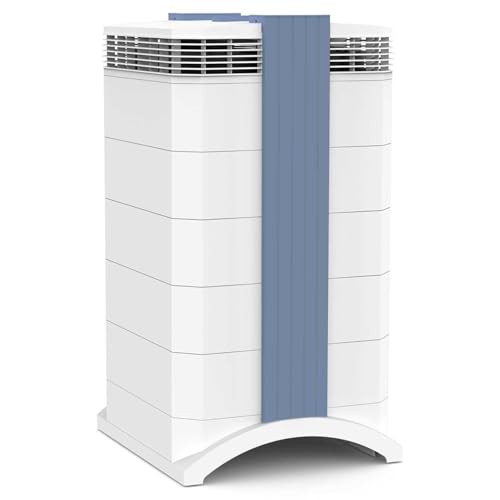
The GC MultiGas XE is the premium expression of gas-phase purification: a Swiss-made IQAir system with activated carbon filtration aimed at VOCs, chemicals, gases and odors, WiFi enabled, covering 1,125 sq ft. Where most purifiers treat odor as a feature, the MultiGas treats gas removal as the product — the machine for homes where pet odor arrives mixed with other chemical concerns, from new furnishings to workshop fumes drifting through a shared space.
Strengths
- A dedicated gas-phase design from the premium end of air purification — carbon as the headline, not the footnote.
- Broad chemical coverage (VOCs, gases, odors) that makes it the whole-house answer for sensitive households.
- Swiss engineering and build, with the service and parts ecosystem that tier implies.
Trade-offs
- The summit tier of this guide by a wide margin; it should be bought by households who need its breadth, not its badge.
- A substantial floor unit on wheels — plan its position as furniture, not as an accessory.
- For a simple one-cat litter corner, its capabilities are mostly surplus; the Oransi solves that room for a fraction of the commitment.
The MultiGas earns its place in a pet-odor guide because pet homes are rarely only pet homes. The house with three cats may also have a new sofa off-gassing, a smoker on the porch, a garage below the bedroom. A machine that treats the whole gas family at once ends the whack-a-mole of single-issue devices. It is also the recommendation for households with chemical sensitivities, where the margin for error is smallest and the cost of under-buying is measured in headaches rather than embarrassment. Premium, deliberate and complete — the connoisseur’s deodorizer.
Best for: sensitive households, mixed odor-and-chemical problems, and buyers purchasing the definitive machine once. / Not suited for: single small rooms, tight budgets, or minimalists.

Oransi TrueCarbon 200C Carbon Air Purifier — Best Dedicated Odor Specialist
The TrueCarbon 200C is the most honest machine in this guide, because its concept fits in one line from its own catalogue description: a carbon air purifier for odors, smoke smell, pet odors and VOCs, built around 3.2 lb of treated activated carbon, for rooms up to 375 sq ft, with no ozone, assembled in the USA. It does not pretend to be a whole-house particle system. It is a carbon bed with a fan, placed in the room where the smell lives — and for that specific job, nothing else here is as direct.
Strengths
- A weighed, stated quantity of treated activated carbon — 3.2 lb — rather than an unquantified carbon sheet.
- Purpose-sized for the problem room: litter-box rooms, utility rooms, the dog’s room, up to 375 sq ft.
- No ozone, by design and by statement — the responsible way to deodorize an occupied home.
Trade-offs
- A specialist: particle and allergen duty is not its mission, so dander-heavy homes should pair it with a HEPA machine or choose the WINIX.
- Room-size ceiling is real — it will not rescue an open-plan floor, and should not be asked to.
- Carbon saturates: in a heavy-odor room, plan on the filter’s service life rather than discovering it by nose.
Every pet household has the room — the one guests are steered away from, the one whose door stays closed. The TrueCarbon exists for that room, and its discipline is its charm: instead of diluting a general purifier across the whole house, it concentrates serious carbon exactly at the source, where odor concentration is highest and adsorption works hardest. Put it by the litter boxes, run it continuously, and the closed-door room becomes a room again. As a second machine alongside a main HEPA purifier, it is also the smartest money in this guide: specialists at the source, generalists in the living space.
Best for: litter-box rooms, utility and pet rooms up to 375 sq ft, and as the odor specialist beside a main purifier. / Not suited for: whole-house particle control or large open spaces.
Rabbit Air MinusA2 SPA-780A Air Purifier, Odor Remover — Best Quiet, Wall-Mountable
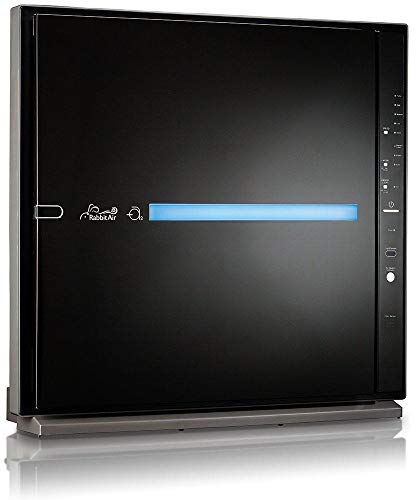
The MinusA2 in its SPA-780A odor-remover configuration brings two gifts no other pick matches: it is ultra-quiet, and it can mount on a wall. For pet households, wall-mounting is not a design flourish — it lifts the machine out of the territory of curious paws, wagging tails and the occasional territorial opinion a pet may express about floor appliances. Its HEPA filtration handles particles while its odor-remover configuration addresses smell, in a slim unit that reads as interior design rather than equipment.
Strengths
- Ultra-quiet operation suited to bedrooms and nurseries, where pet odor and light sleep coexist.
- Wall-mountable: floor space saved, pets kept away from the machine, machine kept away from pets.
- An odor-remover configuration of a long-established, design-led purifier line.
Trade-offs
- Premium positioning for its coverage class; you are paying for quiet, design and the mount as well as filtration.
- Its carbon capacity is that of a refined room purifier, not a carbon specialist — the heaviest odor loads belong to the Austin Air or Oransi.
- Wall-mounting is a small project; renters should confirm they may drill before choosing that route (it also works freestanding).
The Rabbit Air is the pick for the bedroom problem, which is a specific and common one: the dog sleeps in the bedroom, the bedroom must smell like a bedroom, and the machine that fixes it must be inaudible at 2 a.m. and invisible at noon. The MinusA2’s whole design language — slim, quiet, mountable, customisable in appearance — serves exactly that brief. It is the deodorizer for households that rejected the category because purifiers looked and sounded like appliances, and it earns its premium by disappearing.
Best for: bedrooms, design-conscious homes, and pet households wanting quiet, out-of-the-way purification. / Not suited for: the heaviest odor loads, or buyers maximising carbon per unit of money.

Levoit Core 300-P Air Purifier — Best Budget for Pet Odors
The Core 300-P is the accessible door into real pet-odor control: a pet-focused model in Levoit’s long-running Core line, with HEPA filtration, a quiet sleep mode, AHAM Verifide performance, and coverage stated up to 1,073 ft² — with its own catalogue language naming pet odor among its targets. It is the machine for the one-pet bedroom or the first apartment with a cat, where the problem is real but modest and the budget is a fact of life.
Strengths
- Pet-specific positioning in a proven, widely supported purifier line — filters and parts are easy to keep flowing.
- AHAM Verifide rating, so its air-delivery claims rest on a verifiable standard rather than adjectives.
- Quiet sleep mode that suits the bedroom placements where pet odor matters most personally.
Trade-offs
- Its carbon stage is a compact filter’s carbon stage: fine for one pet’s ambient odor, outmatched by multi-pet or litter-room loads.
- Filter replacements come around more often than the big machines’ — the budget is in the purchase, the discipline is in the upkeep.
- Coverage figures are the maker’s maximums; a heavily furnished real room will always ask more of a purifier than an empty test chamber does.
Buy the Core 300-P with clear eyes and it will not disappoint: one cat, one bedroom, litter box in the ensuite — that is its parish, and within it, it genuinely freshens the air and strips the dander that makes guests’ eyes water. The mistake to avoid is scaling it by hope: three dogs and an open-plan floor will defeat it, not because it is a poor machine but because odor load is arithmetic. Start here if your arithmetic is small; start with the WINIX if it is not. Either way, you are inside the world of machines that actually deodorize, which is the only world this guide is interested in.
Best for: one-pet bedrooms and apartments, first purifier purchases, and modest ambient odor. / Not suited for: multi-pet homes, litter rooms, or large open spaces.
Comparison Table
| Pick | Badge | Key spec | Best for |
|---|---|---|---|
| WINIX 5510 Air Purifier | Best Overall | True HEPA + high deodorization carbon filter, auto mode, up to 1,881 ft² | Multi-pet living spaces |
| Austin Air HealthMate Plus | Best Heavy-Duty Odor Control | Activated carbon + zeolite, up to 1,500 sq ft, 5-year filter life | Persistent, heavy odor loads |
| IQAir GC MultiGas XE | Best Premium for Odors and Gases | Activated carbon gas-phase system, VOCs/gases/odors, 1,125 sq ft | Sensitive households, mixed chemical odors |
| Oransi TrueCarbon 200C | Best Dedicated Odor Specialist | 3.2 lb treated activated carbon, up to 375 sq ft, no ozone | Litter-box and pet rooms |
| Rabbit Air MinusA2 SPA-780A Odor Remover | Best Quiet, Wall-Mountable | Ultra-quiet HEPA, odor-remover configuration, wall-mountable | Bedrooms, design-conscious homes |
| Levoit Core 300-P | Best Budget for Pet Odors | Pet-focused HEPA, sleep mode, AHAM Verifide, up to 1,073 ft² | One-pet bedrooms and apartments |
How to Choose the Best Air Purifiers Deodorizer for Pet Odors
Begin by locating your odor. Pet smell is not evenly distributed through a house; it concentrates at sources — litter boxes, beds, cages, the dog’s favourite chair — and dilutes from there. A purifier placed at the source outperforms a bigger purifier placed across the house, because adsorption works on concentration. So the first choosing question is geographic: is your problem one room (choose the Oransi specialist or the Levoit for light duty), the main living space (WINIX, Austin Air), a bedroom (Rabbit Air, Levoit), or the whole home’s air character (IQAir)? Buy for the geography you have, not the floor plan you imagine.
Next, weigh the carbon — literally, where the maker lets you. Odor capacity is carbon mass times contact time. A stated weight, like the Oransi’s 3.2 lb of treated carbon, or a deep adsorbent bed like the Austin Air’s carbon-and-zeolite, tells you the machine can keep working for months; an unquantified carbon-impregnated sheet in a compact filter tells you it will help for weeks. Match the carbon to the load: the number of animals, their size, the litter arrangements and how closed your house stays in winter. Under-buying carbon is the category’s most common false economy, because a saturated filter fails silently — the fan still spins, the lights still glow, and the smell quietly returns.
Then confirm the particle side and the practicalities. Dander and hair ride along with every pet odor problem, so a true HEPA stage matters unless the machine is a deliberate specialist like the Oransi. Check the verified coverage ratings against your room’s real size, prefer auto mode if the machine will live in a social space, and put the filter-replacement schedule and availability into the purchase decision itself — a purifier is a filter subscription wearing a fan, and the households that stay fresh are the ones that treat filter changes as calendar events rather than discoveries.
How to Deodorize a Pet Home: The System Around the Purifier
A purifier is the last metre of a system that starts at the source. Run the whole system and the machine in the middle will seem miraculous; skip the system and even the best machine fights uphill.
- Place the purifier near the odor source, with clearance around its intake and outlet — not hidden behind furniture, where it will diligently purify the back of a sofa.
- Run it continuously on auto or a steady medium setting. Odor is produced continuously; a purifier used for an hour after guests are announced is theatre, not treatment.
- Keep the source honest: litter scooped daily and fully changed on schedule, pet bedding washed weekly, cages and trays cleaned before they announce themselves. Every gram of odor never produced is a gram the carbon never has to catch.
- Vacuum soft furnishings and floors regularly — dander and hair are the particle reservoir that keeps re-seeding both smell and allergens into the air the purifier must clean.
- Ventilate when weather allows. Ten minutes of open windows does dilution work no machine matches, and it rests the carbon bed for the hours the house is closed.
- Change filters on schedule — carbon when its service life ends, not when you remember. Mark the date on the filter itself with a pen; your nose adapts to your own home’s smell and cannot be trusted as the gauge.
Carbon, Explained: Adsorption, Saturation and Treated Carbon
Activated carbon earns the word “activated”: it is carbon processed into a labyrinth of microscopic pores, giving a single gram an internal surface area on the scale of a tennis court. Odor molecules that wander into those pores stick — adsorption, with a d, a surface phenomenon rather than absorption into a bulk material. Two consequences follow, and both shape this guide. First, capacity is finite and physical: when the pores are full, the filter is done, however clean it looks — which is why carbon mass and replacement schedules, not fan power, decide long-term odor control. Second, contact matters: air must actually pass through the bed at a pace the pores can work on, which is why serious deodorizers are built around their carbon rather than sprinkling carbon onto a particle filter as an afterthought.
Treated carbon is the refinement worth knowing. Some odor molecules — ammonia, the litter box’s headline act, among them — are not adsorbed equally well by plain carbon, so manufacturers impregnate carbon with treatments that react with specific gas families and hold them chemically. The Oransi’s description says “treated activated carbon” outright, and the Austin Air’s pairing of carbon with zeolite pursues the same goal by a second material: zeolite’s mineral structure has a particular appetite for ammonia-family compounds. When you compare purifiers for pet duty, look for exactly these signals — treatment, zeolite, stated weight, deep beds — because they are the vocabulary of makers who engineered for gas, and their absence is the vocabulary of makers who engineered for the shelf.
One myth deserves a quiet burial: carbon does not “wear out and then release everything back”. Saturated carbon simply stops adding capacity; it does not become an odor source under normal home conditions. The practical failure is gentler and more deceptive — performance fades gradually while the machine seems unchanged — which is why this guide keeps returning to the calendar rather than the nose as the replacement gauge.
Matching the Machine to the Animal
Different animals load the air differently, and the right pick follows the animal. Cats concentrate the problem: the litter box is a point source of ammonia-family odor, usually in one room, which is why the source-room strategy — an Oransi at the boxes, or a WINIX covering the room the boxes share with life — works so well for cat homes. Cat dander is also exceptionally fine and persistent, which argues for the true-HEPA side of the machine never being an afterthought in a cat house.
Dogs distribute the problem. A dog’s odor lives in its bed, its favourite furniture and its own coat, and it rises with activity and weather — the wet-dog event is a genuine odor spike that an auto-mode machine earns its keep on. Dog homes usually need the living-space answer (WINIX, Austin Air) plus bedding discipline, rather than a point-source specialist. Homes with both cats and dogs should think in two zones without embarrassment: specialist at the litter source, generalist where the family and the dog actually live.
Small mammals and birds argue for placement care in the other direction. Ferrets and rabbits produce concentrated cage odor that a nearby carbon machine handles beautifully — but the machine should treat the room’s air, not blast the cage, and birds in particular are sensitive to air treatments generally, which is one more reason this guide’s carbon-only, no-ozone, no-fragrance discipline matters. When in doubt with sensitive species, purify the room gently and continuously rather than intensely and occasionally, and let fresh air do its share whenever the weather is kind.
Running Costs and the Filter Economy
A purifier’s price is the down payment; its filters are the mortgage. This guide prints no prices, but the ownership arithmetic across these six picks differs so much that it deserves a section of its own. Compact machines like the Levoit ask little up front and ask regularly: combined HEPA-and-carbon filters on a cycle measured in months, forever. The WINIX sits in the middle — a serious machine with filters that are a planned annual-scale expense in most homes. The Austin Air inverts the shape entirely: a premium purchase whose stated five-year filter life means the cost per year of deodorizing can undercut machines that looked cheaper on day one. The IQAir prices its consumables like the premium system it is, and the Oransi’s carbon refills are the cost of keeping a specialist sharp.
The disciplined way to compare is cost per year of fresh air in your actual room: machine price amortised over its realistic life, plus filters at the rate your odor load will consume them, plus the electricity of a fan that should run continuously — modest for modern machines, but not zero. Run that arithmetic honestly and the “expensive” machine frequently wins, which is why this guide keeps directing heavy-load households upward. The households that lose money in this category are the ones that buy small, saturate fast, replace late, conclude that purifiers do not work, and buy small again. Buy the carbon your animals require, once, and the category becomes boringly economical.
Common Buying Mistakes
- Buying HEPA alone for an odor problem. HEPA catches particles; odor is gas. Without real activated carbon, the smell survives a perfectly filtered room.
- Trusting a fragrance sponge. Scented stages mask odor by adding perfume to it. Removal — adsorption onto carbon — is the only honest mechanism in this category.
- Undersizing the carbon for the menagerie. Three large dogs will saturate a compact filter in weeks. Match carbon mass to animal load, or buy the specialist for the source room.
- Placing the purifier across the house from the problem. Adsorption feeds on concentration. Source placement beats raw size.
- Running the machine only when guests come. Odor control is a continuous process; intermittent use lets odor soak into furnishings, where no purifier can follow.
- Forgetting the filter calendar. A saturated carbon filter is a fan with memories. Replace on schedule and write the date on the filter.
Final Recommendation
For most pet homes, the WINIX 5510 is the answer: deodorization carbon and true HEPA in one large-room machine that handles both halves of the pet problem. Step up to the Austin Air HealthMate Plus when odor is heavy and persistent, or to the IQAir GC MultiGas XE when gases and chemicals beyond pet odor are part of the picture. Add the Oransi TrueCarbon 200C at the litter-box room whatever else you buy — source control is the highest-value move in this whole guide — and choose the Rabbit Air MinusA2 for quiet bedrooms and the Levoit Core 300-P for honest budget duty in one-pet spaces. Pair any of them with the source habits in the how-to, and your home will smell like a home that happens to have pets, not the other way round — which is, in the end, the entire ambition: animals fully part of the household, their comfort and yours sharing the same clean air, and the door to every room standing open because there is no longer a reason to keep it closed.
Tackling the wider pet-air picture? These companion guides cover the neighbouring decisions: Best Air Purifiers For Cat Odors, Best Air Purifiers For Odor Elimination, Best Air Purifiers For Dust And Pet Dander, Best Air Purifiers For Voc Removal and Best 2 Pack Air Purifiers.
Frequently Asked Questions
Why does my HEPA purifier not remove pet smell?
Because smell and particles are different problems. HEPA filters are superb at trapping particles — dander, hair, dust — but pet odor is carried by gas molecules that pass straight through a HEPA’s fibre mat. Removing it requires activated carbon, whose internal surface adsorbs gas molecules. If your current purifier has little or no carbon, it is doing the particle job well and the odor job not at all. The fix is a machine with a serious carbon stage, like the picks in this guide, placed near the odor source.
How much activated carbon does a pet home need?
Enough that the maker can state it with pride. As a guide: a compact carbon sheet suits one pet’s ambient odor in a bedroom; a stated multi-pound carbon bed — the Oransi’s 3.2 lb is this guide’s concrete example — suits a dedicated odor room; and deep carbon systems like the Austin Air’s suit whole living spaces with heavy loads. The principle matters more than any single number: carbon capacity should scale with the number and size of your animals and how closed your home stays. When a listing will not quantify or describe its carbon at all, assume there is very little of it. The same logic explains why two purifiers with identical room ratings can perform so differently on smell: their fans and HEPA stages may be twins, while their carbon stages differ by an order of magnitude — and odor only ever meets the carbon.
Where should I place an air purifier for pet odor?
Near the source — the litter boxes, the pet’s bed, the cage — with open clearance around the intake and outlet so room air actually circulates through it. Odor concentration is highest at the source, and adsorption works hardest where concentration is highest. A purifier in the hallway purifies the hallway, and a purifier sealed in a cupboard or shoved flush against a wall purifies the inside of its own box — clearance is not a suggestion in the manual, it is the mechanism by which room air becomes treated air. If the source is in a room with a door, keep the purifier inside that room and let it treat the air before the smell migrates through the house.
Are ionizers or ozone machines good for pet odor?
They are not the responsible answer for occupied homes, and this guide excludes them. Ionizers mostly cause particles to settle onto surfaces rather than removing odor gases, and ozone is a lung irritant that no household should generate deliberately in living space. Activated carbon removes odor by adsorption without adding anything to the air — which is why every pick in this guide uses it, and why the Oransi’s “no ozone” design point is worth naming as a virtue rather than a footnote. In a home with animals whose lungs are smaller and often considerably more sensitive than ours, subtraction is the only safe technology worth trusting.
How often do carbon filters need replacing in a pet home?
It depends on carbon mass and odor load, and the honest answer is: on the maker’s schedule, not your nose’s — your nose adapts to your home and will under-report a fading filter. Compact pet purifiers in daily use typically need their combined filters changed on a regular cycle measured in months; deep-bed machines like the Austin Air stretch that to a stated five years. Write the install date on each new filter, set a calendar reminder, and treat a returning smell as a filter symptom before treating it as a machine failure.
Will one of these purifiers help with pet allergies as well as odor?
The machines here with true HEPA stages — the WINIX, Austin Air, IQAir, Rabbit Air and Levoit — address both halves of the pet-air problem: HEPA captures the dander and hair particles associated with pet allergies while the carbon stage handles odor. The Oransi is the deliberate exception, a carbon specialist that should be paired with a HEPA machine where allergies are a concern. Two honest limits apply: a purifier treats the air of the room it stands in, not the dander in carpets and upholstery, which vacuuming and washing must handle; and anyone managing a diagnosed allergy should treat a purifier as one part of their clinician-guided plan, not as a medical device. Within those limits, the dual-action machines in this guide are exactly the right tools.
Can an air purifier replace litter-box cleaning?
No — and the homes that smell best never ask it to. A purifier treats the air; the litter box, the bedding and the cage are the source, and source hygiene decides how hard the machine must work and how long its carbon lasts. Daily scooping, scheduled full litter changes and weekly bedding washes are the foundation; the purifier is the finishing system that keeps the room’s air at “no smell” between those habits. Think of it as the difference between airing a kitchen and never washing the dishes: only one of those strategies works, and it is not the airing. The purifier’s role is to hold the line between cleans — absorbing the ordinary daily output of a well-kept pet household so completely that guests notice the animals only when the animals introduce themselves.


