Disclosure: airfryerkitchensupply.com is reader-supported. When you buy through links on our site, we may earn an affiliate commission at no extra cost to you.
Where to buy
Every model in this guide to the best air purifiers below 300 dollars is a current Amazon listing we verified, sold by the brand or an established seller. Prices in this category move constantly with coupons and seasonal sales, which is exactly why this guide prints no fixed prices: a model that sits below the $300 line this week can drift above it during a stock shortage, and one listed above it can drop under with a coupon. Buy by the full model name, confirm the filter type and room-size rating on the listing page, and check price on Amazon before you order so you know the machine you are buying still sits in the tier you budgeted for.
- Coway Airmega Mighty AP-1512HH – check price on Amazon; choose the listing sold or shipped by Amazon or the Coway brand store where available.
- Winix 5510 Air Purifier – check price on Amazon; choose the listing sold or shipped by Amazon or the Winix brand store where available.
- Levoit Core 300S-P Smart Air Purifier – check price on Amazon; choose the listing sold or shipped by Amazon or the Levoit brand store where available.
- Blueair Blue 311i Max Air Purifier – check price on Amazon; choose the listing sold or shipped by Amazon or the Blueair brand store where available.
- Levoit Vital 100S-P Air Purifier – check price on Amazon; choose the listing sold or shipped by Amazon or the Levoit brand store where available.
- Coway Airmega 50 Air Purifier – check price on Amazon; choose the listing sold or shipped by Amazon or the Coway brand store where available.
Why the Below-$300 Tier Is the Sweet Spot
If you are shopping for the best air purifiers below 300 dollars, you are shopping in the most competitive band of the entire market, and that works in your favor. Below this line you find the machines most households actually need: true HEPA filtration, verified clean-air delivery rates sized for real bedrooms and living rooms, auto modes that react to dust and cooking smoke, and filters that last six to twelve months instead of a few weeks. Above this line, you mostly pay for larger coverage, quieter motors at high speed, and premium build materials. Those things matter in a great room or an open-plan floor, but for a bedroom, a nursery, a home office, or an average living room, the below-$300 tier is where performance per dollar peaks.
There is one honest warning that belongs at the top of any below-$300 roundup. The purchase price is only the first cost. Every purifier in this guide consumes replacement filters, and over three years the filter bill can approach or exceed what you paid for the machine. A slightly more expensive purifier with a twelve-month filter can cost less to own than a bargain unit that eats a fresh filter every four months. That is why this guide weighs filter life and filter design as heavily as cleaning power, and why the buying-guide section further down walks through cost of ownership in detail before you commit.
Every pick below was verified as a live listing, and each one earns its place for a different reason: one is the all-round benchmark, one leans hardest on odor and smoke control, one is the smart-home pick, one covers the biggest rooms in the tier, one is the pet-bedroom specialist, and one is the compact option for small spaces where a full-size tower simply does not fit.
One more thing this tier gets right: it respects renters and small households. None of these machines needs installation, venting, or a landlord’s permission. They arrive in a box, plug into a normal outlet, and start working the same evening — which is why the below-$300 band is also where dorm rooms, first apartments, and nurseries get solved. If your housing situation changes, the purifier moves with you, and the filter ecosystem behind every pick here is stocked widely enough that you will not be hunting an orphaned cartridge in two years. Portability is not a specification on any listing, but for a large share of buyers in this tier it is quietly the deciding feature.
In this guide
Quick Picks
- Best Overall: Coway Airmega Mighty AP-1512HH – the long-running benchmark of this tier, with an air quality monitor, auto and eco modes, and coverage sized for large rooms. Check the current price on Amazon.
- Best for Smoke and Odors: Winix 5510 – a high-deodorization carbon filter and true HEPA stage aimed squarely at cooking smoke, wildfire drift, and household odors. Check the current price on Amazon.
- Best Smart Pick: Levoit Core 300S-P – app and voice control, a smart air quality monitor, and a genuinely quiet sleep mode for bedrooms. Check the current price on Amazon.
- Best for Large Rooms: Blueair Blue 311i Max – the biggest verified coverage figure in this roundup, with HEPASilent filtration that stays quiet at working speeds. Check the current price on Amazon.
- Best for Pet Bedrooms: Levoit Vital 100S-P – a washable pre-filter that catches hair before it loads the HEPA stage, plus a smart monitor and quiet sleep mode. Check the current price on Amazon.
- Best Compact for Small Rooms: Coway Airmega 50 – a small footprint, a real HEPA and deodorization filter set, and a night light, sized for rooms up to about 500 square feet. Check the current price on Amazon.
How These Picks Were Chosen
We started with the constraint in the search itself: the machine has to live in the below-$300 tier as a mainstream listing, not as a one-day flash deal on a model that normally sells for far more. From there, every candidate had to clear four bars. First, true HEPA filtration or a filtration system with independently verified performance, because a purifier that cannot trap fine particles is a fan with a marketing budget. Second, a published, verifiable room-size or clean-air delivery figure, so the coverage claim could be compared across brands instead of taken on faith. Third, a filter ecosystem you can actually maintain: replacement filters that are widely stocked, clearly specified, and rated for at least six months of typical use. Fourth, controls that suit the room the machine will live in, because a purifier that is too loud or too fiddly gets switched off, and a switched-off purifier cleans nothing.
We then sorted the survivors by job rather than by spec sheet. A purifier for a smoky kitchen-adjacent living room needs carbon capacity more than it needs an app. A purifier for a light sleeper needs a sleep mode that is quiet in practice, not just on a label. A purifier for a pet owner’s bedroom needs a pre-filter that keeps hair off the expensive HEPA stage. The six picks below are the machines that best match those six distinct jobs inside this budget, and the detailed reviews explain exactly where each one compromises, because every machine in this tier compromises somewhere.
The 6 Best Air Purifiers Below $300

Coway Airmega Mighty AP-1512HH – Best Overall
The Coway Mighty has been the reference point in this price tier for years, and it keeps the Best Overall badge because it does the widest range of jobs well rather than winning one narrow contest. It is rated for rooms up to roughly 1,748 square feet on its listing figures, carries a true HEPA filter paired with a deodorization stage, and adds the two features that separate a set-and-forget machine from a chore: a real-time air quality monitor and an eco mode that drops the fan to standby when the air stays clean, then wakes it when particles return. If you want one purifier for a main living space and you do not want to think about it afterward, this is the default recommendation in the tier.
Strengths
- Air quality monitor with auto and eco modes, so the machine reacts to cooking smoke or dust on its own and idles quietly when the air is clean.
- Large verified coverage for the tier, which means it can run at a lower, quieter speed in an average room and still turn the air over effectively.
- A filter indicator and a long warranty period by category standards, which makes ownership predictable.
Trade-offs
- The design is a plain box that looks like an appliance, not furniture; it will not disappear into a styled room.
- No app or voice control, so remote adjustments mean walking to the unit.
- Replacement filter packs are a real recurring cost, and using off-brand filters can undermine the fit and seal the performance depends on.
The deeper point about the Mighty is headroom. In a 300-square-foot bedroom it is oversized, and oversized is good: it can hold the air clean on a low speed where smaller machines must run at a louder medium or high. That is the practical difference between a purifier you leave on all night and one you turn off at 2 a.m. Its deodorization filter handles everyday cooking and pet odors competently, though households fighting heavy smoke should look at the Winix below, which leans further into carbon. For everyone else, the Mighty is the machine against which the rest of this tier is measured, and most of them come up short in at least one dimension it covers.
Best for: buyers who want one dependable purifier for a main living space or a large bedroom. / Not suited for: buyers who want app control or a compact footprint.
Check on Amazon – check the current price on Amazon before ordering, and confirm the filter pack format on the listing.

Winix 5510 – Best for Smoke and Odors
The Winix 5510 is the current generation of the 5500-2 line, a model family that built its reputation on one thing: odor control. Its listing leads with a high-deodorization carbon filter in front of a true HEPA stage, and that ordering matters. Carbon is what adsorbs the gases behind cooking smells, pet odor, and smoke, while HEPA handles the particles. In homes where the complaint is smell as much as dust — a kitchen that opens into the living room, a house downwind of wildfire country, a room that never quite loses the litter-box note — the 5510 is the pick in this tier aimed at your actual problem.
Strengths
- High-deodorization carbon filter paired with true HEPA, the right combination for smoke particles and the odors that travel with them.
- Air quality monitor and auto mode, so the fan ramps up when a pan smokes or a door opens on a hazy day.
- Large-room coverage figures comparable to the biggest machines in this roundup, so it does not need to scream on turbo to keep up.
Trade-offs
- Carbon filters saturate; in heavy-smoke homes the deodorization stage gives up before the HEPA stage does, and replacements are an ongoing cost.
- The unit is bulky for a bedroom nightstand zone and reads as a piece of equipment.
- App support is present on this generation, but the app experience is more basic than Levoit’s.
Set expectations correctly and the 5510 is excellent. No purifier in this tier makes a smoking household’s air safe, and none erases a strong odor source you leave in place; what the Winix does is cut the lingering haze and smell dramatically faster than a HEPA-only box, because it attacks both halves of the problem. Run it on auto in the room where the odor starts, keep doors to that room closed when you can, and replace the carbon stage when smells start surviving a full cycle — that schedule, not the spec sheet, is what owners of this machine learn to love.
Best for: homes battling cooking smoke, wildfire drift, or persistent household odors. / Not suited for: buyers who want the smallest, quietest bedroom unit above all else.
Check on Amazon – check the current price on Amazon, and price the replacement filter set at the same time so the ownership cost is clear.
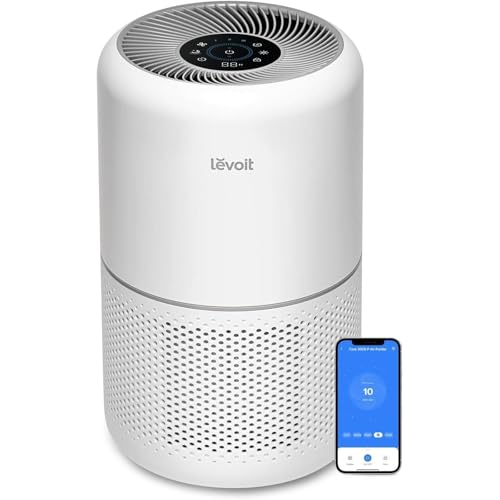
Levoit Core 300S-P – Best Smart Pick
The Core 300S-P is the smart version of one of the most popular compact purifiers ever sold, and it earns its badge by making the connected features genuinely useful rather than decorative. The app shows the air quality reading the machine’s sensor sees, lets you schedule runtimes around your day, and pairs with voice assistants so the purifier can be adjusted from the couch or the bed. Its sleep mode is properly quiet — the listing cites 24dB-class operation — which makes it the easiest machine here to live with in a bedroom where the purifier sits a few feet from the pillow.
Strengths
- Smart WiFi with app and voice control, plus a built-in air quality monitor that drives auto mode.
- Very quiet sleep mode for a machine with verified whole-room coverage, rated for spaces up to about 1,073 square feet on listing figures.
- Compact tower footprint that fits dorm rooms, nurseries, and small apartments where floor space is contested.
Trade-offs
- The 3-in-1 filter is a consumable on a shorter cycle than the big Coway and Winix filter sets, so annual filter spend deserves a look before buying.
- It is a bedroom-and-medium-room machine; in a large open-plan space it will run hard and loud to keep up.
- The display light, while dimmable, still needs managing for completely dark sleepers.
What the Core 300S-P understands is routine. Students set it to run while they are in class and idle down at night. Parents check the nursery air from their phone. Allergy sufferers bump it to auto during pollen season without getting up. That day-to-day fit is why this smaller machine outsells bigger ones, and inside the below-$300 tier it is the smart pick that does not ask you to trade away filtration credibility: it is AHAM Verifide, with a proper HEPA sleep mode and a sensor that makes its automation trustworthy rather than random.
Best for: bedrooms, dorms, and smart-home households that want app control and quiet nights. / Not suited for: large open-plan rooms or buyers who dislike replacing filters on a shorter cycle.
Check on Amazon – check the current price on Amazon and confirm you are looking at the 300S-P smart version, not the non-smart sibling.

Blueair Blue 311i Max – Best for Large Rooms
Blueair’s 311i Max carries the largest coverage claim in this roundup — up to about 2,107 square feet on its listing — and it gets there with the company’s HEPASilent approach, which blends mechanical and electrostatic filtration so the fan does not have to work as hard, or as loudly, to move clean air. The listing cites 23dB-class quiet operation, WiFi, auto mode, and a washable pre-filter, a combination that suits the machine’s real job: sitting in a big living room or open-plan space, running most of the day, and not becoming part of the noise problem it is meant to solve.
Strengths
- The biggest verified coverage in this tier, so one unit handles spaces that would need two smaller purifiers.
- HEPASilent filtration keeps working speeds quiet, which matters in rooms where the machine runs during conversation and television.
- Washable pre-filter trims consumable costs and catches the coarse dust and hair that shorten main-filter life.
Trade-offs
- Its filtration leans less on deep activated carbon than the Winix, so stubborn odor problems are not its strongest suit.
- The minimalist design hides controls behind the app for some functions, which not every buyer enjoys.
- Replacement filters are proprietary and sized for the big housing; budget for the genuine article.
The honest way to judge the 311i Max is by the room it replaces. In a combined kitchen-living space, two mid-size purifiers cost more to buy, more to feed with filters, and more to listen to than this one unit running calmly in the corner. If your space is a standard bedroom, it is more machine than you need and the Levoit or the Airmega 50 will serve you for less. If your space is genuinely large, this is the pick in the below-$300 tier that was built for it, with AHAM verification behind the coverage claim rather than a number invented by a marketing team.
Best for: large living rooms and open-plan spaces that need one quiet, high-coverage unit. / Not suited for: small bedrooms or buyers whose main problem is odor.
Check on Amazon – check the current price on Amazon and confirm the 311i Max size, since the Blue Max line comes in several footprints.
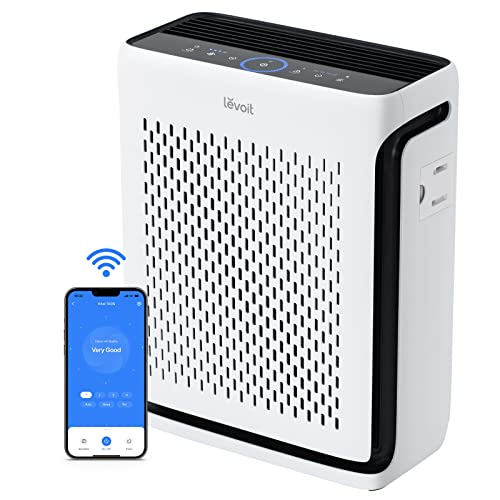
Levoit Vital 100S-P – Best for Pet Bedrooms
Pet hair is a pre-filter problem before it is a HEPA problem, and the Vital 100S-P is built around that fact. Its washable pre-filter sits in front of the HEPA stage and traps the hair and large dander that would otherwise mat against the expensive filter and choke it early. Rinse or vacuum the pre-filter, and the main filter lives the life it was rated for. Add a smart air quality monitor, app control, and a quiet HEPA sleep mode, and you have the machine in this tier that best fits a bedroom shared with a dog or a cat.
Strengths
- Washable pre-filter that intercepts pet hair before it loads the HEPA stage, extending real filter life.
- Smart monitor with auto mode, so a pet wandering in and shaking off a cloud of dander gets an automatic response.
- Quiet sleep mode and coverage rated up to about 1,073 square feet on listing figures, right-sized for bedrooms.
Trade-offs
- It will not remove odor at the level of the Winix’s carbon-heavy design; litter-box smell needs source control plus ventilation, not just this machine.
- The pre-filter only pays off if you actually wash it; neglected, it becomes the clog.
- Like its Core sibling, it is a room purifier, not an open-plan solution.
Pet owners routinely buy the wrong purifier by shopping the HEPA claim and ignoring the hair path. Hair does not float politely into a filter; it settles, clumps, and coats intake surfaces. The Vital 100S-P’s design acknowledges the mess in front of the machine, which is why it holds its performance between filter changes better than sealed-cartridge designs in homes with shedding animals. Pair it with the discipline of a monthly pre-filter rinse and it is the most ownership-friendly pet pick below $300.
Best for: bedrooms shared with shedding pets, and owners who will maintain a washable pre-filter. / Not suited for: whole-floor coverage or severe odor problems.
Check on Amazon – check the current price on Amazon and look at the replacement filter format so you know what the yearly consumable looks like.

Coway Airmega 50 – Best Compact for Small Rooms
The Airmega 50 is Coway’s small-room answer, rated for spaces up to about 500 square feet, and it keeps the family traits that matter — a real HEPA filter plus a deodorization stage, an air quality indicator with auto mode, a filter replacement indicator, and even a night light for hallway-adjacent bedrooms and nurseries. It exists for the rooms the Mighty would overwhelm: the nursery, the small home office, the studio apartment’s sleeping corner, the dorm room where every surface is already spoken for.
Strengths
- Genuine Coway filtration in a compact footprint, with both HEPA and deodorization stages rather than a token filter.
- Air quality monitor, auto mode, and filter indicator — the set-and-forget features of the big machines, scaled down honestly.
- Night light and quiet operation suit nurseries and light sleepers better than a full-size tower.
Trade-offs
- Coverage is capped at small-room scale; asking it to clean a living room means constant high speed and noise.
- Smaller filters mean a shorter replacement cycle than the Mighty’s filter set.
- No washable pre-filter, so pet-heavy small rooms will load its filter faster than the Vital 100S-P.
Compact purifiers are where this category’s worst products live — tiny boxes with toy filters and laboratory-sounding claims. The Airmega 50 is the opposite: a scaled-down version of a serious line, with published coverage and a two-year warranty on its listing. If your room is small and your air problem is real — dust that resettles overnight, pollen that follows you in, a nursery you want kept clean — this is the small machine that behaves like a big one, just within its honest limits.
Best for: nurseries, small offices, dorms, and studio sleeping areas up to about 500 square feet. / Not suited for: living rooms or any space beyond its coverage rating.
Check on Amazon – check the current price on Amazon and measure your room before ordering; this pick rewards honest sizing.
Comparison Table
| Pick | Badge | Key spec | Best for |
|---|---|---|---|
| Coway Airmega Mighty AP-1512HH | Best Overall | True HEPA + deodorization, AQI monitor, auto/eco modes, up to ~1,748 sq ft | One dependable purifier for a main living space |
| Winix 5510 | Best for Smoke and Odors | High-deodorization carbon + true HEPA, auto mode, large-room coverage | Cooking smoke, wildfire drift, household odors |
| Levoit Core 300S-P | Best Smart Pick | WiFi app/voice control, smart monitor, quiet sleep mode, up to ~1,073 sq ft | Bedrooms and smart-home households |
| Blueair Blue 311i Max | Best for Large Rooms | HEPASilent filtration, up to ~2,107 sq ft, washable pre-filter, WiFi | Large and open-plan living spaces |
| Levoit Vital 100S-P | Best for Pet Bedrooms | Washable pre-filter, smart monitor, quiet sleep mode, up to ~1,073 sq ft | Bedrooms shared with shedding pets |
| Coway Airmega 50 | Best Compact for Small Rooms | HEPA + deodorization, AQI monitor, night light, up to ~500 sq ft | Nurseries, dorms, small offices |
How to Choose the Best Air Purifiers Below $300 for Your Room
Start with the room, not the machine. Measure the space where the purifier will live and compare it with the coverage figures the brands publish, then apply the rule experienced buyers use: choose a purifier rated for at least the size of your room, and preferably one size up. A machine rated exactly at your room’s size must run near its top speed to keep up, and top speed is where noise lives. A machine rated well above your room can hold the air clean on a low or medium setting, which is quieter, gentler on the filter, and cheaper to run. This single decision — sizing up — explains most of the satisfaction gap between purifier owners who love their machine and owners who returned it as too loud.
Next, name your pollutant, because filtration is not one thing. Dust, pollen, and pet dander are particles, and any true HEPA machine in this guide handles them. Smoke is particles plus gases; the particles yield to HEPA, but the smell needs activated carbon, which is why the Winix carries a high-deodorization filter and why HEPA-only compact units disappoint in smoky homes. Allergens in a bedroom argue for a quiet sleep mode and an auto sensor. A nursery argues for a compact footprint, a night light, and controls that cannot be easily turned into a toy. Match the machine to the pollutant and the room’s routine, and the spec sheet mostly falls into place behind that choice.
What $300 Actually Buys — and What It Does Not
Below $300 you get real filtration: true HEPA stages, meaningful carbon, verified delivery rates, sensors, and auto modes. What you do not get is whole-house coverage from one box, medical-grade claims you should trust, or freedom from consumables. Premium machines above this tier buy quieter high-speed operation, larger carbon beds for industrial odor problems, and housings built like furniture. For the overwhelming majority of bedrooms and living rooms, those are luxuries, not necessities. The smarter spend inside this tier is the machine itself plus its first replacement filter, bought with your eyes open about the annual filter budget — typically the difference between a purifier that gets maintained and one that gets abandoned in a closet with a gray, exhausted filter inside it.
One more budget truth: the cheapest way to run any of these machines is to run them continuously at the lowest speed that holds your air clean, rather than blasting them on turbo for an hour a day. Continuous low-speed operation keeps particle counts from ever building up, treats the filter evenly, and in eco or auto mode sips electricity. The owners who complain about filter costs are often the owners who run turbo-only, loading the filter in bursts and replacing it early.
How to Set Up and Run Your Purifier for Real Results
Placement decides half of performance before you ever press a button. Put the purifier in the room where you spend the time or where the pollution starts, with clearance around its intake and outlet — a hand’s width at minimum, more where the manual asks for it — and never boxed into a corner behind furniture. Keep it out of the direct path of a constantly opening exterior door if you can, since every opening dumps a fresh load of outdoor particles at the machine’s feet.
When the machine arrives, remove every piece of packaging from the filter itself; a surprising number of purifiers spend their first month running with the HEPA filter still sealed in its plastic bag, cleaning nothing while the owner concludes the category is a scam. Run the unit on auto for the first week and watch its air quality indicator through a normal day: cooking, cleaning, and opening windows should all move it. That observation teaches you your home’s rhythm. After that, set the routine — continuous low or auto for occupied rooms, sleep mode at night in bedrooms, and a calendar note for the filter check date the indicator suggests. Vacuum or wash pre-filters monthly where the design allows it, wipe the sensor lens when readings start looking lazy, and keep the replacement filter’s model number in your phone so reordering takes a minute instead of a research project.
CADR, Coverage Claims, and How to Read Them Honestly
Every purifier listing throws numbers at you, and the numbers are not all measuring the same thing. The figure that matters most is the clean air delivery rate — CADR — which describes how much filtered air the machine actually delivers, tested under a standard method. Brands that submit to AHAM verification publish CADR figures you can compare across models, and several picks in this guide carry that verification. The looser figure is the headline coverage claim, usually calculated at one or two air changes per hour under ideal conditions. A claim of 1,000 square feet might assume the machine runs at full speed in an empty, sealed room. For allergy and asthma-adjacent use, the common guidance is to size for roughly four to five air changes per hour in the room where you sleep, which shrinks the honest coverage of any machine to a fraction of its headline number.
This is not a reason to distrust the category; it is a reason to do one piece of arithmetic. Take the room’s square footage, multiply by the ceiling height to get volume, and ask how often you want that volume turned over. Then compare machines on their verified delivery figures rather than their biggest printed number. The Coway Mighty and the Blueair 311i Max look strong under this arithmetic precisely because their verified figures hold up at the speeds you will actually tolerate overnight. A machine whose numbers only work on turbo is a machine whose numbers do not work.
Noise: The Specification That Decides Whether You Keep the Machine
Ask purifier owners why a unit ended up in a closet and the answer is rarely filtration. It is noise. A purifier cleans the air only while it runs, and a machine that drones, whistles, or cycles its fan up and down through the night gets switched off by a tired hand at 3 a.m. That is why this guide treats sleep-mode noise as a headline feature rather than a footnote. The Levoit Core 300S-P’s low-twenties decibel sleep operation and the Blueair’s HEPASilent design exist because their makers understand the real competition is not another purifier — it is the off switch.
Judge noise at the speed you will live with, not the speed in the brochure’s first line. Most listings quote the quietest setting, where airflow is a trickle. The practical test is the medium setting: can you hold a conversation, watch television, or sleep beside the machine there? Oversizing, again, is the quiet buyer’s trick — a large machine loafing at low speed is almost always quieter than a small machine straining at medium. If the purifier is destined for a bedroom, prioritize the sleep mode and the oversized rating over any smart feature; if it is destined for a living room, prioritize a machine whose working speeds stay under the volume of normal conversation.
Filter Ownership: The Three-Year View
Run the ownership math before you buy and the below-$300 tier sorts itself differently. A machine at the top of the tier with a twelve-month filter can cost less across three years than a machine at the bottom with a four-month filter, even before you count the hassle of ordering replacements three times a year. Look at three things on every listing: the rated filter life in months, whether a washable pre-filter protects the main filter, and whether the replacement is a single cartridge or a stack of separate stages you replace on different schedules. Single cartridges, as on the Levoit machines, are simpler; multi-stage stacks, as on the Winix and Coway designs, let you replace only the stage that is spent — the carbon stage usually goes first in smoky homes, while the HEPA stage soldiers on.
Two habits protect your wallet once the machine is home. First, vacuum or wash the pre-filter monthly; a clogged pre-filter forces the fan to work harder and loads the main filter unevenly. Second, distrust the calendar and trust the indicator plus your nose: when a cleaned room starts smelling like last night’s cooking an hour after the machine has run, the carbon is done regardless of what the date says. Buy genuine filters sized for your exact model. A loose-fitting off-brand filter leaks unfiltered air around its edges, and a purifier with a leak is a decoration.
Certifications and Claims Worth Trusting
Three signals separate serious machines from dressed-up fans. AHAM Verifide status means the delivery-rate claims were tested under a recognized standard. A true HEPA designation means the filter meets the 99.97 percent capture standard at 0.3 microns, the particle size that is hardest to trap; vaguer labels like HEPA-type or HEPA-style describe filters that miss that bar by design. And an ozone-free design matters: some electrostatic and ionizer-heavy machines generate ozone as a by-product, which is itself a lung irritant. The picks in this guide are mechanical-filtration machines with verified claims, which is the conservative, defensible end of the market. Treat any purifier that promises to sanitize a home, cure a condition, or replace ventilation as marketing first and equipment second — filtration improves the air you breathe in a room; it does not perform medicine.
Common Buying Mistakes
- Buying by room-size claims without sizing up. A purifier rated exactly at your room’s size must run loud to cope. One size up runs quiet and lasts longer between filter changes.
- Ignoring the filter bill. The machine is a one-time purchase; the filter is a subscription. Compare replacement intervals and formats before you buy, not after the indicator lights up.
- Expecting HEPA to remove smells. Odors and smoke gases need activated carbon. If smell is the complaint, shop the carbon stage first, as with the Winix 5510.
- Leaving the filter in its plastic. New purifiers ship with the filter bagged inside the housing. Open the unit and remove the bag before first use.
- Buying one small unit for an open-plan floor. Coverage is physics, not optimism. Large spaces need a large-coverage machine or one unit per closed room.
- Turning it off at night. Bedrooms benefit most from overnight cleaning, when you breathe the same air for eight hours. A sleep mode exists precisely for this; use it.
Final Recommendation
For most households, the Coway Airmega Mighty AP-1512HH remains the safest single purchase in this tier: verified coverage, honest automation, and a track record the rest of the category is still chasing. If your problem is smoke or odor, step sideways to the Winix 5510 and its carbon-first design. If the purifier lives in a bedroom and your home runs on apps and voice, the Levoit Core 300S-P is the one you will actually enjoy owning, while pet owners should take the Levoit Vital 100S-P and its washable pre-filter. Large open spaces belong to the Blueair Blue 311i Max, and small rooms to the Coway Airmega 50. Whichever you choose, size it up one step, budget the first replacement filter, and run it continuously — that routine matters more than the last few points of any spec sheet.
Still deciding between filtration styles or shopping for a specific problem? These guides in the same series go deeper: Best Air Purifiers Blueair · Best Air Purifiers For Allergies Mold And Smoke · Best Air Purifier For A Smokers House · Best Air Purifier For Cigarette Smokers
Related guides
- Best Cost Effective Air Purifiers
- Best Cooling Fan And Air Purifiers
- Best Air Purifiers For Birds
- Best And Affordable Air Purifiers
Frequently Asked Questions
Is a purifier below $300 actually effective, or do I need to spend more?
Effective, genuinely. This tier contains true HEPA machines with verified delivery rates sized for real rooms. Spending more buys larger coverage, quieter high speeds, and heavier carbon beds — useful in specific cases, unnecessary for a typical bedroom or living room.
How often will I replace the filter?
Most machines in this guide run six to twelve months per filter under normal use, with the indicator tracking actual load. Pet hair, smoke, and turbo-heavy routines shorten that; a washable pre-filter, kept clean, extends it.
Can one purifier clean my whole apartment?
Only if the apartment is open-plan and the machine’s coverage rating matches the full area. Walls and closed doors defeat airflow, so multi-room homes do better with one right-sized unit per main room.
Do I need carbon filtration if I only have allergies?
Allergens are particles, so HEPA does the essential work. Carbon helps with the odors that ride along with real life — cooking, pets, traffic — but a light sleeper with pollen allergies can prioritize a quiet HEPA machine with a good sleep mode.
Should the purifier run all the time?
Yes, at the lowest speed that holds the air clean, or on auto. Continuous operation prevents particle buildup, and modern machines in eco or sleep modes use very little power doing it.
Where in the room should the purifier sit?
In the room you occupy most, close to where the pollution starts or where you breathe longest — beside the bed, not across the bedroom; near the kitchen opening, not in a far hallway. Keep clearance around the intake and outlet, keep it off thick carpet if the intake is underneath, and do not hide it behind a sofa: a purifier cleans the air it can reach, and furniture decides what it can reach.
Is it worth buying two smaller purifiers instead of one large one?
For two closed rooms, yes — two right-sized machines beat one large machine that can only be in one room at a time. For one open space, no: a single large-coverage unit like the Blue 311i Max is cheaper to feed with filters and quieter than two small units both running hard. Match the layout of the home, not the shape of a deal.
Why does my new purifier’s air quality reading spike when I cook?
Because it is working. Cooking releases a burst of fine particles, the sensor sees them, and auto mode ramps the fan until the reading settles. If it never spikes, check that the filter’s plastic bag was removed and the sensor lens is clean.

