Disclosure: airfryerkitchensupply.com is reader-supported. When you buy through links on our site, we may earn an affiliate commission at no extra cost to you.
Where to buy
The Memphis Elite models and their premium alternatives below were each confirmed as live Amazon listings before inclusion. Check the current price on Amazon for the Memphis Elite Cart ITC3, the Memphis Elite Built-In ITC3, the Traeger Timberline 1300, the recteq Flagship 1600, the Green Mountain Grills Ledge Prime 2.0, and the Traeger Ironwood 885. This is the premium end of the pellet world, where listings are fewer and freight arrangements matter, so read the live page carefully for delivery and configuration details before ordering.
Introduction: The Pellet Grill as Outdoor Kitchen Appliance
Searches for the best wood pellet grill Memphis Grills Elite come from a particular kind of buyer: someone who has seen what the top of the pellet category looks like and wants to know whether the Memphis Elite justifies its position there. The Elite is Memphis Wood Fire Grills’ flagship — a pellet grill built from 304 stainless steel, in cart and built-in forms, around the company’s ITC3 controller with Wi-Fi, and designed with a party trick no mainstream rival matches: a direct-flame capability that lets a pellet grill sear over open flame rather than merely near it. In a category where most grills are painted steel boxes built to a price, the Elite is built like a professional appliance and priced like one, and the honest questions are what that money buys in daily cooking, who should pay it, and which alternatives deserve a look before committing.
This guide therefore does two jobs. It treats the Elite itself properly — cart versus built-in, what the stainless construction and the controller mean in practice, and what owning one is like across seasons. And it lines up the four most credible alternatives at or below its tier: Traeger’s Timberline 1300 flagship, recteq’s stainless-heavy Flagship 1600, Green Mountain’s Ledge Prime 2.0 as the step-down sweet spot, and Traeger’s Ironwood 885 as the value end of the premium class. One transparency note up front: Memphis’s smaller grills were not confirmed as live Amazon listings when this guide was verified — only the Elite models and accessories appeared — so the Elite is covered here in its two real configurations, and the smaller Memphis models are discussed as unlinked context rather than linked picks. That distinction matters, and this guide maintains it throughout: every product with a purchase link below was verified as a real, orderable listing, and anything that could not be verified is talked about in words alone, exactly as an honest buyer’s guide should handle it.
In this guide
Quick Picks
- Best Overall (The Keyword Pick): Memphis Elite Cart ITC3 — 304 stainless, Wi-Fi ITC3 control, and direct-flame searing in a freestanding flagship. Check the current price on Amazon.
- Best Built-In: Memphis Elite Built-In ITC3 — the same flagship engineered to drop into an outdoor kitchen island. Check the current price on Amazon.
- Best Premium Alternative: Traeger Timberline 1300 — Traeger’s flagship with 1,300 square inches and the deepest accessory ecosystem in pellets. Check the current price on Amazon.
- Best Capacity Alternative: recteq Flagship 1600 — 1,667 square inches, a 40-pound hopper, and stainless-forward construction. Check the current price on Amazon.
- Best Step-Down: Green Mountain Grills Ledge Prime 2.0 — premium features and Wi-Fi control at a mid-premium tier. Check the current price on Amazon.
- Best Value in the Premium Class: Traeger Ironwood 885 — the most complete mainstream premium pellet grill for households not building an outdoor kitchen. Check the current price on Amazon.
How These Picks Were Chosen
The assignment was unusually specific — a named flagship model — so the method matched it. First, the Memphis Elite itself was verified in both of its real configurations, cart and built-in, with ASINs recorded from live API responses; the search was run on the airfry site’s own AffiliateCMS Pro provider, and the results are stored in this batch’s cache file. Memphis’s smaller models (the Pro and Advantage lines) were searched for as well and did not return grill listings — only covers and accessories — so they are handled honestly as a mention without a link, with no invented links. Alternatives were admitted only if they compete with the Elite on at least one axis it is bought for: construction quality, capacity, controller sophistication, or premium ownership experience. Each alternative was likewise listing-verified before inclusion.
Judging at this tier shifts away from raw specs. All six grills smoke and grill competently; what separates them is materials (304 stainless versus painted or lesser-grade steel), temperature ceiling and searing method, controller refinement, insulation, and the long economics of ownership — parts availability, cover quality, and how the grill looks and performs in year six rather than month six. The reviews below therefore spend as much time on ownership as on cooking, because at this tier the purchase is closer to buying a range for an outdoor kitchen than buying a seasonal gadget.
The Best Wood Pellet Grill Memphis Grills Elite Buyers Compare: 6 Picks
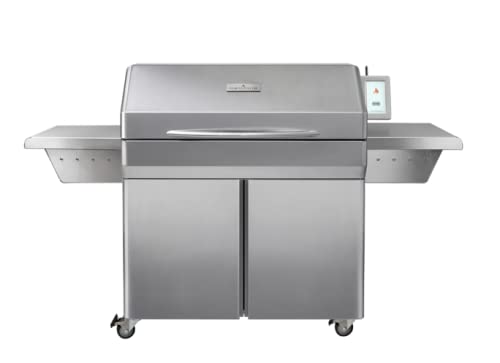
Memphis Elite Cart ITC3 Pellet Grill — Best Overall
The Elite Cart is the flagship in freestanding form: a full 304 stainless steel body — the marine-grade alloy that resists the corrosion which eventually freckles lesser stainless and painted steel — on a cart with serious casters, powered by Memphis’s ITC3 controller with Wi-Fi monitoring and control. Two features define the cooking. The first is temperature range: the Elite runs from genuine low-and-slow smoking up to searing temperatures beyond most pellet grills’ ceilings, because Memphis designs its burn system for heat, not just for smoke. The second is the direct-flame insert system: swap the standard configuration for the open-flame setup and the grill sears over actual pellet flame, producing the char and crust that pellet grills are famously accused of missing. Together they make the Elite the closest thing in the pellet world to a single-appliance outdoor kitchen: smoke a brisket Saturday, flame-sear steaks Sunday, bake at roasting temperatures all week.
Strengths
- 304 stainless construction throughout — the durability benchmark of the category.
- Direct-flame searing capability answers the pellet grill’s oldest criticism.
- ITC3 Wi-Fi controller with the wide temperature range Memphis is known for.
Trade-offs
- Flagship pricing — this is a considered purchase, not an upgrade whim.
- Heavier and more substantial than mainstream grills; plan its patio position once, well.
- Amazon availability is thinner than mass-market brands; configuration details need care at ordering.
Ownership is where the Elite argues its case most quietly. Stainless at this grade wipes clean, shrugs off coastal air that eats painted grills, and still looks like an appliance in year eight. The pellet system is engineered for clean burns and straightforward ash handling, and the controller’s intelligence — including its food-probe integration and programmable behavior — suits cooks who run long sessions. If the budget reaches it and the cooking is frequent, the Elite Cart is the pellet grill equivalent of buying the good knife once. It is the pick this search asks about, and on merit, it holds the crown the search implies.
Best for: serious outdoor cooks building a long-term premium setup on a patio / Not suited for: casual grillers or first-time pellet buyers testing the category
Check the current price on Amazon

Memphis Elite Built-In ITC3 Pellet Grill — Best Built-In
The Built-In is the same flagship — same 304 stainless construction, same ITC3 Wi-Fi controller, same temperature range and direct-flame talent — engineered as a drop-in unit for an outdoor kitchen island. That single difference changes the purchase completely: this is not a grill you buy, it is a grill you build around, with the island’s cutout, clearances, and utility runs planned to its dimensions. In return, the built-in format gives the cleanest installation in the pellet world — no cart, no visible hopper box awkwardness, just a stainless cooking appliance set into stone or cabinetry like an indoor range.
Strengths
- The flagship Elite experience integrated flush into an outdoor kitchen.
- 304 stainless suits permanent outdoor installation better than any painted rival.
- ITC3 control and direct-flame searing, identical to the cart model.
Trade-offs
- Requires a properly built island with correct cutout and clearances — a construction project.
- Permanence cuts both ways: moving house means leaving it or major work.
- Total installed cost includes the island build, not just the grill.
Buyers for the Built-In should sequence the project correctly: confirm the current model’s exact cutout specifications from the manufacturer before any island work begins, plan pellet storage within reach of the hopper, and think about cover and weather protection for the installation as a whole. Done right, this is the finest pellet cooking installation available to a homeowner — the Elite’s cooking with an architect’s finish — and it is the natural endpoint of the outdoor-kitchen ambitions this search usually signals.
Best for: outdoor kitchen builds and remodels / Not suited for: renters, movers, or anyone whose patio plans are still fluid
Check the current price on Amazon

Traeger Timberline 1300 Wood Pellet Grill — Best Premium Alternative
The Timberline 1300 is Traeger’s flagship answer: 1,300 square inches of cooking space, WiFIRE control with Super Smoke mode, a fully insulated body for cold-weather steadiness, and the deepest accessory and pellet ecosystem in the industry behind it. Against the Elite, the honest comparison is philosophy: the Timberline bets on space, insulation, and connected features in a powder-coated and stainless-trimmed body, while the Elite bets on all-304-stainless construction and direct flame. The Timberline’s searing is strong radiant work but not open flame; its capacity exceeds the Elite’s; its app and community support are the category’s most developed.
Strengths
- 1,300 square inches with full insulation for all-season cooking.
- Super Smoke mode and the most mature app ecosystem in pellets.
- Traeger’s dealer, parts, and accessory network is unmatched.
Trade-offs
- No direct-flame searing — the Elite keeps that crown.
- Construction is premium but not full 304 stainless.
- Large footprint and weight demand a committed patio position.
Choose the Timberline if your premium priorities are capacity and ecosystem over metallurgy — if you cook for a crowd weekly, value the app experience, and like knowing every accessory imaginable exists. It is a genuinely great grill that happens to lose this particular comparison on the two axes the Elite was invented to win: stainless permanence and flame.
Best for: crowd-cooking households loyal to the Traeger ecosystem / Not suited for: buyers whose top priorities are stainless build and open-flame searing
Check the current price on Amazon
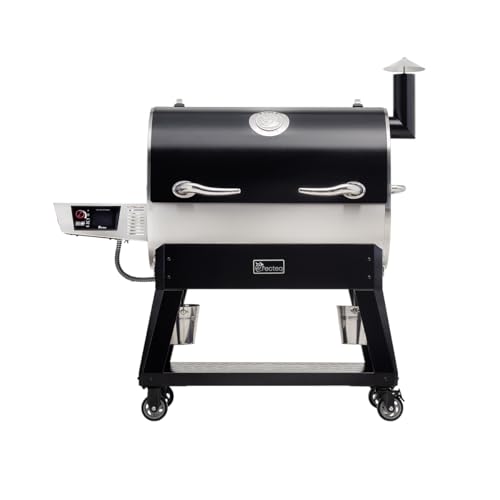
recteq Flagship 1600 Pellet Grill Smoker — Best Capacity Alternative
recteq built its reputation on stainless-forward construction and controllers that hold temperature like laboratory equipment, and the Flagship 1600 is its largest statement: 1,667 square inches of cook space, a 40-pound hopper that turns overnight cooks into non-events, Wi-Fi smart control, and the brand’s characteristic heavy build. It competes with the Elite on the “buy it for decades” axis more directly than any other alternative here — recteq owners are famously evangelical about build quality — while undercutting the flagship tier on price for dramatically more space.
Strengths
- Enormous capacity with a hopper sized for true overnight autonomy.
- Stainless-forward, heavy construction with a durability-first reputation.
- Controller steadiness is a recteq signature and shows on long cooks.
Trade-offs
- No open-flame searing system comparable to the Memphis insert.
- Its scale is overkill for couples and small families.
- Brand ecosystem and retail presence are smaller than Traeger’s.
The Flagship is the value-engineer’s premium pick: if the Elite’s price makes you blink but its buy-once philosophy appeals, recteq’s flagship delivers most of the permanence with more room and a smaller invoice. Competition-style cooks and big-family hosts will use its capacity weekly; everyone else should measure their actual cooks against its vastness before being seduced by it.
Best for: big households and capacity-first buyers who value build quality / Not suited for: small families or flame-sear devotees
Check the current price on Amazon

Green Mountain Grills Ledge Prime 2.0 — Best Step-Down
The Ledge Prime 2.0 is where premium thinking meets a mid-premium price: GMG’s Prime 2.0 platform brings Wi-Fi control, a peaked lid for whole-poultry headroom, rack systems, and thoughtful details like a collapsible front shelf and a pellet-view window, in the brand’s full-size footprint. It lacks the Elite’s stainless construction and direct flame, but as a cooking machine it is thoroughly modern — steady controller, real smoke at low settings, and an accessory family that includes the pizza oven attachment praised in our pizza guide. For buyers who admire the Elite’s philosophy but not its invoice, the Ledge is the rational landing spot.
Strengths
- Prime 2.0 Wi-Fi platform with practical, owner-loved details.
- Peaked lid fits turkeys and beer-can chickens other grills squeeze.
- Strong accessory ecosystem, including the GMG pizza attachment.
Trade-offs
- Painted steel body — a tier below the Elite’s stainless for longevity.
- Searing is competent radiant work, not direct flame.
- Smaller cooking area than the Timberline or Flagship alternatives.
Think of the Ledge as the premium class’s common sense: eighty percent of the flagship experience for a far friendlier commitment. Households upgrading from an entry pellet grill will feel the jump in controller quality and build immediately, and the money saved against the Elite buys a great deal of protein to practice on.
Best for: upgraders wanting premium features without flagship pricing / Not suited for: buyers specifically seeking stainless construction or built-in installation
Check the current price on Amazon

Traeger Ironwood 885 Wood Pellet Grill — Best Value in the Premium Class
The Ironwood 885 closes the list as the premium class’s all-rounder: 885 square inches, WiFIRE with a pellet sensor, Super Smoke mode, and a maturity of design that makes it the easiest premium grill to recommend to a household that simply wants the best mainstream pellet experience. Against the Elite it concedes construction grade and flame; against everything else in its own tier it concedes almost nothing. It is included here because many Elite-curious buyers, after honest reflection on budget and cooking frequency, land exactly here — and land happily.
Strengths
- The most polished all-round premium pellet package for the money.
- Pellet sensor and WiFIRE make long cooks genuinely low-anxiety.
- Super Smoke mode deepens low-and-slow flavor credibly.
Trade-offs
- Not a stainless appliance and not built-in capable like the Elite.
- No direct-flame searing path.
- Premium-tier price within the mainstream class.
The Ironwood is the control group of this roundup: the grill the Elite must beat, and does — on materials, on flame, on permanence — at a substantially higher commitment. If those axes matter to you, the Elite’s premium is explained; if they do not, the Ironwood’s value is. Either conclusion is a good outcome, and knowing which buyer you are is the entire purpose of this guide.
Best for: households wanting the best mainstream premium pellet grill / Not suited for: outdoor-kitchen builds or stainless-or-bust buyers
Check the current price on Amazon
Comparison Table
| Pick | Badge | Key spec | Best for |
|---|---|---|---|
| Memphis Elite Cart ITC3 | Best Overall | 304 stainless, ITC3 Wi-Fi, direct flame | The flagship freestanding pellet grill |
| Memphis Elite Built-In ITC3 | Best Built-In | 304 stainless drop-in unit | Outdoor kitchen islands |
| Traeger Timberline 1300 | Best Premium Alternative | 1,300 sq in, insulated, WiFIRE | Capacity plus ecosystem |
| recteq Flagship 1600 | Best Capacity Alternative | 1,667 sq in, 40 lb hopper | Maximum room with heavy build |
| GMG Ledge Prime 2.0 | Best Step-Down | Wi-Fi, peaked lid, Prime 2.0 platform | Premium features, friendlier tier |
| Traeger Ironwood 885 | Best Value Premium | 885 sq in, Super Smoke, pellet sensor | The mainstream premium benchmark |
How to Choose at the Premium Tier: What the Money Actually Buys
Premium pellet pricing confuses buyers because the cooking results at the top are closer than the prices suggest — a well-run Ironwood brisket and a well-run Elite brisket are cousins, not strangers. What the flagship money buys is everything around the cooking. It buys 304 stainless steel, which is not a cosmetic upgrade: it is the difference between a grill that needs a cover, a sheltered spot, and eventual rust management, and one that lives outdoors like a fixture. It buys temperature ceiling and the direct-flame system, which together erase the pellet category’s one functional gap. It buys controller refinement — tighter holds, better probes, smarter recovery after a lid opening. And it buys time: parts, seals, and finishes engineered for a decade-plus service life, which amortizes the invoice across far more cooks than a mid-tier grill will ever see.
The decision framework is therefore about horizon and setting. If this grill will anchor an outdoor kitchen or a permanent patio for ten years, flagship construction is not indulgence; it is the economical choice, because replacing a mid-tier grill twice costs more than buying the Elite once. If the setting is temporary — a rental, a starter home, a first exploration of pellet cooking — the same money is better spent across the step-down picks and a generous protein budget while you learn what your cooking actually demands. Cart versus built-in follows the same logic: the cart preserves optionality, the built-in commits to a place. Neither is an upgrade over the other; they are answers to different questions about your next decade.
One more premium-tier truth: at this level, buy the cover, and buy the manufacturer’s. A fitted cover from the maker protects the exact contours, vents, and stacks of your model, and on a flagship grill the cover is not an accessory but a rounding error that protects a serious asset. Budget it into the purchase rather than discovering its absence in the first storm.
Using the Memphis Elite: Direct-Flame Searing and Everyday Smoking
Daily operation of the Elite follows the pellet grammar — fill the hopper with quality hardwood pellets, set the ITC controller, let the grill come to temperature with the lid closed — with two Memphis flourishes worth learning deliberately. The first is the direct-flame configuration for searing: with the flame insert in place and the grill at high heat, steaks and chops cook over genuine pellet flame, and the technique is gas-grill familiar — preheat thoroughly, cook with the lid up for the hardest sear in short bursts, and expect flare character that radiant-only grills cannot produce. Thick steaks benefit from the reverse sequence the Elite makes easy on one machine: smoke low with the standard configuration until the interior approaches target, rest, swap to flame, and finish fast.
The second flourish is the controller itself. ITC3’s probes and programming reward cooks who use them as instruments rather than decorations: set the food probe, let the grill hold or adjust around it, and use Wi-Fi monitoring for the long middle hours of a brisket rather than as a novelty. For everyday smoking, keep the burn system clean — ash management on a Memphis is straightforward, and a clean burn pot is what delivers the wide, steady temperature range the grill is bought for. Pellets matter as much here as anywhere: dry, quality hardwood, stored sealed, because a flagship controller cannot rescue swollen, dusty fuel.
Caring for Stainless: Keeping a Flagship Looking Like One
304 stainless is forgiving but not magical, and its care routine is short enough to memorize. Wipe spills and grease from exterior surfaces while the grill is warm, not hot, with a soft cloth along the grain; fingerprints and smoke film lift easily when fresh and bake into work when ignored. In coastal or poolside settings, rinse and dry the exterior periodically — salt film is the one enemy even 304 respects over years — and a stainless protectant a few times a season keeps the finish deep. Never use steel wool or chlorinated cleaners on the exterior; both can wound the passive layer that makes stainless stainless.
Inside, the religion is ash and grease discipline, as with every pellet grill, with one premium addition: because this grill is a decade-scale asset, put its wear items on a calendar rather than a crisis — igniter health, gasket condition, probe accuracy checked against boiling water once a season. None of this exceeds an hour a few times a year, and it is precisely the maintenance profile that separates an appliance that ages into patina from one that ages into problems. The Elite was engineered to reward exactly this level of care with an unusually long prime.
Common Buying Mistakes
The flagship-tier mistake is buying the Elite as a first pellet grill to “skip the learning curve.” The Elite does not remove the need to learn pellet cooking — fuel quality, cleaning rhythm, smoke-versus-temperature trade-offs — it simply performs at a higher level once learned, and a first-time buyer often cannot yet tell whether pellets are even their fuel. The step-down picks exist for that discovery phase. The second mistake is ordering the built-in before the island exists on paper: cutout specifications must come from the manufacturer’s current documentation for the exact model, confirmed before stone is cut, because “close enough” is a very expensive phrase in masonry.
Third, buyers at this tier routinely forget the total budget: freight or delivery arrangements for a heavy flagship, the fitted cover, a starter stock of quality pellets, and for built-ins the island work itself. Price the project, not the grill. Fourth, do not buy flagship capacity you will not use — the Elite’s standard footprint is the right size for most serious households, and the giant alternatives earn their space only in genuinely big cooking lives. Finally, beware gray-market or unclear-configuration listings on any flagship: at this tier, buy through channels where the model, controller generation, and warranty path are unambiguous, and verify the listing details on the live page before committing.
Memphis as a Brand: Why This Name Sits at the Top of the Tier
Memphis Wood Fire Grills occupies an unusual position in the pellet market: a specialist maker, building in the United States, that never chased the entry tier. While the category’s giants compete on features per dollar, Memphis competes on appliance fundamentals — metallurgy, temperature range, and fire design — and its grills have long been the ones other makers’ flagships are compared against in enthusiast circles. The Elite is the purest expression of that stance: the largest, most capable expression of a design philosophy that treats a pellet grill as a permanent outdoor range rather than a seasonal cooker. That positioning explains both the price and the ownership pattern — Memphis buyers tend to be second- or third-grill buyers, arriving after a mainstream pellet grill taught them what they actually wanted, and the brand’s range is structured as a ladder ending at the Elite rather than a sprawl of trims.
It also explains the Amazon situation this guide handled transparently: specialist brands distribute through dealers more than marketplaces, which is why the Elite’s two configurations verified cleanly while smaller Memphis models surfaced only as accessories. For the buyer, the practical meaning is that an Elite purchase deserves dealer-grade diligence wherever you buy it — confirm the controller generation (ITC3 is the current standard referenced here), the configuration, and the freight plan, and the ownership experience will match the flagship promise. Brands at this tier sell decades of service; buy like it.
Elite vs. the Field: Where Each Alternative Actually Wins
Head-to-head honesty helps more than a spec table at this tier, so here is the plain version. Against the Timberline 1300, the Elite wins on construction material and flame, and loses on raw capacity, insulation for extreme cold, and the size of the world built around the grill — apps, accessories, community recipes, dealer density. Against the recteq Flagship 1600, the Elite wins on flame and on the built-in option, and loses on capacity per dollar and hopper size; recteq’s controller steadiness is a genuine peer strength, not a consolation. Against its own step-downs, the Ledge Prime 2.0 and Ironwood 885, the Elite wins on permanence and searing, and loses on nothing except price and, for some households, wisdom — a grill used twice a month does not amortize like a grill used four times a week.
The pattern underneath those trades is that the Elite is a specialist’s flagship: it concentrates its budget on the grill as a physical, thermal object. Rivals distribute budget across ecosystems, capacities, and features. Neither allocation is wrong, but they serve different buyers, and the surest way to choose is to rank your own priorities before reading any review — including this one. If stainless and flame top your list, the Elite is not merely a good choice but effectively the only one in its form. If capacity or ecosystem tops it, the alternatives above are not compromises; they are the correct answers to a different question.
Installation and First Fires: Setting Up a Flagship Properly
A flagship grill deserves a deliberate first day. Position the cart model on a level, stable surface with its clearances honored — heat and exhaust need room, and the grill’s weight makes “we will move it later” a promise few keep. Before the first cook, run the manufacturer’s burn-in: an empty, hot session that cures surfaces, burns off manufacturing residues, and lets you verify the controller, the igniter, and the Wi-Fi pairing while nothing edible is at stake. Pair the app at the patio, not from inside the house, and confirm the signal strength where the grill will actually live; a flagship monitored through a flaky connection is a frustration of your own making. Stock the hopper with fresh pellets from a newly opened bag for the burn-in, so the grill’s first impression of fuel is a good one.
Sequence the first cooks like a curriculum. A forgiving, fatty first cook — chicken thighs or a pork butt — seasons the interior and teaches the controller’s personality: how fast it recovers from a lid opening, how its displayed temperature compares with a probe at grate level, how the smoke reads at low settings. Save the flame-seared steak for the second or third session, when the basics are reflexes, and save the overnight brisket until you have watched the grill hold a temperature through one full daytime cook. Owners who rush a flagship into hero cooks on day one and feel underwhelmed have usually skipped the calibration that makes flagships shine; the grill is an instrument, and the first week is tuning it. By the end of that week, the Elite should feel less like new equipment and more like the patio’s permanent range — which is precisely what it was bought to be.
The Cost-Per-Year Argument, Done Honestly
Flagship pricing invites a lazy dismissal — “no pellet grill is worth that” — and an equally lazy defense. The honest arithmetic sits between them. A pellet grill’s true cost is its purchase price divided by its years of real service, plus fuel and wear parts, which are roughly equal across the category. A mid-tier grill that serves five hard years and a flagship that serves twelve do not compare the way their price tags suggest; on a per-year basis the gap narrows dramatically, and on a per-cook basis — for the household grilling three or four times a week — it can invert entirely. Add the softer returns: a flagship that holds temperature in January gets used in January, while a grill that struggles in the cold sits under its cover, and usage is the multiplier that decides whether any grill was worth buying at all.
The counter-argument deserves its due: money parked in a grill is money not spent on the food that goes on it, and a step-down grill plus a year of excellent protein will produce more memorable dinners than a flagship plus austerity. The resolution is frequency and horizon, again. High-frequency cooks in a long-term home extract flagship value; everyone else should let the step-downs do their excellent work. This guide’s structure — Elite first, alternatives honored — reflects that the search’s asker is usually the former. If, reading this far, you recognize yourself as the latter, the Ledge and the Ironwood are not lesser endings to the story. They are the right ones.
What a Week of Cooking on the Elite Actually Looks Like
Flagship reviews tend to live at the extremes — the holiday brisket, the steak night — but a grill earns its price on ordinary weeks, so consider the Elite’s. Monday is salmon at a moderate roast, the kind of cook where a wide, honest temperature range and a reliable probe turn a delicate fish into a non-event. Wednesday is chicken thighs smoked low for the first stretch and finished hotter for skin, a two-stage cook that mid-tier controllers make fiddly and the ITC handles as a program. Friday is the flame’s night: steaks or chops over the direct-flame configuration, with the patio smelling like a steakhouse instead of a science project. The weekend is when the hopper and the insulation justify themselves — a pork butt started in the morning, monitored from a phone at a kid’s soccer game, ready when the day is.
Two qualities stand out across that week. The first is recovery: every lid opening costs heat, and the Elite’s combination of mass, insulation thinking, and controller authority gets the chamber back to work quickly, which quietly improves everything from bark to timing predictability. The second is cleanliness of flavor. A well-engineered burn system running good pellets produces a clean, sweet smoke that seasons without sooting — the difference between food that tastes wood-kissed and food that tastes like a campfire’s aftermath. Neither quality photographs well or fits on a spec sheet, which is exactly why flagship grills are so often misunderstood from a distance and so rarely regretted up close.
Final Recommendation
If the budget and the setting are right, the Memphis Elite Cart ITC3 is the finest freestanding pellet grill in this roundup and the correct answer to the keyword: stainless permanence, real flame, and a controller worthy of both. Building an outdoor kitchen? The Elite Built-In is its natural form. If flagship pricing overshoots, descend with confidence — Timberline 1300 for ecosystem and insulation, recteq Flagship 1600 for capacity and build, Ledge Prime 2.0 as the step-down sweet spot, and Ironwood 885 as the mainstream premium benchmark. The one outcome to avoid is the unexamined middle: a near-flagship price paid for a grill chosen by inertia, when the same money — spent deliberately in either direction — buys either the Elite’s permanence or a step-down’s value plus a year of remarkable ingredients to cook on it.
More from the pellet cluster: Best Wood Pellet Grills, Best Wood Pellet Grill Smokers, Best Wood Pellet Smokers, Best Wifi Pellet Grills, Best Wood Grills, and Best Wood Oven Pizza Grills.
Frequently Asked Questions
What makes the Memphis Elite different from other premium pellet grills?
Three things, in order of importance: full 304 stainless steel construction, a direct-flame searing capability that mainstream pellet grills lack, and a temperature range that runs from true smoking lows to genuine searing highs, all under the ITC3 Wi-Fi controller. Most premium rivals match one or two of those; the Elite’s proposition is all three in one appliance.
Should I buy the Elite on a cart or built in?
Buy the cart unless an outdoor kitchen island is already planned or built — the cooking is identical, and the cart preserves the freedom to rearrange or move. Choose the built-in when the island project is real, and confirm the exact cutout specifications for the current model before any construction begins.
Are Memphis’s smaller grills worth considering instead?
Memphis’s smaller models follow the same stainless-and-controller philosophy at lower tiers and are well regarded. At the time this guide was verified, however, only the Elite models returned live grill listings — the smaller models appeared only as accessories — so they are not linked picks here. If you want one, a Memphis dealer is the reliable route, and the Elite remains the range’s benchmark either way.
Does direct-flame searing on a pellet grill really work?
Yes — with the flame insert configuration, the Elite cooks over actual pellet flame, which produces char and crust character that radiant-only pellet grills approximate but do not duplicate. It is still a smaller flame zone than a charcoal fire, so thick steaks benefit from the reverse-sear sequence: smoke low first, then finish over the flame.
How long should a flagship pellet grill last?
With the modest care routine described in this guide — ash and grease discipline, exterior wiping, seasonal checks of igniter and gaskets — a 304 stainless flagship is a decade-plus appliance. That lifespan is the core of its value argument: the relevant comparison is not its price against a mid-tier grill’s price, but its cost per year against two mid-tier grills bought in sequence.
Do I need a dedicated electrical circuit for a flagship pellet grill?
Pellet grills draw modest power — the igniter’s startup surge is the largest load, and running draw afterward is small — so a standard outdoor outlet in good condition is normally sufficient. What matters more is the outlet’s weather protection and a sound, outdoor-rated connection, since the grill lives outside and cooks in all seasons. If the patio circuit is shared with heavy loads, a tripped breaker mid-brisket is the kind of lesson worth learning from this FAQ instead of from experience.
How does the Elite handle winter cooking?
Better than most of the category, for structural reasons: a flagship’s mass, sealing, and controller authority are precisely the qualities winter attacks in lesser grills. Expect higher pellet consumption in deep cold — physics collects its tax from every pellet grill — but temperature holding and recovery stay composed where thin, leaky grills swing wildly. A fitted cover and dry pellets complete the winter picture; the grill itself brings the rest.
Is the Elite a good choice in a coastal climate?
It is arguably the best choice in one. Salt air is the great killer of outdoor grills, attacking painted steel at every chip and lesser stainless at every weld, while 304 stainless was essentially designed for marine exposure. The care routine still applies — rinse salt film periodically, keep the cover on between cooks — but the Elite’s material advantage compounds fastest exactly where other grills age quickest. Coastal buyers should weigh that heavily; the flagship premium buys the most years precisely in the harshest zip codes.
Can the Elite replace a gas grill and a smoker both?
That is its design brief. Low-and-slow smoking, roasting and baking across its middle range, high-heat grilling, and direct-flame searing cover the combined repertoire of a gas grill and a dedicated smoker for the great majority of households. What it does not replace is the live-fire experience of charcoal or an offset — a different pleasure rather than a missing feature — and households devoted to that ritual tend to keep a fire cooker beside any pellet grill, flagship or not.
What should I verify before ordering a flagship online?
Four things: the exact model and controller generation named in the listing; the configuration (cart versus built-in, and for built-ins, the current cutout specification); the delivery arrangement, since flagships ship as freight and curbside-versus-placement changes the installation day entirely; and the warranty registration path. Flagship purchases reward ten minutes of listing diligence more than any other tier, because corrections after delivery are measured in weeks, not days.
What pellets should I run in the Elite?
Quality hardwood pellets from a reputable maker, stored sealed and dry — the same advice as any pellet grill, with higher stakes, because a flagship controller exposes bad fuel mercilessly. Oak and hickory blends are the versatile defaults; fruit woods flatter poultry and pork. Avoid pellets that have swollen, dulled, or turned dusty in the bag, and empty the hopper if the grill will sit through a humid month.


