Disclosure: airfryerkitchensupply.com is reader-supported. When you buy through links on our site, we may earn an affiliate commission at no extra cost to you.
Where to buy
The best wood burning bbq smokers in this guide are sold through Amazon and the makers’ own stores. Availability shifts by season, especially around spring grilling season and autumn hunting season, so use the links in each review to check price on Amazon and confirm the exact model before you buy. Model names in this category are confusingly similar — a single suffix often separates a different size, a different controller or a different fuel setup — so match the full name in our sources list against the listing title before ordering.
Finding the best wood burning bbq smokers is harder than the marketing suggests, because this category rewards honesty about how you cook. This guide covers genuine wood-burning barbecue smokers — cookers whose flavour comes from a live wood fire, whether that is splits in an offset, chunks over charcoal in a bullet, or pellets in an automated fire pot — compared honestly by smoke intensity and effort. Every product below was cross-checked against the Amazon catalogue before it earned a link; anything we could not verify is covered without a link, with no link attached. Picture an oak-fired brisket cook where smoke quality, not gadgets, decides the result: the picks are judged against that reality, not against a laboratory.
Three questions decide this purchase. First, how much involvement do you want during the cook — this category spans everything from near-automatic to a fire you feed by hand. Second, what do you cook most often, in what quantity, because capacity figures flatter almost every product here. Third, where will it live: footprint, shelter, power access and storage decide long-term satisfaction as much as cooking performance does. The buying guide later in this article works through each question in the order experienced owners wish they had asked them.
In this guide
Quick Picks
- Oklahoma Joe’s Highland Offset Charcoal Smoker Grill — Best Overall Wood Burner. Best for cooks who want the full split-log offset experience at a consumer tier. Check price on Amazon.
- Weber Smokey Mountain Cooker 18-inch — Best Charcoal-and-Chunk Burner. Best for households wanting strong smoke flavour with bullet stability. Check price on Amazon.
- Oklahoma Joe’s Highland Reverse Flow Offset Smoker — Best Even-Burning Offset. Best for long brisket cooks where grate evenness protects the bark. Check price on Amazon.
- Dyna-Glo Wide Body Vertical Offset Charcoal Smoker — Best Vertical Wood Burner. Best for rack-stacked ribs and sausage over a charcoal-and-wood fire. Check price on Amazon.
- Traeger Pro 22 Wood Pellet Grill & Smoker — Best Automated Wood Burner. Best for cooks who want wood flavour on weeknights without fire craft. Check price on Amazon.
- Royal Gourmet CC1830S Charcoal Grill and Offset Smoker — Best Budget Wood Burner. Best for first live-fire cooker on a tight budget. Check price on Amazon.
How These Picks Were Chosen
We started from the full field of products a buyer searching for best wood burning bbq smokers will encounter, then filtered hard. Products stayed on the list only if they could be verified in the Amazon catalogue — name, model and listing matched — and only if they represent a genuinely different choice rather than a colour variant. We weighed design fundamentals that predict real performance in this category, owner-reported reliability patterns, and the fit between each product and a distinct type of cook. Six survived. They are not ranked by price or by brand size; each carries a badge naming the job it does best, and each review states plainly who should skip it.
Two rules governed the writing. No static prices appear anywhere in this article, because prices in this category move constantly; every link says check price on Amazon instead. And no fixed ratings or review counts are quoted, for the same reason — a number printed here would be stale within weeks. What you get instead is the reasoning: what each design does well, where it compromises, and which cook it serves.
The 6 Best wood burning bbq smokers

Oklahoma Joe’s Highland Offset Charcoal Smoker Grill — Best Overall Wood Burner
This pick suits cooks who want the full split-log offset experience at a consumer tier. It is not the right buy for anyone counting tending time as a cost — that distinction matters more in this category than any single specification, because the wrong format will sit unused no matter how well it is built. In the context of an oak-fired brisket cook where smoke quality, not gadgets, decides the result, it earns its badge by handling the core job with the fewest compromises for its intended cook.
Strengths
- Classic horizontal offset layout with a separate firebox for real wood fire management
- Large stated cooking area handles brisket and ribs together
- Also grills in the firebox and main chamber when you want direct heat
Trade-offs
- Thin-to-mid steel needs gasket and tuning-plate attention to hold even heat
- Heavy and awkward to move once assembled
- Eats fuel faster than insulated designs
Key spec: 900 sq. in. cooking area per the Amazon listing, offset charcoal design.
Look closer at how it behaves over a full cook. The first hour flatters almost every product in this category; differences appear at hour four, when fuel needs attention, when the weather shifts, or when a second item joins the cook and space gets honest. Owners who love this model tend to share a pattern: their cooking matches the design’s centre of gravity. Owners who return products in this category usually bought a neighbour’s use case instead of their own — a bigger, hotter or more automated unit than their actual weekends require. If your routine matches the ‘best for’ line above, this is a durable choice; if it matches the ‘not suited for’ line, keep reading, because one of the other five was chosen for exactly your situation.
Ownership details deserve a sentence each. Cleaning is the chore that decides whether a cooker gets used weekly or monthly, and this design keeps that chore proportionate to its size. Replacement parts and accessories for established models in this roundup are straightforward to source, which matters in year three, not week one. And resale in this category is kind to recognised designs: if your cooking changes, a known model finds a second owner far more easily than an obscure one.
Best for: cooks who want the full split-log offset experience at a consumer tier / Not suited for: anyone counting tending time as a cost.
Check on Amazon — check price on Amazon
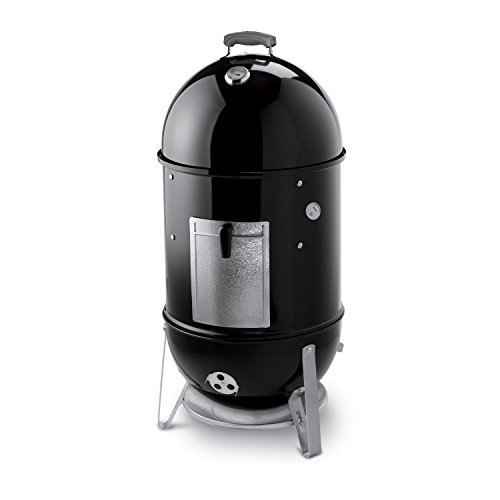
Weber Smokey Mountain Cooker 18-inch — Best Charcoal-and-Chunk Burner
This pick suits households wanting strong smoke flavour with bullet stability. It is not the right buy for full packer briskets without trimming — that distinction matters more in this category than any single specification, because the wrong format will sit unused no matter how well it is built. In the context of an oak-fired brisket cook where smoke quality, not gadgets, decides the result, it earns its badge by handling the core job with the fewest compromises for its intended cook.
Strengths
- The sweet spot of capacity and charcoal economy for most families
- Same stable, enamelled design as its bigger sibling
- Easy to store in a shed corner
Trade-offs
- Full packer briskets need trimming or a rack bend to fit
- Two grates mean lifting the top load to reach the bottom
- Water pan management on overnight cooks
Key spec: 18-inch charcoal bullet smoker, dual grates per the Amazon listing.
Look closer at how it behaves over a full cook. The first hour flatters almost every product in this category; differences appear at hour four, when fuel needs attention, when the weather shifts, or when a second item joins the cook and space gets honest. Owners who love this model tend to share a pattern: their cooking matches the design’s centre of gravity. Owners who return products in this category usually bought a neighbour’s use case instead of their own — a bigger, hotter or more automated unit than their actual weekends require. If your routine matches the ‘best for’ line above, this is a durable choice; if it matches the ‘not suited for’ line, keep reading, because one of the other five was chosen for exactly your situation.
Ownership details deserve a sentence each. Cleaning is the chore that decides whether a cooker gets used weekly or monthly, and this design keeps that chore proportionate to its size. Replacement parts and accessories for established models in this roundup are straightforward to source, which matters in year three, not week one. And resale in this category is kind to recognised designs: if your cooking changes, a known model finds a second owner far more easily than an obscure one.
Best for: households wanting strong smoke flavour with bullet stability / Not suited for: full packer briskets without trimming.
Check on Amazon — check price on Amazon

Oklahoma Joe’s Highland Reverse Flow Offset Smoker — Best Even-Burning Offset
This pick suits long brisket cooks where grate evenness protects the bark. It is not the right buy for small spaces — that distinction matters more in this category than any single specification, because the wrong format will sit unused no matter how well it is built. In the context of an oak-fired brisket cook where smoke quality, not gadgets, decides the result, it earns its badge by handling the core job with the fewest compromises for its intended cook.
Strengths
- Reverse-flow baffle evens out the classic offset hot spot near the firebox
- Largest stated cooking area in this group
- Convertible baffle setup lets you experiment with flow direction
Trade-offs
- Even bigger footprint and weight
- More parts to season and keep sealed
- Still a hands-on stick burner, not a set-and-forget cooker
Key spec: 1,093 sq. in. cooking area per the Amazon listing, reverse-flow baffle design.
Look closer at how it behaves over a full cook. The first hour flatters almost every product in this category; differences appear at hour four, when fuel needs attention, when the weather shifts, or when a second item joins the cook and space gets honest. Owners who love this model tend to share a pattern: their cooking matches the design’s centre of gravity. Owners who return products in this category usually bought a neighbour’s use case instead of their own — a bigger, hotter or more automated unit than their actual weekends require. If your routine matches the ‘best for’ line above, this is a durable choice; if it matches the ‘not suited for’ line, keep reading, because one of the other five was chosen for exactly your situation.
Ownership details deserve a sentence each. Cleaning is the chore that decides whether a cooker gets used weekly or monthly, and this design keeps that chore proportionate to its size. Replacement parts and accessories for established models in this roundup are straightforward to source, which matters in year three, not week one. And resale in this category is kind to recognised designs: if your cooking changes, a known model finds a second owner far more easily than an obscure one.
Best for: long brisket cooks where grate evenness protects the bark / Not suited for: small spaces.
Check on Amazon — check price on Amazon

Dyna-Glo Wide Body Vertical Offset Charcoal Smoker — Best Vertical Wood Burner
This pick suits rack-stacked ribs and sausage over a charcoal-and-wood fire. It is not the right buy for wide single-grate cooking — that distinction matters more in this category than any single specification, because the wrong format will sit unused no matter how well it is built. In the context of an oak-fired brisket cook where smoke quality, not gadgets, decides the result, it earns its badge by handling the core job with the fewest compromises for its intended cook.
Strengths
- Vertical racks stack a lot of food in a small footprint
- Offset firebox keeps direct heat away from the meat
- Hanging and rack options suit ribs and sausage
Trade-offs
- Vertical heat rises, so top and bottom racks cook at different rates
- Door seals benefit from aftermarket gasket
- Charcoal basket access is tighter than a horizontal offset
Key spec: Vertical cabinet with offset firebox, charcoal fuel.
Look closer at how it behaves over a full cook. The first hour flatters almost every product in this category; differences appear at hour four, when fuel needs attention, when the weather shifts, or when a second item joins the cook and space gets honest. Owners who love this model tend to share a pattern: their cooking matches the design’s centre of gravity. Owners who return products in this category usually bought a neighbour’s use case instead of their own — a bigger, hotter or more automated unit than their actual weekends require. If your routine matches the ‘best for’ line above, this is a durable choice; if it matches the ‘not suited for’ line, keep reading, because one of the other five was chosen for exactly your situation.
Ownership details deserve a sentence each. Cleaning is the chore that decides whether a cooker gets used weekly or monthly, and this design keeps that chore proportionate to its size. Replacement parts and accessories for established models in this roundup are straightforward to source, which matters in year three, not week one. And resale in this category is kind to recognised designs: if your cooking changes, a known model finds a second owner far more easily than an obscure one.
Best for: rack-stacked ribs and sausage over a charcoal-and-wood fire / Not suited for: wide single-grate cooking.
Check on Amazon — check price on Amazon

Traeger Pro 22 Wood Pellet Grill & Smoker — Best Automated Wood Burner
This pick suits cooks who want wood flavour on weeknights without fire craft. It is not the right buy for maximum smoke intensity — that distinction matters more in this category than any single specification, because the wrong format will sit unused no matter how well it is built. In the context of an oak-fired brisket cook where smoke quality, not gadgets, decides the result, it earns its badge by handling the core job with the fewest compromises for its intended cook.
Strengths
- The long-running entry point into Traeger pellet cooking
- Included meat probe covers the basics
- Compact footprint for a full pellet grill
Trade-offs
- No Wi-Fi on this generation
- Smaller hopper needs topping up on the longest cooks
- Max temperature suits roasting more than hard searing
Key spec: 572 sq. in., 18 lb hopper and meat probe per the Amazon listing.
Look closer at how it behaves over a full cook. The first hour flatters almost every product in this category; differences appear at hour four, when fuel needs attention, when the weather shifts, or when a second item joins the cook and space gets honest. Owners who love this model tend to share a pattern: their cooking matches the design’s centre of gravity. Owners who return products in this category usually bought a neighbour’s use case instead of their own — a bigger, hotter or more automated unit than their actual weekends require. If your routine matches the ‘best for’ line above, this is a durable choice; if it matches the ‘not suited for’ line, keep reading, because one of the other five was chosen for exactly your situation.
Ownership details deserve a sentence each. Cleaning is the chore that decides whether a cooker gets used weekly or monthly, and this design keeps that chore proportionate to its size. Replacement parts and accessories for established models in this roundup are straightforward to source, which matters in year three, not week one. And resale in this category is kind to recognised designs: if your cooking changes, a known model finds a second owner far more easily than an obscure one.
Best for: cooks who want wood flavour on weeknights without fire craft / Not suited for: maximum smoke intensity.
Check on Amazon — check price on Amazon

Royal Gourmet CC1830S Charcoal Grill and Offset Smoker — Best Budget Wood Burner
This pick suits first live-fire cooker on a tight budget. It is not the right buy for demanding winter performance — that distinction matters more in this category than any single specification, because the wrong format will sit unused no matter how well it is built. In the context of an oak-fired brisket cook where smoke quality, not gadgets, decides the result, it earns its badge by handling the core job with the fewest compromises for its intended cook.
Strengths
- Value-tier way into barrel-plus-offset cooking
- Adjustable charcoal pan helps grill-side heat control
- Front and side tables give working space budget smokers often skip
Trade-offs
- Light steel loses heat and needs shelter
- Offset box is small for true log burning
- Thermometer in the lid reads lid air, not grate temperature
Key spec: 783 sq. in. barrel per the Amazon listing, adjustable charcoal pan.
Look closer at how it behaves over a full cook. The first hour flatters almost every product in this category; differences appear at hour four, when fuel needs attention, when the weather shifts, or when a second item joins the cook and space gets honest. Owners who love this model tend to share a pattern: their cooking matches the design’s centre of gravity. Owners who return products in this category usually bought a neighbour’s use case instead of their own — a bigger, hotter or more automated unit than their actual weekends require. If your routine matches the ‘best for’ line above, this is a durable choice; if it matches the ‘not suited for’ line, keep reading, because one of the other five was chosen for exactly your situation.
Ownership details deserve a sentence each. Cleaning is the chore that decides whether a cooker gets used weekly or monthly, and this design keeps that chore proportionate to its size. Replacement parts and accessories for established models in this roundup are straightforward to source, which matters in year three, not week one. And resale in this category is kind to recognised designs: if your cooking changes, a known model finds a second owner far more easily than an obscure one.
Best for: first live-fire cooker on a tight budget / Not suited for: demanding winter performance.
Check on Amazon — check price on Amazon
Comparison Table
| Pick | Badge | Key spec | Best for |
|---|---|---|---|
| Oklahoma Joe’s Highland Offset Charcoal Smoker Grill | Best Overall Wood Burner | 900 sq. in. cooking area per the Amazon listing, offset charcoal design | cooks who want the full split-log offset experience at a consumer tier |
| Weber Smokey Mountain Cooker 18-inch | Best Charcoal-and-Chunk Burner | 18-inch charcoal bullet smoker, dual grates per the Amazon listing | households wanting strong smoke flavour with bullet stability |
| Oklahoma Joe’s Highland Reverse Flow Offset Smoker | Best Even-Burning Offset | 1,093 sq. in. cooking area per the Amazon listing, reverse-flow baffle design | long brisket cooks where grate evenness protects the bark |
| Dyna-Glo Wide Body Vertical Offset Charcoal Smoker | Best Vertical Wood Burner | Vertical cabinet with offset firebox, charcoal fuel | rack-stacked ribs and sausage over a charcoal-and-wood fire |
| Traeger Pro 22 Wood Pellet Grill & Smoker | Best Automated Wood Burner | 572 sq. in., 18 lb hopper and meat probe per the Amazon listing | cooks who want wood flavour on weeknights without fire craft |
| Royal Gourmet CC1830S Charcoal Grill and Offset Smoker | Best Budget Wood Burner | 783 sq. in. barrel per the Amazon listing, adjustable charcoal pan | first live-fire cooker on a tight budget |
Read the table as a map, not a league ladder. The right row is the one whose ‘best for’ column describes your cooking; the wrong row, however impressive its specification, will frustrate you. Check price on Amazon for the top pick once you have narrowed the field to two.
How to Choose the Right Option When Shopping for Best wood burning bbq smokers
Smoke intensity by design: offset, bullet, cabinet and pellet compared
Start with your own routine. Smoke intensity by design: offset, bullet, cabinet and pellet compared sounds like a specification question, but it is really a behaviour question: the best answer depends on how often you cook, for how many people, and how much attention you enjoy paying. In this category, buyers routinely over-weight the headline version of this factor and under-weight the version they will live with — the setup on a rainy Friday, the cleanup on a Sunday night, the storage in February. Weight the lived version.
Then compare the shortlist honestly. Two or three of the six picks above will usually survive this factor; the rest can be struck off with confidence, which is progress, not indecision. If a detail is not stated in a listing, treat it as absent rather than assumed — in this category, unstated features are usually missing features. Finally, remember that budget tiers here buy build quality and convenience, not a different category of result: a well-chosen budget-tier pick, cooked on attentively, beats a premium pick used reluctantly.
Wood selection and moisture: splits, chunks, chips and pellets
Start with your own routine. Wood selection and moisture: splits, chunks, chips and pellets sounds like a specification question, but it is really a behaviour question: the best answer depends on how often you cook, for how many people, and how much attention you enjoy paying. In this category, buyers routinely over-weight the headline version of this factor and under-weight the version they will live with — the setup on a rainy Friday, the cleanup on a Sunday night, the storage in February. Weight the lived version.
Then compare the shortlist honestly. Two or three of the six picks above will usually survive this factor; the rest can be struck off with confidence, which is progress, not indecision. If a detail is not stated in a listing, treat it as absent rather than assumed — in this category, unstated features are usually missing features. Finally, remember that budget tiers here buy build quality and convenience, not a different category of result: a well-chosen budget-tier pick, cooked on attentively, beats a premium pick used reluctantly.
Fire management rhythm each format demands
Start with your own routine. Fire management rhythm each format demands sounds like a specification question, but it is really a behaviour question: the best answer depends on how often you cook, for how many people, and how much attention you enjoy paying. In this category, buyers routinely over-weight the headline version of this factor and under-weight the version they will live with — the setup on a rainy Friday, the cleanup on a Sunday night, the storage in February. Weight the lived version.
Then compare the shortlist honestly. Two or three of the six picks above will usually survive this factor; the rest can be struck off with confidence, which is progress, not indecision. If a detail is not stated in a listing, treat it as absent rather than assumed — in this category, unstated features are usually missing features. Finally, remember that budget tiers here buy build quality and convenience, not a different category of result: a well-chosen budget-tier pick, cooked on attentively, beats a premium pick used reluctantly.
Clean smoke versus dirty smoke and how design affects it
Start with your own routine. Clean smoke versus dirty smoke and how design affects it sounds like a specification question, but it is really a behaviour question: the best answer depends on how often you cook, for how many people, and how much attention you enjoy paying. In this category, buyers routinely over-weight the headline version of this factor and under-weight the version they will live with — the setup on a rainy Friday, the cleanup on a Sunday night, the storage in February. Weight the lived version.
Then compare the shortlist honestly. Two or three of the six picks above will usually survive this factor; the rest can be struck off with confidence, which is progress, not indecision. If a detail is not stated in a listing, treat it as absent rather than assumed — in this category, unstated features are usually missing features. Finally, remember that budget tiers here buy build quality and convenience, not a different category of result: a well-chosen budget-tier pick, cooked on attentively, beats a premium pick used reluctantly.
Running costs in fuel, time and attention
Start with your own routine. Running costs in fuel, time and attention sounds like a specification question, but it is really a behaviour question: the best answer depends on how often you cook, for how many people, and how much attention you enjoy paying. In this category, buyers routinely over-weight the headline version of this factor and under-weight the version they will live with — the setup on a rainy Friday, the cleanup on a Sunday night, the storage in February. Weight the lived version.
Then compare the shortlist honestly. Two or three of the six picks above will usually survive this factor; the rest can be struck off with confidence, which is progress, not indecision. If a detail is not stated in a listing, treat it as absent rather than assumed — in this category, unstated features are usually missing features. Finally, remember that budget tiers here buy build quality and convenience, not a different category of result: a well-chosen budget-tier pick, cooked on attentively, beats a premium pick used reluctantly.
How to Burn Clean Wood Smoke, Whatever Your Cooker
- Start the fire well before the food: the goal is a glowing coal bed with thin, pale smoke, not fresh-log billow.
- Add smaller splits more often rather than one large log that smoulders.
- Keep the exhaust fully open and control heat at the intake; choking the chimney makes dirty smoke.
- Pre-warm the next split on the firebox or in the sun so it ignites fast instead of smouldering.
- Watch the smoke, not just the thermometer: thin and blue-grey is right; thick white means adjust airflow.
- Keep a fire log for your cooker; wood species, size and weather patterns repeat.
Two habits separate good results from great ones in an oak-fired brisket cook where smoke quality, not gadgets, decides the result. The first is patience at transitions: most failures in this category happen in the ten minutes after a change — new fuel, an opened door, a moved cut — when the cook reacts twice before the cooker has answered once. Change one thing, wait, then judge. The second is notes. A phone note per cook — weather, fuel, timing, result — compounds faster than any accessory purchase. By your fifth cook you will own a manual written for your exact cooker, your exact patio and your exact cuts, which no guide, including this one, can give you.
Common Buying Mistakes
- Loading meat while the fire is still producing thick white ignition smoke.
- Using green, painted or softwood timber and blaming the recipe for bitter food.
- Sealing every vent to ‘keep smoke in’, which makes stale, acrid smoke instead.
- Buying the cheapest bagged chunks with no species labelling.
- Judging smoke by volume — more visible smoke usually means worse smoke.
Underlying all five is the same error: buying for an imagined cook instead of the real one. The fix costs nothing — describe your last five cooks honestly, and let that list, not an aspirational one, choose the size, the fuel and the feature set.
Final Recommendation
Start with the Oklahoma Joe’s Highland Offset Charcoal Smoker Grill (Best Overall Wood Burner) if its ‘best for’ line describes you — for most readers of this guide it is the safest single answer. Check price on Amazon. If your cooking leans the other way, the badges are the shortcut: each of the six exists because a real type of cook needs it. Related reading in this series: Best Wireless Meat Thermometers For Grills · Best Wood Backyard Smokers · Best Wood Barbecue Grills Traeger · Best Wood Bbq Smokers For Competition
A Longer View: Living With the Choice
Articles about the best wood burning bbq smokers tend to end at the purchase, but satisfaction is decided in months two through twelve. By then the novelty has gone and what remains is rhythm: how the cooker fits your space, your weather and your patience. The picks in this guide were chosen with that second year in mind. Designs with sound fundamentals — honest airflow, serviceable parts, a cleaning routine you will actually perform — age gracefully. Designs bought for a single headline feature age into clutter. If you are torn between two finalists, choose the one whose weekly routine you can picture yourself repeating in February, not the one that excites you most in May.
There is also a skill curve worth naming. Every format in this category teaches the cook something: fire formats teach fuel and airflow; automated formats teach trust and timing; compact formats teach organisation. None of that learning transfers perfectly between formats, which is why experienced cooks advise choosing the format whose lessons you will enjoy learning. A season of cooks on the right format will improve your food more than any upgrade. Buy once, cook often, take notes — that sequence, in that order, is the real recommendation behind every badge in this guide.
Ownership, Season by Season: Best wood burning bbq smokers
Spring is when most of these purchases happen, and it flatters every design: mild weather, fresh enthusiasm, short cooks. Judge the shortlist instead by the other three seasons. In summer heat, the question is control at the low end and shade for both cooker and cook; a unit that overshoots on a still, hot afternoon will test your patience with delicate food. In autumn, cooks get longer and evenings darker, so work lights, readable displays and a fire rhythm you can keep in the dark start to matter more than any spring specification. In winter, wind is the real opponent — it strips heat from thin steel, worries flames and doubles fuel use — and the cooks who thrive are the ones who planned shelter and fuel storage back in spring.
Maintenance follows the same seasonal logic. Monthly, during the season: clear ash and grease, check seals and gaskets by feel, and confirm that moving parts still move freely. Quarterly: inspect for rust at seams and fasteners, touch up bare metal, and test any thermometer against a known reference such as boiling water at your altitude. Annually: deep-clean, replace tired gaskets, and service the parts your specific model is known to wear. None of this is glamorous, and all of it is cheaper than the replacement purchase it prevents. The owners who keep a cooker for a decade are rarely the ones who bought the most expensive model; they are the ones whose maintenance rhythm never slipped.
Accessories deserve the same discipline. Buy them in the order your cook log demands, not in the order shops display them. For most readers of this guide the first accessory is measurement — a reliable way to know food temperature and grate temperature independently — because information improves every cook. The second is usually protection: a fitted cover or a sheltered storage spot, because weather does more damage than cooking ever will. Only after those two should capacity or convenience accessories enter the basket, and each should have to name the specific cook it improves. An accessory that cannot name its cook is decoration.
Finally, a word on upgrading. This category encourages a familiar ladder: entry model, mid model, dream model. The ladder is worth climbing slowly. Each format teaches distinct skills, and a cook who masters an entry design will extract more from a premium one than a cook who skips the learning stage. If your current cooker is in this guide’s category at all, cook on it for a full season with notes before replacing it. The notes will tell you whether your frustration is with the equipment — fixable by upgrading — or with a technique, which follows you to the next purchase free of charge. That distinction, honestly made, is worth more than any single recommendation in this article, including our top pick.
Building bark without bitterness
Bark is a negotiation between smoke, surface moisture and time. A dry, well-seasoned surface in clean smoke builds colour steadily; a wet surface or dirty smoke builds colour fast and flavour badly. Spritzing has its place — it cools hot spots and helps smoke adhere — but every opening costs heat and time, so spritz with a purpose, not on a timer. Wrap decisions belong to the bark, not the clock: wrap when the colour and texture are right and the stall is real, and not before either.
Write down what happens the first three times you apply this. In this category, advice only becomes knowledge when your own cooker confirms it — steel thickness, local wind and your fuel supply all edit the theory. Three logged cooks turn a general principle into your principle, calibrated to your patio, and that calibration is exactly what separates cooks who improve every season from cooks who repeat their first season ten times.
Wood itself deserves a storage plan before the first cook. A face cord dumped against a fence will season unevenly, shelter spiders and absorb ground moisture; a simple rack under cover, stacked with air gaps and off the soil, keeps fuel ready and measurable. Label stacks by species and season if you split your own — future you, mid-brisket at midnight, will be grateful for fuel whose behaviour is known. Buy or cut ahead so the wood dictates nothing: the worst smoke comes from whatever was available, and the best from a boring, consistent supply. Master your fuel supply and every cooker in this guide performs closer to its best; neglect it, and even the finest offset will taste like the woodpile’s mistakes.
Learn one cut completely before expanding the repertoire. A pork butt, cooked five times in a row on the same fuel with notes, teaches fire behaviour, bark judgement and resting discipline that transfer to every other cut you will ever smoke. Variety too early hides the lesson, because every variable changes at once and nothing can be blamed or credited honestly. Depth first, breadth second — the order feels slow for a month and pays for years, and your fifth butt will embarrass your first brisket in the best possible way.
Resting is part of the fire’s work, not an afterthought. Carryover, juice redistribution and bark setting all finish off the heat, and a rest planned with the same care as the cook — wrapped or unwrapped by intention, held warm but not steaming — protects everything the fire built.
Serve smoked food with its rest juices, never despite them: slice over the board, return the meat through its own juices, and let the table see the result of the fire rather than a dried presentation of it.
Related guides
Frequently Asked Questions
Which smoker gives the strongest wood flavour?
A split-log offset, run well. Charcoal-and-chunk bullets come next, then cabinets, with pellet cookers giving the cleanest, mildest profile.
What is the best wood for beginners?
Oak for long cooks, with apple or cherry for pork and poultry. All should be seasoned hardwood, split or chunked to suit your firebox.
Why does my smoked food taste bitter?
Usually dirty smoke: green wood, a smouldering fire or closed exhaust. Fix the fire first; rubs and sauces cannot rescue acrid bark.
Can pellets count as wood burning?
Yes — pellets are compressed hardwood, burned in an automated fire pot. The flavour is real but milder than split-log cooking.
How dry should smoking wood be?
Seasoned, not kiln-bone-dry and not green. It should feel light for its size, with checked ends, and ignite readily on a coal bed.
Still deciding? Re-read the comparison table with your last five cooks in mind, then check price on Amazon for the two finalists — in this category, the honest shortlist is the whole battle.


