Disclosure: airfryerkitchensupply.com is reader-supported. When you buy through links on our site, we may earn an affiliate commission at no extra cost to you.
Where to buy
The best wood burning vault smokers in this guide are sold through Amazon and the makers’ own stores. Availability shifts by season, especially around spring grilling season and autumn hunting season, so use the links in each review to check price on Amazon and confirm the exact model before you buy. Model names in this category are confusingly similar — a single suffix often separates a different size, a different controller or a different fuel setup — so match the full name in our sources list against the listing title before ordering.
Finding the best wood burning vault smokers is harder than the marketing suggests, because this category rewards honesty about how you cook. This guide covers vault smokers — tall, insulated-style cabinet smokers with stacked racks and a fire or element at the base — compared for batch capacity, rack workflow and the cooks (sausage, jerky, ribs, whole birds) where a cabinet beats a barrel. Every product below was cross-checked against the Amazon catalogue before it earned a link; anything we could not verify is covered without a link, with no link attached. Picture a full cabinet load: ribs on top racks, a brisket below, and sausage hanging at the side: the picks are judged against that reality, not against a laboratory.
Three questions decide this purchase. First, how much involvement do you want during the cook — this category spans everything from near-automatic to a fire you feed by hand. Second, what do you cook most often, in what quantity, because capacity figures flatter almost every product here. Third, where will it live: footprint, shelter, power access and storage decide long-term satisfaction as much as cooking performance does. The buying guide later in this article works through each question in the order experienced owners wish they had asked them.
In this guide
Quick Picks
- Pit Boss 4-Series Vertical Pellet Smoker — Best Overall Vault. Best for batch cooks wanting pellet automation in a tall cabinet. Check price on Amazon.
- Masterbuilt 710 WiFi Digital Electric Smoker — Best Electric Vault. Best for hands-off cabinet smoking with app monitoring. Check price on Amazon.
- Dyna-Glo Wide Body Vertical Offset Charcoal Smoker — Best Charcoal Vault. Best for live-fire cabinet cooking with an offset firebox. Check price on Amazon.
- Masterbuilt 30-inch Digital Electric Smoker MB20071117 — Best Value Vault. Best for households starting cabinet smoking at a sensible tier. Check price on Amazon.
- Pit Boss 3-Series Vertical Pellet Smoker — Best Compact Vault. Best for smaller patios that still want a connected pellet cabinet. Check price on Amazon.
- Masterbuilt 30-inch Digital Electric Smoker with Leg Kit MB20070421 — Best Raised-Height Vault. Best for cooks who want the cabinet at standing working height on its leg kit. Check price on Amazon.
How These Picks Were Chosen
We started from the full field of products a buyer searching for best wood burning vault smokers will encounter, then filtered hard. Products stayed on the list only if they could be verified in the Amazon catalogue — name, model and listing matched — and only if they represent a genuinely different choice rather than a colour variant. We weighed design fundamentals that predict real performance in this category, owner-reported reliability patterns, and the fit between each product and a distinct type of cook. Six survived. They are not ranked by price or by brand size; each carries a badge naming the job it does best, and each review states plainly who should skip it.
Two rules governed the writing. No static prices appear anywhere in this article, because prices in this category move constantly; every link says check price on Amazon instead. And no fixed ratings or review counts are quoted, for the same reason — a number printed here would be stale within weeks. What you get instead is the reasoning: what each design does well, where it compromises, and which cook it serves.
The 6 Best wood burning vault smokers

Pit Boss 4-Series Vertical Pellet Smoker — Best Overall Vault
This pick suits batch cooks wanting pellet automation in a tall cabinet. It is not the right buy for live-fire purists — that distinction matters more in this category than any single specification, because the wrong format will sit unused no matter how well it is built. In the context of a full cabinet load: ribs on top racks, a brisket below, and sausage hanging at the side, it earns its badge by handling the core job with the fewest compromises for its intended cook.
Strengths
- Pellet feed in a vertical cabinet gives capacity without fire tending
- Wi-Fi and Bluetooth monitoring
- Cabinet format suits hanging ribs and stacking briskets
Trade-offs
- Pellet smoke is cleaner and milder than log smoke
- Tall cabinet needs a sheltered, level spot
- Hopper and electronics need weather protection
Key spec: Vertical pellet cabinet with Wi-Fi and Bluetooth per the cache listing.
Look closer at how it behaves over a full cook. The first hour flatters almost every product in this category; differences appear at hour four, when fuel needs attention, when the weather shifts, or when a second item joins the cook and space gets honest. Owners who love this model tend to share a pattern: their cooking matches the design’s centre of gravity. Owners who return products in this category usually bought a neighbour’s use case instead of their own — a bigger, hotter or more automated unit than their actual weekends require. If your routine matches the ‘best for’ line above, this is a durable choice; if it matches the ‘not suited for’ line, keep reading, because one of the other five was chosen for exactly your situation.
Ownership details deserve a sentence each. Cleaning is the chore that decides whether a cooker gets used weekly or monthly, and this design keeps that chore proportionate to its size. Replacement parts and accessories for established models in this roundup are straightforward to source, which matters in year three, not week one. And resale in this category is kind to recognised designs: if your cooking changes, a known model finds a second owner far more easily than an obscure one.
Best for: batch cooks wanting pellet automation in a tall cabinet / Not suited for: live-fire purists.
Check on Amazon — check price on Amazon

Masterbuilt 710 WiFi Digital Electric Smoker — Best Electric Vault
This pick suits hands-off cabinet smoking with app monitoring. It is not the right buy for strongest smoke flavour seekers — that distinction matters more in this category than any single specification, because the wrong format will sit unused no matter how well it is built. In the context of a full cabinet load: ribs on top racks, a brisket below, and sausage hanging at the side, it earns its badge by handling the core job with the fewest compromises for its intended cook.
Strengths
- Wi-Fi monitoring suits long, hands-off smokes
- Four racks organise different foods by level
- Plug-in simplicity for apartment-adjacent patios where charcoal is banned
Trade-offs
- App dependence for the best experience
- Mild smoke ceiling of electric designs
- Needs a weather-protected outlet
Key spec: 711 sq. in., four racks and Wi-Fi per the Amazon listing.
Look closer at how it behaves over a full cook. The first hour flatters almost every product in this category; differences appear at hour four, when fuel needs attention, when the weather shifts, or when a second item joins the cook and space gets honest. Owners who love this model tend to share a pattern: their cooking matches the design’s centre of gravity. Owners who return products in this category usually bought a neighbour’s use case instead of their own — a bigger, hotter or more automated unit than their actual weekends require. If your routine matches the ‘best for’ line above, this is a durable choice; if it matches the ‘not suited for’ line, keep reading, because one of the other five was chosen for exactly your situation.
Ownership details deserve a sentence each. Cleaning is the chore that decides whether a cooker gets used weekly or monthly, and this design keeps that chore proportionate to its size. Replacement parts and accessories for established models in this roundup are straightforward to source, which matters in year three, not week one. And resale in this category is kind to recognised designs: if your cooking changes, a known model finds a second owner far more easily than an obscure one.
Best for: hands-off cabinet smoking with app monitoring / Not suited for: strongest smoke flavour seekers.
Check on Amazon — check price on Amazon
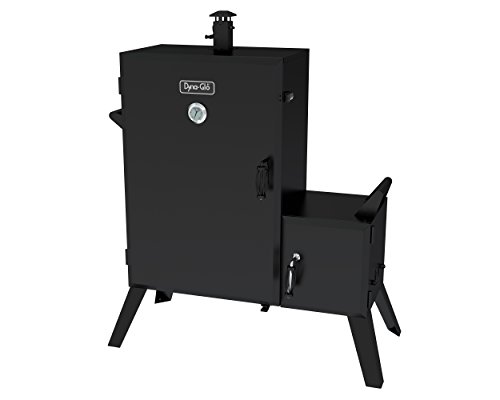
Dyna-Glo Wide Body Vertical Offset Charcoal Smoker — Best Charcoal Vault
This pick suits live-fire cabinet cooking with an offset firebox. It is not the right buy for cooks who dislike rack rotation — that distinction matters more in this category than any single specification, because the wrong format will sit unused no matter how well it is built. In the context of a full cabinet load: ribs on top racks, a brisket below, and sausage hanging at the side, it earns its badge by handling the core job with the fewest compromises for its intended cook.
Strengths
- Vertical racks stack a lot of food in a small footprint
- Offset firebox keeps direct heat away from the meat
- Hanging and rack options suit ribs and sausage
Trade-offs
- Vertical heat rises, so top and bottom racks cook at different rates
- Door seals benefit from aftermarket gasket
- Charcoal basket access is tighter than a horizontal offset
Key spec: Vertical cabinet with offset firebox, charcoal fuel.
Look closer at how it behaves over a full cook. The first hour flatters almost every product in this category; differences appear at hour four, when fuel needs attention, when the weather shifts, or when a second item joins the cook and space gets honest. Owners who love this model tend to share a pattern: their cooking matches the design’s centre of gravity. Owners who return products in this category usually bought a neighbour’s use case instead of their own — a bigger, hotter or more automated unit than their actual weekends require. If your routine matches the ‘best for’ line above, this is a durable choice; if it matches the ‘not suited for’ line, keep reading, because one of the other five was chosen for exactly your situation.
Ownership details deserve a sentence each. Cleaning is the chore that decides whether a cooker gets used weekly or monthly, and this design keeps that chore proportionate to its size. Replacement parts and accessories for established models in this roundup are straightforward to source, which matters in year three, not week one. And resale in this category is kind to recognised designs: if your cooking changes, a known model finds a second owner far more easily than an obscure one.
Best for: live-fire cabinet cooking with an offset firebox / Not suited for: cooks who dislike rack rotation.
Check on Amazon — check price on Amazon

Masterbuilt 30-inch Digital Electric Smoker MB20071117 — Best Value Vault
This pick suits households starting cabinet smoking at a sensible tier. It is not the right buy for high-heat work of any kind — that distinction matters more in this category than any single specification, because the wrong format will sit unused no matter how well it is built. In the context of a full cabinet load: ribs on top racks, a brisket below, and sausage hanging at the side, it earns its badge by handling the core job with the fewest compromises for its intended cook.
Strengths
- Side chip loader adds wood without opening the door and dumping heat
- Digital control holds a set temperature with almost no tending
- Vertical racks fit a lot of food on a small patio footprint
Trade-offs
- Electric heat gives a gentler smoke profile than a live fire
- Max temperatures suit smoking, not searing
- Element and control panel dislike being left uncovered in rain
Key spec: 710 sq. in. and side wood chip loader per the Amazon listing.
Look closer at how it behaves over a full cook. The first hour flatters almost every product in this category; differences appear at hour four, when fuel needs attention, when the weather shifts, or when a second item joins the cook and space gets honest. Owners who love this model tend to share a pattern: their cooking matches the design’s centre of gravity. Owners who return products in this category usually bought a neighbour’s use case instead of their own — a bigger, hotter or more automated unit than their actual weekends require. If your routine matches the ‘best for’ line above, this is a durable choice; if it matches the ‘not suited for’ line, keep reading, because one of the other five was chosen for exactly your situation.
Ownership details deserve a sentence each. Cleaning is the chore that decides whether a cooker gets used weekly or monthly, and this design keeps that chore proportionate to its size. Replacement parts and accessories for established models in this roundup are straightforward to source, which matters in year three, not week one. And resale in this category is kind to recognised designs: if your cooking changes, a known model finds a second owner far more easily than an obscure one.
Best for: households starting cabinet smoking at a sensible tier / Not suited for: high-heat work of any kind.
Check on Amazon — check price on Amazon
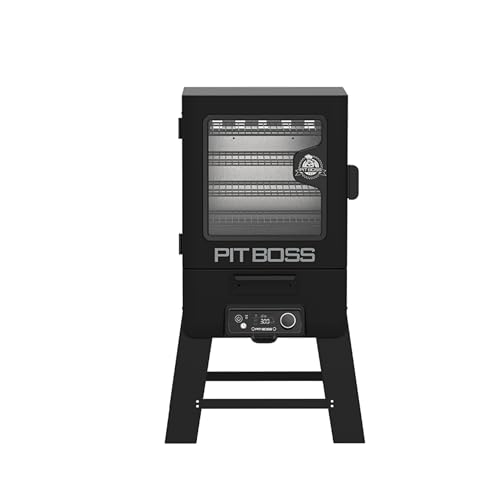
Pit Boss 3-Series Vertical Pellet Smoker — Best Compact Vault
This pick suits smaller patios that still want a connected pellet cabinet. It is not the right buy for full packer briskets as the main event — that distinction matters more in this category than any single specification, because the wrong format will sit unused no matter how well it is built. In the context of a full cabinet load: ribs on top racks, a brisket below, and sausage hanging at the side, it earns its badge by handling the core job with the fewest compromises for its intended cook.
Strengths
- Smaller vertical pellet option for tighter patios
- Connected controls at a lower tier than the 4-Series
- Vertical racks make batch organisation easy
Trade-offs
- Less capacity for full packer briskets
- Pellet flavour ceiling
- Fewer racks than the larger cabinet
Key spec: Vertical pellet cabinet with Wi-Fi and Bluetooth per the cache listing.
Look closer at how it behaves over a full cook. The first hour flatters almost every product in this category; differences appear at hour four, when fuel needs attention, when the weather shifts, or when a second item joins the cook and space gets honest. Owners who love this model tend to share a pattern: their cooking matches the design’s centre of gravity. Owners who return products in this category usually bought a neighbour’s use case instead of their own — a bigger, hotter or more automated unit than their actual weekends require. If your routine matches the ‘best for’ line above, this is a durable choice; if it matches the ‘not suited for’ line, keep reading, because one of the other five was chosen for exactly your situation.
Ownership details deserve a sentence each. Cleaning is the chore that decides whether a cooker gets used weekly or monthly, and this design keeps that chore proportionate to its size. Replacement parts and accessories for established models in this roundup are straightforward to source, which matters in year three, not week one. And resale in this category is kind to recognised designs: if your cooking changes, a known model finds a second owner far more easily than an obscure one.
Best for: smaller patios that still want a connected pellet cabinet / Not suited for: full packer briskets as the main event.
Check on Amazon — check price on Amazon

Masterbuilt 30-inch Digital Electric Smoker with Leg Kit MB20070421 — Best Raised-Height Vault
This pick suits cooks who want the cabinet at standing working height on its leg kit. It is not the right buy for uneven ground where legs wobble — that distinction matters more in this category than any single specification, because the wrong format will sit unused no matter how well it is built. In the context of a full cabinet load: ribs on top racks, a brisket below, and sausage hanging at the side, it earns its badge by handling the core job with the fewest compromises for its intended cook.
Strengths
- Leg kit raises the cabinet to a comfortable working height
- Same side-loading chip system as the base model
- Good capacity for ribs and poultry batches
Trade-offs
- Legs add assembly and a little wobble on uneven ground
- Electric-only heat profile
- Door latch and seal need periodic checking
Key spec: 710 sq. in., leg kit and side chip loader per the Amazon listing.
Look closer at how it behaves over a full cook. The first hour flatters almost every product in this category; differences appear at hour four, when fuel needs attention, when the weather shifts, or when a second item joins the cook and space gets honest. Owners who love this model tend to share a pattern: their cooking matches the design’s centre of gravity. Owners who return products in this category usually bought a neighbour’s use case instead of their own — a bigger, hotter or more automated unit than their actual weekends require. If your routine matches the ‘best for’ line above, this is a durable choice; if it matches the ‘not suited for’ line, keep reading, because one of the other five was chosen for exactly your situation.
Ownership details deserve a sentence each. Cleaning is the chore that decides whether a cooker gets used weekly or monthly, and this design keeps that chore proportionate to its size. Replacement parts and accessories for established models in this roundup are straightforward to source, which matters in year three, not week one. And resale in this category is kind to recognised designs: if your cooking changes, a known model finds a second owner far more easily than an obscure one.
Best for: cooks who want the cabinet at standing working height on its leg kit / Not suited for: uneven ground where legs wobble.
Check on Amazon — check price on Amazon
Comparison Table
| Pick | Badge | Key spec | Best for |
|---|---|---|---|
| Pit Boss 4-Series Vertical Pellet Smoker | Best Overall Vault | Vertical pellet cabinet with Wi-Fi and Bluetooth per the cache listing | batch cooks wanting pellet automation in a tall cabinet |
| Masterbuilt 710 WiFi Digital Electric Smoker | Best Electric Vault | 711 sq. in., four racks and Wi-Fi per the Amazon listing | hands-off cabinet smoking with app monitoring |
| Dyna-Glo Wide Body Vertical Offset Charcoal Smoker | Best Charcoal Vault | Vertical cabinet with offset firebox, charcoal fuel | live-fire cabinet cooking with an offset firebox |
| Masterbuilt 30-inch Digital Electric Smoker MB20071117 | Best Value Vault | 710 sq. in. and side wood chip loader per the Amazon listing | households starting cabinet smoking at a sensible tier |
| Pit Boss 3-Series Vertical Pellet Smoker | Best Compact Vault | Vertical pellet cabinet with Wi-Fi and Bluetooth per the cache listing | smaller patios that still want a connected pellet cabinet |
| Masterbuilt 30-inch Digital Electric Smoker with Leg Kit MB20070421 | Best Raised-Height Vault | 710 sq. in., leg kit and side chip loader per the Amazon listing | cooks who want the cabinet at standing working height on its leg kit |
Read the table as a map, not a league ladder. The right row is the one whose ‘best for’ column describes your cooking; the wrong row, however impressive its specification, will frustrate you. Check price on Amazon for the top pick once you have narrowed the field to two.
How to Choose the Right Option When Shopping for Best wood burning vault smokers
Cabinet capacity in racks and what each rack actually fits
Start with your own routine. Cabinet capacity in racks and what each rack actually fits sounds like a specification question, but it is really a behaviour question: the best answer depends on how often you cook, for how many people, and how much attention you enjoy paying. In this category, buyers routinely over-weight the headline version of this factor and under-weight the version they will live with — the setup on a rainy Friday, the cleanup on a Sunday night, the storage in February. Weight the lived version.
Then compare the shortlist honestly. Two or three of the six picks above will usually survive this factor; the rest can be struck off with confidence, which is progress, not indecision. If a detail is not stated in a listing, treat it as absent rather than assumed — in this category, unstated features are usually missing features. Finally, remember that budget tiers here buy build quality and convenience, not a different category of result: a well-chosen budget-tier pick, cooked on attentively, beats a premium pick used reluctantly.
Heat source: charcoal firebox, electric element or pellet feed
Start with your own routine. Heat source: charcoal firebox, electric element or pellet feed sounds like a specification question, but it is really a behaviour question: the best answer depends on how often you cook, for how many people, and how much attention you enjoy paying. In this category, buyers routinely over-weight the headline version of this factor and under-weight the version they will live with — the setup on a rainy Friday, the cleanup on a Sunday night, the storage in February. Weight the lived version.
Then compare the shortlist honestly. Two or three of the six picks above will usually survive this factor; the rest can be struck off with confidence, which is progress, not indecision. If a detail is not stated in a listing, treat it as absent rather than assumed — in this category, unstated features are usually missing features. Finally, remember that budget tiers here buy build quality and convenience, not a different category of result: a well-chosen budget-tier pick, cooked on attentively, beats a premium pick used reluctantly.
Rack-level temperature spread and rotation strategy
Start with your own routine. Rack-level temperature spread and rotation strategy sounds like a specification question, but it is really a behaviour question: the best answer depends on how often you cook, for how many people, and how much attention you enjoy paying. In this category, buyers routinely over-weight the headline version of this factor and under-weight the version they will live with — the setup on a rainy Friday, the cleanup on a Sunday night, the storage in February. Weight the lived version.
Then compare the shortlist honestly. Two or three of the six picks above will usually survive this factor; the rest can be struck off with confidence, which is progress, not indecision. If a detail is not stated in a listing, treat it as absent rather than assumed — in this category, unstated features are usually missing features. Finally, remember that budget tiers here buy build quality and convenience, not a different category of result: a well-chosen budget-tier pick, cooked on attentively, beats a premium pick used reluctantly.
Door seal, latches and water pan access
Start with your own routine. Door seal, latches and water pan access sounds like a specification question, but it is really a behaviour question: the best answer depends on how often you cook, for how many people, and how much attention you enjoy paying. In this category, buyers routinely over-weight the headline version of this factor and under-weight the version they will live with — the setup on a rainy Friday, the cleanup on a Sunday night, the storage in February. Weight the lived version.
Then compare the shortlist honestly. Two or three of the six picks above will usually survive this factor; the rest can be struck off with confidence, which is progress, not indecision. If a detail is not stated in a listing, treat it as absent rather than assumed — in this category, unstated features are usually missing features. Finally, remember that budget tiers here buy build quality and convenience, not a different category of result: a well-chosen budget-tier pick, cooked on attentively, beats a premium pick used reluctantly.
Hanging versus racking: hooks, rails and sausage work
Start with your own routine. Hanging versus racking: hooks, rails and sausage work sounds like a specification question, but it is really a behaviour question: the best answer depends on how often you cook, for how many people, and how much attention you enjoy paying. In this category, buyers routinely over-weight the headline version of this factor and under-weight the version they will live with — the setup on a rainy Friday, the cleanup on a Sunday night, the storage in February. Weight the lived version.
Then compare the shortlist honestly. Two or three of the six picks above will usually survive this factor; the rest can be struck off with confidence, which is progress, not indecision. If a detail is not stated in a listing, treat it as absent rather than assumed — in this category, unstated features are usually missing features. Finally, remember that budget tiers here buy build quality and convenience, not a different category of result: a well-chosen budget-tier pick, cooked on attentively, beats a premium pick used reluctantly.
How to Load and Run a Vault Smoker Evenly
- Preheat the cabinet empty until every rack level settles; cabinets take longer to stabilise than barrels.
- Load the longest-cooking items lowest, nearest the heat, and quick items higher.
- Leave air gaps between pieces; a packed cabinet cooks unevenly and steams instead of smoking.
- Rotate racks once, halfway, swapping top and bottom positions.
- Use the water pan as your humidity tool: full for poultry skin insurance, empty or sand-filled for firmer bark.
- Cool, ash or empty the base, and wipe door seals before storing so the next cook seals properly.
Two habits separate good results from great ones in a full cabinet load: ribs on top racks, a brisket below, and sausage hanging at the side. The first is patience at transitions: most failures in this category happen in the ten minutes after a change — new fuel, an opened door, a moved cut — when the cook reacts twice before the cooker has answered once. Change one thing, wait, then judge. The second is notes. A phone note per cook — weather, fuel, timing, result — compounds faster than any accessory purchase. By your fifth cook you will own a manual written for your exact cooker, your exact patio and your exact cuts, which no guide, including this one, can give you.
Common Buying Mistakes
- Filling every rack edge to edge on the first cook and blaming the smoker for uneven results.
- Never rotating racks in a format where heat naturally stratifies.
- Opening the tall door repeatedly — a cabinet dumps more heat per opening than a barrel lid.
- Ignoring the water pan until it boils dry and scorches.
- Storing the cabinet with ash or grease in the base, where moisture breeds rust and off smells.
Underlying all five is the same error: buying for an imagined cook instead of the real one. The fix costs nothing — describe your last five cooks honestly, and let that list, not an aspirational one, choose the size, the fuel and the feature set.
Final Recommendation
Start with the Pit Boss 4-Series Vertical Pellet Smoker (Best Overall Vault) if its ‘best for’ line describes you — for most readers of this guide it is the safest single answer. Check price on Amazon. If your cooking leans the other way, the badges are the shortcut: each of the six exists because a real type of cook needs it. Related reading in this series: Best Wireless Meat Thermometers For Grills · Best Wood Backyard Smokers · Best Wood Barbecue Grills Traeger · Best Wood Bbq Smokers For Competition
A Longer View: Living With the Choice
Articles about the best wood burning vault smokers tend to end at the purchase, but satisfaction is decided in months two through twelve. By then the novelty has gone and what remains is rhythm: how the cooker fits your space, your weather and your patience. The picks in this guide were chosen with that second year in mind. Designs with sound fundamentals — honest airflow, serviceable parts, a cleaning routine you will actually perform — age gracefully. Designs bought for a single headline feature age into clutter. If you are torn between two finalists, choose the one whose weekly routine you can picture yourself repeating in February, not the one that excites you most in May.
There is also a skill curve worth naming. Every format in this category teaches the cook something: fire formats teach fuel and airflow; automated formats teach trust and timing; compact formats teach organisation. None of that learning transfers perfectly between formats, which is why experienced cooks advise choosing the format whose lessons you will enjoy learning. A season of cooks on the right format will improve your food more than any upgrade. Buy once, cook often, take notes — that sequence, in that order, is the real recommendation behind every badge in this guide.
Ownership, Season by Season: Best wood burning vault smokers
Spring is when most of these purchases happen, and it flatters every design: mild weather, fresh enthusiasm, short cooks. Judge the shortlist instead by the other three seasons. In summer heat, the question is control at the low end and shade for both cooker and cook; a unit that overshoots on a still, hot afternoon will test your patience with delicate food. In autumn, cooks get longer and evenings darker, so work lights, readable displays and a fire rhythm you can keep in the dark start to matter more than any spring specification. In winter, wind is the real opponent — it strips heat from thin steel, worries flames and doubles fuel use — and the cooks who thrive are the ones who planned shelter and fuel storage back in spring.
Maintenance follows the same seasonal logic. Monthly, during the season: clear ash and grease, check seals and gaskets by feel, and confirm that moving parts still move freely. Quarterly: inspect for rust at seams and fasteners, touch up bare metal, and test any thermometer against a known reference such as boiling water at your altitude. Annually: deep-clean, replace tired gaskets, and service the parts your specific model is known to wear. None of this is glamorous, and all of it is cheaper than the replacement purchase it prevents. The owners who keep a cooker for a decade are rarely the ones who bought the most expensive model; they are the ones whose maintenance rhythm never slipped.
Accessories deserve the same discipline. Buy them in the order your cook log demands, not in the order shops display them. For most readers of this guide the first accessory is measurement — a reliable way to know food temperature and grate temperature independently — because information improves every cook. The second is usually protection: a fitted cover or a sheltered storage spot, because weather does more damage than cooking ever will. Only after those two should capacity or convenience accessories enter the basket, and each should have to name the specific cook it improves. An accessory that cannot name its cook is decoration.
Finally, a word on upgrading. This category encourages a familiar ladder: entry model, mid model, dream model. The ladder is worth climbing slowly. Each format teaches distinct skills, and a cook who masters an entry design will extract more from a premium one than a cook who skips the learning stage. If your current cooker is in this guide’s category at all, cook on it for a full season with notes before replacing it. The notes will tell you whether your frustration is with the equipment — fixable by upgrading — or with a technique, which follows you to the next purchase free of charge. That distinction, honestly made, is worth more than any single recommendation in this article, including our top pick.
Hanging versus racking in a cabinet
A cabinet offers two geometries. Racked food cooks in layers and suits flat items and pans; hung food — ribs on hooks, sausage in loops, whole birds — cooks in the rising heat column with no grate marks and no pooling juices. Hanging rewards vertical space and punishes overloading, because touching pieces steam each other. Try the same cut both ways across two cooks before deciding your default; many cabinet owners end up hanging ribs and racking everything else, and the cook log, not habit, should make that call.
Write down what happens the first three times you apply this. In this category, advice only becomes knowledge when your own cooker confirms it — steel thickness, local wind and your fuel supply all edit the theory. Three logged cooks turn a general principle into your principle, calibrated to your patio, and that calibration is exactly what separates cooks who improve every season from cooks who repeat their first season ten times.
Think about what a cabinet does to your cooking repertoire over a year. The rack format quietly encourages foods other formats discourage: trays of jerky drying slowly, sausages linked and hung, peppers and chillies smoked for the pantry, whole fish that would fall apart on a grate. Owners often find the second year of vault ownership more interesting than the first, because the cabinet becomes a small smokehouse rather than a brisket machine. If that trajectory appeals to you, weight rack count, hook options and low-temperature control heavily in your choice. If it does not — if brisket and ribs are the whole ambition — a barrel may serve you better, and the honest answer now is worth more than the fashionable one.
Label racks and keep them in a fixed order. Cabinet racks look identical and are not: slight size differences and warps accumulate, and a rack that always lives at the same level makes your rotation notes meaningful from cook to cook. A dab of high-heat paint or a stamped notch costs nothing and turns the cabinet into an instrument you can read. The same applies to hooks and rails — a fixed system, logged simply, is what lets a vault owner reproduce a great batch of sausage or jerky instead of approximately remembering it.
Date and label everything you smoke for storage. Cabinet batches blur together in a freezer within a month, and the cook who labelled species of wood, cure and date on the packet can repeat a success, while the cook who guessed is starting over. A marker and tape at the cabinet is the cheapest upgrade in this entire guide.
Wipe the door glass, where fitted, while the cabinet is still warm; smoke film releases easily then and resists every solvent once it has baked through a second cook.
Frequently Asked Questions
What is a vault smoker best at?
Batch cooking: ribs, sausage, jerky, whole birds and multiple butts stacked on racks in a small footprint. It is the most space-efficient smoker format.
Do cabinet smokers cook evenly?
Not automatically — heat rises, so levels differ. Good loading order and one mid-cook rack rotation close most of the gap.
Charcoal, electric or pellet vault: which should I choose?
Charcoal gives the strongest smoke and no power dependence; electric gives the steadiest hands-off heat with milder smoke; pellet sits between, automated with clean smoke.
Can a vault smoker cook a brisket?
Yes, on its widest rack — check rack dimensions against a full packer before buying, as cabinet width is the usual limit.
Why use a water pan?
It buffers temperature swings and adds humidity that helps smoke stick and surfaces stay moist. It is optional for bark-focused cooks.
Still deciding? Re-read the comparison table with your last five cooks in mind, then check price on Amazon for the two finalists — in this category, the honest shortlist is the whole battle.


