Disclosure: airfryerkitchensupply.com is reader-supported. When you buy through links on our site, we may earn an affiliate commission at no extra cost to you.
Where to buy
PreSonus rack gear is sold through Amazon as individual units and occasionally in dealer bundles with cases or cables. Buy the units individually unless a bundle’s case genuinely matches your rack plan — rack gear lives or dies on physical fit. Each of the six picks below was confirmed against Amazon’s catalog before this guide was published.
- PreSonus StudioLive Series III SE 32R — check price on Amazon
- PreSonus StudioLive Series III 24R — check price on Amazon
- PreSonus StudioLive Series III SE 16R — check price on Amazon
- PreSonus NSB 16.8 Stage Box — check price on Amazon
- PreSonus NSB 8.8 Stage Box — check price on Amazon
- PreSonus EarMix 16M — check price on Amazon
Searching for the best studio rack to go with PreSonus mixers usually means one of two projects, and this guide serves both. The first project: you own a PreSonus StudioLive console and want to expand it — more inputs at the stage, personal monitoring for the band, a rack that travels. The second project: you are building a system around the StudioLive ecosystem from scratch, where the “mixer” is a rack unit controlled from a laptop or tablet and the console surface is optional. Either way, the architecture is the same and it has a name: AVB networking. StudioLive Series III consoles, the R-series rack mixers, the NSB stage boxes, and the EarMix personal mixers all speak AVB over ordinary Cat5e/Cat6 Ethernet cable, which means your inputs can live on stage, your mixer can live in a rack at the side, and your monitor mixes can live at each musician’s feet — all connected by network cable instead of a heavy analog snake.
That architecture is the reason this guide is brand-specific, and we make no apology for it: AVB ecosystems do not mix across brands the way analog gear does. A PreSonus stage box expands a PreSonus system; it does nothing for another maker’s console. So the honest advice is to commit to the ecosystem deliberately, buy the pieces in the order your sessions demand them, and understand what each piece actually does before assuming a bigger number is a better buy. The six picks below are the six building blocks that matter — the brains, the stage boxes, and the personal monitor mixer — and together they cover everything from a rehearsal room that records itself to a full stage with the mixer a hundred feet from the drums.
In this guide
Quick Picks
- Best Overall Rack Brain — PreSonus StudioLive Series III SE 32R: A full 32-channel digital rack mixer — run it as your entire system controlled from a computer or tablet, or as the expansion engine beside a StudioLive console. Check the current price on Amazon
- Best Value Rack Mixer — PreSonus StudioLive Series III 24R: The proven 24-channel rack mixer of the Series III line, with the same AVB networking and remote control at a lower tier. Check the current price on Amazon
- Best Compact Rack — PreSonus StudioLive Series III SE 16R: Sixteen channels of the same system in the smallest rack footprint — the right brain for small stages, churches, and studios that record bands in one room. Check the current price on Amazon
- Best Stage Box Expansion — PreSonus NSB 16.8: Sixteen remote-controlled inputs and eight outputs that live on stage and feed your mixer over one AVB network cable. Check the current price on Amazon
- Best Small Stage Box — PreSonus NSB 8.8: The same idea at eight-by-eight — perfect for a drum riser, a keyboard world, or a small stage that outgrew its snake. Check the current price on Amazon
- Best Personal Monitor Mixer — PreSonus EarMix 16M: A 16×2 AVB personal monitor mixer that hands every musician their own mix, ending the era of “can I have more me” shouted at the engineer. Check the current price on Amazon
How These Picks Were Chosen
This guide covers the complete, currently available StudioLive rack ecosystem rather than a grab-bag of generic rack accessories. Each of the six functional roles in a PreSonus AVB system — main rack mixer at three sizes, stage box at two sizes, and personal monitoring — is represented by the verified current product for that role. Every product and ASIN was checked against Amazon’s catalog before linking, and the listings confirmed include the current SE-generation rack mixers alongside the established Series III models they succeed. Where generations overlap (the 24R exists in both the original Series III and newer SE listings), we chose the listing that best represents the role and note the alternative in the review. Generic rack cases, power conditioners, and cables are deliberately not picks here: they are not PreSonus-specific, they are covered by fit rather than by brand, and the buying-guide section explains how to choose them honestly.
The 6 Best Studio Rack Pieces to Go With PreSonus Mixers

PreSonus StudioLive Series III SE 32R — Best Overall Rack Brain
The 32R is the largest rack brain in the StudioLive system: a complete 32-channel digital mixer in rack form, with its XMAX preamps at the rack and every control — gains, EQ, dynamics, effects, mixes — operated from PreSonus’s UC Surface software on a computer or tablet, or from a StudioLive console acting as its control surface. It suits two buyers equally: the engineer building a fly rack whose entire PA or recording system is this box and a laptop, and the StudioLive console owner who wants 32 more remote inputs living on stage. It does not suit anyone who wants physical faders without adding a console or control surface — that preference is legitimate, and it points to a different system shape.
Strengths
- A complete flagship mixer — not a dumb stage box — so the rack works standalone for gigs, installations, and studio tracking alike.
- AVB networking lets it serve as console expansion, as a stage box with local mixing, or as the heart of a fully distributed system.
- The SE generation ships with current software support, which is the real lifespan of a digital mixer.
Trade-offs
- Premium tier — this is the system’s flagship and priced like one.
- Tablet/laptop control demands a reliable network setup; your Wi-Fi router becomes part of your audio system and must be chosen accordingly.
- Thirty-two channels is more than small systems need; the 16R and 24R below exist precisely for them.
Key specs (from the verified listing): Series III SE 32R digital rack mixer · bundled Fender Studio Pro software (per listing).
The mental shift the 32R asks for is trusting a rack and a screen the way you once trusted a desk. Engineers who make that shift gain something real: the mixer sits where the inputs are, cable runs shrink to a single network line, and the “front of house” position becomes wherever you and the tablet are standing — including in the audience, hearing what they hear. For a studio, the same box becomes a tracking front end with recall: save the session’s settings with the project, and last month’s drum sound is a file load away. That combination — stage box, mixer, and recallable studio front end in one rack unit — is why it leads this guide. Check the current price on Amazon
Best for: fly racks, StudioLive expansion at full size, studios wanting recallable tracking / Not suited for: fader traditionalists, small systems on small budgets

PreSonus StudioLive Series III 24R — Best Value Rack Mixer
The 24R is the rack mixer that built the Series III ecosystem’s reputation: twenty-four channels of the same digital mixing, AVB networking, and remote control, in the size that fits the largest number of real-world systems — working bands, mid-size churches, regional sound companies, and project studios that track full bands. It suits buyers who have done the channel math and landed in the twenties. It does not suit buyers who need thirty-two inputs at the rack, nor minimalists who will use ten.
Strengths
- The ecosystem’s sweet spot: enough inputs for a full band with drum kit and stereo keys, in one rack unit.
- Full AVB citizenship — works as a standalone mixer, a console’s stage box, or a monitor-world engine.
- An established model with a deep base of user knowledge, venue familiarity, and rental cross-compatibility.
Trade-offs
- The SE generation now exists alongside it; compare current listings and software bundles before choosing between generations.
- Like all rack mixers, it is only as reliable as the network and control devices you pair with it.
- Twenty-four channels still will not cover festival-style backline plus full choir scenarios — that is 32R territory plus stage boxes.
Key specs (from the verified listing): Series III 24R digital rack mixer · 24 XMAX preamps (per bundle listings) · Studio One Pro software bundle (per listing).
Value in a digital ecosystem is not just the sticker tier; it is how many of your future problems the unit already solves. The 24R covers the overwhelming majority of band and church input lists without expansion, speaks the same AVB language as every other pick in this guide, and leaves budget for the stage box or EarMix units that complete the system. Systems are bought piece by piece over years; the 24R is the piece most owners report never needing to replace. Check the current price on Amazon
Best for: working bands, mid-size churches, band-tracking studios / Not suited for: 32-input rigs, minimal desktop setups

PreSonus StudioLive Series III SE 16R — Best Compact Rack
The 16R SE is the system’s small brain: sixteen channels in the shallowest commitment of rack space and budget, with the same software control and AVB networking as its larger siblings. It suits small stages, rehearsal rooms that record, compact church systems, and studios whose largest session is a band in one room with sensible drum miking. It does not suit anyone whose input list already touches sixteen — headroom is a feature, and a full rack is a wall.
Strengths
- Full ecosystem membership at the smallest size: add NSB boxes or EarMix units later and the system grows around it.
- Current SE generation with up-to-date software support.
- A single rack unit that replaces a small analog board, a snake, and a monitor mixer in one move.
Trade-offs
- Sixteen channels is a hard ceiling at the rack; growth means stage boxes or a bigger brain.
- Per-channel cost runs higher than the 24R — compactness is what you are paying for.
- Tablet control is mandatory, not optional, at this size.
Key specs (from the verified listing): Series III SE 16R digital rack mixer.
Small systems benefit most from the rack revolution, paradoxically, because small systems were the ones dragging analog snakes and wedge monitors through doorways for a five-piece band. A 16R in a compact rack, a pair of powered speakers, and network cable where the snake used to be: load-in becomes one trip, soundcheck becomes the engineer standing in the room with a tablet, and the rehearsal room recording is the same rig with a laptop attached. For small churches especially — volunteer operators, no dedicated sound booth — a recallable rack system that loads last Sunday’s scene is a genuine quality-of-life upgrade. Check the current price on Amazon
Best for: small bands, compact churches, rehearsal-room recording / Not suited for: input lists already at sixteen, expansion-free forever plans
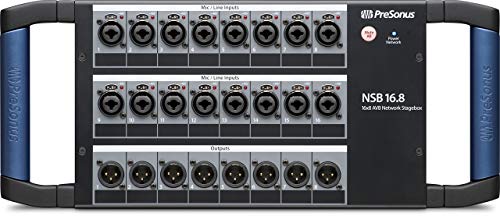
PreSonus NSB 16.8 — Best Stage Box Expansion
The NSB 16.8 solves the oldest physical problem in live and studio audio: the inputs are on stage, the mixer is not. Sixteen remote-controlled preamps and eight outputs live in a stage-side box, and a single AVB network cable carries everything to and from the mixer — replacing a copper snake that weighs more than the rest of the system combined. It suits StudioLive owners whose console or rack sits away from the performers: front-of-house positions, control rooms, broadcast corners. It does not suit anyone outside the PreSonus AVB ecosystem — it is a system component, not a universal stage box.
Strengths
- Sixteen quality inputs at the stage with gains controlled remotely from the mixer position — no gain-staging walks back and forth.
- Eight returns feed monitors, mains, or recording splits from the same box.
- Rugged stage-box form that also serves as a studio floor box for a live room.
Trade-offs
- Ecosystem-locked by design; it has no life outside a PreSonus AVB system.
- Adds a network-planning step: cable quality, switch choice, and run length now matter to your audio.
- If your mixer already lives at the stage edge, a stage box solves a problem you do not have.
Key specs (from the verified listing): 16×8 AVB-networked stage box.
Studios should not overlook the NSB as a live-room tool. Put the 16.8 on the tracking-room floor, run one network cable through the wall, and the control room gains sixteen preamps with no new wall box, no snake through the door, and no compromised isolation. Drum kits, in particular, stop requiring a cable loom across the room. Whether the room is a stage or a studio, the principle is identical: convert to network at the source, and distance stops being an audio problem. Check the current price on Amazon
Best for: FOH-separated stages, studio live rooms, snake replacement / Not suited for: non-PreSonus systems, stage-edge mixer setups

PreSonus NSB 8.8 — Best Small Stage Box
The NSB 8.8 is the 16.8’s idea at the scale of a single riser: eight inputs and eight outputs on AVB. It suits the drum position, the keyboard rig, a horn section, a choir area, or the small stage whose main box lives at the side — the sub-location that needs its own local inputs without a full-size stage box. In a studio it is the perfect satellite for a drum room or an iso booth. It does not suit main-stage duty for a full band; that is what its larger sibling is for, and the price difference is smaller than the regret.
Strengths
- Eight-by-eight symmetry makes it a natural fit for monitor returns as well as inputs at one location.
- Same AVB networking and remote preamp control as the larger box — no second-class citizenship.
- Compact enough to live permanently at a drum riser or in a booth.
Trade-offs
- Eight inputs disappear fast under a fully miked drum kit plus overheads and triggers.
- Still ecosystem-specific; no standalone or cross-brand use.
- Systems often end up wanting both sizes — budget the pair eventually if your stages vary.
Key specs (from the verified listing): 8×8 AVB-networked stage box.
Think of the 8.8 as the ecosystem’s scalpel. A worship band whose drums and keys sit together, a theater pit, a podcast studio with a separate performance corner — each has a cluster of sources that deserves local conversion. It is also the friendliest entry point into stage-box thinking: add one 8.8 to an existing StudioLive setup, feel the snake weight disappear from one corner of the stage, and you will understand the whole architecture viscerally. Check the current price on Amazon
Best for: drum risers, keyboard worlds, iso booths, small stages / Not suited for: main stage-box duty for full bands

PreSonus EarMix 16M — Best Personal Monitor Mixer
The EarMix 16M is the piece musicians ask about after the show. It is a personal monitor mixer: each performer gets a unit at their mic stand or belt, fed sixteen channels over AVB, and builds their own stereo mix — more of themselves, less of everything else — without the engineer mediating. It suits any band, church team, or studio that runs in-ear monitors or wedges and loses soundcheck time to monitor requests. It does not suit solo performers mixing themselves from the main desk, for obvious reasons.
Strengths
- Sixteen channels of personal control with stereo mixing — performers place sources in a stereo field, not just a mono pile.
- Networked over the same AVB system and powered conveniently in typical PreSonus rigs, so adding units is a cabling decision, not a system redesign.
- Soundchecks get dramatically shorter, and mid-show monitor changes stop requiring the engineer’s attention.
Trade-offs
- Each performer needs a unit, so full-band deployment is a multiplied cost — budget per musician, not per system.
- Sixteen channels means large input lists must be submixed into stems before reaching the EarMix — a workflow decision to plan.
- Performers given control occasionally mix badly for themselves; a five-minute orientation per musician is part of deployment.
Key specs (from the verified listing): 16×2 AVB-networked personal monitor mixer.
The EarMix changes band politics as much as band audio. Monitor mixes are the number-one source of friction between performers and engineers, and they are friction because one person — the engineer — holds everyone’s happiness in a row of aux knobs. Personal mixers dissolve that: the drummer who wants the click louder and the bassist who hates the click are both right, simultaneously, in their own ears. In the studio, the same unit becomes a cue mixer that lets a vocalist build a tracking balance without the engineer stopping work. Of every pick in this guide, this is the one whose absence is felt most once a band has experienced its presence. Check the current price on Amazon
Best for: in-ear bands, worship teams, studio cue mixes / Not suited for: solo acts, buyers counting a single unit for a whole band
Comparison Table
| Pick | Badge | Key spec | Best for |
|---|---|---|---|
| PreSonus StudioLive SE 32R | Best Overall Rack Brain | 32-channel digital rack mixer, AVB | Flagship fly racks and expansion |
| PreSonus StudioLive 24R | Best Value Rack Mixer | 24-channel digital rack mixer, AVB | Bands, churches, band studios |
| PreSonus StudioLive SE 16R | Best Compact Rack | 16-channel digital rack mixer, AVB | Small stages and rehearsal recording |
| PreSonus NSB 16.8 | Best Stage Box Expansion | 16×8 AVB stage box | FOH separation, studio live rooms |
| PreSonus NSB 8.8 | Best Small Stage Box | 8×8 AVB stage box | Drum risers, booths, keyboard worlds |
| PreSonus EarMix 16M | Best Personal Monitor Mixer | 16×2 AVB personal monitor mixer | In-ear bands and cue mixes |
How to Choose the Right Rack Pieces for a PreSonus System
Decide the system shape first: console-plus-rack, or rack-only. A StudioLive console with physical faders plus an NSB stage box is the traditional shape — surface at front of house, inputs on stage. A rack mixer alone, controlled by tablet and laptop, is the modern shape — cheaper, smaller, and entirely dependent on your network discipline. Both shapes use the same ecosystem pieces in this guide; the rack mixers even serve as stage boxes for consoles. Choose the shape by who operates the system: a dedicated engineer loves a surface, a self-mixing band needs the rack and the tablet.
Count inputs at the stage, not at the mixer. Your input list lives where the musicians are. If the list is twenty and the mixer is at front of house, you need either a rack mixer on stage or a console plus an NSB 16.8 (and probably its sibling). Count the largest realistic lineup — full drum miking, stereo keys, playback tracks, spare vocal — and place conversion at that location with headroom. AVB makes distance free; use that freedom in the plan, not as an afterthought.
Treat the network as audio equipment, because it is. AVB requires AVB-capable switching when you expand beyond point-to-point links, and PreSonus’s ecosystem expects compatible switches for multi-device systems. Use quality Cat5e or Cat6 cable, keep runs within Ethernet limits, dedicate the audio network — do not share it with venue Wi-Fi traffic — and choose a wireless router for control that you would trust as much as a microphone cable, because functionally it is one. Most “digital mixer problems” at gigs are network problems wearing a disguise.
Understand the generations before you compare listings. The StudioLive rack line spans the original Series III models and the newer SE generation, and Amazon listings for both circulate simultaneously, sometimes at confusingly similar tiers. The generations share the AVB ecosystem, the software family, and the same roles — 16, 24, and 32 channels — so a system can even mix them. What the newer generation buys you is current production status, the longest remaining runway of firmware and software support, and the refinements of newer hardware. What the established generation buys you is a proven field record and, frequently, a friendlier tier. Neither choice is wrong; choosing without knowing which generation you are looking at is the only actual mistake. Check the exact model designation in the listing title — the verified listings in this guide name their generation explicitly — and make the trade-off deliberately.
Plan monitoring as a system, not an accessory. Decide early whether performers will use wedges from aux mixes, in-ears from aux mixes, or personal mixers. EarMix units change the budget shape — cost per musician — but return soundcheck time every single show, forever. For studios, one or two EarMix units as cue stations can transform session comfort without a dedicated cue system. Monitoring is where this ecosystem quietly outperforms similarly priced analog rigs; do not leave it as an afterthought purchase.
Budget the rack itself honestly. The units in this guide need a home: a shock-mounted rack case for travel or a studio rack for fixed installation, rack power with enough outlets, ventilation space above heat-producing units, and a drawer or shelf for the router, cables, and the tablet that runs the show. Case depth must match the units, and weight adds up faster than expected — a “portable” 32R system in a big case is a two-person lift. None of this is PreSonus-specific, which is why none of it appears as picks; all of it belongs in the budget beside the picks.
How to Set Up a PreSonus AVB Rack System Step by Step
Build the system on a table before it ever sees a stage. First, update firmware on every unit — rack mixer, stage boxes, EarMix — to matching current versions, because AVB systems behave best when the whole family runs coordinated firmware, and update between gigs, never on show day. Second, connect the simplest possible system: mixer, one control computer by direct network connection, and confirm local inputs, outputs, and UC Surface control. Third, add the network switch and stage box, assign the stage-box inputs in the mixer’s routing, and verify each remote preamp answers gain control from the surface. Fourth, add EarMix units one at a time, naming each for its musician, and build sensible default mixes — a personal mixer handed to a performer with a chaotic default is a bad first impression. Fifth, set up the control Wi-Fi on its own dedicated router, place it high and central, and test control range at the farthest seat in the venue. Sixth, save everything as named scenes: the band’s show, the church’s Sunday, the studio’s tracking template. Finally, run a full rehearsal-length test at performance volume, including the failure drill — pull the tablet connection and confirm the audio continues (it should; control and audio are separate paths), then reconnect. A system you have deliberately broken in rehearsal will not surprise you in public.
Rack Cases, Power, and Cooling: The Unglamorous Half of the System
Ask engineers what actually fails on tour and in small venues, and almost nobody says “the mixer.” They say power, heat, connectors, and cases. A rack system deserves the same engineering as the audio design. Choose the case for the life the system will live: a studio rack can be furniture, but a traveling system wants a shock-mounted case, because the foam suspension is the difference between a rack that survives a trailer and one that develops intermittent faults by the tenth load-in. Depth matters — confirm the case rails and rear clearance fit the units plus their connectors and the router you will inevitably add. Leave a rack space of air above the hardest-working unit; digital mixers are computers, and computers in sealed boxes in summer venues throttle, glitch, and shut down in ascending order of embarrassment. Power deserves a dedicated distribution unit in the rack with enough outlets for every component plus the router and a spare, so the entire system turns on from one switch in the right order and no wall-wart ever migrates to a random venue outlet. Cable the rack once, neatly, with every lead labeled at both ends, and photograph the rear panel — the photograph is the manual you will actually consult at midnight in a dark venue. None of this appears in any product listing, and all of it decides whether the excellent units in this guide get to be excellent in public.
Weight is the final honesty check. A rack grows: mixer, stage box in a second case, power, a drawer of cables, the router, a small UPS if the venue power is suspect. Total it before you commit to a case size, and be honest about who lifts it and up what stairs. Two smaller racks that one person can carry beat one magnificent rack that needs a crew you do not have. The PreSonus system’s modularity is an advantage here — brains, stage boxes, and monitor gear can split across cases by location, which is exactly how the ecosystem is used professionally.
Using a StudioLive Rack as the Front End of a Recording Studio
Studios adopted rack mixers for a reason that has nothing to do with live sound: recall. A traditional analog tracking setup sounds glorious and evaporates the moment the next session patches in. A StudioLive rack remembers — gains, EQ, dynamics, routing, cue mixes — as a scene stored with the project. The band that returns next month to overdub gets last month’s drum sound back in seconds, and the engineer spends the session on performances instead of archaeology. Paired with an NSB stage box on the live-room floor, the control room gains remote preamps without a wall panel rebuild; paired with EarMix units, performers build their own cue mixes and the engineer stops being a headphone butler. The recording itself flows to the computer over USB or the network depending on configuration, landing as multitrack files in the DAW while the rack handles the latency-critical monitoring. This is, quietly, one of the best-value shapes a project studio can take in this entire guide series: the same rack that tracks the band on Tuesday mixes their gig on Friday, and both jobs recall their settings perfectly. When you evaluate the R-series purely as studio equipment — ignoring that it also happens to be a live system — the value case becomes very hard to argue with.
Scenes, Templates, and the Discipline That Makes Digital Worth It
The deepest difference between this ecosystem and the analog boards in our studio mixer guide is not sound — it is memory, and memory only pays if you build the habit of using it. Professionals run their racks on templates: a studio tracking template with the house drum kit’s gains and EQ already close, a worship template with the team’s EarMix defaults and the pastor’s microphone gated and compressed, a band template with the show’s scenes in order. Each template started life as one good session, saved deliberately, then refined a little every time it loaded. The discipline is small and specific: save the scene before you tear down, name it with the date and the lineup, and keep a backup of the library somewhere that is not the mixer — a laptop folder or cloud drive — because a scene library accumulated over two years is a genuine asset of the band or the church, as real as the instruments. Engineers new to digital systems often skip saving “because we will just set it up again,” and then spend every soundcheck redoing identical work while wondering what the fuss about digital was. The fuss is this: a system that remembers turns setup from labor into refinement. Every event starts from the best version of the last one. Build that habit from the first rehearsal and the rack in this guide will quietly become the most professional member of the organization.
Recording the Show: Capture Options in a Rack System
A rack system that mixes a performance is already standing in the perfect place to record it, and the StudioLive ecosystem offers the capture paths to match — multitrack recording to a connected computer for studio-grade post-production, and simpler stereo capture for archives and quick references, depending on the model and configuration. The professional habit is to record both whenever the event matters: the multitrack is the asset you can remix when the live balance served the room rather than the recording, and the stereo board mix is the honest document of what the audience heard. Churches use the archive for training and for members who missed the service; bands use the multitrack to turn one good night into release material; studios use the same rig’s capture as the session itself. Whichever path you use, test the full chain at rehearsal — record, stop, play back from the recording device, and confirm the files are where you think they are — because recording failures are silent in every sense: nothing sounds wrong in the room while the capture quietly does not exist. Storage is part of the system too; a multitrack habit fills drives with the enthusiasm of a band filling notebooks, so name files by date and event the day they are made. The rack remembers its settings; make sure the organization remembers its recordings.
Common Buying Mistakes
- Mixing ecosystems. AVB stage boxes and personal mixers are brand-family products. A PreSonus NSB will not expand another maker’s console — commit to the family deliberately.
- Buying the biggest rack mixer by default. Unused channels in a rack are dead weight and dead budget. The 24R outsells the 32R in real systems for a reason: most input lists live in the twenties.
- Forgetting the switch and router in the budget. Multi-box AVB systems need the right network hardware, and control needs a serious router. Price the whole system, not the shiny unit.
- One EarMix for the whole band. Personal monitoring is personal — one unit per performer, or the concept collapses back into shared aux mixes.
- Updating firmware on show day. Digital systems reward boring discipline: freeze the system before performances, update in the workshop between them.
- Running audio and venue internet on one network. Keep the AVB and control network dedicated. The night the congregation’s phones join your mixer network is a night you will remember.
- Leaving the tablet as an afterthought. The control device is part of the instrument: dedicate one, keep it charged and updated on your schedule, and mount it where the operator actually stands.
Final Recommendation
Build the system around the brain first. Most buyers should start with the StudioLive 24R: it covers the real-world input lists of bands, churches, and band studios, and every other piece in this guide expands it gracefully. Systems that genuinely need thirty-two rack inputs — or a flagship that doubles as console expansion — should step to the StudioLive SE 32R, while small stages and rehearsal rigs get the same ecosystem for less with the StudioLive SE 16R. Add the NSB 16.8 when the mixer and the musicians part company across a room, the NSB 8.8 at drum risers and booths, and EarMix 16M units — one per performer — when monitor politics start costing you soundcheck time. Bought in that order, the rack grows with the music instead of ahead of it.
For the wider studio picture, see also: Best Studio Mixers, Best Summing Mixers, Best Analog Mixers, Best Thunderbolt Mixers, and Best Streaming Mixers.
Frequently Asked Questions
Can a StudioLive rack mixer completely replace a console?
Yes — the R-series units are complete digital mixers, not accessories. With UC Surface on a computer or tablet they handle inputs, mixing, effects, recording workflows, and monitor mixes. What you give up is physical faders; what you gain is size, price, and the freedom to mix from anywhere in the room. Adding a StudioLive console later gives the same system a surface without replacing the rack.
What is AVB and why does this ecosystem use it?
AVB — Audio Video Bridging — is a set of Ethernet standards that carries many channels of low-latency audio over network cable with guaranteed timing. In the StudioLive system it is the pipe connecting consoles, rack mixers, NSB stage boxes, and EarMix personal mixers, replacing analog snakes. Multi-device systems need AVB-compatible switches, which is a planning point, not a drawback.
How many EarMix 16M units can a system support?
Enough for a full band and then some, subject to the AVB network’s design and the mixer’s configuration — large worship and touring rigs run many units. The practical limits are budget (one per performer) and the sixteen channels each unit receives, which on big input lists means sending submixed stems — drums as a stereo pair, for example — rather than every raw channel.
Will NSB stage boxes work with other brands of mixer?
No. The NSB boxes are PreSonus AVB system components with remote preamp control integrated into StudioLive consoles and software. Other brands run their own digital stage-box protocols with the same one-family logic. This is the honest trade of all digital ecosystems: deep integration inside the family, no interoperability outside it.
Is a rack system reliable enough for live work?
Yes, with boring discipline: current matched firmware, a dedicated network, a quality control router, scenes saved and backed up, and a rehearsal-tested setup. The audio path does not depend on the tablet staying connected — losing control mid-show is an inconvenience, not silence. Most field failures trace to network corners cut in setup, which the step-by-step section above is designed to prevent. It is also worth keeping one humble analog backup path in the rack bag — a small mixer or even a direct-box route for the single most important source — because professionals plan for the failure they cannot imagine, not just the ones they can.
StudioLive R mixer or a StudioLive console for a studio?
For a studio, the rack mixers shine as recallable tracking front ends that live in the rack with the outboard gear and free the desk for the DAW — and they double as live rigs. A console suits studios that mix on a surface or record live-style sessions. Many rooms eventually run both shapes from the same ecosystem, which is precisely the flexibility this guide is built around.
What cables does an AVB rack system actually need?
Shielded Cat5e or Cat6 Ethernet cable for every AVB link — mixer to switch, switch to stage boxes and EarMix units — plus ordinary balanced XLR cables from microphones and instruments into whichever box is nearest them. Buy Ethernet cables in the lengths your stages and rooms actually measure, keep two spares of the longest run, and treat a kinked or crushed network cable with the same suspicion you would give a damaged microphone cable, because in this system it is one.
Can volunteers run a rack system in a church or school?
Yes — in many ways more easily than an analog desk, because the system’s memory does the expertise. A trained volunteer builds and saves the scenes; a newer volunteer loads “Sunday Morning,” checks that the labeled inputs make sound, and mixes gently within a setup that is already 90 percent correct. The tablet interface also means training can happen from a seat in the congregation, hearing exactly what the room hears. The one requirement is a named human who owns firmware updates and backups between events. Churches that assign that ownership explicitly — one person, named in the team chat, with the backup drive in their keeping — report the smoothest volunteer experience of any mixing format.


