Disclosure: airfryerkitchensupply.com is reader-supported. When you buy through links on our site, we may earn an affiliate commission at no extra cost to you.
Where to buy
Every pick below for the best options for food processors is a verified, live Amazon listing checked against the manufacturer’s model number. Food processors are sold in several colors and bundle variants under the same model, so confirm the bowl size and included discs on the listing before you order. Prices move often on this category, which is why each pick links out instead of quoting a number here.
- Cuisinart 14-Cup Food Processor (DFP-14BCNY) — the benchmark full-size processor — a 720-watt motor and a 14-cup bowl that handles everything from salsa to double dough batches.
- Breville Sous Chef 16 Cup Food Processor (BFP810) — the precision flagship — a 16-cup bowl, an extra-wide feed chute, and the most refined slicing performance in this roundup.
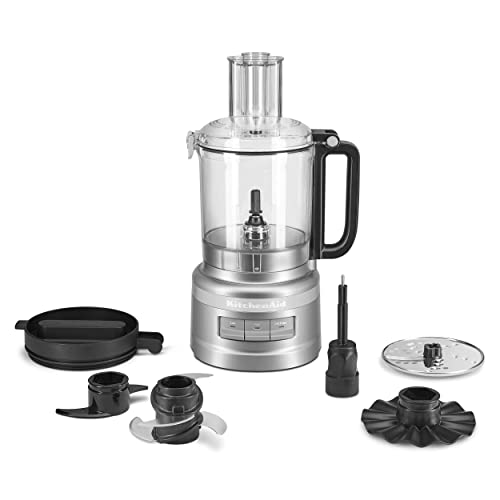
- KitchenAid 9-Cup Food Processor (KFP0921) — the storage-smart modern pick — every blade and disc nests inside the bowl, and it adds a whisk accessory most rivals skip.
- Ninja Professional Plus Food Processor (BN601) — the preset-driven option — 1000 peak watts and Auto-iQ programs that chop, slice, puree, and mix dough at one touch.
- Hamilton Beach 10-Cup Food Processor (70730) — the honest budget pick — a full 10-cup bowl, slicing and shredding discs, and a built-in bowl scraper at a budget-tier price.
- Cuisinart Pro Classic 7-Cup Food Processor (DLC-10SYP1) — the small-footprint Cuisinart — a 600-watt motor and the full disc treatment in a 7-cup bowl sized for smaller households.
If you are sorting through the best options for food processors, the honest starting point is that there is no single best machine — there is a best machine for the way you actually cook. A food processor earns its counter space by doing the jobs a knife does slowly and a blender does badly: slicing a mound of onions evenly, shredding cheese without turning it to paste, kneading a stiff pizza dough, and turning chickpeas into hummus with a texture a blender rarely matches. The six machines below cover the realistic spread of the market, from a budget 10-cup workhorse to a 16-cup premium flagship, and each one was verified as a current, correctly matched listing before it earned a place here.
Capacity is the first fork in the road. Bowls are measured in cups of dry ingredients, and the usable liquid capacity is always lower, so a household of two that mostly makes salsa and pesto is well served by a 7- to 9-cup bowl, while anyone who doubles recipes, preps for a crowd, or kneads family-size dough batches should start at 12 cups and up. Motor style matters just as much: traditional belt-and-button machines from Cuisinart use heavy induction-style motors that shrug off dough, while modern designs from KitchenAid, Ninja, and Hamilton Beach trade some of that old-school mass for easier cleaning, in-bowl storage, and lids that do not fight you.
This roundup is deliberately brand-diverse. Cuisinart effectively invented the category and still builds its benchmark machines, Breville builds the precision flagship, KitchenAid builds the storage-smart modern option, Ninja builds the preset-driven powerhouse, and Hamilton Beach builds the honest budget pick. Read the picks by the job you do most, not by the badge order — the right processor is the one whose bowl size, feed tube, and disc set match your weekly cooking, and whose parts you will actually wash without resentment.
In this guide
Quick Picks
Six verified machines, six different jobs done best. Start here if you already know your bowl size and budget tier.
- Best Overall: Cuisinart 14-Cup Food Processor (DFP-14BCNY) — the machine most home cooks should buy first if the budget stretches — proven design, huge bowl, real dough power.
- Best Premium: Breville Sous Chef 16 Cup Food Processor (BFP810) — for serious meal preppers who want the widest chute and the most precise, even slicing money can buy.
- Best for Easy Storage: KitchenAid 9-Cup Food Processor (KFP0921) — the easiest processor to own in a small kitchen — parts store in the bowl, bowl cleans without food traps.
- Best with Presets: Ninja Professional Plus Food Processor (BN601) — for cooks who want push-button programs instead of pulse-counting, with serious peak power behind them.
- Best Budget: Hamilton Beach 10-Cup Food Processor (70730) — proof you do not need to spend flagship money — a real 10-cup processor with the discs that matter.
- Best Compact Full-Feature: Cuisinart Pro Classic 7-Cup Food Processor (DLC-10SYP1) — flagship manners in a compact bowl — the pick for one- and two-person kitchens that still cook seriously.
How These Picks Were Chosen
Every product in this guide was cross-checked against Amazon’s own catalog data: we searched by brand and model, matched the returned listing title to the exact machine described, and only then recorded the ASIN used in the links. Anything that could not be matched with certainty was left out rather than guessed. Prices and ratings from the catalog were used only as internal sanity checks for tier placement and are never printed, because both change constantly and a stale number in a buying guide helps nobody.
Beyond verification, picks had to clear practical bars. Each machine needed a feed tube wide enough for real produce, a slicing and shredding disc set rather than a bare chopping blade, a bowl and lid that lock without a wrestling match, and parts that go in the dishwasher. We weighted dough performance heavily, because dough is where weak motors and flexing bowls reveal themselves, and we weighted storage design more than most guides do — a processor whose blades live loose in a drawer is a processor you will stop reaching for.
Finally, we spread the list across honest tiers. There is a premium flagship, two mid-range anchors, a modern mid-size option, a preset-driven alternative, and a genuine budget machine. Where a tier is thin — true budget machines with real dough capacity, for example — the guide says so instead of padding the list with choppers pretending to be full-size processors.
A word on what did not make the list, because exclusion is half of curation. The market’s mini choppers — excellent tools, several of them — were left to their own dedicated roundups, because a guide to full-size food processor options should compare machines that slice, shred, and knead, not machines that only chop. Blender-processor combo systems were likewise left to the combo guide linked below, with one exception made by category logic rather than favoritism: none. Every machine above is a dedicated food processor, verified as such, and the six span the capacity and price range widely enough that adding a seventh would have meant repeating a job already covered. If your kitchen’s answer is a mini chopper or a combo, the internal links at the end of this guide lead to roundups built with the same verification standard.
The 6 Best Options for Food Processors

Cuisinart 14-Cup Food Processor (DFP-14BCNY) — Best Overall
The DFP-14BCNY is the direct descendant of the machine that created this category, and it remains the default recommendation for a reason. The 720-watt motor is the story: it does not bog down in bread dough, does not hesitate at a bowl full of hard cheese, and runs with the low, steady note of a motor that is loafing rather than straining. Fourteen cups of bowl capacity means a full head of cabbage for slaw, a double batch of pie dough, or a kilo of onions for a freezer prep session all fit without splitting the job.
Day to day, the machine’s virtues are unglamorous and cumulative. The feed tube takes halved onions and block cheese without pre-trimming gymnastics, the slicing disc produces even rounds instead of the wedge-and-shard mix cheaper discs deliver, and the shredding disc handles mozzarella without smearing it across the bowl. The metal S-blade purees hummus and nut sauces to a genuinely smooth finish if you give it time and scrape once — the patience every processor asks for, rewarded here by a motor that never overheats mid-job.
The compromises are size and simplicity. This is a heavy, tall appliance that wants a permanent counter spot, and its three-button control panel offers no pulsing presets or timers. Assembly — bowl, blade, lid, pusher sleeve — must align correctly or the motor will not start, which frustrates first-time users and then becomes invisible habit. If you cook for a household, bake regularly, and want one processor that simply does everything asked of it for years, this is the safest money in the category.
Strengths
- 720-watt motor kneads stiff dough without stalling or walking across the counter
- 14-cup bowl swallows double batches, big slaws, and family-size meal prep
- Decades-proven design with widely available replacement discs and parts
Trade-offs
- Heavy base and tall profile demand real counter or cabinet space
- Controls are simple buttons — no presets or digital finesse
- Bowl, lid, and pusher assembly has a learning curve the first few uses
| Capacity | 14-cup work bowl |
| Motor | 720 watts |
| Functions from listing | Mincing, dicing, shredding, pureeing, kneading dough |
| Finish | Stainless steel |
Best for: households that cook and bake at volume and want one do-everything machine / Not suited for: tiny kitchens, or cooks who only ever make single-serve salsa
Check the current price on Amazon

Breville Sous Chef 16 Cup Food Processor (BFP810) — Best Premium
The Sous Chef 16 is what happens when a manufacturer treats the food processor as a precision instrument instead of an appliance. The 16-cup bowl is the largest in this roundup, but capacity is not the headline — control is. Breville’s slicing system produces shavings and rounds of remarkably even thickness, the kind of consistency that makes gratins cook evenly and salads look deliberate rather than accidental. The extra-wide feed chute accepts whole potatoes, large onions, and blocks of cheese with the multi-size pusher keeping fingers far from the disc.
For meal prep at scale, the machine is superb. A week of vegetables for a family, a catering-size batch of coleslaw, or several loaves’ worth of dough move through quickly, and the motor handles dense loads with the unhurried confidence of a machine built with headroom to spare. The accessory ecosystem — multiple discs and blades stored in their own case — covers jobs the standard two-disc sets cannot, from fine julienne to variable slicing thicknesses.
The honest costs are money and space. This is a premium-tier purchase, priced well above the mid-range anchors, and it is a big, heavy object that will dominate a small counter. The rich accessory set also means more pieces in the sink on days you use three discs. Buy it if processing is a weekly, high-volume ritual in your kitchen and you value precision enough to pay for it; everyone else is better served one tier down.
Strengths
- 16-cup bowl is the largest here — true batch-prep capacity
- Extra-wide chute takes whole potatoes and large produce with minimal trimming
- Slicing precision and consistency are the best in this roundup
Trade-offs
- Premium tier pricing — the most expensive machine on this list by a wide margin
- Large footprint and heavy base need dedicated storage
- Accessory set is extensive, which means more parts to wash and store
| Capacity | 16-cup bowl |
| Feed chute | Extra-wide, multi-size pusher system |
| Functions from listing | Chop, slice, shred large batches with precision |
| Finish | Brushed stainless steel |
Best for: high-volume meal preppers and precision-focused cooks / Not suited for: budget shoppers or anyone short on storage space
Check the current price on Amazon
KitchenAid 9-Cup Food Processor (KFP0921) — Best for Easy Storage
KitchenAid’s 9-cup machine attacks the two reasons food processors end up abandoned in cupboards: loose blades in drawers and bowls that never quite get clean. Its all-in-one storage design nests every blade and disc inside the work bowl, so the whole kit occupies one tidy footprint and nothing sharp migrates to the cutlery drawer. The bowl itself is designed to be easy to clean, with a smooth interior that does not trap food in seams and a lid that rinses without a archaeological dig.
In use, the four-blade multipurpose design chops evenly and purees respectably, the slicing and shredding discs handle the standard weekly jobs, and the included whisk accessory is a real differentiator — whipped cream, meringue, and emulsified dressings come out of the same machine that shredded the cabbage. Nine cups is the sweet-spot capacity for couples and small families: big enough for a full batch of hummus, a pie dough, or a family slaw, small enough to live on the counter without dominating it.
The trade is raw power and maximum capacity. The motor is a versatile all-rounder rather than a dough specialist, and bakers who regularly work large, stiff batches will feel the difference against the Cuisinart and Breville flagships. Assembly also asks for a moment of attention — the lid components align in one correct way. For most households, though, this is the processor most likely to be used three times a week a year from now, precisely because owning it is so friction-free.
Strengths
- All blades and discs store inside the bowl — no loose sharp parts in drawers
- Easy-clean bowl design avoids the food-trapping seams of older machines
- Whisk accessory whips cream and egg whites, a genuine point of difference
Trade-offs
- 9-cup bowl is mid-size — double dough batches need splitting
- Motor is tuned for versatility rather than brute dough force
- Lid and chute parts reward careful alignment when assembling
| Capacity | 9-cup work bowl |
| Blade design | Four-blade multipurpose blade |
| Storage | All-in-one storage — accessories nest in the bowl |
| Extras from listing | Whisk accessory, easy-clean work bowl |
Best for: couples and small families who value tidy storage and easy cleaning / Not suited for: high-volume bakers who need maximum dough capacity
Check the current price on Amazon

Ninja Professional Plus Food Processor (BN601) — Best with Presets
The BN601 is built for the cook who wants results without technique. Ninja’s Auto-iQ programs run timed patterns of pulsing and spinning for chopping, slicing, pureeing, and dough, so a new owner gets a properly chopped onion or a smooth puree by pressing one button rather than learning pulse counts. Behind the presets sits a motor rated at 1000 peak watts, and in practice the machine is fast — vegetables break down quickly, nut butters and hummus reach smoothness with fewer scrape-downs than weaker machines need, and frozen fruit for smoothie bowls is handled with confidence.
The three-blade set is thoughtfully chosen: a chopping blade, a slicing/shredding disc, and a dedicated plastic dough blade that kneads without shredding gluten strands the way a metal blade can. The 9-cup bowl matches the KitchenAid for everyday capacity, and the feed chute and pusher arrangement is straightforward. Everything that touches food goes in the dishwasher, which matters more to real-world usage than any spec on the box.
Two honest caveats. Peak watts are a sprint number, not a marathon one — for very stiff, large dough batches the heavyweight Cuisinart and Breville still feel more composed. And presets are averages: if you like your salsa chunky or your onions fine, you will sometimes stop a program early or add pulses, which is normal for every preset machine. For households that want speed, simplicity, and strong all-round performance at a mid-range tier, the BN601 is an easy recommendation.
Strengths
- Auto-iQ presets remove guesswork — consistent results for new processor owners
- 1000 peak watts deliver fast, aggressive chopping and pureeing
- Three dedicated blades including a dough blade, all dishwasher safe
Trade-offs
- Peak-watt rating flatters it — sustained dough work is good, not flagship-class
- Preset timing may need a manual pulse or two for personal texture preferences
- Bowl capacity is 9 cups — mid-size, like the KitchenAid
| Capacity | 9-cup bowl |
| Power | 1000 peak watts |
| Programs | Auto-iQ presets for chop, slice, puree, and dough |
| Included | 3 blades, feed chute and pusher |
Best for: beginners and busy cooks who want one-touch programs / Not suited for: purists who want full manual control of every pulse
Check the current price on Amazon

Hamilton Beach 10-Cup Food Processor (70730) — Best Budget
Most budget food processors cheat — they shrink the bowl, drop the discs, or both. The 70730 does neither. You get a true 10-cup bowl, a reversible slicing/shredding disc, and an S-blade, which covers the overwhelming majority of what home cooks actually ask a processor to do. Hamilton Beach also includes its clever built-in bowl scraper: a lever you sweep while the machine runs to push food off the walls, cutting the stop-open-scrape ritual that slows down hummus and pesto on every other machine in this price class.
Performance is honestly matched to the tier. Chopping, mincing, and pureeing everyday ingredients is quick and even enough for weeknight cooking, and the shredding disc makes short work of cheese and carrots. Slicing is serviceable rather than surgical — expect a little more variation in thickness than the premium discs deliver. The machine will knead a soft pizza dough, but stiff, heavy doughs are beyond its design brief; treat dough as an occasional job, not the reason you bought it.
Build quality is where the savings show. The base is light, the plastics are thinner than the flagships’, and under a full, hard load the unit can creep on a smooth counter. None of that matters if your processor life is salsas, slaws, crumb crusts, chopped nuts, and weeknight veg prep — for that workload this is the smartest value in the roundup, and the money saved buys a lot of groceries.
Strengths
- Genuine 10-cup capacity at a budget tier — no mini-chopper compromises
- Built-in bowl scraper saves the stop-scrape-repeat cycle
- Includes the slicing and shredding discs budget rivals often omit
Trade-offs
- Motor and bowl plastics are built to a price — dough loads should stay modest
- Slicing consistency trails the Cuisinart and Breville discs
- Louder, lighter base can shift on the counter under heavy loads
| Capacity | 10-cup bowl |
| Functions from listing | Slicing, shredding, mincing, pureeing |
| Extras from listing | Easy-clean bowl scraper built in |
| Finish | Stainless steel accents |
Best for: budget shoppers who still want a full-size bowl and real discs / Not suited for: heavy dough bakers or anyone expecting flagship build quality
Check the current price on Amazon

Cuisinart Pro Classic 7-Cup Food Processor (DLC-10SYP1) — Best Compact Full-Feature
The Pro Classic 7-Cup exists for a specific, common kitchen: one or two people who cook properly but do not need fourteen cups of anything. Its headline number is the 600-watt motor, which is flagship-adjacent power in a compact machine. That matters because small processors usually get weak motors, and weak motors are why mini machines smear cheese and stall in dough. This one shreds, slices, purees, and genuinely kneads — a single loaf of bread dough or a batch of pizza dough for two is squarely within its ability.
The smaller bowl is an advantage more often than shoppers expect. A single onion, a cup of nuts, or a half-batch of pesto processes evenly in a 7-cup bowl, where the same load in a 14-cup bowl bounces around the blade and chops unevenly. The disc set and S-blade are proper Cuisinart hardware, so slicing and shredding quality tracks the big machine’s, scaled down. For apartment kitchens and smaller counters, the reduced footprint is the difference between a processor that lives out and one that lives in a box.
The limits are arithmetic and cosmetic. Seven cups is seven cups — a double batch of slaw or dough for a dinner party means working in two rounds. The white housing also shows the badge of honor stains that turmeric, tomato, and carrot leave on light plastics. Neither flaw matters to the household this machine is aimed at: small, serious, and better served by the right size than by the biggest size.
Strengths
- 600-watt motor is unusually strong for the 7-cup class — real dough ability
- Full Cuisinart disc compatibility and build quality in a smaller footprint
- Right-sized bowl means small batches chop evenly instead of rattling around
Trade-offs
- 7 cups fills fast — family batches need splitting
- White finish shows turmeric and tomato stains over time
- Same multi-part lid assembly learning curve as its big sibling
| Capacity | 7-cup bowl |
| Motor | 600 watts |
| Functions from listing | Mincing, dicing, shredding, pureeing, kneading dough |
| Finish | White |
Best for: singles and couples who cook seriously in smaller kitchens / Not suited for: families or anyone who routinely doubles recipes
Check the current price on Amazon
Comparison Table
| Pick | Badge | Key spec | Best for |
|---|---|---|---|
| Cuisinart 14-Cup Food Processor (DFP-14BCNY) | Best Overall | 14-cup bowl, 720W motor | households that cook and bake at volume and want one do-everything machine |
| Breville Sous Chef 16 Cup Food Processor (BFP810) | Best Premium | 16-cup bowl, extra-wide feed chute | high-volume meal preppers and precision-focused cooks |
| KitchenAid 9-Cup Food Processor (KFP0921) | Best for Easy Storage | 9-cup bowl, all-in-one in-bowl storage, whisk accessory | couples and small families who value tidy storage and easy cleaning |
| Ninja Professional Plus Food Processor (BN601) | Best with Presets | 9-cup bowl, 1000 peak watts, Auto-iQ presets | beginners and busy cooks who want one-touch programs |
| Hamilton Beach 10-Cup Food Processor (70730) | Best Budget | 10-cup bowl, built-in bowl scraper | budget shoppers who still want a full-size bowl and real discs |
| Cuisinart Pro Classic 7-Cup Food Processor (DLC-10SYP1) | Best Compact Full-Feature | 7-cup bowl, 600W motor | singles and couples who cook seriously in smaller kitchens |
How to Choose the Best Food Processor for Your Kitchen
Start with capacity, because it is the one spec you cannot change later. Bowl sizes run from 3-cup mini choppers to 16-cup flagships, and the number refers to dry-ingredient capacity — liquids should stay well under the rim or they will find the center tube and leak. As a working rule: 3 to 5 cups suits dips, herbs, nuts, and baby food; 7 to 9 cups suits couples and small families doing full recipes; 10 to 12 cups suits families and regular bakers; 14 cups and up suits batch preppers, big households, and anyone who doubles recipes by default. Buying one size up from your instinct is usually right, because an underfilled large bowl still chops acceptably while an overfilled small bowl simply cannot do the job at all.
Next, judge the motor by the hardest job you will actually give it. Chopping vegetables asks almost nothing; kneading stiff dough asks everything. If dough is a weekly job, prioritize the heavy, high-wattage designs from Cuisinart and Breville and treat preset-driven machines as all-rounders rather than dough specialists. If your processor life is salsa, slaw, crumbs, and sauces, any machine in this roundup has power to spare, and your decision should turn on discs, cleaning, and storage instead. Feed tube width is the third real-world factor: a wide tube that takes a halved onion or a potato saves more daily time than any electronic feature.
Finally, audit the ownership details. Check that the slicing and shredding discs are included rather than sold separately, that the bowl, lid, and blades are dishwasher safe, and where the accessories will live — in-bowl storage designs like KitchenAid’s remove a genuine daily annoyance. Consider the lid mechanism too: twist-lock bowls with a pusher-activated safety are universal, but some align more intuitively than others, and you will perform that motion thousands of times. The best processor is the one whose size, discs, and cleanup fit your routine so completely that using it is never a decision.
Food Processor vs. Blender vs. Mini Chopper: Which Tool Does What?
The three machines overlap just enough to cause confusion, so it is worth being precise. A food processor uses a wide bowl, a flat S-blade, and interchangeable discs, which makes it the tool for dry and semi-dry work: chopping, slicing, shredding, grating, crumb-making, dough, and thick mixtures like hummus and pesto where a blender’s narrow jar starves the blade of material. A blender uses a tall jar and vortex action, which makes it the tool for liquids: smoothies, soups, and sauces that need to move to be processed. Ask a blender to shred cheese or knead dough and it will fail; ask a processor to make a silky smoothie and it will leak and underperform.
A mini chopper is simply a small processor — same blade principle, 3- to 5-cup bowl, no discs. It is the right tool for the small, frequent jobs: an onion, a cup of nuts, herbs, garlic, a quick salsa. Many households honestly need only a mini chopper, and several in this guide’s orbit — including Cuisinart’s Mini-Prep line — are excellent. The full-size processor earns its place when discs enter the picture: the moment you want sliced potatoes, shredded cheese, or julienned vegetables in quantity, or dough in any quantity, the mini chopper is out of its depth and the full-size bowl is the tool.
Combination machines blur these lines usefully. Blender-processor systems share one motor base between a blending jar and a processing bowl, which suits kitchens short on storage — the trade is that each function is usually good rather than best-in-class. If you blend daily and process weekly, a strong blender plus a mini chopper can be the smarter pair; if you process daily, the dedicated full-size processor in this roundup is the purchase that will still satisfy in five years.
Discs, Blades, and Feed Tubes: The Hardware That Decides Your Results
Shoppers compare motors and bowl sizes, but daily results are decided by three pieces of hardware most listings photograph and few explain. The S-blade does the chopping and pureeing, and its quality shows in how close it sits to the bowl’s floor and walls: a blade that rides low and sweeps wide leaves fewer unprocessed chunks orbiting above it, which is why the better machines puree hummus smoothly with one scrape while lesser ones need four. The slicing disc decides whether your potatoes come out as even rounds or as wedges and shards — disc flatness and blade sharpness are the whole story, and they are where premium machines like the Breville and the big Cuisinart quietly justify themselves every single week.
The shredding disc is the second daily worker, and its test is cheese. A good disc, fed with cold, firm cheese at steady pusher pressure, produces distinct shreds; a poor one smears and clogs. The feed tube is the third factor, and it is pure ergonomics: every centimeter of width is trimming you do not do. A tube that takes a halved onion or a whole small potato changes the machine from a project into an appliance, because the prep before the prep is what makes people reach for a knife instead. When you compare the picks in this roundup, compare these three parts first and the control panels last — buttons age into irrelevance, but you will use the discs at every single session for the life of the machine.
One more hardware truth: replacement availability is a feature. Bowls crack, pushers wander off, blades dull over years. The established designs in this guide have deep parts catalogs, which means a ten-year-old machine can be made whole for the price of a part. An unknown machine with a proprietary bowl is a countdown to a full replacement. In a category where the best products last a decade or more, the parts shelf behind the product is part of the product.
What a Food Processor Does to Your Cooking Week
The honest case for owning a full-size processor is not any single recipe; it is the arithmetic of the week. Ten minutes of knife work becomes ninety seconds of machine work, multiplied by every onion, carrot, cabbage, cheese block, and crumb crust you touch. That arithmetic changes behavior: cooks who own and use a processor make slaws, gratins, fresh breadcrumbs, nut butters, and pastry at home that knife-only cooks quietly buy pre-made or skip. The machine does not just save time on the cooking you already do — it expands the cooking you consider reasonable on a Tuesday.
It also changes food economics and quality in the same direction. Block cheese shreds cheaper and melts better than pre-shredded bags with their anti-caking coatings. Whole vegetables outlast and underprice pre-cut trays. Dough made in the processor — pizza on Friday, bread on Sunday — costs a fraction of bakery equivalents and takes the machine about a minute of kneading. None of this requires the flagship: the budget Hamilton Beach in this roundup captures most of it. What it requires is the right size, on the counter, with its discs in reach — which is why this guide weighs storage and cleaning design as heavily as power. The best food processor is not the strongest one. It is the one that is running three times a week a year from now.
How to Use a Food Processor Safely and Get Even Results
Technique matters more than horsepower. The same machine that produces a lumpy, uneven chop for one cook produces a perfect one for another, and the difference is almost always loading, pulsing, and order of operations. These steps apply to every full-size pick in this roundup.
- Assemble in order: bowl on the base, blade or disc on the center post, lid locked, pusher in the tube. Every machine here has a safety interlock — if the motor will not start, something is misaligned, and forcing it is never the answer.
- Cut food to fit the tube or bowl evenly. Uniform input pieces produce uniform output; a bowl loaded with whole onions and tiny garlic cloves will always chop unevenly.
- Pulse for chopping. Short one-second pulses, checking between them, give you control. Holding the button turns chopping into pureeing within seconds — the most common beginner mistake in this category.
- Use the pusher with steady, moderate pressure for slicing and shredding. Let the disc do the cutting; jamming food down produces thick, torn pieces and strains the motor.
- For purees like hummus, run the machine longer than feels natural and scrape the bowl once halfway. Smoothness comes from time and one scrape, not from adding excess liquid.
- For dough, add flour first, then liquid slowly through the tube with the machine running. Stop when the dough forms a ball that cleans the sides of the bowl; over-processing warms and toughens it.
- Never reach into the bowl with the blade in place, and remove the blade before scraping or pouring. Wash blades and discs by hand if you can — dishwasher heat and detergent dull edges over time, even on dishwasher-safe parts.
Two habits separate good results from great ones. First, chill cheese briefly before shredding and it will grate cleanly instead of smearing. Second, process in the order the recipe tolerates best: dry ingredients before wet, hard before soft, so one bowl can carry several steps with only a quick wipe between them. A processor used with a little technique is the closest thing a home kitchen has to a second pair of skilled hands.
Common Buying Mistakes
Buying capacity by household size alone. A family that mostly makes dips needs a small bowl; a single cook who batch-preps needs a big one. Buy for your batches, not your headcount — an oversized bowl chops small loads unevenly, and an undersized one turns every recipe into two jobs.
Ignoring the disc set. The S-blade gets the glory, but slicing and shredding discs do the daily work. Some budget machines omit discs or sell them separately, quietly doubling the real price. Every pick in this roundup includes its discs.
Judging motors by wattage headlines. Peak-watt figures describe a sprint, not sustained work. Dough performance comes from motor design, gearing, and bowl rigidity — which is why the guide weighs proven heavy motors for bakers and treats wattage claims as one factor among several.
Overfilling with liquid. Bowl capacity is a dry measure. Fill past the safe liquid line and soup will climb the center post and leak onto the counter. For large liquid batches, work in two rounds or use a blender.
Storing blades loose in a drawer. It dulls edges, chips bowls, and eventually cuts a hand. In-bowl storage designs, a blade case, or a simple magnetic strip habit will keep both the kit and your fingers intact.
Final Recommendation
If you want one answer: the Cuisinart 14-Cup (DFP-14BCNY) is the best option for most households — the strongest all-round motor, a genuinely useful big bowl, and a design with a decades-long track record. Meal preppers who want the ultimate should step up to the Breville Sous Chef 16, while couples in smaller kitchens should choose between the KitchenAid 9-Cup for its storage and cleaning design and the Cuisinart Pro Classic 7-Cup for its compact power. The Ninja BN601 is the pick for anyone who prefers presets to technique, and the Hamilton Beach 70730 proves the budget tier can still buy a real, full-size processor.
Whichever you choose, buy the size that matches your biggest regular batch, confirm the discs are in the box, and check the current price on Amazon before ordering — listings in this category change bundles and finishes frequently. A food processor chosen this way stops being a gadget and becomes infrastructure: the machine your weeknight cooking quietly depends on.
One last piece of advice before you order: photograph your counter space, mentally, with the machine on it. The processors in this guide earn their keep by being present — out, plugged in, discs in reach. Choose the one whose footprint your kitchen can permanently spare, and the purchase will pay for itself in onions alone within the season.
Keep exploring the cluster: Best 7 Cup Food Processors, Best 8 Cup Food Processors, Best Affordable Food Processors, Best Compact Food Processors, Best Food Processors For Dough, Best Blenders And Food Processors Combo.
Frequently Asked Questions
What size food processor do most home cooks need?
A 9- to 12-cup bowl covers the widest range of home cooking: full recipes, family slaws, and single dough batches. Smaller households that rarely cook at volume are well served by 7 cups, and batch preppers should look at 14 cups and above. Remember that bowl ratings measure dry capacity, so liquids should stay well below the stated size.
Can a food processor replace a blender?
Only partly. A processor is better for chopping, slicing, shredding, dough, and thick mixtures like hummus. A blender is better for smoothies, soups, and anything pourable, because its jar creates the vortex that liquids need. Most serious kitchens eventually own both, or a processor plus a mini chopper for small jobs.
Is a food processor good for making dough?
Yes — it is one of its best jobs, provided the motor is up to it. The blade kneads a ball of dough in under a minute. Heavy, proven motors like the Cuisinart 14-Cup’s handle stiff dough confidently; lighter budget machines should stick to softer doughs and smaller batches.
Why does my food processor chop unevenly?
Usually the load, not the machine. Pieces that start uniform finish uniform, so pre-cut large items. Use short pulses instead of holding the button, do not overfill the bowl, and for very small loads consider that the batch may be too small for a large bowl — a mini chopper handles those better.
Are food processor parts dishwasher safe?
On every pick in this roundup, the bowls, lids, and blades are dishwasher safe. That said, blades and slicing discs keep their edges longer when washed by hand, because dishwasher detergent and heat dull fine edges over time. The bases should never be immersed — wipe them down instead.
How long should a good food processor last?
A well-built full-size processor should last many years of regular use. The proven designs in this guide have long track records and available replacement parts, which matters more than any warranty headline: a machine you can buy a new bowl or disc for is a machine you will not have to replace.

