Disclosure: airfryerkitchensupply.com is reader-supported. When you buy through links on our site, we may earn an affiliate commission at no extra cost to you.
Where to buy
The fastest way to compare the best espresso machines for every day use in this guide is on Amazon, where every pick below is listed with its full piece list, lid type and care instructions on one page. Use the links in this section to jump straight to a pick, or read the full reviews first and use the check-price links inside each one.
- Philips 3200 Series Fully Automatic Espresso Machine with LatteGo (EP3241/54) — Best Overall for Daily Use. Check the current price on Amazon.
- De’Longhi Magnifica Evo Automatic Espresso Machine (Automatic Frother) — Best One-Touch Variety. Check the current price on Amazon.
- De’Longhi Magnifica Start Automatic Espresso Machine — Best Value Fully Automatic. Check the current price on Amazon.
- Philips 3300 Series Fully Automatic Espresso Machine with LatteGo (EP3341/50) — Best for Iced Coffee Drinkers. Check the current price on Amazon.
- Breville Bambino Espresso Machine (BES450) — Best Manual for Daily Use. Check the current price on Amazon.
- CASABREWS 3700 Essential Espresso Machine — Best Budget Daily Driver. Check the current price on Amazon.
The best espresso machines for every day use are not necessarily the best espresso machines — they are the ones still being used on day three hundred. Daily use is a specific discipline: the machine must be ready before you are awake, forgiving before you are caffeinated, and cleanable in less time than the drink took to make. We verified the field on 2026-11-22 and ranked for that discipline, which is why fully automatic machines with one-touch recipes lead this guide and a fast-heating manual machine earns the enthusiast’s slot.
The honest divide is between households that want a ritual and households that want a result. If your mornings have room for grinding, tamping and steaming, a quick manual machine can absolutely be a daily driver — the Bambino in this guide proves it. If your mornings have room for exactly one button, the fully automatics from Philips and De’Longhi are engineered precisely for you, and there is no quality shame in choosing them. What kills daily use is friction, and every pick here was chosen to minimise it in a different way.
In this guide
Quick Picks
If you are short on time, these are the best espresso machines for every day use we would shortlist first. Each pick carries its own badge, and the same badge appears again at the top of its full review further down the page, so you can jump between the summary and the detail without losing track of which set or machine is which.
- Best Overall for Daily Use — Philips 3200 Series Fully Automatic Espresso Machine with LatteGo (EP3241/54): One-touch drinks, a ceramic grinder and the two-piece LatteGo milk system that rinses clean in seconds — the daily-use benchmark.
- Best One-Touch Variety — De’Longhi Magnifica Evo Automatic Espresso Machine (Automatic Frother): Seven one-touch recipes with an automatic LatteCrema-style frother and a built-in grinder — the crowd-pleasing daily machine.
- Best Value Fully Automatic — De’Longhi Magnifica Start Automatic Espresso Machine: The Magnifica formula at a friendlier tier: built-in grinder with 13 settings, five one-touch recipes and a milk frother, hot or iced.
- Best for Iced Coffee Drinkers — Philips 3300 Series Fully Automatic Espresso Machine with LatteGo (EP3341/50): LatteGo ease with hot and iced presets — the daily machine for households whose order changes with the weather.
- Best Manual for Daily Use — Breville Bambino Espresso Machine (BES450): The manual machine that survives weekdays: ready in seconds, pre-infusion to forgive sleepy puck prep, and a wand that makes real microfoam.
- Best Budget Daily Driver — CASABREWS 3700 Essential Espresso Machine: The low-cost daily option: a 20-bar pump, a steam wand and a removable tank in a compact body — simple espresso that survives daily duty.
How These Picks Were Chosen
Candidates were searched by brand and model, then scored on the daily-use variables: time from cold to first drink, number of steps and decisions per drink, milk handling, cleaning burden per week, and how the machine behaves with supermarket beans and imperfect routine. The Philips 3200 and 3300 listings (LatteGo milk system, ceramic grinder, one-touch recipes), the De’Longhi Magnifica Evo and Magnifica Start listings (built-in grinder, one-touch recipes, automatic and manual frother variants) were verified in the site’s API cache and re-confirmed for this batch.
The Breville Bambino (BES450) was included as the manual benchmark because its heat-up is measured in seconds — the only manual pattern that survives weekday mornings for most people — and the CASABREWS 3700 Essential as the budget daily option, verified in an earlier wave’s API cache with its 20-bar pump and removable tank. Prices were used only as internal tier checks and are never printed in this guide.
The 6 Best Espresso Machines for Every Day Use

Philips 3200 Series Fully Automatic Espresso Machine with LatteGo (EP3241/54) — Best Overall for Daily Use
The Philips 3200 is what happens when a manufacturer designs backwards from a weekday morning. Five coffee varieties from an intuitive touch display, a 100% ceramic grinder, and the LatteGo system — a milk carafe with no tubes or hidden parts, in two pieces that rinse under the tap or go in the dishwasher. Its listing also names the AquaClean filter, which stretches the interval between descaling dramatically when filters are changed on schedule. Every daily friction point has been thought about, and most have been engineered away.
Strengths
- LatteGo milk system has no tubes — the easiest milk cleaning routine in this guide
- One-touch recipes with adjustable strength and volume via My Coffee Choice
- AquaClean filtration greatly extends descale intervals for daily users
Trade-offs
- Fully automatic espresso is very good, not hobbyist great — no manual control to grow into
- Ceramic grinder is durable and gentle but not the fastest or quietest
- Brew group needs its scheduled rinse-and-grease routine to stay happy for years
| Model | EP3241/54, 3200 Series |
| Drinks | 5 coffee varieties, one-touch (per listing) |
| Grinder | 100% ceramic grinder |
| Milk | LatteGo system, two-piece, dishwasher safe |
| Filter | AquaClean filter compatible |
Daily machines die of milk and scale, in that order, and the 3200 attacks both causes directly. LatteGo’s tubeless design removes the milk system’s entire failure mode — there is nowhere for residue to hide — and AquaClean turns descaling from a monthly chore into a rare event for filtered-water households. What remains is a genuinely small weekly routine: empty the drip tray and puck bin, rinse the brew group under the tap as Philips schedules it, wipe the wand area. Five minutes, once a week, for café drinks every day.
The coffee itself is the fully automatic standard at its best: fresh-ground, consistent, and tuned for the milk drinks most households actually consume. Espresso purists will find the ceiling quickly, but purists are not this machine’s audience — busy people who drink two flat whites a day are, and for them the 3200’s combination of speed, consistency and near-zero cleaning is the strongest in this guide.
Best for: busy households that want real bean-to-cup drinks daily with minimal cleaning / Not suited for: hobbyists who want to control dose, pressure and extraction themselves
Check the current price on Amazon for the Philips 3200 Series Fully Automatic Espresso Machine with LatteGo (EP3241/54).

De’Longhi Magnifica Evo Automatic Espresso Machine (Automatic Frother) — Best One-Touch Variety
The Magnifica Evo is De’Longhi’s answer to the family group chat: seven one-touch recipes on a colour display, a built-in grinder, and an automatic milk frother that textures for cappuccinos and lattes without any technique from the drinker. Its listing leads with De’Longhi’s position as the world’s biggest espresso machine maker — relevant here, because daily machines live or die on parts, service and descaler being findable forever, and nobody’s are findable-er.
Strengths
- Seven one-touch recipes cover the whole household’s orders from one panel
- Automatic milk frothing — cappuccino foam with zero steaming skill
- De’Longhi’s service and consumables network is the deepest in home espresso
Trade-offs
- Automatic milk system has more parts to rinse than Philips’ LatteGo
- Bean hopper and grinder are tuned for convenience blends, not micro-lot experiments
- A bigger countertop presence than the slim manual picks
| Drinks | 7 one-touch recipes (per listing) |
| Grinder | Built-in grinder |
| Milk | Automatic milk frother (LatteCrema system) |
| Personalisation | MyLatte personalised recipe (manual-frother variant) |
| Type | Fully automatic bean-to-cup |
Variety is the Evo’s daily-use argument. A household where one person drinks espresso, another cappuccino and a third a long coffee will abandon a single-drink machine by February; the Evo’s recipe row keeps everyone’s drink one touch away, at consistent strength, from the same beans. The automatic frother’s foam is reliably good — not microfoam art, but the cappuccino cap the drink promises — and the carafe stores in the fridge door between uses like the Mr. Coffee pattern, with the same weekly deep-clean discipline required.
Against the Philips, the choice is milk system versus menu: LatteGo cleans faster, the Evo pours more variety with a more traditional carafe. Against manuals, the Evo is the honest admission that most households value the drink over the process. For guest-heavy, multi-drinker homes, it is the daily machine we would install and never think about again.
Best for: multi-drinker households that want maximum one-touch variety / Not suited for: minimalists, or anyone who wants manual control over extraction
Check the current price on Amazon for the De’Longhi Magnifica Evo Automatic Espresso Machine (Automatic Frother).

De’Longhi Magnifica Start Automatic Espresso Machine — Best Value Fully Automatic
The Magnifica Start takes the Evo’s daily-use formula — bean-to-cup, one-touch, built-in grinder — and trims it to essentials: five one-touch recipes covering hot and iced drinks, a grinder with 13 settings, and a milk frother for the cappuccino end of the menu. Its listing positions it exactly where it belongs: the entry point to De’Longhi’s fully automatic range that does not feel like a compromise by March.
Strengths
- Fully automatic daily routine at the friendliest tier in this guide’s auto class
- 13 grinder settings — enough adjustment to dial in mainstream beans properly
- Hot and iced recipes cover the full year of daily drinking
Trade-offs
- Fewer recipes and less personalisation than the Evo above it
- Milk frothing is the simpler system — good foam, less finesse
- Same brew-group care routine as any fully automatic; budget the five weekly minutes
| Drinks | 5 one-touch recipes, hot/iced (per listing) |
| Grinder | Built-in, 13 grind settings |
| Milk | Milk frother |
| Type | Fully automatic bean-to-cup |
| Recipes | Espresso, coffee, americano-style and milk drinks |
The Start is the machine for the reader who has decided on fully automatic but not on spending Evo money, and its compromises are well chosen: nobody’s daily routine needs twenty recipes, but everybody’s needs a grinder with enough range to make a new bag of beans taste right, and 13 settings is that range. The drinks land where the Evo’s land for the core menu — espresso, long coffee, cappuccino — with the same De’Longhi brew-group engineering underneath.
Daily ownership mirrors its sibling: rinse cycles the machine runs itself, a weekly brew-group rinse, descaling on the machine’s own alert schedule. If your household’s choice is between the Start and a manual machine plus grinder at similar total spend, decide by the morning test — the Start is for people who want coffee before conversation, and it serves them faithfully.
Best for: first fully automatic buyers who want the daily routine without the flagship tier / Not suited for: households wanting deep recipe personalisation for many drinkers
Check the current price on Amazon for the De’Longhi Magnifica Start Automatic Espresso Machine.

Philips 3300 Series Fully Automatic Espresso Machine with LatteGo (EP3341/50) — Best for Iced Coffee Drinkers
The 3300 takes the 3200’s winning daily formula — LatteGo milk, ceramic grinder, touch display — and aims it at the iced-coffee generation: its listing specifies five hot and iced coffee presets, with customisable strength and milk settings. If your household’s daily drink is an iced latte from April to October and a cappuccino after that, this is the Philips to buy, because the machine’s menu matches your year.
Strengths
- Hot and iced presets in one daily machine — no manual workaround for iced drinks
- Same tubeless LatteGo cleaning advantage as the 3200
- Customisable strength and milk settings per drink
Trade-offs
- Overlaps heavily with the 3200 — households that never drink iced coffee should save the difference
- Fully automatic ceiling applies: convenience first, craft second
- Iced recipes still need a freezer that keeps up with the household’s ice habit
| Model | EP3341/50, 3300 Series |
| Drinks | 5 hot & iced coffee presets (per listing) |
| Grinder | Ceramic grinder |
| Milk | LatteGo milk system |
| Pressure | 15 bars (per listing) |
Iced espresso drinks are a genuine workflow problem for most home machines — brew hot over ice and you dilute; brew and chill and you wait. Preset iced recipes adjust the extraction and volumes for the glass of ice they expect, which turns the summer drink into the same one-touch routine as the winter one. Combined with LatteGo’s fridge-friendly carafe, the 3300 handles the full calendar of a modern household’s coffee habit without a second appliance or a technique video.
Everything said about the 3200’s cleaning and care applies here unchanged, because the platform is shared: tubeless milk, scheduled brew-group rinses, filter-extended descale intervals. The 3300 is simply the version pointed at a younger, iced-leaning household — and for that household, it is the most frictionless daily coffee we verified.
Best for: households that drink iced coffee daily for half the year / Not suited for: hot-drinks-only homes — the 3200 covers you for less
Check the current price on Amazon for the Philips 3300 Series Fully Automatic Espresso Machine with LatteGo (EP3341/50).
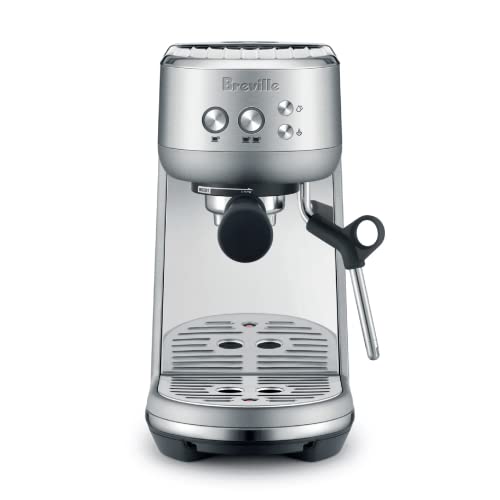
Breville Bambino Espresso Machine (BES450) — Best Manual for Daily Use
A manual machine has no business in a daily-use guide unless it solves the morning problem, and the Bambino’s ThermoJet heat-up solves it outright: the machine is ready roughly when you are. Automatic pre-infusion forgives the distribution you managed before caffeine, and the manual steam wand produces the genuine microfoam that fully automatics imitate. For households that love the ritual but live by the clock, this is the daily manual.
Strengths
- Near-instant heat-up — the only manual pattern that fits a weekday alarm schedule
- Pre-infusion makes pre-coffee puck preparation mistakes survivable
- Real steam wand: your latte art improves weekly instead of never
Trade-offs
- You are the grinder-and-tamp department every single morning (grinder not included)
- Brew-then-steam sequence adds a minute to milk drinks
- Small tank and drip tray need frequent attention in multi-drink homes
| Model | BES450, brushed stainless steel |
| Heating | ThermoJet, near-instant |
| Pre-infusion | Automatic low-pressure |
| Steam | Manual steam wand |
| Format | Manual espresso, compact footprint |
The Bambino’s daily case rests on a comparison of routines. Fully automatic routine: press button, wait, drink, empty a bin weekly. Bambino routine: grind while the machine heats (seconds), tamp, pull, steam, knock out the puck, wipe the wand — perhaps ninety extra seconds, in exchange for espresso with a higher ceiling and milk with a better texture. Households that find those ninety seconds meditative keep this machine for years; households that find them theft buy the Philips. Both are right, and this guide’s job is to make the choice consciously.
Durability in daily manual use comes down to two habits: purging and wiping the wand after every drink (milk bakes on fast), and descaling on schedule. Build those into the ritual and the Bambino’s simplicity — few moving systems, no milk plumbing — makes it arguably the lowest-maintenance machine in this entire guide over a five-year horizon.
Best for: ritual-lovers whose mornings still run to a schedule / Not suited for: one-button households, or anyone without a grinder plan
Check the current price on Amazon for the Breville Bambino Espresso Machine (BES450).

CASABREWS 3700 Essential Espresso Machine — Best Budget Daily Driver
Not every daily machine needs to be an appliance ecosystem. The CASABREWS 3700 Essential — verified in this programme’s earlier API checks — is a compact manual machine with a 20-bar Italian pump, a steam wand for cappuccinos, and a 43.9-ounce removable water tank, at the budget end of the espresso market. For a single coffee drinker, a student flat or an office corner, it delivers the daily drink without the daily machine becoming a household project.
Strengths
- Budget tier that leaves real money for the grinder and beans that matter more
- Removable 43.9oz tank — filling at the sink, not with a jug around the machine
- Compact footprint suits offices, dorms and second stations
Trade-offs
- Thermoblock workflow with brew-steam sequencing and modest steam power
- Light build and pressurised-basket tuning favour convenience over shot nuance
- Small brand footprint for parts and service compared with the Italians
| Model | 3700 Essential |
| Pump | 20-bar Italian pump (per listing) |
| Tank | 43.9oz removable water tank |
| Milk | Steam wand |
| Body | Compact stainless steel |
The 3700’s daily virtue is proportionality. One person, one or two drinks, a machine that heats fast, pulls an honest pressurised-basket shot, steams a small jug of milk adequately, and asks for a descale now and then — that is a complete daily coffee life at the lowest total cost in this guide. The removable tank is a small feature with daily weight: refilling and weekly cleaning happen at the sink, where they should, instead of by juggling water around a fixed machine.
Its ceiling is equally clear: this is not the machine for dialing in single-origin light roasts, and its steam will not win a latte-art throwdown. But daily use is a marathon of ordinary mornings, and on ordinary mornings the 3700 shows up, works, and cleans up quickly. As a first daily driver or a second-station machine, it earns its place.
Best for: solo drinkers, students and offices wanting daily espresso at the lowest sensible cost / Not suited for: enthusiasts chasing extraction nuance or multi-drink milk service
Check the current price on Amazon for the CASABREWS 3700 Essential Espresso Machine.
Comparison Table
| Pick | Badge | Key spec | Best for |
|---|---|---|---|
| Philips 3200 Series Fully Automatic Espresso Machine with LatteGo (EP3241/54) | Best Overall for Daily Use | LatteGo milk, one-touch, AquaClean | busy households that want real bean-to-cup drinks daily with minimal cleaning |
| De’Longhi Magnifica Evo Automatic Espresso Machine (Automatic Frother) | Best One-Touch Variety | 7 one-touch recipes, automatic frother, built-in grinder | multi-drinker households that want maximum one-touch variety |
| De’Longhi Magnifica Start Automatic Espresso Machine | Best Value Fully Automatic | 5 one-touch recipes, 13-setting grinder | first fully automatic buyers who want the daily routine without the flagship tier |
| Philips 3300 Series Fully Automatic Espresso Machine with LatteGo (EP3341/50) | Best for Iced Coffee Drinkers | Hot & iced presets, LatteGo, ceramic grinder | households that drink iced coffee daily for half the year |
| Breville Bambino Espresso Machine (BES450) | Best Manual for Daily Use | ThermoJet heat-up, pre-infusion, manual wand | ritual-lovers whose mornings still run to a schedule |
| CASABREWS 3700 Essential Espresso Machine | Best Budget Daily Driver | 20-bar pump, removable tank, compact | solo drinkers, students and offices wanting daily espresso at the lowest sensible cost |
Descaling Day: A Fifteen-Minute Walkthrough
Descaling is the maintenance task daily machines live or die by, and it is simpler than its reputation. On the fully automatics here, the machine announces the need and walks the cycle: fill the tank with the descaler solution, place a large container under the outlets, start the program, and let it run its stages, rinsing at the end as prompted. On the manual picks, the same chemistry applies with you as the operator: solution in the tank, run portions through the group and the wand into a jug, rest, then flush two full tanks of clean water through before the next drink.
Three habits make descale day painless. First, do it when the machine asks, not when the flow visibly suffers — scale is much easier to dissolve in its thin stage than its geological one. Second, use the maker’s specified descaler or a citric-acid solution at the concentration the manual allows, because seals and boilers have opinions about chemistry. Third, write the date on a note inside the cupboard door; daily machines in hard-water homes benefit from a rhythm slightly ahead of the alert, and the note is how you learn your home’s rhythm. Fifteen minutes, a few times a year, is the entire tax on daily espresso — cheaper than any café habit it replaces.
How to Choose an Espresso Machine for Every Day Use
Rank your mornings before you rank machines. The daily-use hierarchy is: (1) time to first drink, (2) steps per drink, (3) cleaning minutes per week, (4) tolerance for your worst beans and your least awake technique, and only then (5) ultimate shot quality. A machine that wins on (5) and loses on (1)–(3) becomes a weekend machine by spring, and the most expensive espresso is the kind made by a machine you stopped using.
Matching machine type to household type
- One-touch households (varied drinks, zero interest in process): Philips 3200/3300 or Magnifica Evo — decide by milk cleaning (LatteGo) versus menu variety (Evo).
- Value automatics: Magnifica Start — the same daily routine, fewer recipes, friendlier tier.
- Ritual households with a clock: Breville Bambino — manual craft at automatic speeds.
- Solo and budget daily drinkers: CASABREWS 3700 — proportionate, simple, cheap to run.
Then audit the consumables of daily life: water filters, descaler, and — for milk systems — the cleaning routine you will honestly perform. Daily machines consume care the way cars consume fuel; the models above were chosen partly because their care is cheap in time. Finally, size the tank and the bin to your household: a two-drink household emptying a tiny drip tray daily will resent a compact machine that a solo drinker finds perfect.
The Real Cost of Daily Espresso: Beans, Care and Time
The machine is the down payment; the subscription is beans, filters and minutes. Bean-to-cup machines grind fresh for every drink, so bean cost per cup is the dominant running cost — and the strongest argument for buying beans you actually love, since the machine will faithfully reproduce them three hundred times a year. Filters (Philips’ AquaClean pattern) trade a cartridge cost for descaling labour and machine longevity; in hard-water areas they are close to mandatory economics, not accessories.
Time is the other currency. Price your routine honestly: a fully automatic asks roughly five minutes a week of bins, rinses and wipes; a manual asks ninety seconds a drink and a descale cycle. Neither is burdensome, but they are different shapes of burden — weekly batch versus daily sprinkle — and households reliably keep the shape that matches their temperament. Choose the shape, then the machine, and day three hundred takes care of itself.
Hard Water, Soft Routines: Keeping a Daily Machine Alive
Daily use multiplies water before it multiplies anything else: three hundred days of drinks is three hundred days of mineral-laden water heating, cooling and depositing scale in boilers, thermoblocks and brew groups. The machines in this guide fight back with filtration (Philips’ AquaClean pattern), self-run rinse cycles and descale alerts — but the schedule only works if the human half of the system respects it. In hard-water postcodes, treat the filter cartridge and the descale alert as part of the machine’s fuel system, not as optional accessories, and your daily driver’s fifth year will taste like its first.
Milk is the second front. Every automatic frother and carafe in this guide rewards a rhythm of rinse-after-use and deep-clean weekly, and punishes improvisation with flavours that no bean upgrade can mask. The LatteGo design earns its repeated mentions here because it shrinks that rhythm to seconds — two pieces, no tubes, under a tap — and in daily life, the cleaning routine that happens is the short one. When choosing between the automatics, weigh that difference as heavily as the drinks menu: it is the one you will experience most often.
Finally, keep the machine’s small consumables in stock the way you keep beans in stock: a spare filter, a descaler dose, and for manual machines a group gasket in the drawer. Daily machines fail socially before they fail mechanically — one Monday without coffee because a two-dollar part is in the post, and the household’s faith in the routine wobbles. A tiny buffer stock is the cheapest reliability upgrade in this entire guide.
Beans for Daily Machines: What to Feed Them
Daily machines are faithful reproducers, which makes bean choice the highest-leverage decision in this whole guide. Fully automatics reward medium and medium-dark roasts with developed sweetness: their brew groups and grinders are tuned for coffees that extract easily and taste generous under milk. Very light, dense roasts can taste thin and sharp from an automatic no matter how fresh — a mismatch of coffee to machine, not a defect in either. Manual picks like the Bambino explore further up the roast spectrum because you control the variables the automatic fixes.
Freshness discipline matters more than origin prestige. Buy in quantities your household finishes within about a month of the roast date, keep the hopper filled only a few days deep, and store the remainder sealed away from heat and light. A daily machine drinking fresh, appropriate beans will outperform a flagship drinking stale, inappropriate ones every single morning — the least glamorous sentence in this guide, and possibly the most valuable. When a new bag tastes wrong, adjust the grinder before you judge the coffee: one setting finer or coarser is the difference between a bag you finish happily and a bag you blame.
Decaf drinkers are part of daily life too, and the same logic applies doubled: decaf stales faster and extracts differently, so buy it fresh, in smaller bags, and expect to grind it a touch finer. Every format in this guide handles good decaf respectably; none can rescue old decaf. The daily habit survives on logistics, and beans are the logistics that arrive by post.
Weekday Versus Weekend: Running a Two-Speed Coffee Household
Many households discover they are actually two coffee households sharing a counter: a weekday operation that needs speed and forgiveness, and a weekend one that enjoys process. The machines in this guide map onto that split in instructive ways. The fully automatics collapse the two into one acceptable compromise — the weekend drink is the weekday drink, enjoyed slower. The Bambino splits them deliberately: weekday drinks pulled fast on pre-infusion’s forgiveness, weekend drinks steamed carefully with the wand while nobody watches the clock.
If your household feels the split strongly, plan for it rather than fighting it: one machine chosen for the weekday (the majority of drinks by count) and, if the hobby grows, a manual corner added later for the weekend. What does not work is buying the weekend machine for a weekday life — the most common and most expensive mismatch in home espresso, and the one this guide’s ranking is designed to prevent. Count your drinks by day of the week before you buy; the arithmetic is embarrassingly decisive.
How to Set Up a Daily Espresso Routine That Sticks
Daily espresso succeeds as a system, not a purchase. This setup routine works for every pick in this guide and takes one weekend morning to establish.
- Place the machine where the routine happens: near water, with the cups stored above or beside it, and the beans within arm’s reach. Every metre of friction costs future mornings.
- Set the machine’s clock, auto-on or your smart plug so it is ready when you are — fully automatics wake fast, and the Bambino needs only seconds, but a machine that is ready beats a machine that is becoming ready.
- Dial in your house beans once, properly: adjust the grinder until the standard drink tastes balanced, then write the setting down. Daily machines punish daily re-deciding; a written baseline ends it.
- Standardise your drink: same cup, same button or same dose, same milk volume. A default order removes morning decisions and makes any change in taste a signal (beans, scale, season) rather than noise.
- Attach cleaning to an existing anchor: bins and rinses with Saturday breakfast, wand wipe with the drink itself, descale when the machine asks — not when it begs.
- Keep a small buffer stock: one spare bag of beans, one filter, one descaler dose. Running out of any of them on a Monday is how routines — and machines — get abandoned.
Review the routine after a month and cut any step that is not earning its place. The routine that survives is the shortest one that still makes coffee you look forward to.
Common Buying Mistakes
Buying a hobbyist machine for a commuter life
A beautiful manual setup that needs twenty minutes of warm-up and five of process will be used on Sundays and resented on Tuesdays. Match the machine to the morning you actually have — heat-up time is a daily-use specification, not a footnote.
Underestimating milk-system cleaning
Automatic frothers and carafes are wonderful right up to the week nobody cleaned them. If your household will not rinse milk parts, buy a manual-wand machine (where the cleaning is a wipe) or a LatteGo-style tubeless system — and be honest with yourself before, not after.
Ignoring water in a daily machine
Daily use multiplies everything, including scale. Filtered water and on-schedule descaling are the difference between a five-year machine and a two-year one, especially for fully automatics whose brew groups and boilers are expensive to rescue once scaled.
Filling the hopper for a month
Beans stale in a warm hopper above a working machine. Fill for a few days at a time and store the rest sealed and cool. Fresh beans are the cheapest daily upgrade there is, and a month-old hopper quietly cancels a good machine’s advantages.
Final Recommendation
For most households the daily answer is the Philips 3200 — the easiest milk cleaning and the most considered daily routine — with the Magnifica Evo for variety-seeking families, the Magnifica Start as its value sibling, and the Philips 3300 if iced drinks rule your summers. Keep the ritual with the Bambino if your mornings allow ninety seconds of craft, and take the CASABREWS 3700 if the daily drink is solo and the budget is real.
Compare the neighbouring angles in Best Espresso Machines For Home Use, keep an eye on the ceiling with Best Espresso Machines For 300 Dollars if the budget is fixed, read Best Espresso Machines For Baristas for the craft end of the spectrum, Best Affordable Home Espresso Machines for more value options, and Best Espresso Machines For Business if your “daily” is about to become commercial.
Start your shortlist with the top three picks: Philips 3200 Series Fully Automatic Espresso Machine with LatteGo (EP3241/54), De’Longhi Magnifica Evo Automatic Espresso Machine (Automatic Frother), De’Longhi Magnifica Start Automatic Espresso Machine — each link goes to the current listing so you can check the current price on Amazon and confirm the piece list before you buy.
Frequently Asked Questions
What type of espresso machine is best for daily use?
For most households, a fully automatic bean-to-cup machine: it grinds, brews and (with an automatic frother) milks in one touch, and its cleaning routine is a few minutes a week. The Philips 3200 and De’Longhi Magnifica Evo lead this guide for exactly those reasons. Manual machines suit daily use only when they heat almost instantly, like the Breville Bambino — otherwise the warm-up alone breaks weekday routines.
How much cleaning does a daily espresso machine really need?
Plan on roughly five minutes a week for a fully automatic: empty the drip tray and puck container, rinse the brew group on the maker’s schedule, and wipe milk contact parts after use (the Philips LatteGo system rinses in seconds because it has no tubes). Manual machines need a wand wipe per drink and descaling on schedule. Neglected milk systems and scale are the two main killers of daily machines.
Is a fully automatic machine’s espresso as good as a manual machine’s?
It is consistently very good rather than occasionally great. Automatics are tuned for balanced, repeatable drinks from mainstream beans, which is what daily drinking actually is. A skilled user with a manual machine and a good grinder can exceed them on a great morning — and fall short of them on a rushed one. Daily use rewards the consistency.
How long do fully automatic machines last with daily use?
Years, when water and cleaning are managed: filtered water, descaling on the machine’s schedule, and the weekly brew-group rinse are the whole secret. The moving systems (brew group, grinder, milk frother) are designed for thousands of cycles, and the big makers’ parts and service networks — De’Longhi and Philips especially — make long ownership realistic.
Should I leave my espresso machine on all day?
No — use auto-off or a timer so the machine is ready at your coffee times and asleep otherwise. It saves energy, reduces heat stress on components and slows scale formation in boilers and thermoblocks. Every pick in this guide supports quick readiness, so there is no convenience argument for idling hot all day.
Can one machine serve a household with different daily drinks?
Yes — that is the fully automatics’ home turf. The Magnifica Evo’s seven one-touch recipes and the Philips machines’ adjustable strength and volume exist precisely for households splitting espresso, long coffee, cappuccino and iced drinks across people and seasons. Manual machines serve variety too, but one drink — and one skill set — at a time.
Can I use tap water in my daily espresso machine?
You can, but in hard-water areas you will pay for it in descaling frequency and eventually in repairs. Filtered water — a jug filter at minimum, or the machine’s own AquaClean-style cartridge where supported — is the standard recommendation for every pick in this guide. Avoid distilled water: machines’ sensors and the coffee’s extraction both expect some mineral content.
Can a daily machine handle a household’s guests on weekends?
Within reason, yes — with sequencing. Fully automatics serve guests one touch at a time and only ask for a water top-up and a bin check mid-session; the Bambino handles a round of milk drinks as a short production line. What daily machines are not built for is café-volume continuous service — for a party of twenty, batch the milk drinks in waves and let the machine breathe between them, exactly as a small café would.
Is it worth keeping a backup way to make coffee?
A cheap pour-over cone or a small French press costs little, takes no counter, and covers the machine’s descale day, service week or the morning the beans run out. Daily households that keep a manual fallback never face a coffee emergency, and the fallback doubles as the travel and camping kit. It is the least glamorous recommendation in this guide and one of the most used.
Do fully automatic machines need special beans or oil-free beans?
Very oily, dark-roasted beans can gradually foul grinder burrs and brew-group mechanisms in any bean-to-cup machine, so makers generally steer owners toward medium roasts with a dry surface. It is guidance, not a hard rule — but in a daily machine, where the same grinder sees thousands of doses, following it is cheap insurance and one more reason the medium-roast recommendation in this guide’s bean section exists.
What happens when a daily machine goes wrong midweek?
The honest answer separates the brands in this guide: De’Longhi and Philips maintain the deepest service and parts networks in home espresso, so a fault is a repair rather than a replacement hunt. Keep the machine’s documents, run its self-diagnostics first, and remember that most “failures” in daily machines trace back to scale, a full bin sensor or a brew group overdue for its rinse — the three checks to make before booking any repair.


