Disclosure: airfryerkitchensupply.com is reader-supported. When you buy through links on our site, we may earn an affiliate commission at no extra cost to you.
Where to buy
Every linked pick in this guide to the best home vacuum sealers was verified against Amazon’s catalogue on 2026-11-22: the product name and ASIN below come from that check, not from memory. Prices move constantly, so this guide never prints them — use a link to see today’s figure.
- FoodSaver V4400 2-in-1 Vacuum Sealer — check price on Amazon
- FoodSaver PowerVac Compact VS0150 — check price on Amazon
- Anova Culinary Vacuum Sealer (Slim) — check price on Amazon
- Weston Professional Advantage Vacuum Sealer 65-0501-W — check price on Amazon
- NutriChef Food Vacuum Sealer Machine — check price on Amazon
- POTANE Precision Vacuum Sealer Machine — check price on Amazon
The best home vacuum sealers solve a household logistics problem, not just a food problem. They portion the warehouse-club run, tame the freezer’s chaos, protect the hunting and fishing harvest, keep coffee and cheese alive between uses, and do it from a machine that stores vertically in a cupboard. This guide covers the home category broadly — food first, but with the jar, container and canister uses that make a sealer a household tool rather than a single-task appliance.
Because the brief is broader, the picks are broader: a fully automatic flagship, a vertical-storage compact, a slim sous vide specialist, a heavy-duty home machine for harvest-scale work, a budget all-rounder with a wine stopper in the box, and a preset-rich mid-range model. Every one was verified, and every specification quoted comes from those verified listings.
If your sealing is exclusively about dinner, our companion guide to home vacuum food sealers goes deeper on moist modes and freezer technique. This guide is for the whole household: the pantry, the freezer, the tackle box of marinades and the drawer of things that must stay dry.
In this guide
Quick Picks
Best Overall — FoodSaver V4400 2-in-1 Vacuum Sealer. The V4400 removes the step where home sealing usually fails: it detects the bag and starts the process itself, so the seal a beginner gets on day one resembles the seal an expert gets. Check the current price on Amazon.
Best for Small Kitchens — FoodSaver PowerVac Compact VS0150. The PowerVac’s defining feature is not power — it is posture. Check the current price on Amazon.
Best Slim Design — Anova Culinary Vacuum Sealer (Slim). Anova’s slim sealer is the machine for kitchens where the sealer must disappear. Check the current price on Amazon.
Best Heavy-Duty Home Machine — Weston Professional Advantage Vacuum Sealer 65-0501-W. Some homes seal like small businesses: a deer in November, a garden’s worth of beans in August, a fisherman’s season in between. Check the current price on Amazon.
Best Budget All-Rounder — NutriChef Food Vacuum Sealer Machine. NutriChef’s budget sealer understands the household brief: automatic dry and moist sealing for food, plus a hose and a wine stopper in the box, so the same machine that portions chicken also reseals the bottle and vacuums the canister. Check the current price on Amazon.
Best for Gentle Presets — POTANE Precision Vacuum Sealer Machine. POTANE’s machine is built around a truth about households: different foods — and different family members — need the sealer to behave differently. Check the current price on Amazon.
How These Picks Were Chosen
Each ASIN was matched to its Amazon title before linking; automatic bag detection, vertical storage design, wattage and included accessories in the spec boxes are drawn from those titles. Unverifiable listings were excluded.
Selection weighted versatility for this broader brief: accessory ports and hoses for jars and containers, seal width for heavy work, storage format for real kitchens, and mode range for the variety of things a household seals — from flour-dusted chicken to the good coffee that must never meet freezer air twice.
We deliberately included one heavy-duty machine (the Weston) because ‘home’ now includes households processing garden harvests and game at volumes that would exhaust a light sealer, and one true budget machine because a first sealer should be cheap enough to learn on.
The 6 Best Home Vacuum Sealers
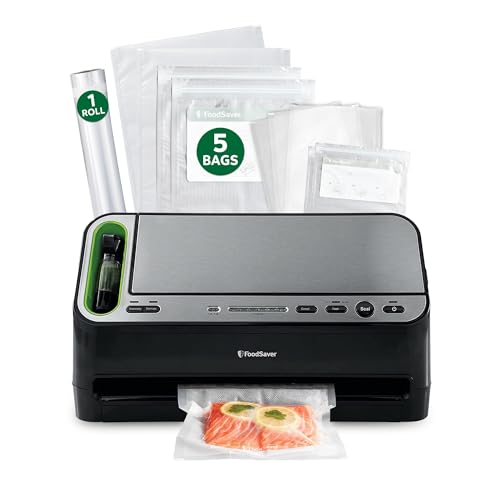
FoodSaver V4400 2-in-1 Vacuum Sealer — Best Overall
The V4400 removes the step where home sealing usually fails: it detects the bag and starts the process itself, so the seal a beginner gets on day one resembles the seal an expert gets. The 2-in-1 design extends the same machine from bags to containers and jars via its handheld component, which is what turns a food sealer into a household system — coffee, cheese, flour and leftovers all live under vacuum somewhere in a well-run kitchen.
Strengths
- Automatic bag detection removes the main beginner error
- 2-in-1 design covers bags plus containers and jars
- FoodSaver ecosystem depth for bags, rolls and parts
Trade-offs
- Automation means more to learn on day one
- Counter footprint is flagship-sized
- Handheld component needs its own storage spot
| Automation: automatic bag detection and sealing |
| Format: 2-in-1 with handheld component tradition |
| Kit: starter kit included |
| Platform: FoodSaver flagship home line |
It is a flagship in size and in learning curve; the automatic systems reward a careful read of the manual. Households that seal often and broadly will find it the most capable home machine here, backed by the deepest accessory ecosystem in the category. This is the sealer for the home that intends to organise everything once, properly.
The V4400’s automation reshapes household behaviour: because sealing is nearly effortless, it happens for small things — the half-block of cheese, the opened coffee — that manual machines get skipped for. The handheld component lives in a drawer and handles jars weekly. Owners should give the automatic system its first evening of patience; households that do report the machine becoming invisible infrastructure thereafter.
Best for: households wanting the most automatic, complete home system / Not suited for: minimalists who prefer fully manual machines.
Check on Amazon — check price on Amazon for the current figure.
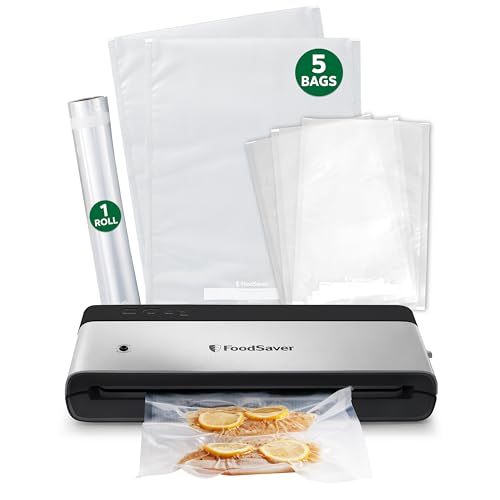
FoodSaver PowerVac Compact VS0150 — Best for Small Kitchens
The PowerVac’s defining feature is not power — it is posture. It stores vertically, sliding into the cupboard slot where cutting boards live, which means a small kitchen can own a real FoodSaver without surrendering a counter. It still seals dry and wet foods properly, and its design attention to reducing bag waste suits households sealing modest amounts often.
Strengths
- Vertical storage fits cupboards other sealers cannot
- Handles dry and wet food in a compact body
- Designed to reduce bag waste with right-sized sealing
Trade-offs
- Compact pace for batch work
- No built-in roll storage
- Accessory range is narrower than flagship models
| Storage: vertical storage design |
| Finish: stainless steel and black |
| Use: dry and wet food sealing |
| Format: compact |
Compacts trade batch pace and roll storage for that footprint, and this one is no exception: the roll lives in the drawer, and a marathon session runs at household speed. For the kitchens it targets — apartments, small homes, tidy counters — those are the right trades, made by the brand with the deepest support behind it.
The PowerVac’s vertical life means it is simply always there — in the cupboard, at arm’s reach, out in ten seconds. Small kitchens report sealing more, not less, than friends with bigger machines stored worse. Its bag-waste-reducing design suits the small-batch rhythm: a portion here, a leftover there, each sealed right-sized.
Best for: apartment and small-kitchen households / Not suited for: harvest-scale processors.
Check on Amazon — check price on Amazon for the current figure.

Anova Culinary Vacuum Sealer (Slim) — Best Slim Design
Anova’s slim sealer is the machine for kitchens where the sealer must disappear. Its low, narrow body lives in a drawer, yet it keeps the wet/dry dual modes that matter — marinated sous vide proteins one night, dry pantry staples the next — and carries a 2-year warranty that suggests Anova expects it to work for a living.
Strengths
- Slimmest serious sealer here — drawer-friendly
- Wet and dry modes cover marinades and dry goods
- Backed by a 2-year warranty
Trade-offs
- No roll cutter or storage — pre-cuts and separate rolls
- Home pace, not batch pace
- Sous vide branding undersells its pantry uses
| Design: slim and compact |
| Modes: wet and dry dual sealing |
| Included: 10 pre-cut bags |
| Warranty: 2-year |
There is no roll storage or cutter, so your bag supply lives beside it, and its pace is domestic. But as a household tool its slimness is a genuine capability: the sealer that is always within reach gets used for the small jobs — half an onion, the good cheese, yesterday’s bread — and small jobs are where household food waste actually happens.
Anova’s slim sealer is the drawer appliance perfected: it appears for the marinade, the cheese, the pantry restock, and vanishes. Owners who cook sous vide keep it beside the circulator as one kit. The absence of a cutter stops mattering once a roll and scissors live in the same drawer — a small system, honestly assembled.
Best for: drawer-storage households and sous vide cooks / Not suited for: bulk buyers who cut bags from rolls daily.
Check on Amazon — check price on Amazon for the current figure.
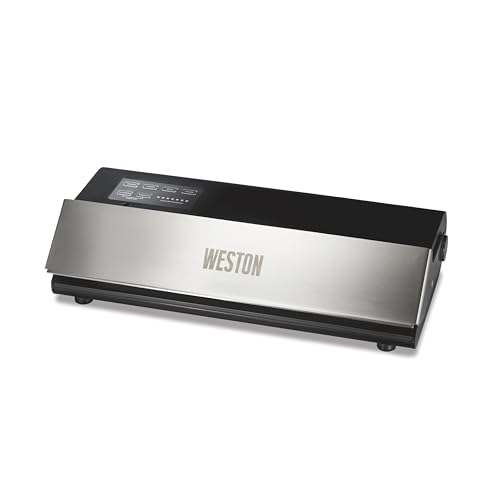
Weston Professional Advantage Vacuum Sealer 65-0501-W — Best Heavy-Duty Home Machine
Some homes seal like small businesses: a deer in November, a garden’s worth of beans in August, a fisherman’s season in between. The Weston Professional Advantage is built for those weekends — an 11-inch seal bar, stainless construction and a duty cycle that does not need cooling pauses while a light sealer rests. Weston’s processing heritage is the point; this is the home machine from a company that equips people who process for real.
Strengths
- Built for harvest and game processing volumes
- Wide, robust sealing for heavy bags
- Weston’s processing heritage shows in the duty cycle
Trade-offs
- Overbuilt for light weekly use
- Larger and heavier than domestic compacts
- Fewer convenience automations than flagship home models
| Seal bar: 11 inch |
| Construction: stainless steel and black |
| Class: professional-advantage home/commercial crossover |
For a household sealing two bags a week it is honest overkill, heavier and less automated than the flagship home models. Match the machine to your heaviest month, not your average week: if your heaviest month looks like a harvest, this is your sealer.
The Weston changes its household’s calendar: processing days become single sessions instead of weekends, and the freezer fills in ordered rows while light machines would still be cooling between batches. It stores like the serious tool it is — on a shelf, not in a drawer — and asks to be treated as equipment. For the homes that need it, nothing else here is a substitute.
Best for: gardeners, hunters and anglers processing at volume / Not suited for: occasional sealers — the compacts above fit better.
Check on Amazon — check price on Amazon for the current figure.

NutriChef Food Vacuum Sealer Machine — Best Budget All-Rounder
NutriChef’s budget sealer understands the household brief: automatic dry and moist sealing for food, plus a hose and a wine stopper in the box, so the same machine that portions chicken also reseals the bottle and vacuums the canister. LED touch controls and a compact 14-inch body keep it kitchen-friendly, and the included kit means it works across the house from the first evening.
Strengths
- Hose and wine stopper widen it beyond bags from day one
- Dry and moist modes at a budget position
- Compact 14-inch footprint stores easily
Trade-offs
- Touch controls divide opinion versus buttons
- Brand ecosystem is thinner than FoodSaver’s
- Suction suits home loads, not harvest marathons
| Modes: automatic dry and moist sealing |
| Controls: LED touch |
| Included: vacuum bags, hose and wine stopper |
| Size: 14 x 6 x 3 inches |
Its suction and pace are home-grade, and the accessory ecosystem behind it is thinner than FoodSaver’s. As a first, broad, inexpensive household sealer, though, its completeness is the argument — few budget machines arrive this ready for the whole house.
The NutriChef’s kit completeness shows daily: the wine stopper on Friday, the hose on the flour jar, bags for Sunday’s portions. Touch controls keep the top wipe-clean in a floury kitchen. It is the sealer most often bought as a gift in this guide’s list — inexpensive, complete and immediately useful in any household that receives it.
Best for: budget households wanting bags, jars and wine in one kit / Not suited for: heavy-volume processors.
Check on Amazon — check price on Amazon for the current figure.

POTANE Precision Vacuum Sealer Machine — Best for Gentle Presets
POTANE’s machine is built around a truth about households: different foods — and different family members — need the sealer to behave differently. Its four food modes include soft and delicate settings that keep baked goods and fragile produce intact, and the 8-in-1 preset system lets each user repeat a known-good setting instead of re-judging vacuum strength every time.
Strengths
- Soft and delicate modes protect fragile foods properly
- Preset system suits households with many users
- Compact body with a full mode range
Trade-offs
- Presets need learning before they save time
- Mid-tier brand support network
- No roll storage in the compact body
| Presets: 8-in-1 easy presets |
| Modes: 4 food modes — dry, moist, soft, delicate |
| Kit: starter kit included |
| Design: compact, silver |
Presets repay a short learning investment and confuse anyone who will not make it. For multi-user homes sealing a wide variety — the berries, the bread, the roast, the cheese — that shared repeatability prevents more crushed food and failed seals than any single power figure. A thoughtful mid-range machine with a household-first design.
POTANE’s presets become family knowledge: ‘berries are delicate-two’ is a sentence its households actually say. Multi-user consistency is its quiet triumph — the teenager’s seals hold as well as the expert’s, because the machine remembers what the food needs. That repeatability, more than any suction figure, is what its owners praise after a year.
Best for: households sealing everything from berries to roasts / Not suited for: single-user kitchens that prefer two buttons.
Check on Amazon — check price on Amazon for the current figure.
Comparison Table
| Pick | Badge | Key spec | Best for |
|---|---|---|---|
| FoodSaver V4400 2-in-1 Vacuum Sealer | Best Overall | automatic bag detection and sealing | households wanting the most automatic, complete home system |
| FoodSaver PowerVac Compact VS0150 | Best for Small Kitchens | vertical storage design | apartment and small-kitchen households |
| Anova Culinary Vacuum Sealer (Slim) | Best Slim Design | slim and compact | drawer-storage households and sous vide cooks |
| Weston Professional Advantage Vacuum Sealer 65-0501-W | Best Heavy-Duty Home Machine | 11 inch | gardeners, hunters and anglers processing at volume |
| NutriChef Food Vacuum Sealer Machine | Best Budget All-Rounder | automatic dry and moist sealing | budget households wanting bags, jars and wine in one kit |
| POTANE Precision Vacuum Sealer Machine | Best for Gentle Presets | 8-in-1 easy presets | households sealing everything from berries to roasts |
How to Choose a Home Vacuum Sealer
Start with your heaviest month
Average weeks flatter light machines; harvest weekends expose them. If you process in volume even twice a year, buy duty cycle and seal width for that month — the Weston pattern. If your sealing is steady and small, compacts serve better and store better.
Value the accessory port more than it costs
A hose port turns a bag sealer into a household system: jars of flour, canisters of coffee, wine bottles, marinating containers. Homes that use the port seal three times as many kinds of things, and waste less of all of them.
Storage format is a feature, not packaging
Vertical-storage and slim designs exist because sealers compete with everything else in a kitchen. Choose the format your kitchen can actually house within arm’s reach of where food is prepared.
Automation helps households, not just beginners
Automatic bag detection and presets make results consistent across every person in the house. In a multi-user kitchen, repeatability is a quality feature in its own right.
How to Organise a Freezer With a Home Vacuum Sealer
- Adopt the flat-freeze rule: every bag freezes flat on a tray first, then files upright in a bin or box by category — proteins, vegetables, prepared meals.
- Label before sealing, not after: contents, date and portion count in marker on the bag’s top margin, where frost will not hide it.
- Keep a freezer inventory on the door — a simple list wiped and updated as bags go in and out. Vacuum sealing extends life so effectively that unlabelled, unlisted food becomes archaeology.
- Rotate ruthlessly: new bags go behind or beneath older ones, and the inventory’s oldest line is next week’s menu planning starting point.
- Reserve one small bin for odds and ends — half onions, herb bundles, stock portions — sealed with the accessory containers or small bags, so the useful small stuff stops dying in the crisper.
Common Buying Mistakes
Buying a light sealer for harvest work
Duty cycle is real: light machines need cooling rests mid-batch, and a harvest does not wait. Match the machine to your biggest processing day.
Never using the accessory port
Owners who seal only bags use half their machine. Jars, canisters and wine are where a home sealer quietly saves money every single week.
Sealing sharp bones and edges unprotected
Bone tips and dry pasta edges puncture bags under vacuum. Pad them with a fold of bag material or paper towel before sealing.
Storing the sealer somewhere inconvenient
A sealer in the garage seals nothing. Its home must be within reach of the prep counter or it will be used only on planned occasions, missing the daily small saves.
Forgetting that vacuum is not preservation magic
Vacuum sealing extends freezer and pantry quality; it does not make perishable food shelf-stable at room temperature. Refrigerate and freeze exactly as you would without it.
Beyond Food: The Household Sealer
Once a sealer lives in a kitchen, its uses multiply: resealing coffee and spices against staling, protecting batteries and matches in a boat or camper, waterproofing documents and emergency supplies, compressing off-season clothing in storage bags designed for the hose port. None of these justify the purchase alone; together they explain why owners describe the machine as household infrastructure rather than a kitchen gadget.
The wine stopper in kits like NutriChef’s points at the same truth — air is the enemy of many things a home values, and a machine that removes it on demand earns a permanent place. When choosing between two similar sealers, the one with the better accessory ecosystem usually wins the decade.
Seal Bars, Pumps and Duty Cycles, Explained
Three specifications decide a home sealer’s working life. Seal bar length sets maximum bag width — 11 inches covers standard home bags. Seal quality, meaning a wide, even, repeatable heat band, decides whether bags stay sealed. Pump strength, quoted in suction figures, decides how much air leaves the bag and how the machine handles moist loads.
Duty cycle is the unquoted fourth: how many consecutive seals before heat and pump strain demand a rest. Light compacts are honest tools for weekly handfuls of bags; harvest work wants the heavier construction of machines like the Weston. Knowing your own pattern is worth more than any single number on a box.
A Home Sealer Is a System, Not a Machine
Judge a home sealer as you would a system: the machine, its bags and rolls, its accessory ecosystem, its storage format and its maker’s parts support, operating together for years. A superb machine with orphaned accessories loses to a good machine inside a deep ecosystem — which is why FoodSaver’s presence in any home guide is structural, and why challengers earn their places through specific excellences like slimness, gentleness or harvest strength.
When comparing two finalists, list the five things you will seal monthly and walk each through both systems — bag or container, mode, storage, cleanup. The right machine usually announces itself during that walk, and it is rarely the one with the largest suction number.
Matching Sealer Class to Household Class
Occasional sealers — a few bags a month — should buy compact and inexpensive without a flicker of guilt; the category’s core benefit does not require more. Weekly households justify the workflow tier: roll storage, moist modes, accessory ports. Processing households — gardens, game, bulk clubs at scale — should buy duty cycle and seal width first and treat convenience features as secondary.
The expensive error is symmetrical: a flagship idling in a light household, or a compact dying nobly under a harvest. Both are cured by the same honesty about your heaviest month, which is why this guide keeps returning to it.
Gaskets, Channels and Keeping Suction Honest
When a home sealer weakens, the cause is usually maintenance, not mortality. The foam gasket compresses if the lid is stored latched — store it closed but unlatched. The seal channel collects drips that bake into leaks — wipe it after moist sessions. The drip tray, where fitted, quietly fills — empty it before it teaches you why it exists.
These three habits, costing a minute a week, preserve the suction the machine had on day one. Makers like FoodSaver and Weston sell replacement gaskets for when years eventually win; that a part exists and costs little is itself a reason these brands anchor home guides.
Vacuum Storage Beyond the Kitchen
The accessory hose extends a home sealer’s reach into the rest of the house: off-season clothes compressed in vacuum bags, emergency kits kept dry, silver kept untarnished, documents and photos protected against water, camping gear compacted. None of these uses appears on the box, and together they often double the machine’s annual work.
This is the final argument for buying a complete home system over a bare food-only tool. Air removal is a household utility, like hot water — once available on demand, uses keep presenting themselves, and the sealer that can serve them all becomes very difficult to imagine the house without.
Setting Up a Home Sealing Station
A home sealer works best as a station, not an event. The station is modest: the machine within reach of the prep counter, bags or a roll beside it, labels and a marker in the same drawer, and a flat tray in the freezer reserved for first-freezing bags flat. Assembled once, this arrangement removes every small friction that otherwise decides whether sealing happens tonight or ‘later’.
Vertical and slim machines — the PowerVac and Anova patterns — exist to make the station possible in kitchens with no spare counter. A station in a cupboard, complete and ready, beats a flagship in a distant pantry on every day except processing day.
Audit your station monthly: bags stocked, gaskets clean, inventory list current. The audit takes two minutes and is the difference between a system and a gadget slowly reverting to clutter.
Sealing the Harvest: Gardens, Game and Bulk Buys
Harvest sealing has its own craft. Blanch vegetables before freezing and dry them thoroughly — surface water becomes ice, and ice becomes texture damage. Portion game and fish with the meal in mind, pad every bone, and consider a double bag for long storage of fatty fish, where odour transfer is the enemy in both directions.
Work in the order the machine prefers: dry goods first, moist last, so the seal channel stays clean through the session’s bulk. Rest a light machine on schedule rather than on failure; the heavy-duty Weston pattern exists because harvests do not respect a small pump’s feelings.
Label with the harvest date, not just the contents. A garden’s August beans and October beans are different foods by spring, and rotation by true age is what keeps a deep freezer honest.
Coffee, Cheese and the Refrigerator Frontier
The refrigerator is where a home sealer’s accessory port earns its keep. Hard cheeses, vacuumed between uses, resist mould for weeks beyond their wrapped life. Coffee beans in a vacuum canister stale at a fraction of their open-bag rate. Deli meats, opened grains, the good butter — the fridge is full of slow air damage that a hose and thirty seconds prevents.
Know the limits with equal clarity. Soft cheeses need air and should not be vacuumed tight; fresh bread crushes under full vacuum and prefers the gentle modes of machines like the POTANE or Nesco patterns; and nothing vacuumed becomes shelf-stable that was not shelf-stable before.
Used with that judgement, the sealer stops being a freezer accessory and becomes the refrigerator’s organiser too — the broader home role this guide exists to describe.
Teaching the Household: Sealing as a Shared Skill
A home sealer delivers its full value when everyone in the house can use it. The barriers are small — headroom, dry seals, the right mode — and the preset and automatic machines in this guide exist largely to lower them. A five-minute family tutorial, plus a note on the machine with the household’s three standard settings, converts a personal gadget into shared infrastructure.
Children old enough to cook are old enough to seal leftovers, and households report that the person who seals dinner’s remains wastes less of them. Ownership, even small ownership, changes behaviour around food more reliably than any lecture about waste.
Make the first shared session an easy win: dry goods, forgiving bags, visible results. The freezer’s neat flat rows will teach the rest of the lesson themselves.
The Pantry Audit: What Your Shelves Are Losing to Air
Walk your pantry with a sealer owner’s eyes and the losses announce themselves: the coffee staling between weekends, the nuts turning in their opened bag, the flour ageing toward the bin, the spices fading from the day their seals broke. Air is a slow tax on every opened package, and a home sealer with an accessory hose is the audit’s remedy — canisters and jars under vacuum, taxed no longer.
Prioritise by value and vulnerability: expensive, aromatic, slow-consumed goods first — coffee, spices, nuts, good rice, dried mushrooms. Staples you burn through weekly gain little; the sealer’s pantry work is protecting the slow and the precious.
Within a month, the difference is measurable in the cup and the pan. That measurability is why this guide insists a home sealer is a household system: the freezer shows the savings in months, but the pantry shows them at breakfast tomorrow.
Vacuum Sealing for Travel, Boats and Second Homes
The hose port’s jurisdiction extends beyond the house. Boats and caravans use sealers to keep provisions dry, batteries unfouled and emergency kits genuinely emergency-ready. Second homes stock their freezers in sealed, dated order, so a Friday arrival finds dinner instead of archaeology. Travellers compress clothing in vacuum bags and protect documents against the trip’s weather.
In each setting the same virtues recur: air excluded, water excluded, order imposed. A compact machine — the PowerVac’s vertical format, the Anova’s slim body — travels or stores where a flagship cannot, which is why this guide treats format as a first-class feature rather than packaging.
If your household has a boat, a van or a cabin, size the sealer to that life as well as the kitchen’s. The machine that serves both is bought once and used in two worlds.
Safety and Food Handling, Plainly Stated
Vacuum sealing changes food’s environment, and the safety rules deserve plain speech. Removing air suppresses many spoilage organisms but favours a few serious ones if food is then stored warm — which is why sealed perishables must be refrigerated or frozen exactly as unsealed ones are, and thawed in the fridge, in their bags or out of them, never on the counter in a sealed bag at room temperature for hours.
Garlic in oil, a classic home preparation, should never be vacuum sealed and stored at room temperature; refrigerate or freeze it, sealed or not. Cooked foods should be cooled promptly before sealing, and anything that smelled questionable before sealing will be questionable after — the vacuum preserves condition, good or bad.
These rules are neither new nor onerous; they are ordinary food hygiene wearing a vacuum’s clothes. Follow them and the technology’s safety record in home kitchens is excellent, which is precisely why it has become standard equipment.
The Ten-Year Sealer: Habits of Households That Keep Them
Households still sealing happily in year ten share a recognisable pattern. The machine lives within reach. The bags are stocked before they run out. The gasket is cleaned, the lid stored unlatched, the inventory kept. And the machine was bought for the household’s real pattern — the test this guide has applied from its first page.
They also share a purchasing pattern: they bought the system, not the suction figure. Accessory depth, bag economics and maker support decided their satisfaction in years three through ten, long after the unboxing specifications were forgotten.
Imitate the pattern and the specific model matters less than the match. That is the honest conclusion of every guide on this site, and the vacuum sealer — a decade-long household servant when chosen well — may be where it matters most.
The Drawer Test: Where Your Sealer Will Actually Live
Before choosing any model in this guide, open the drawer or cupboard where it will live and measure it. Then measure the machine — not its marketing footprint, but its body with the lid open and a bag loaded, in the posture you will actually use it. The sealers that fail households fail spatially first: bought for a counter they never got, exiled to a shelf they are never fetched from.
Vertical and slim designs exist to pass this test in real kitchens. Honour their engineering by taking the test seriously, and the machine you choose will be the one still in weekly use when its box is long forgotten.
Batch Day Protocol for Big Shops
The warehouse run deserves a protocol. Unpack proteins directly to the prep surface, portion before anything is put away, seal in a dry-to-moist order, label as you go, and freeze flat on trays before filing. Worked this way, a month of meat portions itself in under an hour, and the freezer receives order instead of chaos.
Keep the machine’s drip tray and channel checked at the session’s midpoint, not just its end — batch day is when small maintenance pays its largest dividends. And end with the inventory updated while the evidence is still on the counter, not reconstructed from memory on Friday.
Sealing Liquids Without a Liquid Machine
Households without a liquid-designed sealer still have three honest routes to frozen soups and sauces. Pre-freeze the liquid in the bag, standing in a container for shape, then seal the firm result. Freeze in rigid containers first, pop out the blocks, and seal the blocks. Or use the paper towel intercept and a gentle hand on a pulse mode, accepting a slower craft for a weekly job.
What does not work is optimism at full vacuum with a full bag of soup. Choose a route, practise it on water, and the household’s sauce production stops being limited by its sealer’s specialisation.
Kids, Guests and the House Rules Card
A shared sealer needs shared rules, and three lines on a card cover nearly everything: leave three inches of headroom; keep the seal dry; if the seal looks wrong, cut it and redo it. Add the household’s standard settings for its three most-sealed foods and the card becomes a complete operating system for any user over the age of supervised cooking.
Machines with presets and automatic detection — several in this guide — encode much of the card in the appliance itself, which is their deepest household value. Judge that value by your household’s least experienced regular user, not by its most expert one.
Resale, Gifting and the Second Life of Sealers
Home sealers gift and resell unusually well because their value is legible: a working machine, a clean channel, a gasket with life in it. If you upgrade, pass the old machine on with a fresh roll and the house rules card — the recipient inherits a system, not a puzzle, and the craft spreads exactly as it should.
If you are receiving a second-hand sealer, test it on a dry bag, inspect the gasket and channel, and replace the gasket pre-emptively if the platform supports it. A small part and ten minutes convert a hand-me-down into a household asset with years of service priced at nearly nothing.
Renters, Movers and the Portable Pantry
A home sealer suits unsettled lives better than almost any appliance: it asks for no installation, weighs little, and its work — portioning, protecting, organising food — is most valuable exactly where storage is improvised and kitchens are temporary. In a new city, on a tight budget, the machine that turns bulk buys into a month of ordered meals pays its rent in the first month.
Movers should pack it late and unpack it early. The first shop in a new home is precisely the shop that needs portioning, and the familiar ritual of sealing is a small, practical way of making a strange kitchen yours.
The Complete Household: A Final Inventory
Step back and inventory what a home sealer, properly used, touches in a year: the freezer’s ordered rows, the pantry’s protected aromatics, the fridge’s rescued cheeses, the boat’s dry kit, the cabin’s stocked shelves, the gifts of sauce that travelled flat and arrived perfect. Few appliances at any price sign their names in so many rooms.
That breadth is the argument of this guide in a single image. Choose the machine that fits your heaviest month and your real storage, learn its three habits, and it stops being a purchase. It becomes part of how the house runs — which is the most any tool can ever become.
Final Recommendation
The FoodSaver V4400 is the most complete home system here, the PowerVac the small-kitchen answer, Anova’s slim sealer the drawer-dweller’s friend, Weston’s machine the harvest hero, and NutriChef and POTANE the budget and gentle-preset specialists.
Choose for your heaviest month and your real storage space, use the accessory port for the whole house, and a home vacuum sealer becomes the quiet organiser of the entire kitchen.
Related guides on this site: Best Home Vacuum Food Sealers Best Vacuum Sealers Best Chamber Vacuum Sealers Best Vacuum Sealers For Sous Vide Best Handheld Vacuum Sealers
Revisit the top picks: FoodSaver V4400 2-in-1 Vacuum Sealer.
Revisit the top picks: FoodSaver PowerVac Compact VS0150.
Revisit the top picks: Anova Culinary Vacuum Sealer (Slim).
Frequently Asked Questions
What is the difference between a home vacuum sealer and a chamber sealer?
Home external sealers draw air from embossed bags and suit most households; chamber sealers vacuum the whole chamber, handle liquids effortlessly and use cheaper bags, but are large and commercial-priced. This guide covers the home external category.
Can a home vacuum sealer seal jars and containers?
Yes, with an accessory hose and compatible lids or canisters — one reason we favour machines with accessory ports, like the FoodSaver and NutriChef picks here.
How wide a bag can a home sealer handle?
Standard home seal bars are around 11 inches, matching standard rolls and bags. Wider work belongs to commercial-width machines like the Weston Pro models in our cache-verified chamber and pro listings.
Do I need special bags for a home vacuum sealer?
External sealers need embossed, textured bags so air can be drawn out. Rolls let you cut bags to size and usually cost less per use than pre-cut bags.
Can vacuum sealing keep food fresh outside the freezer?
It extends pantry and refrigerator life meaningfully for dry goods, cheese and cured items, but perishable food still needs refrigeration or freezing. Vacuum is a quality extender, not a preservation method on its own.
How often should I replace the gaskets or seals on my machine?
Foam gaskets compress over years of use and are the first suspect when suction weakens. Most major makers sell replacements; cleaning the seal channel and storing the lid unlatched extends gasket life.


